J.W. McFadden 1881-1950
John Wesley McFadden was born in Big Creek, Kentucky on December 1, 1881. He came to Oregon in 1901 as a carpenter and lived briefly in Vancouver. By 1913, he was back in Portland, living with his second wife and step-daughter and starting out on his own as an independent homebuilder, focused on building small bungalows in southeast Portland:
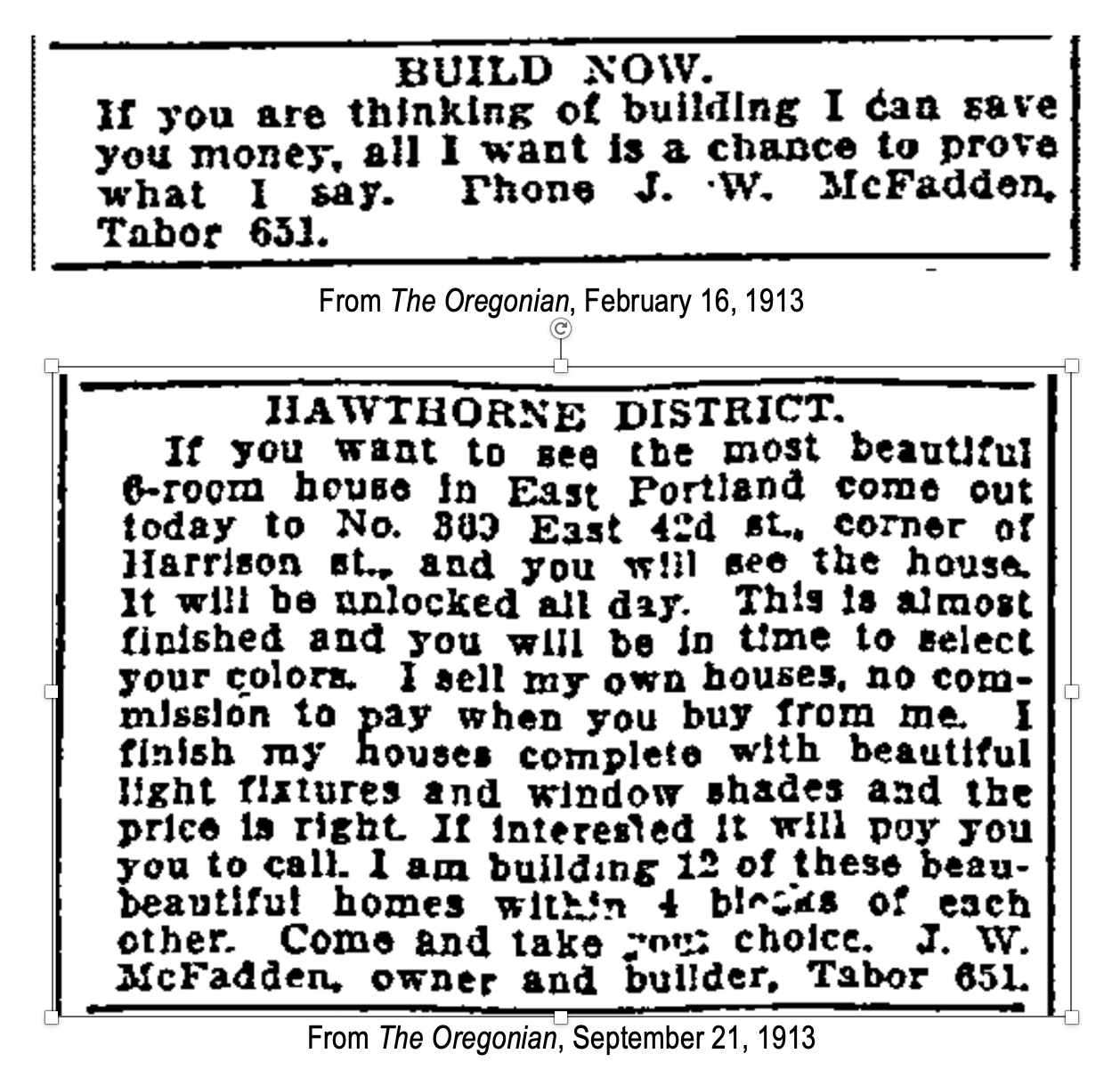
By the late 19-teens, McFadden had scaled up his business to produce hundreds of homes in Rose City Park, Laurelhurst and in southeast Portland. As a builder/owner, his method was to purchase a large number of lots in desirable new eastside subdivisions that he would then build and sell, mostly on speculation. In essence McFadden was both builder and realtor. Over time, his work progressed from small bungalows to larger homes. The tag line in his newspaper ads read: “If McFadden built it, it’s all right. Builder of fine homes.”
In 1919, McFadden began to be a quoted source in newspapers about homebuilding market trends:
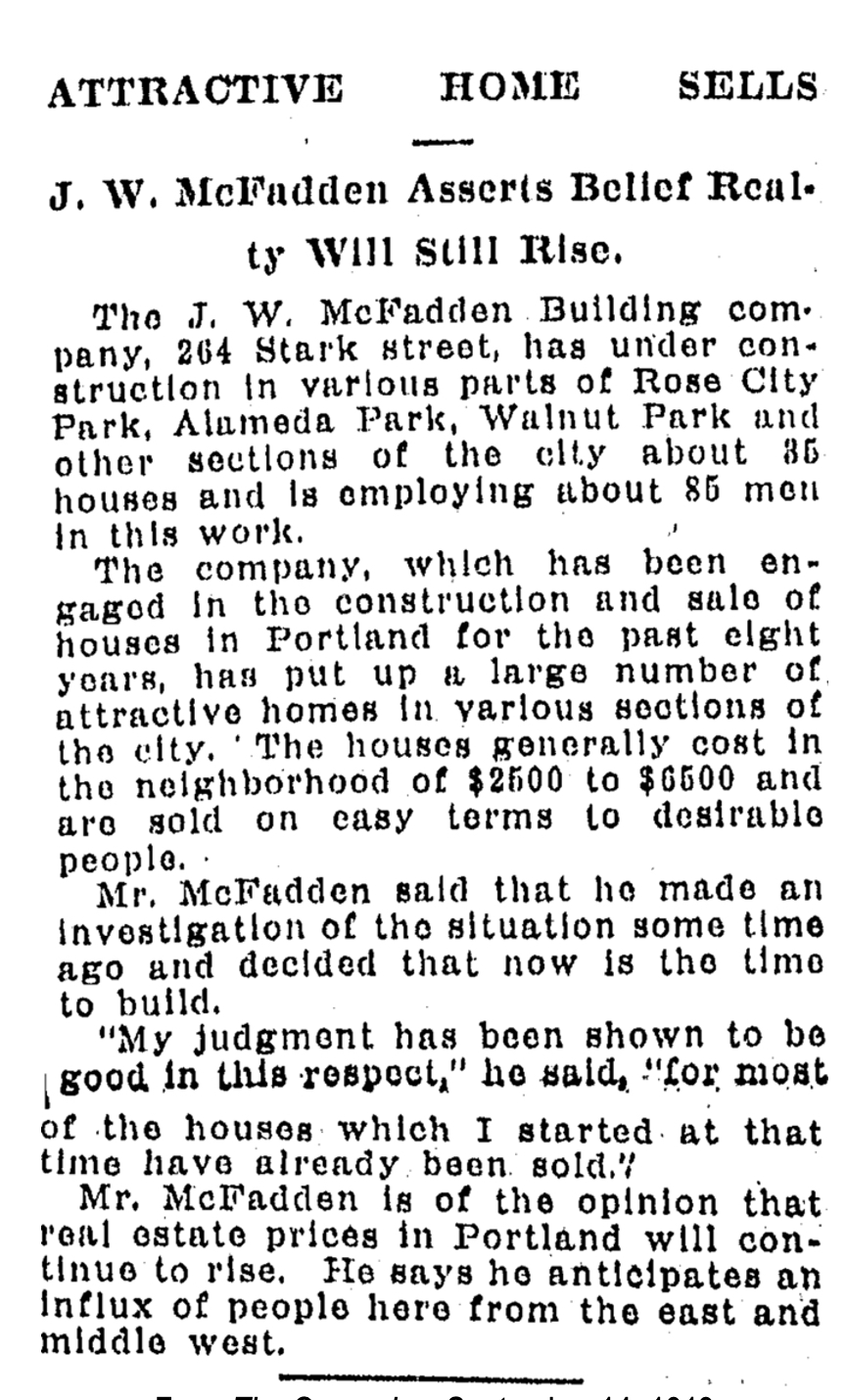
From The Oregonian, September 14, 1919
In early 1920, as Portland’s economy began to rebound from both the 1918 pandemic and the end of World War I, McFadden made his move into Alameda, building the following addresses during the first six months of that year: 2866 and 2874 NE Alameda; 2514 NE Mason; 4017 NE 32nd; 4217 NE 30th; 4026 NE 32nd; 4213 NE 31st; 4124 NE 31st; 4206 NE 31st; 4207 NE 31st; and 4136 NE 26th.
After these Alameda homes, McFadden took on even higher profile building projects:
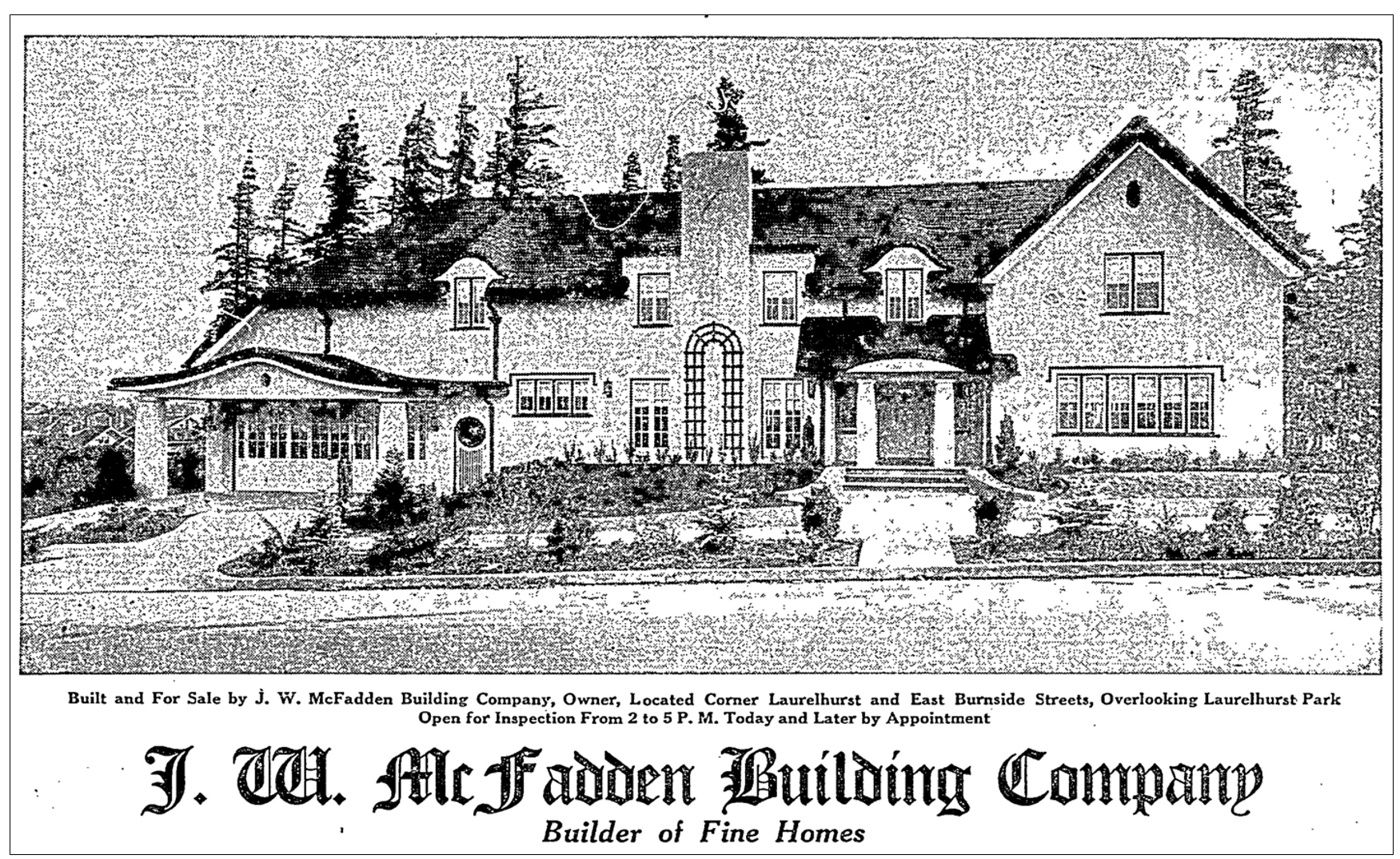
From The Oregonian, October 16, 1921
During Portland’s building boom period of the 1920s, in addition to high-profile homes, apartment buildings and movie theaters, the J.W. McFadden Company built dozens of middle market and entry level bungalows on Portland’s eastside, mostly using designs and blueprints produced by the Universal Plans Service.
In 1921, he caused a stir in Laurelhurst by insisting on building a grocery, meat market and drug store on property he owned on the south end of Coe Circle at NE Cesar Chavez and Glisan. A protracted legal battle pitted the neighborhood and the city against McFadden, with an eventual compromise in 1923 where the city bought-out McFadden’s interest and turned the circle into a city-owned park that now features the gold-leaf statue of Joan of Arc.
In 1931, McFadden built “Bobbie’s Castle,” a scaled-down bungalow memorial to the famous Silverton-area collie dog that walked 2,800 miles from Indiana back to its owners in Oregon. Bobbie was buried at the Oregon Humane Society in Northeast Portland, and McFadden’s memorial—a small house—was located at the dog’s grave.
In 1937—at age 56—McFadden joined with financial backers to create Modern Builders, Inc. to build apartment buildings in southeast and southwest Portland. McFadden died in Portland of Parkinson’s at age 68 on February 3, 1950.

 Alameda Old House History