Two 112-year-old public stairways, known today for their role in fitness regimes as well as shortcuts to and from Alameda Elementary School, were once frontrunners of change in what had been rural northeast Portland.
The stairways were built in 1912 by Warren Construction Company, concrete flights anchored into the slope of the ridge, connecting the brand-new Olmsted Park subdivision above with early Fremont Street and what developers hoped would eventually be new neighborhoods below. When built they seemed precarious and tentative, hanging out on rugged cliff-like hillsides above Fremont Street, a giant gravel pit just below. See for yourself:
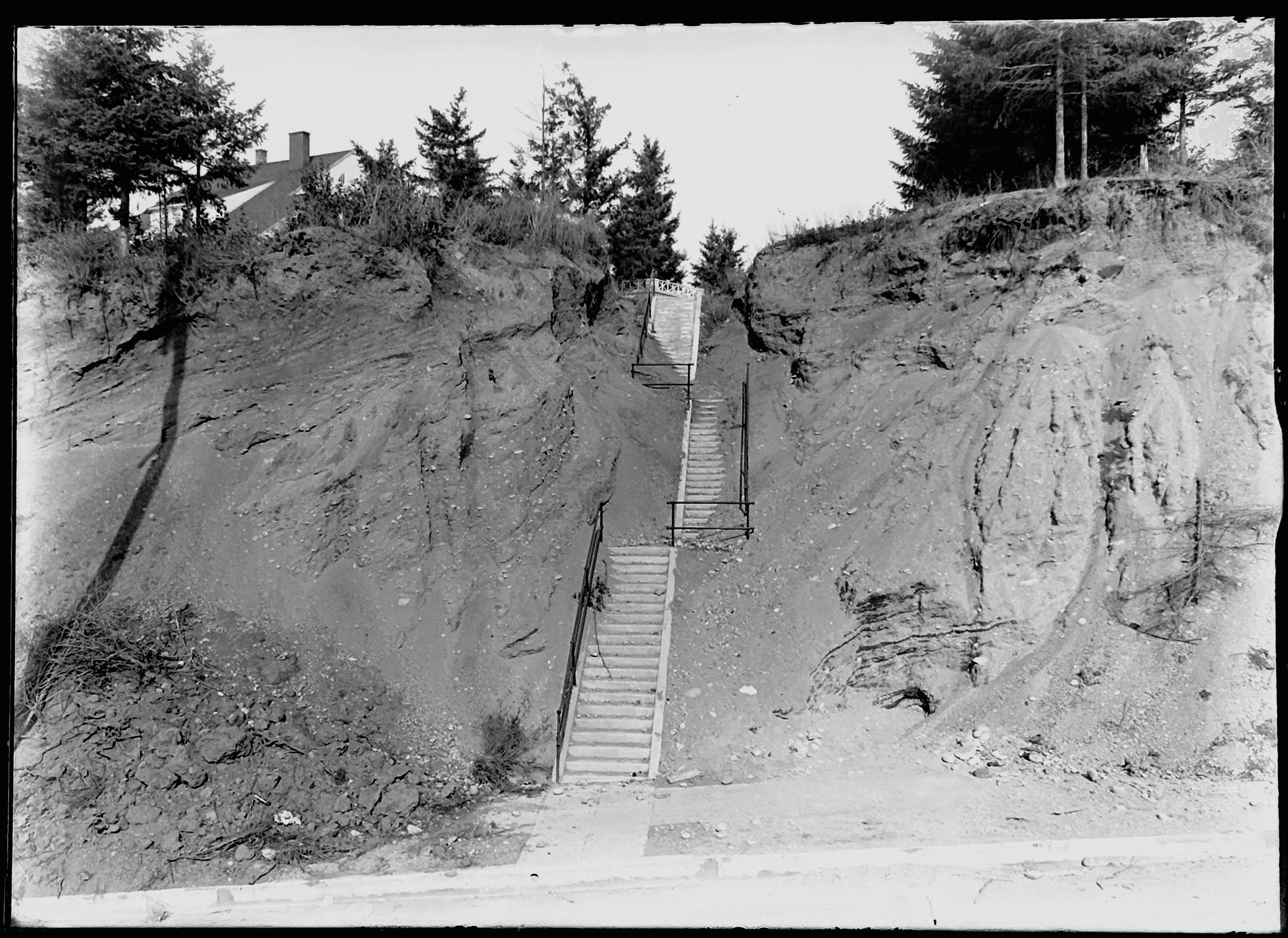
Fremont Street looking due north showing steps leading down from Alameda Terrace, 1913. House at left is 3251 NE Alameda Terrace. Today these steps land just west of NE 32nd Avenue. Directly behind the photographer was a gravel pit that stretched downslope to the south beyond today’s Klickitat Street and spanned from NE 33rd to NE 31st. Photo courtesy of City Archives: A2009.009.3621.
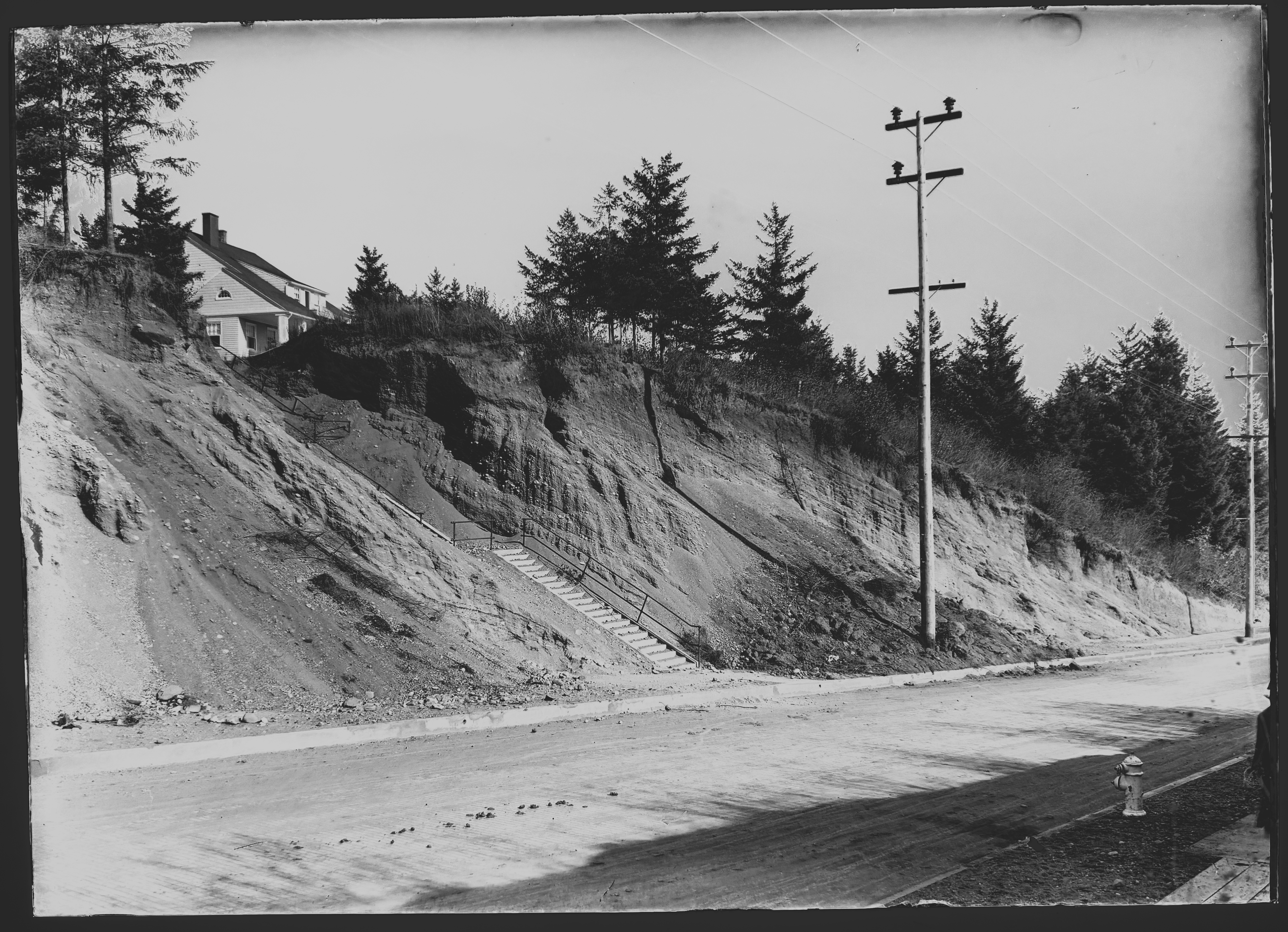
Fremont Street looking northeast showing steps leading down from Alameda Terrace, 1913. Today these steps land just east of NE 30th and Fremont. House at left is 3251 NE Alameda Terrace. Photo courtesy of City Archives: A2009.009.3635.
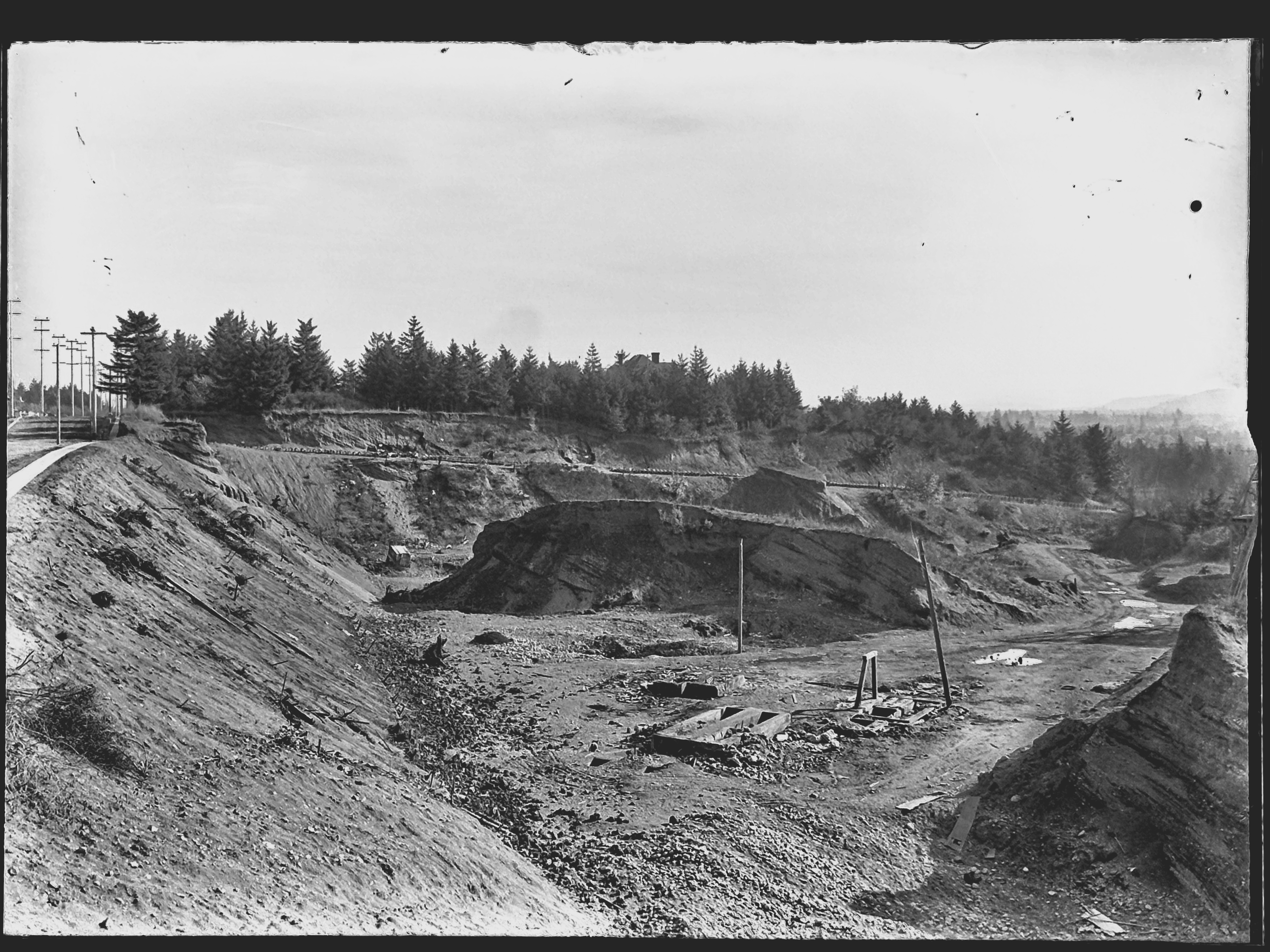
A photographer from the Department of Public Works visited the area in December 1913 and may have been following up on concerns from developers and new homeowners about the stability of the slope above and below Fremont in the stretch between NE 30th and NE 33rd. The glass plate negatives he brought back have been at rest since, identified as “Lombard Street” at City Archives. The newly re-discovered stairway images join photos of the giant gravel pit at NE 33rd and Fremont, and photos of the actual intersection in its early development days that we’ve been sharing here, with a few more to come.
The house pictured in both photos still stands today. In 1912, it was one of just a few homes on what was then known as Woodworth Avenue, but is today known as Alameda Terrace, built that same year by Samuel J. and Dorrie Mae Claridge. Over the years, other adjacent houses were built, steadying the slope and giving the stairs purpose connecting neighbors with their neighborhood.
Despite a deep search of early newspapers, city contracting documents and city ordinances, little remains to tell the story of their early construction. When built in 1912, most Portlanders relied on walking and streetcars to get around, and horses to move freight. A dispersed system of public stairways just made sense, particularly up and down landscapes like Gravelly Hill (today’s Alameda Ridge).
The 30th Avenue stairs were noted in the May 1981 citywide Historic Resource Inventory, called out for their significance related to landscape architecture and their role in development of the neighborhood. In the inventory, they’re labeled as “Olmsted Park Public Right of Way.”
Today, these stairs, along with others that span the ridge as it transits northeast Portland, appear in many city exploration guides, including a notable book written by Laura O. Foster called appropriately Portland Stair Walks.
We recommend them as part of your regular history walk regime!
Up next: three 1913 views of mini-landslides on this same slope just above Fremont.

 Alameda Old House History
Thanks, but growing up
I had no idea these stairs were so old! These are amazing photos. Thanks for sharing all of this with us—it is truly fascinating, and I look forward to every new blog article!
I love reading your blog entries. These photos & the context you provide is a real gift to the community. My grandfather Frederick Sandstrom, off the boat from Norway, was a cement and brick contractor in Portland during this same era. His company built Holy Redeemer church in North Portland. Will be curious if you ever uncover other cement or brick projects that are of his doing. For better or worse, he didn’t stamp his name on things like Elwood of sidewalk fame. 🙂 Thanks again for sharing your work. – Tricia
Great work as always, Doug! It’s fascinating to see the bare slope along Fremont Street now held in place by thousands of plants to stabilize the soil.