Our research into Portland’s early homebuilders continues, with three more profiles which illustrate the range and type of people and companies who built our homes in the early years of the 20th century. These three join more than 40 other builder profiles on The Builders page, including mom-and-pop builders and large scale operators who shaped the neighborhoods we know today. Be sure to have a look and see if you find your address or neighborhood in these lists.
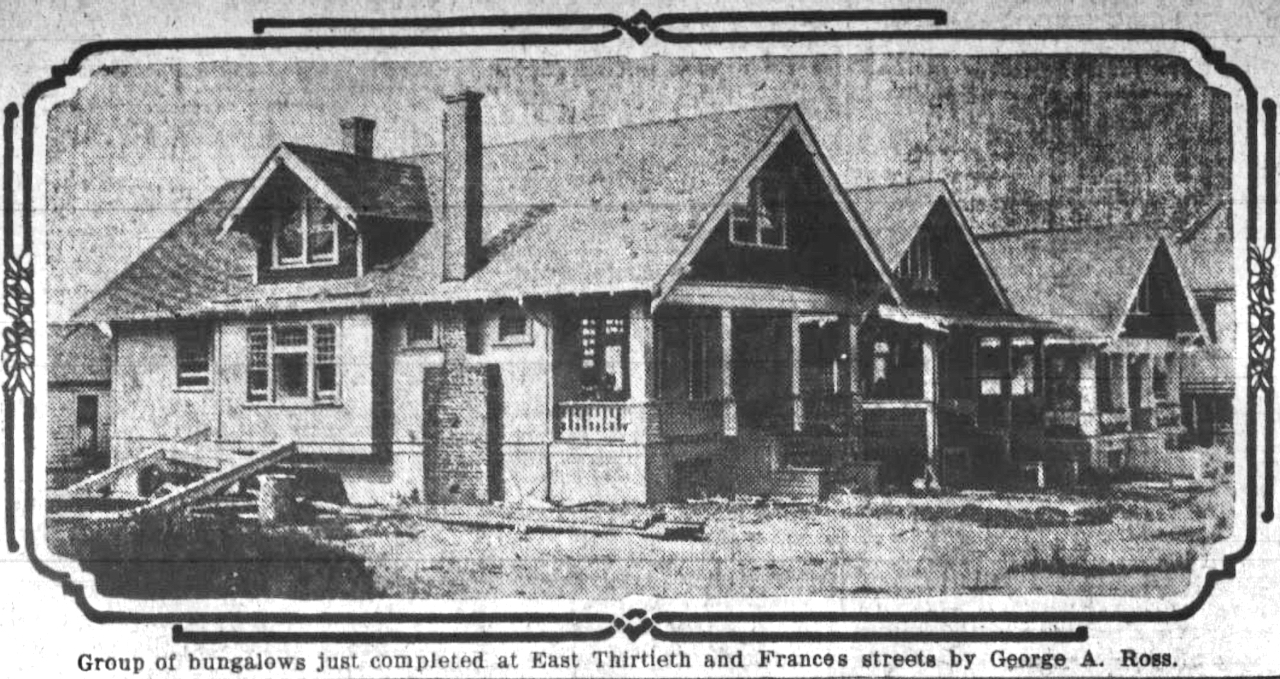
George A. Ross (1877-1958) was one of the prolific builders whose company would be working on multiple homes at the same time. He did it all: builder, designer (but not a registered architect), financier, marketer. Like many of our builders, he was an immigrant who started out by building a home for himself, sold it, and went on to build (and live in) many others.
George E. Weller (1870-1942) had been a dry goods merchant in Raymond, Nebraska before coming to Portland after the Lewis and Clark Exposition to capitalize on the early homebuilding boom. He was 40 years old when he began his Portland house construction business, and like George Ross, built his first bungalow for his own family. Weller later operated the Pacific Building Co. before leaving the homebuilding business and going into real estate. In his early years his motto was Builder of Good Homes ~ Weller-Built is Well-Built.
George Weller – “Builder of Good Homes”
William M. Umbdenstock (1869-1937) came to the business from family money and from fire insurance underwriting in Chicago. Arriving in Portland in 1911, he kept his Chicago company name “W.M. Umbdenstock & Co.” and produced more than 300 homes between 1911-1923, from humble bungalows to much larger colonial-style showpieces. Umdenstock likely did not wield a hammer: his business was business and his company built homes, managed and rented out existing properties and sold vacant lots for others to build. He left Portland for Los Angeles in 1923 to work as an importer-exporter, inventor, and entrepreneur.
Insights about an early Portland builder? We’d like to hear from you.
In our continuing quest to learn more about the people who designed and built Portland’s neighborhoods and homes, we’re adding nine more builder biographies bringing our total number of homebuilder and architect profiles to 41. You can find these profiles under The Builder’s tab here on the AH blog. Between them, these nine builders were responsible for hundreds of Portland homes.
In this latest batch, you’ll notice the continued theme: Portland’s housing stock from 1900-1950 was built primarily by immigrants, with Swedish immigrants figuring prominently. Here are some highlights:
Horace Askwith: Built in Laurelhurst and Alameda before taking on the job as Superintendent Architect for the Oregon-Washington Railway and Navigation Company.
Robert Beat:the Scottish designer and builder who built more than 100 houses in Irvington, where he lived. The gold standard of Portland homebuilding.
George Binkey: A hardscrabble builder who focused on the Elberta Addition in the early 1900s before moving to the Coos Bay area.
Oscar Earlson:Built houses on both sides of the river and found time to be a leader of Swedish culture in Portland.
Nils Eklund: Swedish immigrant who saved money with his wife Signe to build their first house, which ended up launching a prolific homebuilding career.
J.W. McFadden:Active builder in Laurelhurst and Alameda, was almost successful in building a commercial building in Coe Circle, and who eventually built a special memorial for Oregon’s most famous dog.
Conrad Mueller: German immigrant builder who bought tax foreclosed lots to stay busy during the Great Depression.
Fred Turner: Changed his name in 1918 to sound more American. Turner built many Northeast Portland homes and an historic apartment building before turning to development in the Burlingame area of southwest Portland.
Thomas Winship: Prolific English-born homebuilder who was the spark plug behind construction of the old Rose City Park Library (now demolished).
We had been focused on the work of John W. McFadden, a homebuilder operating in the Laurelhurst neighborhood of the 19-teens and 1920s, when we bumped into an interesting thread of newspaper stories related to the big traffic roundabout known today as Coe Circle, at the intersection of NE Cesar Chavez Boulevard and NE Glisan. The circle exists at the core of the 392-acre Laurelhurst subdivision, platted in 1909, which before the turn of the last century had been prime agricultural land known as Hazel Fern Farm.
You know this place, which features the gold-leaf statue of Joan of Arc given to the City of Portland in 1925 by Portland resident Dr. Henry Waldo Coe, Oregon State Senator, personal friend of Teddy Roosevelt and advocate for WW1 soldiers. Coe chose this statute because Joan of Arc, by way of a song (Joan of Arc, They Are Calling you), spurred the courage and devotion of soldiers singing and fighting in France in 1917-1918. But that’s another story. Plus, the statue didn’t come along until Memorial Day 1925, 16 years after the circle was first platted.
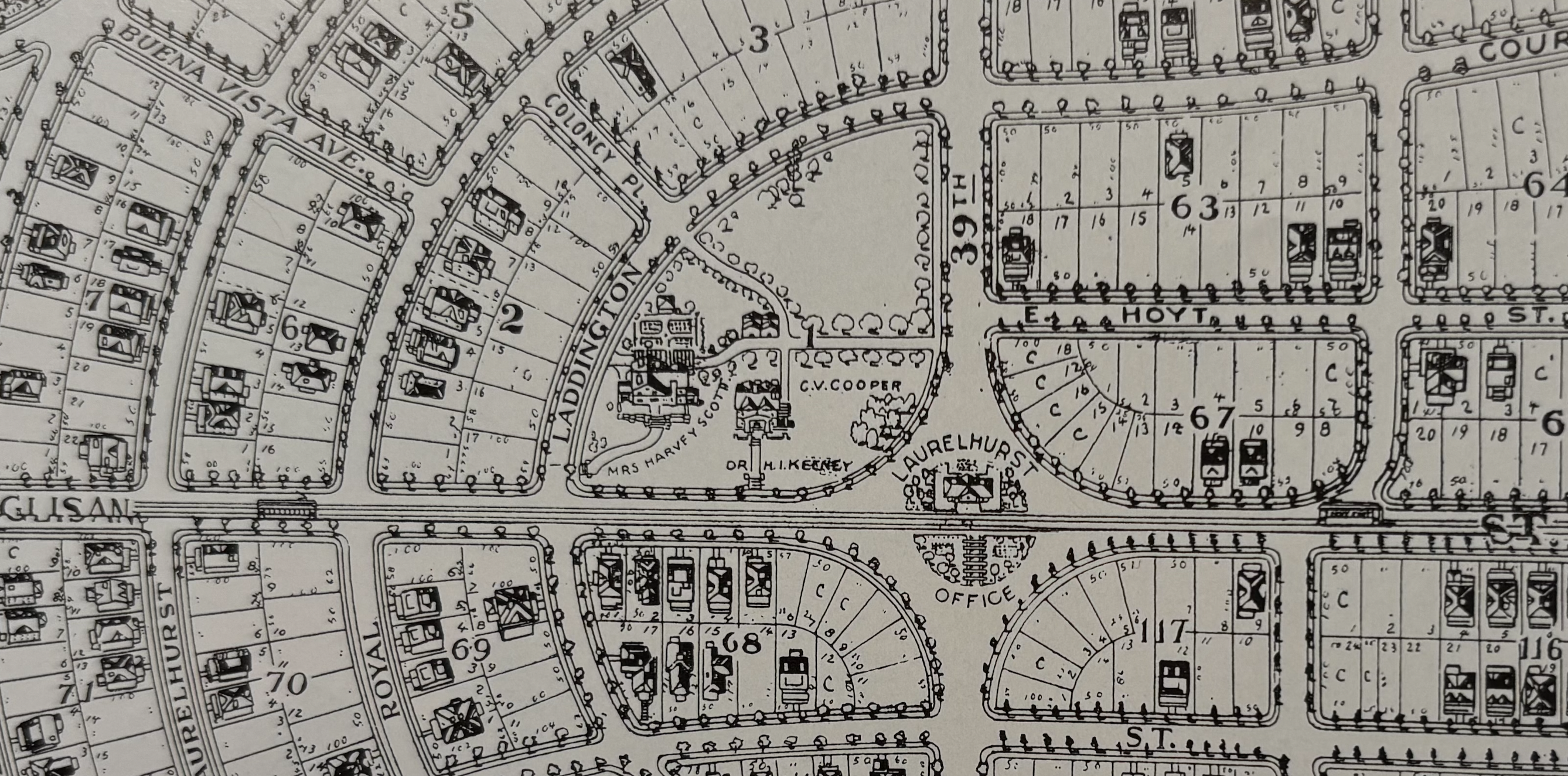
Coe Circle / “Block A” and the location of the Laurelhurst Company Tract Office, from “Laurelhurst & Its Park,” published in 1912.
The 80’ radius circle in the middle of the intersection had a few incarnations before it became the roundabout we know today, and in 1923 it narrowly avoided being turned into a retail hub, launching a dispute that shook the neighborhood. Add the traffic circle—today officially a city park—to the long list of places that nearly turned out very differently, including several of our favorite Northeast Portland parks which barely missed becoming subdivisions.
Up until the early 1920s, the Laurelhurst Company operated a real estate sales office on the north side of the circle, which was then divided north-south by the Montavilla Streetcar that traveled east-west on Glisan between Montavilla and downtown. A streetcar stop / real estate office was the perfect combination. During those years, most Portlanders traveled by streetcar, which was the ideal way to access the new eastside subdivisions to peruse vacant lots and dream about building a new house.
But by 1921, surrounding neighborhood lots had been bought up and it seemed to at least one builder/developer that what Laurelhurst needed more than a real estate office at that location was a place to buy groceries.
The Laurelhurst Company closed the real estate office in November 1921 and auctioned off the property, often referred to as “Block A,” to the highest bidder: builder/developer J.W. McFadden who knew the neighborhood well from building dozens of homes there.
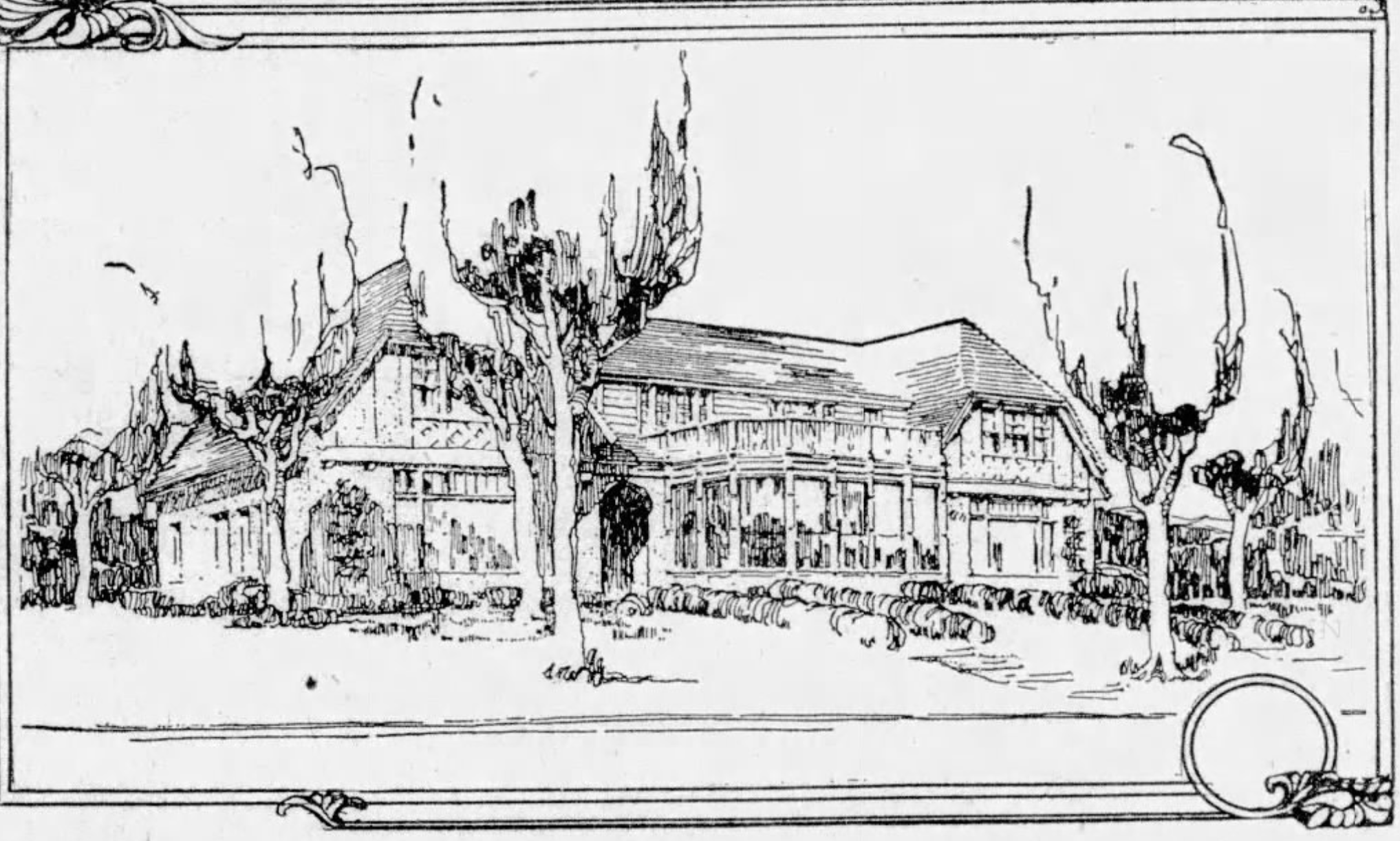
By Christmas 1921, McFadden’s plans to build a combined grocery, meat market and drug store on the south side of the circle with second-story apartments above, plus a filling station on the north side of the circle, ignited a battle in the neighborhood between those who liked the idea, and those who felt it compromised the residential feel of the place. McFadden hired talented local architect Ellis Lawrence, co-founder of the University of Oregon School of Architecture, to produce designs that would make the market a “handsome structure.”
Rendering of J.W. McFadden’s planned commercial hub to be located on the south side of today’s Coe Circle at NE Cesar Chavez and Glisan. From The Oregonian, December 25, 1921. The building was designed by Ellis Lawrence.
At issue was the interpretation of prohibitions on commercial buildings. Laurelhurst, like many eastside neighborhoods had racial deed restrictions and prohibitions against commercial buildings. But Block A seemed to be exempt.
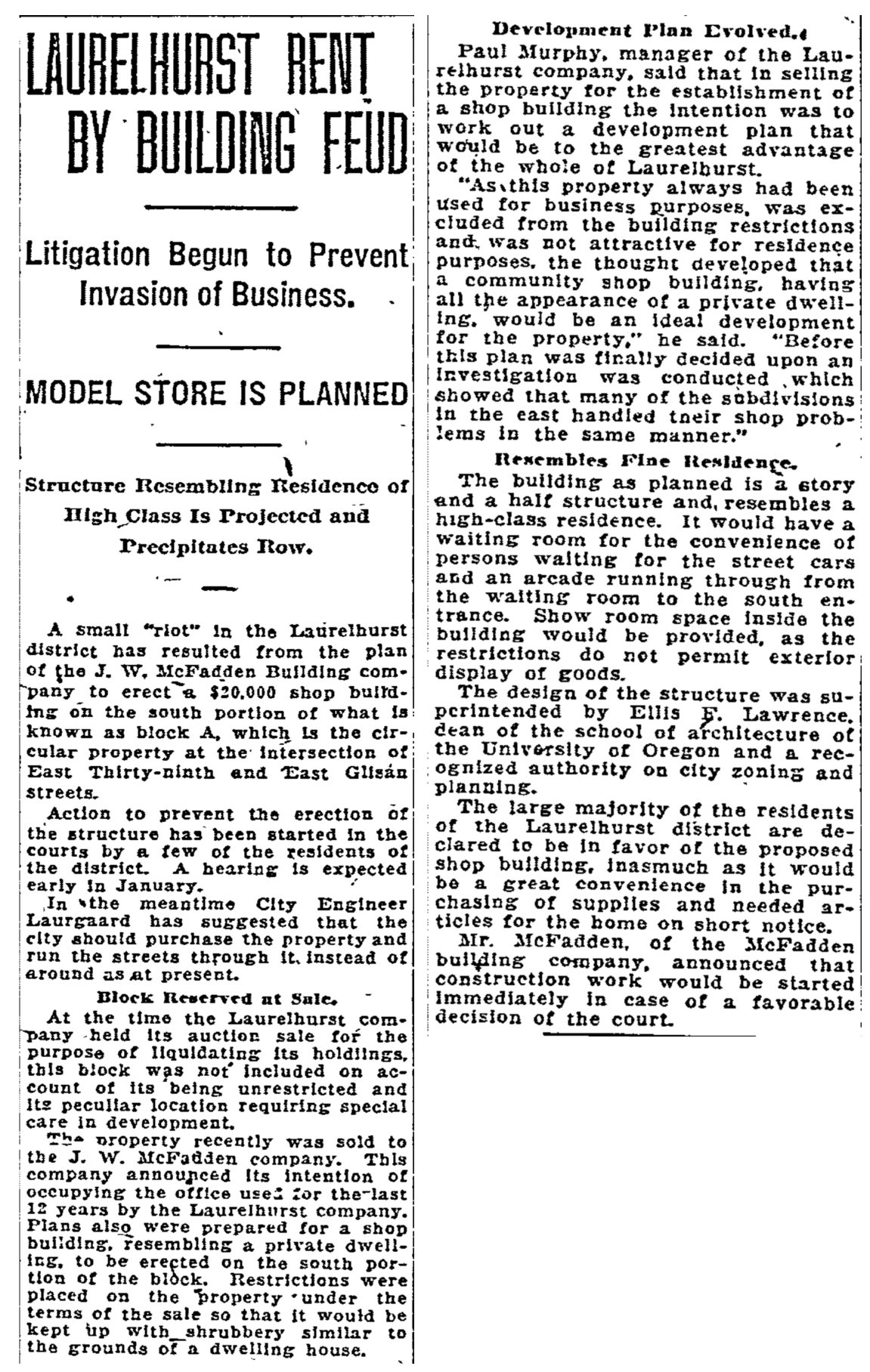
From The Oregonian, December 25, 1921
A “riot” might be a bit of an overstatement, but things did get heated, with adjacent homeowners who were attorneys filing an injunction against McFadden’s plans. Even Olaf Laurgaard, Portland’s City Engineer who lived in Laurelhurst on Royal Court, came out against the proposal and suggested a fix.
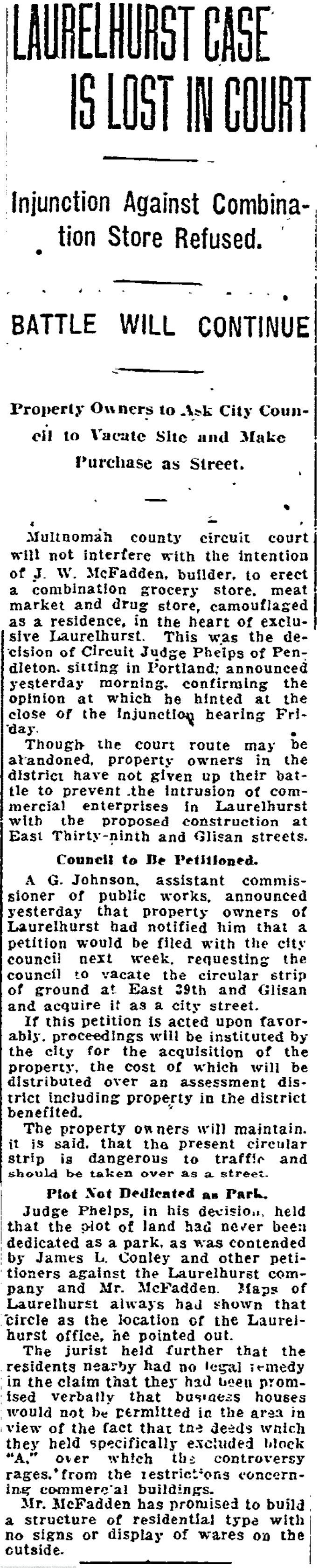
The case moved through Multnomah County Circuit Court in early 1922 and eventually the opponents lost: McFadden won the case that the commercial prohibitions did not apply to Block A. After all, the Laurelhurst Company had operated its commercial real estate office there for at least a dozen years.
From The Oregonian, March 5, 1922
The day after the circuit court decision, attorney-homeowners petitioned Portland City Council to seek other means by eliminating the circle altogether and turning it into a city street thus scuttling McFadden’s development plans. City Engineer Laurgaard’s fingerprints begin to show in this approach. Must have been a fine line to walk both as concerned neighbor and city official in charge of street engineering.
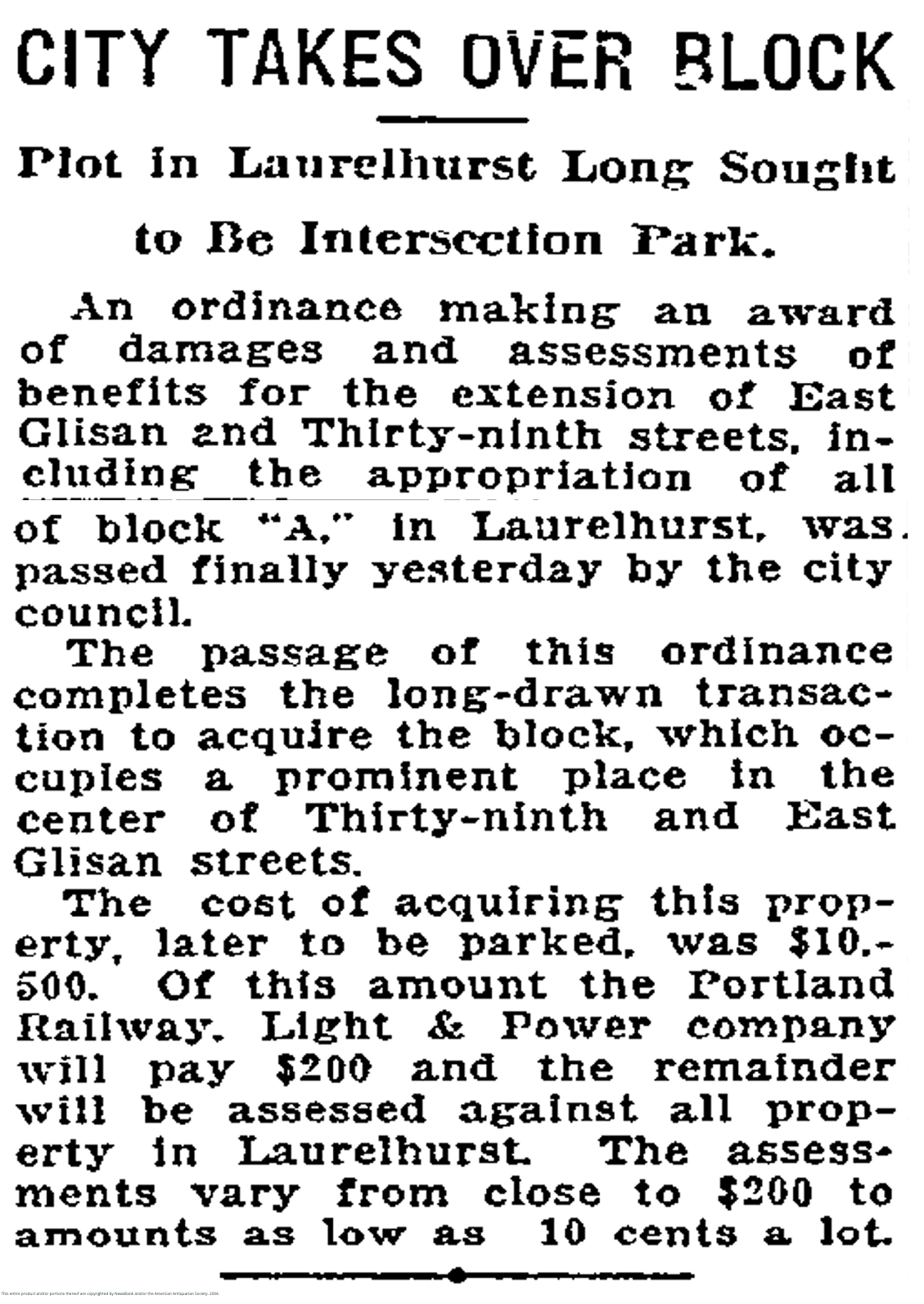
The case percolated through city politics that spring and summer, but by August 1922, Laurgaard and development opponents had figured out a course of action that involved the city buying out McFadden’s interest using mostly one-time special assessment funds paid by Laurelhurst residents and a token amount paid by the streetcar company. In August, City Council passed an ordinance codifying the “compromise.” McFadden dropped his plans, Laurelhurst neighbors paid their one-time special assessment to buy Block A, and the city added its latest city park.
From The Oregonian, August 24, 1922.
The Joan of Arc statue came along in 1925. Next time you pass by, note that it’s not in the middle of the circle, but slightly to the south because at the time, the streetcar still passed directly through the middle as it traveled along Glisan Street. As you make the round, tip your hat to City Engineer Laurgaard and the neighbors who pushed for the park, and the early generation of Laurelhurst residents who paid their special assessment to make it happen.
For the record, builder John Wesley McFadden went on to become one of Portland’s more prolific and respected residential builders in Laurelhurst, Alameda and other northeast neighborhoods. During Portland’s building boom period of the 1920s, in addition to high-profile homes, apartment buildings and movie theaters, the J.W. McFadden Company built dozens of middle market and entry level bungalows on Portland’s eastside, mostly using designs and blueprints produced by the Universal Plans Service.
In 1931, McFadden built “Bobbie’s Castle,” a scaled-down bungalow memorial to the famous Silverton-area collie dog that walked 2,800 miles from Indiana back to its owners in Oregon. Bobbie was buried at the Oregon Humane Society in Northeast Portland, and McFadden’s memorial to him—a small house—was located at the dog’s grave there.
In 1937—at age 56—McFadden joined with financial backers to create Modern Builders, Inc. to build multiple apartment buildings in southeast and southwest Portland. He died in Portland at age 68 on February 3, 1950.
Next Saturday morning, September 21st, we’ll be at the Architectural Heritage Center in Portland to present a new program called The Builders. Illustrated with photos, newspaper clippings, maps, interviews and stories–and drawing on our growing collection of builder biographies–we’ll share a sense of the people and the process of building, marketing and buying the houses that are now entering their second century. Tickets are still available, register online or contact AHC for more information.
Builders working on an eastside bungalow in the early 1900s. Courtesy of Oregon Historical Society, Negative 37092.
We’ve added two more builder biographies to our growing collection of Portland area home builders from the early 20th Century: A.C. Galbraith, a prolific builder of small bungalows, based in St. Johns; and W.H Dunn, a retired Canadian wheat-grower-turned-builder who started his building career late and operated in Irvington, Alameda and Laurelhurst.
Both were in early on the building boom of the 1920s. Both worked mostly from standard plan sets. Both built most of their houses on speculation, without a contract or particular client in mind on faith the house would sell. And both were crushed by the Great Depression, like so many builders.
Their trials and accomplishments add to our understanding of the times.
More builder profiles to follow (we love doing these) and appreciate the suggestions from readers. If you haven’t read the bio of Harry Phillips and the recent comments from his great-great granddaughter who found our profile of Harry, do check it out.
In collaboration with the Alameda Neighborhood Association, I’ll be presenting a program on the work of the Oregon Home Builders Co., Wednesday, January 17, 2024 from 7:30-9:00 p.m. at the Fremont United Methodist Church (2620 NE Fremont), and you’re invited (RSVPs required, see below).
The Oregon Home Builders company set out in 1912 to pursue its vision of homebuilding market domination by selling stock to investors and by building memorable homes for its customers. During five years between 1912-1917, the company built more than 125 homes, including many in Alameda, several of which are listed today in the National Register of Historic Places.
The company was unique among homebuilders of the era because it catered to both ends of the economic spectrum: large, charismatic custom-designed homes for the wealthy, and simple, affordable thoughtfully-designed bungalows for those just entering the housing market. Join me for an inside look at the intriguing rise and fall of the company and the legacy of its homes today.
To reserve your spot for the January 17, 2024 program, please e-mail the Alameda Neighborhood Association at alamedanewsletter@gmail.com. Reservation deadline is January 10th. Doors open at 7:00 and the association will have light refreshments on hand.
The Alameda Neighborhood Association is a neighbor-led board that advocates for smart policies, takes action on neighbors’ concerns, facilitates communication about neighborhood issues, hosts events to bring residents together and publishes the quarterly newsletter AlamedaPDX.
Two new profiles to add to The Builders collection, both Swedish immigrants, one who had a brother in the business that we have already profiled, though they chose to spell their last names differently.
Stockholm Harbor, summer 2023
Herman Nelson, who immigrated through Canada in his early 20s a few years ahead of his younger brother builder Emil Nilson; and August Malmquist, or as he is more frequently referred to on building permits as A.C. Malmquist. Learning more about the third Nelson/Nilson brother, Oscar, is still on our to-do list.
Included in all of these profiles is a list of homes built by these builders, so by all means check to see if your address is here.
These three Swedish carpenters built hundreds of houses in Northeast Portland neighborhoods, and operated mostly as Mom-and-Pop businesses, with spouses’ names occasionally showing up on real estate transactions. Their business was building houses, but they were family people too, and were active members in the Swedish community in Oregon.
We are reminded about the contributions made by so many immigrants to the shaping of these neighborhoods, and about the racial restrictions and systems that have kept others away.
There’s been a spike of recent interest here on the blog about original construction dates and early builders, which is great. Every house has an origin story all its own and they’re always interesting. I’m currently working on profiles of several more builders to join the 25 already in The Builders section, and I’ve appreciated the suggestions from readers about who to focus on next.
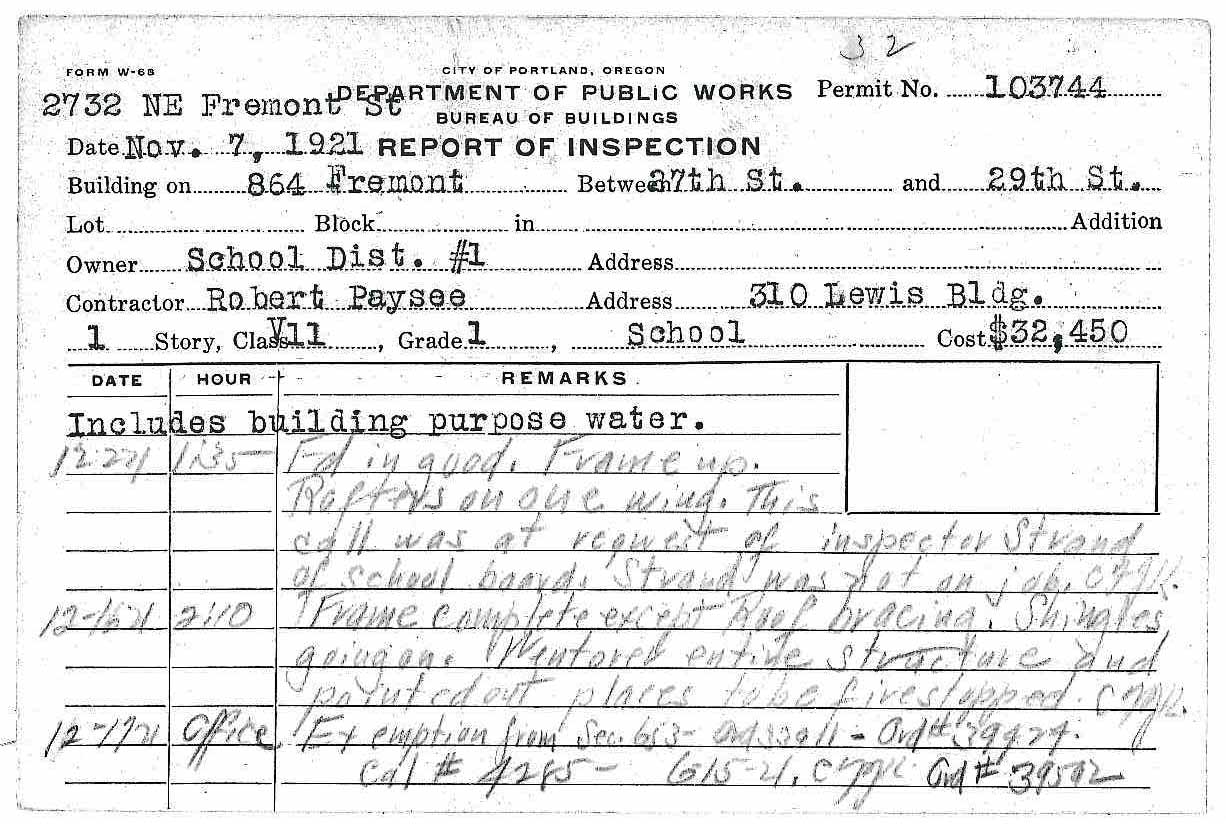
Thinking about these things, I am reminded about the study of building inspection cards I did a few years back which really helped me understand geographic patterns of growth, Portland’s early waves of expansion and recession, and a very busy group of early homebuilders.
Construction inspection card from 1921 for Alameda School.
On many evenings over two years in the mid-2000s, I was granted research access behind the counter at the Bureau of Development Services to examine construction inspection cards. Slowly and carefully, I handled every inspection card in the Alameda Park addition and noted details into a growing record. While my scope of interest is much wider than just Alameda, it’s hard to boil the ocean so I had to define the boundaries of the search. The thought of recording details from every eastside inspection card (by hand) is overwhelming.
Back in 2010, I posted a summary of that research here on the blog. Because AH is up to about 300 posts since 2007, it’s possible current readers haven’t seen it. I realize that’s an ongoing challenge, by the way, of wayfinding through the content here (try using the categories feature, with drag-down menus which you can find on the far right edge of the blog).
Our recent post on the prolific Portland homebuilders known as Hiller Brothers Inc. grew out of our research on one of their classic bungalows on NE Knott Street. In the post, we mentioned several family resemblances among these homes: windows, built-ins, doors, hardware.
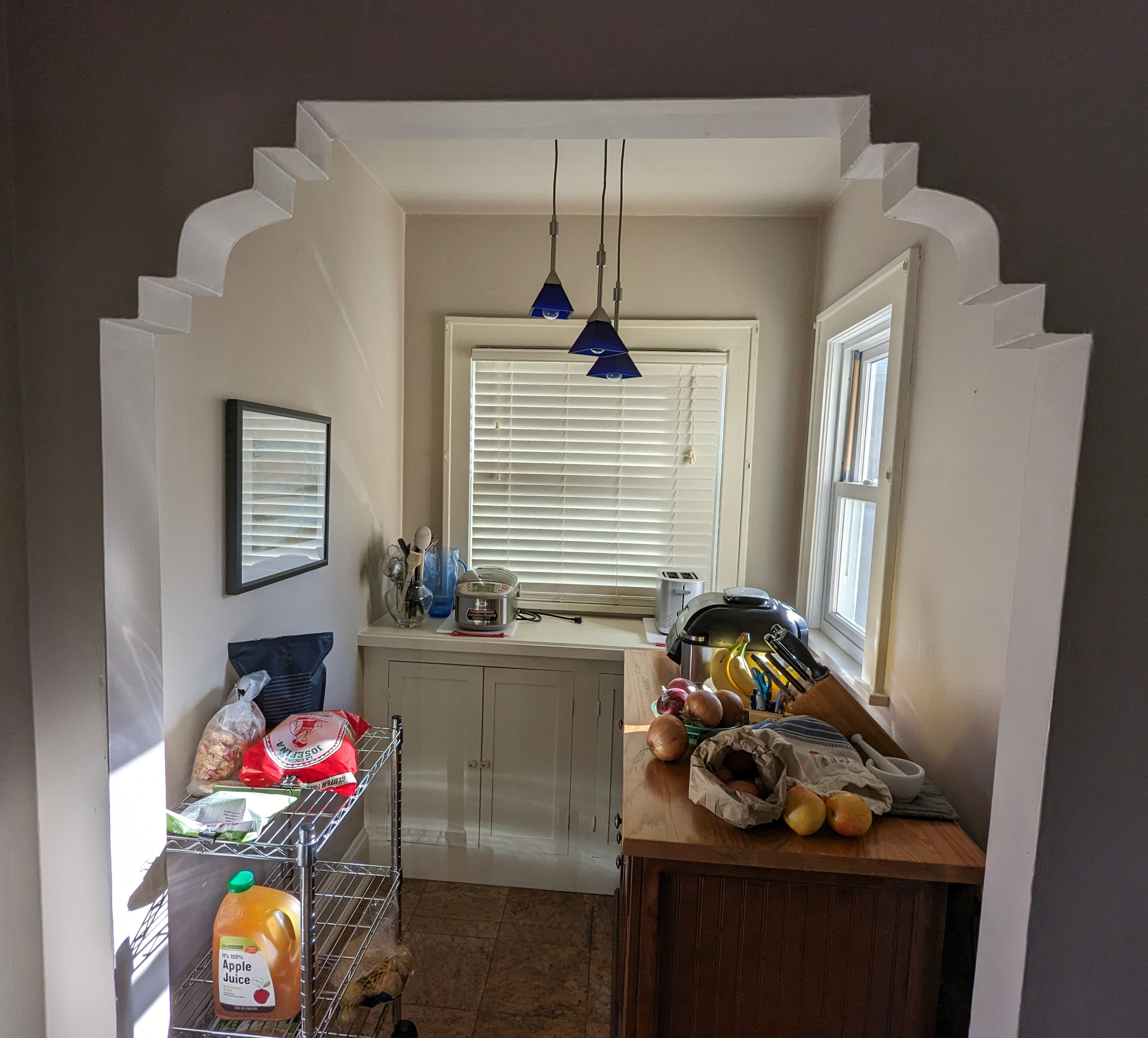
As it turns out there’s another distinctive feature that came to light as neighbors began talking with neighbors. It’s an archway that looks like this:
That distinctive coved shape defining the room is called a cavetto, or quarter-circle, joined to a couple of 90-degree steps top and bottom to create a decorative entry feature that reveals this cozy space–once a breakfast nook–located just off the kitchen. In at least a couple of the Hiller homes we know of, the distinctive cavetto cove is still there and the small space has been converted into a pantry-like area that offers a worktop as well. In some homes, the nook has likely already been annexed into kitchen extensions. Some homeowners might be eyeing that nook and arch right now mulling over remodeling plans.
It would be interesting to hear from others on the Hiller Brothers address list if this cavetto cove and nook feature look familiar. We bet there are more than few still out there.
Which leads to the topic of nooks (more formally inglenooks), a worthy eventual blog post.
Do you have a favorite nook space that operates near the heartbeat of the house? We do, in our 1912 Arts and Crafts bungalow, but it’s a design generation earlier than the Hillers and their hard working architect Hubert A. Williams.
We’ve just completed another builder profile, this time the story of two brothers who formed Hiller Brothers Incorporated in the early 1920s and built more than 400 homes in Irvington, Alameda, Grant Park, Garthwick and West Slope.
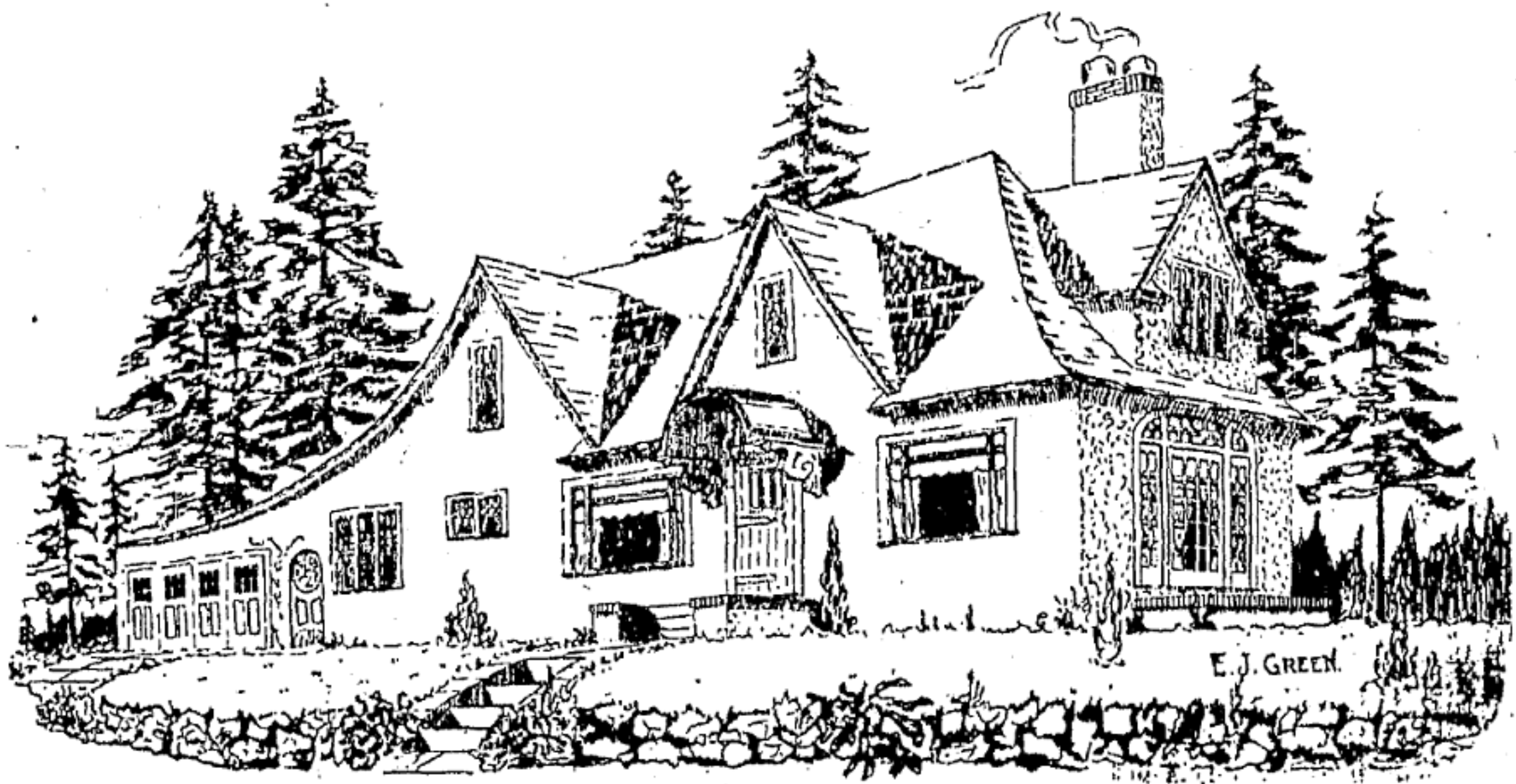
A Hiller Brothers built home at 2131 NE Siskiyou, from The Oregonian, March 14, 1926
In the early years, their preferred building type was the bungalow and in later years Tudor-revival and English cottage style. When you figure out the family resemblances, you’ll find them all over the neighborhood. Look for Hiller Brothers’ work on NE Knott Street between 29th and 32nd (virtually every house). They built 40 homes within a two-block radius of NE 32nd and Knott–most designed by Portland architect Hubert A. Williams (1887-1965)–so check out the profile to see a long list of addresses.
James was 16 years older than brother Gus. The two divided up responsibilities, with Gus supervising the construction wing and James focusing on real estate development and sales. In the 1920s, together with their teams of carpenters, tradespeople and sales force, they were among the busiest homebuilders on the eastside. During the Great Depression–like so many other builders–they switched to repair and remodeling work, but that wasn’t enough to sustain the company. Gus eventually went to work in the Portland shipyards and James–after a brief retirement to the Rogue River Valley–returned to Portland to develop hundreds of homes in the West Slope area.









 Alameda Old House History