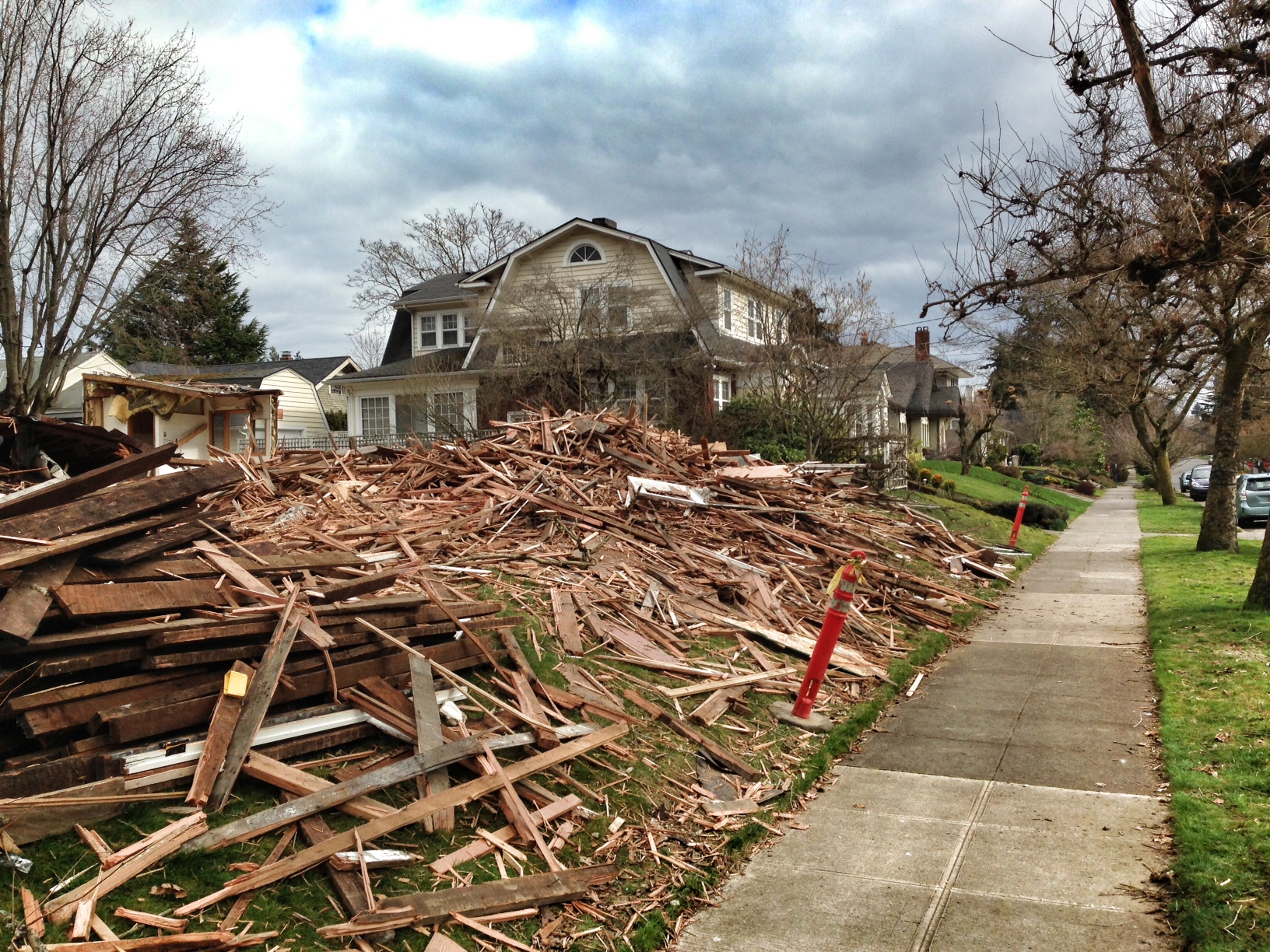
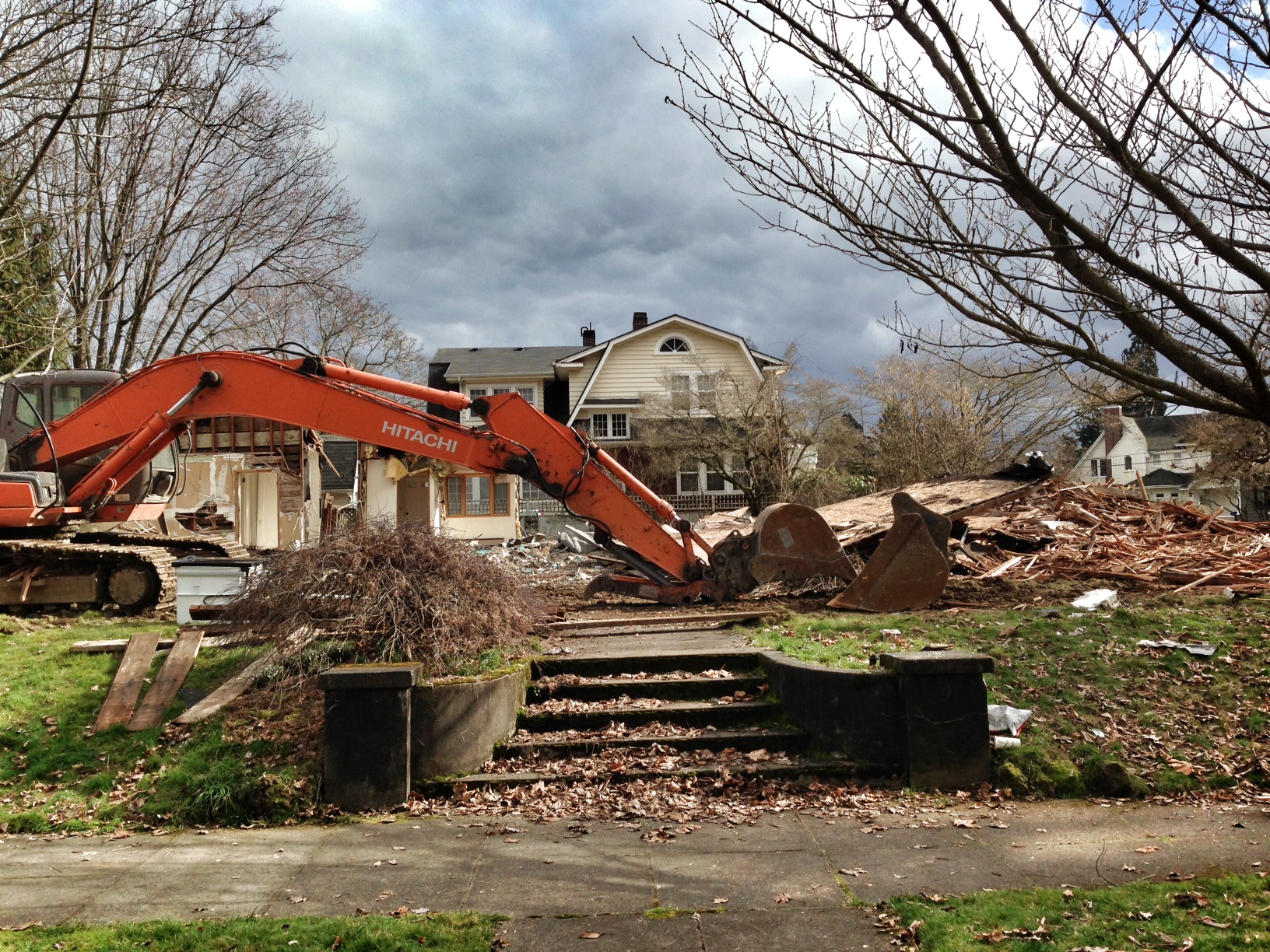
While we know change is actually the default setting of the universe, and we appreciate the economic complexities of restoration and development, there’s no getting away from the gut punch that happens every time we see these forces collide in our neighborhood.
We’ve been exploring this lately here on the blog as a witness to the coming changes at the corner of NE 30 and Skidmore. We’ve lived here almost 30 years and have walked by that house hundreds, maybe thousands of times. But we’ve never lived there, and don’t know anyone who has. It’s not part of our personal story, per se.
We’ve wondered what it might be like, or how objective we could be, if it was a place integral to our family history. If we thought of each demolition in this way, would it become more impactful? Would there be another set of calculations to make that could lead to other options?
We had an inkling of that this week when we learned one of the iconic homes from our family history, a modest Queen Anne bungalow on Diversey Avenue on Chicago’s north side where our father was born, has been demolished and replaced with a condominium. We wrote about the Diversey house here on AH some time back when we asked you to share a picture and story about your favorite house. Here it is, from one of the hundreds of pictures taken during earlier days:
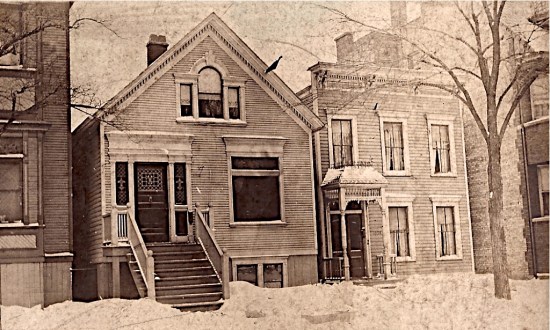
1038 Diversey Parkway, Chicago (on the left). Taken about 1918.
Here’s the visual on this recent change, thanks to Google streetview. It’s the blue house on the right.
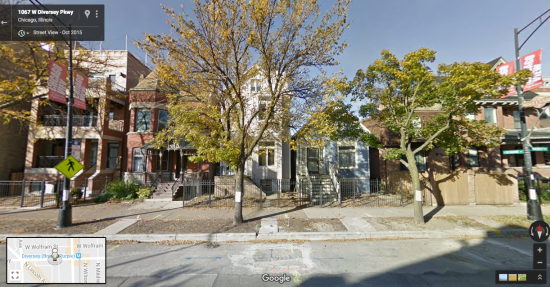
Before
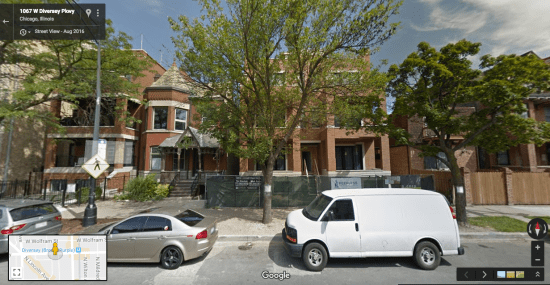
After
We won’t go into detail about how many stories and memories went down with those two houses. Dad was born there, delivered by the doctor who lived next door. Neighborhood picnics were held in the backyard. First day of school pictures on the front steps. Photos of uncles coming and going from the Great War. That house anchored the family as it grew, and it showed in the pictures that flowed from that experience.
During our own growing up years in the Chicago area, decades after the house passed from the family’s hands, whenever we were anywhere near, Dad always took us by, told a story, fed our imaginations with a sense of times past. Maybe our visits and the house’s presence in stories and pictures helped Dad stay oriented in his own family landscape. That’s the thing about our old houses: they become a kind of navigational aid for a family in its journey from past to present to future. After Dad died, we made the pilgrimage back on our own, the pictures of the uncles, the big snow, the sled on the porch burned into our hearts.
That’s where the gut punch comes from. Today, it’s all erased: not a single clue about those houses, those lives.
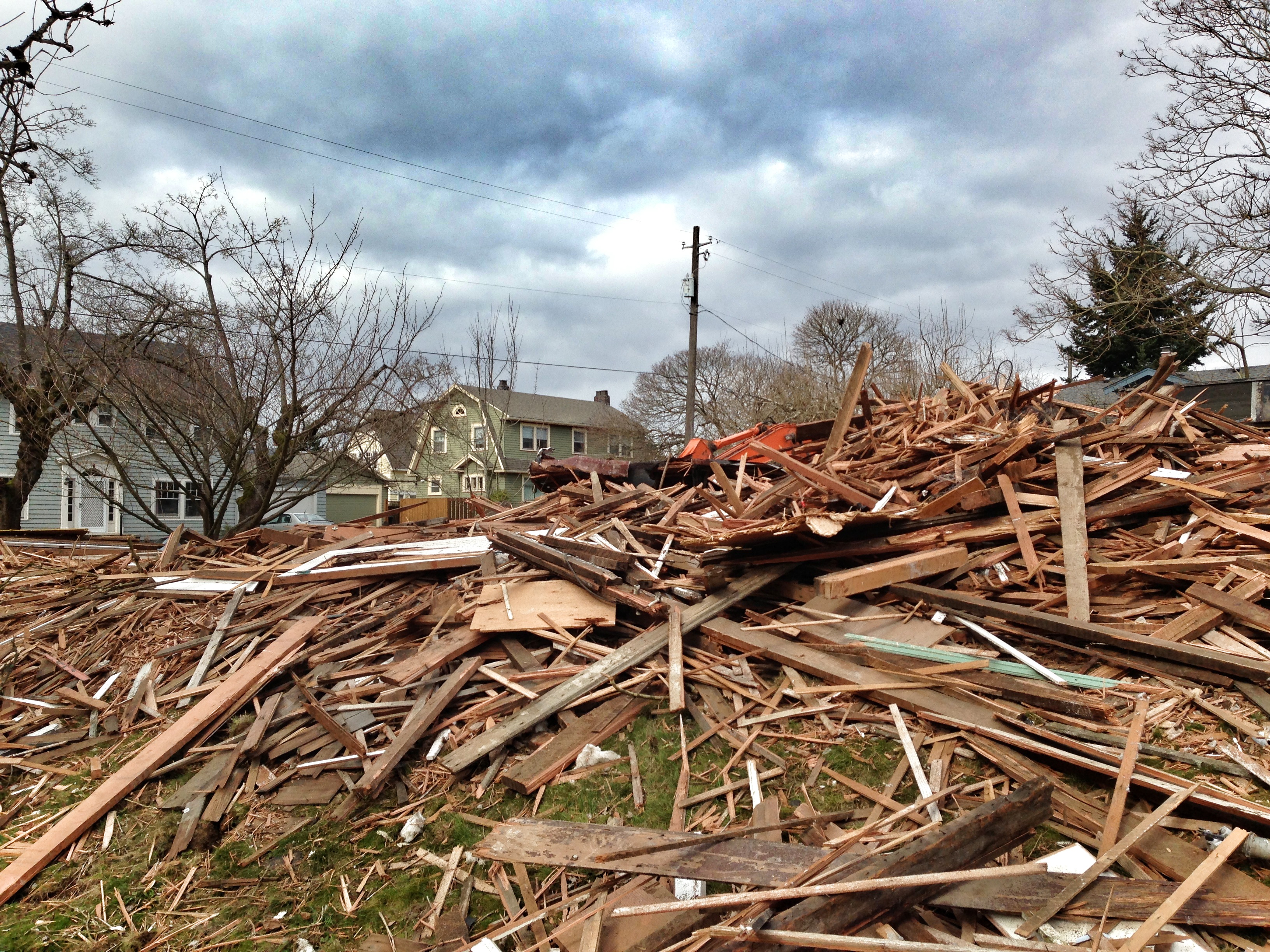
Clearly, we can’t “save” every old house or building. Our communities are growing and changing and a new infrastructure, informed by the past, is necessary for the city of the future. But we have to find a better way, to build on our strengths and on our past rather than erasing all traces.



 Alameda Old House History