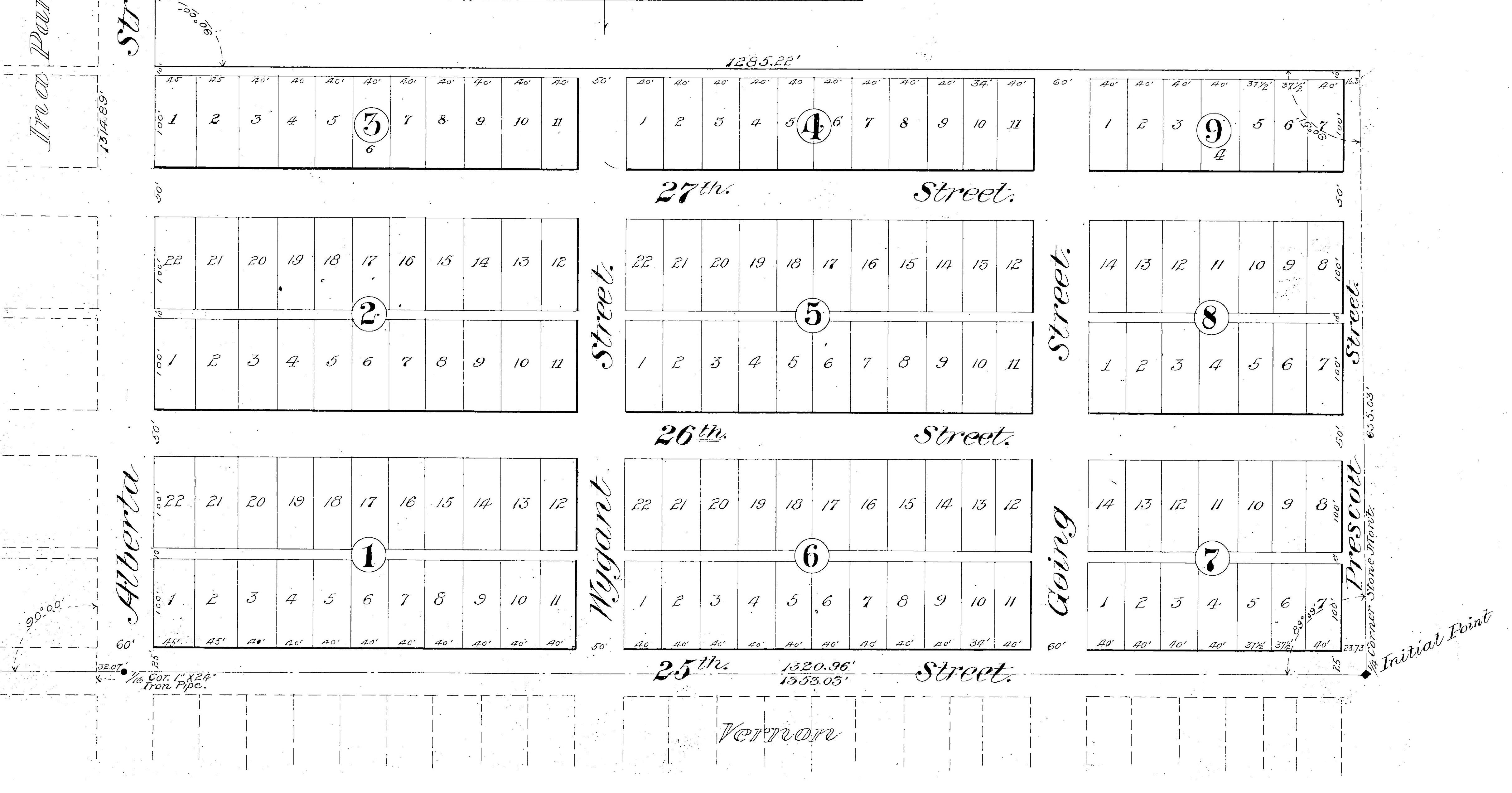
We’ve been looking into the Elberta Addition this week, a 24-block subdivision platted in August 1906 bounded by Northeast 33rd and 28th on the east and west, and by Northeast Alberta and Prescott on the north and south.
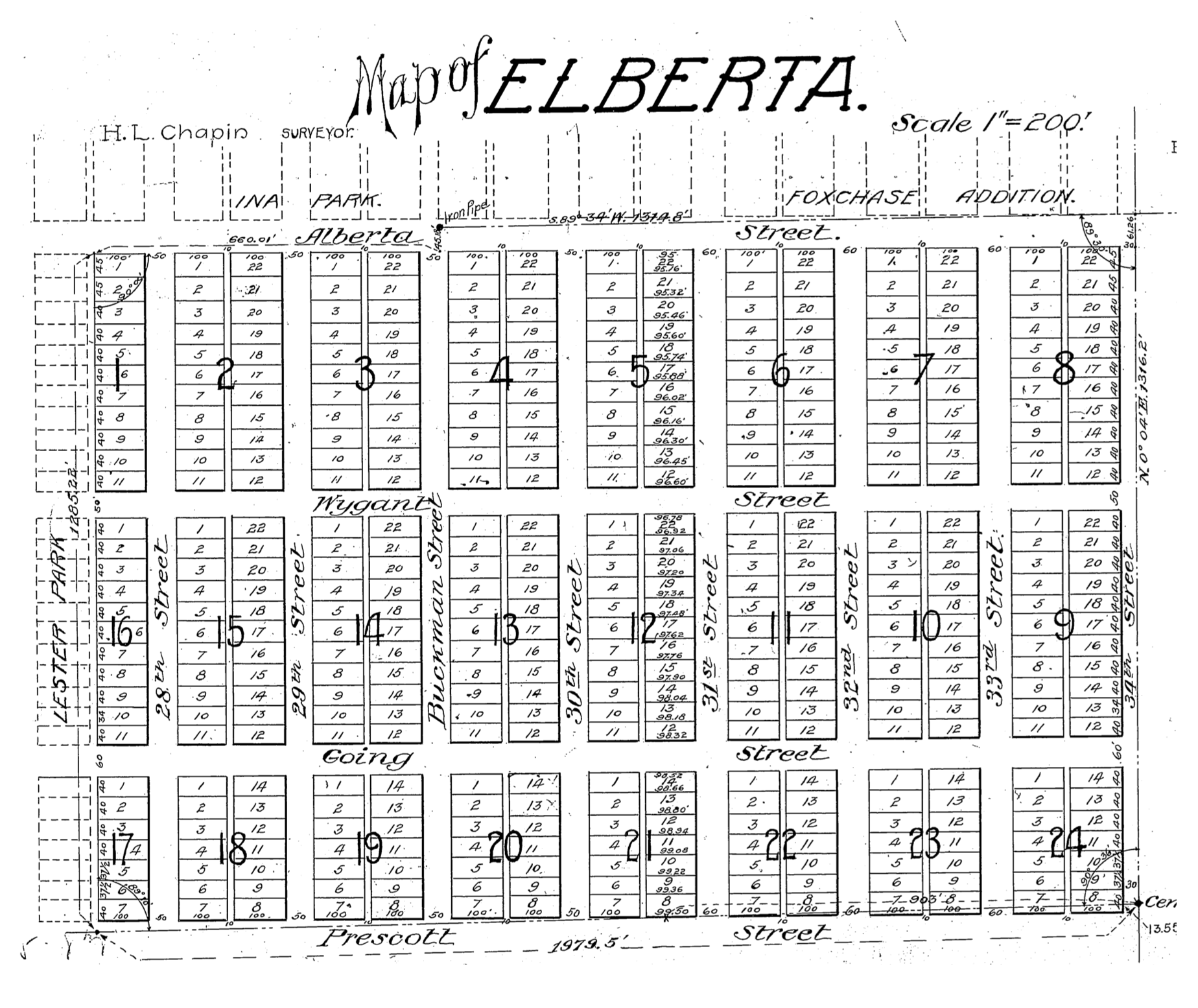
It’s a name that has caused some confusion in the past given its proximity to Alberta Street. Readers will recall that name stems from the fourth daughter of Queen Victoria, Princess Louise Caroline Alberta, an honorific street name bestowed in the 1880s. Not to be confused with Elberta.
Elberta was once the most popular variety of peach, named for the wife of the Georgia peach grower who established the hybrid in the 1800s. It’s rich, tart flavor eventually fell out of favor to sweeter varieties, and what had been tens of thousands of acres of peach orchards all across the country were uprooted. Our peach sources tell us that finding an Elberta peach today can be challenging.
This 50-acre subdivision, part of today’s Concordia neighborhood, was once forests, orchards and fields, part of the Buckman Estate and may well have known its own share of Elberta peaches. But when real estate speculation boomed in Portland after the 1905 Lewis and Clark Exposition, properties like this became valuable for conversion to residential use.
Angeline B. Richardson, sister of Isaac Buckman, owned the property (and many other properties on Portland’s eastside) and when she saw the writing on the wall for the rapidly increasing development value, she platted the fields into 479 lots, each 40 x 100, and began selling them off, with the help of her friends Thomas Benton Potter and H.L. Chapin.

From the Oregon Journal, August 5, 1906
Potter and Chapin were the principals of a much larger real estate syndicate that developed rural properties in Kansas City, San Francisco and even on the Oregon Coast: Potter was the driving force behind the ill-fated Bayocean community west of Tillamook that was eventually washed away by the Pacific Ocean. They also initially sold most of the lots in the adjacent Ina Park, Lester Park and Vernon subdivisions here in Northeast Portland.
About 1906, the Potter & Chapin firm changed its name to the Arleta Land Company (which just to keep things interesting, The Oregonian sometimes confused with the Alameda Land Company), named for Thomas Potter’s youngest daughter Arleta. The firm continued to develop and sell properties across Portland’s eastside, including in the Mt. Scott – Arleta neighborhood which it platted in 1903. The Arleta Land Company kept a fairly low profile, unlike other developers who paid for robust advertising campaigns in local newspapers. Arleta Land Company’s presence was almost entirely focused on classified advertising where business was brisk in 1906-1908 with news of properties being bought and resold, and homes built.
In other research, we’ve come across an interesting photo of the young Elberta Addition, showing the former home of the Hans C.S. and Minnie von Homeyer family, located at the southwest corner of NE 27th and Going. Click into this photo for a good look, it’s a beauty.
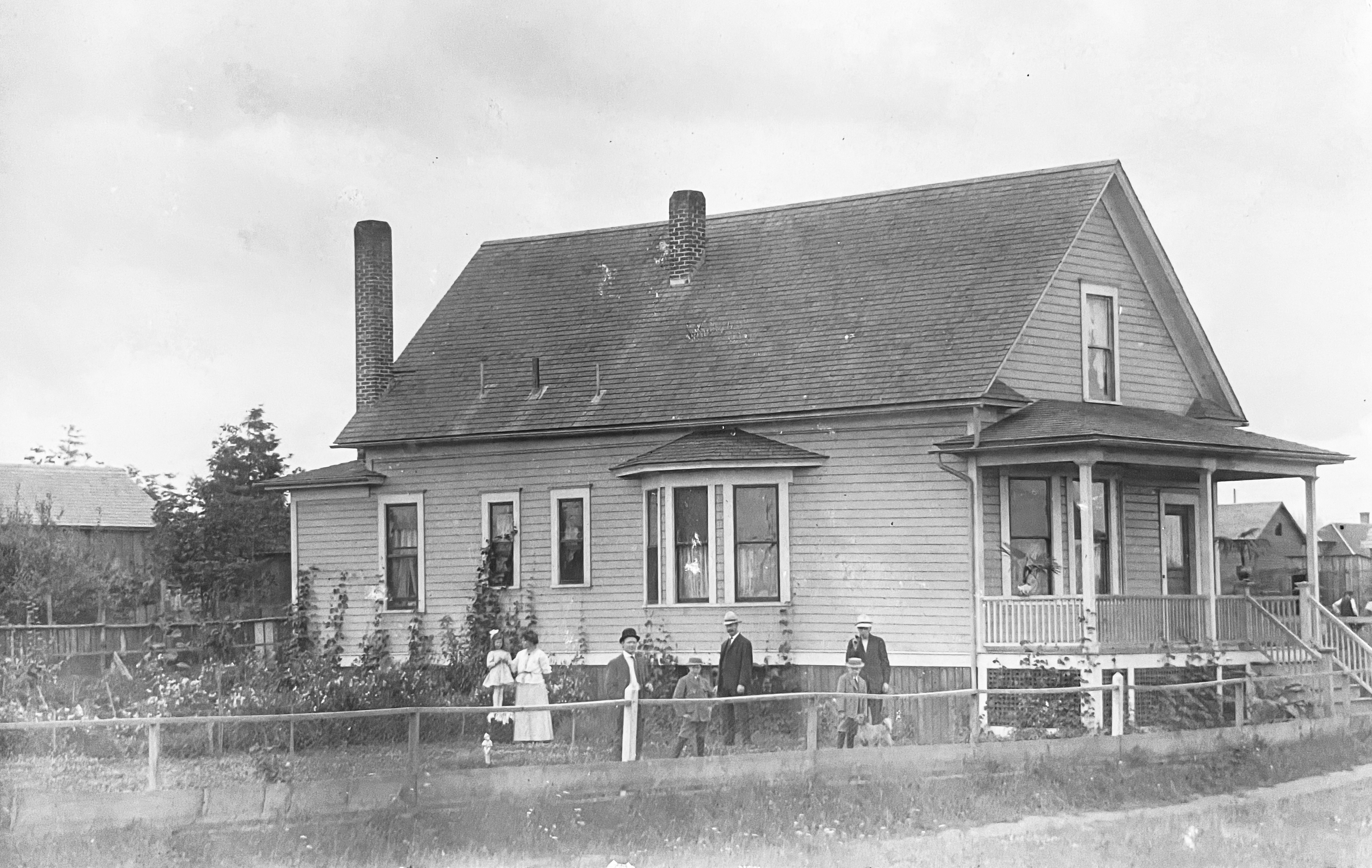
Southwest corner of NE 27th and Going, known as 850 Going Street prior to the Great Renumbering. Courtesy von Homeyer Collection
Today a 1910 Victorian-style home known as the “Going Queen” is on that property. But back in 1907, the von Homeyers bought the two lots from the Arleta Land Company for $350 and built this house. Unfortunately for them, fire destroyed their home on July 28, 1907. This rich photo has many stories to tell, and reminds us of the rural nature of the area.
Today, Elberta is a great place for a walk to appreciate residential design and construction from the first decade of the 20th Century. We’ve enjoyed exploring Elberta in this post about its alleys, which are like a built-in trail system for many of us dog-walkers. And in this bit of photo sleuthing.

 Alameda Old House History