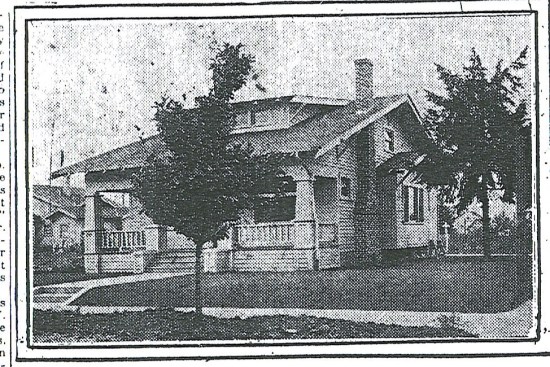
A photo from The Oregonian, September 11, 1921. Built by the Wickman Building Company for the George A. Kettleberg family at a cost of $4,500.
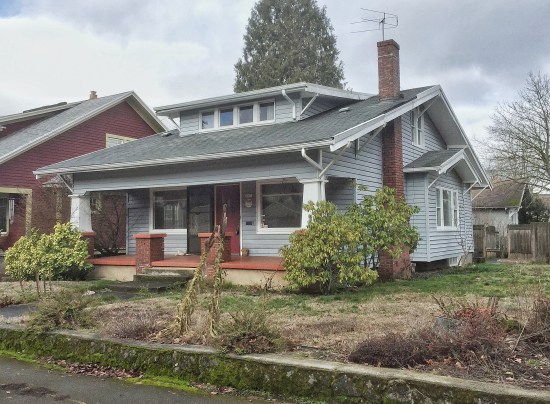
January 30, 2016
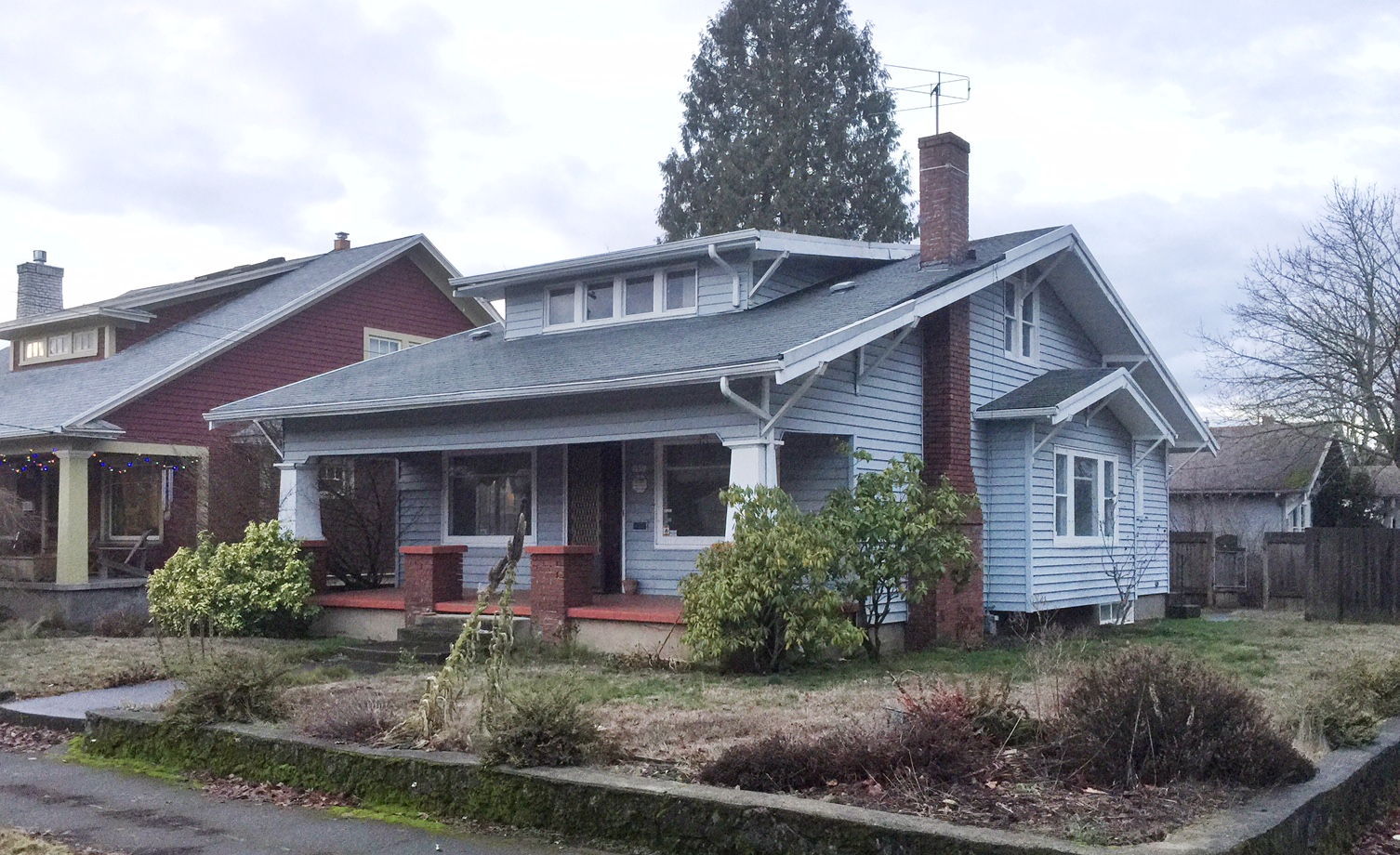
We were disappointed to read the language of a recent real estate advertisement for the 1921 Craftsman bungalow at the northwest corner of NE 30th and Skidmore.
The 50 x 100 corner lot was recently legally partitioned into two 50 x 50 lots and an allowance made for two houses on what has been (and still is for the moment) a single lot. (Read more about the practice of “lot splitting” and the demolition trend here). Among other things, the ad called out to builders and investors and made it clear this was a tear-down in waiting:
“House of no value. Value in land only.”
This week, the listing broker amended the ad noting that the seller would be willing to consider selling the house as is instead of tearing it down. This is good news. The price moved a bit too in the right direction: now asking $599,900. Last week’s language of “house of no value” was changed this week to this:
“Instant equity with this fixer; hardwood floors; classic floor plan; Seller willing to try conventional financing for full price offer – seller to do no repairs. Or Tear Down and Build 2 new houses! Approved for attached houses!”
AH readers know that old houses do indeed have value, and a multi-layered history that makes them unique and important. Yes, we know that all things (including houses and buildings) do have a life cycle, and that taking care of any older home is an investment. We haven’t had a chance to look around inside the house yet, but old-house-savvy people we respect have and report that yes indeed, it is a fixer with its share of deferred maintenance. But, the bones are solid, and they just don’t make ’em like this anymore.
Know anyone who’s looking for a bargain of an old house, wants to stem the tide of tear downs, and has a fixer upper in them? Time to make that call.
We’ll volunteer to do a full house history study as moral support for any successful fixer-upper purchaser…
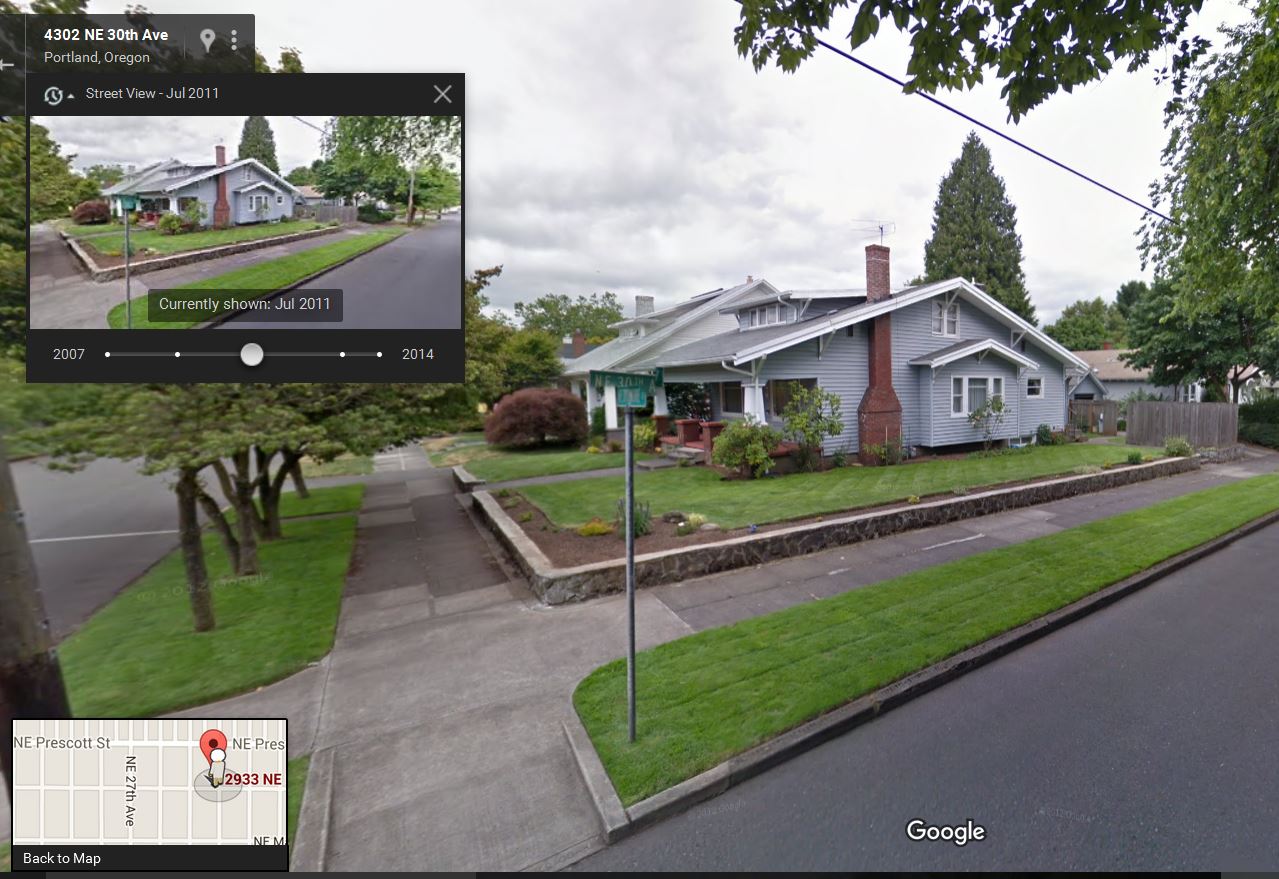
Extra note: below is a screenshot from a faithful AH reader that shows a Google Maps street view image of the property from 2011. Our helpful reader reminds us that it’s possible to turn back street view time to see how this property has aged over the last few years. Try it yourself by searching the address and going to Google Maps street view, then drag the timeline bar back and forth to look for changes. Thanks John!




 Alameda Old House History