The bungalows of NE Mason

AH readers know walking is the best way to observe the eastside’s century-plus houses and neighborhoods. At a slow pace, you can see the craftsmanship, the years of wear and change, the hands of five or six generations building, improving, maintaining (and sometimes not).

On our regular dog walks this summer, we’ve been watching three particular bungalows on NE Mason in the Alameda neighborhood, just a few blocks apart. All have been time travelers with their own stories and are now in transition. Two of them are essentially gone and no longer in their earlier forms; but one special little one is, at least for now.
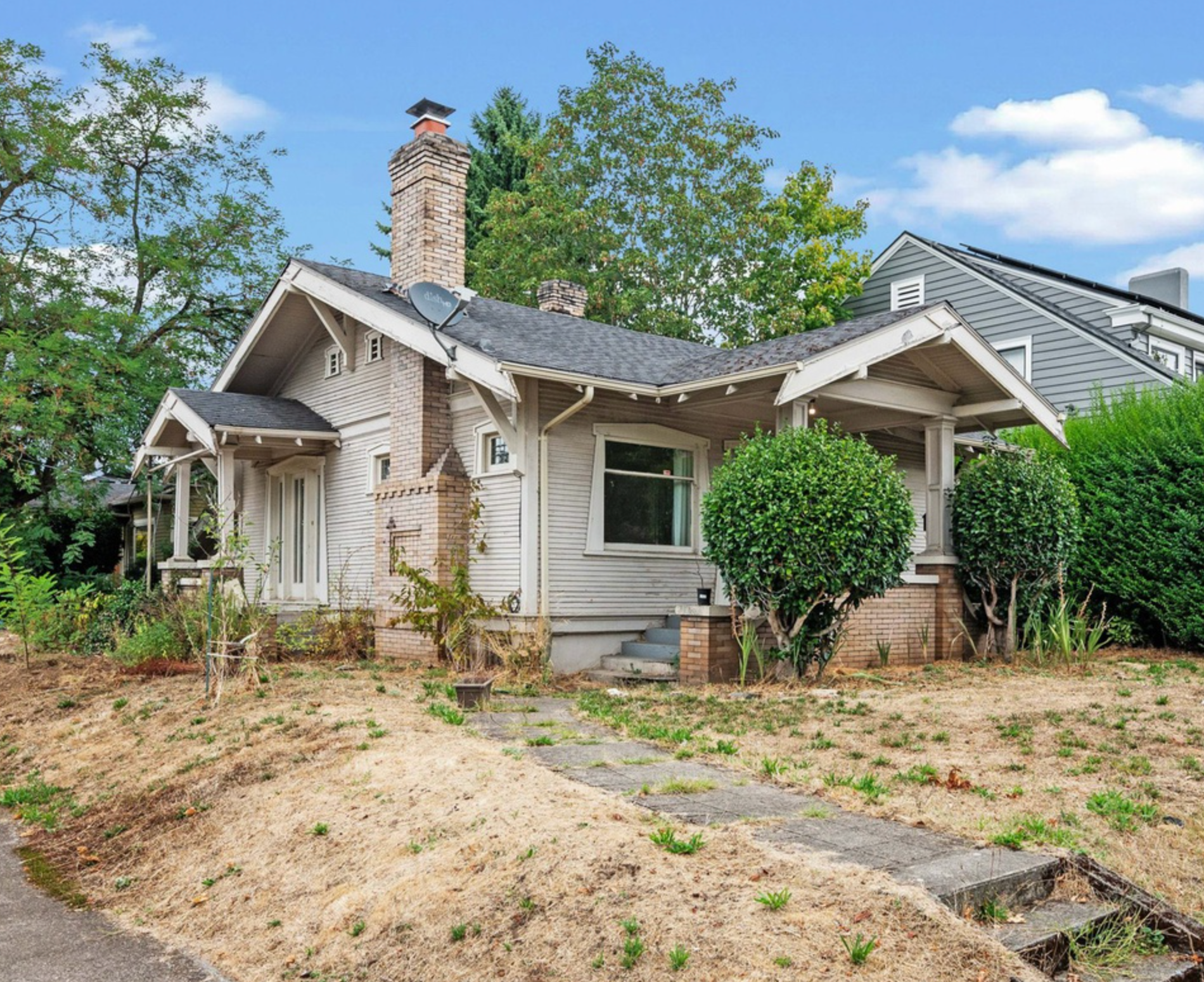
1914 Arts and Crafts bungalow at 2503 NE Mason, September 2023.

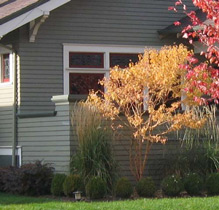
The 1914 Arts and Crafts bungalow on the NE corner of NE 25th and Mason is a small beauty with unique and original trim and detail, both inside and out. You would remember it if you’ve seen it (we’ve never seen a house quite like it). It’s small but distinctive, has been essentially unchanged in almost 110 years, and it’s on the market now, listed by Emily Hetrick at Keller Williams.

Interior of 2503 NE Mason, September 2023. Note the coved ceiling, box beams in both rooms, beveled glass built-ins, beveled glass windows and doors, period decorative columns. Fine 110-year-old architectural detail inside and out.

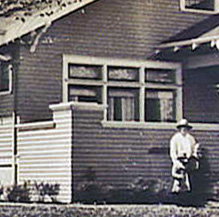
A few years back, we had the good fortune to connect with family members who remember it from the 1940s and 1950s as the perfect small bungalow. Back in the day, David White remembers visiting his great aunt and uncle who lived there. Here’s a photo of their niece–David’s mother Agnes–at the front porch from 1940. That very same view is very much available today.

Agnes Coulter in 1940, front porch of 2503 NE Mason. Note distinctive window and door trim, still in place today. And of course the smiling subject and her flowers. Courtesy of David White.

David’s grandmother Isabella Coulter ran the Alameda Park Grocery at NE 27th and Going, which we wrote a three-part series about back in 2015. By day, Isabella worked in the store. In later years, after closing time, she returned home a few blocks south to this small corner bungalow she shared with her sister and brother-in-law. Frequently, nieces and grand nephews visited the bungalow and those memories are strong and clear.

Because it is small and because it’s on a corner, we’re a little worried about its future. We’re researching its early history at the moment and will have more to share, and would be glad to introduce the new owners to its long-time-ago former family who knew and loved it well.

A few weeks later we posted the origin story of this great little bungalow, which you can read here.

A couple blocks east on the south side of the street was the Clifton bungalow, built in the summer of 1921 by Enoch Clifton, who with his brother Knute immigrated from Norway and went into the homebuilding business on Portland’s eastside, making bungalows just like this one throughout the neighborhood. Their niece Nancy Clifton lived in the home for many years up until her passing earlier this year. The bungalow was bought by Liberty NW Homes in Oregon City and all but razed—the building permit refers to the work as an “addition.”

Here’s a look at before and during.
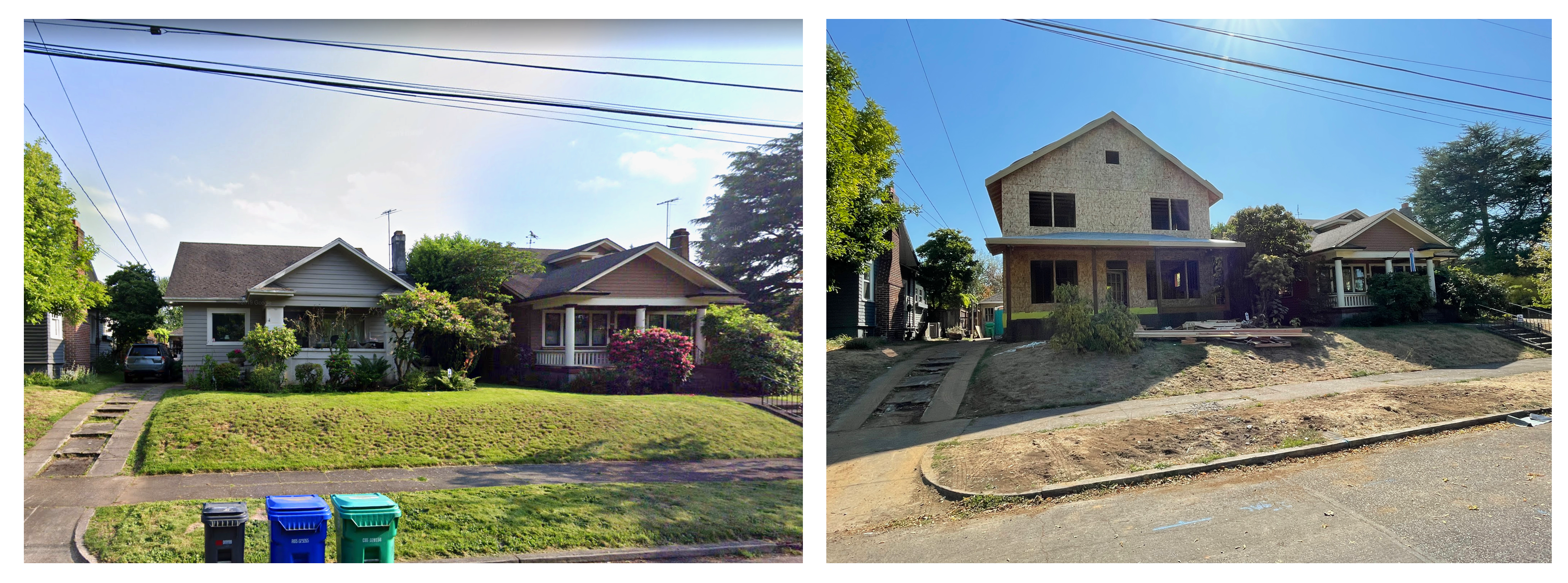
2617 NE Mason (on the left) before, and this week. The new house utilizes the foundation and several external walls of the former bungalow.

A few blocks west, on the southwest corner of Mason and NE 23rd (pictured below), we’ve watched the small red 1915 Arts and Crafts bungalow being taken apart piece by piece. Another somewhat unusual home, this one distinctive for its center hip-roofed cupola-like second story. The new home going up incorporates the foundation, and is also considered an addition, but the permit notes “whole house to be reconfigured.” The new framing does suggest echoes of the former building.

Here’s the before and during…
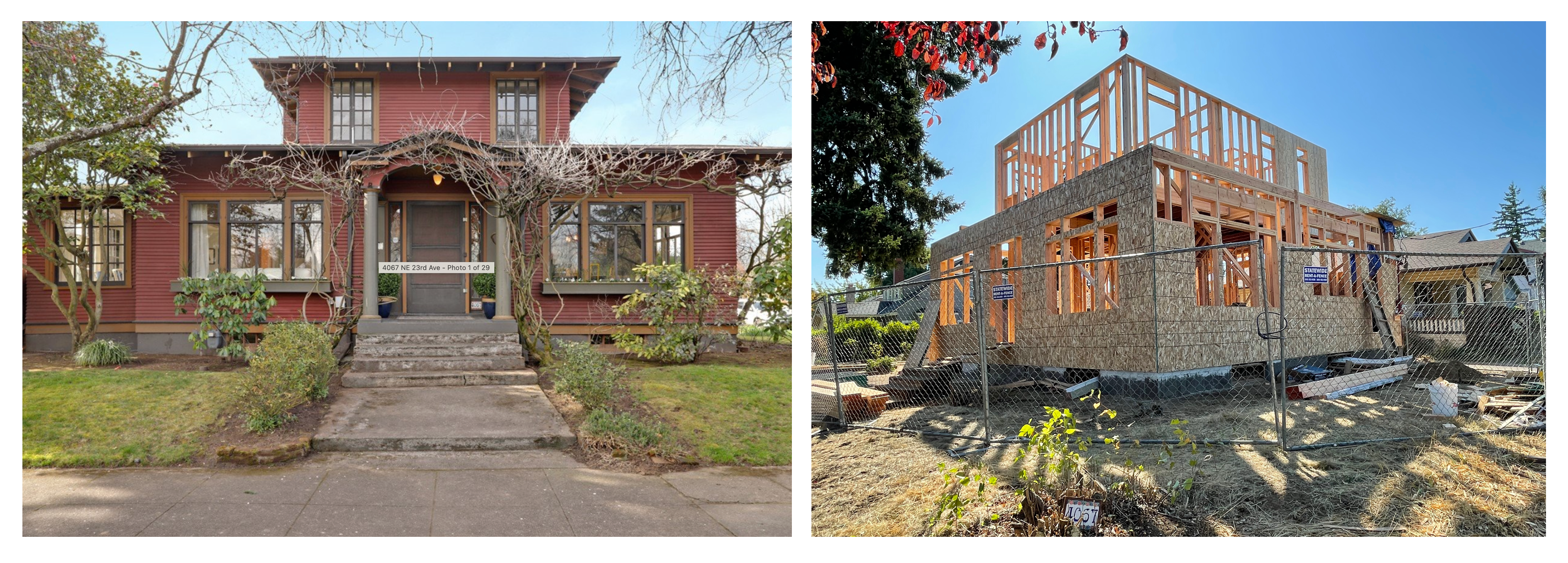
4067 NE 23rd before, and this week. It could be that the new construction will mirror aspects of the former.

We appreciate that change is our constant companion: that our communities, homes and even we ourselves must adapt to be vital. We support adaptive reuse (rather than tear-down and replacement) and we celebrate it when we see it in the neighborhood.

For at least one of the bungalows on NE Mason Street, time will tell.

Note:

Summer seems to be “off season” for the blog: it’s hard to compete with sunshine and all things outdoors in Oregon. But the promise of rain and these cooler days brings us back inside. We have lots of topics for the blog this winter and fall, so even though it gets quiet around here between June and October, we won’t be a stranger in the rainy weeks and months ahead.

Style Points | The Bungalow

jean-and-little-bro.jpg

Jean and Robert Morrison in front of their Alameda Arts and Crafts Bungalow, about 1925. Note the front porch with squared columns, wide bank of casement windows, overhanging eaves and low profile, all hallmarks of the bungalow style. Photo courtesy of the Morrison-Munson family.

The Bungalow
If you’re passing through a residential area of Northeast Portland, (or southeast Portland for that matter) it’s impossible to be more than a stone’s throw from a bungalow. Distinguishing features of this much-loved style include its typical storey-and-a-half height, prominent overhanging eaves and front porch, often angular lines, and square-tapered columns.

Indoors, family interaction was facilitated by a more open plan than the closed off parlors associated with earlier times. Larger windows, often in banks of two or three, invited natural light and fresh air inside and connected the home’s residents with the surrounding landscape outside.

Rooted in the English Arts and Crafts movement – as much a social revolution as it was a design aesthetic – bungalow designs seemed to say solid, simple, natural, durable, practical, healthy, rustic. Some architectural historians credit this venerable building form with permanently altering America’s relationship with the home, breaking with pretentious Victorian and Queen Anne styles and putting a simple, attractive, dwelling within reach of would-be owners.

While Portland didn’t invent the bungalow (credit is given to British ex-pats living in India), prolific local builders at the turn of the 20th Century got a lot of practice perfecting their style. In mid-April 1912, perhaps the peak of our bungalow love affair, Portland was third in the nation behind only New York and Chicago in terms of the total number of building permits issued (667), two thirds of which were for homes…and many of them bungalows.

The era in which our bungalows were built was one of incredible growth in Portland and other West Coast cities. A study I’m making of The Oregonian from 1909-1920 paints the picture of our city in a total building and expansion frenzy in a way us current residents can’t fully appreciate. New neighborhoods were being born on a monthly basis. Hardly a week passed without some mention in the paper about the bungalow style (often referred to as the California bungalow, in deference to its popularity in Los Angeles and other California cities). This article below, from The Oregonian on 21 May 1911, provides a narrative blueprint for what a bungalow should be. I live in a bungalow built about the time the article was written and it sounds like a turn-by-turn description of our house…

21-may-1911-bungalows-many.jpg

From The Oregonian, 21 May 1911. Click to see larger image of this story.

A testament to the cultural popularity of the bungalow can be seen in other segments of Portland life beyond housing: Movie theaters, community centers and even churches were built in the bungalow style. The Alameda Park Community Church near Regents and NE 31st, built in 1922 (now called Regents Center), was originally known as “Bungalow Church.” And a grocery on NE Going was known as “Bungalow grocery.”

The Craftsman / Arts and Crafts bungalow style was popular into the early 1930s, when the English cottage and Tudor cottage became more popular, as family sizes changed, and as the economy contracted. As homeowners’ design preferences changed, some of them remodeled (some might say remuddled) their bungalows to become more “modern.” Past owners of my house removed crown mouldings, columns, portions of dining room plate rail, leaded glass and light fixtures as they pursued their vision of modernity. Fortunately, the solid bones of most bungalows have survived those bad ideas, and homeowners today have access to many resources and materials to restore the original look and feel of the bungalow era.

It’s interesting to track development of our neighborhood simply by looking at house styles, with the bungalow, the four-square, and other Craftsman-style homes built first, giving way to the formal Tudor revival, the English cottage style, Mediterranean (we have a good few in the neighborhood), and Colonial influences.

Our national love affair with bungalow style has given rise to at least one national magazine, dozens of books, friends groups, websites, conventions and retail businesses. The themes embodied in Portland’s first bungalows – family, simplicity, connection with the natural world, practicality – are very much part of our design ethic today.

For further exploration
If you grew up in, live in, or just care about a bungalow, you have to read Janet Ore’s fine book The Seattle Bungalow, published in 2007 by the University of Washington Press.

You might also be interested in checking out how one local family restored their 1921 Craftsman bungalow, built from a Sears Roebuck kit.

Consider having a look at the American Bungalow Magazine.

What features make the bungalow special for you?

When Research Pays Off

pair-1-then.jpg pair-1-now.jpg

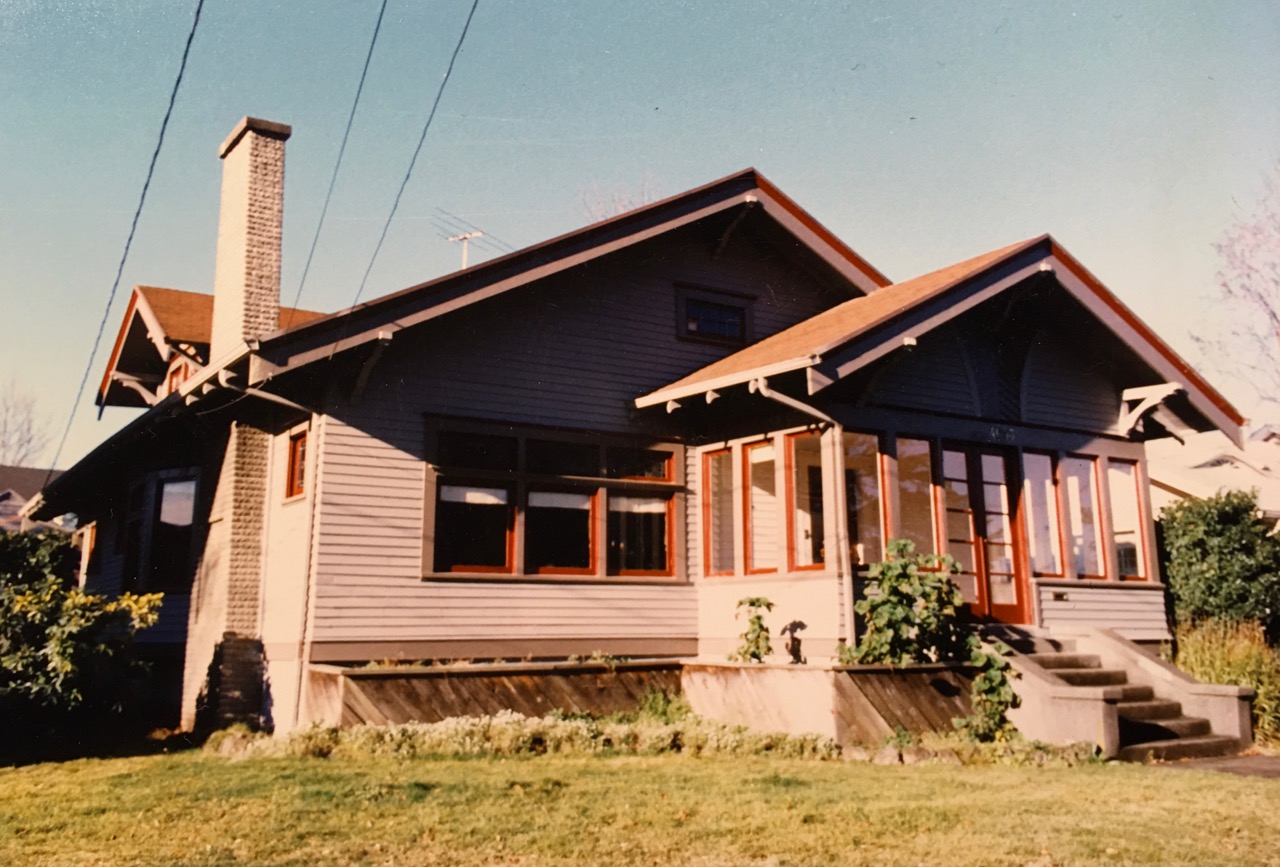
In the 1940s, after 30 years of exposure and wear-and-tear, the family living here decided to remodel their deteriorating front porch. They removed the columns and poured a concrete deck. Then they enclosed it with casement windows and turned it into a sun porch. Below is what it looked like when we moved in in the late 1980s:

Front porch, December 1989

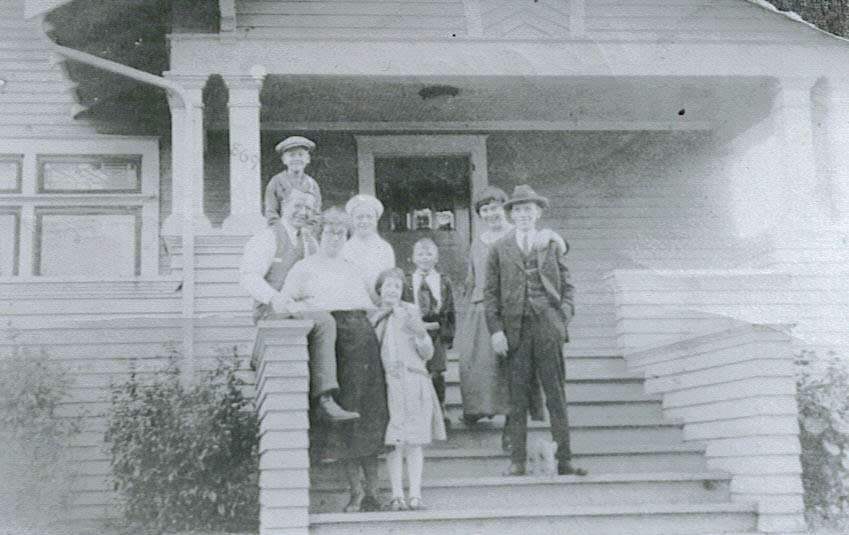
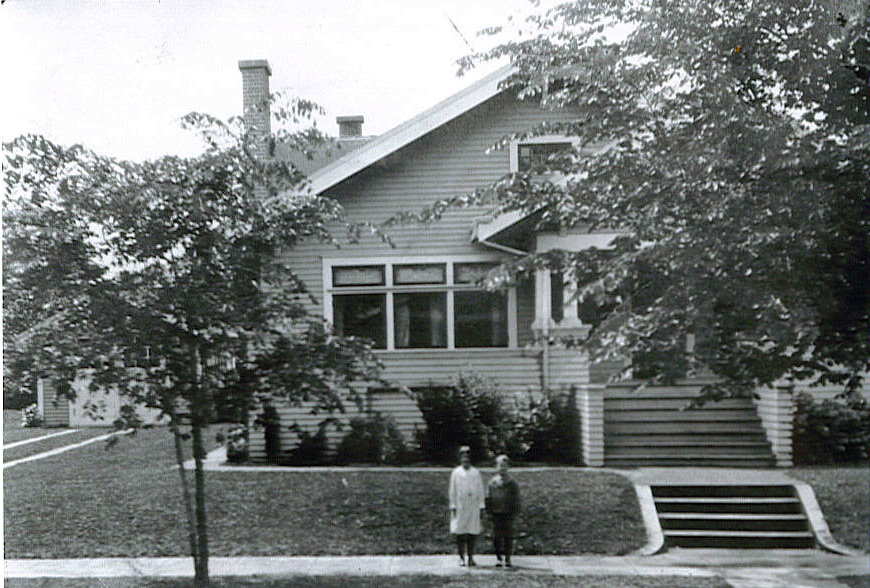
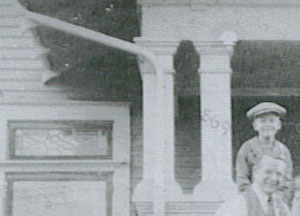
Our detective work on the reconstruction showed the ghosts of some early columns and other features, but we had to use our imaginations to guess at what it looked like originally. I had been looking for members of the family who lived in our house (one single family was here from 1912 until 1959, which is a good long time for one family to be in the house…we were lucky in that). Through determined research, I found the little boy who grew up here…he was in his 90s when I found him. That’s Bruce Morrison in the cap with his hand on his dad’s shoulder on the left side in the photo below. We had lunch together and he told me all about growing up in our house.

pair-3-then.jpg

pair-3-now.jpg

In addition to sharing all kinds of stories about the house and neighborhood, Bruce put me on to a bunch of photographs of the house from the teens and early 1920s. Jackpot! We couldn’t believe our eyes. We were generally right about the columns, but the idea of the extended porch, with its false pedestal corners, was well beyond our imaginations.


Photo courtesy of Morrison Family

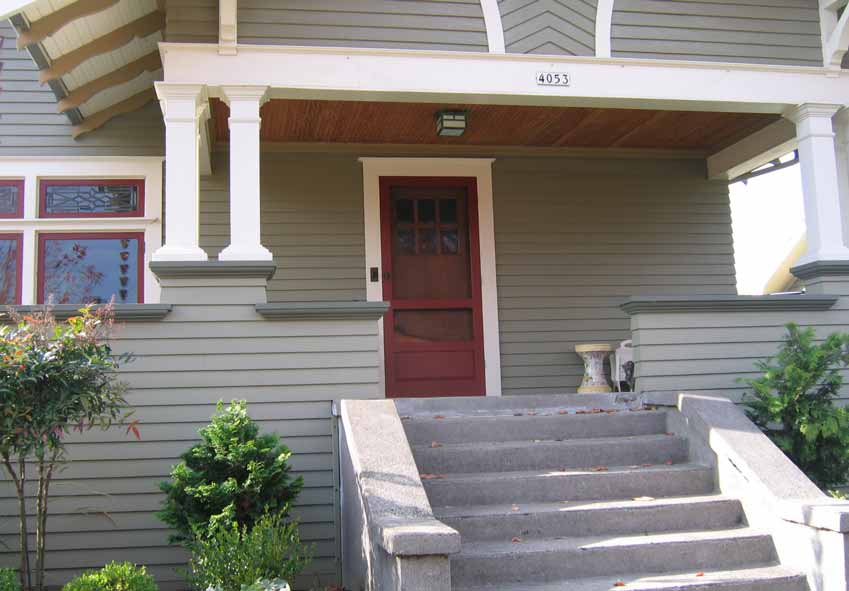
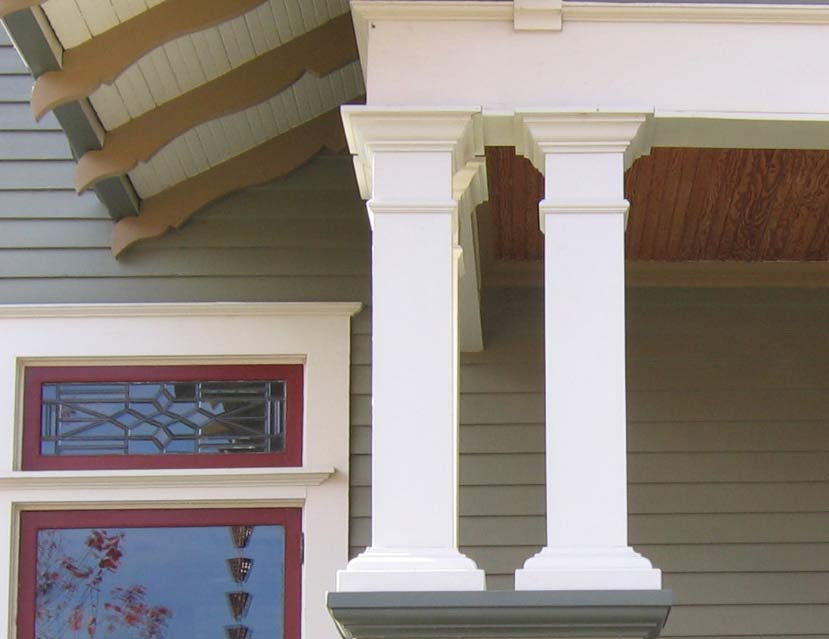
So, we sat down at the drawing board, old photos in hand, and did some scaling of the ghost porch using measurements of house parts visible then and still here today. And then we found a very talented and patient carpenter to put it all back together.


pair-2-then.jpg

pair-2-now.jpg


roof-then.jpgroof-now.jpg

After a little landscaping and reconstruction of some long-gone sidewalks, we’re confident the family who moved in those long years ago would clearly recognize the place today. Research pays off: you might be surprised at what you’ll learn.