The Hiller Arch

Our recent post on the prolific Portland homebuilders known as Hiller Brothers Inc. grew out of our research on one of their classic bungalows on NE Knott Street. In the post, we mentioned several family resemblances among these homes: windows, built-ins, doors, hardware.

As it turns out there’s another distinctive feature that came to light as neighbors began talking with neighbors. It’s an archway that looks like this:
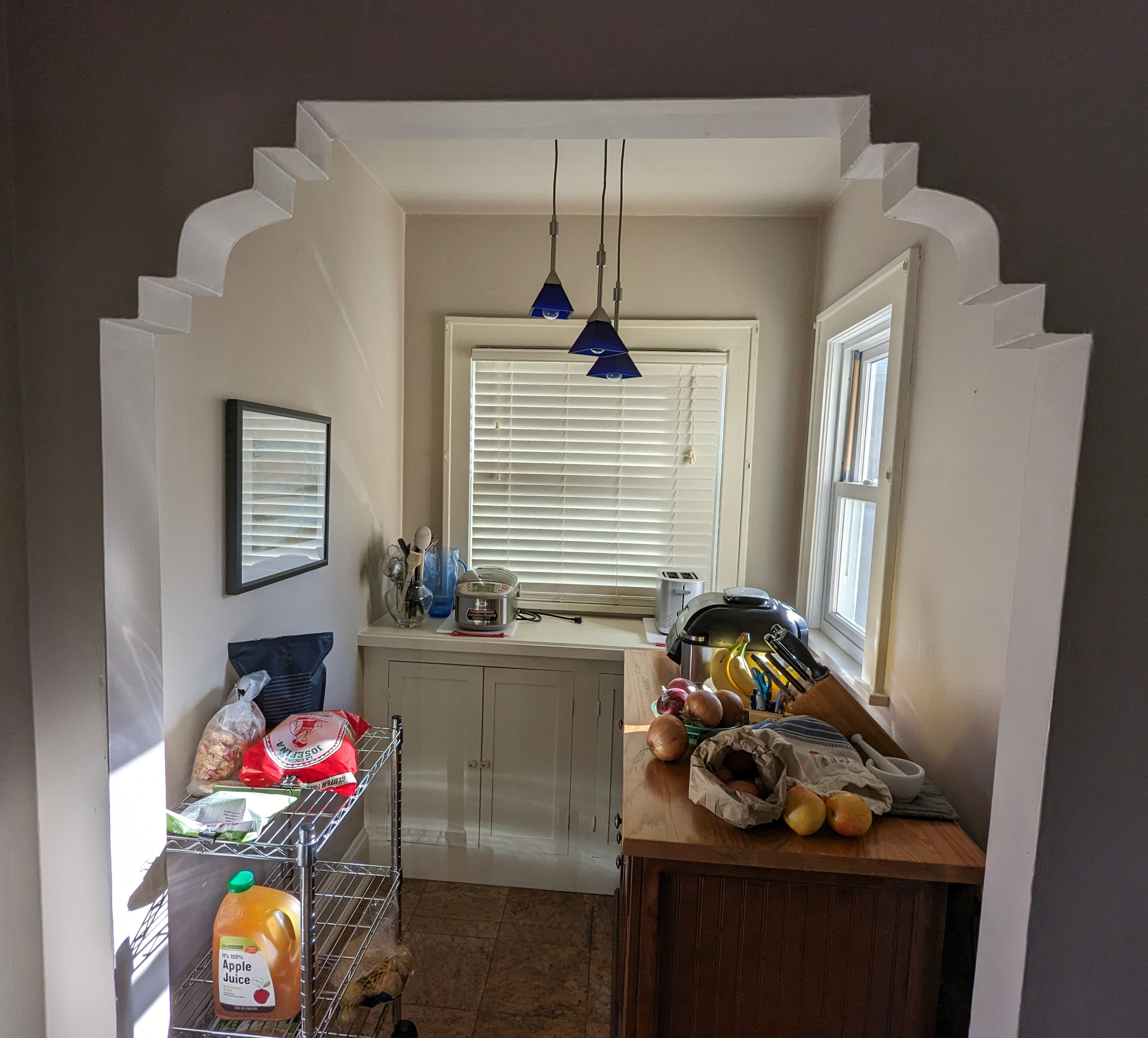
That distinctive coved shape defining the room is called a cavetto, or quarter-circle, joined to a couple of 90-degree steps top and bottom to create a decorative entry feature that reveals this cozy space–once a breakfast nook–located just off the kitchen. In at least a couple of the Hiller homes we know of, the distinctive cavetto cove is still there and the small space has been converted into a pantry-like area that offers a worktop as well. In some homes, the nook has likely already been annexed into kitchen extensions. Some homeowners might be eyeing that nook and arch right now mulling over remodeling plans.

It would be interesting to hear from others on the Hiller Brothers address list if this cavetto cove and nook feature look familiar. We bet there are more than few still out there.

Which leads to the topic of nooks (more formally inglenooks), a worthy eventual blog post.

Do you have a favorite nook space that operates near the heartbeat of the house? We do, in our 1912 Arts and Crafts bungalow, but it’s a design generation earlier than the Hillers and their hard working architect Hubert A. Williams.

Kitchen Archaeology | The California Cooler

Our neighbors Rob and Marti are carefully and heroically remodeling their 1923 bungalow kitchen. They’re doing a great job. We’ve been following their progress and in a recent driveway conversation, Rob held up an old house part (the square frame in the photo below) and asked a kitchen archaeology question we thought other old house readers might be interested in reading about too. Recognize this?

DSCN7476

It’s the face of a vent removed from an outside kitchen wall, one of two that were part of an early and natural cooling method known as a “California Cooler.” In a time before refrigeration—and borne out of the bungalow ethic of keeping things simple and natural—these indoor cabinets were the next best thing and were built into many eastside kitchens and homes.

Here’s another look, showing the frame in the original clapboard siding, which was shingled over in the 1950s (thanks to Rob Donnelly for the photos):

DSCN7475

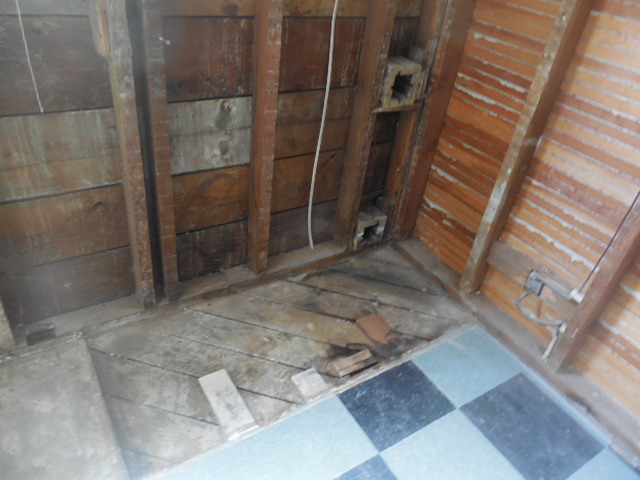
Here’s how they worked: the vents were stacked vertically one at the bottom of the cabinet and one near the top, and always placed on an outside wall. Maybe you have seen the exterior evidence: two small frames with screen or mesh on an outside kitchen wall. Here’s what they looked like from the inside. The old cupboard has been removed showing just the vents.

DSCN5981

Inside the kitchen, the vents led into a cabinet with shelves, which were often just slats with space between to promote ventilation. The cabinet or cupboard had a door on the front, just like any other cupboard in the kitchen.

But the physics of convection made this cupboard different: warm air would escape through the top vent, which acted like a chimney, and cooler air was drawn in through the bottom vent. The result was a measurably cooler space that kept foods fresher longer, and promoted cooling for just-baked items.

The extremes of summer and of winter obviously weren’t optimal (“honey, why is it so cold in the kitchen?”). But they did work, and were omnipresent in the older homes we love. Today, some kitchen designers and builders interested in sustainability and energy efficiency are even recreating this old technology for the same reasons they were first installed a century ago.

Now that you know what to look for, keep your eyes peeled when you are out and about in the neighborhood for twin openings on an exterior kitchen wall, and chances are you are seeing evidence of a California cooler. Do you have one? Send us a photo.