It’s been over a year since we’ve written about Willamette River swimming at Windemuth and at Bundy’s Baths on the eastbank in the vicinity of Ross Island. There’s an important anniversary coming up for Windemuth, plus we’ve learned a few more things (and found some more photos), so it’s time to say a bit more.
If you don’t yet know about Windemuth and Bundy’s Baths, be sure to follow those links and while you’re doing that, check out this great set of old photos and memories about canoeing the Willamette downtown during the summer of 1919. We’ve been haunting these places and the archives this summer to learn more about the hold they had on Portland’s soul, which was something.
Briefly: Windemuth was a huge two-story floating swimming tank, diving venue and dance floor anchored off the north end of Ross Island (before the bridge, which was built in 1926) that held more than 500 people. It was so popular in the 19-teens and 1920s there were times it rode low in the water, packed with so many people.
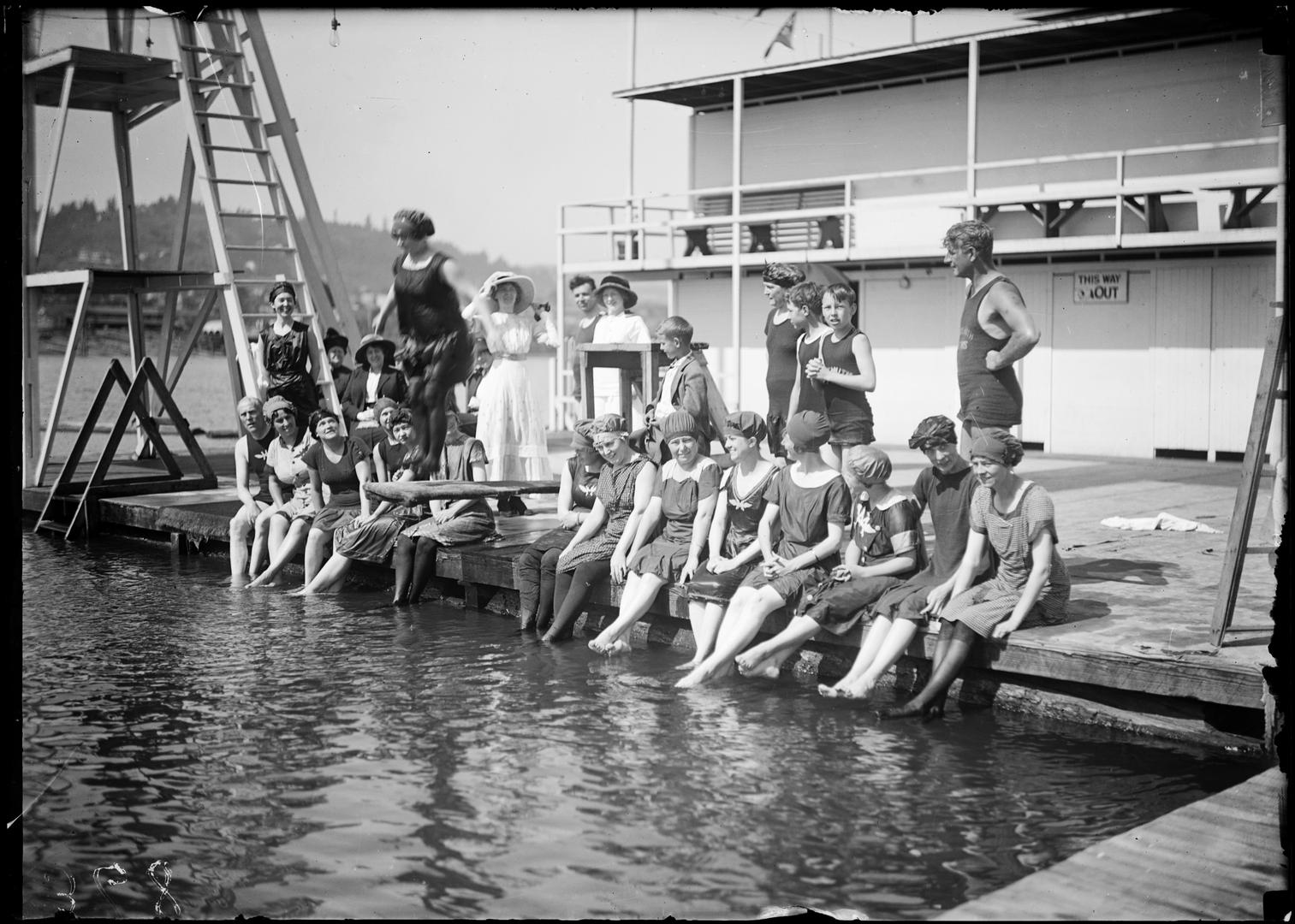
Swimmers at Windemuth. Angelus Studio photographs, 1880s-1940s, University of Oregon, Oregon Digital. PH037_b012_AG00052
Earlier–dating back into the 1890s–Bundy’s Baths was the place to meet your friends, rent your swimming togs, and play in the water at river’s edge.
To the infamous anniversary: 100 years ago this month, Willamette River water was so polluted with sewage and human waste that City Health Officer George Parrish recommended Portland City Council pass an ordinance banning all Willamette River swimming in Portland. At the time (and up until 1952) all of the city’s raw sewage poured directly into the Willamette from nine major sewer outfalls. By 1924 it was a serious human health problem, as well as a wider environmental menace.
The topic came before council in mid-July 1924 because Windemuth was required to be relicensed in order to open to the public, a process that involved gaining an endorsement from the City Health Officer. The giant floating swimming platform had already opened that June to much fanfare, with relicensing just a bureaucratic box to check.
The place had become an institution: when Portlanders thought about being in the water (which in those days they did frequently) their first thought was the Willamette and Windemuth. It was the premier swimming venue in the city, the place for diving competitions, as well as being a top-flight social scene (think dancing at night to a live orchestra on a floating dance floor in the middle of the river).
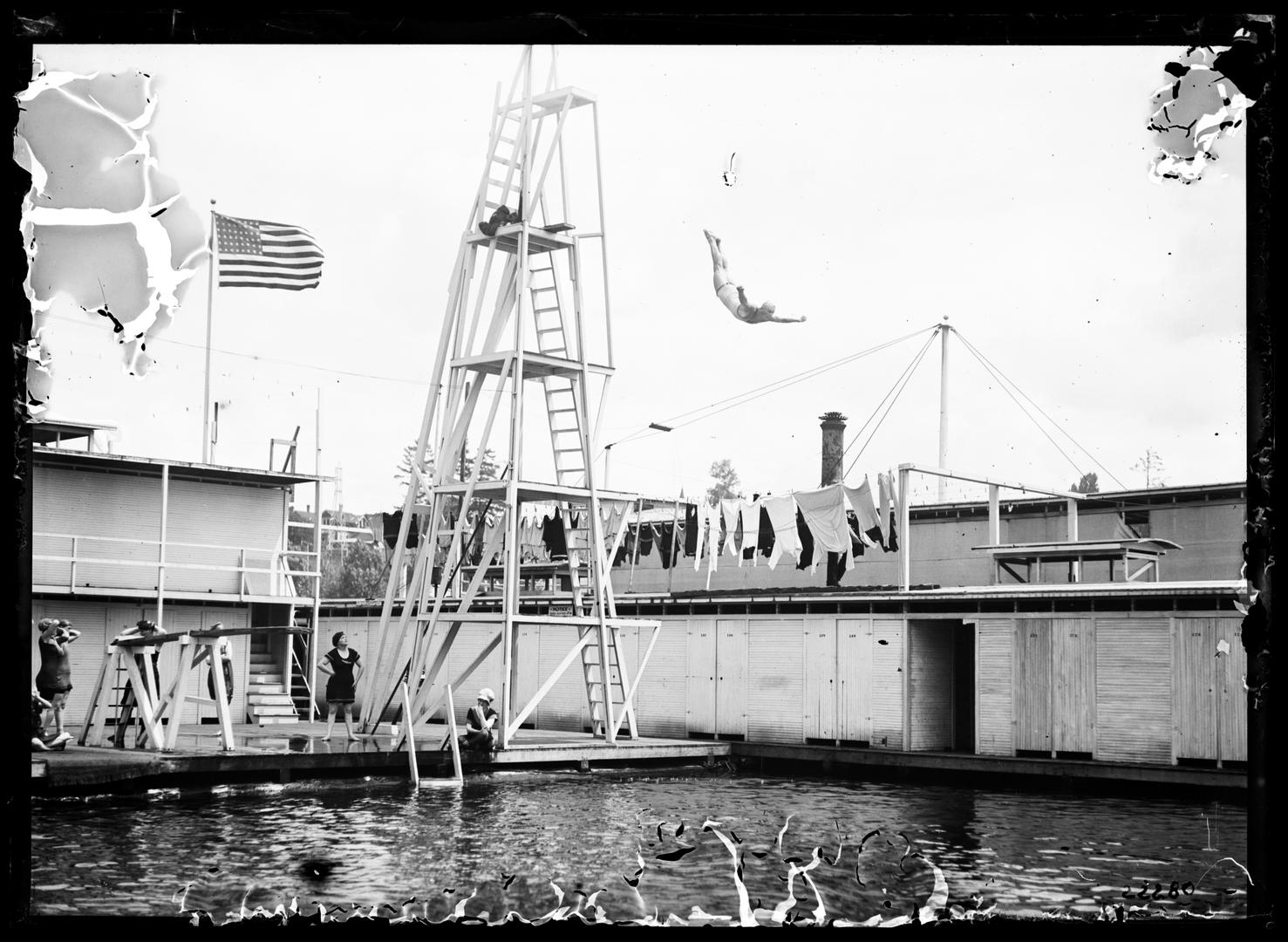
Diving at Windemuth. Angelus Studio Photographs, 1880s-1940s, University of Oregon, Oregon Digital. PH037_P362
City Health Officer Parrish and Chief Sanitary Inspector Gordon Lang brought their findings into council on the day of the relicensing hearing: record-breaking levels of fecal coliform bacteria and low levels of dissolved oxygen. Beyond just not endorsing Windemuth, Parrish recommended council craft an ordinance prohibiting all river swimming.
Of course, banning swimming in the Willamette in Portland would mean the end of Windemuth, and as The Oregonian reported “None of the members of the council felt inclined to rob the Windemuth company of its business…” So council punted, ordering Parrish and Lang to take another set of samples to verify the earlier readings.
Nine days later, the relicensing question was back before council, with Parrish and Lang reporting levels hadn’t gotten any better. Between a rock and hard place now, council deferred action on relicensing Windemuth and directed Parrish and Lang to confer with Windemuth owner John Jennings to see what could be worked out regarding finding an alternative location. Council also raised the existential question of whether or not it even had the authority or the duty to ban swimming.
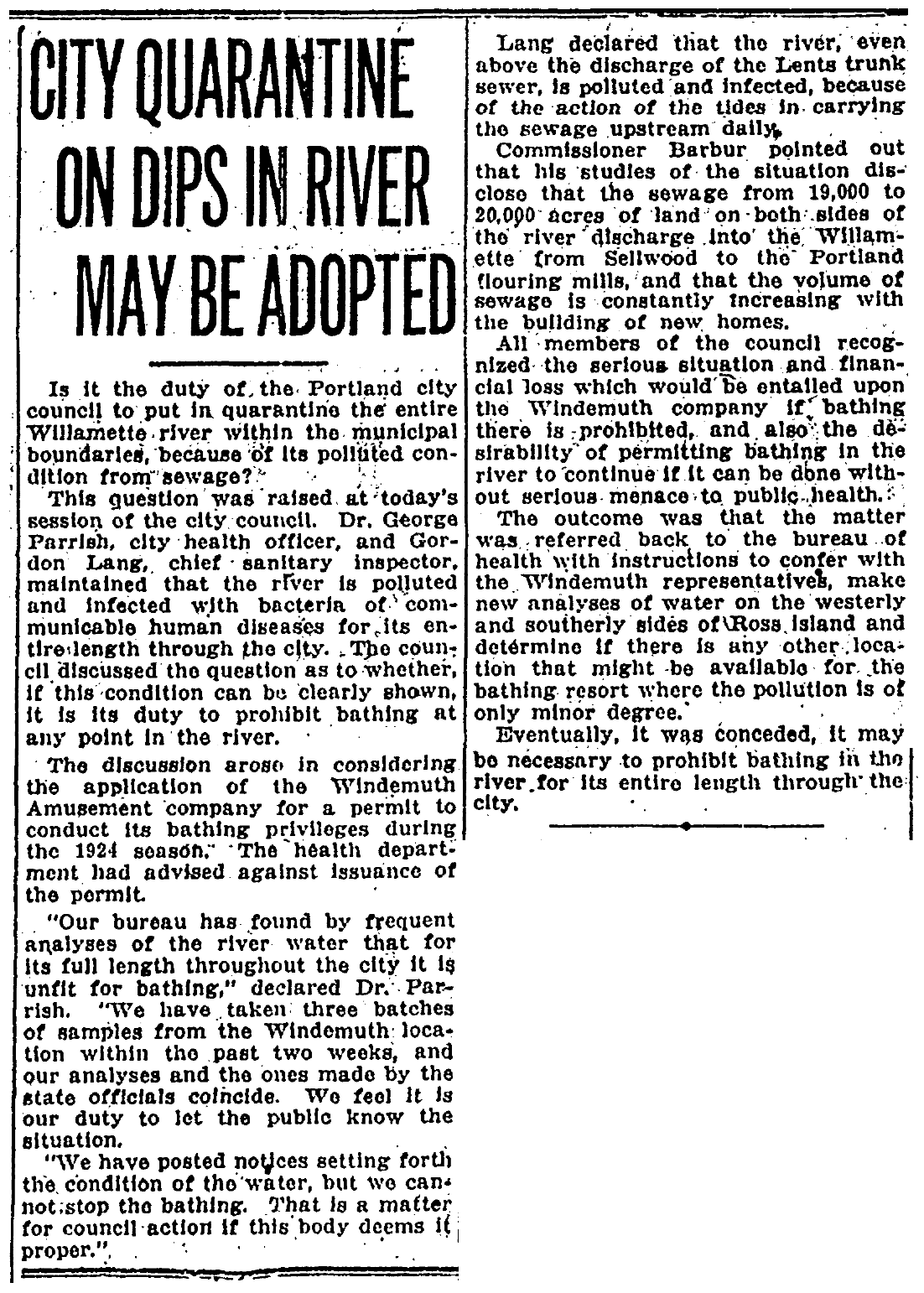
From the Oregon Journal, July 24, 1924
But Jennings saw the writing on the wall. People had lost confidence in the river. Record-breaking levels of bacteria in the Willamette were in the news every day. Parents told their kids not to swim in the river. And as water levels dropped in late July and temperatures rose, the Willamette didn’t look or smell very enticing.
On Sunday, July 27, 1924, Jennings announced he was voluntarily closing Windemuth. It was the end of an era. Portlanders got out of the river in the summer of 1924, mourned the loss, and stayed out until not so long ago.
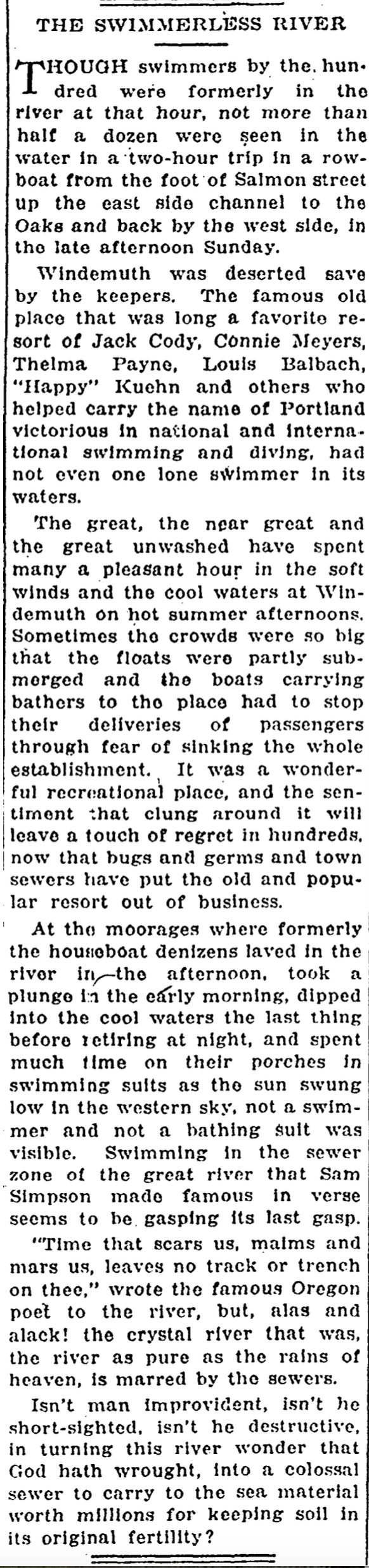
From the Oregon Journal, August 5, 1924
100 years later, a resurgence of interest in Willamette River swimming and much healthier and desirable conditions now beckon Portlanders back into the water, reminding us about what was lost, what has been gained back, and how we must never again take our river for granted.
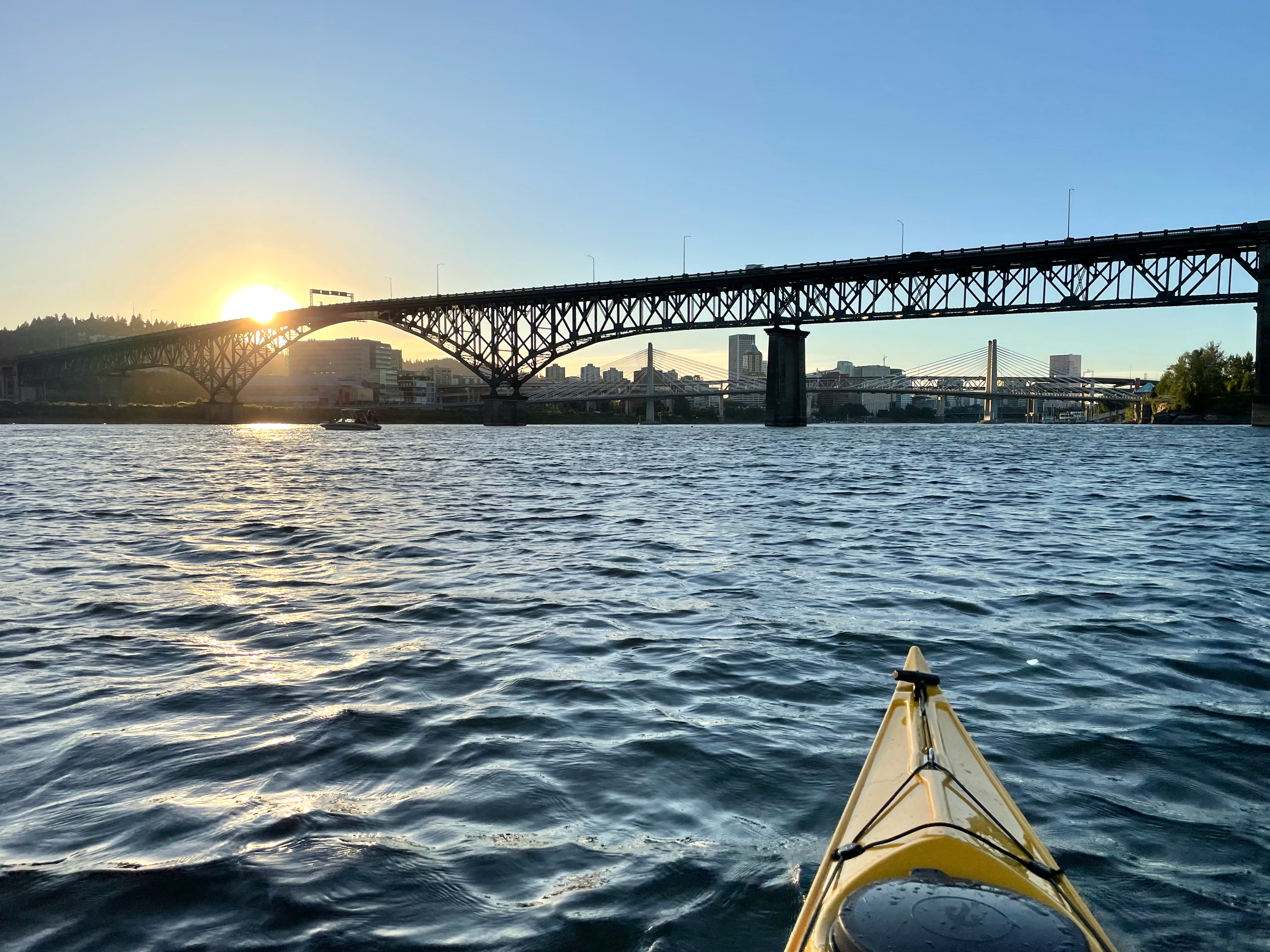
Willamette River sunset near the former location of Windemuth.

 Alameda Old House History