It’s been like time travel, studying the discovered photos from 1913 that take us back to the intersection of NE 33rd and Fremont, the giant gravel pit that once defined that hillside, the stairs leading up Alameda Ridge, and the unstable cutbank above Fremont.
Here are two more views of the general vicinity taken 25 years later that show us how the slope was settling after being filled with garbage and soil. Photographed by the Public Works Department on November 21, 1938, these views look uphill and downhill on 33rd from just below the top of the hill. Click in for a good look and then we’ll discuss:
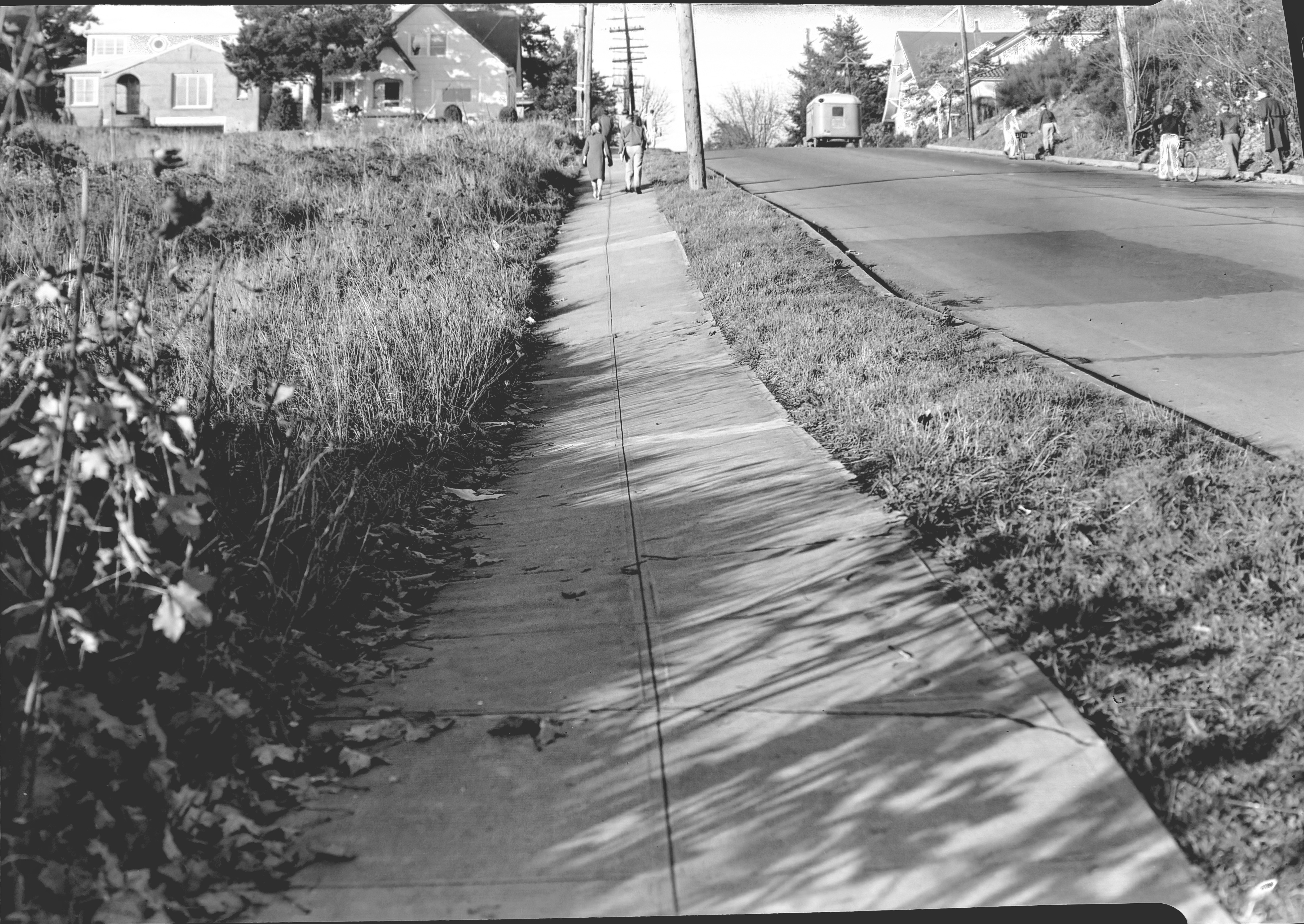
Looking north along the west side of NE 33rd, just downslope from NE Fremont. Image A2009.009.1272, courtesy of City Archives.
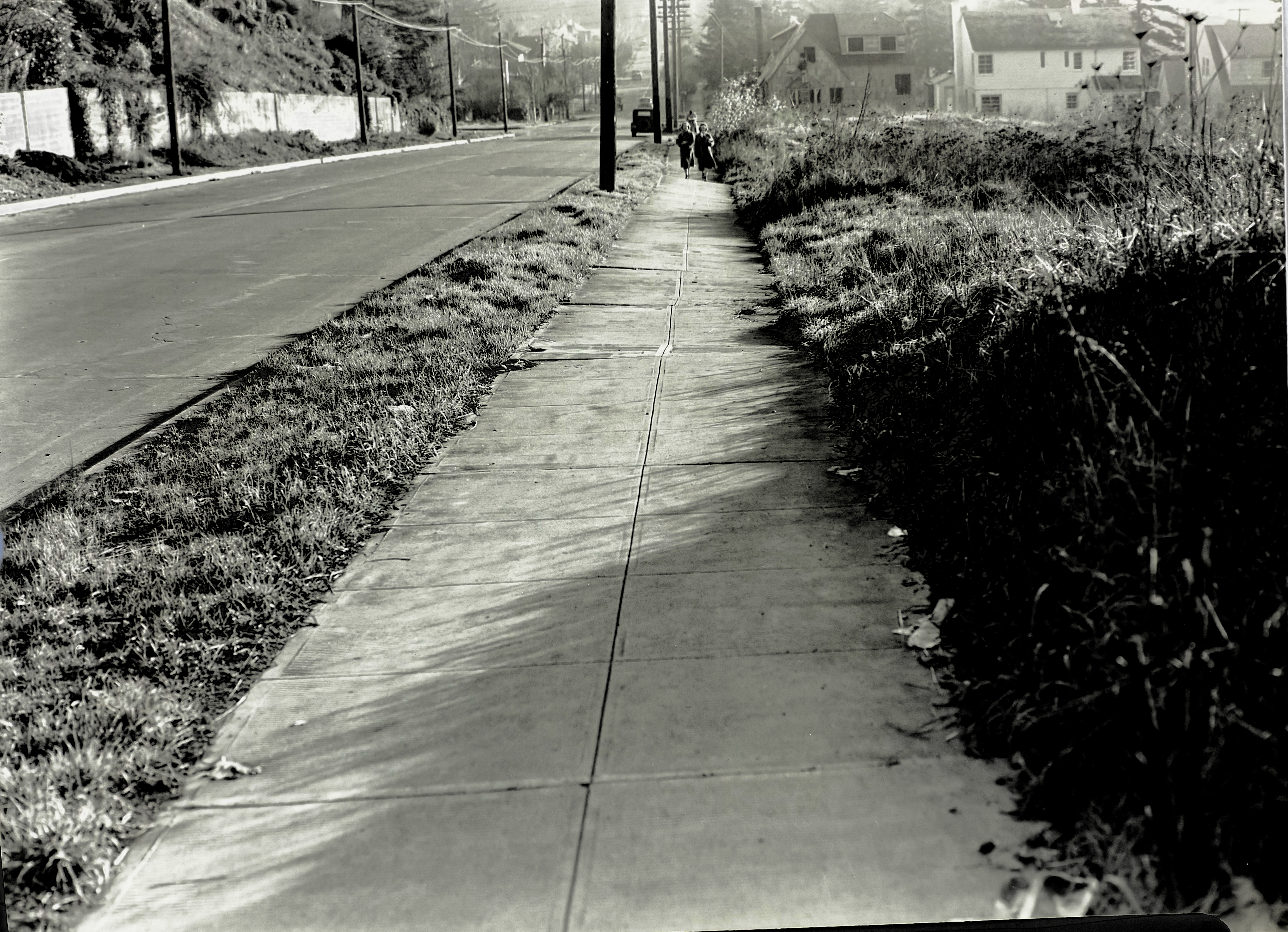
Looking south along the west side of NE 33rd, just downslope from NE Fremont. Image A2009.009.1271, courtesy of City Archives.
Judging by the sunlight and shadows–and what looks like an exodus from Grant High School–these photos were taken in the afternoon of that November day. The uphill photo shows just how much the mid-slope has settled, with the curb and street surface buckling and the entire sidewalk heaving to the west. Nothing has been built on these vacant lots, probably because they were still settling.
Look a bit farther up the hill and you can see two brand-new Ken Birkemeier houses at far left (3279 NE Fremont), perched on what had been the cutbank, and the bungalow to its east at the corner (3289 NE Fremont). Across the street farther east you can see the high-peaked roof of the home at 3304 NE Alameda, and the distinctive tile roof of the Mediterranean-style house at 3301 NE Fremont.
Also interesting to note: no signal light controlling the intersection, nor is there a stop sign facing 33rd (can’t read what is on that sign, but it’s not the standard octagonal STOP sign we know today, which was in common use by 1938). Perhaps Fremont had the stop sign and 33rd had the right of way.
Yet to be built at the top of the hill on the southwest corner was a mid-century home and swimming pool that would eventually collapse into the old pit area and be replaced in the 1990s by a much larger house (and geotechnical engineering). We wrote about it here: The lost house at 33rd and Fremont.
The downhill photo looking south shows just how much the sidewalk wants to fall off into the old pit. Below the pedestrians you can see a house under construction–3289 NE Klickitat, also by Ken Birkemeier who was very busy in this part of the neighborhood during those years.
Today we have Google streetview to document so many aspects of our neighborhood, but it’s been a treat to turn back the clock with these and the 1913 photos. We’re always on the lookout for early photos of our Northeast neighborhoods. Stay tuned for more findings. The promised Columbia Slough photo from 1913 is next.
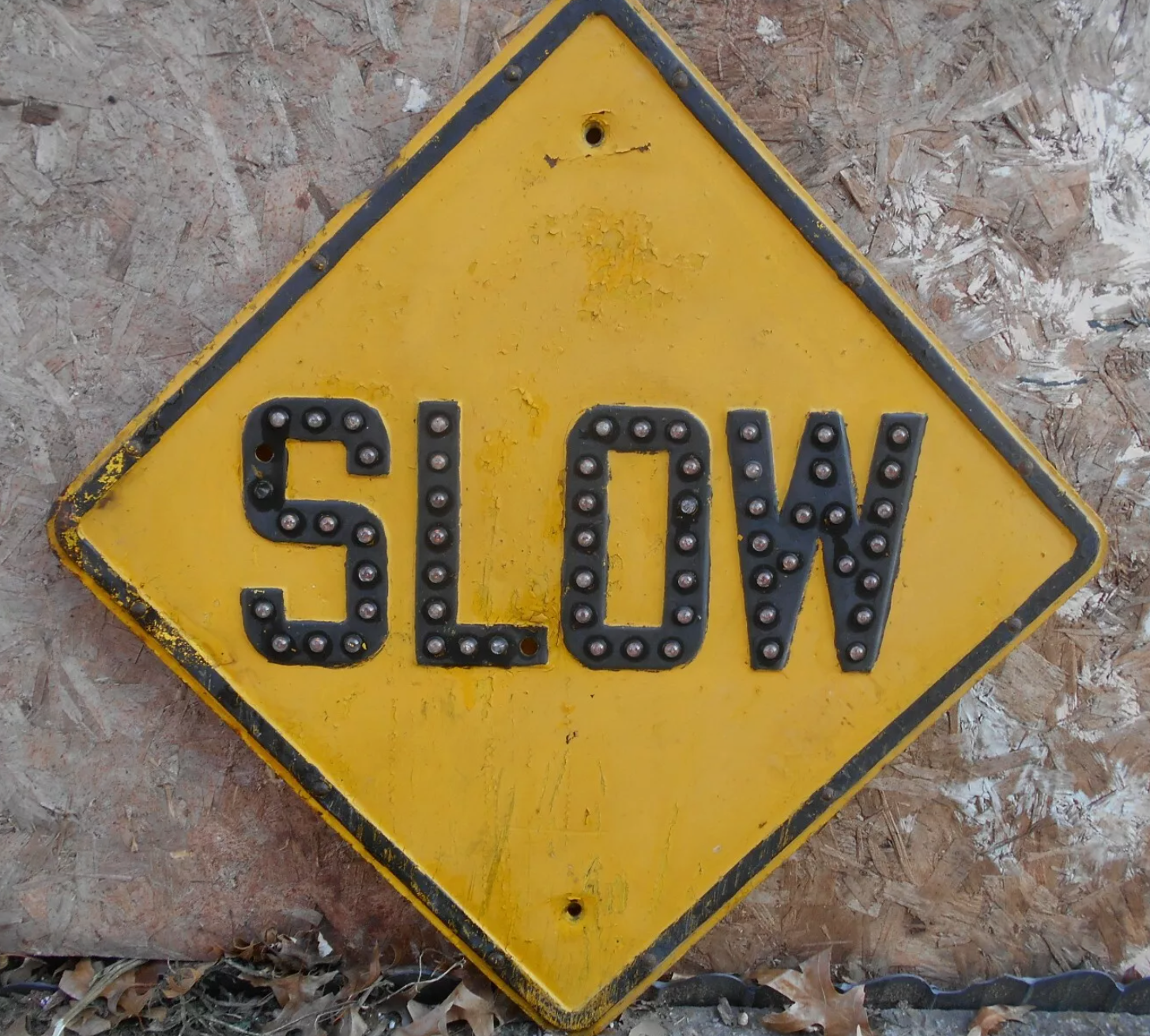
Post Script: Attentive Reader John Golightly adds his observations that the sign at the intersection probably was a “SLOW” sign, which we agree with. Here’s a photo of a 1930s-era slow sign in its characteristic diamond shape:

 Alameda Old House History
I’m pretty sure that sign in question says SLOW
Thanks John. I think you’re right. I’ve found a photo of the 1930s era “slow” sign and it was indeed a diamond. Will add it to the post.
I was just looking through your summary of the different spots and houses you are covering and it s great I love the memories of the area I grew up in.I was shocked to see the water tower at 19th and Prescott it brought back my of a warm summer nite when two college kids were partying with friends at a little duplex on the NE corner of 20th and Prescott when a dare was made of getting the light off the top of the water tower,the dare was accepted and the tower was climbed and the light bulb retrieved,I confess I was one of the two goofs who did it (1965)
Wonderful sleuthing and local history research!
Back when Civil Engineering wasn’t so civil….I remember when they (property owners) pounded several dozen ‘telephone poles’ (creosote soaked?) into the ground with giant pile drivers, to stabilize that area Seemed to take several weeks. I don’t remember exactly, but I think in the 80s or maybe later.