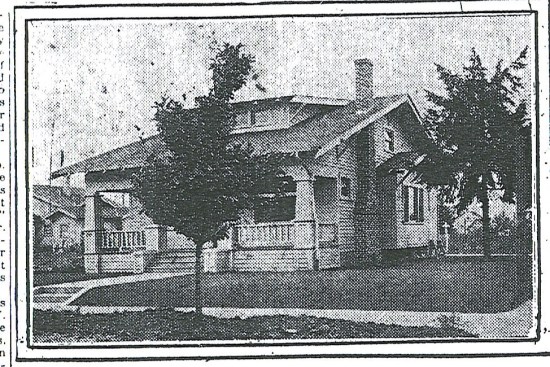
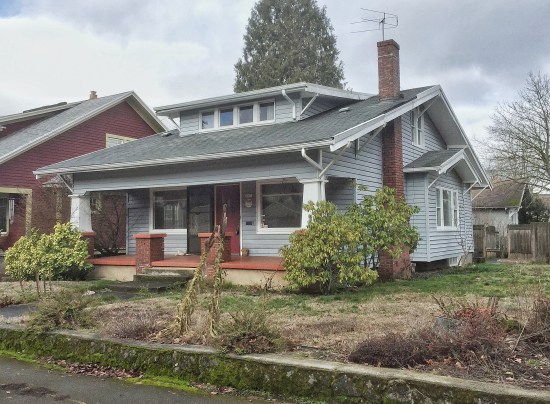
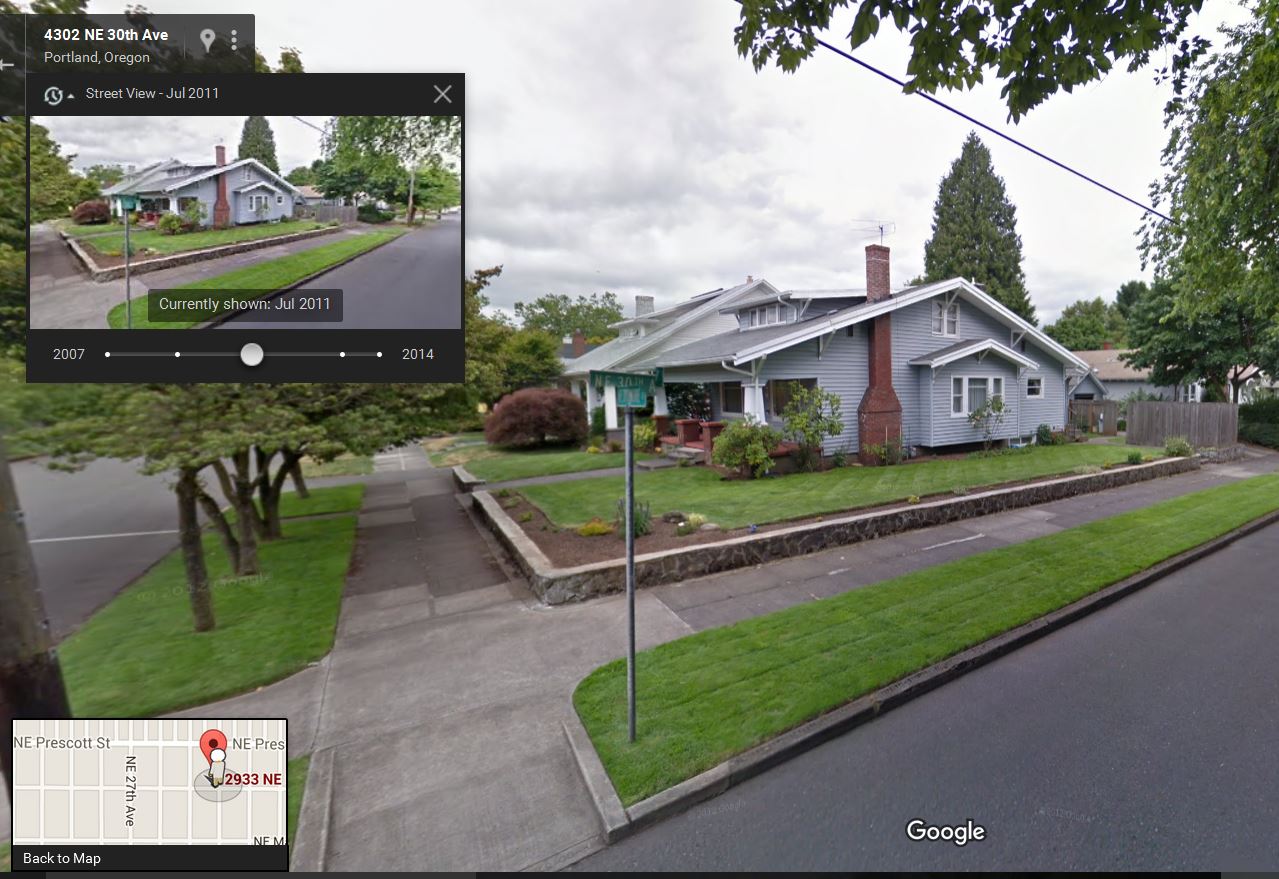
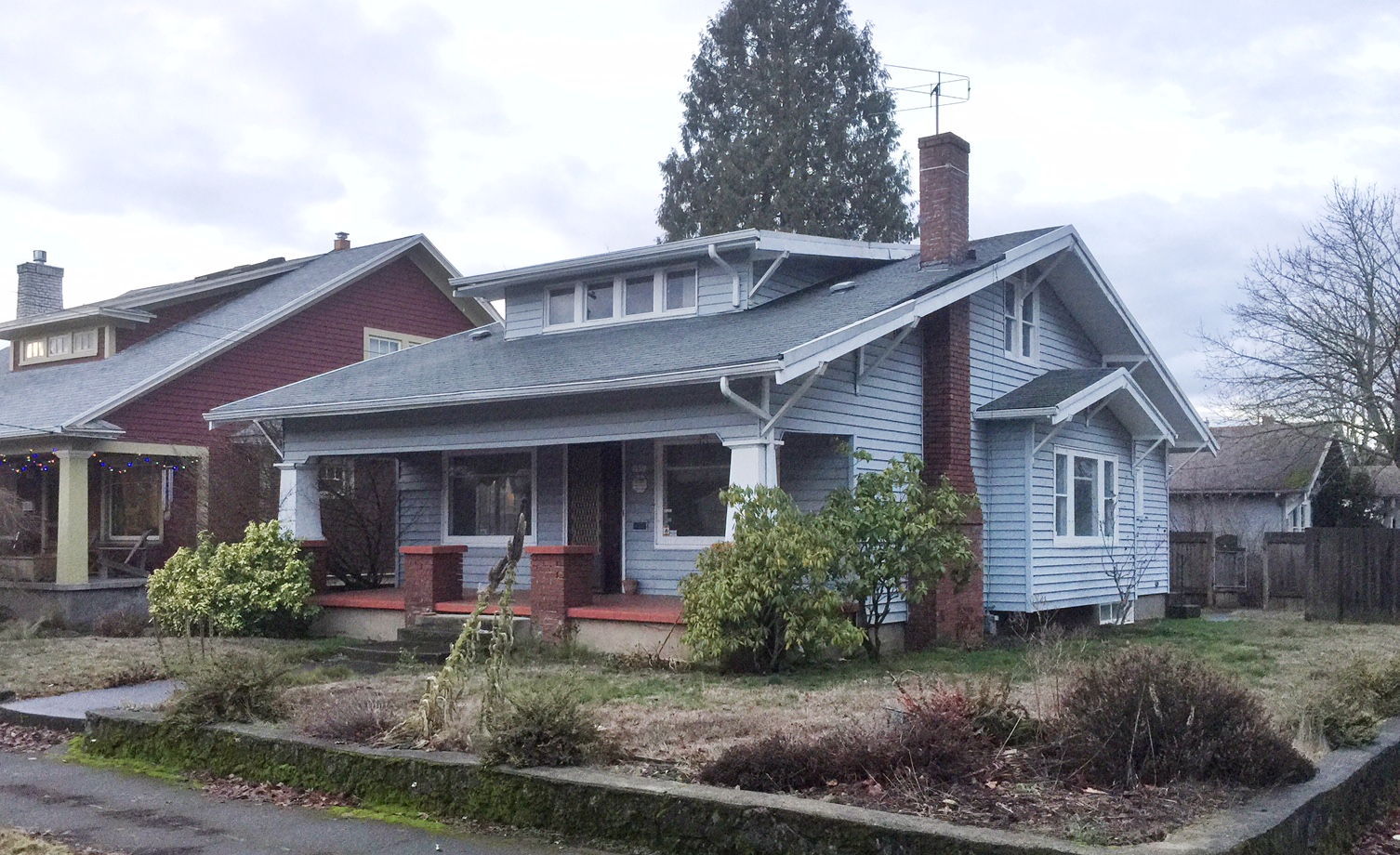
The Alameda neighborhood’s initial hopes for renovation of a 1921 Craftsman bungalow at the corner of NE 30th and Skidmore are about to come tumbling down.
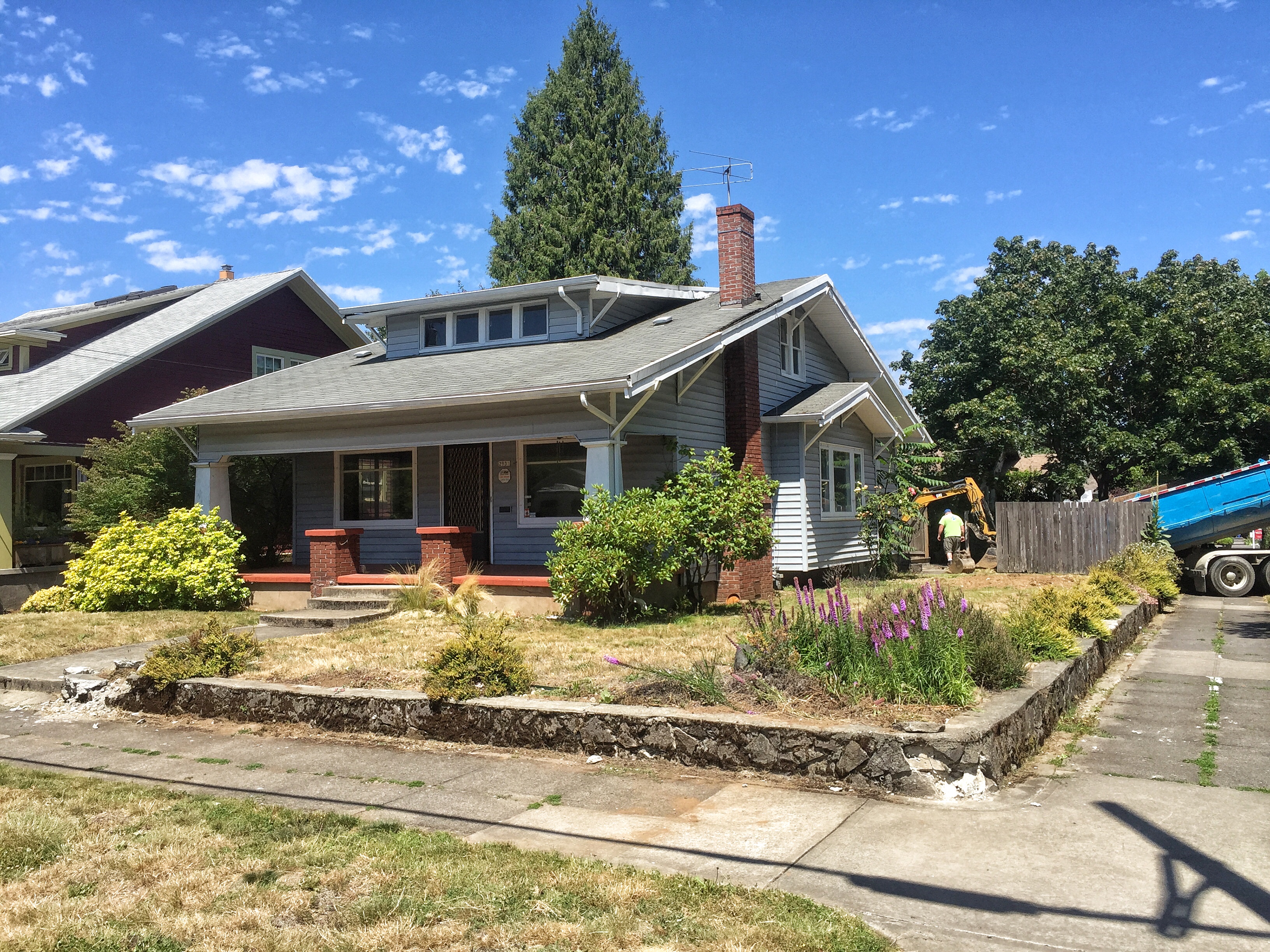
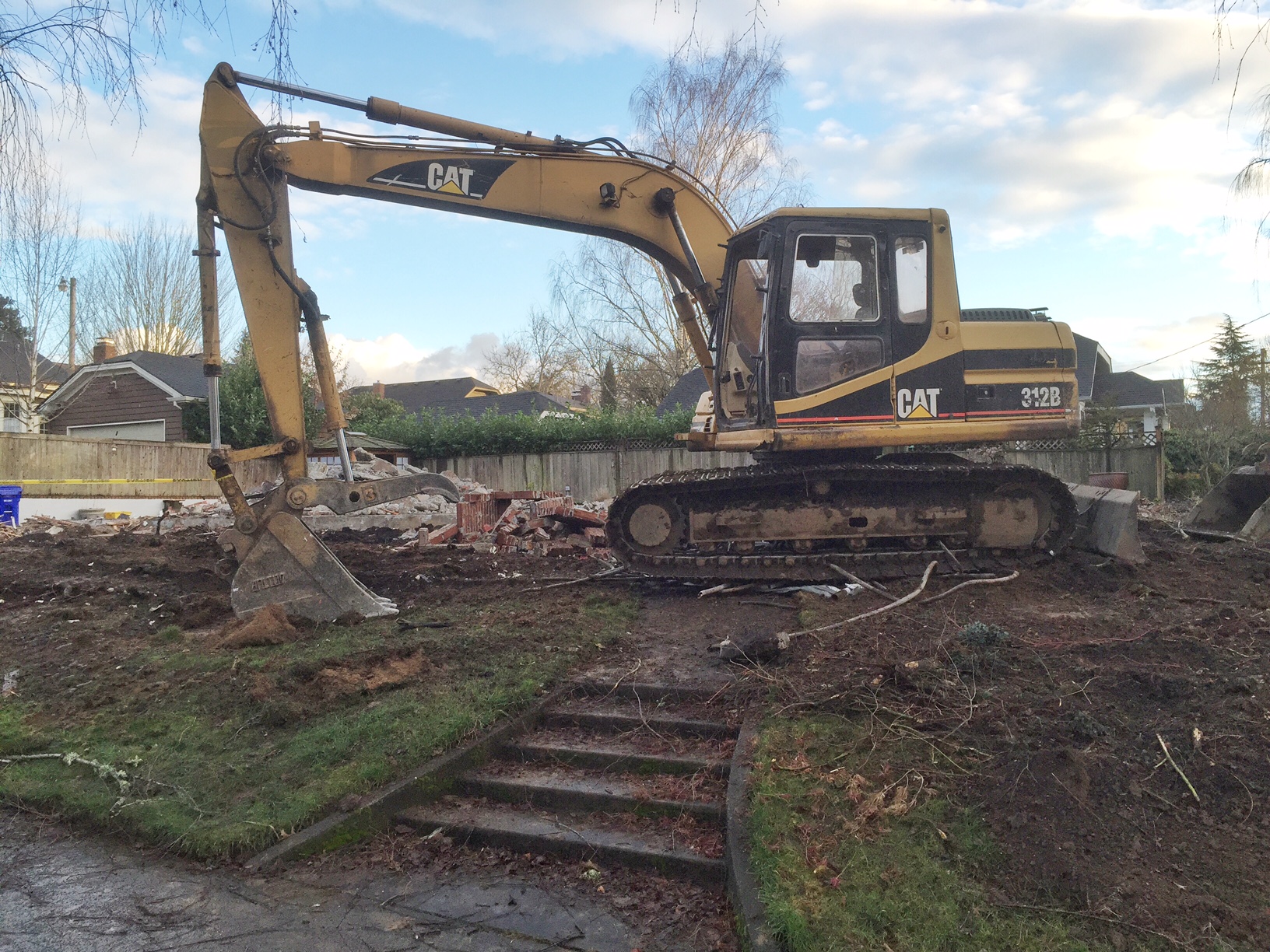
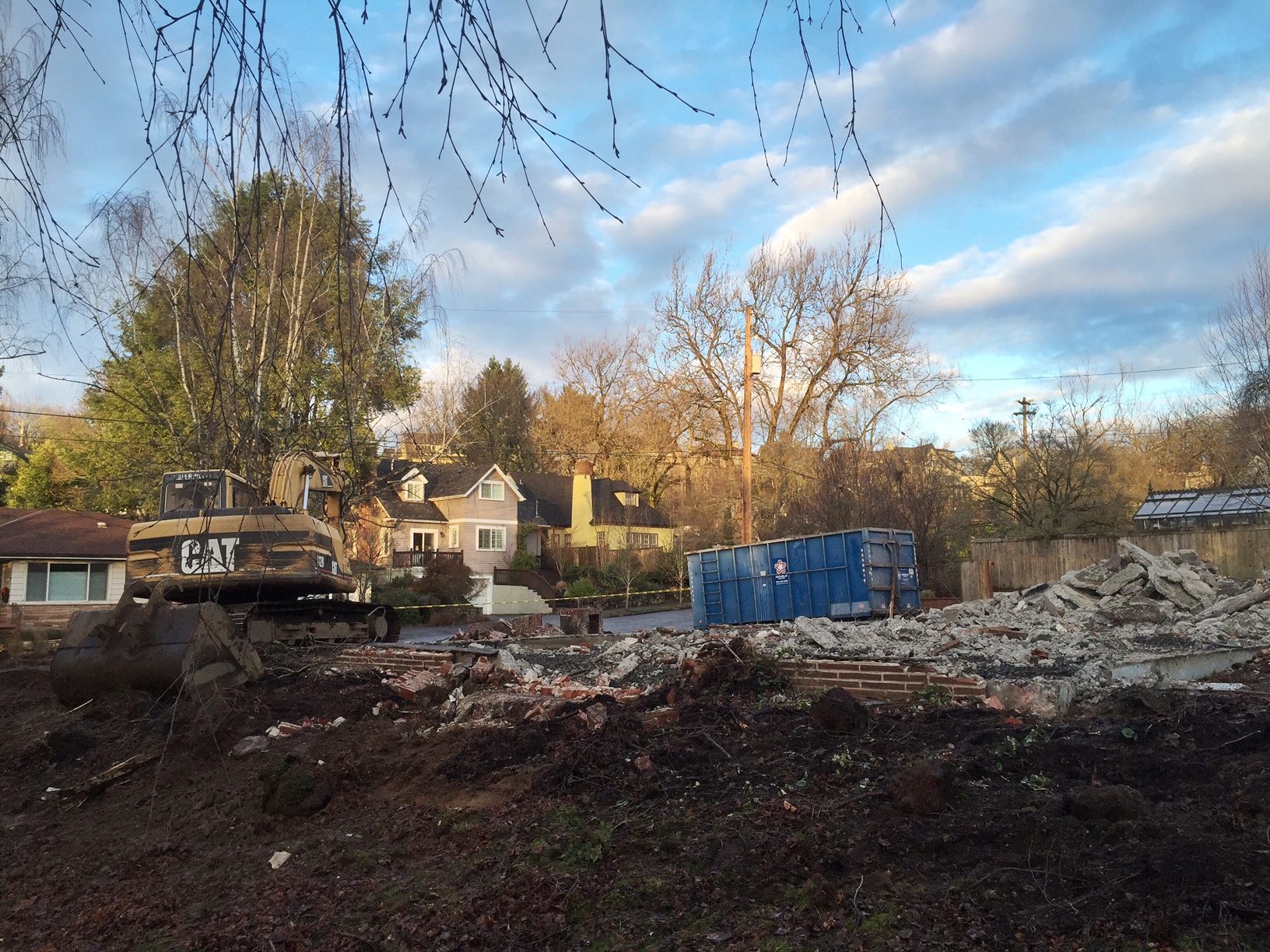
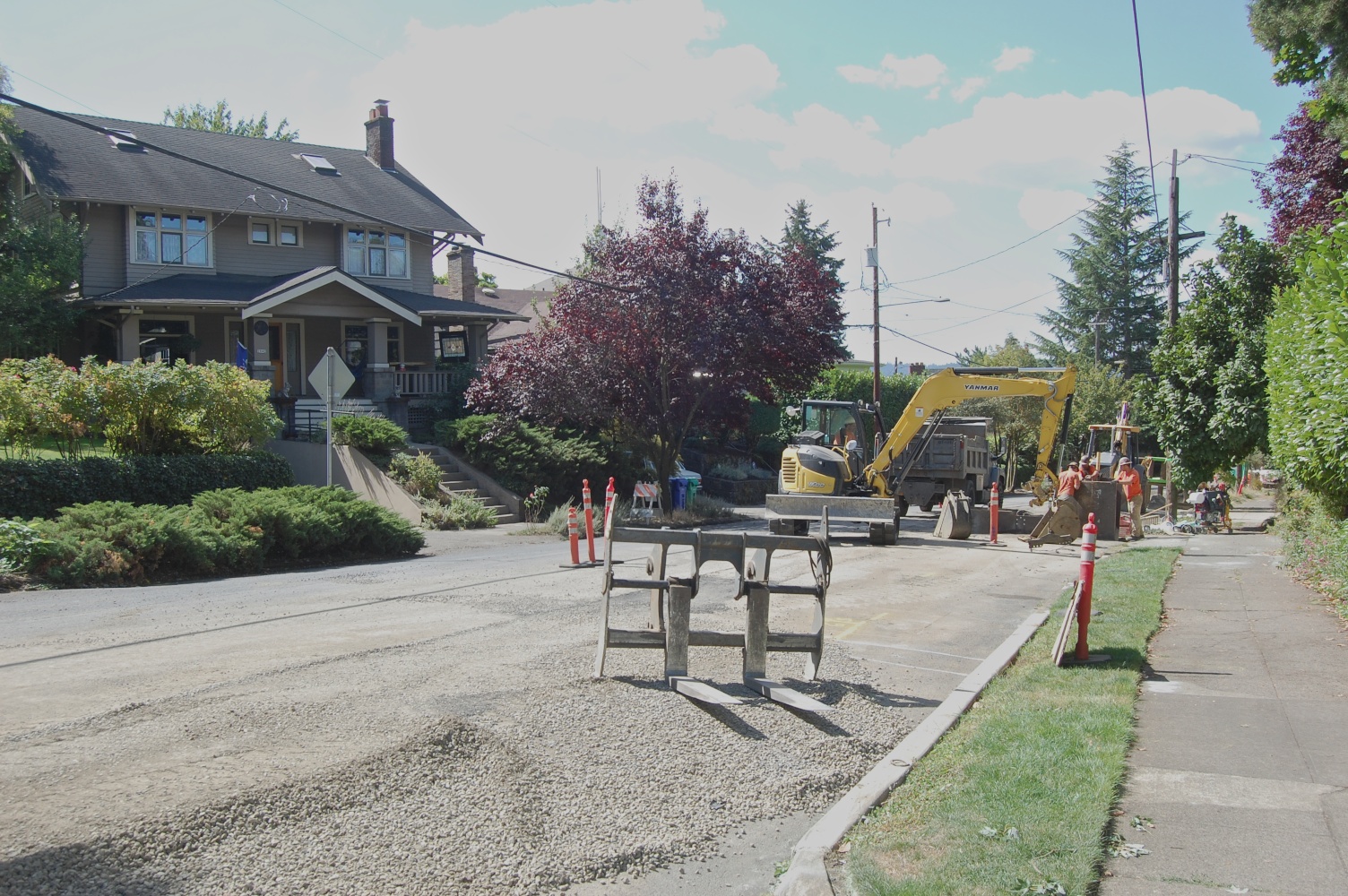
Contractors removing contaminated soil last week from an oil tank in the backyard of 2933 N.E. Skidmore. Demolition permits have been issued and according to the developer, the 95-year-old home will be demolished in mid-August.
Over the next few weeks, this part of the neighborhood will experience a major transition: Seattle developer Green Canopy has bought the corner lot and plans to demolish the 95-year-old home and build two 45-foot tall, three-story, 3,000-square-foot houses in its place. Each home is expected to list for more than $800,000.
Activity on the property has picked up in the last week, including removal of an oil tank and contaminated soil, and interior asbestos abatement.
Green Canopy’s Portland Construction Operations Manager Ryan Nieto writes that the company received its demolition permit on June 18th, but will likely not begin the process until mid-August. “We’ve been holding off the demolition for as long as possible, so we minimize the amount of time the lot has to sit empty,” wrote Nieto. “Before we mobilize for mechanical demolition, we’ll be properly abating the lead paint on the exterior of the home. 5 days prior we will pass out the required door hangers to the neighbors immediately adjacent to the property notifying them of the upcoming demolition.”
Nieto reports construction of the two homes will begin in early October.
Green Canopy owner Sam Lai, interviewed by AH in May, explained his vision for development of the new housing units at the neighborhood corner: his company is building environmentally-responsible, highly energy efficient homes to accommodate the growing need for housing in Portland and Seattle neighborhoods.
The company website summarizes Green Canopy’s mission and purpose:
What We Do: Our team is dedicated to building sustainable and resilient communities from the inside out. From re-building single family homes, to developing small scale communities, to impact investment and education – Green Canopy focuses on transforming the market to consider resource efficiency when homes are bought and sold.
Why We Do it: Green Canopy has created a business ecosystem that is different and better than what traditional home building has had to offer in the past. We are a values-led organization with a staff that forges ahead with purpose, and a corporate culture that is built on respect, trust and love for each other, our children and future generations, and the planet.
This spring, Lai and his design and construction team canvassed neighbors in the area and held meetings to hear concerns and desires for the new construction, offering a digital survey tool to gather input. “We like to give neighbors a seat at the table during design,” he said. They heard neighbor input on everything from building form and height, building materials, paint colors, construction noise and dust, and building setback from the street and sidewalk. The company’s website encourages neighbor input, allowing visitors to vote on paint colors for specific house projects.
AH interviews with neighbors, however, suggest that even though they had a chance to share their preferences and concerns, there’s been no indication how or if the company will respond.
Rachael Hoy, who lives next door to the west (see photo above), just feet away from the planned demolition, attended one of the two input meetings and recalls that the message from the 15 or so gathered neighbors was clear: don’t destroy this old bungalow.
“Most of the people who spoke asked the developer to please keep the home that’s here and do what’s needed to repair and get it back on the market,” said Hoy. “They (Green Canopy) made it clear the house was coming down. The next set of questions was about maintaining the traditional form and they made it clear that it’s probably not going to look like what’s here.”
Early drawings (pictured below) of the two houses to be built on the property turned up recently on Alameda Nextdoor, a neighborhood social networking website, showing two buildings with 45-foot roof heights, built with minimal setbacks, and with multiple garages facing NE 30th Avenue. Neighbors have received no information from Green Canopy about how the company intends to respond to resident input. A written request AH made to the company three days ago seeking drawings or specifications was not returned.
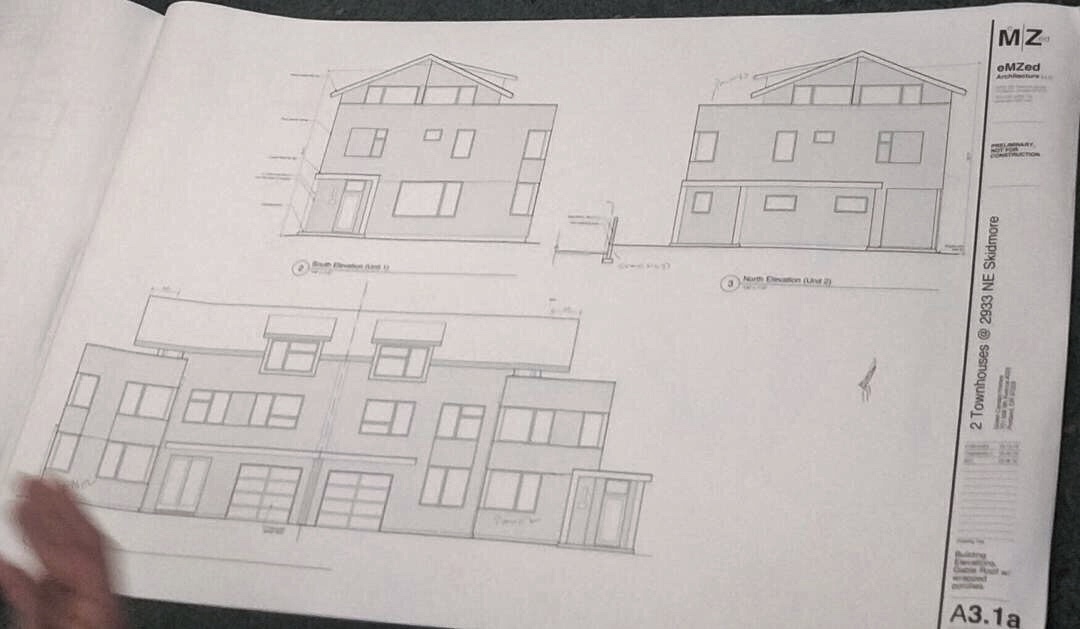
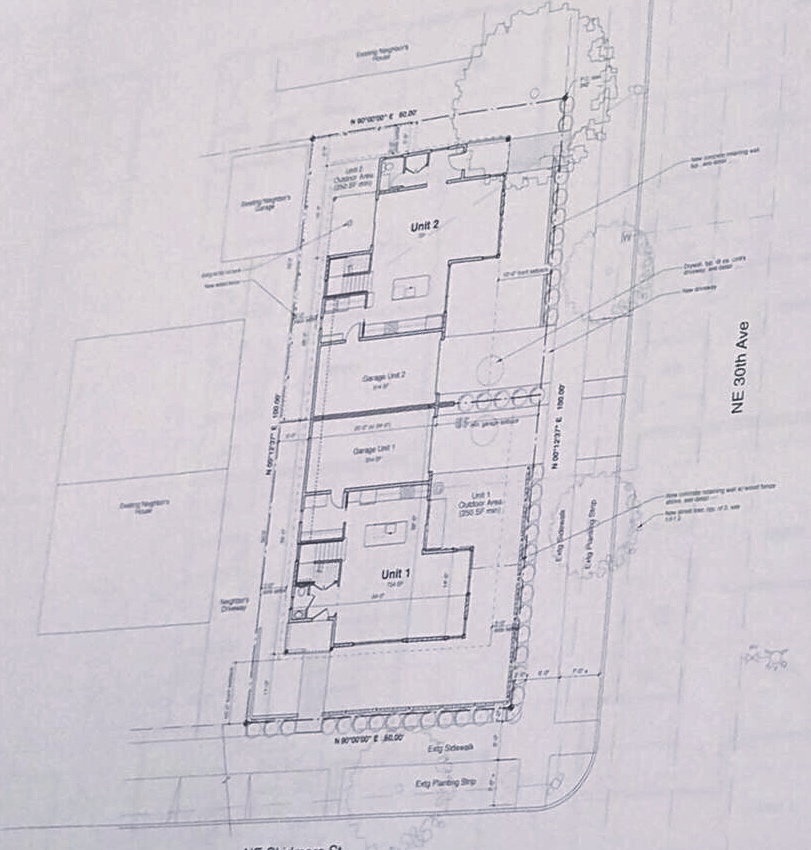
During meetings this spring, neighbors clearly expressed disappointment with the company’s plans for demolition instead of remodel. Lai said his team listened to the concerns and worries, and walked the neighbors through the economics of development and renovation, particularly in Portland’s strong real estate market.
“The economic opportunity for renovation of this home is so far past,” said Lai, citing significant costs associated with the instability of a nearly 100-year-old foundation and the need to essentially replace all building systems, windows, walls, floors, finishes and kitchen in order to make it viable for sale in this marketplace.
Green Canopy has come to its understanding of restoration vs. demolition economics through its experience in Seattle, where the company started out doing energy efficient old house renovations, completing 65 total renovations between 2010-2014. The company’s business model in its early years was to buy older homes in serious need of renovation and restore them to marketability and energy efficiency. But as real estate market values increased, costs made restoration prohibitive and the company learned that in order to be successful—and to pursue its mission of energy efficiency and sustainability—it needed to change the model from restoration to replacement utilizing sustainable design and construction practices to raze the older home and go with new construction
Lai acknowledges the seeming paradox of wanting to utilize sustainable practices while also beginning a project with demolition.
“We all get to choose the hypocrisies we get to live with,” he said, citing his own example of being dedicated to reducing atmospheric carbon emissions but also owning a car. “Yes, I own a Prius, but I know I really should be riding a bicycle if I care about climate change.”
Portland’s zoning ordinances permit two houses to be built on the corner lot, but they must be attached. Neighbors we spoke with were concerned about the size of the new construction and how it will dominate the corner and the neighborhood. Others were concerned about the interruption and impact of demolition and the construction process, including air quality and health issues. At least one person expressed concern about how the new construction may lead to an increase in property taxes for surrounding homes.
Lai affirms that change is coming, and that the houses will stand out from the smaller, older homes. “They’re going to be bigger houses than people want to see,” he said. “But the basis cost of the land determines how big the houses need to be.” The lot and current home sold for $545,000. When it sold earlier this year, the listing referred to the property as “house of no value.”
“I expect the houses to be unsightly, so they will detract from the neighborhood,” said Gloria Berqquist, who lives kitty-corner from the bungalow. “It won’t fit with the other houses. They can call it whatever they want, but to me it’s a duplex. I think they said it’s going to be almost twice as tall as the current house. I won’t be able to see the trees that I now see behind the house.”
In the end, Mr. Lai’s philosophy is that change is inevitable, and that it is important to make good decisions and long-term choices about building practices and materials. As homes age, markets accelerate, populations, lifestyles and family needs evolve, a neighborhood and its housing stock must change as well.
“It’s not 100 years ago anymore,” he said. We have to use our space and materials more efficiently.
In the midst of the disappointment and neighborhood anger associated with the coming demolition, next-door neighbor Rachael Hoy is working on acceptance.
“Our single family neighborhoods are going to become denser, it’s just a reality,” she said. Because of that, neighbors need to weigh in with the city about land use and infill requirements and processes, and impress on developers that they must take some interest in and be responsive to the comments of neighbors.
“We’re trying to be positive,” she said. “However this unfolds, we’ll have two new sets of neighbors. We all want to be supportive of the people who will be moving in even if we don’t like the houses.”
AH will continue its coverage of the demolition and construction as the process proceeds.