Alameda’s Commercial Corner | 24th and Fremont

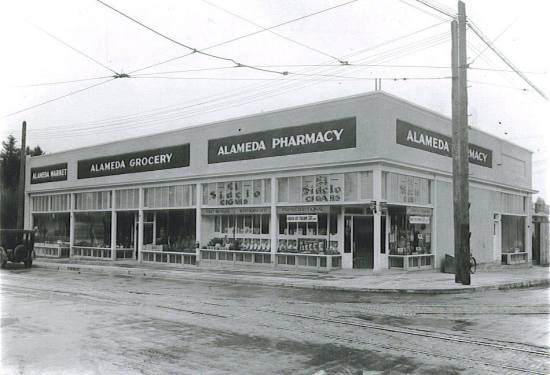
Looking southwest at the corner of NE 24th and Fremont, early 1920s. Note delivery bike visible behind power pole. OrHi 49061.

There was a time when the building we know today as the home of Lucca and Garden Fever—at the southwest corner of 24th and Fremont—looked after most of the neighborhood’s needs for grocery and personal goods. Alameda Pharmacy, Alameda Grocery, John Rumpakis’s Alameda Shoe Repair, even the dentist’s office, upstairs above the pharmacy, were neighborhood landmarks that everyone knew, shopped in, and pretty much took for granted (except the ice cream sodas at the pharmacy which were supposed to be legendary). The pharmacy and grocery even provided a delivery-by-bicycle option for homemakers who needed a few small items, but couldn’t get out of the house. It was a win-win situation for Alameda and for the local family-owned business during those early years.

To be sure, some shopping needs were taken care of away from the neighborhood. Even then, there were smaller markets or “convenience” style stores of the day located within walking distance (see this post on the Davis Dairy Store, one such locally-owned convenience market). Built in 1922 during the peak of neighborhood construction, the Alameda Grocery commercial building at 24th and Fremont quite literally had a corner on the market.

That is, until the mid 1930s, when a fully-built-out neighborhood with a growing population, combined with a slowly recovering economy and new trends in shopping, opened up new opportunities for big business which began to shape the corner.

Enter the Safeway Corporation: a publicly-traded rampant success story, with headquarters in Oakland, California and more than 3,200 chain stores nationwide. The company’s penetration of local grocery markets was so complete that by 1935, many states around the country were passing legislation—urged by local merchants who were getting slammed by Safeway chain stores—that taxed the huge company’s local operations to discourage competition.

But not in Portland. By 1937, Safeway had 54 stores here, including 46 stores located in eastside neighborhoods, and even one on the doorstep of Alameda at the southwest corner of NE 24th and Broadway (today it’s Brake Team, an auto service garage) built in 1936. Most of these stores were modest in size, and not like the sprawling stores we know today. Undoubtedly, the local Safeway on Broadway cut into the market share of Alameda Grocery. But nothing like what happened starting in 1938.
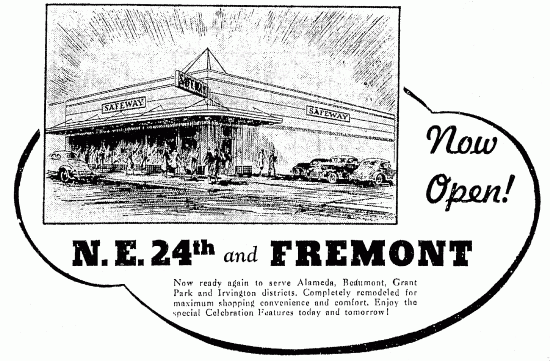
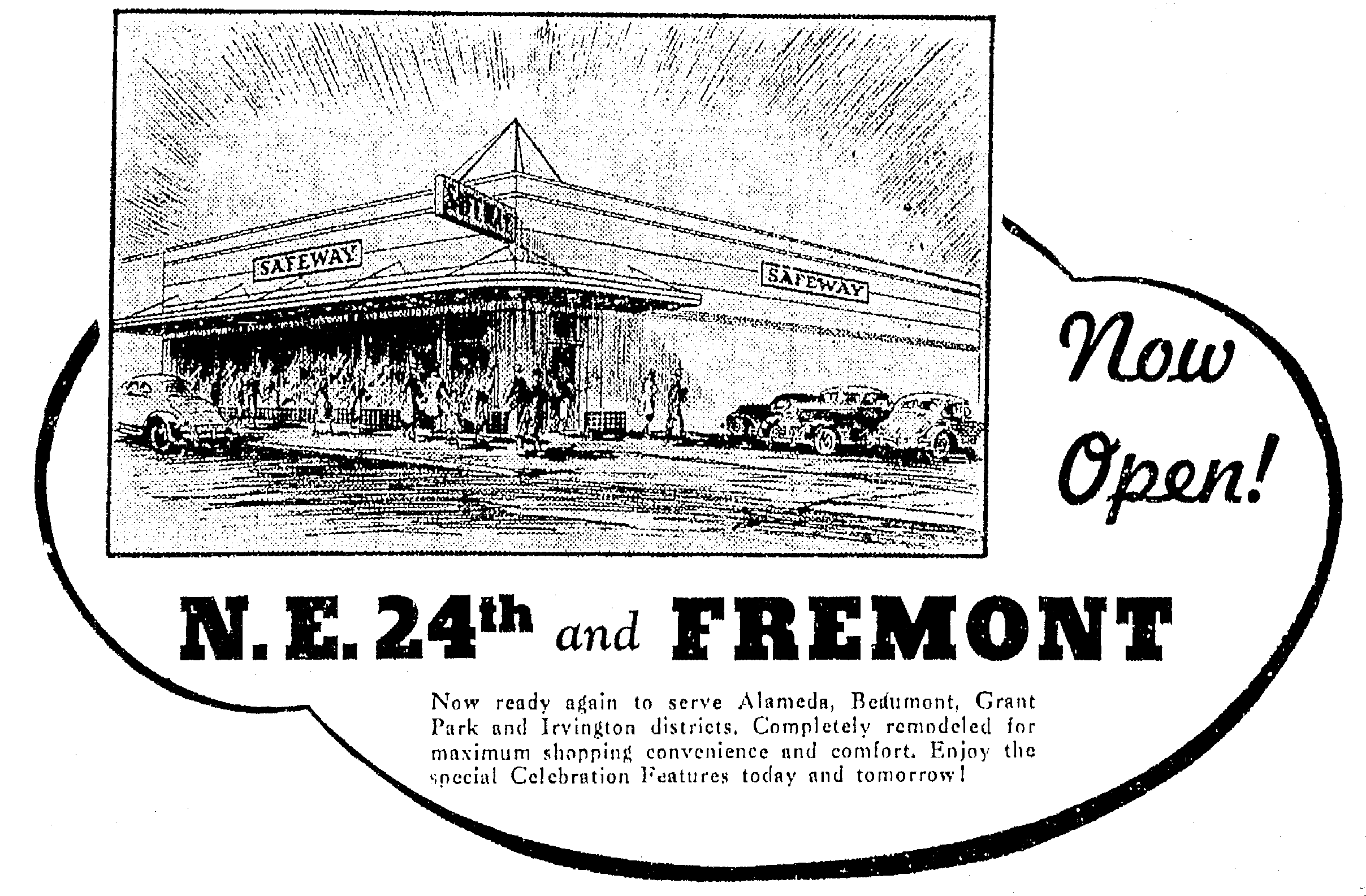
Click on the image for a larger view. This ad is from The Oregonian on September 13, 1940 announcing a remodel and reopening of the Alameda Safeway.

On July 16, 1938, Safeway opened a store in the building we know today as the home of Alameda Dental and Frontier Bank on the southeast corner of the intersection. The property had been leased from the Albers Brothers Milling Company, who incidentally also owned the Alameda grocery and pharmacy building across the street. Retail activity in the single-storey 50-by-100 foot concrete Safeway building began to take a big bite out of Alameda Grocery’s market share.

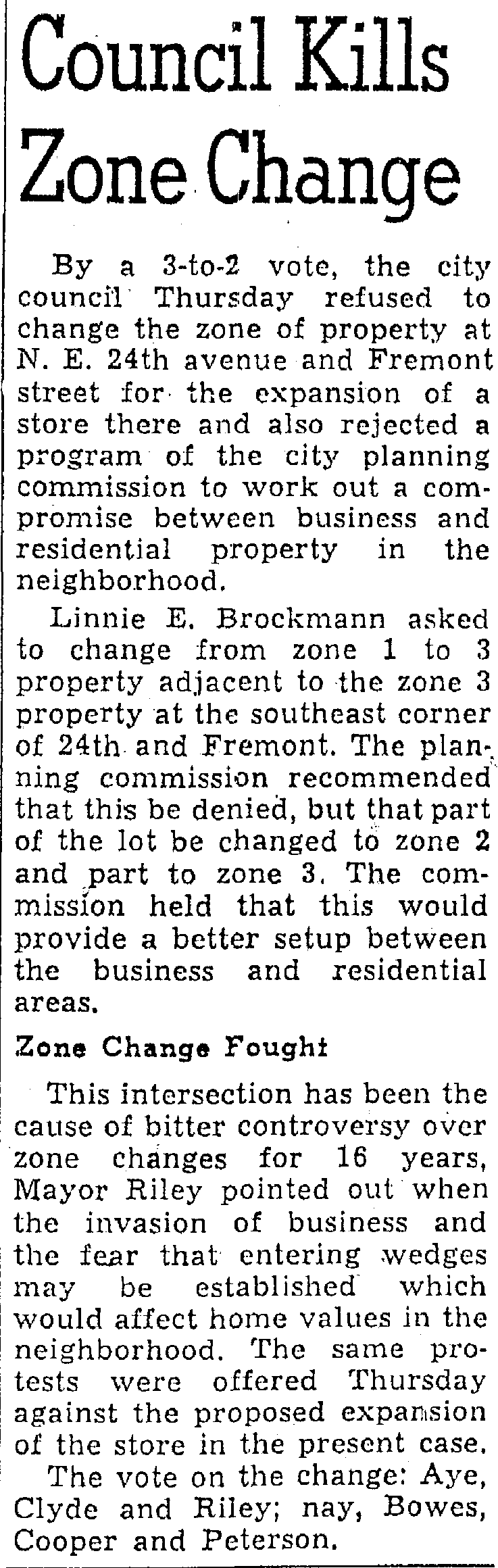
By 1940, Safeway expanded and remodeled, while Alameda Grocery across the street struggled to hold on. About that time, Safeway made plans to expand beyond the footprint of the existing store to take in the entire north end of the block. But as The Oregonian reported on March 20, 1942, the Portland City Council narrowly defeated a zoning change that would have allowed this major expansion. Despite voicing concerns about home values in the neighborhood, Mayor Earl Riley voted to expand the commercial zoning to permit the Safeway expansion:
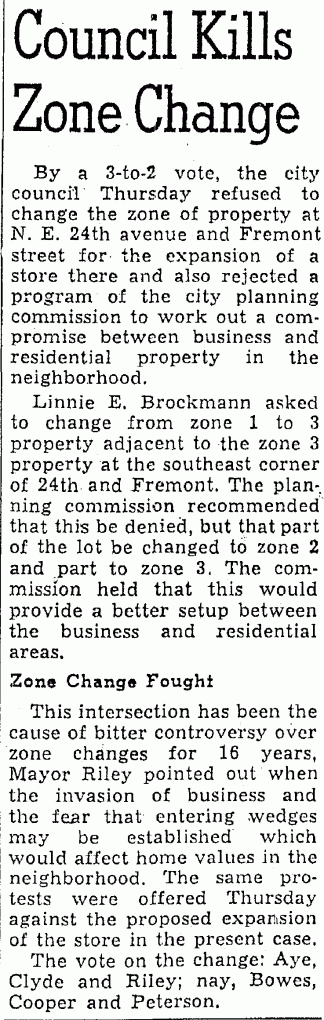
From The Oregonian, March 20, 1942.

Safeway’s expansion into residential neighborhoods was not a phenomenon isolated to Alameda. Blog reader and longtime Grant Park resident John Hamnett writes that in nearby Grant Park, local residents fought a pitched battle with the City of Portland regarding a plan to build a Safeway adjacent to the Grant Park Grocery, a similar locally-owned market at the southwest corner of NE 33rd and Knott. The vision for that zone change took in all of the southwest corner, and further considered zoning the entire intersection commercial at all four corners. In May 1942, City Council voted 4-1 to allow the Safeway development. Incredulous neighbors protested time and again concerned about their property values, but the City would not relent. Finally, in March 1943, neighbors filed suit against the city for allowing the zone change, and won in a clear decision handed down by Circuit Judge Walter L. Tooze.

Back at NE 24th and Fremont, two gas stations were added on the northwest and northeast corners—the true portal of the Alameda Park subdivision (today site of a parking lot, and Perry’s on Fremont). Generational and ownership changes were remaking the anchor businesses on the south side of the street as well. Eventually, as Safeway’s business model changed (fewer, larger stores instead of the 50-foot by 100-foot businesses sprinkled all over Portland), the former Safeway store went back to being a family-owned business, loved and known by a generation of Alamedans as Brandel’s. Nature’s Fresh Northwest (or simply “Natures”) eventually took over the Alameda Grocery building. And today, after a string of unsuccessful restaurant tenants, Lucca seems to have hit its stride.

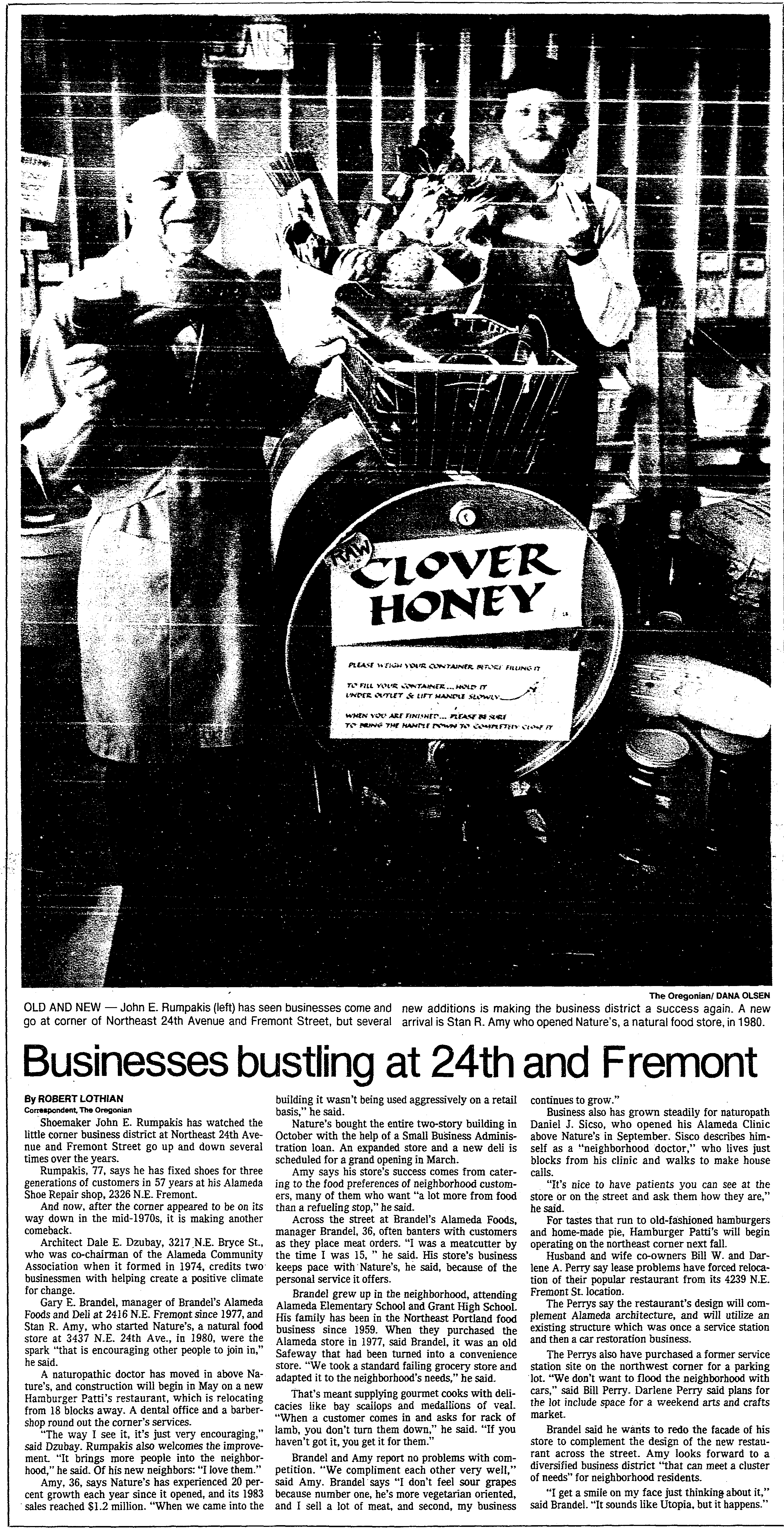
Check out this story from The Oregonian on January 17, 1984, which is a snapshot as the corner transitioned from some difficult times in the 1970s to the place we know today:
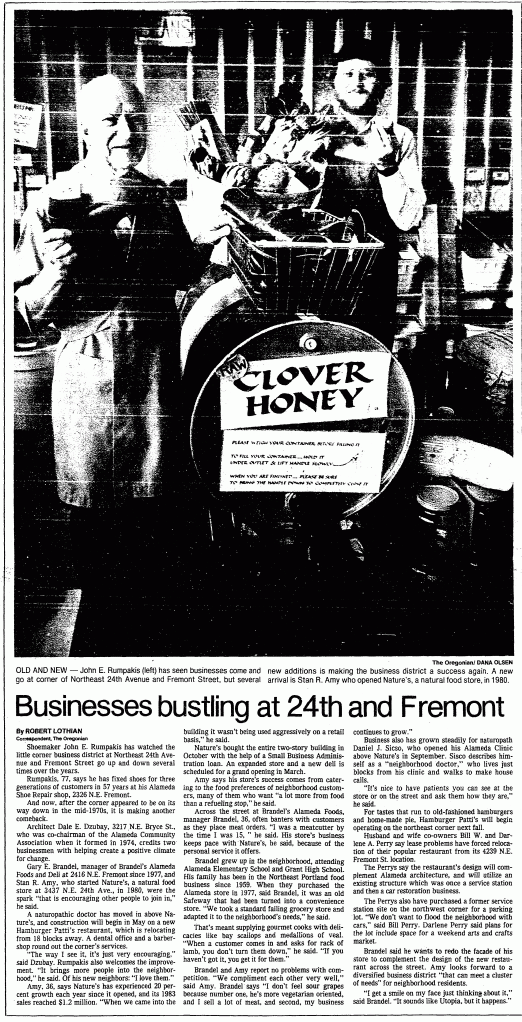
From The Oregonian, January 17, 1984. Click on the image for a larger view.

We still miss Brandel’s and the ease of slipping into that old Safeway building for a gallon of milk on the way home. But every time we pass through that intersection, we pause for a moment to think about how our neighborhood geography could have turned out quite differently.

The Story Behind Deadman’s Hill

When it snows in Alameda—or more properly when we think about snow in Alameda—there are a few things that come to mind: Did we disconnect the hoses? Will the kids get a day off? Where did we put the sleds?

Which leads to the next thought: Deadman’s Hill.

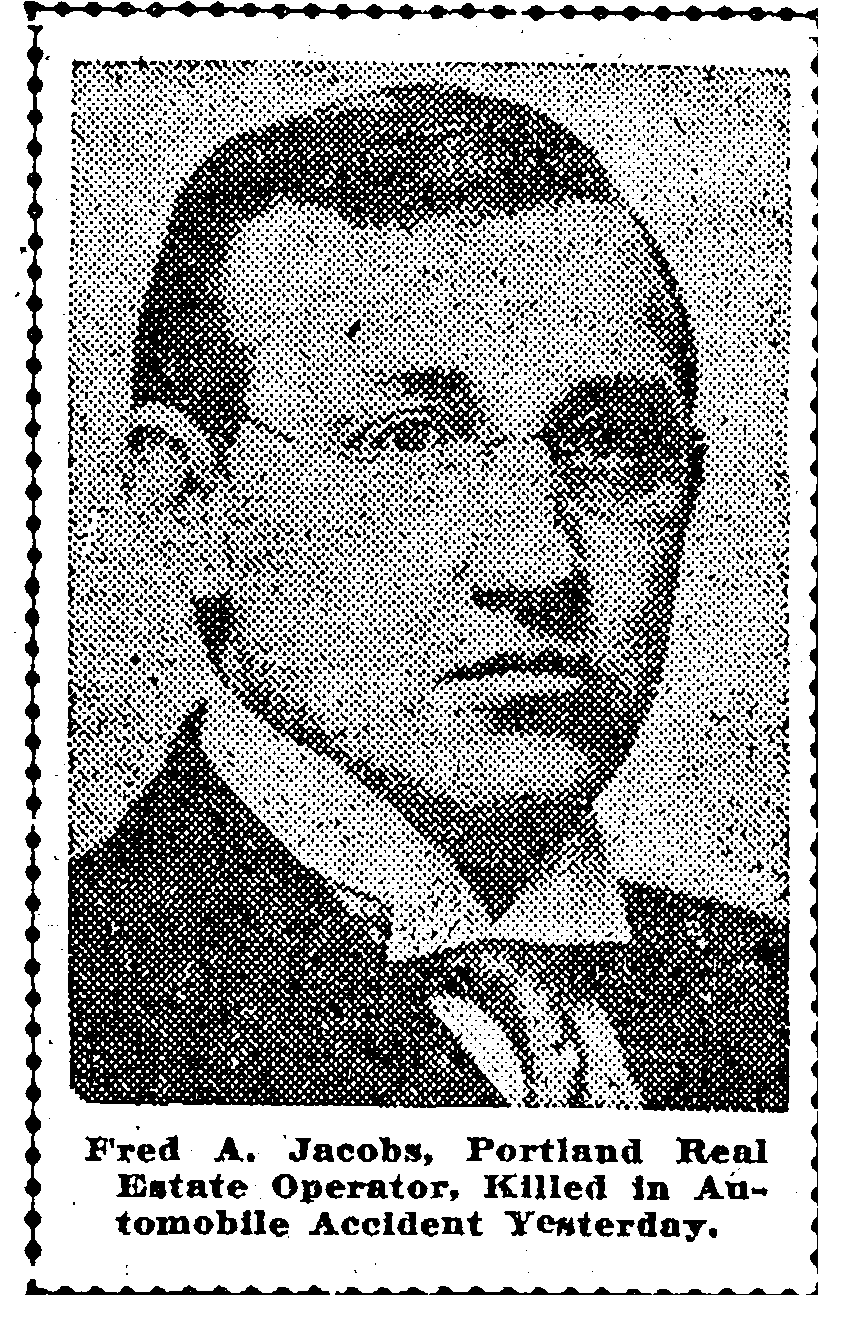
Over the years we’ve sledded down, walked up and often wondered about the namesake Dead Man behind the slang name for Stuart Drive. In this case, it’s not just a myth, it’s a real story about a well-known and popular Portland businessman who died in 1917 in a freak accident that rattled the business community and shocked the young Alameda Park neighborhood.

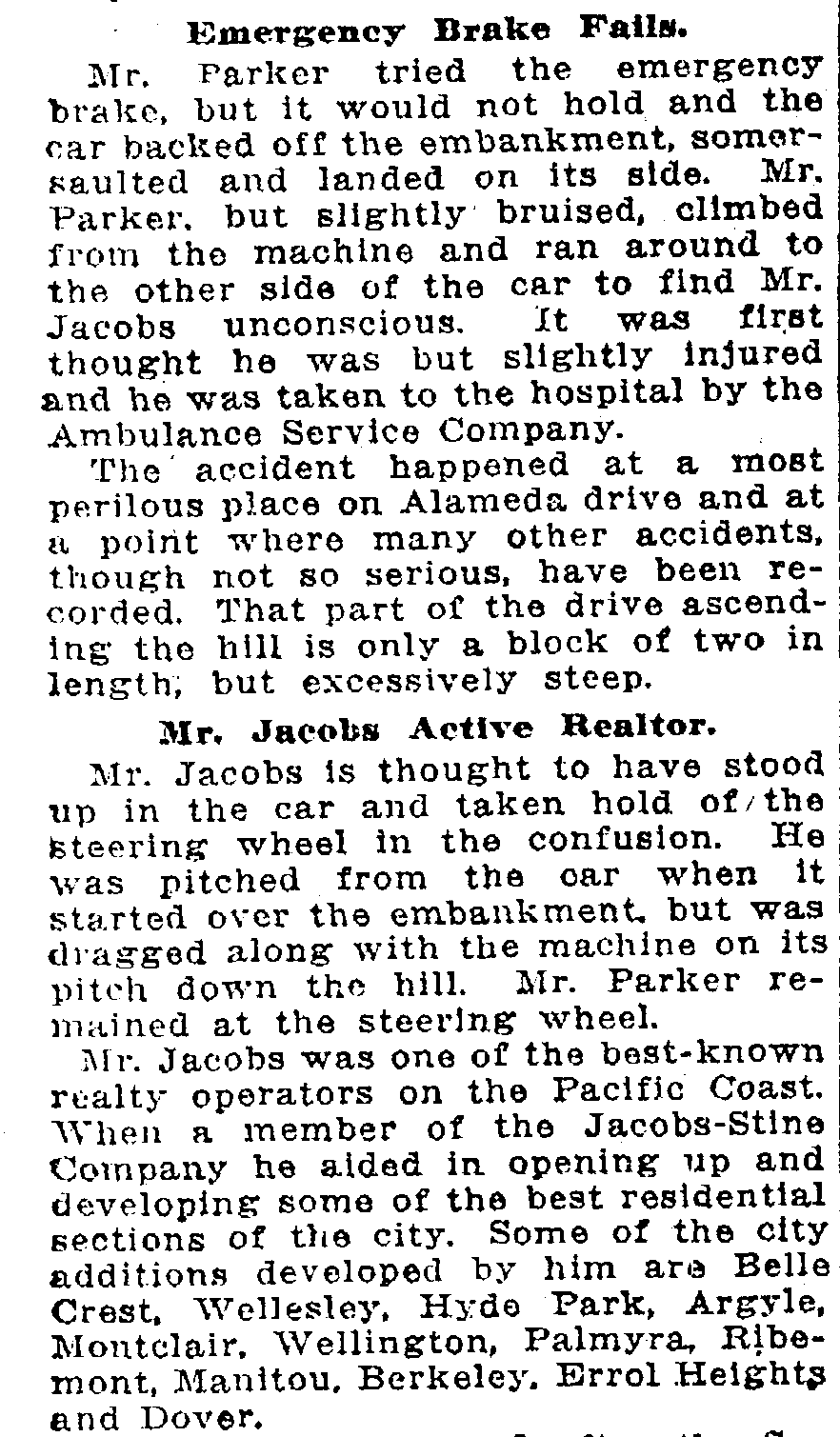
Fred A. Jacobs, art collector, civic booster, real estate broker and owner of the Fred A. Jacobs Company, had set out with his employee J.P. Parker to drive through Alameda on their way to have a look at rental properties in the Vernon neighborhood. At the time—and well up until the 1970s, we’ve been told—Stuart Drive was a two-way street. On the morning of June 5, 1917, they started up Stuart Drive on their route north. Why they chose Stuart Drive over the gentler and wider Regents Drive is anyone’s guess. The car made it about half way up the hill, but then stalled out and started to roll backwards down the street. Unfortunately for Parker and Jacobs, the emergency brake did not hold and the car rolled to the far left side of the street, went backwards over the curb, bumped over the small sliver of property that goes with the lovely George A. Eastman-designed Craftsman home there on the hill, and then flipped over hard, landing on its side 25 feet below on Ridgewood Drive. Here’s what The Oregonian said the next morning:

From The Oregonian, June 6, 1917

Jacobs, age 47, left behind his wife Gussie and two children, Elizabeth, and Fred Jr. Pallbearers for the funeral—held with full Masonic rite honors—included Portland’s most powerful and successful business leaders. Services were held at home, and then again at graveside. No known plaque or marker was ever put in place in honor of Fred Jacobs. The real estate company bearing his name lived on for many years. Jacobs was responsible for platting and then selling multiple chunks of farm and forest that are now integral parts of the neighborhood, including the Manitou Addition.

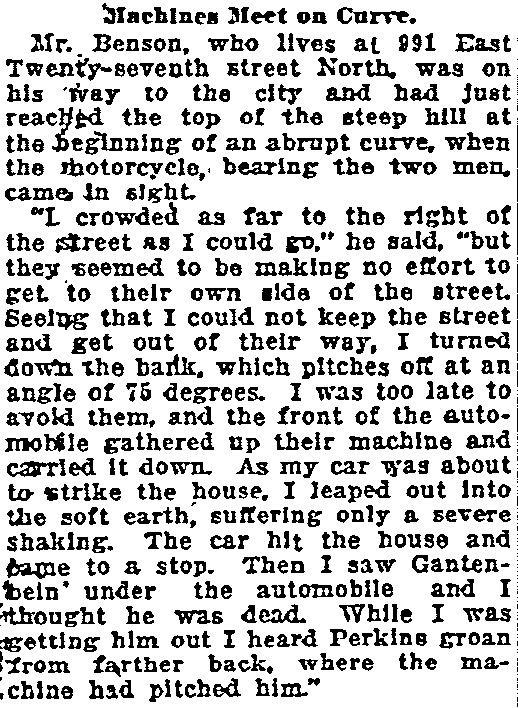
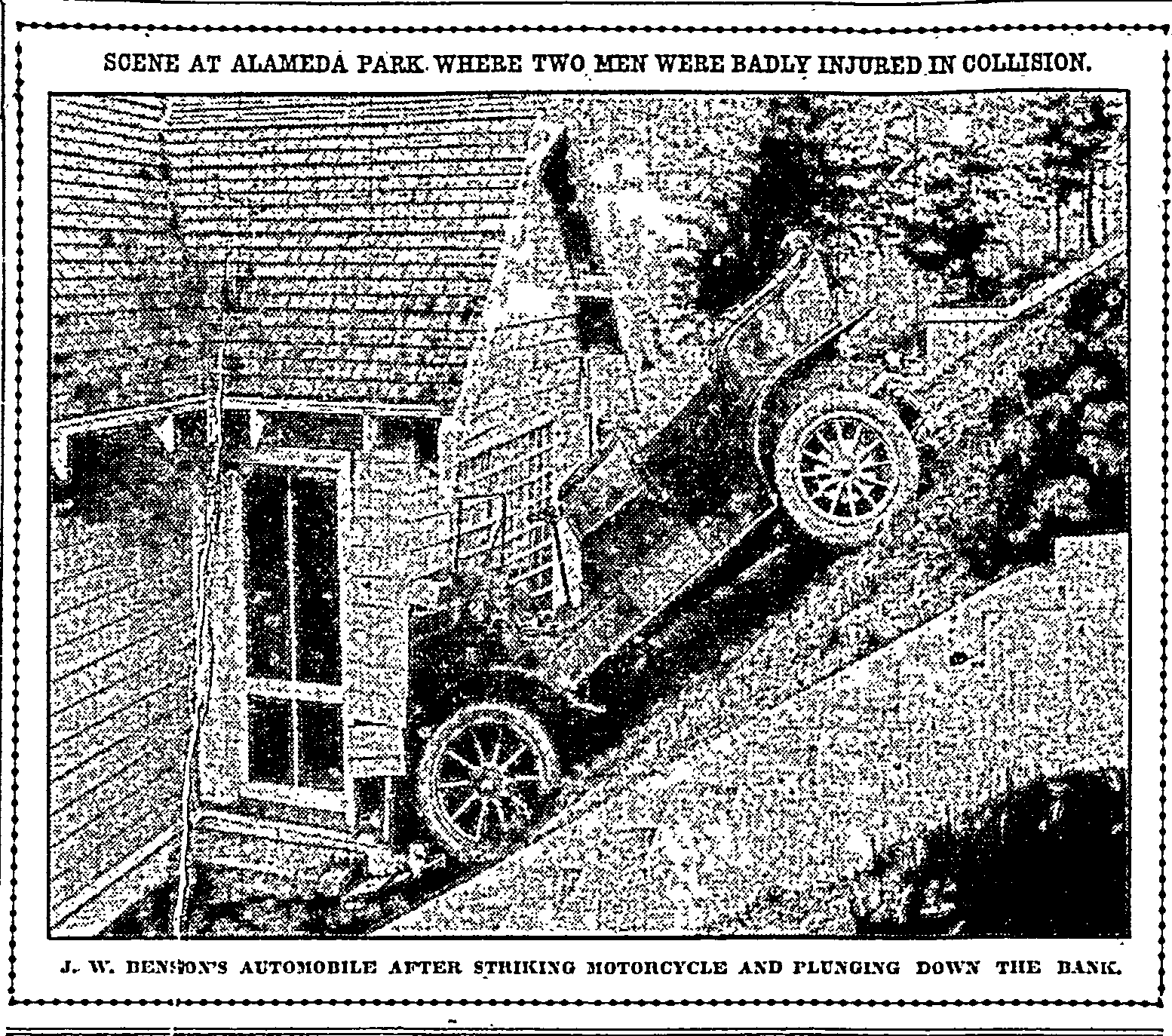
The same story that carried news of the fatal accident also described the hill as a perilous spot and the scene of other accidents. Indeed, an earlier news story, this one from April 19, 1912, described a serious but non-fatal collision between a motorcycle and a car near the top of the hill that ended up with the car over the side and smashed into a just-finished (and now much remodeled) house, and motorcycle driver and passenger pinned under the car.

Here’s The Oregonian’s description from April 19, 1912, and even a photo.

From The Oregonian, April 19, 1912. Click to enlarge.

Here’s some bonus information that we found fascinating: A later news story about the motorcycle vs. car accident, and the law suit that resulted, appearing on July 3, 1914, helps solve another mystery about the hill. Frequent readers of the blog will recall the post about “Hugby” Drive, which we now know was Rugby Drive. The July 1914 story refers to the accident as happening at Rugby Drive and Alameda Street. A search through the city’s street naming records shows the only “official” Rugby Drive as being on the Westside. References to Stuart Drive exist both before 1912 (including in the original 1909 plat) and long after, so we’ll have to continue wondering about the story behind this visible but extinct street name. Theory: the Alameda Land Company boys had it set in the concrete curb before the official naming protocol became clear.

One more item, for the record: the late Portland historian Eugene Snyder, author of the definitive Portland Names and Neighborhoods: Their Historic Origins, which we greatly admire, guesses incorrectly about who Stuart was. After researching E.Z. Ferguson, president of the Alameda Land Company, and understanding more about his social network, it’s clear to us that Stuart was Donald M. Stuart, Ferguson’s business partner, owner of the Spencer-McCain-built home on the northwest corner of 26th and Hamblet, (less than a block from Ferguson’s Craftsman mansion at the southeast corner of 26th and The Alameda). Long-time friends from Astoria, Stuart served as pallbearer at Ferguson’s funeral in July 1917.

Sled carefully please.

Alameda History Program Scheduled: Saturday October 23

If you’re like us as we turn the corner into fall, we’re mapping out the next few months and trying to fit in all the family goings on, important programs and events we want to be sure to take in.

Here’s one for your calendar: We’re presenting a program on the history of the Alameda neighborhood at the Architectural Heritage Center on the morning of Saturday, October 23rd. It’s an encore presentation of a sold-out program we gave in January of this year, but with some added new research from the last nine months.

The program is entitled “The Alameda Neighborhood: It’s Founding and Early Life.” We believe all who attended enjoyed it, and we certainly enjoyed the many conversations it spawned afterwards.

The Architectural Heritage Center hasn’t posted their fall listing of programs yet, but when they do, you’ll be able to register for the Alameda program on-line. Stay tuned for that. In the meantime, save the date.

Hope you can join us for a trip back through time…

Irvington and Alameda: What’s in a name?

We’ve been listening to a fairly heated conversation this last week about the location of the western boundary of what people think of as the Alameda neighborhood. The debate has been spawned by a pending proposal to create the Irvington National Historic District. The proposal has been in the works for several years and is about to be submitted to the federal list keeper back in Washington DC for final decision. But just recently, some residents in one portion of the neighborhood—known as the “Alameda-Irvington overlap” – have learned their blocks are to be included. Problem is—from the standpoint of some who live there—they aren’t part of Irvington, and they’re concerned about permit review fees and other constraints if they want to undertake exterior house projects. Reasonable concerns.

We won’t focus on the complexities of historic district status, building codes and permit review costs because that’s not our expertise or particular interest (we support the notion of historic districts and feel they are an important tool to conserve the historic integrity of a neighborhood), but we will explore the Alameda western boundary question. Some longtime residents of the neighborhood are more concerned about the historic identity of the area, which is also a reasonable concern. In their view, the proposal overreaches the more logical boundary at NE 24th, which we all know was the location of the Broadway Streetcar. The Irvington proposal would draw the eastern boundary to include the east side of NE 27th Avenue, directly across from Alameda Elementary School.

In the past, we’ve written about the difference between neighborhood boundaries (established by the Office of Neighborhood Involvement), and plats (established by the developer, typically many years ago). Sometimes plat names survive and are part of the identify of a place (as in Alameda). And sometimes they don’t. It’s not an exact science.

What does seem clear to us—and we think this is a compelling point—is that long-time residents we know who have lived in this overlap for 50 years or more have not thought of themselves as living in Irvington, but rather in Alameda.

Never mind that Alameda takes its name from the Alameda Park Addition, a whole other piece of real estate platted in 1909 and occupying the area north of Fremont, south of Prescott, west of 33rd and east of 21st (more or less…the western boundary squiggles around north of the ridge). The “Park” part of our name began to fade from usage in the 1950s (we’d like to see it revived, actually).

To get technical about it, as far as the city is concerned, the overlap area is part of the Alameda neighborhood. And it exists within several plats whose names have been lost to time: Edgemont, Pearson’s Addition, the Bowering Tract. Those plats have been around since the late 1800s, which would be more concurrent with development of Irvington than Alameda (platted 1909). On the other side of the coin, the vast majority of the houses in the overlap area weren’t built until the mid 1920s, much later than most of Irvington and more concurrent in style and feel with Alameda and other plats that people think of today as Alameda.

An hour spent browsing through real estate ads in The Oregonian from the early 1920s is less conclusive. The vast majority of advertisements for homes and lots in the overlap area actually do refer to the district as “Irvington.” Some refer to it as “Alameda Park” which is patently not correct. Some refer to “East Irvington.” Of course advertisements are designed to sell homes and both Irvington and Alameda had a certain cachet that any real estate agent might want to stand next to.

The upshot for us: pushing the eastern boundary of Irvington into an area that has been considered Alameda for generations, that has architectural similarities and patterns of life more connected with Alameda than with Irvington, and that claims a boundary directly across the street from Alameda School, does seem like a reach. Many of today’s residents of the overlap aren’t concerned with historical identity,  but are more focused on the costs and constraints of permit review, and about the public involvement process behind the proposal. Realistically, the proposal looks ready to sail through the final approval process.

Historic district status will help conserve the historic integrity of the neighborhood, no matter what it’s called. But a different neighborhood name that far into what most think of as Alameda does feel like pushing the envelope. Perhaps it could be the Alameda annex to the Irvington Historic District, or the first installment of an Alameda Historic District of its own.

Amazing, isn’t it: the power of a name, a place and a little history.

Study of Alameda Building Permits Provides Insights

In 2010, we completed a survey through city building inspection cards, collecting information on every home built here in the Alameda Park addition. It’s taken two years and more than a dozen visits to the Bureau of Development Services (which has been very accommodating and helpful), but time well spent, given the insight it offers into the development of the early neighborhood. Everything from the date of construction—it’s interesting to see what parts of the neighborhood were built first—to identifying the most prolific builders, and all of it helps paint a picture of how Alameda Park developed.

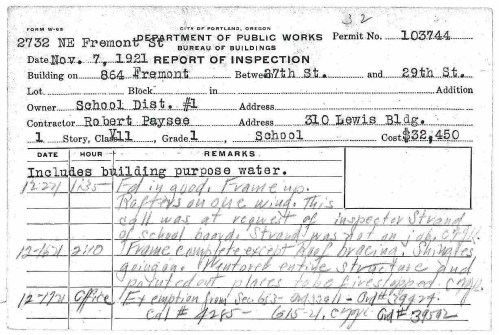
Original building record for Alameda School, taken out on November 7, 1921. Information from more than 1,025 Alameda Park building records were reviewed as part of the study.

When you aggregate the information from the permits, there are some trends and patterns that emerge:

The first observation has to do with the general timing of construction in Alameda Park, from just two homes built in 1909 to a peak of 139 built in 1922. One factor in the timing of this was the ebb and flow of the economy. Strong in 1910, but the infrastructure hadn’t yet caught up. Slow in 1918-1919. Explosive in the 1920s with both a strong economy and demand, and an infrastructure that was truly ready for development.

Building permits issued in the Alameda Park subdivision, by year, 1909-1934. From permit study by Doug Decker, 2010.

By 1934—the end of this graph—about 85 percent of the neighborhood had been built out (the late 1930s and 1940s are a mere trickle of a couple or three homes per year, if that). 1922 would have been an interesting time here in Alameda, with an influx of neighbors. If you haven’t read it, go back and look up our post about the Alameda Park Community Church and the pastor’s desire to bring together new neighbors who were strangers. That was 1922 here in Alameda.

Another observation from the permit study is to have a look at the spread of construction activity to see which portions of the neighborhood were built out first: the areas around 24th and Dunckley; 25th and 26th below the ridge; 29th and Mason; and 32nd Place (then called Glenn) from Mason to Hamblet. These highlighted areas below indicate in general the earliest construction from 1909 to 1912.

It’s also interesting to see who was doing the building during these years. A handful of builders built a large percentage of the homes. The list we’ve compiled below shows total homes constructed in Alameda Park by each of the most prolific builders. Many of these we’ve profiled here, others we’re still working on.

Builder Total Alameda Homes Built Building Activity
Oregon Home Builders 24 homes built 1914-1917
Ken Birkemeier 21 homes built 1932-1952
Harry Phillips 21 homes built 1921-1928
Matot Construction Co. 20 homes built 1921-1926
Frank Read 19 homes built 1923-1941
Nils O. Eklund 17 homes built 1916-1922
Grady Mahaffy 13 homes built 1922-1936
Wickman Building Co. 10 homes built 1921-1923

In addition to the general trends, there are specific sad stories: more houses than you might imagine have had fires (and fire repairs, hence the permit records). A couple of homes were actually struck by lightning. A fad of game rooms, recreation rooms and wet bars were put in during the 1950s, and even an exercise room way back when. Sadly, too frequent removal of trim, built-in shelves and other architectural details in a attempt at modernization (gasp). Interesting to note how many wooden front porches were rotting apart by the 1950s, and a spate of concrete porches and steps poured in replacement.

It’s also clear, when you look at the records, why Portland’s addressing system was changed in the early 1930s. Some of our homes here in Alameda have had three addresses prior to the Great Renumbering (particularly on NE Bryce Avenue) as numbers had to be skootched over to make room for new houses built on empty lots. Let’s just say the original numbering system was less than scientific. You can see this on the actual building permits themselves, where one address has been scratched out and the new one written in. History in the making. It wasn’t scratched out in the example above, but you can clearly see Alameda School’s pre-address change number: 864 Fremont.

Another observation as we completed the study was just how many homes do not have an original building permit. Over the years, for whatever reasons, the City has lost perhaps as many as 20 percent of the original building permits, particularly in the early years. For these homes, we have to rely on original plumbing permits which always give the construction date, but can be sketchy with owner and contractor information.

Regardless, as you handle these permits, some 1,025 in all, you feel time passing through your fingers. You see the clerk typists punching in the details. You sense the contractors standing in line, waiting at a counter wishing they could be back on the job site instead of in the permit office. You witness the many inspectors and their mostly neat observations, drawings, complaints and even sarcastic remarks in shorthand on the 4 x 6 manila cards.

And you can’t help but wonder what it will be like 100 years from now when someone wants to research the history of your house. What story will your house be able to tell?

Alameda History Presentation | January 23rd

We’ve just heard from our friends at the Architectural Heritage Center that there are still some seats left for the Saturday, January 23rd presentation about Alameda History. We’ll be taking a trip back through time to look at how the neighborhood developed, some of the key builders, and stories from across the years that help characterize the life and times of the Alameda Park neighborhood. The program runs from 10:00-11:30 a.m. at the Architectural Heritage Center, 701 S.E. Grand Ave., Portland.

Click here for more information about registration.

Alameda Community Church: The Rest of the Story

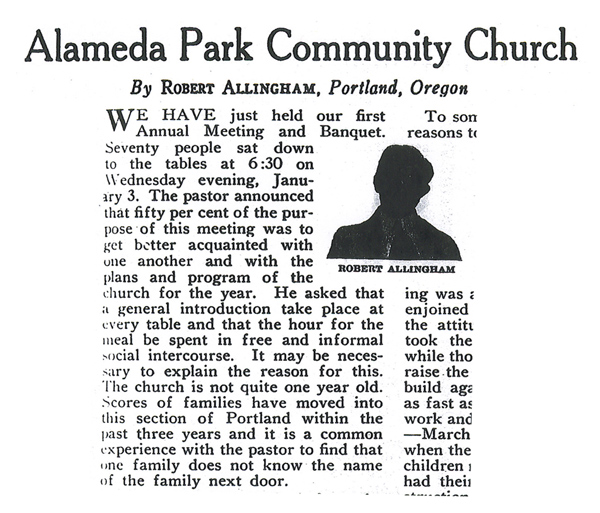
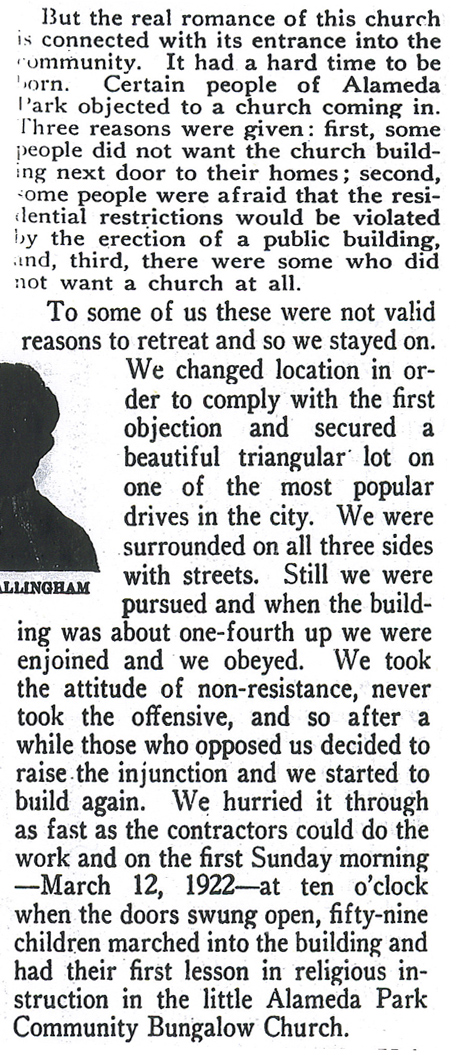
There are always at least two sides to any story (usually a lot more), and we’ve recently found a description of the events surrounding the neighborhood opposition to the Alameda Park Community Church that sheds further light on exactly what happened around here in the fall of 1921.

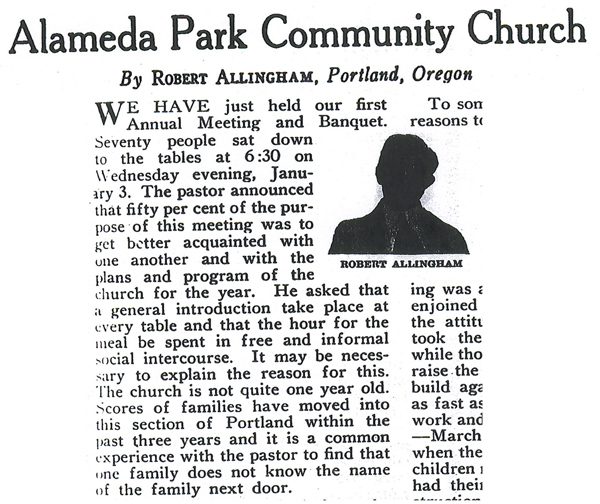
Let us whet your appetite with this clip, from the April 1923 edition of The American Missionary, published by the Congregational Home Missionary Society:

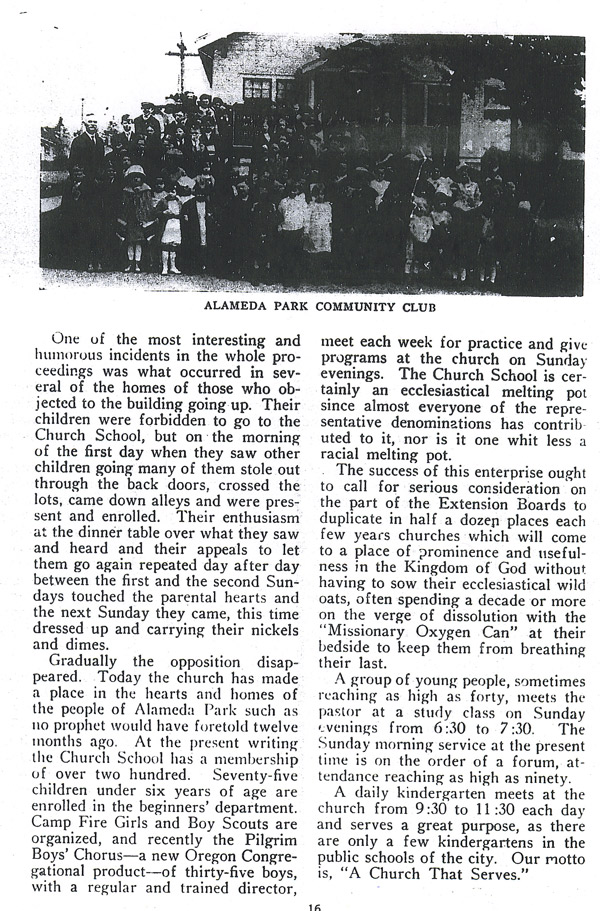
To help put this in context, if you haven’t already read it, we’d recommend reading the page on the church (today’s Subud Center) which you can find by clicking here. Be sure to have a good look at the photos too.

In order to appreciate what The Rev. Allingham is about to tell us, you have to know that some in the Alameda Park neighborhood were up in arms about the construction of the church at NE 30th and Mason. Several protests were organized, a petition got up, and a fair amount of consternation resulted, including relocation of a construction site. The story hits close to home for us because the leading petitioners were the folks who lived in our house for 50 years, and the original intended construction site are the two lots immediately north of us.

Let’s catch up with The Rev. Allingham: 

The turning of the other cheek. He continues:

The reference to the children from the homes that objected to the church: that’s probably Bruce and Jean Morrison who lived here and were probably some of those kids who snuck out the back door of home to check out Sunday mornings at the Bungalow Church. Hmm. And the church seems to have served the community up into the 1950s and early 1960s. We’ll continue looking for additional stories and articles that chronicle the building’s life and times. In the meantime, with The Rev. Allingham’s words in our minds, stroll past the building at Regents and Mason and listen for the echoes of all those children.

Alameda Park Community Church Drawings Found

If you’re a long-time reader of the blog, you’ll recall our piece on the controversy about construction of the Alameda Park Community Church (click here for that page). As a reminder, in the Fall of 1920, neighbors were not happy about plans to build the church on two lots at the southwest corner of 30th Avenue and Mason. The former owners of our house—Walter and Edith Morrison—led a campaign to oppose the building, and then to relocate the planned construction one block east to the island at the corner of Mason and Regents where it was ultimately built (but not before trying unsuccessfully to kick it out of the neigborhood altogether) .

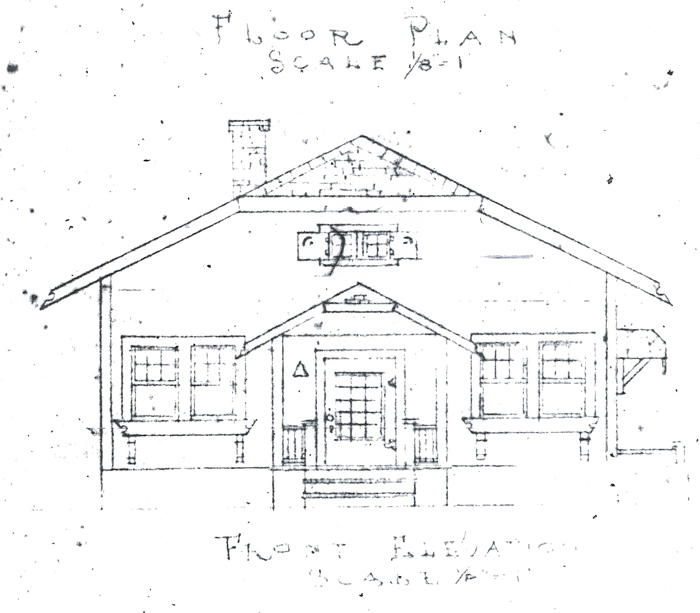
While researching recently through building permits and related documents filed on microfiche, we came across the original drawings for the building, all filed for construction at 30th Avenue and Mason. Take a look:

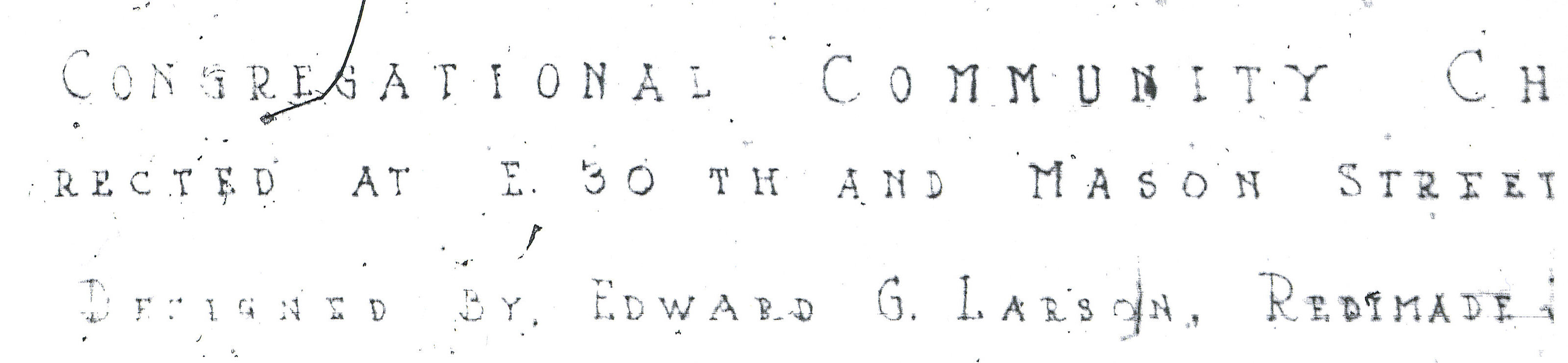
Detail from elevation drawings filed with construction documents for the city’s permit process. Note that the building was designed by architect Edward G. Larson, working for Redimade Building Company (which was based in Portland).

The church building, now known as the Subud Center, is still going strong and a neat place for meetings, events and large family gatherings.

We continue to keep any ear out for stories, memories and photos of this building. Have something you can share?

Save the Date: January 23rd Alameda History Presentation

Interested in learning more about Alameda? I’m doing an education program for the Architectural Heritage Center, which has been rescheduled to Saturday, January 23rd from 10:00-11:30 in the Center’s auditorium on Southeast Grand Ave. It will be a good opportunity to have a closer look at the evolution of Alameda, and specifically at several of the prolific builders and their design styles that have shaped the neighborhood we know today. It’s also a great excuse to drop by and get to know the Architectural Heritage Center a little better. And you might even meet a neighbor or two!

You can find more information about the program, and a link to registration, at the AHC website: http://www.visitahc.org/content/upcoming-programs

Style Points | The Mediterranean

There aren’t many of these in the neighborhood, so they tend to stand out proud and clear: the Mediterranean, with its distinctive tile roof and stucco exterior, is a time traveler from a very specific period in Portland’s residential architecture history.

This home at 2506 NE Ridgewood, built in 1925 by Emil G. Peterson, is a classic example of the Mediterranean style in the Alameda neighborhood. Current resident Clayton France is underway with restoration work.

This home at 2506 NE Ridgewood, built in 1925 by Emil Johnson, is a classic example of the Mediterranean style in the Alameda neighborhood. Current resident Clayton France is underway with restoration work.

First beginning to appear with the housing boom of 19-teens and early 1920s, the Mediterranean style quickly became popular, with multiple grand homes built particularly in high-end Portland Heights and Willamette Heights neighborhoods, but also with more modest versions scattered through Irvington and Alameda.

While much of the surrounding housing stock of the time was clad with shingles, clapboards and the distinctive angular features associated with the Craftsman era, the Mediterranean style offered a more exotic and even romantic feel. Characteristic design elements tie to centuries-old classic materials and structures, including terra-cotta tile roofs, graceful archways, white-washed smooth stucco exteriors, and hipped-roof towers. Look for small porch-like tile-roofed entries (called loggias), and long narrow—often arched—casement windows.

All of these features conjure up romantic visions of Tuscan villas, rolling hills and established old settlements rooted in generations of storied history, which of course young Portland didn’t have a lot of in the 19-teens. But the appeal of this stylistic message, particularly here in a brand new neighborhood at the edge of a booming western city, was clear enough for some speculative home builders to give it a try.

A perfect example of the style here in Alameda is the home at 2506 NE Ridgewood, built in the spring of 1925 by local builder Emil Johnson. Johnson, and his younger brother Ernie Johnson (both Swedish immigrants, and both home builders) were busy in Alameda and Irvington during these years, but this is the only Mediterranean he built. Johnson designed and built this house, and likely took special care in its construction because it’s where he and his family lived (his daughter Eileen lived in the house all her life).

Look at the arched and roofed front entrance, the long casement windows, the terra-cotta roof tiles, the hipped-roof stair tower at the entry, and the wrought iron balcony railings: design elements that trumpet the Mediterranean-Italian connection.

Like so many aspects of American life that changed in the early 1930s, the Great Depression signaled the end to the popularity of the Mediterranean style as well. People went back to basics and the seemingly frivolous romance of the 1920s was seen as part of the problem. But this home, like several other Mediterraneans in the neighborhood, remain as a classy souvenir from the past, and a fine example of the diversity of architectural styles that make up our neighborhood.