Prescott Fountain–Hunderups

I’ve embarked on a line of research that involves trying to understand the businesses that have served Alamedans over the years, with a focus on the smaller shops that existed around the perimeter of the neighborhood. Here’s one that will bring back some memories for those who knew it, and will intrigue those of us who didn’t.

Prescott Fountain, 1955
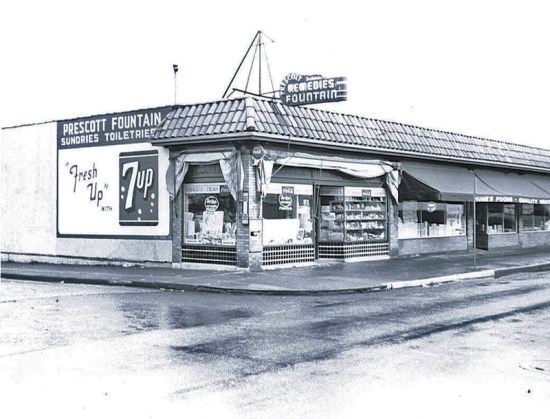
 prescott-fountain-1955

This view is looking northeast from the corner of NE 29th and Prescott. Photo courtesy of Tom Robinson, Historic Photo Archive. Below is the same place, 54 years later.


Food King Market, 2009
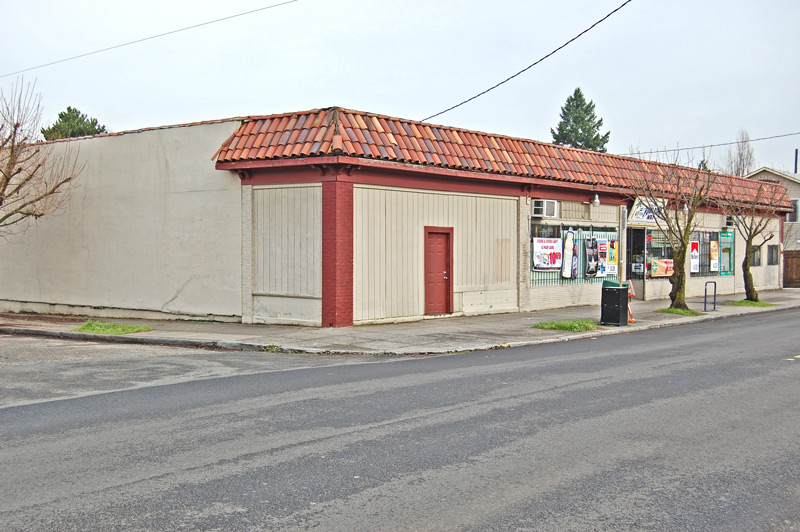
food-king-2009

We live not too far from Food King and drop in from time to time, almost always in the evening after other stores are closed, to get a gallon of milk for the morning. When I found this 1955 picture, I stopped in to see if the owners knew anything about the building, but they don’t, so I turned to others I know (thank you Steve Goodman and John Hamnett) who do.

The building was built in 1922, so there are a couple of generations who shopped here before this early picture was taken, and about which we don’t know much (yet). But here’s the lowdown on this place from the vantage point of the mid- to late-1950s.

I’ll let Steve Goodman tell this story from here:

First, this is actually four businesses. The left door (about one-quarter of the total building), was the Prescott Fountain. But no one called it that. From the late 50’s until it closed (sometime in the mid to late 60’s), it was know as Hunderups, for its owner (we kids pronounced it “Hun-drups”).

It was not what you might envision.  Likely in earlier days it was a modern, clean, well respected establishment, but that’s NOT how we knew it. Adults would never go in there.  It was a dingy hang-out for kids. Emphasis on dingy. It was dark (seemed like only about  two lights lit the whole place), dirty (old Mr. Hunderup, who resembled Charley Weaver, let the store go into disrepair and never cleaned it). The product on the shelves was all old and never sold. Items you’d expect in a old drug store, hot water bottles, etc.

But it did have an old fashioned counter and stools where grade school and high school kids (boys — never a girl) would gather.  He’d have candy behind the counter, but we hardly ever bought it, as fresher was available next door.

The attraction was the iced Cokes in a bottle. I don’t remember, probably a nickel or dime each.  He’d keep them in a “too cold” refrigerator, and kids would go there to socialize in an “adult free” zone, and drink the Cokes from the bottle with a straw. Sometimes Mr. Hunderup would have to break thru the ice with his ice-pick so we could get the straw in.

Rumor has it that someone once saw a rat running thru the store.  Maybe yes, maybe no – but in this dark, dirty establishment it wouldn’t surprise anyone.

My mother went in Hunderup’s once (once) looking for some item, and I think she disallowed me from going in there again — or couldn’t figure out why we’d want to.

I got the feeling that before it was the run-down place we knew, Mr. Hunderup might have owned it when it was nice and new(er), but just let it get run-down.  Looking back, he loved seeing us and chatting with us while we kept him in business.

Mr. Hunderup passed away in the late 60’s. They cleaned it all out (and we joked about how much they probably had to fumigate the place), and it soon became part of the store next door.”

Steve explains that the second door from the left was a thriving, clean, well-lit family owned neighborhood grocery called Hume’s Foods…you can see it on the awning in the photo. It sold in 1963 to the Brandel family (which later owned Alameda Foods at 24th and Fremont).

Steve remembers…

It was unlike the convenience stores of current.  They had a large produce section on the east side of the store. In the back was a large butcher case, well stocked and staffed by a real butcher. While this wasn’t a “supermarket,” it’s where many in the neighborhood did their weekly shopping; always busy. And it had several adults working there – back when they could support a family with that type of job.  No turnover, but the same people.  Mr. and Mrs. Brandel would always be in.  I can remember their faces like it was yesterday.  They kept ledgers behind the counter where some customers ran a tab.”

On the east end of the building, down beyond Brandel’s, was a beauty shop and a barber shop, complete with the twirling red and white barber pole and a row of hair dryers against the wall.

What do you know about this place? Care to share a memory about another neighborhood business?

Post Script| March 28, 2009: Thanks to the helpful memory of blog reader Steve Turner, we know that the proprieter was named August Herman Hunderup. I’ve done a little genealogy on Mr. Hunderup and learned that he was born in 1891 in Minnesota. In the 1920 census, he’s living with his parents on SE 87th Avenue and is listed as a “minister” at a Catholic Church. Death records show he passed away on September 3, 1970. I’d love to hear from any family members, or others, who have a memory of Mr. H and his quirky, memorable shop.

The First Alameda School

When most Alamedans think about our lovely old Alameda Elementary School, we are probably thinking about the beautiful and classic building that stands today on NE Fremont between 27th and 29th. Built in 1921, this school has been the neighborhood hearth for generations.

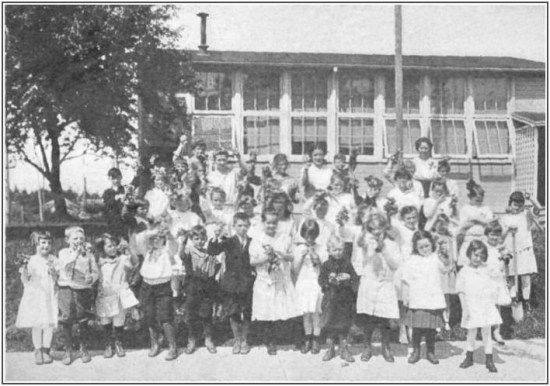
But did you know there was an even earlier Alameda School? I came upon this tidbit while reviewing 1914 articles from The Oregonian, but never dreamed I’d find a photo of the place. You can imagine how pleased I was to find this remarkable shot of the first school in the neighborhood, built in 1915. Check it out:

"First crop of radishes and lettuce at the Alameda Park School, Portland, Oregon, June, 1916. Even in the primary grades children may learn much about the science of growing things. Courtesy L.A. Alderman"

The original caption reads: "First crop of radishes and lettuce at the Alameda Park School, Portland, Oregon, June, 1916. Even in the primary grades children may learn much about the science of growing things. Courtesy L.A. Alderman"

The photo is from a book published in 1919 by Rand McNally called “Vocational Guidance for Girls,” by Marguerite Stockman Dickson. You can have a look at this book (a remarkable story all on its own), thanks to Project Gutenberg, by clicking here.  The Alameda photo is in Chapter V, where you’ll find some other interesting photos from Northeast Portland.

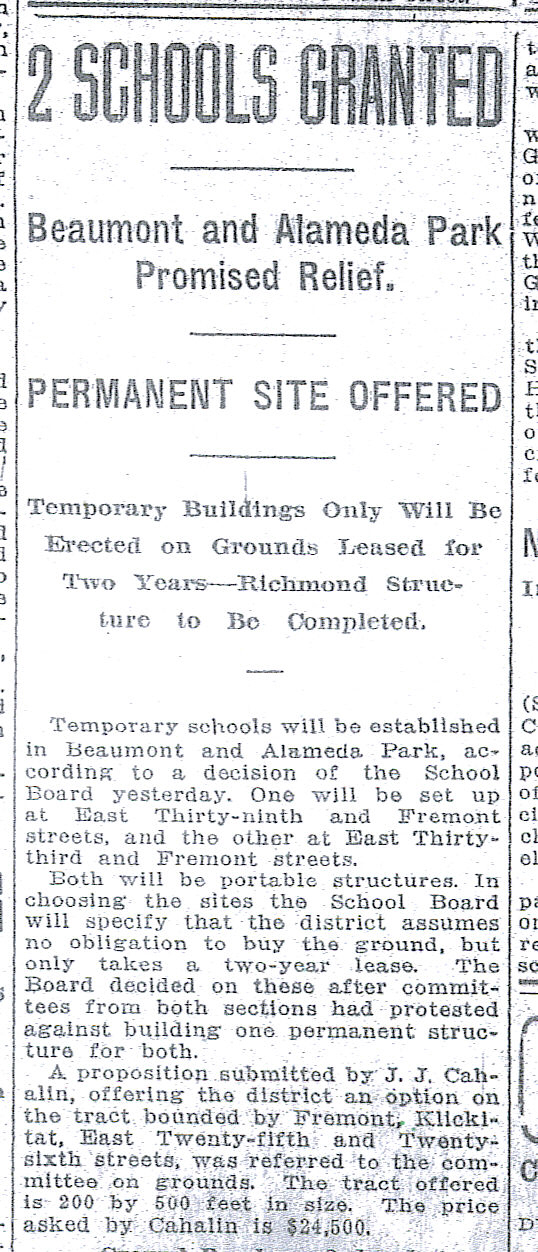
The caption clearly identifies this as the Alameda Park School in Portland, Oregon. That’s us. Pair this up with the news story from The Oregonian on September 18th, 1914 and we can begin to fit some pieces together. Take a look:

From The Oregonian, September 18, 1914.

From The Oregonian, September 18, 1914.

Things to ponder:

  • This original small school building was viewed as temporary when it was first built. Only a relatively small percentage of homes had been built in the neighborhood by then, so it was clear there would one day be a real need. Not so much in 1915, but local kids still needed a local school.
  • It was first imagined in context with a school up the road in the Beaumont neighborhood, which was also to be temporary. Like Alameda, that neighborhood was just starting out in 1915.
  • The newspaper indicates that one site for the school was at the top of Gravelly Hill, NE 33rd and Fremont. It also says the site being offered by J.J. Cahalin was on Fremont between 25th and 26th, the next block west from the current site of the Fremont United Methodist Church. I didn’t find a follow-up story, nor have I looked at the property records, but my hunch just from looking at the photo is that the Cahalin site was selected over the one at the top of the hill. I’ll run that down next time I’m looking at property records, but that just seems likely.
  • Interesting to note the tall windows, lattice-work porch and woodstove chimney. And the fact that the kids had a busy and productive garden.

Where did it sit exactly? Who built it? Who was headmaster? Mysteries yet to solve.

A History of Snow

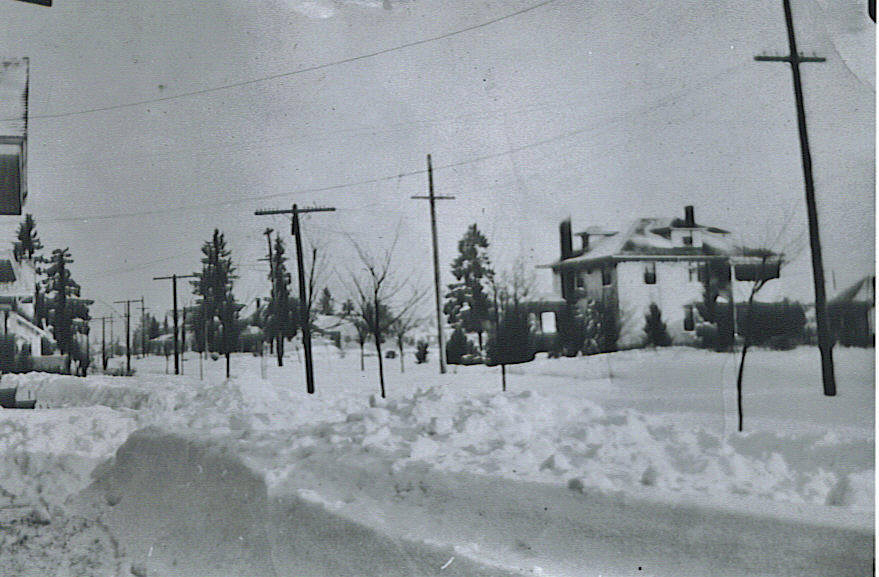
Winter 1936

Winter 1936, looking north on NE 30th toward intersection with Mason.

Winter 1936, looking north on NE 30th toward intersection with Mason. Click for a larger size image.

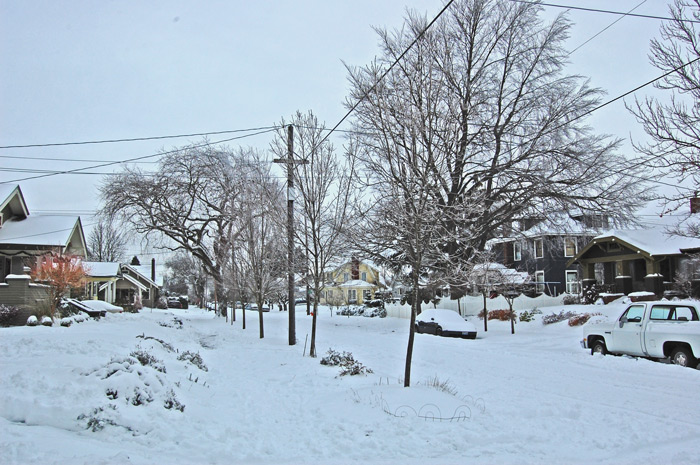
Winter 2008

Winter 2008. Looking north on Northeast 30th toward Mason.

Winter 2008, looking north on NE 30th toward Mason. Click for a larger size image.

There’s a great Billy Collins poem called “A History of Weather” that I’ve been thinking about all week. We’ve had a lot of snow here in Portland, not record-breaking, but still more than anyone has seen around these parts for 40 years. Right now we have about 15 inches on the ground and the city has been at a virtual stop for the last couple days. We started to thaw today, but another 4-8 inches of snow are in the forecast for the next couple days.

In the poem, Collins creates a funny, wistful elegy for atmospheres of the past, and contemplates weather as a common human bond across the ages. Contemplating what a weather history poem should include, Collins writes, “There will be a section on the frozen nights of antiquity…” I’ve been thinking about the frozen days and nights of the past, the transforming quiet and joy visited on the kids of this street and neighborhood over the years.

So after shoveling the front walk yesterday, I dug into my Alameda archive and found a picture taken a few doors south of my house in 1936, the year Portland received about 35 inches of snow. The photo has been passed down to me by the family of the little boy who grew up here in the teens and twenties. He was fledged by 1936 (family members were in the house til the late 1950s), but the photo stayed in his family because it depicted remarkable conditions.

Being obsessed with lining up past and present for clues, I prowled around this morning hunting — camera in one hand, old photo in the other — for the original photographer’s footprints, which are not entirely available today due to some landscaping changes down the block.

The big house on the corner (white in 1936, blue today) is the Copenhagen House, built in 1912 by the family of Les Copenhagen. Today’s big beech in the sideyard is just a start of a tree in 1936. Power poles have thinned out a bit, though still an eyesore. The gable end of the house facing the camera up the block can be seen in both images. A little closer in, if you squint at the 1936 image, you can see Walter Morrison out shoveling the front walk of my house. Farther up the block and across the street, today’s yellow Dutch colonial was just a vacant lot. Other vacant lots allow a view off into the distance.

Families in 1936 probably took pictures of their unusual winter weather event, just like we have this week. Unfortunately, most of those images are lost to time. We’re lucky to have this one, 71 years old. Makes you think about the pictures you take, the pictures you save, the pictures you decide to throw. I’m always on the lookout for old pictures of Alameda…

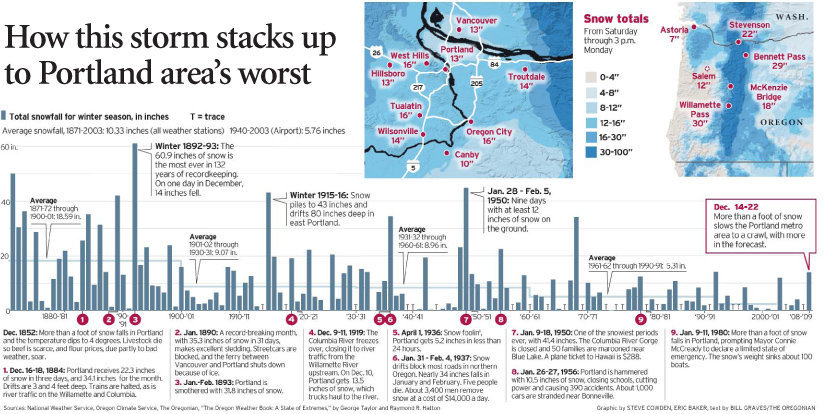
To cap off this entry about the history of snow, thought I’d share a very interesting info-graphic from The Oregonian today that clearly indicates that our predecessors knew a lot more about snow than we do. Check it out:

From The Oregonian, Page 1, 12-23-08

From The Oregonian, Page 1, 12-23-2008. Click for a larger size image.

For more insight and photos on Portland’s winter weather history, check out this post from February 2021 which turns back the clock on ice storms and river ice well into the 1850s.

Grant Park Grocery & Market

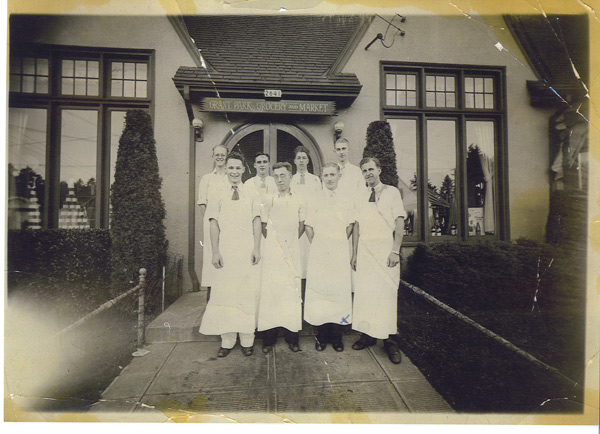
Grant Park Grocery and Market, about 1933. Photo courtesy of Jerry Hoffelner

Grant Park Grocery and Market, NE 33rd and Knott, about 1933. Photo courtesy of Jerry Hoffelner. The man in the first row, second from the right with the blue “x” penned onto his apron, is Jerry’s dad, George Hoffelner. The other men have yet to be identified. Can you help?

I’m researching a very old house near 29th and Knott. One of the many people who lived in the house over the years worked for a while at the Grant Park Grocery and Market, which we know today as the Family Medical Group office on the southwest corner of NE 33rd and Knott.

The image above, taken about 1933, shows the grocery staff decked out in their white aprons ready for action. Like many small stores, these guys often delivered the groceries direct to your door…an idea recently picked up on by some of the modern mega-grocery stores.

This image is taken on the east face of the building (facing 33rd). The original entrance for the market was not on the diagonal at the corner like it is today, though it seems there was always an entry there. My hunch is that was the entry to the pharmacy and fountain that used to be there. The grocery business was owned and operated by Ernest Bjorklund. Next time you are stopped at the light there, have a good look at this interesting building and tip your hat to Mr. Bjorklund and his squad of helpful grocery clerks.

I’m looking for any help with memories, stories, photos or information about either the Grant Park Market or the pharmacy and fountain.

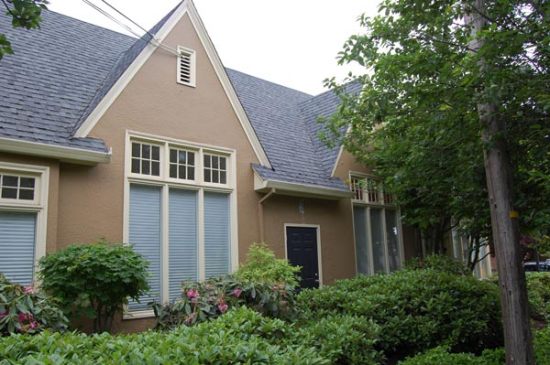
Here’s a shot of that same spot today. The door appears to be an “emergency exit” today. The graceful lights are gone, as is the cool curved doorway and the sidewalk ramp leading to the door (it’s now just part of the garden bed).

Grant Park Grocery and Market building, June 2008

When Research Pays Off

pair-1-then.jpg pair-1-now.jpg

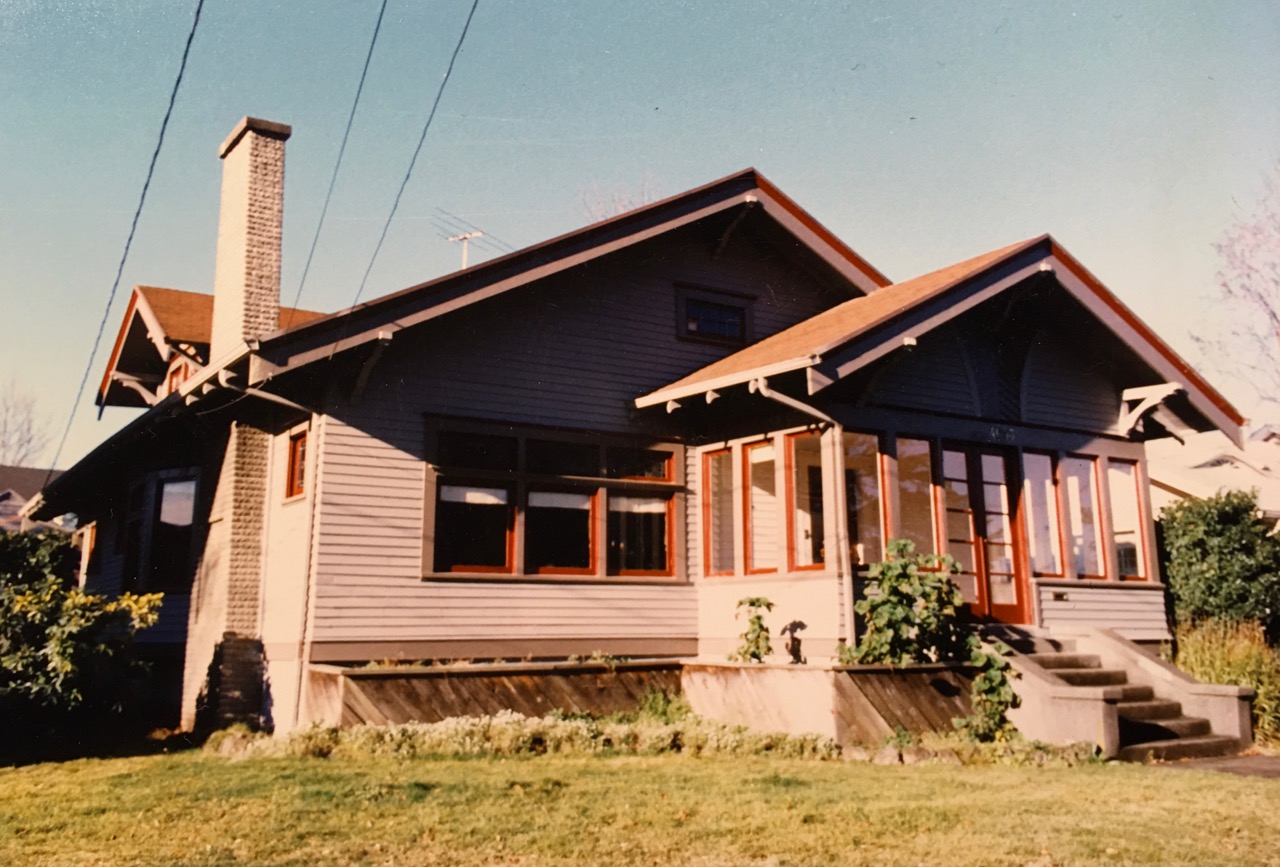
In the 1940s, after 30 years of exposure and wear-and-tear, the family living here decided to remodel their deteriorating front porch. They removed the columns and poured a concrete deck. Then they enclosed it with casement windows and turned it into a sun porch. Below is what it looked like when we moved in in the late 1980s:

Front porch, December 1989

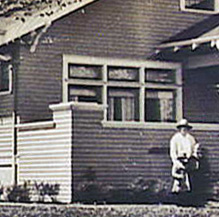
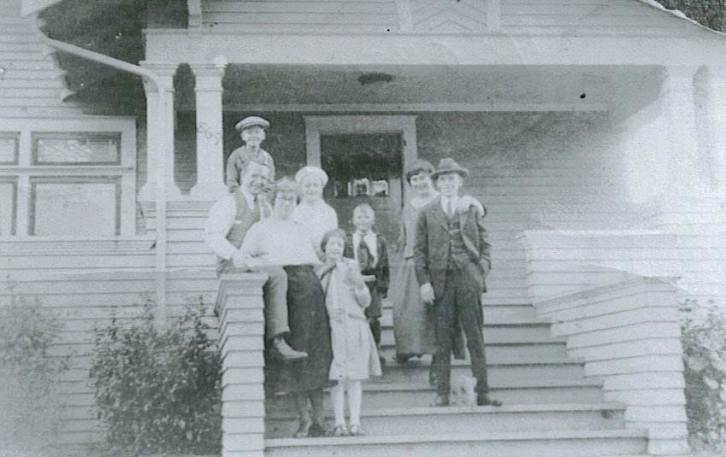
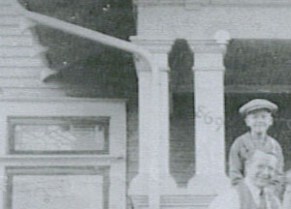
Our detective work on the reconstruction showed the ghosts of some early columns and other features, but we had to use our imaginations to guess at what it looked like originally. I had been looking for members of the family who lived in our house (one single family was here from 1912 until 1959, which is a good long time for one family to be in the house…we were lucky in that). Through determined research, I found the little boy who grew up here…he was in his 90s when I found him. That’s Bruce Morrison in the cap with his hand on his dad’s shoulder on the left side in the photo below. We had lunch together and he told me all about growing up in our house.

pair-3-then.jpg

pair-3-now.jpg

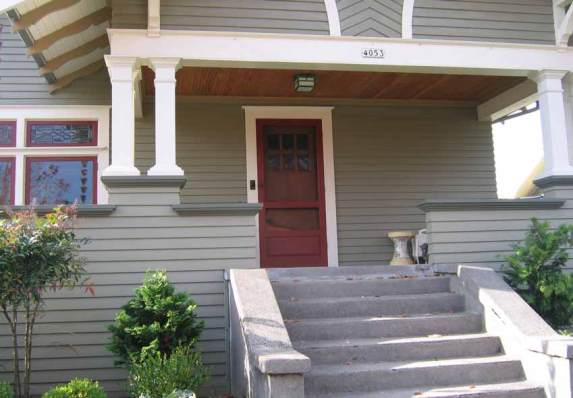
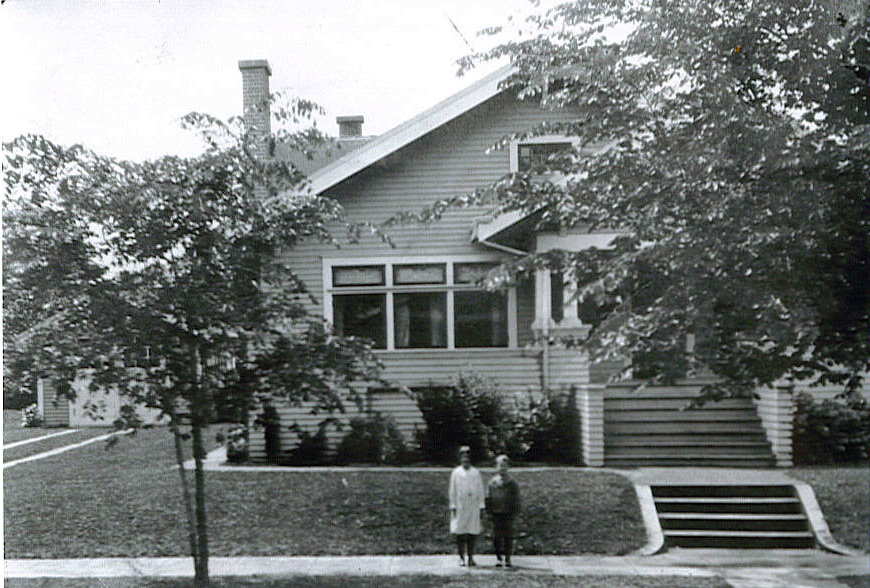
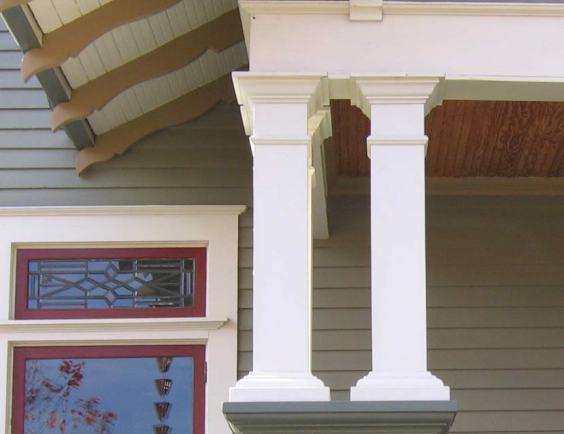
In addition to sharing all kinds of stories about the house and neighborhood, Bruce put me on to a bunch of photographs of the house from the teens and early 1920s. Jackpot! We couldn’t believe our eyes. We were generally right about the columns, but the idea of the extended porch, with its false pedestal corners, was well beyond our imaginations.


Photo courtesy of Morrison Family

So, we sat down at the drawing board, old photos in hand, and did some scaling of the ghost porch using measurements of house parts visible then and still here today. And then we found a very talented and patient carpenter to put it all back together.


pair-2-then.jpg

pair-2-now.jpg


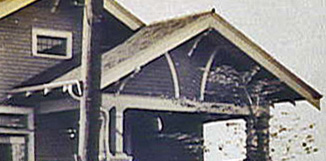
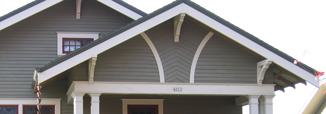
roof-then.jpgroof-now.jpg

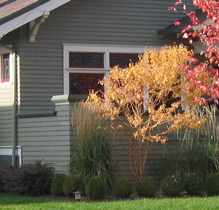
After a little landscaping and reconstruction of some long-gone sidewalks, we’re confident the family who moved in those long years ago would clearly recognize the place today. Research pays off: you might be surprised at what you’ll learn.