Spring history walks and program calendar set

Planning for spring and summer season guided history walks is underway: I’ll be leading four walks for the Architectural Heritage Center through Northeast Portland neighborhoods. Registration (and fee) with AHC is required for these, and they’ll send you meet-up details as well.

Coming right up on Friday, March 6th at 5:00, I’m doing a free program at the Oregon City Library looking at Portland’s historic love affair with the Willamette River: Windemuth and Bundy’s: Where Portland Played in the River. The OC Library requests registration (which is free!).

Just an FYI, I’m always glad to consider leading walks and programs for groups interested in exploring local history. Let’s talk if you’re interested. Meanwhile, have a look at the calendar:
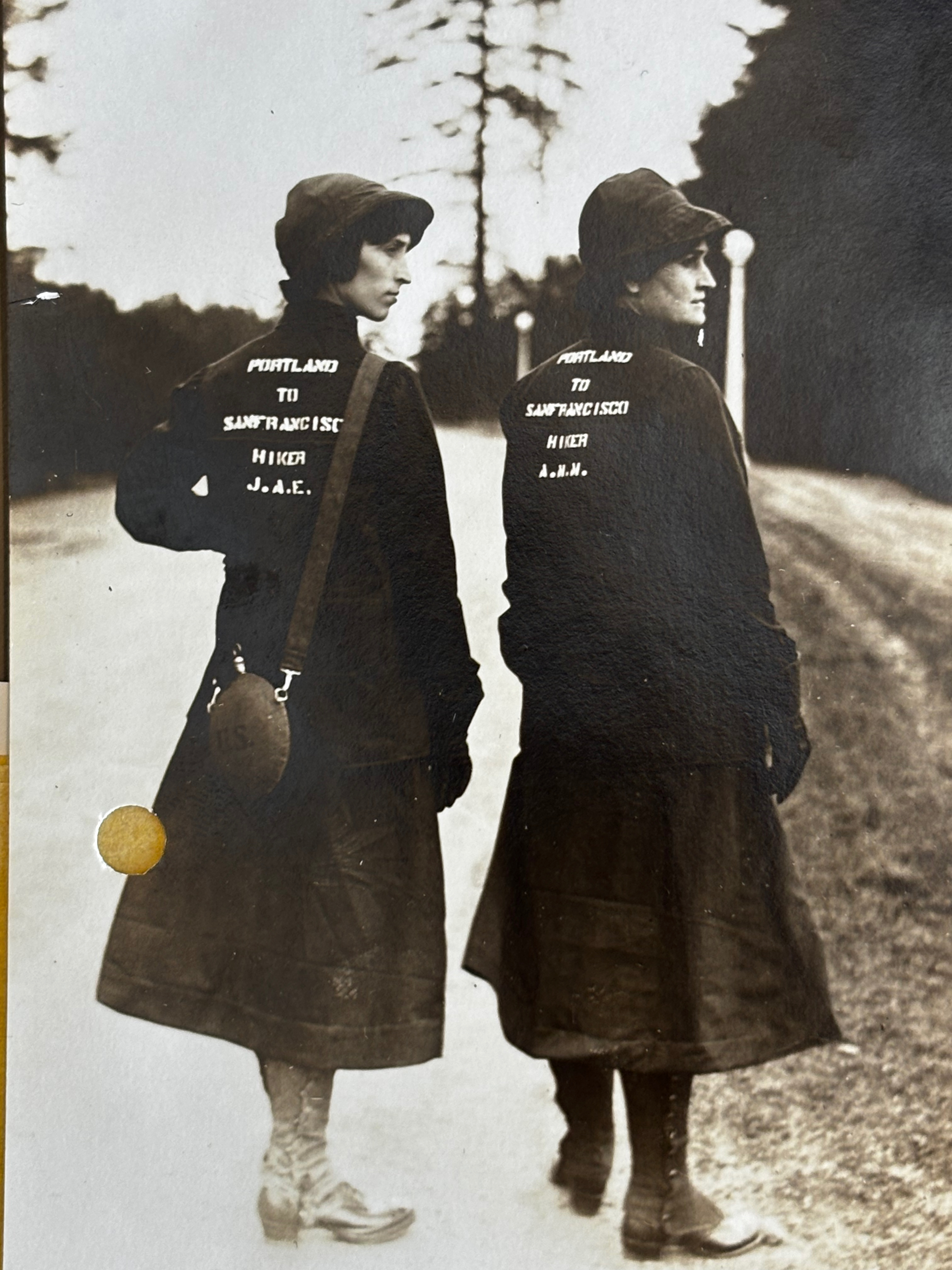
We won’t be walking to California like this Portland mother-daughter duo from 1915 who always inspire us. But we will be walking! Join the fun.

Saturday, May 30, 2026 at 10:00 am – Beaumont Neighborhood History Walk

One of Northeast Portland’s signature planned neighborhoods, Beaumont—“the beautiful mountain”—was platted in 1910, had its own named school, business district and streetcar route, and was home to one of Portland’s wealthiest and most powerful families that built a compound for its seven children. Join me for a walk along Alameda Ridge that ties these stories together and explores 116 years of neighborhood development. Registration link.

Saturday, June 6, 2026 at 10:00 am —Wilshire Neighborhood History Walk

Northeast Portland’s Wilshire neighborhood has long been tied to its neighbor Beaumont. But its history and development followed a very different trajectory. On this Saturday morning stroll, we’ll walk through a planned neighborhood that was never developed, explore multiple attempts to create Wilshire Park (which almost failed!), and line up with then-and-now photo points that show dairy pasture and forest stands at the heart of today’s residential neighborhood. Registration link.

Tuesday. June 30, 2026 at 10:00 am —Alameda Neighborhood History Walk

This Tuesday morning walk will explore the connections between past and present that shape the Alameda neighborhood we know today. This 90-minute stroll will cover just over a mile with multiple stops focusing on pre-development conditions, planning and construction of the neighborhood, the Broadway Streetcar, architectural house styles, and stories of local interest. Most of this walk is on flat terrain other than a gradual stretch that ascends the Alameda Ridge. Registration link.

Tuesday, July 14, 2026 at 10:00 am —Vernon Neighborhood History Walk

Come explore the layers of history in the Vernon neighborhood, from development of Alberta Park, to the fall and rise of neighborhood schools, to patterns of redlining from the 1930s-1950s, the presence of dairies, a much-loved old synagogue, a popular streetcar and a street full of small businesses. We’ll walk back in time to understand the how legacies of the past have shaped the neighborhood of today. Registration link.

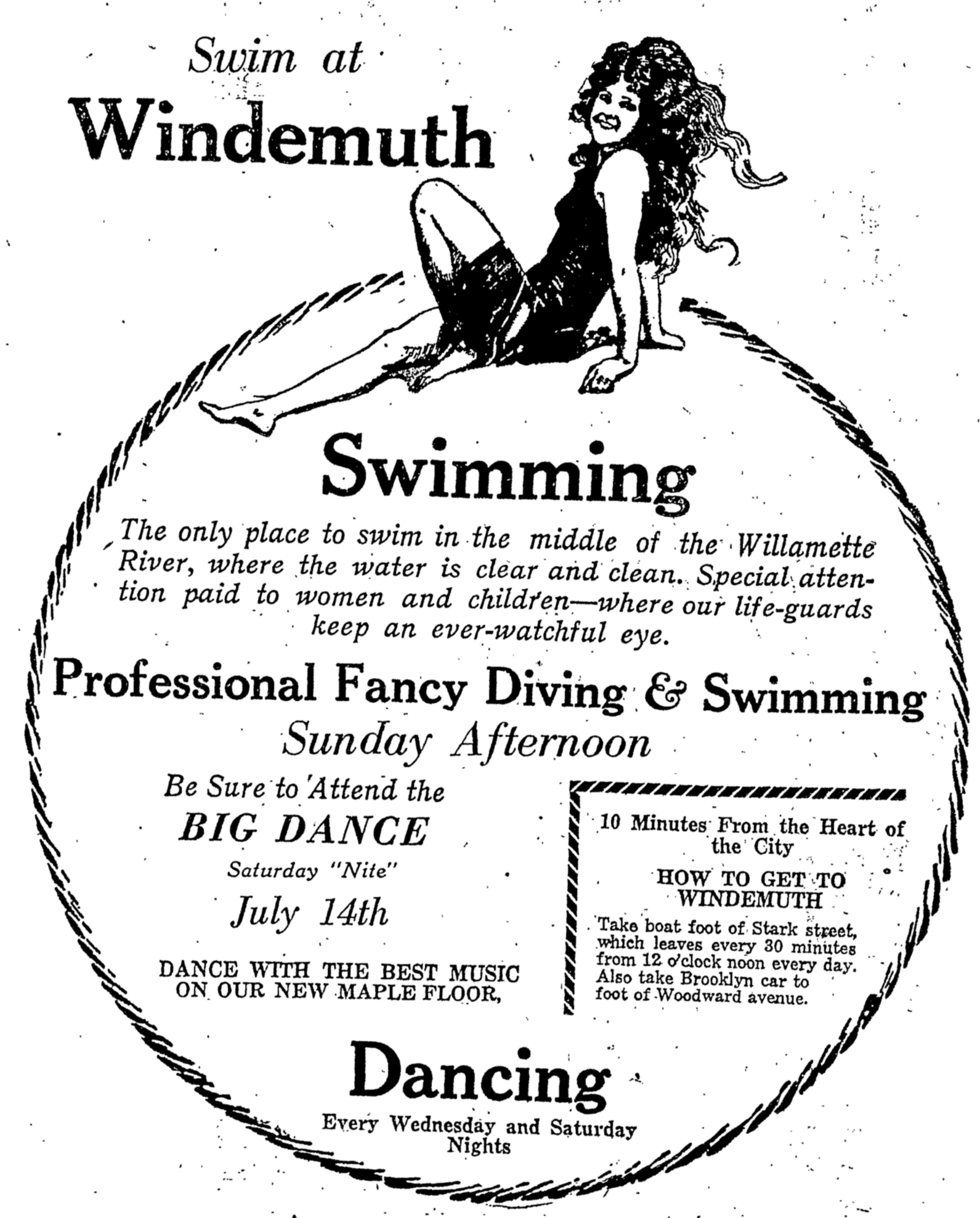
River History kicks off scheduled summer programs

It’s not too late to sign up for one of the programs we’re doing for the Architectural Heritage Center this summer, kicking off this Saturday morning with a program at AHC focused on Portlanders’ historic connection with the Willamette River.

Saturday, May 10th from 10:00-11:30 we’ll explore the colorful history of Portland’s southeast waterfront in the vicinity of Ross Island, where Portlanders flocked to two hugely popular swimming and waterplay venues: Bundy’s Baths and Windemuth. We’ve written about these here on the blog and will be delivering a program with photos, maps and stories that help bring these former Portland water recreation mainstays back to life. Program based at AHC, 701 SE Grand, Portland.

Vernon Walk – Thursday, June 5th from 6:00-8:00 p.m. we’ll be leading a history walk that explores the Vernon neighborhood, from development of Alberta Park, to the fall and rise of neighborhood schools, to patterns of redlining from the 1930s-1950s, the presence of a dairy, a much-loved synagogue and a street full of small businesses.

Alameda Walk – Wednesday, June 11th from 10:00-Noon This walk through the Alameda neighborhood will include insights about pre-development conditions, planning and construction of the neighborhood, the Broadway Streetcar, home construction and architectural styles and points of local interest including the story behind Deadman’s Hill and the 1920s uproar over the former Alameda Park Community Church.

To register or for more information about these programs, visit the Architectural Heritage Center online.

Vernon Tanks: Water arrives, but more storage capacity needed

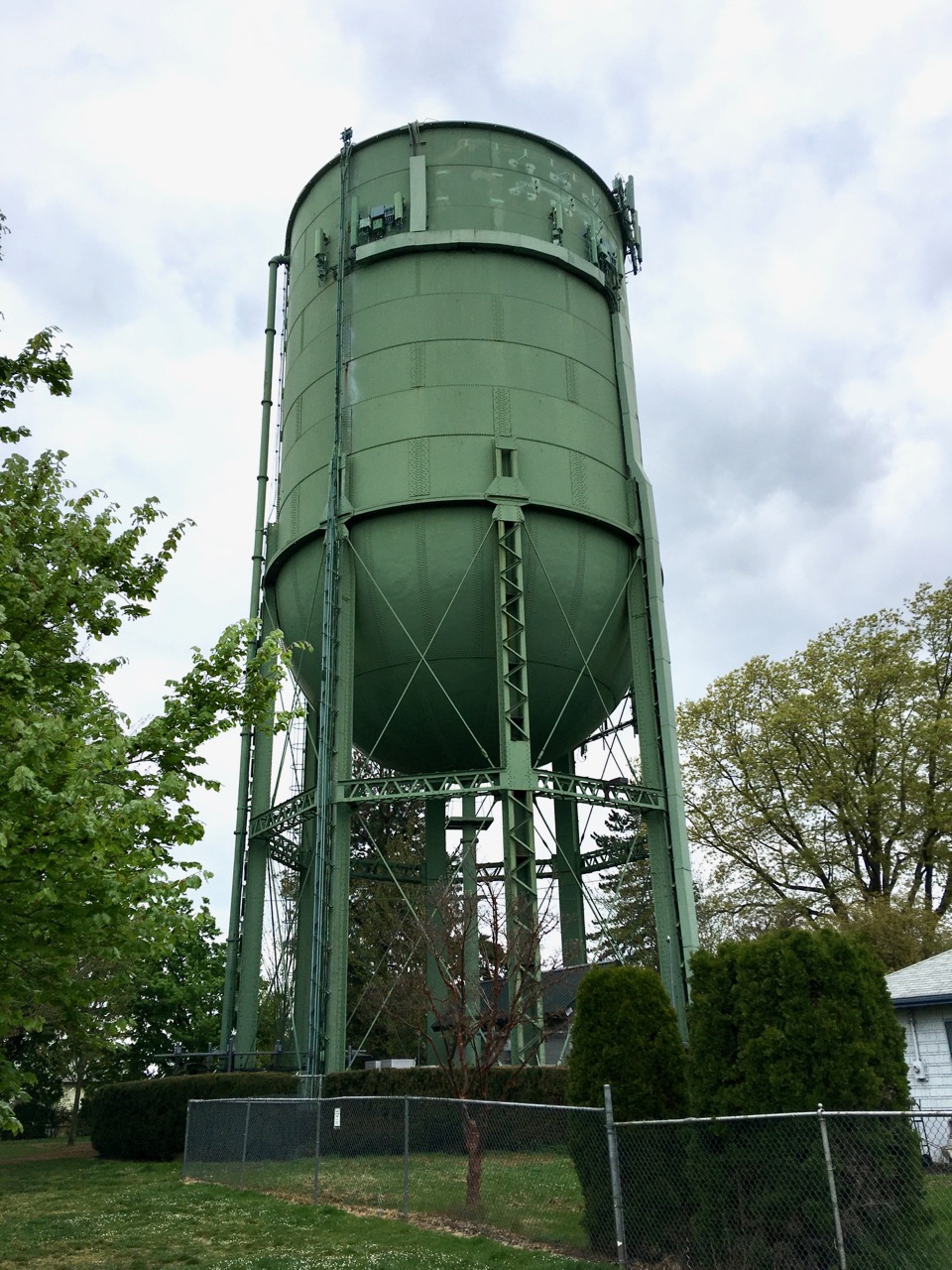
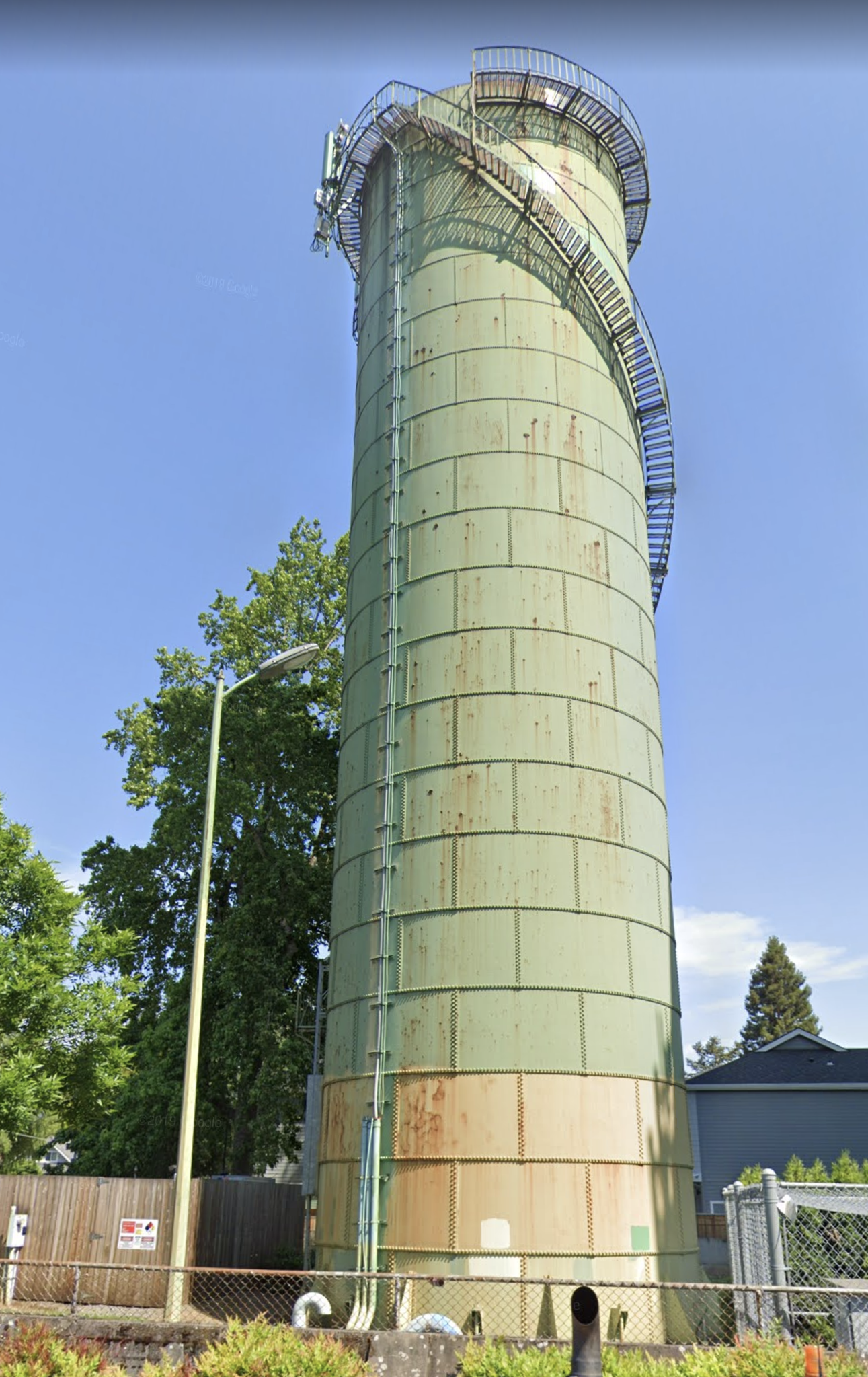
We’ve been thinking these days about the history of the big green giants that anchor the block at NE 19th and Prescott. In our last post we learned about the “Vernon Standpipe” as it was called, and the challenge in the 19-teens of keeping it filled with enough water to supply the neighborhood that grew up around it. That is, until this tank came along almost exactly 100 years ago.

The senior of the two tanks at NE 19th and Prescott, constructed in the fall and winter of 1920-1921 for $100,000 by the Chicago Bridge and Iron Company, holding 1 million gallons. Photographed April 21, 2020.


In our first installment, we left our expectant City Commissioners at the corner of NE 57th and Fremont with a shovel in their hands ready to dig a 14,280-foot long trench for a big new pipeline that would push more water from the Mt. Tabor reservoirs into our thirsty neighborhoods.

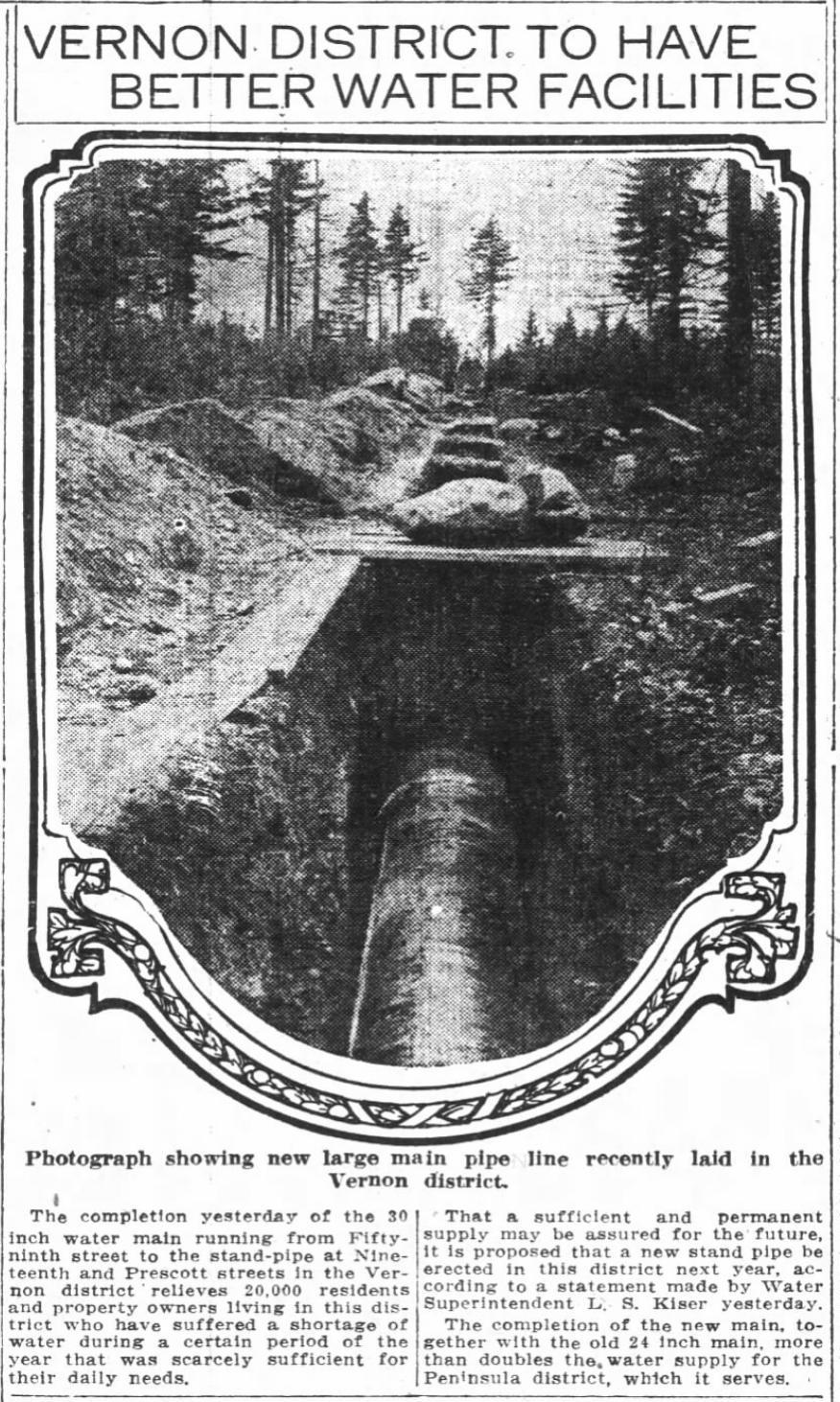
From The Daily Oregon Journal, August 8, 1915. This wooded street scene is likely somewhere along NE Skidmore before the residential neighborhood we know today had taken shape.


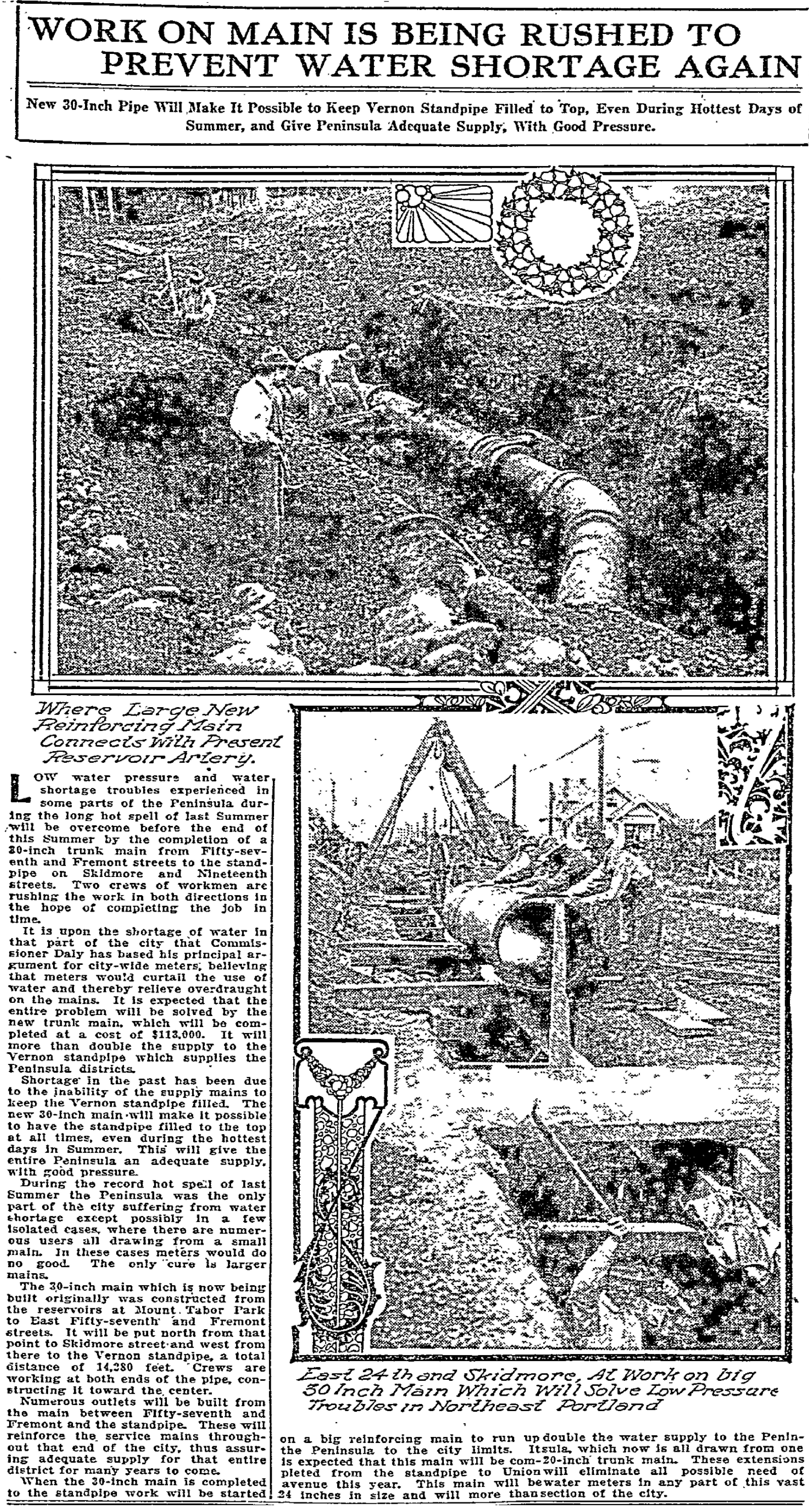
The pipeline dig began on April 16, 1915 powered by 59 unemployed men hired from the city’s standing civil service list. By May, workers at both ends of the project were working toward each other. Promises had been made to alleviate the water shortage by summer, so momentum was important and the newspapers took note.

From The Oregonian, May 16, 1915. Interesting to note that the picture in the lower right shows the intersection of NE 24th and Skidmore, the spot where this water main broke in March 2019 flooding homes and local businesses.


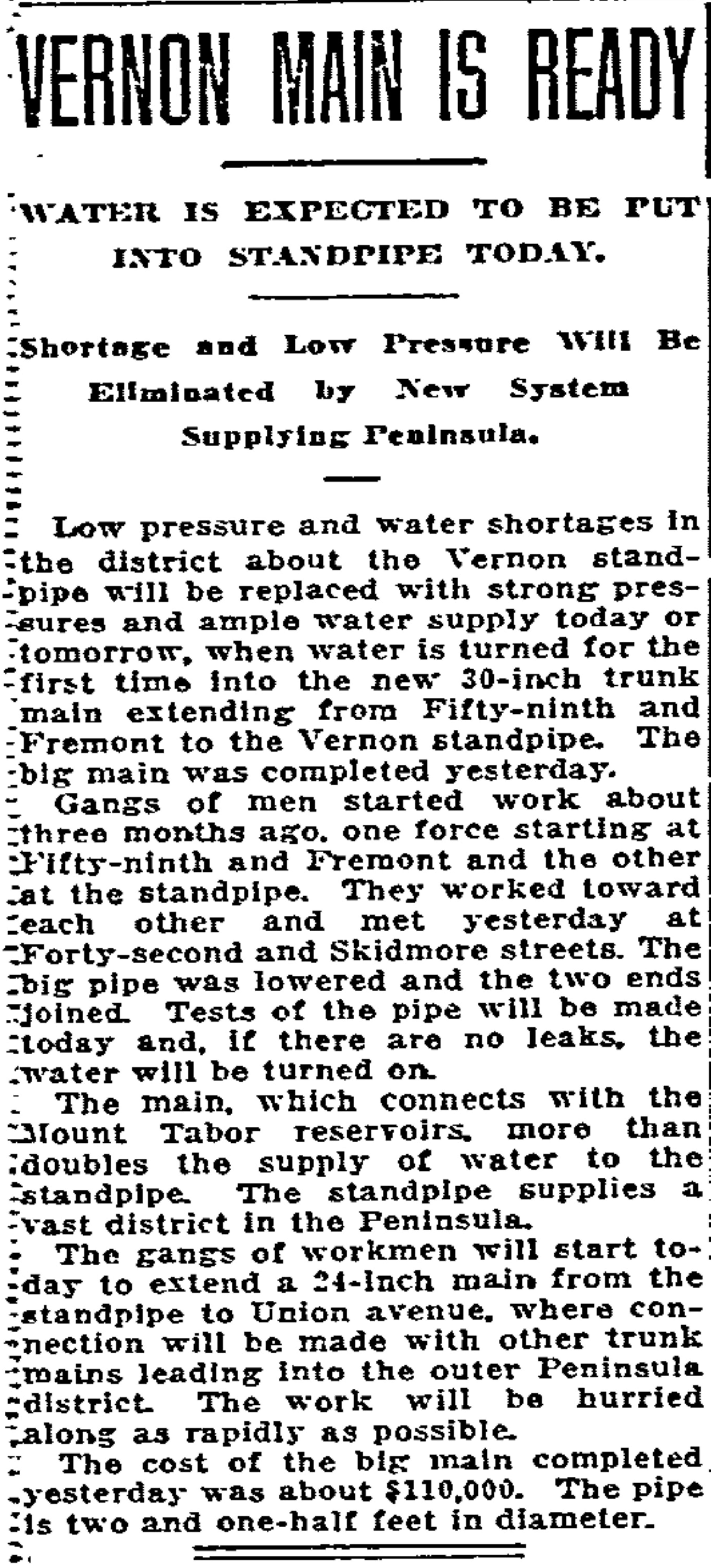
By July 1915, crews had met in the middle and the golden spike moment seemed close at hand:

From The Oregonian, July 20, 1915.

These were the headlines everyone wanted to see and even though the big pipeline job was done, Water Board engineers knew volume and supply were only part of the equation. The hand-me-down Vernon Standpipe just didn’t have sufficient storage capacity to keep up with the growing need here and on the Peninsula. But the new main bought time for more thinking and engineering.

Water officials must have been relieved that the most pressing problem over the next few years seemed to be finding someone to paint the 100-foot-tall, 25-foot-diameter Vernon Standpipe, expressed in this September 19, 1917 headline: LOFTY PAINTING JOB GOES BEGGING. No bidders, so the standpipe’s bare panels became its trademark.

By August 1920, the city announced plans for construction of a new 1 million gallon storage tank for the site that would replace the 350,000 gallon Vernon Standpipe. And fortunately for us, a city photographer documented the progress, which went like this (double click into any of these for a closer look…there’s lots to see):

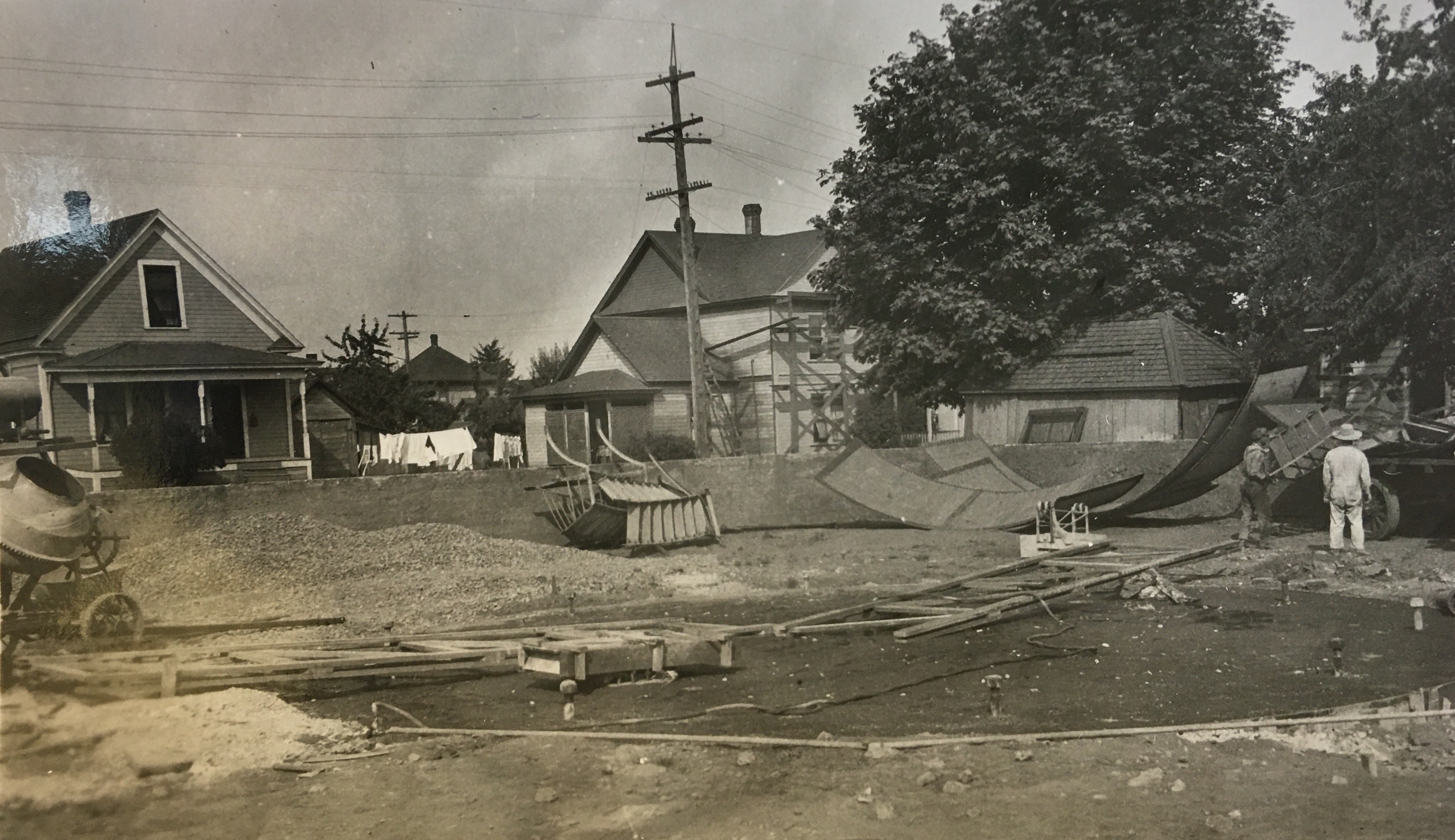
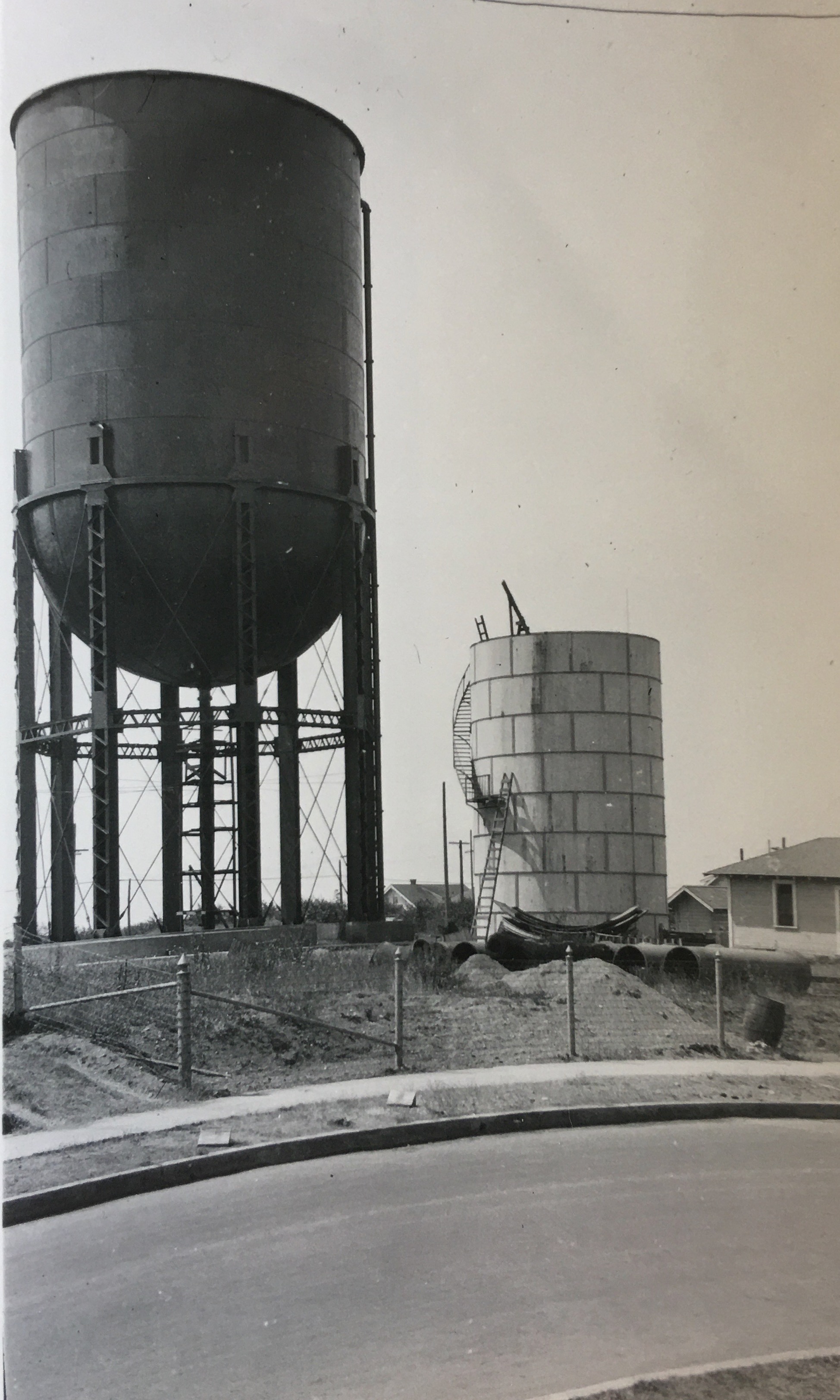
By late summer 1920, workers were busy on the plumbing for the new tank and establishing a concrete foundation that would support the tower and the million-gallon tank above. The water alone weighed 8.3 million pounds. This view is looking north from the tank site; the houses are on the north side of Prescott.


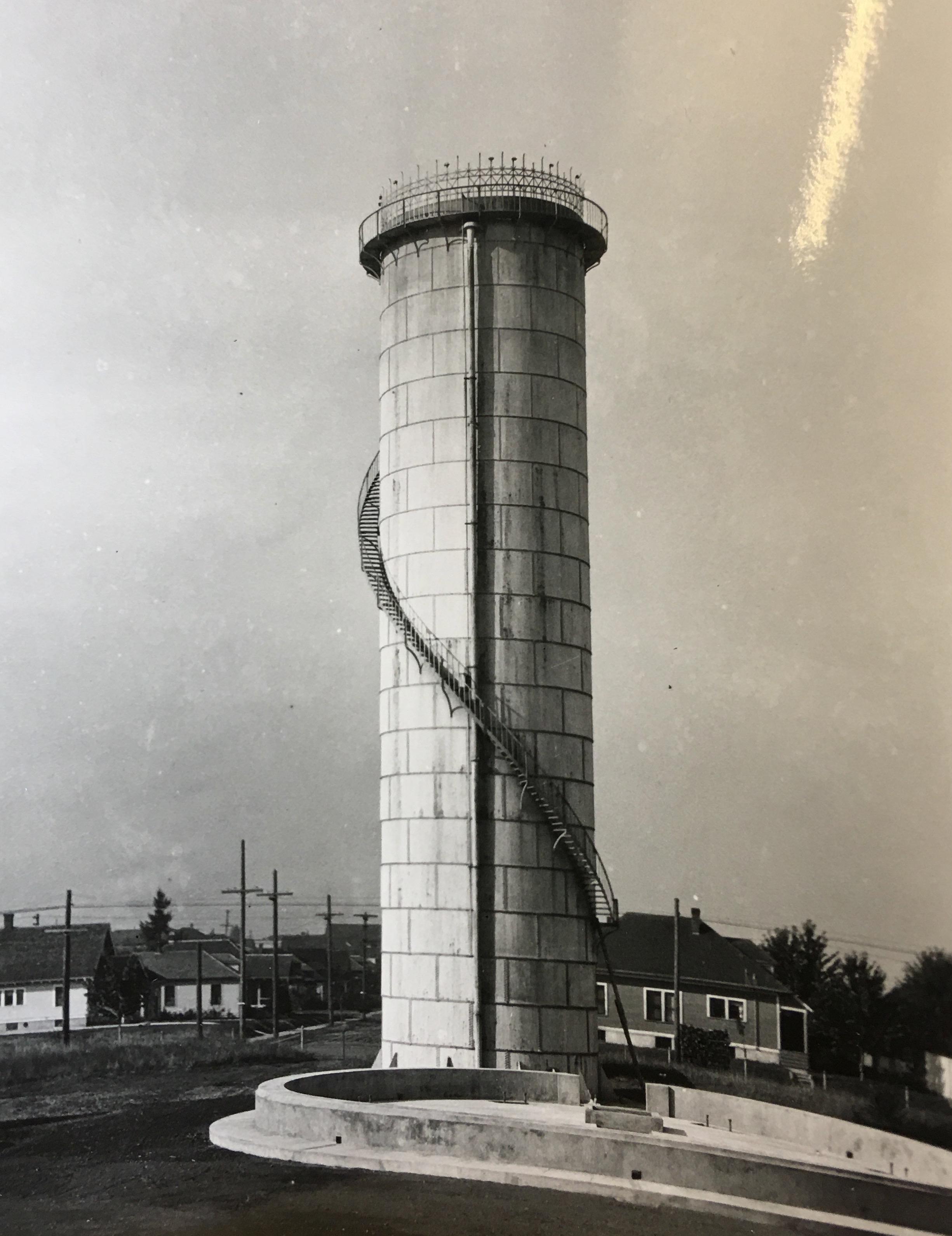
By the fall of 1920, the round base had been poured (foreground) and was ready for tower construction. This view is looking north showing the standpipe behind (nice stairway and railing, eh?), and the T intersection of NE 19th and Prescott.


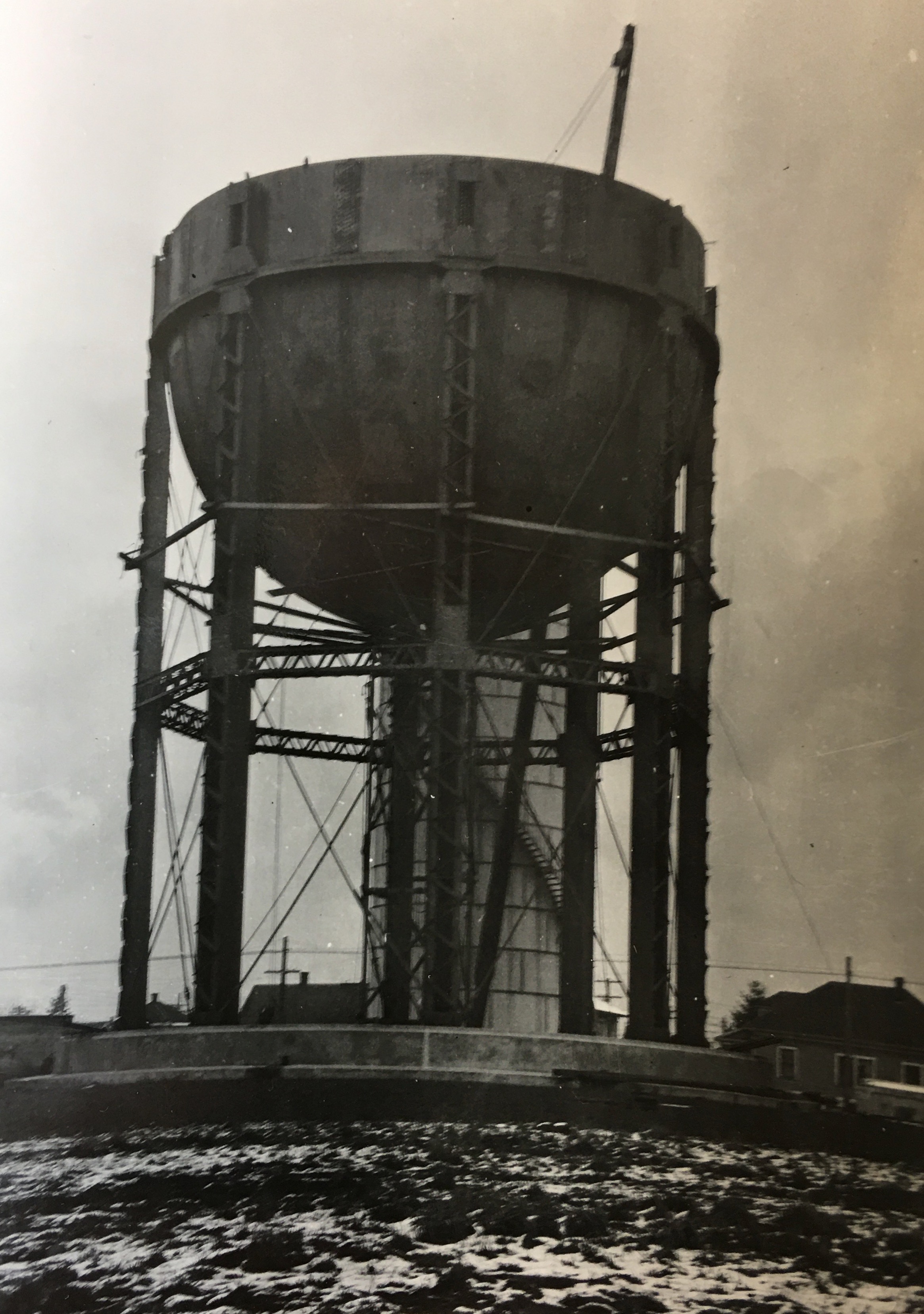
By late 1920 or early 1921 the new tower and tank are taking shape. This view looks north with the standpipe behind and snow on the ground.


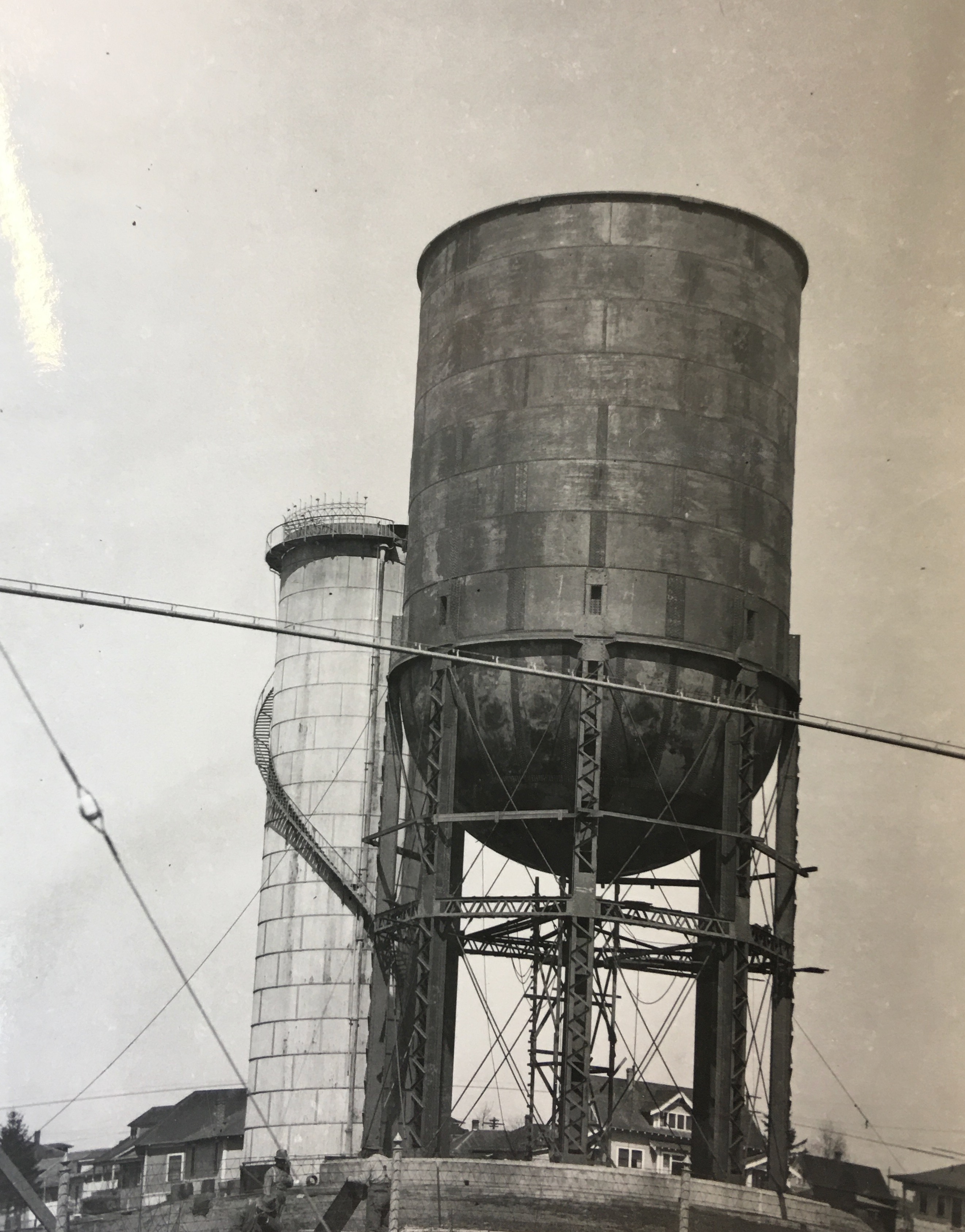
In this view looking north in early summer of 1921, workers are in their shirtsleeves and the tank is done.


In August 1921 the city paid Portland-based Le Doux and Le Doux Construction $10,477 to dismantle the former Vernon Standpipe (underway in this photo) now that the new tank was in place, and to relocate the pipe to a new venue in St. Johns at the corner of N. Princeton Street and N. Oswego  Avenue, where it stands to this day (below), still in service at more than 120 years old:


Next up: The 1920 tank is eventually dwarfed by the biggest tank in the nation.

Alberta Streetcar: Catalyst for Change

It takes lots of imagination to conjure up a picture of what our neighborhood might have looked like 100 years ago. The fields and forests of today’s Alberta district, Vernon, Concordia, and Alameda were way out in the country, beyond the far edge of Portland. But one key development changed all that: the Alberta Streetcar.

a2009-009-4152-streetcar-along-alberta-line-1944

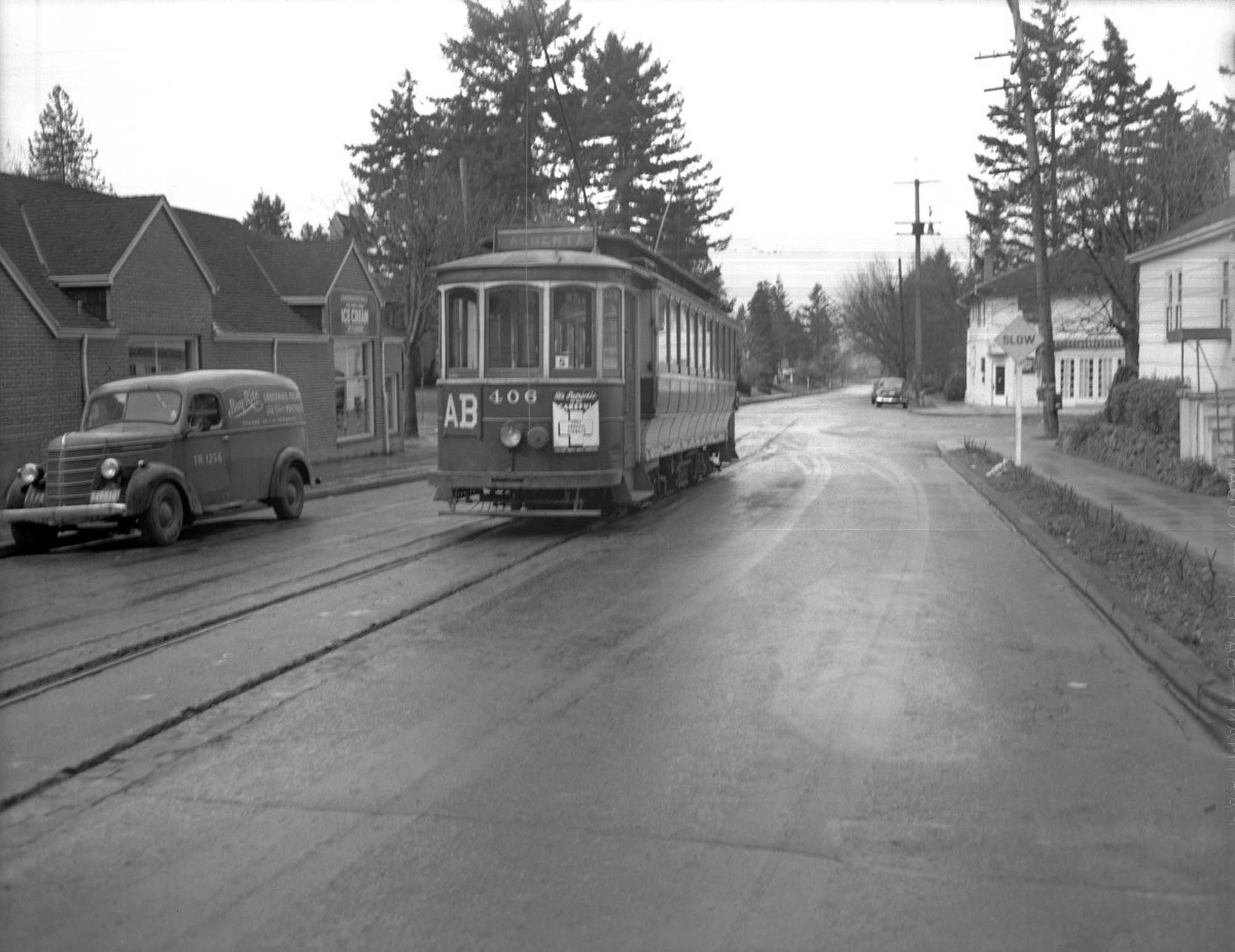
A photo of the Alberta Streetcar from 1944 looking north on NE 30th Avenue at the line’s far northern end, NE 30th and Ainsworth. Only the building on the northeast corner remains. Development of the streetcar line changed everything about the landscape that eventually became our neighborhood. Photo courtesy of City of Portland Archives.

First constructed in 1903, the line left downtown at SW 2nd nd Alder, crossed the old Steel Bridge and ran north up Union (today’s Martin Luther King Jr. Blvd.), where it turned east on Alberta to NE 25th. A few years later it was extended five blocks east on Alberta to NE 30th, and then a few years later north on NE 30th to Ainsworth, which became the end of the line. For a time, there was talk of connecting the Alberta line with the Broadway line, which terminated in Alameda at NE 29th and Mason, but by the time that seemed possible, automobiles had begun to eclipse streetcar use.

Wherever the streetcar went, so did development. Initially just two rails in the mud through brush and open fields, by the heyday of Portland’s streetcars in the teens and 1920s, the Alberta streetcar had attracted scores of business owners and thousands of residents to this new developing part of the city. Its impact on the shape and feel of the neighborhood can’t be overstated.

The December 28, 1913 edition of The Oregonian reported:

“The streetcars are now operated to East Thirtieth street and Ainsworth avenue. The line runs double cars in order to take care of the traffic and even then the cars morning and evening are overcrowded.”

The fact that autos were not the primary mode of transport in those early days meant streetcars—and lots of foot traffic—fueled growth of the business district along Alberta. It was a thriving place of activity and commerce, not unlike today. But by the 1940s, with automobiles dominating the transportation picture and Union Avenue no longer the main north-south travel corridor (travel had shifted to Interstate Avenue), the Alberta streetcar became disused and was eventually replaced by a bus. By then, Portland had turned its back on its once robust streetcar system. The last day for the Alberta line was August 1, 1948.

As if to silence the era of the Alberta streetcar once and for all, in September 1949 The Oregonian reported that the City of Portland authorized a $75,000 paving contract that took 11 days to erase all evidence of the tracks:

“A total of 110,748 yards of materials went into the project to bury the old Alberta streetcar tracks. Paving tonnage amounted to 8,407 tons of blacktop.”

Today, there aren’t many specific clues other than the hundreds of streetcar-era buildings that would not have developed without the line. When you’re out for a walk along our neighborhood’s path of the old streetcar line (1.8 miles along Alberta between MLK and 30th; then 30th Avenue between Alberta and Ainsworth), see what evidence you can find.