Finding Albina

I’ve just finished a research project on a century-old house in the Boise neighborhood, an area known in earlier years as Albina. The house, on North Borthwick, was a rental for many years that held at least 17 different families and dozens of occupants of all ages. The research task was to track down all of the past residents and to learn something about their lives. What a fascinating pleasure it was to unearth the stories from newspaper clips, Polk directories and a handful of remaining public documents.

The part of the neighborhood I was focusing on was a Scandinavian stronghold in the early years: the house was built by a Swedish immigrant and for the first 40 years of its rental life, the house knew only immigrant families.

In the course of the research, I had occasion to read and enjoy a great book by former Northeast Portland resident and author Roy Roos, The History of Albina, which I recommend to readers of this blog.

The back of the book contains a thumbnail history of many properties in the Boise, King, Humboldt and Piedmont neighborhoods. You’ll recognize some of these buildings, particularly the ones up and down Martin Luther King Boulevard. But it’s the front part of the book—the narrative that describes how neighborhood geography has changed over time, and particularly the maps—that will haunt you. So much has been lost in these neighborhoods. Virtually all of Albina has been altered by development of Emanuel Hospital, construction of Interstate 5, and construction of the Fremont Bridge and its various ramps and fly overs. Overlay the map of old Albina on the geography of today and you can get a sense of just how much is gone.

If you are haunted by layers of history and enjoy seeking clues that link today with the past, read Roy’s book and then get out there on the ground, maps in hand, to imagine what must have been. You can find his book at Powell’s and many other booksellers locally and on the internet. Here’s a link to a neat story that ran in The Oregonian following the book’s publication.

Hat’s off to Roy for keeping these stories and places alive.

Alameda Tuesday Club—A Neighborhood Institution Since 1913

Local service and social club has been doing good works quietly for almost 100 years

When you think about Alameda neighborhood institutions and landmarks, a few standouts come to mind: the school, the churches, the ridge, Deadman’s Hill, our particular grid of streets, the big ponderosa pine at Fremont and 29th. We all have our list.

Chances are, though, that you don’t think about—or maybe even know about—one of the longest-lived, active and engaged institutions our neighborhood has known: the Alameda Tuesday Club.
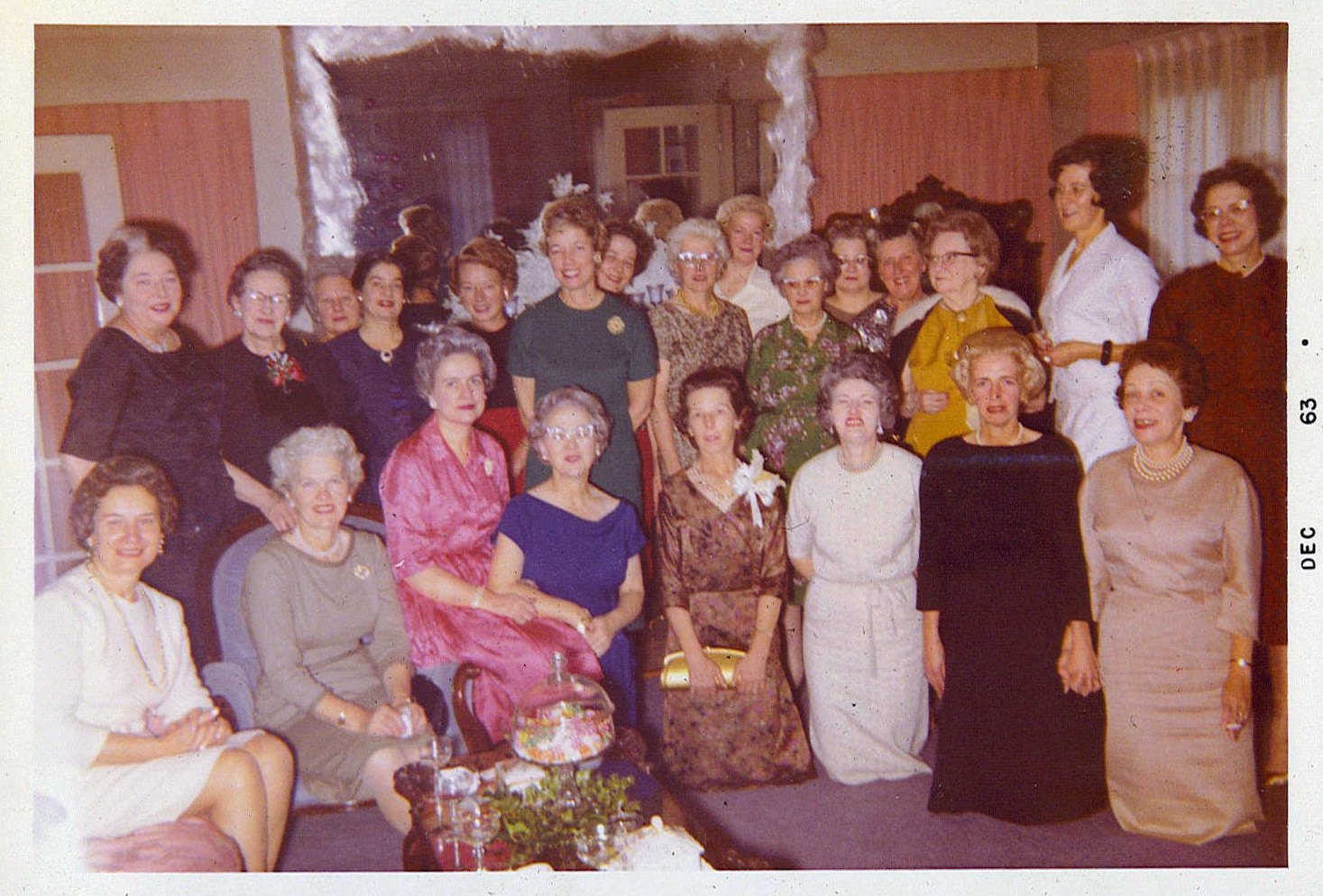
Members of the Alameda Tuesday Club gather in a local home in December 1963. Scrapbooks showing club activities are now in the collection at the Oregon Historical Society. Photo courtesy of the Metschan Family

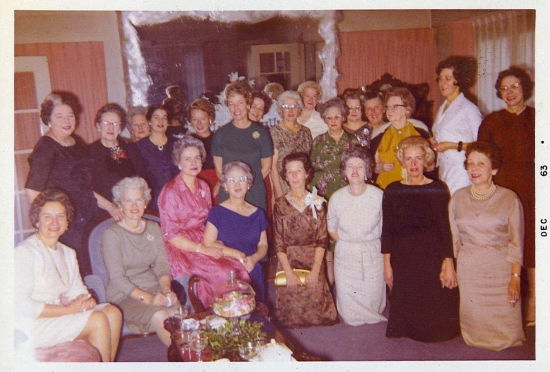
Members of the Alameda Tuesday Club gather in a local home in December 1963. Scrapbooks showing club activities are now in the collection at the Oregon Historical Society. Photo courtesy of the Metschan Family

The ATC, as it is fondly referred to by its 36 members, is a social club with a service mission; a collection of active women from the Alameda neighborhood who are quietly carrying on a tradition that began at the dawn of the neighborhood itself. Since 1913, when the first homes were being built in the fields that are now our neighborhood, members of the club have been gathering on a regular basis in a different Alameda home each month for conversation, for learning, for tea and a meal, and to plan good works both close to home and far away.

In 1914, when a down-on-their-luck family was living rough in the 33rd Street Woods (a much wilder version of today’s Wilshire Park) and the Dad had tuberculosis, the club stepped in to provide food, coal, clothing and milk for the children.

When a well-known national suffragette came to town to advocate for a woman’s right to vote, the club boldly hosted an event with her as lead speaker.

When World War I soldiers from Portland were in the trenches in France, the ATC made and shipped bandages and other supplies overseas.

When the young neighborhood clearly needed a school, the Alameda Tuesday Club stepped up to help make the case.

You get the idea: These women are strong and know how to get things done. The list of charitable works over the years is long and generous. But they know how to have fun too: picnics, tea parties, an award-winning flower-bedecked float for the 1916 Rose Festival parade, fundraisers, costume parties.

These days, the club isn’t advocating for schools or building parade floats. But it does make generous gifts to charities, including most recently the West Women’s Shelter, Beaumont School Library, the Jefferson Dancers, the Oregon Food Bank, Friends of Children and SMART.

“When I first heard about the club, I thought it was such an anachronism,” says current president Kathie Rooney, who has been a member since 1986. “But when you are involved in charitable works and you get to know these women, the club takes on a whole different dimension. There is definitely an old fashioned social interaction. But we’re also talking about the issues of the day.”

Rooney explains that club bylaws have changed little since 1913, and still require members to live within the perimeter of the original Alameda Park Addition: from Fremont to Prescott and between NE 21st and NE 33rd. Membership in the club is by invitation only—as it has been from the beginning—and no more than 36 members are allowed. Monthly meetings rotate around the club, with a member hosting a lunch in her home on the second Tuesday of the month, nine months of the year. Some neighborhood homes have held multiple generations of ATC members and meetings.

And then there is the unwritten silver tea set rule: tradition has it that a silver tea set must be at every gathering of the club. Look back through the club scrapbooks (an amazing collection of images and notations set on black album pages now housed at the Oregon Historical Society) and you’ll see it there on a table, in the corner of a room, sometimes in use.

Terry O’Hanlon has been a member of the club since 1962 and has watched the neighborhood, and the club, change. When she joined, average club membership was a bit older than today, with most members between their early 50s and 80s (she was one of the youngest when she joined, in her 30s). Today, O’Hanlon is the eldest club member, and the youngest member is in her mid 40s. She also remembers Alameda filled with more young families and young children. Not so today, with plenty of two-parent working families.

“The pressures on professional women are different today than in my day,” she says, reflecting on the forces that have shaped the club over the years. “If you are working 40 or 50 hours a week, it’s hard to make it to an afternoon meeting like ours.”

Still, the friendship and camaraderie of the club—and its core philanthropic mission today—create a special sense of purpose that continues to fuel club meetings and activities. The tie to tradition, a respect for generations of Alameda women, and a real love for the neighborhood, distinguishes this special group.

-Doug Decker

Haunted by Harry Phillips’ Story

I’ve just posted the next builder biography, this one about Harry Phillips, who built many of the homes on NE Gile Terrace and Ridgewood in the 1920s. Phillips’ story is fascinating, tragic and indicative of his times. His work, appreciated and admired today, has clearly stood the test of time.

I’ve often wondered how builders weathered the storm of the Great Depression. I know Albert Irwin did only remodeling work in the mid-1930s. Others, like William Donahue, got out of the business altogether. Harry Phillips wasn’t as fortunate.

Phillips’ sons Jerry and Roger—now in their 80s—generously agreed to be interviewed about their parents, the work of their father, and their own growing up years. I feel very fortunate to have been able to gather their story in before it would have been lost to time.

Check out the biography of Harry Phillips on The Builders page.

Do you live in a Phillips home or have any insight to share about the family? Drop me a note.

The Geography of Imagination

Exploring Neighborhood History With Henry, Ramona and Beezus

We’ve been re-reading some favorite books recently, and as it turns out, finding quite a few clues to the world of neighborhood history. Award winning children’s writer Beverly Cleary grew up in the neighborhood and if you read carefully, you’ll find real echoes of our past in her books.

Cleary imagined an entire universe in a few small blocks. Our favorite young residents—Ramona, Beezus, Henry, Ribsy—crisscrossed their kingdom on bikes and on foot walking to their beloved Glenwood School, delivering the evening Journal newspaper, and getting themselves into some memorable misadventures.

Ramona Rides downhill (is that Regents or maybe NE 37th?) in a drawing by Louis Darling.

Ramona Rides downhill (is that Regents or maybe NE 37th?) in a drawing by Louis Darling.

The geography of that imagined place came from author Beverly Cleary’s own experience as a child growing up here in the 1920s and 1930s. She lived in a home on Northeast 37th Avenue, and attended the school now named for her: the Beverly Cleary School Fernwood Campus. The landmarks that define Henry and Ramona’s world—the churches, schools and houses, the hills and even the vacant lots—are drawn from places Cleary frequented as a young person.

It’s possible to find clues to Cleary’s own geography—and even a sense of Alameda neighborhood life in the 1950s—by exploring Henry and Ramona’s neighborhood as it unfolds on the pages of more than a dozen of her books.

A good place to begin looking for clues is Ramona Quimby’s house, just up the street from Henry Huggins on Klickitat Street. Cleary actually tells us in one of her books that Ramona lived with her mother, father and sister Beezus in a rented house near the corner of 28th and Klickitat. I remember reading that part of the story to my daughter one night and making a mental note that I needed to go look up that address on my next walk through the neighborhood.

As many astute readers will recognize, the corner of 28th and Klickitat is actually a “T” intersection adjacent to the playground at Alameda School. The day I walked past that spot and realized it was the setting for Ramona’s fictional house (a school playground), I laughed out loud and tipped my hat to Beverly Cleary.

All readers of the series know that Henry Huggins lives with his mother, his father and his dog Ribsy in a square white house on Klickitat Street. Cleary never really tells us exactly where on Klickitat that might be. But if it’s a square white house—let’s imagine an old Portland foursquare style house with a nice porch—chances are it’s west of Ramona’s house. In Henry And the Paper Route, Cleary hints that Henry’s square white house was slightly elevated above the sidewalk with a sloping lawn the kids rolled down. This sounds indeed like a four-square, built in the 19-teens. Now all we have to look for is Henry’s red bike and the barking Ribsy.

Ramona and Henry’s Glenwood School is an obvious stand in for Fernwood School, where the young Cleary attended before moving on to Grant High School. Why didn’t she create a fictionalized role for Alameda School? We do know there was a certain rivalry between neighborhood schools.  Kids from one school sometimes looked down their noses at kids from the other. Was omitting Alameda School a diss? Probably not. Just a little too complicated to explain why kids living in the playground of one school (wink) would be going to a different school a few blocks away.

Vacant lots…now there is a commodity of the 1950s that we just don’t have any more. By the late 1950s virtually every easily buildable lot in Alameda had been developed (many of the last ones by builder Ken Birkemeier). During Cleary’s growing up years—the 1920s and 1930s—there were plenty vacant lots to be found and they surely provided a refuge for everything from baseball to clubhouses. In Cleary’s 1955 Henry And the Paper Route, Henry watches as the ladies club sets up sawhorses and planks in a nearby vacant lot for the annual fundraising rummage sale. The vacant lot was a community commodity as well as landmark. Reading more closely between the lines, was the ladies club the fictional counterpart of our own Alameda Tuesday Club? Could be.

The business district of the fictional neighborhood bears some resemblance to places we all shop and frequent today. The movie theater, dime store, Rose City Barber Shop and even the “Colossal Market” are landmarks in today’s Hollywood neighborhood. The Colossal—where Henry’s mother bought everything from vegetables to hair clippers—was probably patterned after the original Fred Meyer store at 42nd and Sandy.

Al’s Thrifty Service Station, where Ribsy steals a policeman’s lunch, is today’s 76 station at 33rd and Broadway. Kids at Glenwood School watch from their classroom windows as a new supermarket is built: today’s QFC (formerly Kienows) just south of Fernwood. All the pieces line up.

In addition to the fun of hearing about these thinly disguised places we all know from our area’s past, there’s some wonderful imagery in these books that evokes an earlier time in the neighborhood, while also being timeless:

  • Ramona and Beezus playing outside on a summer’s evening until the street lights come on, when it’s time to go in.
  • The 11-year-old Henry riding his bicycle through the neighborhood in the late afternoon and early evening, delivering the afternoon newspapers hot off the press.
  • Kids jumping in puddles and playing in rivulets of muddy water on a rainy morning’s walk to school.
  • The Fuller Brush man in trenchcoat walking door-to-door selling his wares.
  • Henry crawling on all fours through Grant Park at night with flashlight in search of nightcrawlers for fishing.

And a timeless image that could have been borrowed from this winter: Ramona  sledding down the 37th Street hill on her dad’s old sled. Now there’s a scene drawn from the author’s personal experience, just a few doors up from her own childhood home.

Which gets to what makes Beverly Cleary’s work so appealing and enduring (and even instructive, for us students of history who also like to read to our kids): she crafts a slice of universal life through the experiences of her likeable, believable characters, and all through the lens of a remembered Northeast Portland childhood.

A Legacy Written in Stone (ok, concrete)

Who hasn’t come across the time stamp of history on neighborhood sidewalks? If you’re paying attention, even on a simple stroll around the block, you’ll find yourself on the trail of the past.

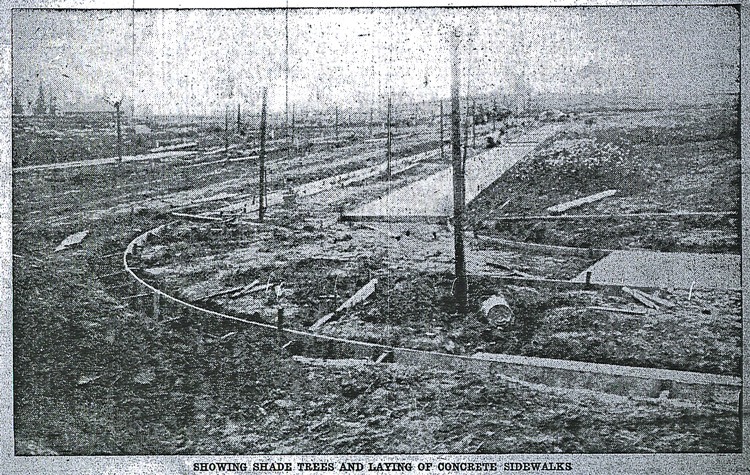
Curbs and sidewalks under construction, from The Oregonian, June 3, 1910.

Curbs and sidewalks under construction, from The Oregonian, June 3, 1910.

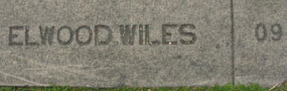
On most blocks–typically near the corners–you’ll find the name of the contractor who installed the sidewalks and curbs, along with the date of their construction, and even the names of the streets. Think of it as a signature, and appreciate the irony that even though the prestigious builders of the big houses are long gone, the identity of the grunt-work done by  ditch diggers, form builders and concrete finishers has stood the test of time.

The curbs and sidewalks on my block–block 23 of the Alameda Park Addition–were built by Warren Construction Company in the summer of 1912. Warren Construction, like other companies, had contracts with the city to excavate, frame and pour many city blocks worth of sidewalks and curbs. Look carefully and you’ll find the printed names of Hassam Construction, Krieq, Elwood Wiles and others.

elwood-wiles-stamp

So, here’s some insight into two of the of the companies you’re going to bump into walking around the Alameda Park neighborhood, and some great factoids you’ll want to hang onto for scintillating dinner conversation. After you’ve paid enough attention to these names–and learned a little about the companies and when they operated–you can almost tell what era and corner of the neighborhood you’re in just by looking at the names on the sidewalks.

Warren Construction Company

This company once employed world-renowned chemist and Nobel Prize winner Linus Pauling as its chief asphalt inspector. Pauling, born in Portland in 1901, was a young man when he worked summers for Warren, testing the quality of its asphalt production facility. Pauling recalled, years later, how company bosses didn’t want him to go on with his studies…they wanted him to stay put on quality control. In addition to giving one of the world’s greatest chemists his start, Warren Construction also made a name for itself building and installing all of the concrete decking on the Interstate Bridge (first opened in 1917), and applying the asphalt surface once the bridge deck was complete. They also worked on the Columbia River Highway as well.


Elwood Wiles

If you are a walker, this man is a household name. You see him everywhere on Portland’s east side. For years, I wondered about his identity, and after doing the research, I finally have a few answers. Wiles was born in Canada in 1874, and came to Portland in 1887. After high school he worked in a variety of jobs for a local harness maker before going into the sidewalk business. From 1903 til about 1917, Wiles held the majority of all city contracts for excavating, framing and pouring curbs and sidewalks. After the big building boom of these years, Wiles dabbled in timber speculation, concrete pipe manufacturing, stocks and bonds, and insurance. In his later years, he owned an illuminated traffic sign company. He died in Portland in December 1956. Be sure to check out this photo of Wiles and biography I’ve written in  The Builders section here on the site.

Interested in helping create an inventory of sidewalk contractors in Alameda? A couple of us are setting out to do some documentation, and we could use a studious person with some time to spare (and a digital camera) to help. If you’re interested in joining in, drop me a note: doug@alamedahistory.org.

Click here to see what’s been done in the Hawthorne neighborhood.

If this topic really piques your interest, check this out.

Alameda Theater Memories

A few months back, we came upon a photograph, taken on May 6, 1926, showing the nearly completed Alameda Theater, located at NE 30th and Alberta. Have a good look at it and soak up the details, and then look at an image from today. 


Alameda Theater, NE 30th and Alberta. Photo taken in May 1926. Note construction materials to the left. View looking southeast.

Alameda Theater, NE 30th and Alberta. Photo taken in May 1926. Note construction materials to the left. View looking southeast.

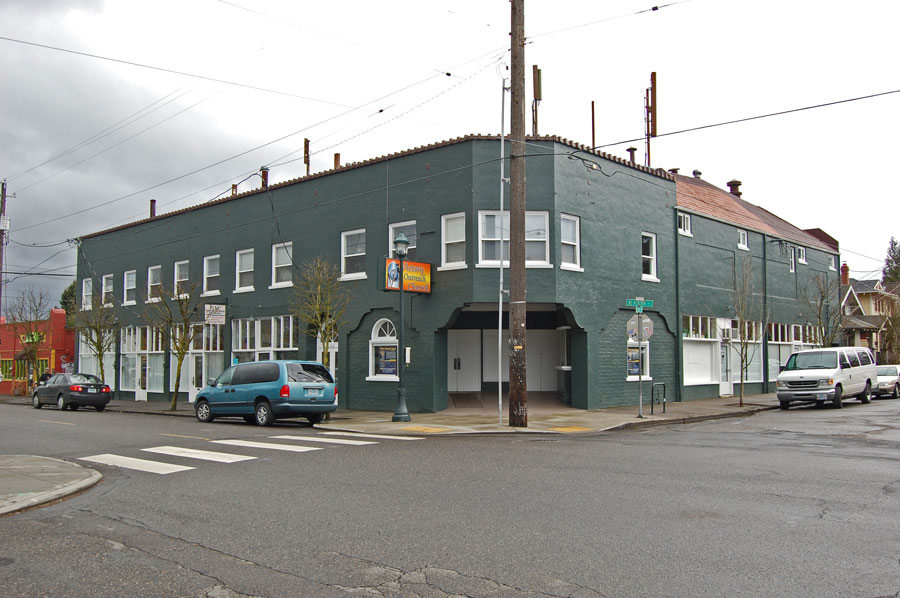
The same view today.

The same view today.

Remarkably, most of the original exterior is still intact. The corner entry and box office; the two prominent display cases that frame the opening; the ornamental trim along the building’s parapet; the box office just inside the entry portico; the spider web window and Georgian doorway just left of the theater entry which opens into a steep stairwell to the second floor; even the store fronts to the left of the main entry (the transom windows are still operational).

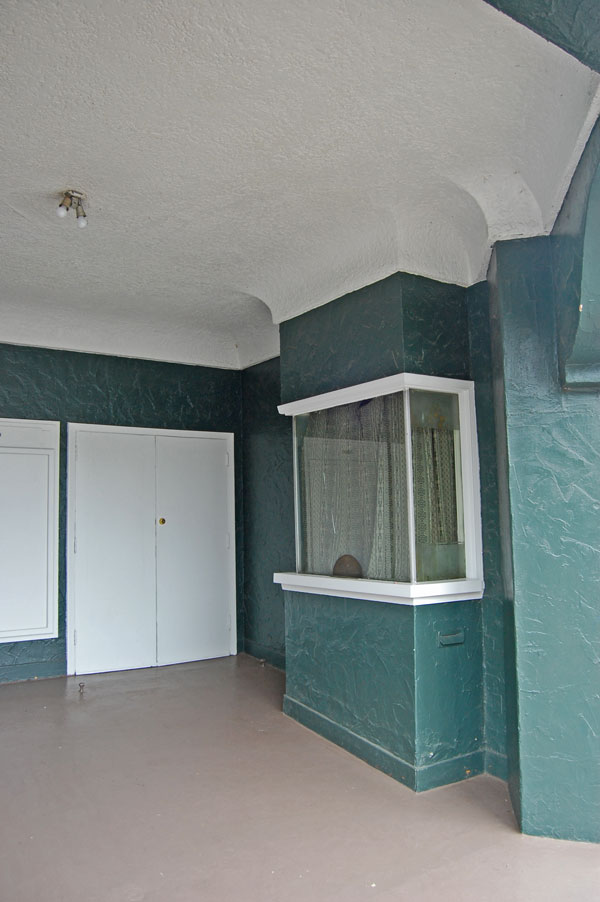
You can’t see it in the earlier photo, but the original Mediterranean style roof tiles are still in place. The marquee was removed some years back, but a 1926 time traveler would definitely recognize the building today, at least on the outside (they might ask about all those antennas on the roof). On a recent visit, the building was locked so we didn’t have a chance to look around inside.

The observant reader will also note the streetcar tracks making a sweeping left turn from Northeast 30th to Alberta Street eastbound…the Alberta Line, which operated from 1903 to 1949.

Here’s a snapshot of its history:

From 1927-1937, it operated as the Alameda Theater (even though it is a few blocks north of the Alameda Park subdivision proper).

From 1937-1964 it was simply known as the 30th Avenue Cinema.

From 1964-1969 it went by the catchy name of “Cine 30.”

From 1969 until it closed for good as a theater in 1978, it went back to its earlier name: Alameda Theater.

Since 1978, the building has served as the home of the Macedonia Church of God, and its current role as home to the Victory Outreach Church.

Along the way, trips to the movies entertained generations of our neighbors, and provided some enduring memories, particularly for a couple of brothers who grew up here in the neighborhood in the 1950s. Steve and Marshall Turner talk about the theater in the same breath as Hunderups, the other neighborhood hang out at NE 30th and Prescott (see the earlier post about Hunderups). We’ve been in touch with Steve and Marshall, and they’ve shared these memories of a misspent youth:

We have fond memories of the 30th Ave. Theater. It was a place where kids could go with their friends and act like kids and generally misbehave without too much chance of parental repercussion.

We looked forward to the Saturday matinees which cost $0.25 cents as I recall. We would usually make a stop at Hunderup’s Drug Store on the way to “buy” candy because it was cheaper to charge it all to our account at Hunderup’s than to actually pay for it at the theater.

Matinees usually consisted of a cartoon such as Tom & Jerry, Woody Woodpecker, Porky Pig, Casper the Ghost, or Daffy Duck. Cartoons were followed by a News Reel and a short serial such as Flash Gordon, The Rocket Man, The Three Stooges, Spin & Marty, or Abbot  & Costello.

The main features always seemed to be a Sci-Fi film such as House on Haunted Hill starring Vincent Price, It Came From Beneath the Sea; Them (a movie about ants that became gigantic through atomic radiation); The Attack of The 50 Foot Woman; The Day The Earth Stood Still; It Came From Outer Space; Forbidden Planet; The Blob War of The Worlds; This Island Earth; and Monster on The Campus, starring Arthur Franz, just to name a few.

Sometimes management would feature a local personality to entertain the kids. We remember seeing Mr. Moon and Addie Bobkins too.

The manager would sometimes get up on stage before the movie started and remind us to be on our best behavior. But, of course, as soon as the lights were dimmed 5,000 pieces of candy would be flying through the air. Experienced movie viewers would never sit directly below the balcony as they were easy targets for “spilled” soft drinks and wads of chewed up juicy fruits, dots, or jujubes. If we had to sit on the main level it was always to the rear so as to not be in the line of fire from the viewers above.

The screen itself was even a target and since we didn’t like the black colored dots very well these made good ammunition. Every once in a while you could hear a loud “whump” against the screen.  Mr. Moon himself took a black dot in the temple. Once in a while we took pea shooters or squirt guns with us if we really felt mischievous.

In the movie Monster on the Campus, an actor who resembled Ralph Wampler, our Alameda Grade School Principal at the time, got killed. One of the neighbor kids yelled out “hey, they just killed “Wampie,” which got all the Alameda kids laughing and shouting.

Once the movie was over it was a good idea to hustle out of the balcony quickly to avoid being recognized by one of our targets below. We would then stop by the Blue Bird Ice Cream shop next door to buy an ice cream cone with the money we saved by charging our candy at Hunderup’s.

One of the last movies they showed was the Beatles’ film A Hard Days Night, but we didn’t see it.

Once the church is done with the building, somebody should buy this place, restore it, and start showing old monster movies. But they should consider shutting down the balcony.

What do you remember about the old 30th Avenue Theater?

Alameda Theater Box Office, today a spot for the greeters at Victory Outreach Church.

Alameda Theater Box Office, today a spot for the greeters at Victory Outreach Church.

Old House History in The News

We see this morning that a recent interview with The Oregonian has turned into a very nice story, which ran in the Thursday, March 26th edition of the paper. Feature writer Larry Bingham wrote the piece out of an interest in old house history, and in keeping with the paper’s focus on Oregon history during this susquicentennial year. You can find the story here at this link. Thanks Larry!

Ken Birkemeier, Prolific Alameda Builder

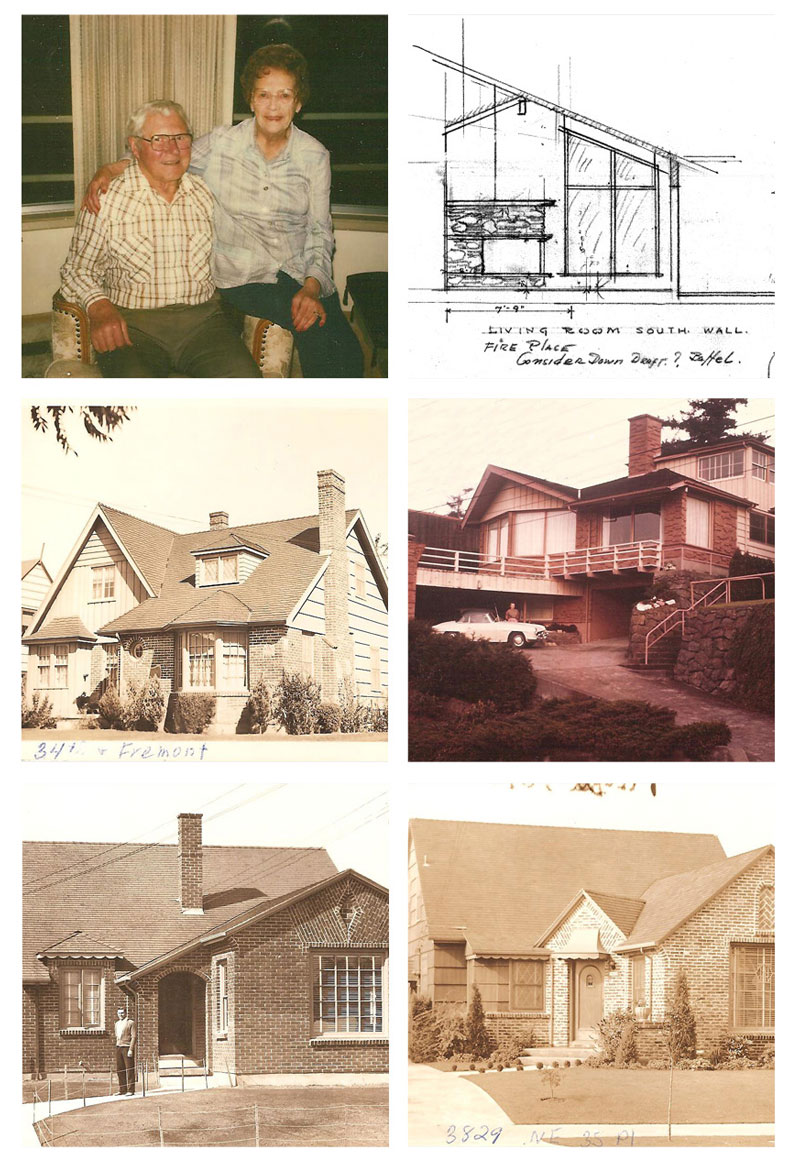
A collection of images relating to Ken Birkemeier. Top left, Ken and his wife of 50 years Marge. Photos and drawings courtesy of Dan Birkemeier.

A collection of images relating to Ken Birkemeier. Top left, Ken and his wife of 50 years Marge. Below, homes he built in the neighborhood. More pictures in The Builders section. Photos and drawings courtesy of Dan Birkemeier.

After a very interesting few weeks of research, correspondence with the Birkemeier family, and lots of walking around the neighborhood looking at dozens of houses he built, I’ve posted some background on local architect and builder Kenneth L. Birkemeier. You’ll find the details (and some more photos) over in the new section called The Builders (click here). It was great to hear memories from various family members, particularly the story from his grandson Dan, who is today an architect in Seattle.

You’ll note that I’m inviting your stories or photos of Birkemeier homes, so let me hear from you and I’ll share them here on the blog.

The new section is up to four major builders now, with dozens more to go. One thought that occurred as I walked around the neighborhood this week is that Irwin, Read and Berkemeier must have known each other. Between the three of them, they designed and built dozens of houses here in the neighborhood…they must have been bumping into each other along the way.

Next on my list is Harry Phillips, who designed and built many of the homes along Ridgewood and Gile Terrace in the late 1920s. I also want to delve into the history behind the reference to the “Town of Wayne,” which is a small plat south of Fremont and between 32nd and 29th.

Inquiring minds want to know: Who was Wayne?

“It lies on a slight eminence…”

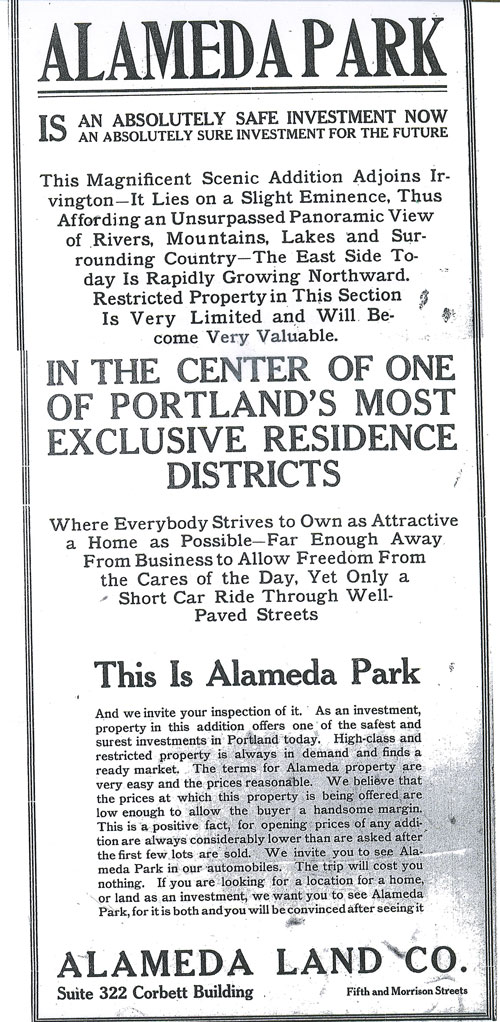
It was 100 years ago this week that the first newspaper advertisements began to run extolling the virtues of the newly platted Alameda Park district. The text is pretty flowery and the ad is jammed with words. Here, take a look:
From The Oregonian, March 16, 1909

From The Oregonian, March 16, 1909

This ad tells us much more about the men behind the Alameda Land Company than it does about the development itself. You get a very clear idea of who they were pitching to, and their intent to offer a “first in” deal to the early wave of investors and potential homeowners. It’s important to point out that in March 1909, there wasn’t much up here on the ridge but mud, Douglas-fir trees, brush, some small orchards and a rutted dirt road running up the hill (today’s 33rd Avenue). Panoramic views of lakes? Hmm. Not sure where they got that one. There was a small pond in the area near today’s NE 28th and Siskiyou. Maybe you could see that from the ridge…

Just one month previous to this advertisement, the Alameda Land Company filed its first plat. Even though there were no streets or curbs or water or any service in place, this March push of advertising was aimed at creating a personality for the new district and to put it on buyers’ radar screens. Different (but similar) ads ran each day this week.

Interesting to note that the March 1909 ads, which seemed to claim well-paved streets, were roundly criticized by the developers of neighboring plats, particularly Irvington, which by 1909 actually had well-paved streets, homes, water, gas and curbs. In their own advertisements taken out the following weeks, the Irvington crew called the Alameda Land Company a pack of liars, literally, for their exaggerated claims. The ad sales guys at The Oregonian must have loved it!

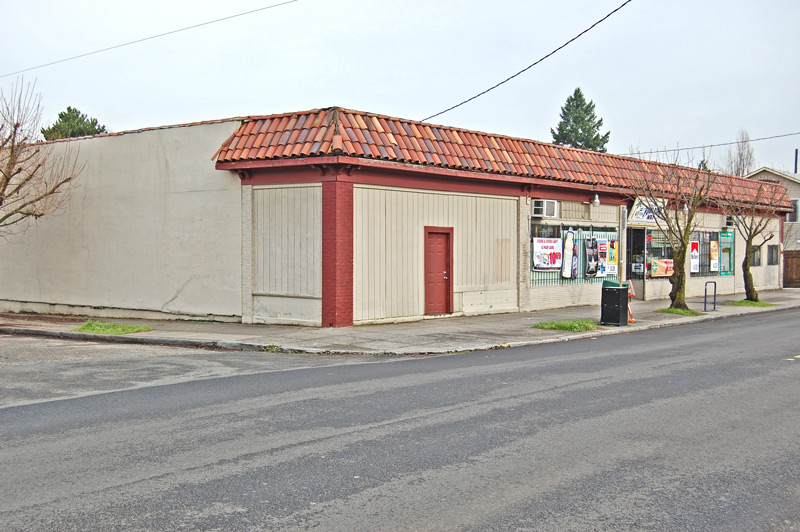
Prescott Fountain–Hunderups

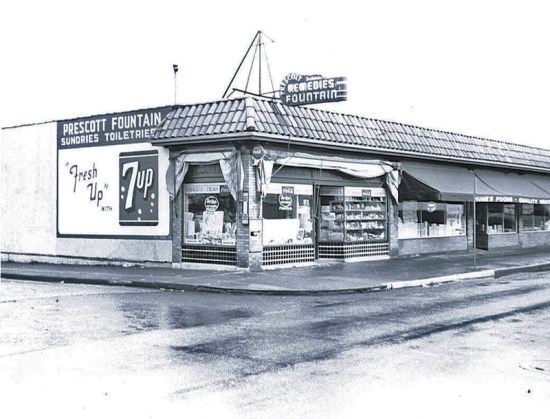
I’ve embarked on a line of research that involves trying to understand the businesses that have served Alamedans over the years, with a focus on the smaller shops that existed around the perimeter of the neighborhood. Here’s one that will bring back some memories for those who knew it, and will intrigue those of us who didn’t.

Prescott Fountain, 1955

 prescott-fountain-1955

This view is looking northeast from the corner of NE 29th and Prescott. Photo courtesy of Tom Robinson, Historic Photo Archive. Below is the same place, 54 years later.


Food King Market, 2009

food-king-2009

We live not too far from Food King and drop in from time to time, almost always in the evening after other stores are closed, to get a gallon of milk for the morning. When I found this 1955 picture, I stopped in to see if the owners knew anything about the building, but they don’t, so I turned to others I know (thank you Steve Goodman and John Hamnett) who do.

The building was built in 1922, so there are a couple of generations who shopped here before this early picture was taken, and about which we don’t know much (yet). But here’s the lowdown on this place from the vantage point of the mid- to late-1950s.

I’ll let Steve Goodman tell this story from here:

First, this is actually four businesses. The left door (about one-quarter of the total building), was the Prescott Fountain. But no one called it that. From the late 50’s until it closed (sometime in the mid to late 60’s), it was know as Hunderups, for its owner (we kids pronounced it “Hun-drups”).

It was not what you might envision.  Likely in earlier days it was a modern, clean, well respected establishment, but that’s NOT how we knew it. Adults would never go in there.  It was a dingy hang-out for kids. Emphasis on dingy. It was dark (seemed like only about  two lights lit the whole place), dirty (old Mr. Hunderup, who resembled Charley Weaver, let the store go into disrepair and never cleaned it). The product on the shelves was all old and never sold. Items you’d expect in a old drug store, hot water bottles, etc.

But it did have an old fashioned counter and stools where grade school and high school kids (boys — never a girl) would gather.  He’d have candy behind the counter, but we hardly ever bought it, as fresher was available next door.

The attraction was the iced Cokes in a bottle. I don’t remember, probably a nickel or dime each.  He’d keep them in a “too cold” refrigerator, and kids would go there to socialize in an “adult free” zone, and drink the Cokes from the bottle with a straw. Sometimes Mr. Hunderup would have to break thru the ice with his ice-pick so we could get the straw in.

Rumor has it that someone once saw a rat running thru the store.  Maybe yes, maybe no – but in this dark, dirty establishment it wouldn’t surprise anyone.

My mother went in Hunderup’s once (once) looking for some item, and I think she disallowed me from going in there again — or couldn’t figure out why we’d want to.

I got the feeling that before it was the run-down place we knew, Mr. Hunderup might have owned it when it was nice and new(er), but just let it get run-down.  Looking back, he loved seeing us and chatting with us while we kept him in business.

Mr. Hunderup passed away in the late 60’s. They cleaned it all out (and we joked about how much they probably had to fumigate the place), and it soon became part of the store next door.”

Steve explains that the second door from the left was a thriving, clean, well-lit family owned neighborhood grocery called Hume’s Foods…you can see it on the awning in the photo. It sold in 1963 to the Brandel family (which later owned Alameda Foods at 24th and Fremont).

Steve remembers…

It was unlike the convenience stores of current.  They had a large produce section on the east side of the store. In the back was a large butcher case, well stocked and staffed by a real butcher. While this wasn’t a “supermarket,” it’s where many in the neighborhood did their weekly shopping; always busy. And it had several adults working there – back when they could support a family with that type of job.  No turnover, but the same people.  Mr. and Mrs. Brandel would always be in.  I can remember their faces like it was yesterday.  They kept ledgers behind the counter where some customers ran a tab.”

On the east end of the building, down beyond Brandel’s, was a beauty shop and a barber shop, complete with the twirling red and white barber pole and a row of hair dryers against the wall.

What do you know about this place? Care to share a memory about another neighborhood business?

Post Script| March 28, 2009: Thanks to the helpful memory of blog reader Steve Turner, we know that the proprieter was named August Herman Hunderup. I’ve done a little genealogy on Mr. Hunderup and learned that he was born in 1891 in Minnesota. In the 1920 census, he’s living with his parents on SE 87th Avenue and is listed as a “minister” at a Catholic Church. Death records show he passed away on September 3, 1970. I’d love to hear from any family members, or others, who have a memory of Mr. H and his quirky, memorable shop.