Save the Date: January 23rd Alameda History Presentation

Interested in learning more about Alameda? I’m doing an education program for the Architectural Heritage Center, which has been rescheduled to Saturday, January 23rd from 10:00-11:30 in the Center’s auditorium on Southeast Grand Ave. It will be a good opportunity to have a closer look at the evolution of Alameda, and specifically at several of the prolific builders and their design styles that have shaped the neighborhood we know today. It’s also a great excuse to drop by and get to know the Architectural Heritage Center a little better. And you might even meet a neighbor or two!

You can find more information about the program, and a link to registration, at the AHC website: http://www.visitahc.org/content/upcoming-programs

Tudor Cottage Design Featured in The Oregonian

Seeing as how the English Tudor Cottage stories and photos are among the most often viewed files here on the blog, I thought I would share an article and drawings that ran in The Oregonian homes section on December 20, 1925 (click on the image to enlarge). Interesting to note that plan sets like this were available in abundance. Every week, the newspaper focused on a different house style: the narrative describing each house could have been the same for every story, favoring words like roomy, inexpensive, tasteful, convenient. If you live in a Tudor, does this floor plan and design look familiar?

From The Oregonian, December 20, 1925

From The Oregonian, December 20, 1925

Finding Albina

I’ve just finished a research project on a century-old house in the Boise neighborhood, an area known in earlier years as Albina. The house, on North Borthwick, was a rental for many years that held at least 17 different families and dozens of occupants of all ages. The research task was to track down all of the past residents and to learn something about their lives. What a fascinating pleasure it was to unearth the stories from newspaper clips, Polk directories and a handful of remaining public documents.

The part of the neighborhood I was focusing on was a Scandinavian stronghold in the early years: the house was built by a Swedish immigrant and for the first 40 years of its rental life, the house knew only immigrant families.

In the course of the research, I had occasion to read and enjoy a great book by former Northeast Portland resident and author Roy Roos, The History of Albina, which I recommend to readers of this blog.

The back of the book contains a thumbnail history of many properties in the Boise, King, Humboldt and Piedmont neighborhoods. You’ll recognize some of these buildings, particularly the ones up and down Martin Luther King Boulevard. But it’s the front part of the book—the narrative that describes how neighborhood geography has changed over time, and particularly the maps—that will haunt you. So much has been lost in these neighborhoods. Virtually all of Albina has been altered by development of Emanuel Hospital, construction of Interstate 5, and construction of the Fremont Bridge and its various ramps and fly overs. Overlay the map of old Albina on the geography of today and you can get a sense of just how much is gone.

If you are haunted by layers of history and enjoy seeking clues that link today with the past, read Roy’s book and then get out there on the ground, maps in hand, to imagine what must have been. You can find his book at Powell’s and many other booksellers locally and on the internet. Here’s a link to a neat story that ran in The Oregonian following the book’s publication.

Hat’s off to Roy for keeping these stories and places alive.

Style Points | The Mediterranean

There aren’t many of these in the neighborhood, so they tend to stand out proud and clear: the Mediterranean, with its distinctive tile roof and stucco exterior, is a time traveler from a very specific period in Portland’s residential architecture history.

This home at 2506 NE Ridgewood, built in 1925 by Emil G. Peterson, is a classic example of the Mediterranean style in the Alameda neighborhood. Current resident Clayton France is underway with restoration work.

This home at 2506 NE Ridgewood, built in 1925 by Emil Johnson, is a classic example of the Mediterranean style in the Alameda neighborhood. Current resident Clayton France is underway with restoration work.

First beginning to appear with the housing boom of 19-teens and early 1920s, the Mediterranean style quickly became popular, with multiple grand homes built particularly in high-end Portland Heights and Willamette Heights neighborhoods, but also with more modest versions scattered through Irvington and Alameda.

While much of the surrounding housing stock of the time was clad with shingles, clapboards and the distinctive angular features associated with the Craftsman era, the Mediterranean style offered a more exotic and even romantic feel. Characteristic design elements tie to centuries-old classic materials and structures, including terra-cotta tile roofs, graceful archways, white-washed smooth stucco exteriors, and hipped-roof towers. Look for small porch-like tile-roofed entries (called loggias), and long narrow—often arched—casement windows.

All of these features conjure up romantic visions of Tuscan villas, rolling hills and established old settlements rooted in generations of storied history, which of course young Portland didn’t have a lot of in the 19-teens. But the appeal of this stylistic message, particularly here in a brand new neighborhood at the edge of a booming western city, was clear enough for some speculative home builders to give it a try.

A perfect example of the style here in Alameda is the home at 2506 NE Ridgewood, built in the spring of 1925 by local builder Emil Johnson. Johnson, and his younger brother Ernie Johnson (both Swedish immigrants, and both home builders) were busy in Alameda and Irvington during these years, but this is the only Mediterranean he built. Johnson designed and built this house, and likely took special care in its construction because it’s where he and his family lived (his daughter Eileen lived in the house all her life).

Look at the arched and roofed front entrance, the long casement windows, the terra-cotta roof tiles, the hipped-roof stair tower at the entry, and the wrought iron balcony railings: design elements that trumpet the Mediterranean-Italian connection.

Like so many aspects of American life that changed in the early 1930s, the Great Depression signaled the end to the popularity of the Mediterranean style as well. People went back to basics and the seemingly frivolous romance of the 1920s was seen as part of the problem. But this home, like several other Mediterraneans in the neighborhood, remain as a classy souvenir from the past, and a fine example of the diversity of architectural styles that make up our neighborhood.

Alameda Tuesday Club—A Neighborhood Institution Since 1913

Local service and social club has been doing good works quietly for almost 100 years

When you think about Alameda neighborhood institutions and landmarks, a few standouts come to mind: the school, the churches, the ridge, Deadman’s Hill, our particular grid of streets, the big ponderosa pine at Fremont and 29th. We all have our list.

Chances are, though, that you don’t think about—or maybe even know about—one of the longest-lived, active and engaged institutions our neighborhood has known: the Alameda Tuesday Club.
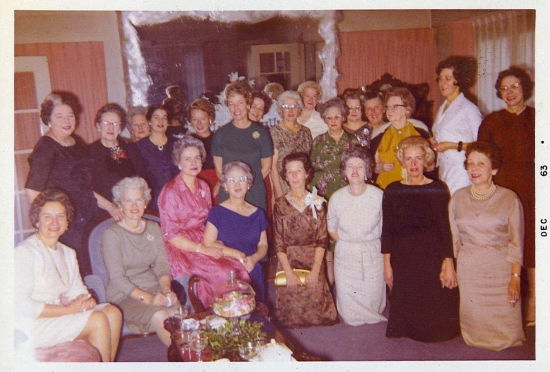
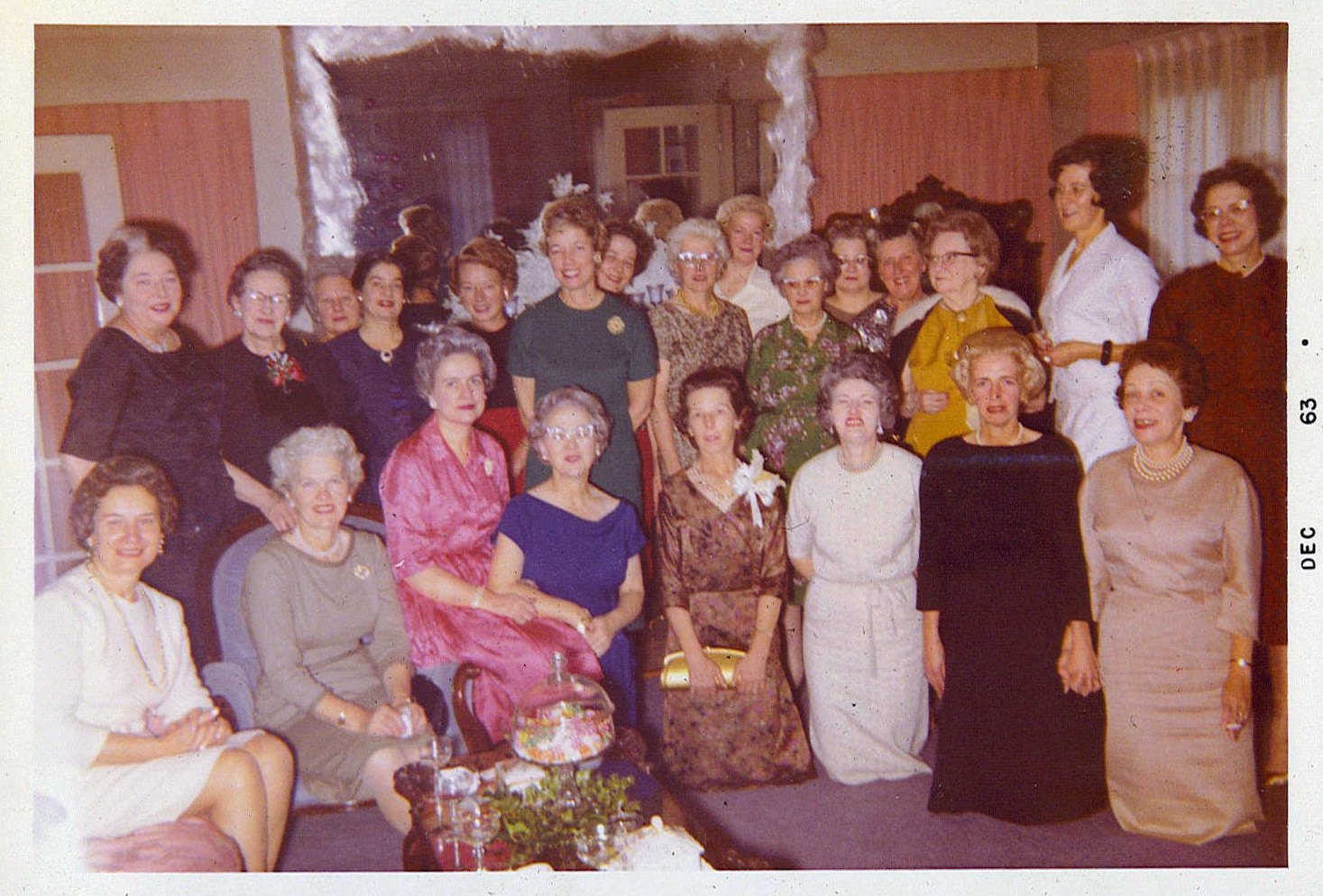
Members of the Alameda Tuesday Club gather in a local home in December 1963. Scrapbooks showing club activities are now in the collection at the Oregon Historical Society. Photo courtesy of the Metschan Family

Members of the Alameda Tuesday Club gather in a local home in December 1963. Scrapbooks showing club activities are now in the collection at the Oregon Historical Society. Photo courtesy of the Metschan Family

The ATC, as it is fondly referred to by its 36 members, is a social club with a service mission; a collection of active women from the Alameda neighborhood who are quietly carrying on a tradition that began at the dawn of the neighborhood itself. Since 1913, when the first homes were being built in the fields that are now our neighborhood, members of the club have been gathering on a regular basis in a different Alameda home each month for conversation, for learning, for tea and a meal, and to plan good works both close to home and far away.

In 1914, when a down-on-their-luck family was living rough in the 33rd Street Woods (a much wilder version of today’s Wilshire Park) and the Dad had tuberculosis, the club stepped in to provide food, coal, clothing and milk for the children.

When a well-known national suffragette came to town to advocate for a woman’s right to vote, the club boldly hosted an event with her as lead speaker.

When World War I soldiers from Portland were in the trenches in France, the ATC made and shipped bandages and other supplies overseas.

When the young neighborhood clearly needed a school, the Alameda Tuesday Club stepped up to help make the case.

You get the idea: These women are strong and know how to get things done. The list of charitable works over the years is long and generous. But they know how to have fun too: picnics, tea parties, an award-winning flower-bedecked float for the 1916 Rose Festival parade, fundraisers, costume parties.

These days, the club isn’t advocating for schools or building parade floats. But it does make generous gifts to charities, including most recently the West Women’s Shelter, Beaumont School Library, the Jefferson Dancers, the Oregon Food Bank, Friends of Children and SMART.

“When I first heard about the club, I thought it was such an anachronism,” says current president Kathie Rooney, who has been a member since 1986. “But when you are involved in charitable works and you get to know these women, the club takes on a whole different dimension. There is definitely an old fashioned social interaction. But we’re also talking about the issues of the day.”

Rooney explains that club bylaws have changed little since 1913, and still require members to live within the perimeter of the original Alameda Park Addition: from Fremont to Prescott and between NE 21st and NE 33rd. Membership in the club is by invitation only—as it has been from the beginning—and no more than 36 members are allowed. Monthly meetings rotate around the club, with a member hosting a lunch in her home on the second Tuesday of the month, nine months of the year. Some neighborhood homes have held multiple generations of ATC members and meetings.

And then there is the unwritten silver tea set rule: tradition has it that a silver tea set must be at every gathering of the club. Look back through the club scrapbooks (an amazing collection of images and notations set on black album pages now housed at the Oregon Historical Society) and you’ll see it there on a table, in the corner of a room, sometimes in use.

Terry O’Hanlon has been a member of the club since 1962 and has watched the neighborhood, and the club, change. When she joined, average club membership was a bit older than today, with most members between their early 50s and 80s (she was one of the youngest when she joined, in her 30s). Today, O’Hanlon is the eldest club member, and the youngest member is in her mid 40s. She also remembers Alameda filled with more young families and young children. Not so today, with plenty of two-parent working families.

“The pressures on professional women are different today than in my day,” she says, reflecting on the forces that have shaped the club over the years. “If you are working 40 or 50 hours a week, it’s hard to make it to an afternoon meeting like ours.”

Still, the friendship and camaraderie of the club—and its core philanthropic mission today—create a special sense of purpose that continues to fuel club meetings and activities. The tie to tradition, a respect for generations of Alameda women, and a real love for the neighborhood, distinguishes this special group.

-Doug Decker

Haunted by Harry Phillips’ Story

I’ve just posted the next builder biography, this one about Harry Phillips, who built many of the homes on NE Gile Terrace and Ridgewood in the 1920s. Phillips’ story is fascinating, tragic and indicative of his times. His work, appreciated and admired today, has clearly stood the test of time.

I’ve often wondered how builders weathered the storm of the Great Depression. I know Albert Irwin did only remodeling work in the mid-1930s. Others, like William Donahue, got out of the business altogether. Harry Phillips wasn’t as fortunate.

Phillips’ sons Jerry and Roger—now in their 80s—generously agreed to be interviewed about their parents, the work of their father, and their own growing up years. I feel very fortunate to have been able to gather their story in before it would have been lost to time.

Check out the biography of Harry Phillips on The Builders page.

Do you live in a Phillips home or have any insight to share about the family? Drop me a note.

The Geography of Imagination

Exploring Neighborhood History With Henry, Ramona and Beezus

We’ve been re-reading some favorite books recently, and as it turns out, finding quite a few clues to the world of neighborhood history. Award winning children’s writer Beverly Cleary grew up in the neighborhood and if you read carefully, you’ll find real echoes of our past in her books.

Cleary imagined an entire universe in a few small blocks. Our favorite young residents—Ramona, Beezus, Henry, Ribsy—crisscrossed their kingdom on bikes and on foot walking to their beloved Glenwood School, delivering the evening Journal newspaper, and getting themselves into some memorable misadventures.

Ramona Rides downhill (is that Regents or maybe NE 37th?) in a drawing by Louis Darling.

Ramona Rides downhill (is that Regents or maybe NE 37th?) in a drawing by Louis Darling.

The geography of that imagined place came from author Beverly Cleary’s own experience as a child growing up here in the 1920s and 1930s. She lived in a home on Northeast 37th Avenue, and attended the school now named for her: the Beverly Cleary School Fernwood Campus. The landmarks that define Henry and Ramona’s world—the churches, schools and houses, the hills and even the vacant lots—are drawn from places Cleary frequented as a young person.

It’s possible to find clues to Cleary’s own geography—and even a sense of Alameda neighborhood life in the 1950s—by exploring Henry and Ramona’s neighborhood as it unfolds on the pages of more than a dozen of her books.

A good place to begin looking for clues is Ramona Quimby’s house, just up the street from Henry Huggins on Klickitat Street. Cleary actually tells us in one of her books that Ramona lived with her mother, father and sister Beezus in a rented house near the corner of 28th and Klickitat. I remember reading that part of the story to my daughter one night and making a mental note that I needed to go look up that address on my next walk through the neighborhood.

As many astute readers will recognize, the corner of 28th and Klickitat is actually a “T” intersection adjacent to the playground at Alameda School. The day I walked past that spot and realized it was the setting for Ramona’s fictional house (a school playground), I laughed out loud and tipped my hat to Beverly Cleary.

All readers of the series know that Henry Huggins lives with his mother, his father and his dog Ribsy in a square white house on Klickitat Street. Cleary never really tells us exactly where on Klickitat that might be. But if it’s a square white house—let’s imagine an old Portland foursquare style house with a nice porch—chances are it’s west of Ramona’s house. In Henry And the Paper Route, Cleary hints that Henry’s square white house was slightly elevated above the sidewalk with a sloping lawn the kids rolled down. This sounds indeed like a four-square, built in the 19-teens. Now all we have to look for is Henry’s red bike and the barking Ribsy.

Ramona and Henry’s Glenwood School is an obvious stand in for Fernwood School, where the young Cleary attended before moving on to Grant High School. Why didn’t she create a fictionalized role for Alameda School? We do know there was a certain rivalry between neighborhood schools.  Kids from one school sometimes looked down their noses at kids from the other. Was omitting Alameda School a diss? Probably not. Just a little too complicated to explain why kids living in the playground of one school (wink) would be going to a different school a few blocks away.

Vacant lots…now there is a commodity of the 1950s that we just don’t have any more. By the late 1950s virtually every easily buildable lot in Alameda had been developed (many of the last ones by builder Ken Birkemeier). During Cleary’s growing up years—the 1920s and 1930s—there were plenty vacant lots to be found and they surely provided a refuge for everything from baseball to clubhouses. In Cleary’s 1955 Henry And the Paper Route, Henry watches as the ladies club sets up sawhorses and planks in a nearby vacant lot for the annual fundraising rummage sale. The vacant lot was a community commodity as well as landmark. Reading more closely between the lines, was the ladies club the fictional counterpart of our own Alameda Tuesday Club? Could be.

The business district of the fictional neighborhood bears some resemblance to places we all shop and frequent today. The movie theater, dime store, Rose City Barber Shop and even the “Colossal Market” are landmarks in today’s Hollywood neighborhood. The Colossal—where Henry’s mother bought everything from vegetables to hair clippers—was probably patterned after the original Fred Meyer store at 42nd and Sandy.

Al’s Thrifty Service Station, where Ribsy steals a policeman’s lunch, is today’s 76 station at 33rd and Broadway. Kids at Glenwood School watch from their classroom windows as a new supermarket is built: today’s QFC (formerly Kienows) just south of Fernwood. All the pieces line up.

In addition to the fun of hearing about these thinly disguised places we all know from our area’s past, there’s some wonderful imagery in these books that evokes an earlier time in the neighborhood, while also being timeless:

  • Ramona and Beezus playing outside on a summer’s evening until the street lights come on, when it’s time to go in.
  • The 11-year-old Henry riding his bicycle through the neighborhood in the late afternoon and early evening, delivering the afternoon newspapers hot off the press.
  • Kids jumping in puddles and playing in rivulets of muddy water on a rainy morning’s walk to school.
  • The Fuller Brush man in trenchcoat walking door-to-door selling his wares.
  • Henry crawling on all fours through Grant Park at night with flashlight in search of nightcrawlers for fishing.

And a timeless image that could have been borrowed from this winter: Ramona  sledding down the 37th Street hill on her dad’s old sled. Now there’s a scene drawn from the author’s personal experience, just a few doors up from her own childhood home.

Which gets to what makes Beverly Cleary’s work so appealing and enduring (and even instructive, for us students of history who also like to read to our kids): she crafts a slice of universal life through the experiences of her likeable, believable characters, and all through the lens of a remembered Northeast Portland childhood.

Don & Peggy Sarason Re-Craft the “Library”

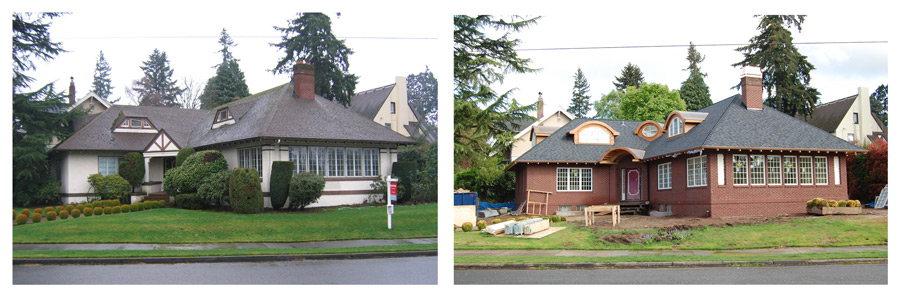
remodel-then-now

Since last fall, Alameda neighbors have watched with interest as the brick house at NE Dunckley and Regents has had a major overhaul. I had been particularly interested in the house after hearing (and debunking) an urban myth that it was built as a library, which I wrote about here on the blog back in January 2008.

The home was originally built in 1923 by C.O. Waller at a cost of $12,000, which was a lot of money for a house at that time, even in this neighborhood. 

As the construction project has entered the home stretch, I’ve wondered—as an amateur old house archaeologist—about what clues the owner may have found, and of course about the extent of the remodeling work. So, last week I dropped in on owner Don Sarason for a visit and a walk through the house.

The word remodeling doesn’t quite do it. Let’s stick with construction project. Here’s why:

Sarason and his contractors have virtually rebuilt the 6,000-square foot house, almost literally from the ground up.

The sun porch on the southwest side of the house, with the distinctive bank of windows, as well as the front porch area, is being rebuilt.

The brick exterior was in serious need of tuck pointing, so all of the old bricks have been removed and a fully new brick exterior is now in place.

The heating system wasn’t operating well, so crews removed the old radiators, put in a new boiler, and added radiant heat into the floor surfaces.

The plumbing system needed an upgrade: out with the galvanized and in with the PEX.

Wiring? That’s been upgraded too. Sarason added a 400 amp electrical service, and category 5 computer cable throughout to boot.

One of the most distinctive features of the house—its windows—needed help too. The originals have been sensitively replaced with all new insulated aluminum-clad wood windows. And the unique oculus window above the front door has been added.

don-sarasohn1

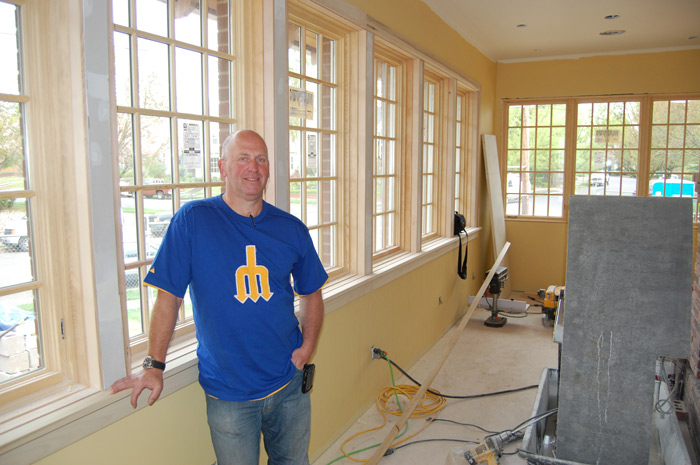
Don Sarason stands in the sun porch area backed by all new wood windows. It's an impressive space.

The Sarasons chose the house when the family moved from San Francisco to Portland in May 2008. The family of five—two boys and one girl—was drawn to the neighborhood because of its location and character: all the big city amenities very close to home. “When we saw this house in this neighborhood, it became clear what this ‘once wonderful’ house could become again,” said Don. The family purchased the house in May 2008 and by August 2008 had secured necessary permits for the work.

The project might be a classic case of being glad they didn’t know then what they know now. Like most remodeling jobs, it’s turned out to be more work than they expected. But with all of the system upgrades and expansion,  it’s also turned out to be more house.

Under the guidance of historic preservation architect Bill Hawkins, they have enlarged the existing dormers, added one more, and given them all a unique look that includes a graceful radius and distinctive trim that represents a combination of Craftsman and has Asian design.

In the public spaces, they’ve completely rearranged the floor plan and traffic flow on the first floor: you can now access the kitchen from the dining room. They’ve opened up the kitchen and family room area (including a spacious, barrel-ceilinged gathering space), added a direct link to the back terrace, and added more windows. Upstairs, they’ve taken what were two big, undefined spaces and crafted three bedrooms, two bathrooms, and some very nice “perching spots” to read or just look out the window. A haven for kids.

It’s basically a new house tucked into the original envelope that honors the original design. Take, for instance, the two beautiful tight-grained Douglas-fir fireplace mantles that have been carefully removed, painstakingly stripped, re-stained and put back in place. Or the ceiling cove molding, stripped clean of generations of paint and reinstalled. Or the decorative wall sconces, all cleaned up and put back in place.

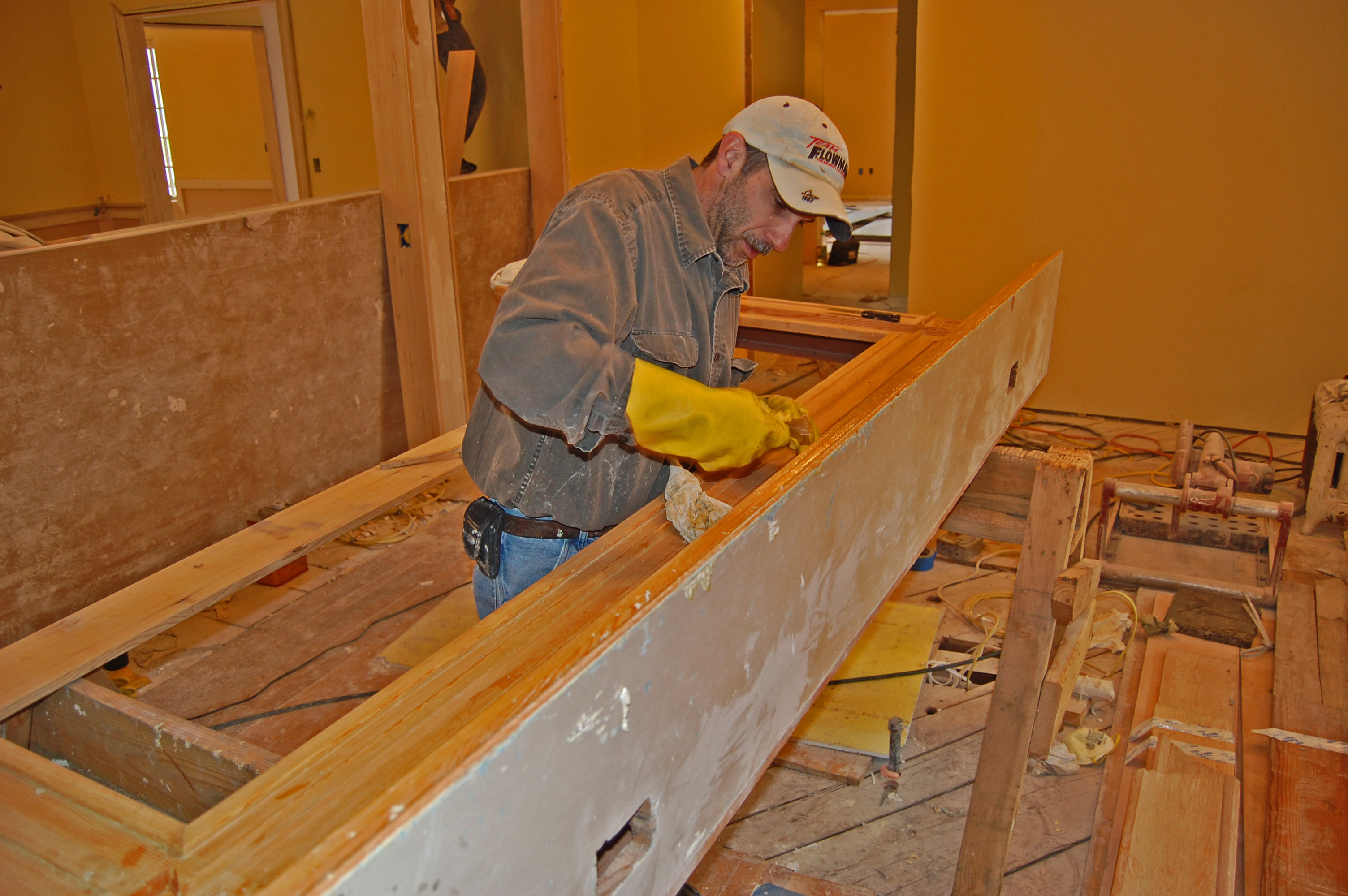
Stripping the fireplace mantle on the first floor.

Stripping the fireplace mantle on the first floor.

During our walk around, I asked about what kind of clues had turned up from the past (“any old library books?” I asked with a smile). Nope. The biggest artifact was a built-in safe, which Sarason was able to open (thanks to finding the combination scrawled conveniently nearby). Nothing inside. And not too big a surprise…thinking back to the era of their construction and the crumbling banking system of the Great Depression, other Alameda homes had safes for the owners to keep a close eye on their precious assets.

During the construction process, several people who have lived in the house over the years dropped by, providing great stories about the home’s earlier years.

Sarason says the target for completion is the end of this month. The work is clearly wrapping up: the construction fences have come down and now it’s time for the final details.

And he’s proud to show off what has become a labor of love.

Hello There Oregonian Readers!

That was a very nice piece in The O today about accessing the past online. I’m honored to be included with some very capable and cool history sites. I invite you to have a good look around…there’s lots here about the Alameda neighborhood and the fruits of old house research in general. I’m always on the lookout for stories and information about the evolution of this neighborhood, and particularly looking for old photos of homes, the school, etc.

Last week a former resident sent me some family pictures taken in the 1950s out in front of her house on NE Regents, which I considered a major find. There just aren’t many photos of our old houses in existing public collections. So, send me a copy, a story, a lead. And bookmark www.alamedahistory.org because there’s always something new — er…old — here to see.

-Doug

Neighborhood Boundary vs. Subdivision Plat

Like a mosaic of fine old tiles, hundreds of subdivision plats rest atop Portland’s neighborhood landscape, creating a base-layer of orderly streets and lots beneath the places we know today. Drawn up over the last 140 years by different developers, each plat has a name: some are catchy, some are descriptive, a few remain in common use to describe the places we know. Most have been lost to time.

Neighborhood names are administratively determined by the Portland Bureau of Planning and Sustainability, which has plotted them on this handy map.

Plat or subdivision names are filed on the date of platting with the Multnomah County Surveyor and are boundaries of surveyed property tied to the legal description of the land. There are more than 900 individual plats in Portland.

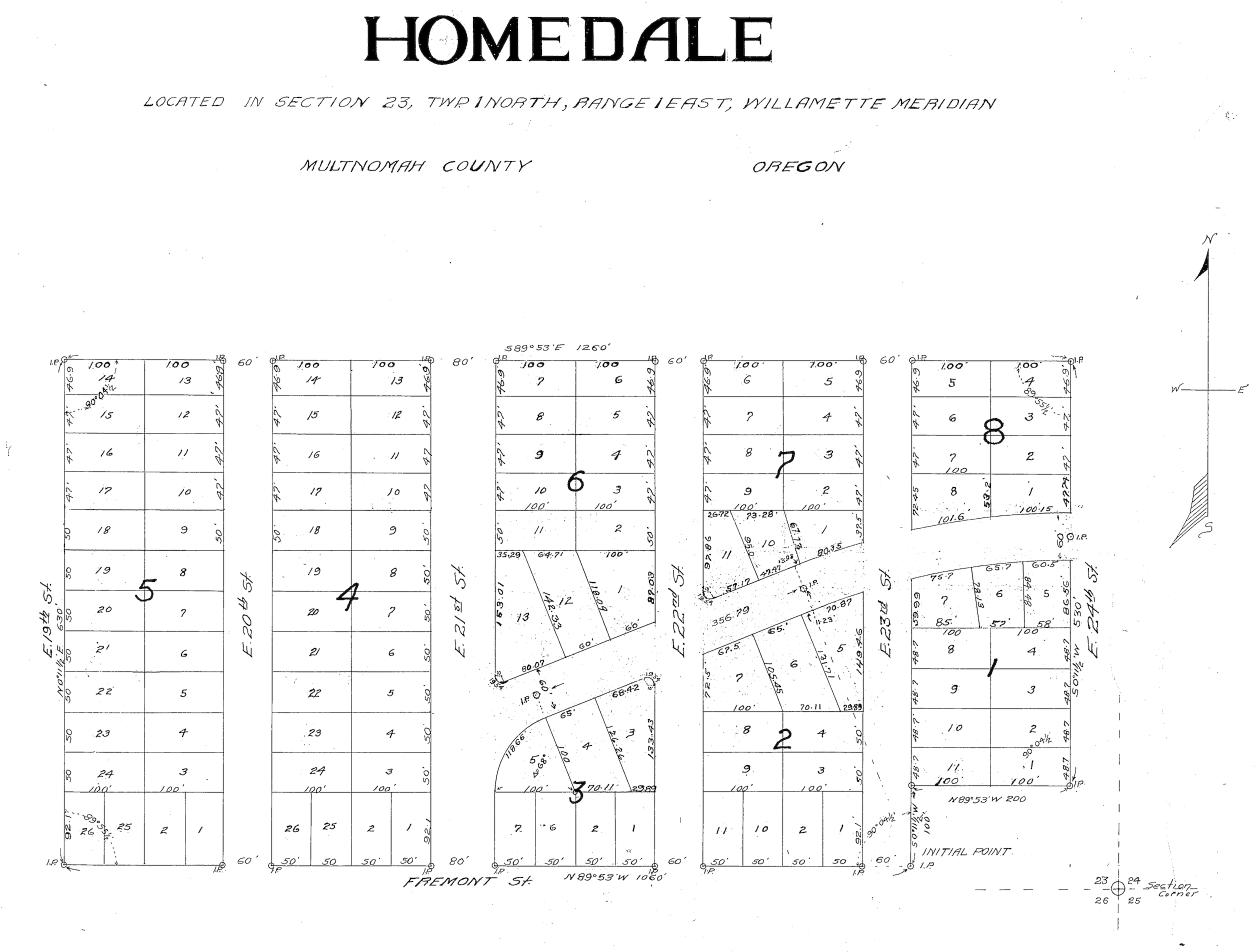
Here’s a good example of a plat that has nothing to do with the name of any neighborhood. It’s Homedale, and it spans today’s Sabin and Alameda neighborhoods. Try telling someone you live in Homedale (or any of the other 21 named plats in our neighborhood) and you’re likely to get a blank stare.

Homedale Plat

Within the confines of what the city thinks of as today’s Alameda Neighborhood are at least 21 plats of all sizes, from the Alameda Park plat, to the Homedale plat (1922), to the Town of Wayne plat (1882). Probably the only one that will ring a bell for most residents is Alameda Park, the namesake for what is today’s larger Alameda Neighborhood.

And just to make life a little more confusing, the Alameda Park plat exists within both the Alameda Neighborhood and the Sabin Neighborhood (late 20th century neighborhood administrative boundaries).

Here’s the full list of plats inside today’s Alameda neighborhood boundaries: Alameda Park, Homedale, Olmsted Park, Irvington, Edgemont, Pearson’s Addition, Town of Wayne, Town of Wayne Replat, Waynewood, Irvingwood, Meadow Park, Dunsmeade, Irvindale, Hillside, George Place, Bowering Donation Land Claim Tract, Norton’s Subdivision, Stanton Street Addition, Gleneyrie, Hudson’s Addition and Meadow Park.

With more than 20 plats in just one “neighborhood” alone, no wonder the city has chosen to lump geographical areas into single neighborhood names. No plats were moved, changed or amended to coincide with our neighborhood’s name. Rather, the place name we all know today — and it’s corresponding map — was determined decades after the ink was dry on the subdivision (plat) names.

Here’s a link to plat maps for Alameda and several surrounding areas.

Just for fun, dig out the thick pack of papers you signed at closing, or look at your property tax statement: you’ll find the name of the plat that includes the block and lot where you live. Just remember: this name exists separate from the name of our neighborhood.