Witness to change: A round-up of our favorite local market buildings

grant-park-grocery-ne-33rd-knott-c1940

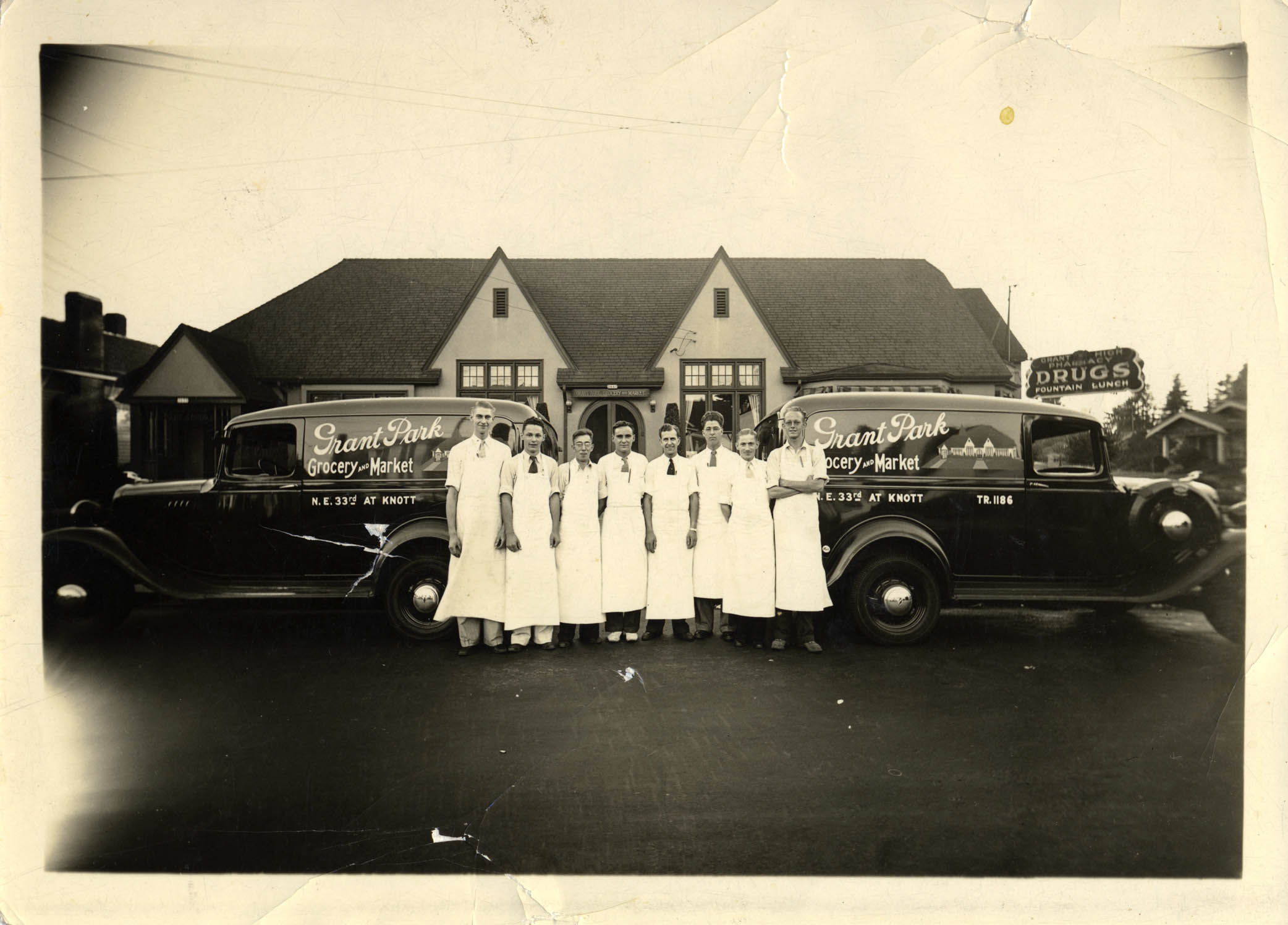
The Grant Park Grocery and Market crew in the 1940s. David Lewis Photo.

We like to think about change as our constant companion in life: always right there with us, frequently a silent partner guiding and shaping our habits and pathways. But sometimes not so silent, as when things change suddenly and dramatically.

From a neighborhood history standpoint, one form of sudden change lately has been the rash of tear downs in the neighborhood, where the physical landscape we know shifts, almost overnight.

Sudden change is easy to see. But slower changes can be invisible unless you hold them up and examine them from time to time. We’ve been busily researching several buildings in and around the neighborhood that have made some of these slower changes visible because they’ve left behind some clues: the old buildings. We thought you might be interested.

Consider for a moment how shopping patterns have changed. In 1931—a time when almost all of the homes in our neighborhood were well established and occupied by young Alameda families—Portland’s business directory listed more than 750 individual grocery stores, most of them owned and operated by families. Butcher shops, fish markets, general grocery stores, bakeries, candy stores. It’s where Portland shopped, and also where neighbors met neighbors, information was exchanged, neighborliness happened.

Here in the Alameda Park Addition, commercial development was prohibited. But just beyond our borders, small business was booming. Here’s a round-up of 10 nearby businesses that once served our neighbors. We’ve written about most of these before on the blog, but this post brings them all together into one place. We’re always looking for more information on these or other stores (my short list of other Mom and Pops to look into includes these ghosts: Spellmans at 15th and Fremont; the grocery at 15th and Knott. And these two going concerns: Beaumont Market; Justin’s Market at 42nd and Failing. Others?

There was Alameda Grocery (3433 NE 24th), located on the southwest corner of 24th and Fremont, built in 1922 at the height of homebuilding in Alameda. You could phone in your order and have your needs delivered by bike, even if it was small as a pint of ice cream. Next door was John Rumpakis’s shoe repair, and upstairs was the dentist. Today this is Lucca.

Believe it or not, 24th and Fremont was also home to a full-fledged Safeway Store, located in the building that now houses Alameda Dental and Union Bank (2416 NE Fremont). Built in 1938, this was the site of a major land use battle in 1942 when Safeway wanted to expand to include the entire block (they lost). Later this became Brandel’s Alameda Foods and Deli, which we miss.

There was the Prescott Fountain (2909 NE Prescott, also known as Hunderup’s) at Prescott and 29th where you could run a monthly tab and just drop in for an iced Coke, or maybe get your hair cut or styled at the barber in the back corner of the shop. Built in 1922 for T.W. Crowley. Today it’s still a market: Food King.

Wilshire Market (3707 NE Fremont) at 37th and Fremont—now a restaurant known as Fire and Stone—was known for its friendly service. We’ve spoken with many Alameda families who did all their grocery shopping there. Padrow’s Pharmacy located in the same space added an extra level of convenience. Built in 1923, three years before Beaumont School opened.

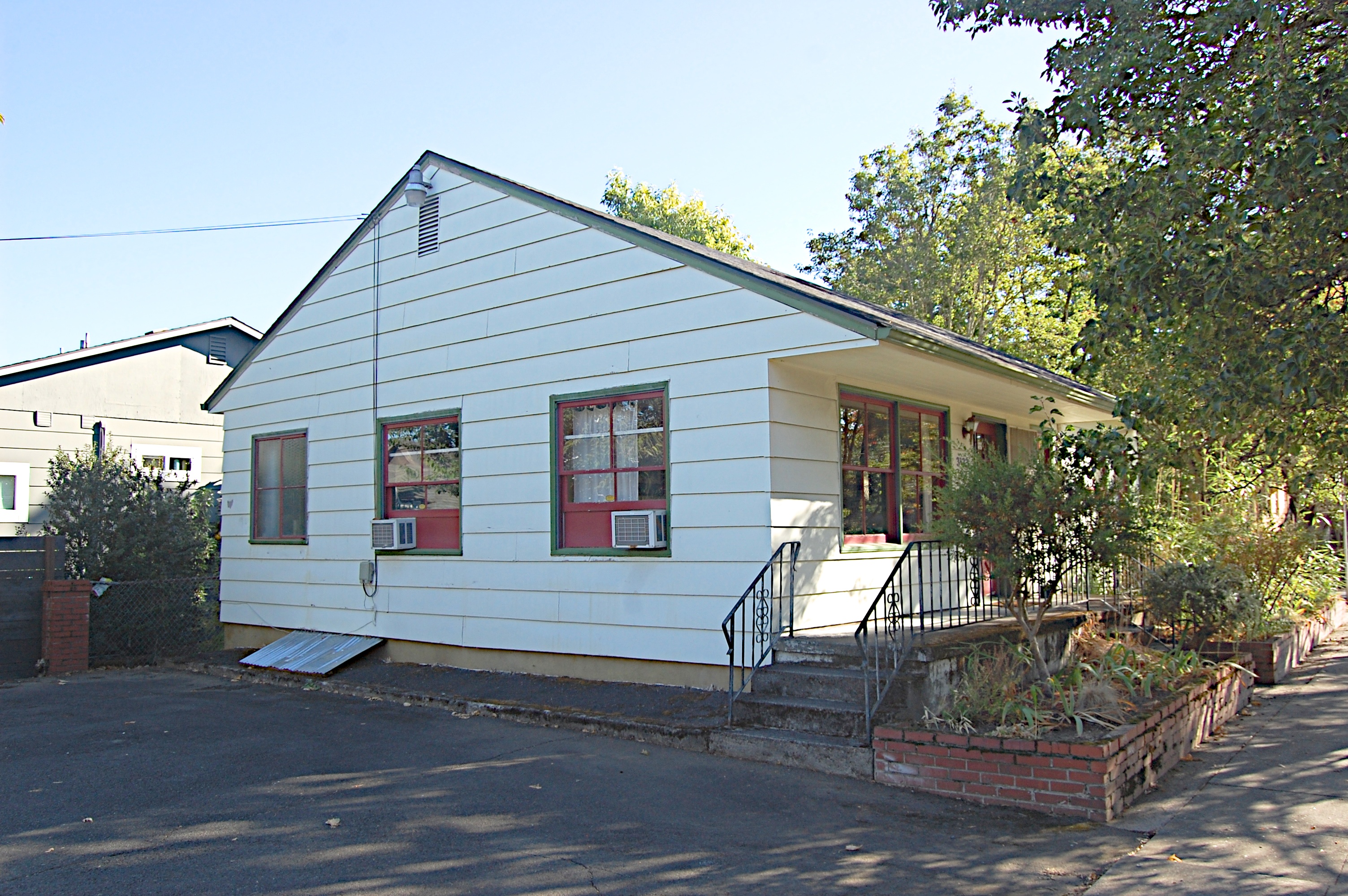
Bradford’s Market and Serv-Us Grocery (3133 NE Prescott) at 31st and Prescott is now a clinic, but note the parking area west of the building. Plenty of neighbors would drop in here for grocery items on the go. It looks a bit like a residence, but this building was purpose-built in 1921 as a grocery store.

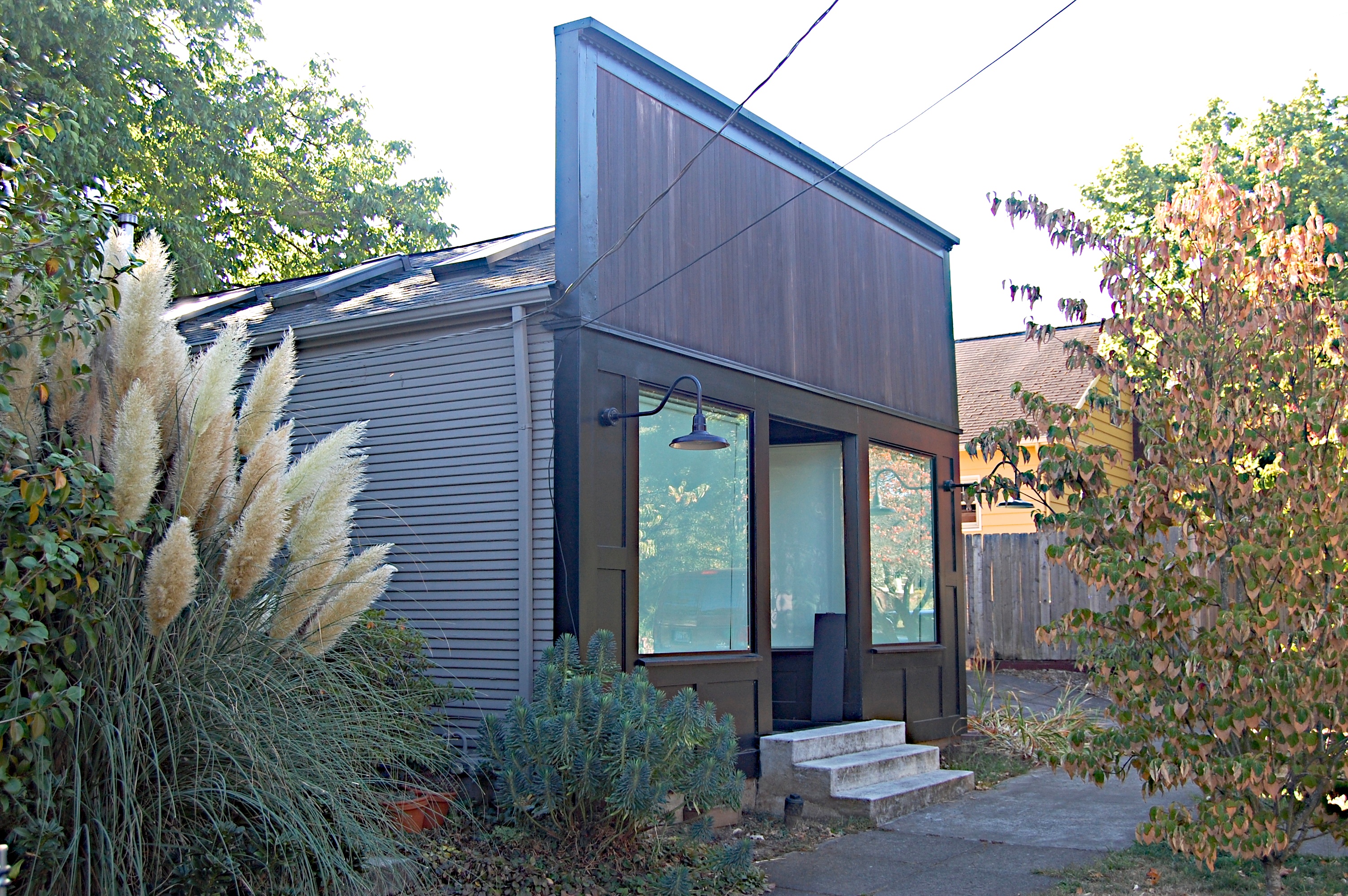
A couple blocks over was the tiny Thirty Second Street Grocery (4518 NE 32nd), built in 1910 and later known as Smith’s Cash Grocery and simply as Doc’s. This sweet little building is the epitome of the small neighborhood grocery, recently converted into an artist’s studio.

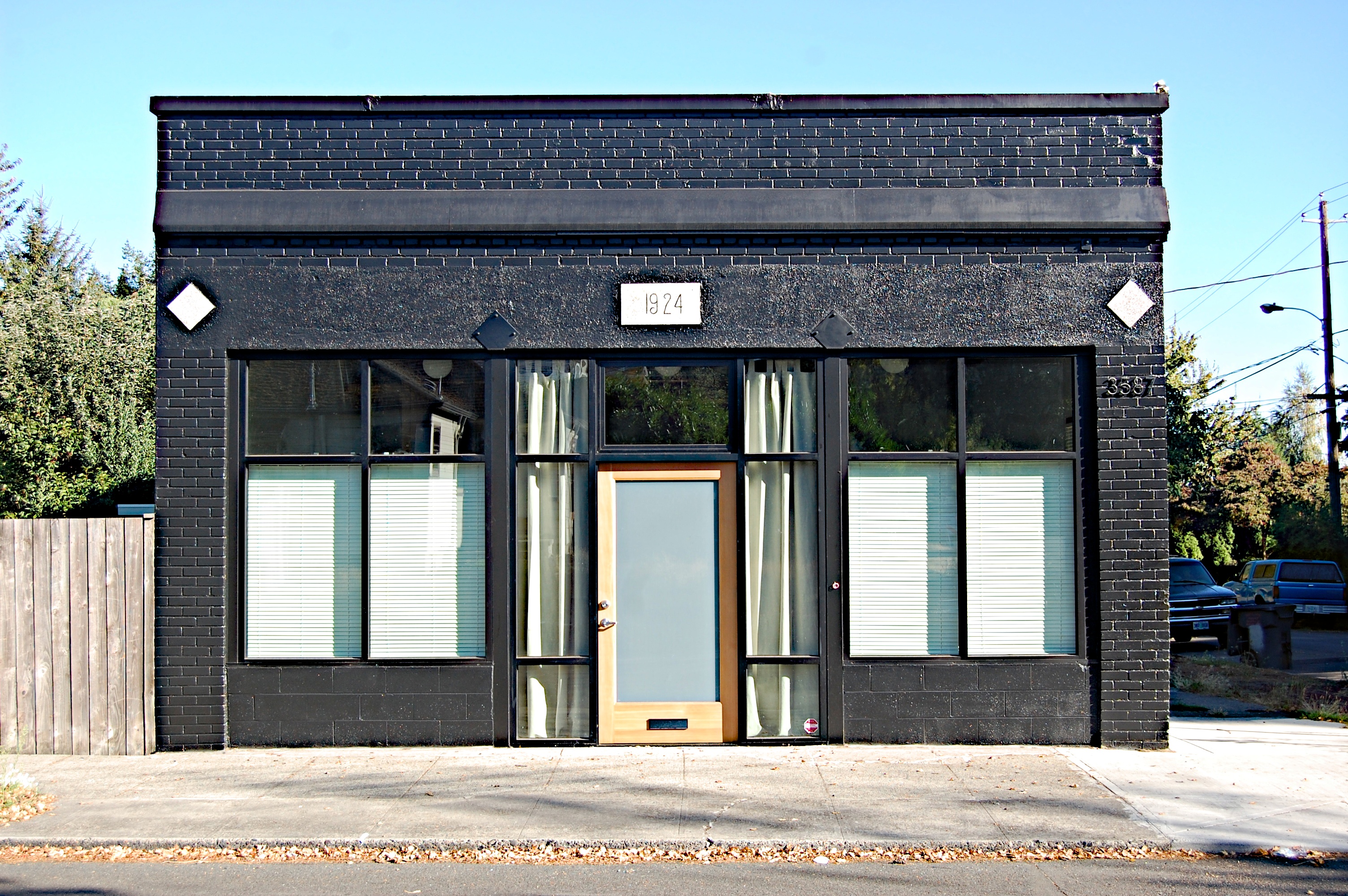
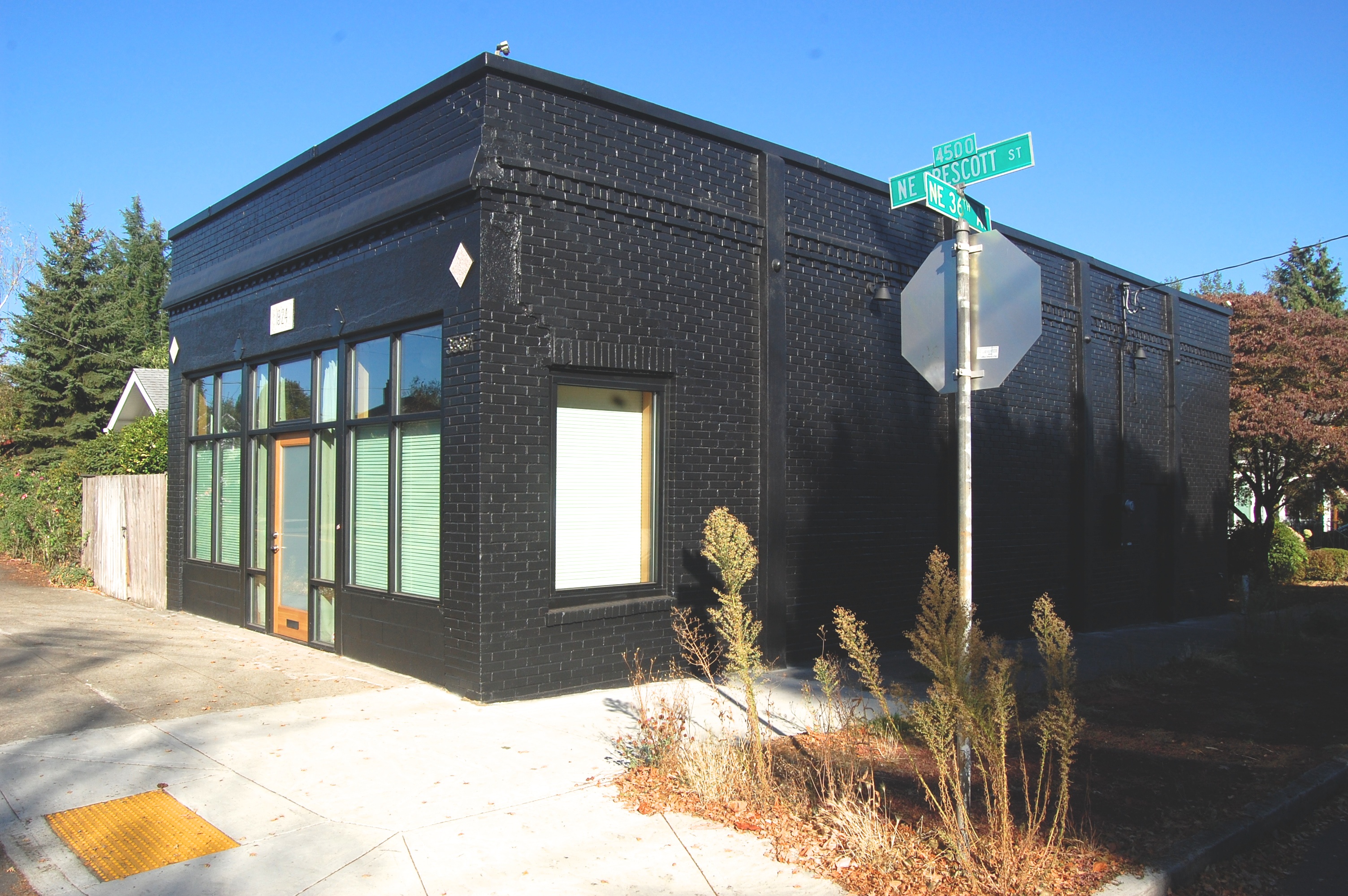
This building was a bright shade of purple for a while but has recently been painted all black when it was converted into an artist’s studio and print restoration business, but the Marble Palace Market and Grocery (3587 NE Prescott) really looks the part of the old neighborhood grocery, built in 1924. Grace and Earl Dickerman were the long-time proprietors here from the 1940s well into the 1960s.

Just to the north was the Alameda Park Grocery (4601 NE 27th), later known by several names including Coulter’s, Rieker’s, Moad’s, Bob’s Quick Stop Market and even the Mt. Zion Church of God in Christ. Built in 1910 as a “men’s furnishings” shop, the building has recently been fully restored and is notable for the connection with its adjacent residence. A perfect example of a “bungalow market.”
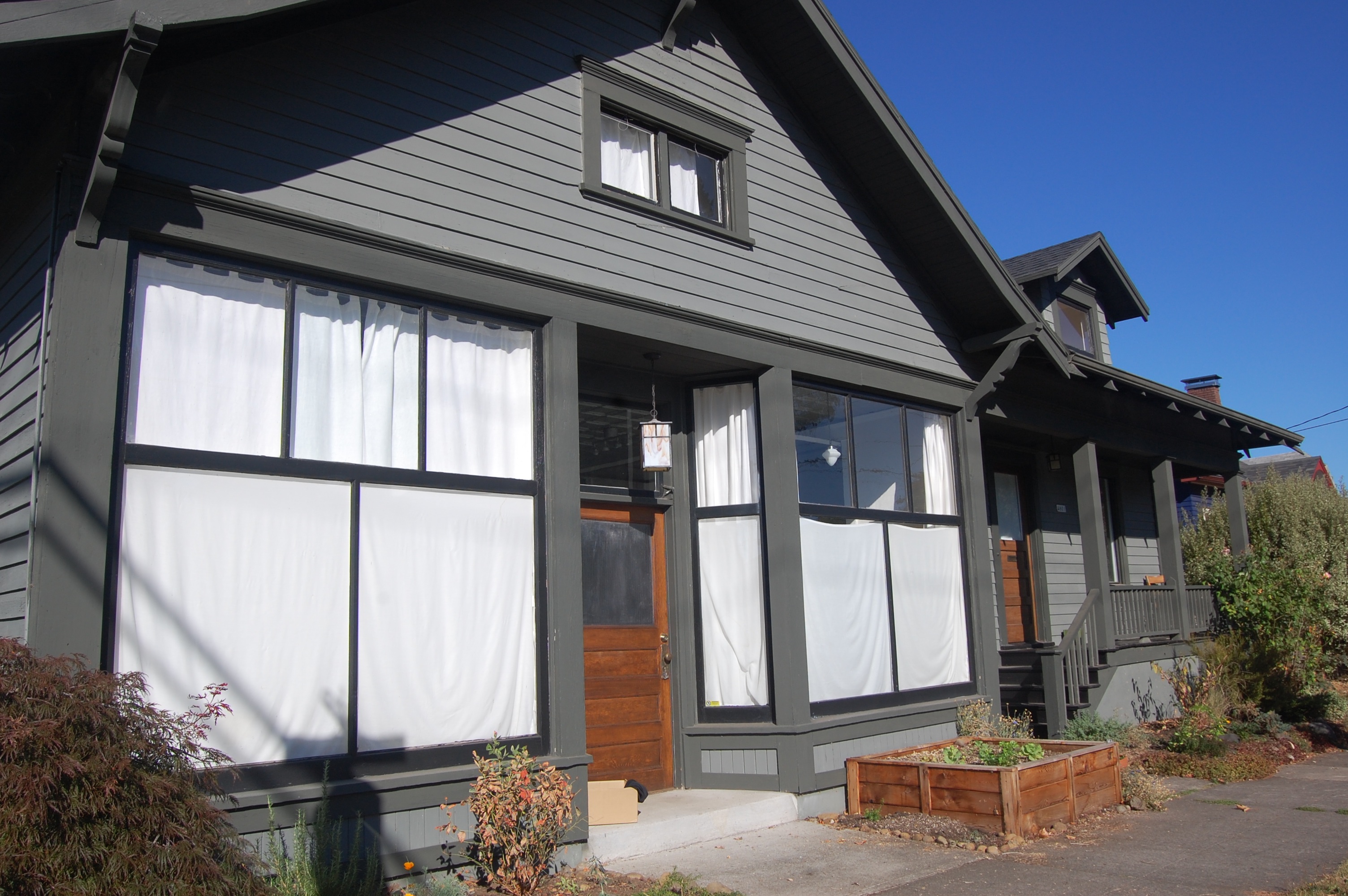
Alameda Park Grocery

This shop at NE 27th and Going started out as a men’s furnishings store in 1910 and finished its commercial life as a church in the 1960s. In between it went through five owners. Stay tuned for a more detailed look at its life in a future post.

The Davis Dairy Store is still further north, at the Fox Chase corner of NE 30th and Killingsworth (5513 NE Killingsworth), built in 1926. The Davis family lived in Alameda at 24th and Dunckley, and some of our neighbors undoubtedly shopped there.

Grant Park Grocery and Market (shown at the top of this post) on the southwest corner of 33rd and Knott (2647 NE 33rd), built in 1925. This attractive grocery, now a medical office, had sleek-looking panel vans and a staff of white-aproned help who would deliver your phoned-in order to your door. Here’s a link to another photo taken on the same day, and some further information about the store.

100 years later, our shopping patterns (and the things we’re buying) are quite different. The infrastructure that developed around those earlier patterns has been reconfigured into the convenience stores, restaurants, banks, and artist studios of today.

Which is a good lesson about the importance of being flexible and responding to changing conditions. And also about respecting and understanding the past by bringing some of the original pieces along with us as we build the neighborhood and community we envision for the future.

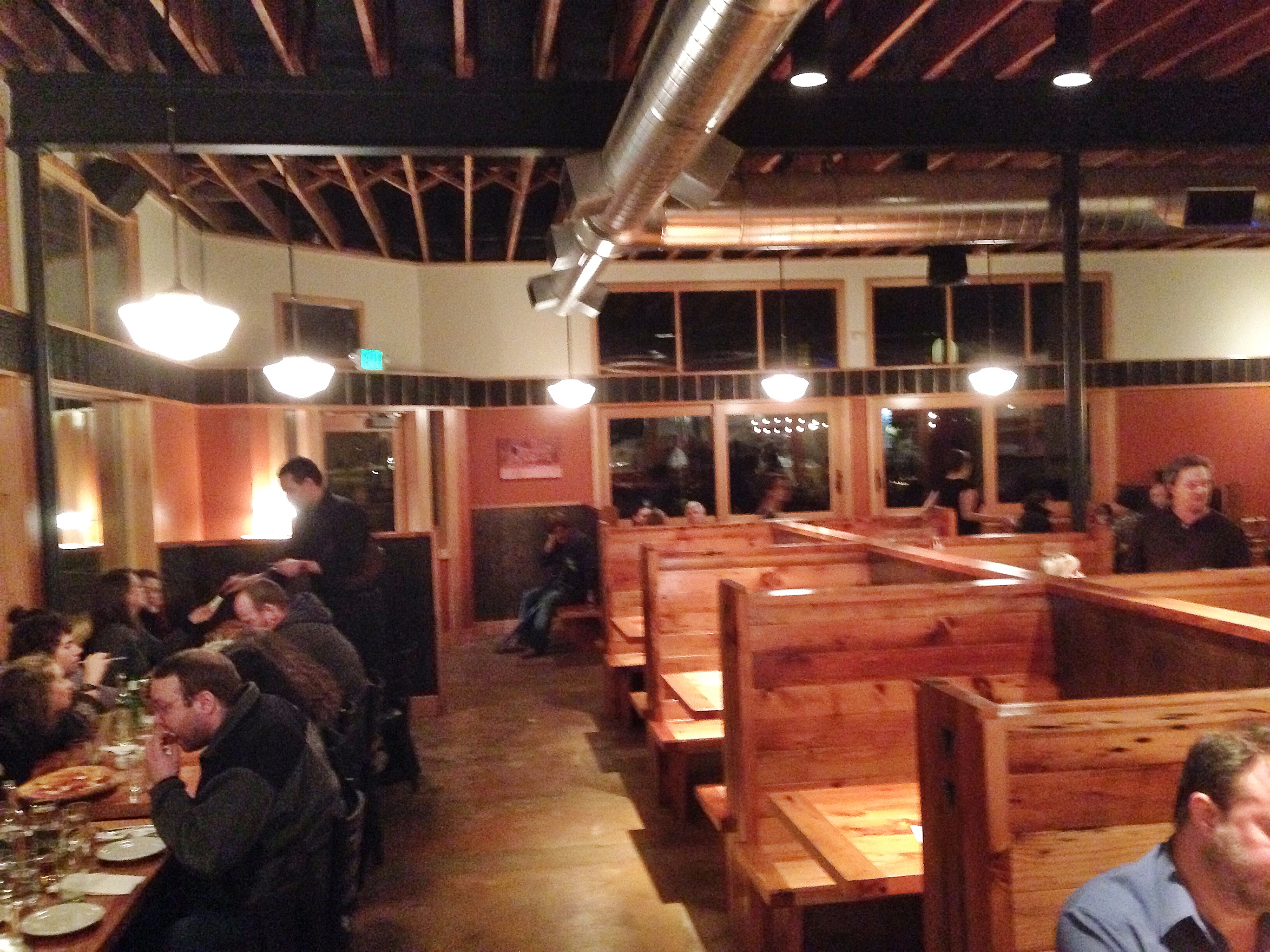
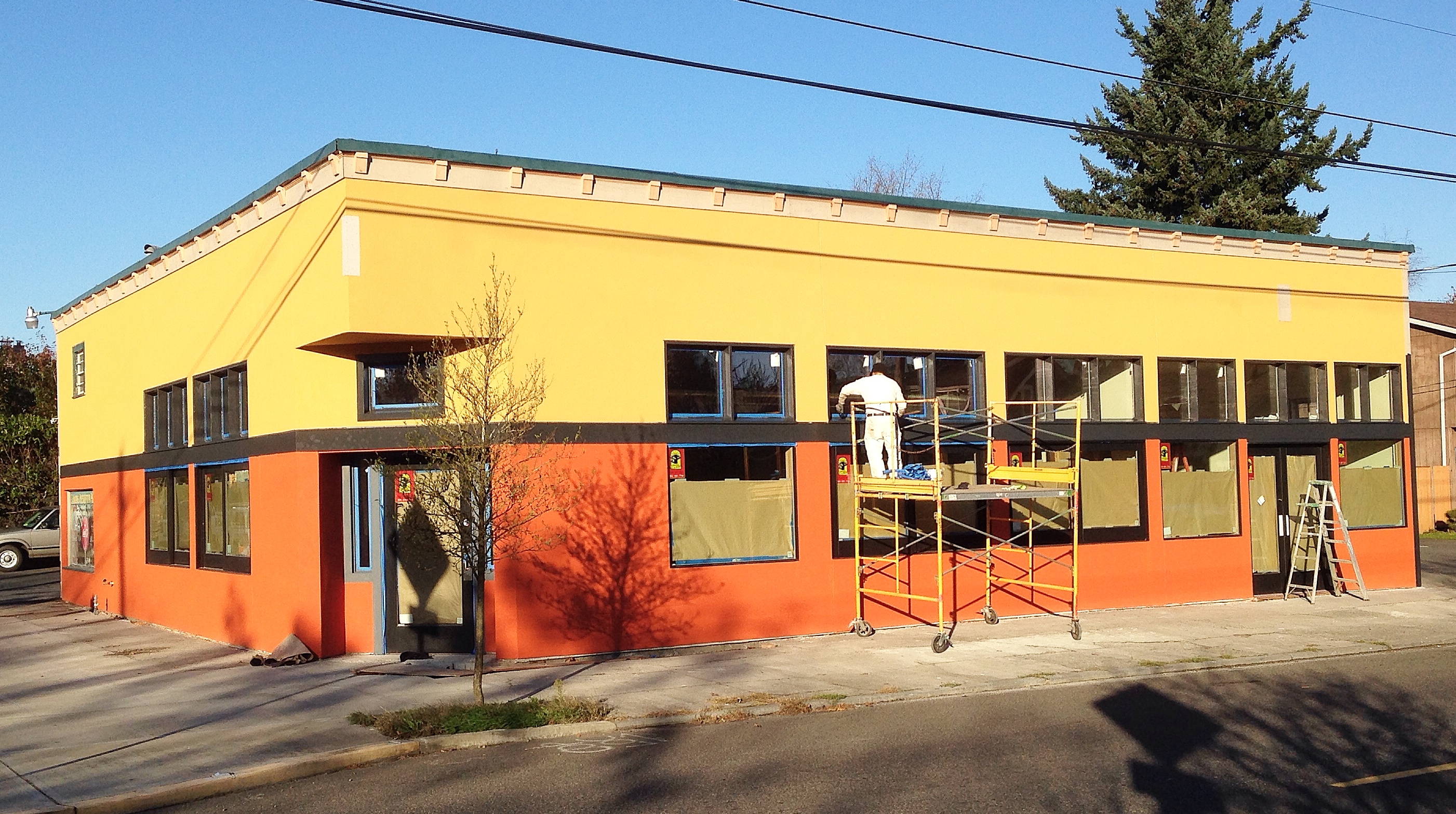
Wilshire Market is now Fire and Stone

IMG_3827

The transformation is complete.

We had a sneak preview dinner last night at Fire and Stone (3707 NE Fremont), which opens today, and can testify that the transformation of Wilshire Market is now complete. We’ve been watching this Beaumont-Wilshire neighborhood building for about a year now, and appreciating its history in the neighborhood: built in 1923 and operated as the Wilshire Market and Grocery by Solomon Barrigar and Albert Mumler, this business served local families and provided sweets and sundries for generations of school children walking to and from nearby Beaumont School. In its early years, it was one of more than 750 small markets where Portland shopped for its groceries.

Today, it’s an attractive bakery and restaurant with a menu that features full dinners like roast chicken, ribs and roasted fish, wood-oven pizzas, salads and bread. During the sneak preview dinner, attended by hundreds of curious supporters and business partners, the building came alive and many remarked about remembering Wilshire Market. There are some clues to its former life:

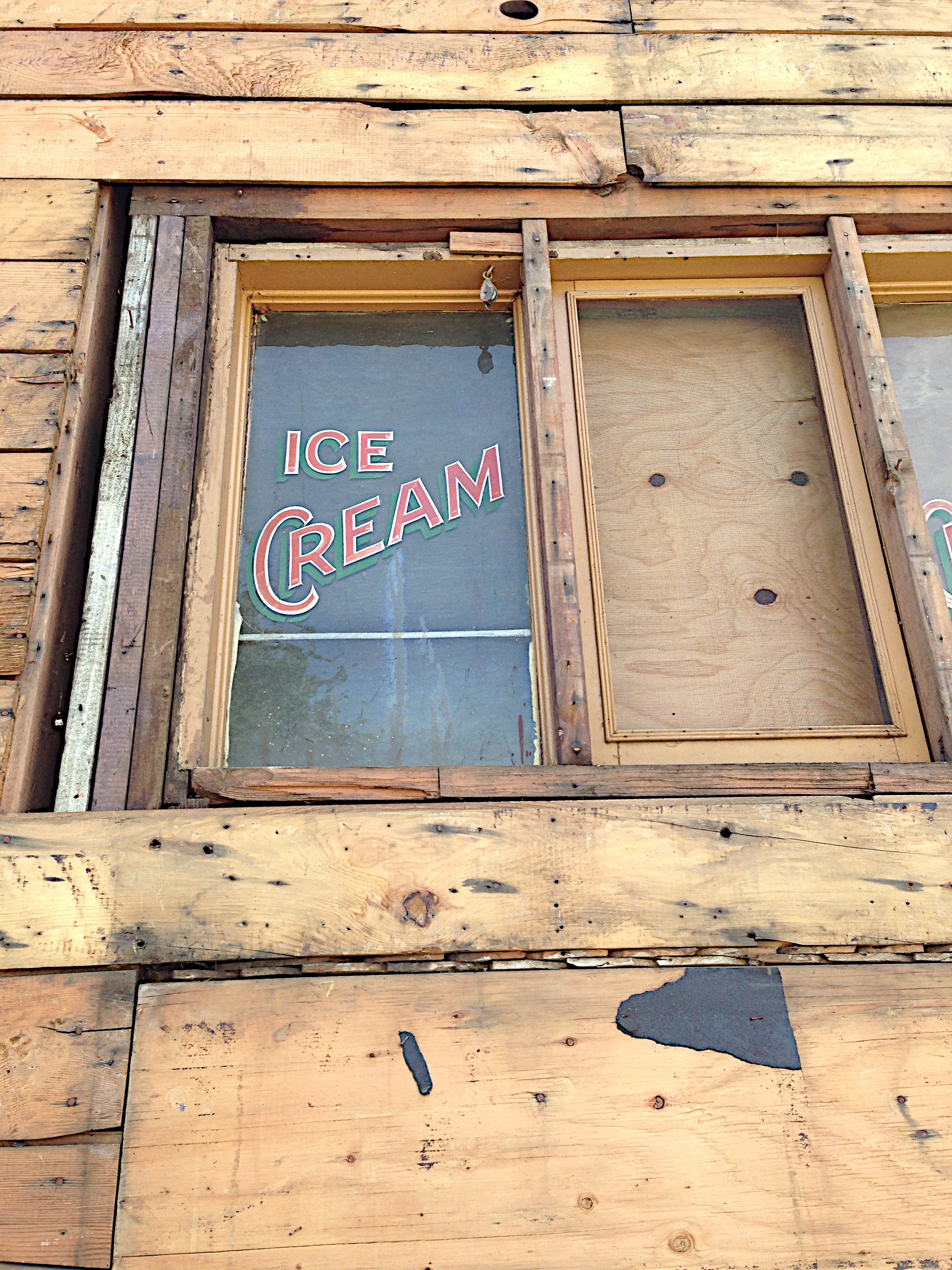
  • Check out the transom windows preserved by owner Jeff Smalley and now displayed on an interior wall. These windows once ran the length of the south and west sides of the building and many of the panels served as advertisements. Jeff has saved some of the nicest examples.
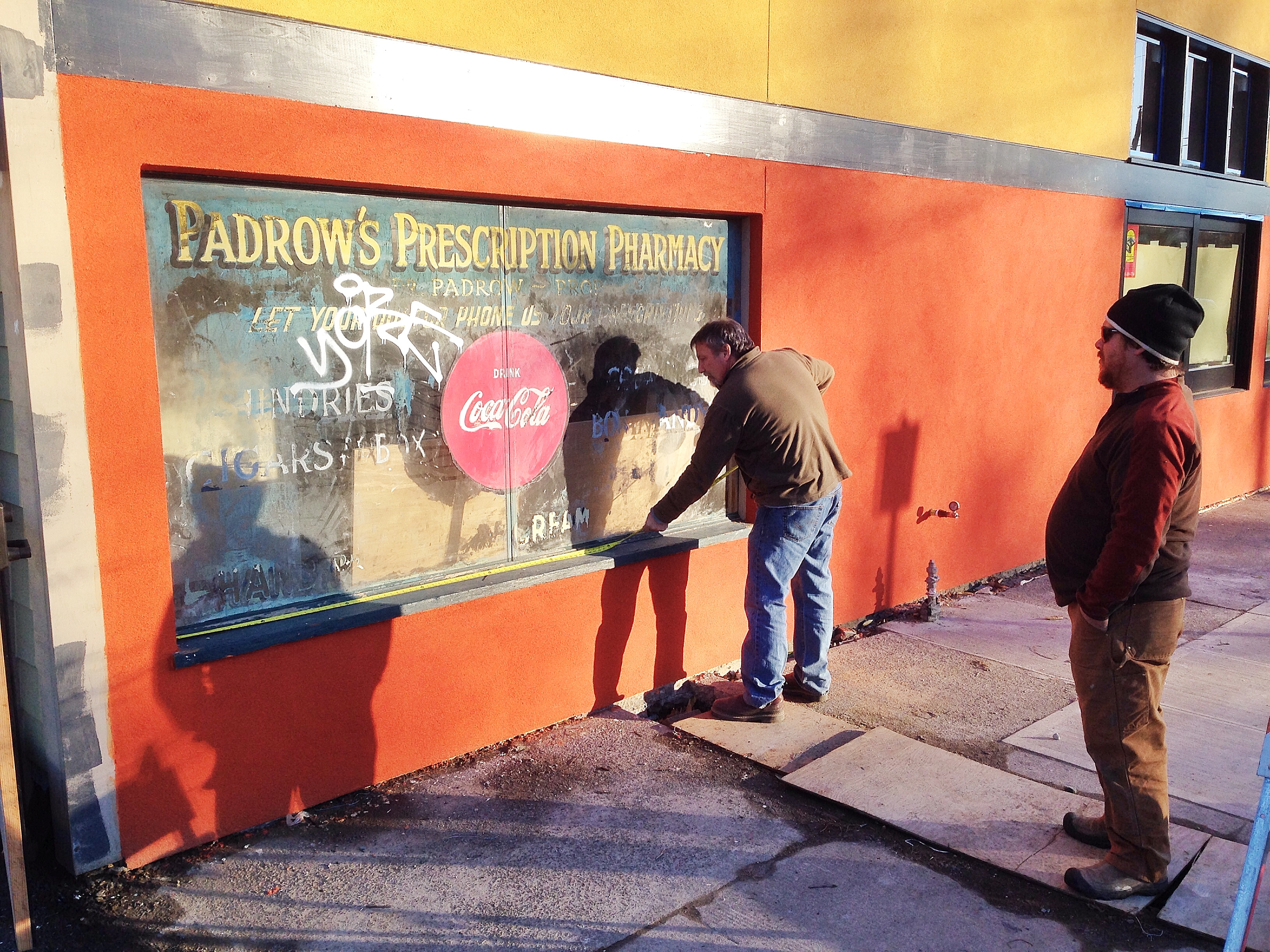
  • Speaking of windows, of course there is the Padrow Pharmacy window, which we’ve been investigating for Jeff. Additional pledges continue to arrive (thank you) and we’re submitting a grant to Coca-Cola (the original window’s sponsor) to help with the restoration. You can read more about the window here and here.
  • The new doorway at the southwest corner returns the building entrance to its original position. Nice touch.
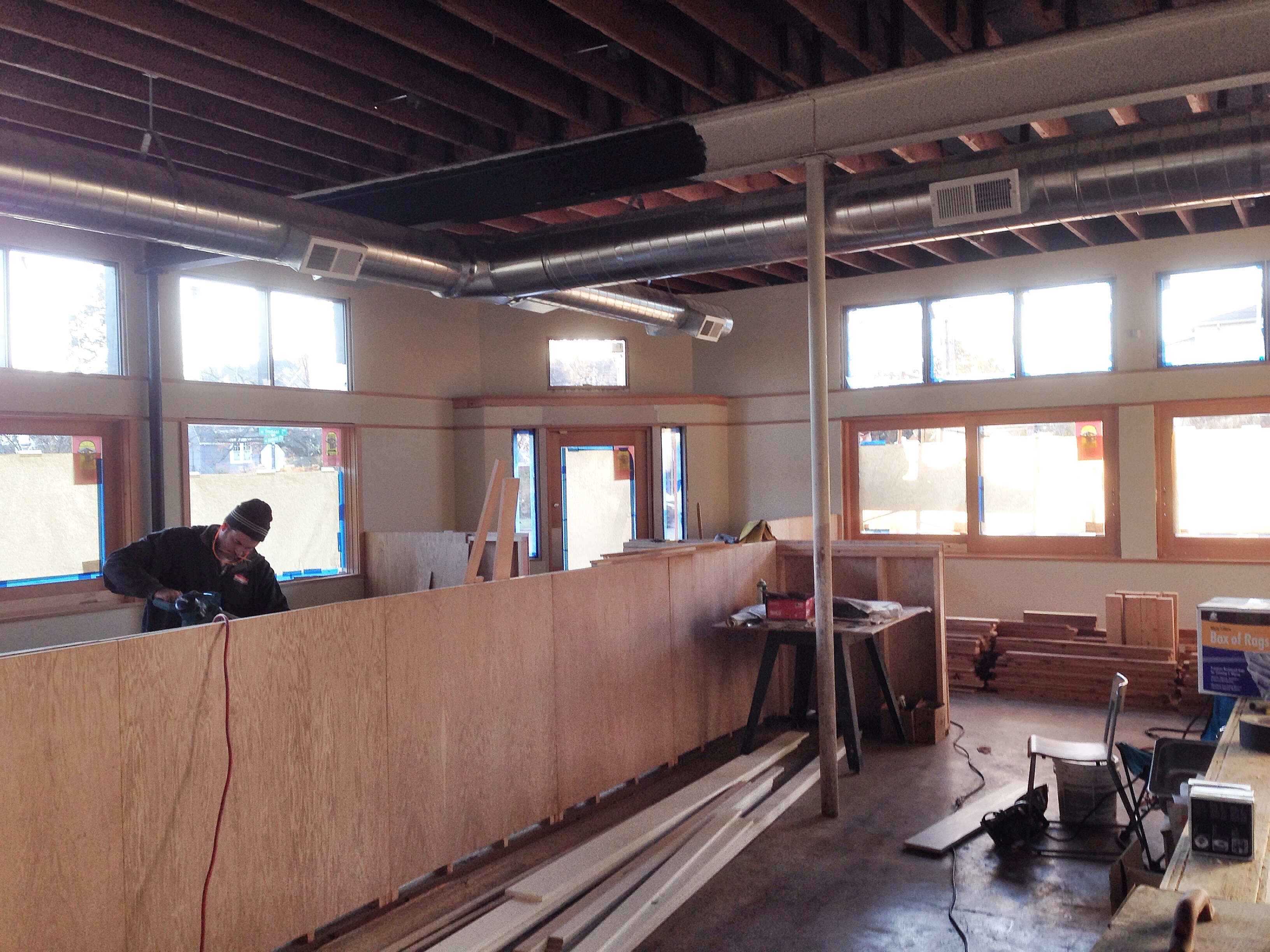
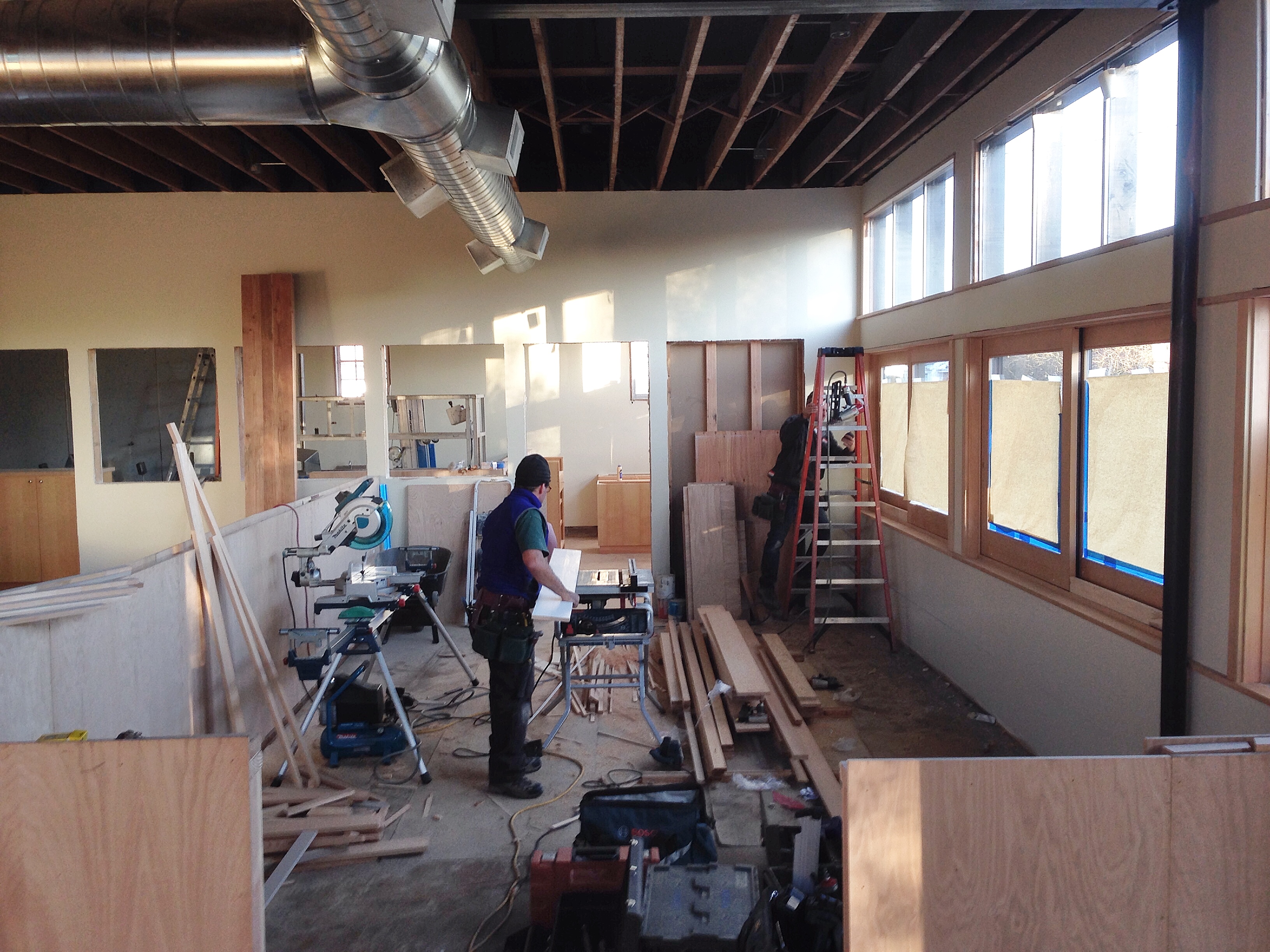
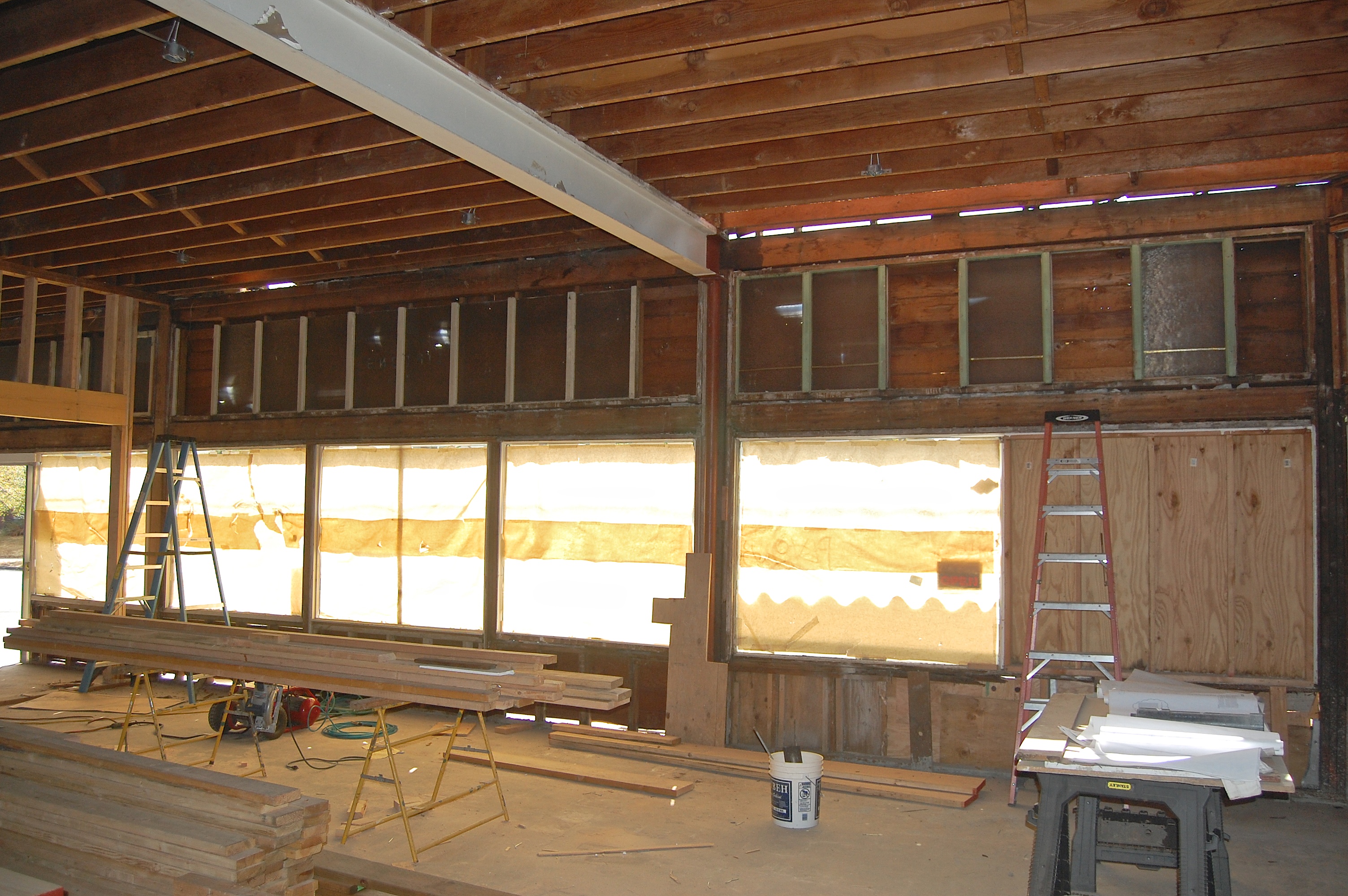
  • Exposed structural and building systems inside let you see back in time. There’s plenty of new framing material, ducts and electrical wiring, but some of the work from 1923 is still visible.

Can you find other clues?

During a time when many developers start their work by demolishing an existing old building to make way for the next big thing, we’re pleased to see one business that has kept the historic structure and even built part of its identity on its history and character. This is a trend Portland needs to support.


Padrow Window Design

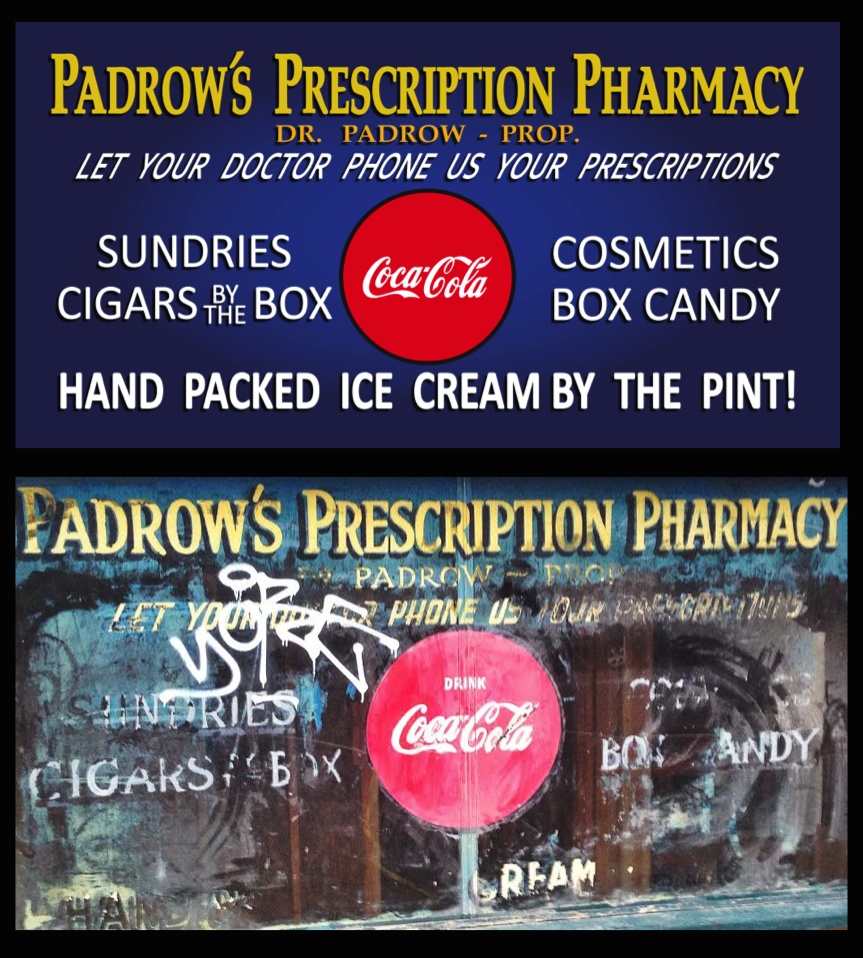
Sign designer Brad Ellsworth has been busy. Replica design above, existing window below. Take a look:

Padrow Windows

AH readers have pledged $350 so far and we need about $1,500 in pledges before we can give Brad the green light to actually get the work underway. Additional pledges or suggestions?


Help Renovate the Padrow Window at Wilshire Market

IMG_3689

The old Padrow Pharmacy window at the former Wilshire Market has sparked plenty of conversation in recent weeks. We were visiting the building this week when one driver pulled to the curb to ask when the new pharmacy would be opening. Ahem, well, it’s been a few years…

AH readers and neighbors who have been following will know the pharmacy window was accidentally revealed a couple years back when the former market owners were doing some remodeling and exposed it under the siding. It was definitely a novelty, and they framed it out and let it be seen again as a kind of a community service, and out of respect for the past.

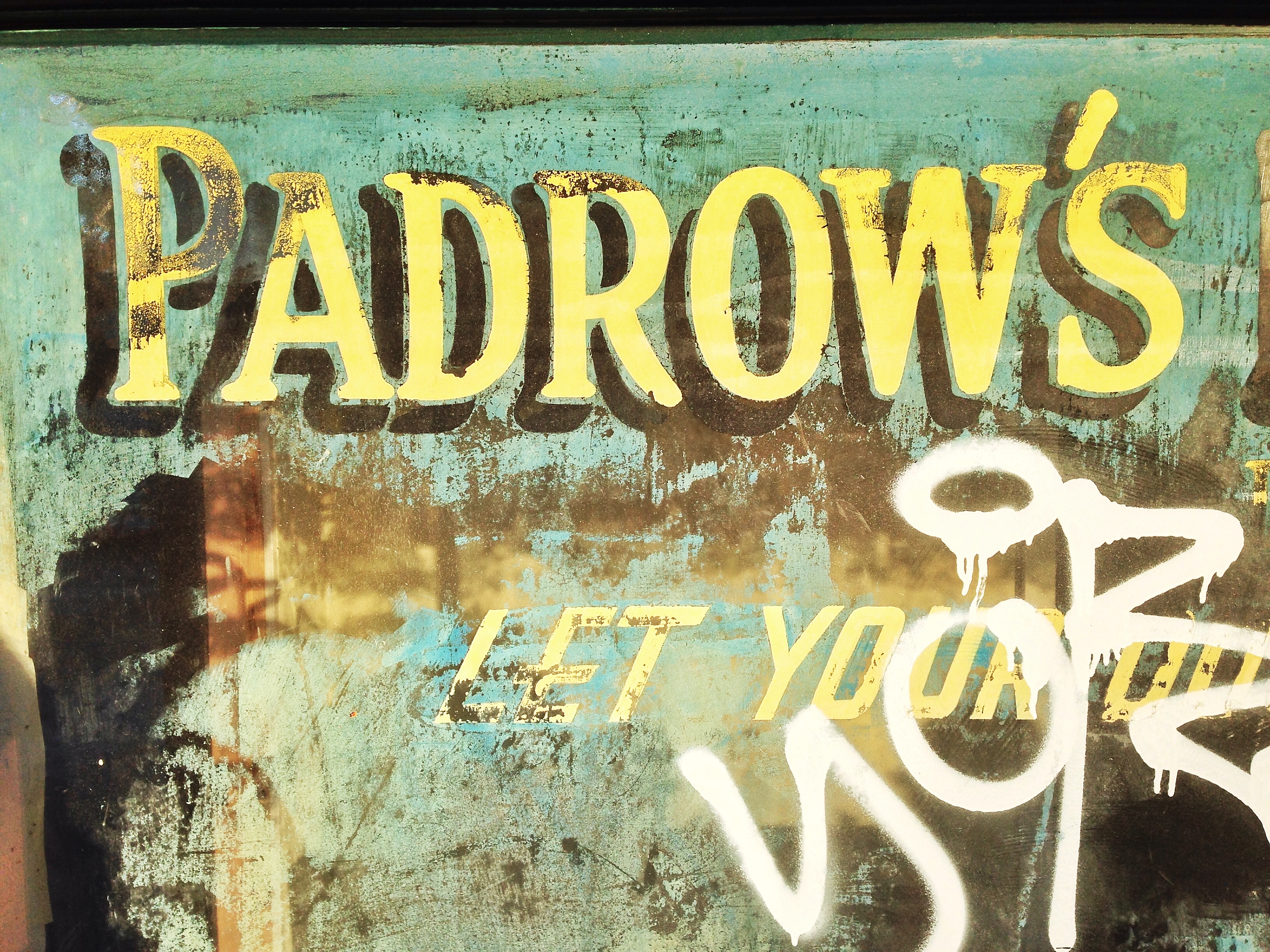
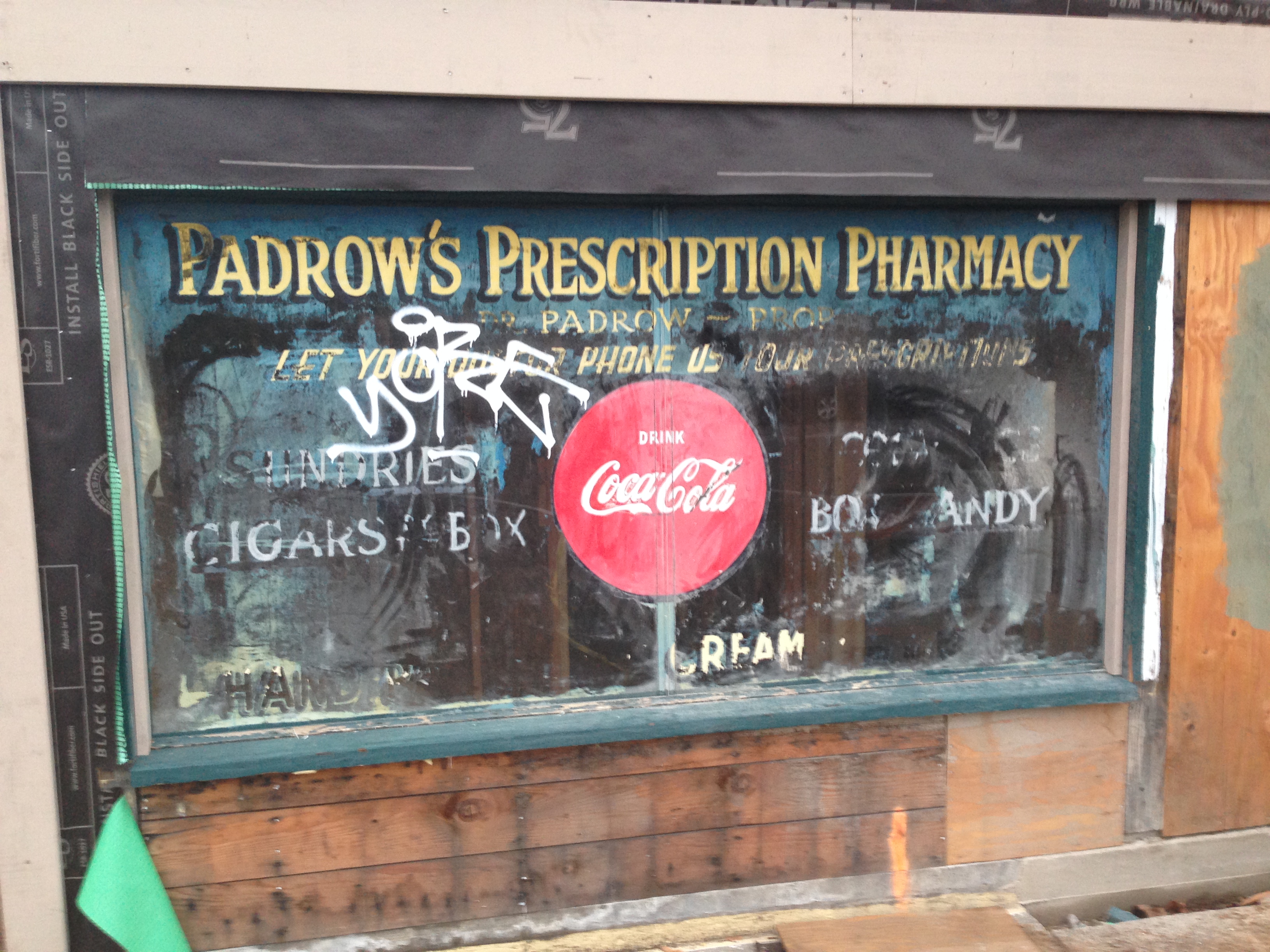
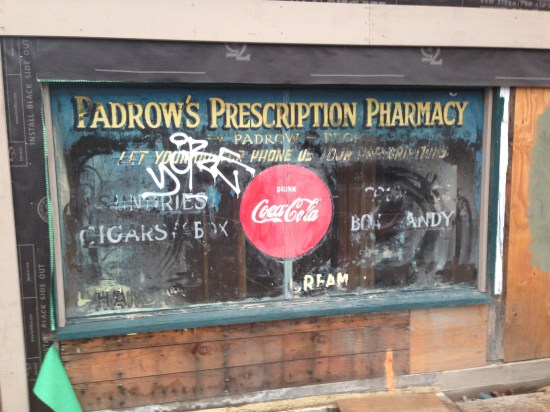
The window itself is a time traveler, and has known better days. It’s actually two panes of glass, joined in the center by a steel joint. The paint is badly faded and in some cases unreadable.

IMG_3675

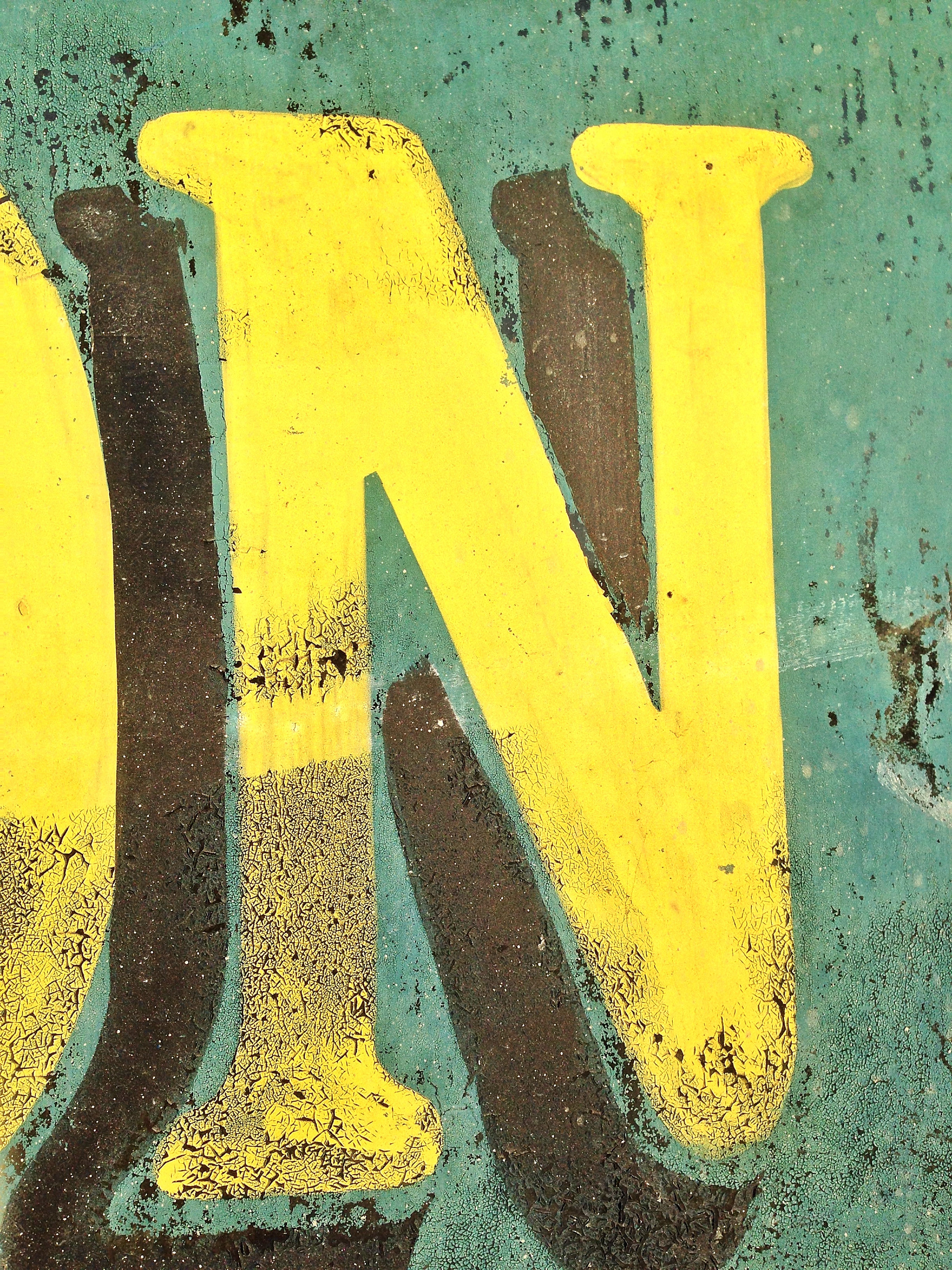
A detail of the window showing the chalky, fading, peeling paint. The original paint was applied to the exterior of the window and hasn’t worn well over time.


IMG_3462

The window was tagged by a vandal in October.

Along the bottom of the glass, the ad seems to suggest hand-packed ice cream may have been sold by the pint, or possibly the quart. With a little imagination, you can fill in the blanks and guess that Padrow’s also sold cosmetics along with the cigars (by the box), sundries, and box candy. No question they sold Coca-Cola, that much is front-and-center in red paint. In fact, according to second-generation sign expert Brad Ellsworth, Coca Cola probably paid for the painted window advertisement.

Part of the reason the window is in such tough shape is that it’s painted on the exterior, exposed to all the elements. Over the years, the paint has flaked off and dried, lost its pigment, and is little more than a chalky substance on the exposed surface of the glass. It won’t last long.

Fast forward to the new owner, Jeff Smalley, who for the last six months has been transforming the former 1923 commercial building into the new Fire and Stone restaurant and bakery. Jeff is a local guy, operates out of a respect for history and for the neighborhood, and wants to do something to tip his hat to the past. He’s made sure other cool windows, discovered long buried inside the market’s walls, will have visible and prominent locations inside the restaurant. And he’s been wondering what to do with the Padrow window. We’ve been talking about it, and we’ve brought in some local sign expertise to consider the options.

And then, on an evening a couple weeks back, someone spray painted graffiti on the window. Because the new tag was painted directly over the crumbling old paint, that almost ended the discussion about trying to restore the window. Focused on all the other details of getting the business up and running, Jeff was ready to just pull it out and forget about trying to do something nice.

But that’s where we came in, and after the AH post about the tagging, we heard from several readers who offered to make a donation to help bring the window back from the brink.

Enter Brad Ellsworth of North Pacific Sign and Design. Brad and his brother Curt took the company over from their dad who started his sign business about the time the Padrows opened the pharmacy (early 1950s…the pharmacy was actually a stand-alone business that had its own address even though it was in the same building as Wilshire Market). Brad and Curt grew up in the neighborhood, sent their kids through Alameda and Beaumont, and have a relative who worked at the Wilshire Market in the 1970s. Brad even has a hunch who painted the original window way back when. Let’s just say they’re invested in trying to figure this out.

IMG_3674

Brad Ellsworth (left) and Jeff Smalley examine the Padrow Window.

So after having a good look at the window and considering the possibilities, here’s the plan:

Jeff wants to keep the Padrow reference even though the window is not long for this world. So Brad is working from the original design and will create as faithful a replica as possible on the same glass, painted on the inside this time to keep it safe from the weather. Jeff’s going to talk to Coca-Cola and see if they might be willing to help with the cost. And AH readers are invited to make a donation pledge if they’d like to help (just drop me a note and I’ll get in touch with you). Brad estimates the job is probably in the $1,800-$2,000 range. Once most of the funds are in hand, we’ll ask Brad to start work. He’ll actually do the work on site, starting with cleaning and preparing the existing glass and then painting it all back. Should be interesting to watch.

So, here’s the challenge, readers. Want to help bring back the Padrow Window? I’m taking pledges right now (and have made my own of $100). If you are interested, drop me a note or leave a comment here and I’ll be in touch.

Wilshire Market Update

IMG_3673

We dropped in on Jeff Smalley at Fire and Stone on Fremont this afternoon to see how his remodel was doing. If you’ve been watching, you can see for yourself that the colors are emerging and things are happening behind the paper on those windows.

Jeff says lots of people are asking about timing: looks like opening in early December. Plumbing and electrical work should be done by Thanksgiving, and then there is time to train staff and get things fully operational.

He’s been pleased to see writers on the internet anticipating the restaurant, including Portland EaterPortland Monthly, and of course our earlier post about the building and the business.

Here are some pictures of the interior from earlier today:

IMG_3677

Looking toward the main entry from the bar area.


IMG_3676

Looking toward the main dining area. The bakery and “take out” area is in the background–accessed by its own door on the east end of the building–where the wood-fired oven will reside. The windows are a dominant feature both inside and outside, illuminating on a sunny, cold fall afternoon.


IMG_3672

The trim pieces (called dentals) along the cornice at the top of the wall were milled from several of the original wood beams removed from inside the building. The windows will receive an awning and during the summer, there will be tables outside.

Speaking of windows, stay tuned for news here in the next day or so about the historic Padrow’s Pharmacy window. Interesting plans are underway.

Defacing History

IMG_3462

Local baker and old building-lover Jeff Smalley dropped us a note this week to let us know of sad and pointless damage to the property he is developing at the former Wilshire Market near the corner of NE Fremont and Alameda. You’ll recall that Jeff is the creative force behind Fire and Stone, the new cafe that is transforming this 1923 commercial building.

When we met Jeff a few weeks back, he was going out of his way to protect and to showcase the historic window–clearly a time traveler from an earlier day–that marked the location of Padrow’s Pharmacy. He liked the vintage look and feel of the window, and after all it has been there for a couple generations.

But on a night this past week, someone spray painted the window. Because the historic window was originally painted on the outside, this senseless act has irreparably damaged the surface. Aside from being completely disgusted about this development, Jeff reports that he has video surveillance in place now throughout the construction site and is ready to pursue and prosecute further vandalism. As for the window, its future does not look good.


When Mom & Pop Stores Ruled

9-20-14 Storefronts 1

The former Marble Palace Grocery and Market building (later known as Prescott Foods), 3587 NE Prescott, has recently been restored and is now alive and well as an art studio.

While looking into the history of the Wilshire Market building, we’ve become interested in the grocery and market world of years gone past.

In a day when large supermarkets did not exist, mom-and-pop stores were everywhere on the eastside. So were butcher shops, bakeries, and candy stores. A quick look at Portland’s business directory for 1931 lists more than 750 individual grocery stores, most of them owned and operated by families.

Here in the Alameda Park Addition, commercial development was prohibited. But just beyond our borders, small business was booming.

In past posts here on the blog, we’ve explored a few of those places, including Hunderups, at NE 29th and Prescott (today’s Food King Market); Alameda Grocery (today’s corner of NE 24th and Fremont); Davis Dairy Store at NE 30th and Killingsworth; and Grant Park Grocery at NE 33rd and Knott.

Here’s a look at three more markets, all of them clustered close together near NE 33rd and Prescott. We’re interested in hearing memories about these places or finding photos from the past. Can you help?


3133 NE Prescott (Bradford’s Market; Serv-Us Grocery)

9-20-14 Storefronts 2

Today it’s the Community Health Center, an acupuncture and Chinese medicine office, but it started out as a store. Ever noticed the parking lot just west of the building, making it perfect for a gallon of milk or a loaf of bread on the way home? Built in 1921 as a grocery, this building was known for most of its life as Bradford’s Market, operated by Paul and Bernice Bradford from the mid-1920s until the mid-1950s. The Bradfords lived in Alameda at NE 30th and Mason (nice commute). Following its long run as Bradford’s, the store was known briefly as the Serv-Us Grocery, owned by Roy and Hazel Turnbaugh. From the early 1960s until the late 1970s, the building was the dental office of Dr. Herman Reisbick. Most recently, before becoming an acupuncture office, it’s been a barber shop and hair salon.


3587 NE Prescott (Marble Palace Grocery; Prescott Foods)

9-20-14 Storefronts 4

This is a notable building today with its fresh coat of black paint and recent makeover as an arts studio (Affiche Studio). And it’s been memorable in the recent past, as an upholstery business with a bright blue paint job.

This handsome one-story brick structure was built in 1924 by Joe Dellasin, and was operated in its early years as the Marble Palace Grocery and Market by George A. Peters, who owned another market by the same name near NE 15th and Fremont. Several proprietors ran it through the 1930s and 1940s before it became Prescott Foods, the name that stuck with the business through multiple mom-and-pop owners up until the mid 1980s (Loomis, Breshears, Dickerman, Patrick and Wallis). Grace and Earl Dickerman ran the business from 1948 until 1966 when they sold it and bought a small hardware store on SE Hawthorne. By 1985 the building had succumbed to the changing grocery shopping patterns of nearby residents (like most other small neighborhood groceries), and it became an upholstery shop, which it served as until 2012 when Affiche Studios moved in and fixed it up.


4518 NE 32nd Ave. (Thirty Second Street Grocery; Smith’s Cash Grocery)

9-20-14 Storefronts 3

This one is an oldie: 1910. We haven’t yet been able to determine its business name prior to 1930, but by then it was known as Thirty Second Street Grocery, operated by Henry C. Parker. In the 1930s, it was owned by the Skoog family, which owned and operated other markets in Portland. In 1940, it was well established as Smith’s Cash Grocery, a name that stuck into the late 1950s.

One local resident remembers this place in the 1950s as Doc’s Market, and can recall going in as a very young person saying “Hi Doc!” to the shopkeeper (who he remembers as having a flat-top haircut and a big smile). Grove M. Smith was the proprietor all those years, and probably was the “Doc” behind the counter.

City directories show the building as being vacant from the 1960s until recently, when it was transformed into an arts studio called FalseFront Studio.

We’d love to learn more about these buildings, see pictures of their earlier selves, or connect with family members of past owners. We’ll share what we learn, and will keep plugging along with research on several other storefronts nearby.

Wilshire Market Building Comes Back to Life

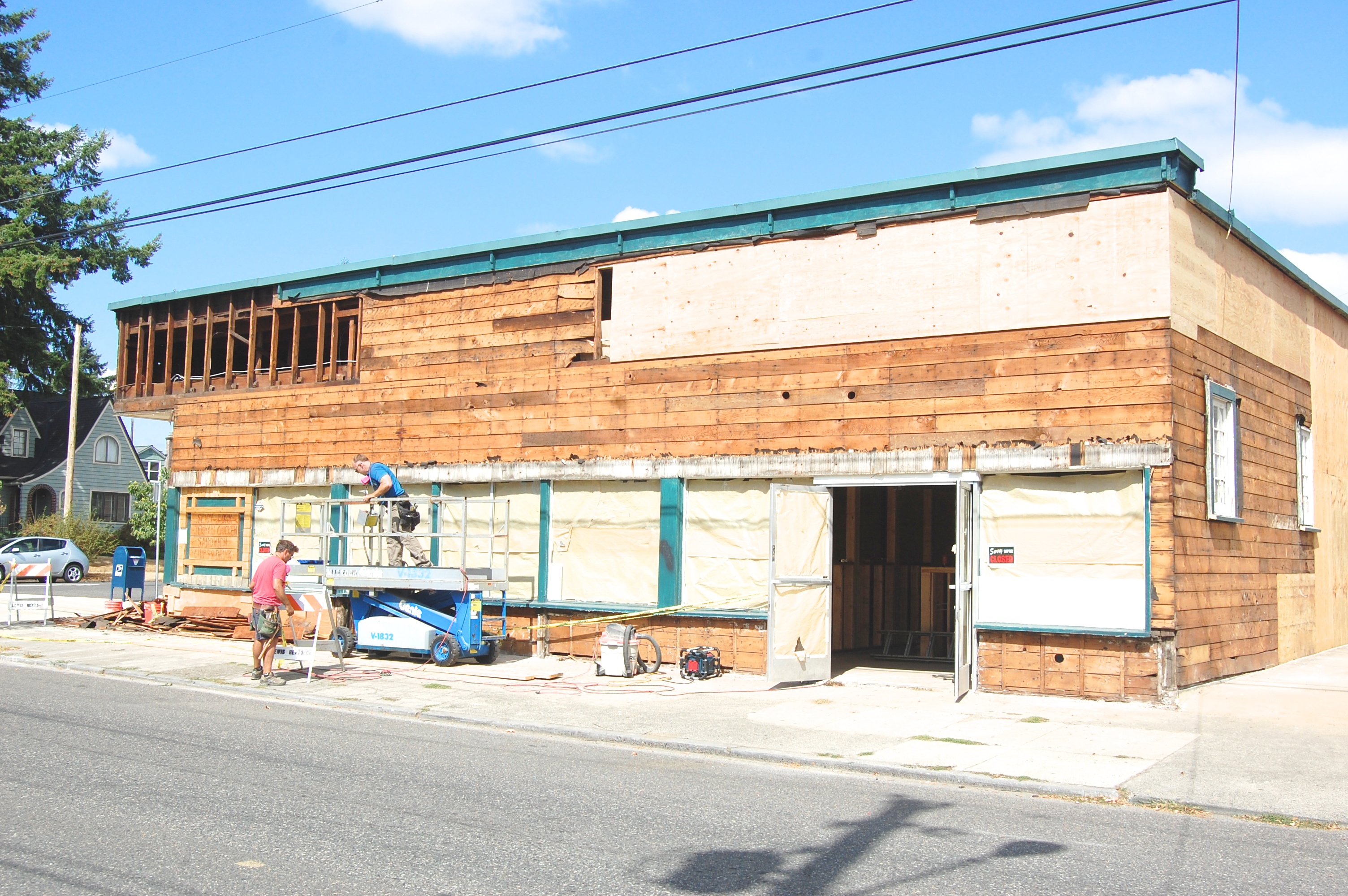
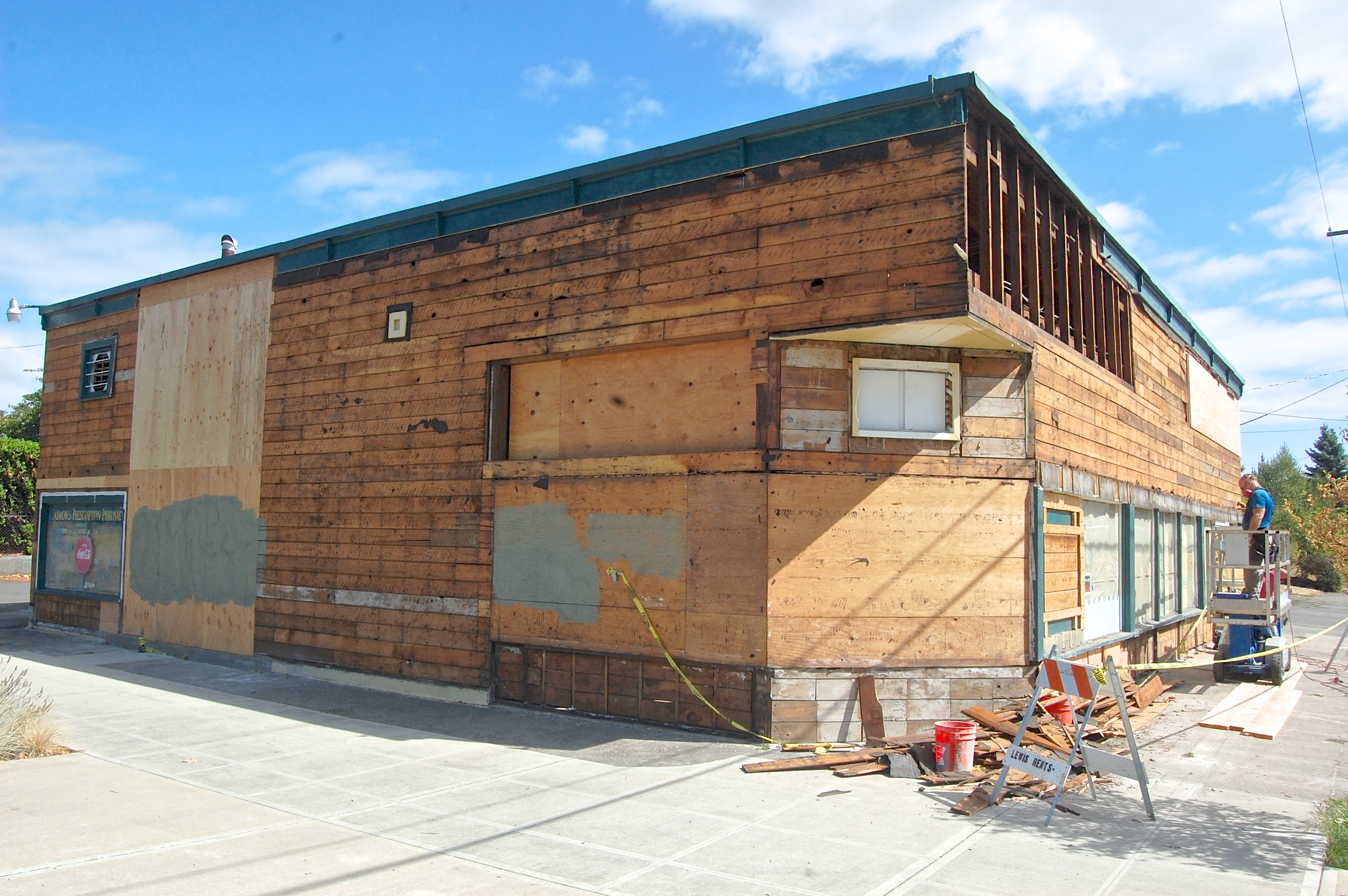
We’ve been watching with interest as the remodel work progresses at Wilshire Market (3707 NE Fremont). The term remodel might be a bit modest for the amount of work going on there, stripping the building back to its barest bones, but keeping some of its most interesting aspects.

9-13-14 South Face

Remodel might also imply that it’s going to continue being Wilshire Market, which we know not to be the case. Business owner Jeff Smalley is in the process of transforming the building into Fire and Stone, a wood-fired bakery and café. As a nearby neighbor, we’re looking forward to that part, as well as being able to see and appreciate some of the original components of the building.

We dropped in for a visit with Jeff this week and were amazed at what we saw, and at his vision for the new business.

First, about the building.

Built in 1923 as the Wilshire Grocery and Market Inc. by partners Solomon N. Barrigar and Albert P. Mumler, the business name has essentially stayed the same, but the building has had a few facelifts.

The front door, which we believe originally faced the corner, has moved around a bit. When deconstructing, Jeff and his carpenters found clues to other doorways: one in the middle of the south wall; the one that has been most recently used near the southeast corner; and a separate entrance in the northwest corner associated with a small pharmacy.

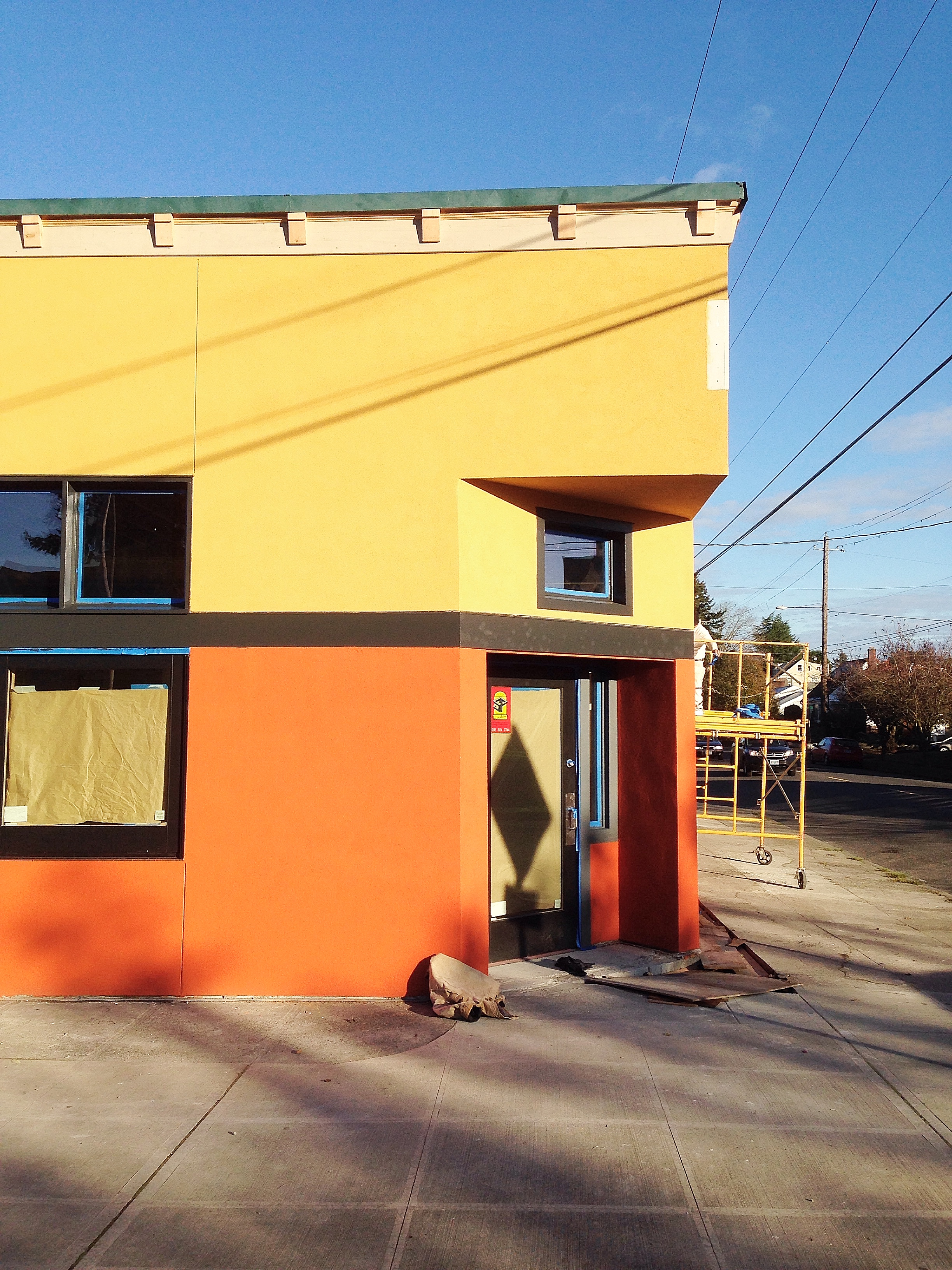
9-13-14 Corner

The once and future entrance at the corner of NE Alameda and Fremont. What was the original entrance to Wilshire Grocery and Market, will be the main entry to the new restaurant Fire and Stone, opening this fall.

The pharmacy has left another big clue: the window on the west side of the building, which you can see to the far left in the photo above. The former owners preserved the window and put it on display for passersby during work completed a few years back.

Padrow’s Dispensing Pharmacy shows up in newspaper advertisements and city directories from 1950-1960 as a business owned by Western Drug Company and in operation at its own address (3701 NE Fremont). How it related to Wilshire Market has so far been beyond anyone’s memory that we’ve spoken with (can any AH readers please shed light on that?), but by all accounts it had its own door–just to the right of the window–and its own identity separate from Wilshire Market.

A fascinating feature of this building buried for at least 50 years is a full set of transom-type windows running the length of the south and west walls above the main windows.

9-13-14 Inside looking south at windows

Looking at the south wall. Note the transom windows above the main windows: 36 panes in all.

They were covered up sometime in the 1940s or 1950s (educated guess) when other things were rearranged in the building (more on that in a moment). 36 of these transom windows tiled the entire south face of the building, prompting Jeff Smalley to observe that it must have been downright hot in the building during the summers. Maybe that’s why they were covered up long ago. Some of the transom windows on the west side had advertisements painted on them like this:

9-13-14 Ice Cream


Smalley has saved the hand-painted windows and will be displaying them inside the business. As for the transom windows, Smalley is liberating that space and opening it up again to light, though the original framing had to be replaced due to damage done during the rearranging a half-century or more ago.

Other rearranging done over the years included an addition to the north side of the building that added a residential apartment and storage area. In fact, the last proprietor of Wilshire Market lived on the premises. Smalley will utilize some of that space for storage and for employee break room space.

Do you have photos or favorite memories from Wilshire Market? Send them along and we’ll share them here.

Now, about the new business: Fire and Stone.

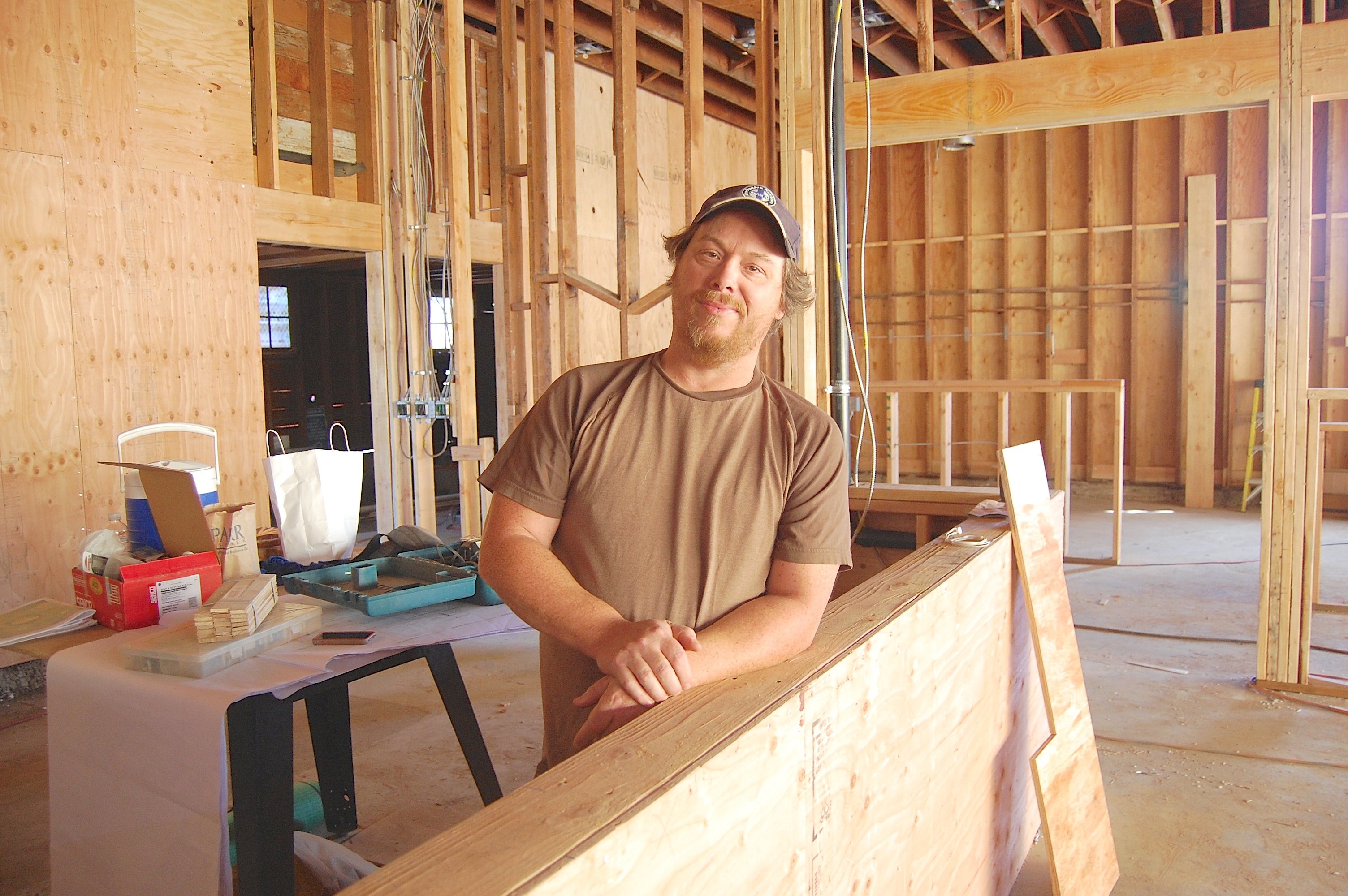
Jeff Smalley at the bar, Fire and Stone

 Jeff Smalley, owner, Fire and Stone.

First things first: Jeff Smalley has a history with bread. He spent seven years as a manager at Grand Central Bakery. He worked at Portland French Bakery, where he launched a new line of bread. And most recently, he was the bakery manager at New Seasons for the last seven years. Jeff knows his bread, and he knows good food. As a plus, he’s also learning a lot about old buildings.

Fire and Stone will feature a large wood-fired oven that is at the heart of the whole operation. A bakery and take-out area with its own entrance will reside at the southeast corner of the building. When you walk in the door—and from just about everywhere inside—you’ll be within sight of the big oven. Seating for 70 in the dining room and 10 seats at the bar should hold a good crowd, and during the summer, tables and chairs will be out on the sidewalk and large sliding windows along the south and west side will be open to the air. Jeff is adamant about being a good neighbor and about wanting the business to be a place where the neighborhood enjoys getting together for good food and conversation. He lives here too: the Smalley family has lived in the Cully neighborhood for 12 years, where Jeff and his wife have restored an older home.

A few other details Jeff pointed out during our recent visit: the tables, chairs and booths (under construction off-site right now) are all being made of seasoned, beautiful wood salvaged from a 100-year-old barn and fashioned in Prairie School and Mission style. The floors will be polished concrete, lending a slightly industrial feel. The exterior will be painted stucco. Inside, expect to see photos of Wilshire Market from the past, in-progress remodeling photos, and maybe even some history about the Beaumont and Alameda neighborhoods (ready when you are, Jeff).

Now for the $64 question: When will Fire and Stone open?

Jeff has been shooting for Labor Day all summer but with that come and gone, has readjusted his sights on the end of October. As an observer and participant in construction projects over the years (and as a lover of good bread), we hope he’s right but are thinking it’s looking more like Thanksgiving.

Whenever it’s ready, the business will add an attractive new venue for a get-together and good food, and serve as a place to remember and appreciate how the past has shaped today and the future.

Northeast Portland’s Aircraft Factory

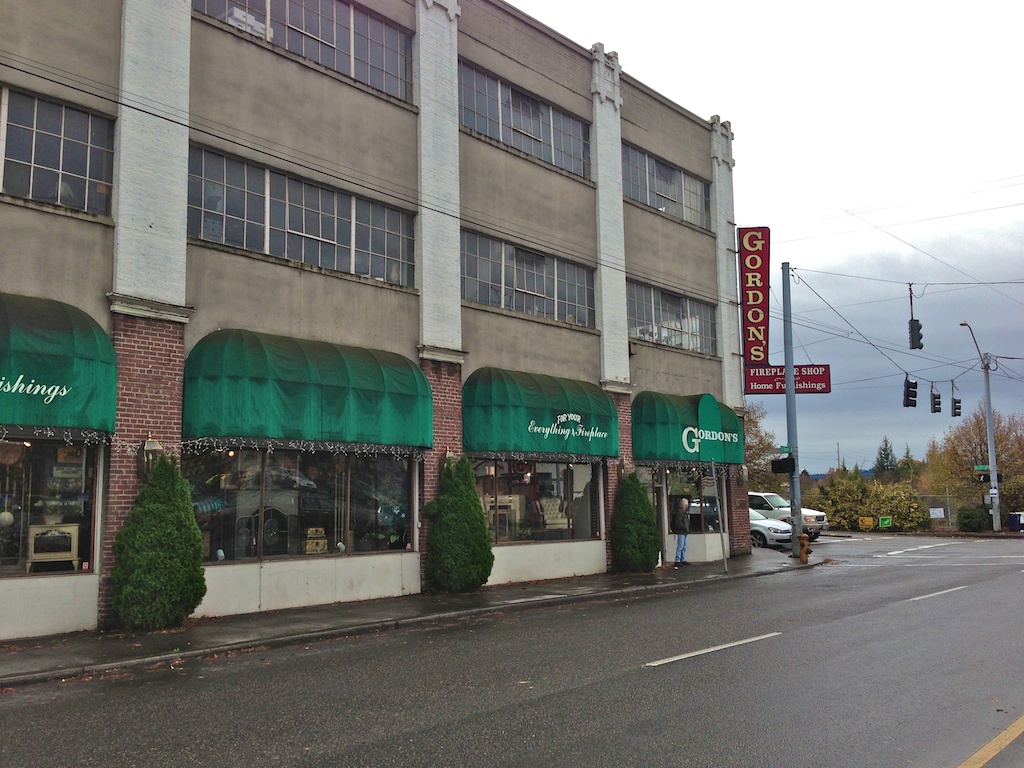
Gordon’s Fireplace Shop, 3300 NE Broadway. Former house-part manufacturing plant owned by Oregon Home Builders President Oliver K. Jeffery and used briefly to manufacture wooden airplane parts in 1917.

One of Alameda’s most prolific home building companies—The Oregon Home Builders, Inc.—is also responsible for building an aircraft manufacturing facility that operated briefly: a building that endures in the neighborhood to this day.

You probably know this building as Gordon’s Fireplace Shop on the southeast corner of NE 33rd and Broadway, or maybe as Tarlow Furniture before that. But in the late 19-teens, after serving as a workshop for house parts and domestic carpentry projects that now reside as built-in cabinets in homes across Northeast Portland, the building moved into full aircraft production mode and began churning out spruce struts, beams and braces for “flying machines.”

First a little context about Oregon Home Builders and its president Oliver K. Jeffery…

Oregon Home Builders, Inc. and its owners had a big vision. They founded the company on a business model that involved selling shares of stock at .25 cents each to investors at large, and building and selling homes. They also built some of Alameda’s prized national register houses, including the Oliver K. Jeffery House at Regents and Shaver, and the Thomas Prince House at Alameda and Regents. Others, including the George Eastman House on Stuart Avenue—designed and built by Oregon Home Builders—should be on the register.

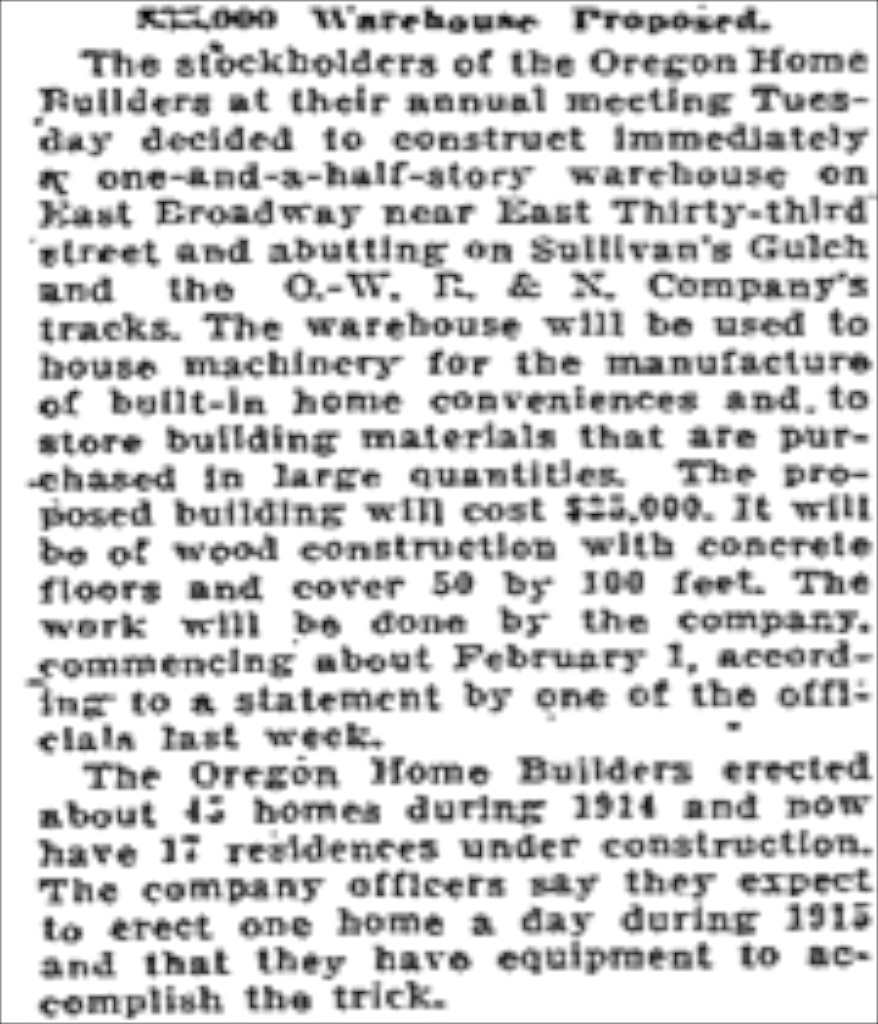
In 1914, the company built 45 houses here in northeast Portland, and drew plans for many more. As a base of operations for this big vision, Oliver K. Jeffery and his colleagues needed a workshop and warehouse near the market they were serving, and near transportation. So in 1915 they set out to build a warehouse on the Oregon Railway and Navigation Line in Sullivan’s Gulch, today’s Banfield corridor. Here’s a snippet that’s a tad fuzzy but readable from the January 17, 1915 pages of The Oregonian.

From The Oregonian, January 17, 1915.

But by 1917, O.K. Jeffery’s personal passions were focused more on airplanes than on homebuilding. A charismatic character in Portland business and social life, and a man of means, Jeffery received much coverage in the pages of The Oregonian during these years, whether in his role as a top Rosarian, his very public divorce proceedings, or his role as a trainee tank commander preparing for World War I. The story below in the August 1, 1917 edition focuses on the airplane factory building at 33rd and Broadway.

Click to read full size. From The Oregonian, August 1, 1917.

Apparently, there was a lot more going on with this story than meets the eye, (Jeffery’s homebuilding company was in the process of going bankrupt). The factory produced airplane parts for only a short time before running out money, but Jeffery’s love of aviation continued until his untimely death due to blood poisoning from a freak accident in December 1934.

Perhaps like us, you’ve driven by the building a million times and wondered about it. Following on that curiosity, and hoping for clues to the company that might have been forgotten in some nook or cranny in its upstairs floors, we dropped in for a visit over the weekend and can offer the following observations:

The folks at Gordon’s were helpful, and interested in the history of their building (which they’ve been in since 1990), but their collective memory of the building can’t see back around the corner of time. They do have a story here and there about a pasta manufacturing company that once inhabited the building. Some sense of the retail furniture company that operated there for 30 years. And a fabulous picture from 1929 that was first and foremost a portrait of Union Pacific Engine 17 coming around a bend in the track, but secondarily a picture of the building. See the distinctive brick pattern along the parapet? Look also how the building extends quite a ways east around the bend of the gulch.

Looking east in Sullivan’s Gulch on January 20, 1929 at Union Pacific Engine 17. The “Beaver State Furniture” building is no longer an aircraft parts factory. The building wraps around the rim of the gulch. Note also how much narrower the gulch is…widened in the 1950s to make room for the Banfield Freeway, requiring replacement of the viaduct. Photo courtesy of Gordon’s Fireplace Shop.

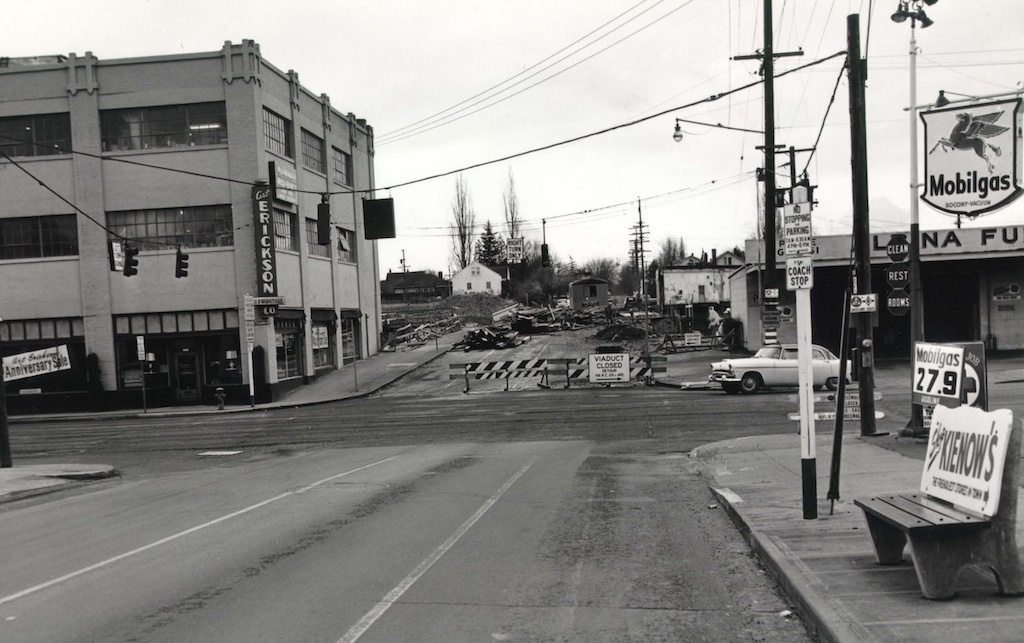
Check out this image below as well, which shows our aircraft factory building in 1956 as Erickson’s Furniture. The new viaduct associated with construction of the Banfield freeway (I-84).

Looking south on Northeast 33rd at Broadway. Construction of a new viaduct. Courtesy of City of Portland Archives. 

During our visit, we learned that the building houses the second oldest freight elevator in Portland, and it’s big. Like a two-car garage that levitates between the first and third floors. It doesn’t take much imagination to see it filled with furniture or spruce airplane parts. But pasta? Hmm.

From the 1960s until 1980, the 22,000-square-foot building was home to Tarlow’s Furniture.

A detailed look at aerial photography of the area over the years (with thanks to Ed McClaran), confirms that the building did indeed once extend east across what is today’s parking lot, and connected up with the building that now houses Rose City Furnishings in the 3400 block of Northeast Broadway.

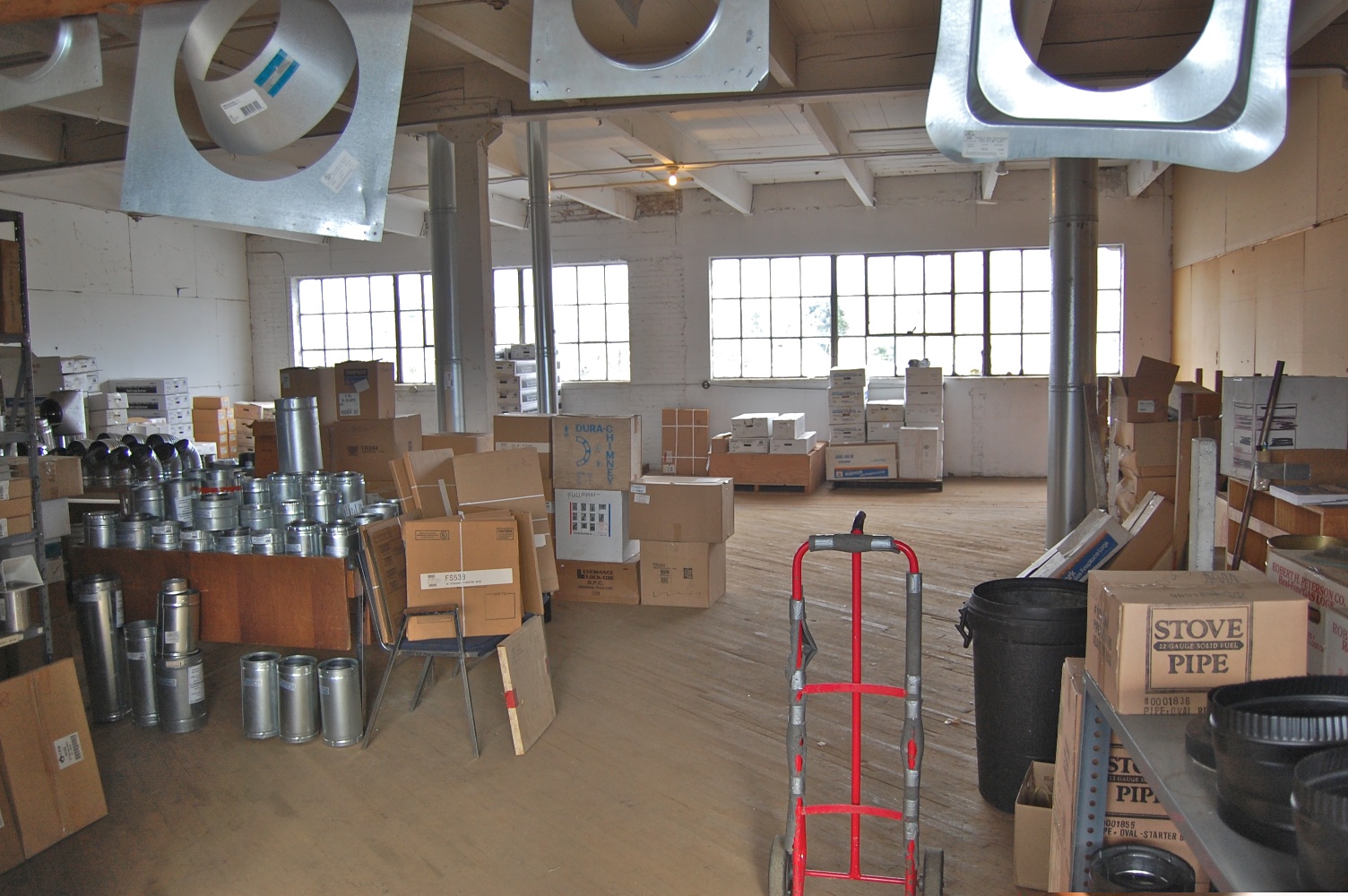
The view from the top floor is impressive: both up and down Sullivan’s Gulch to the east and west. North across the busy intersection toward the Dolph Park neighborhood. But there are no hidden nooks or crannies with artifacts from Oregon Home Builders. It’s a tidy and well-organized warehouse on the upper floors. Here and there you can tell from marks on the floor where heavy machines and equipment may have been anchored, or workbenches secured to the walls.

No aircraft machinery to be found here. Just a warehouse for Gordon’s Fireplace Shop.
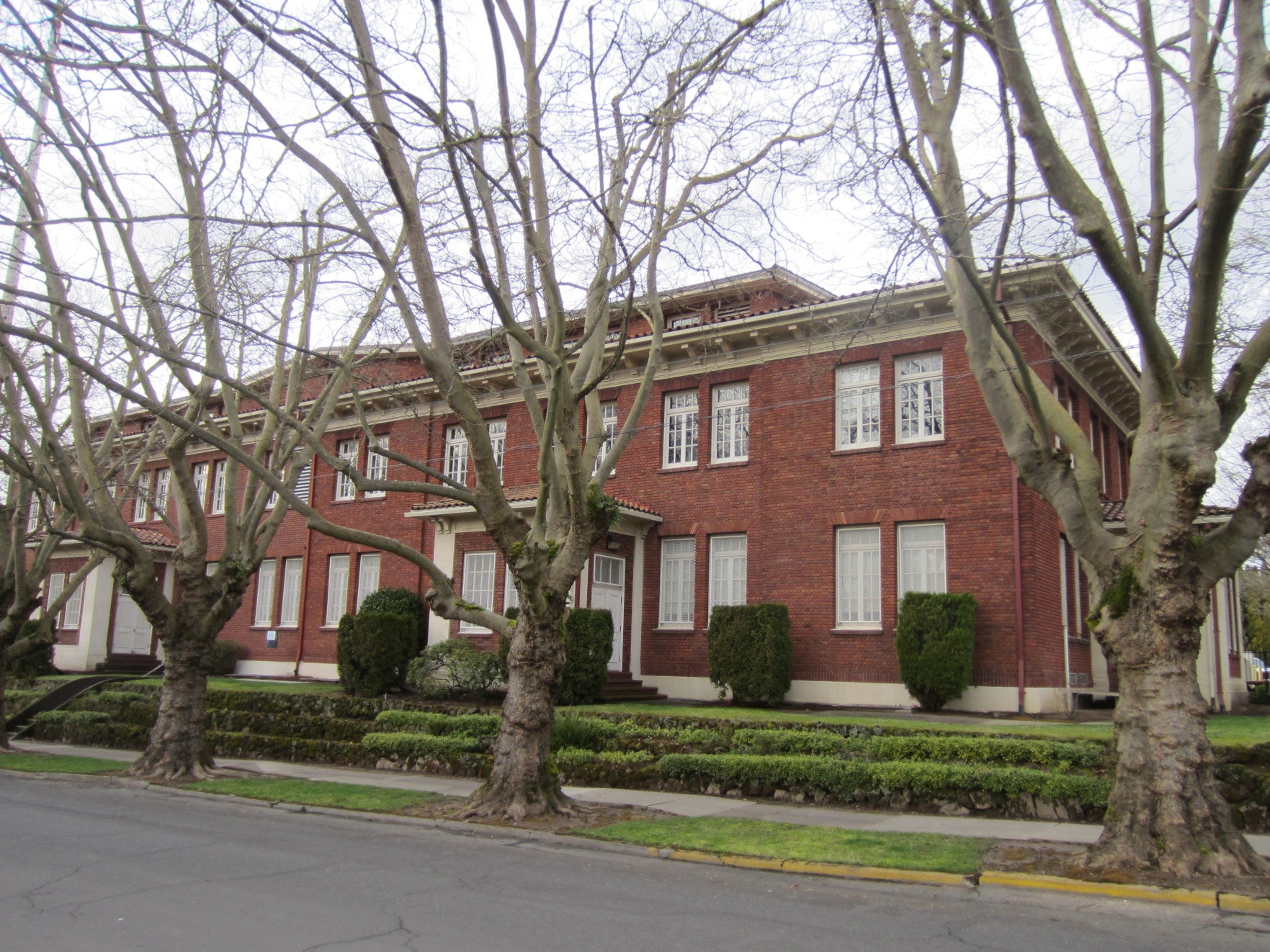
But the aircraft heyday of the building passed briefly and it stands on the north rim of Sullivan’s Gulch as an artifact itself while the busy intersection below surges with traffic and big development plans. In the midst of shuffle and change, it’s a time traveler with stories to tell.

Mystery building at NE 24th and Stanton has always been a “telephone exchange”

You’ve driven by it a million times: the reddish brown brick building on the northwest corner of NE 24th Avenue and Stanton. As I’ve researched this building and its history over the last two years, I’ve spoken with neighbors who’ve thought it was once maybe a school, a brewery, a home for wayward youth: all understandable given its institutional look and size.

Originally referred to as the Garfield Telephone Exchange, or the “Garfield Office,” this building is still functioning today for its original purpose: making sure telephone calls get connected to the right place at the right time.

When it went into full operation in 1924, the building housed telephone operators at switchboards plugging incoming and outgoing calls to and from individual circuits that served homes in Irvington and Alameda. One operator remembered that some of her colleagues and supervisors wore roller skates to help them move quickly from switchboard to switchboard.

Today, the hallways and rooms are quiet except for an omnipresent electrical hum, the quiet clicking of switches doing the job of the former operators, and the soft buzz of fluorescent lights. No roller skates, no operators, in fact it’s uncommon to find anyone in the building at all anymore.

Pacific Telephone and Telegraph Company first rolled out the need for a telephone exchange building in 1919, and chose the location at NE 24th and Stanton because of its strategic location in this growing area of Portland. But early residents did not like the idea of a semi-industrial/commercial building being located in the heart of a residential neighborhood. Building codes and land use ordinances at the time were permissive and allowed the project to move forward. But influential residents of Irvington petitioned Mayor George Baker and Portland City Council to tighten restrictions, which they did on January 14, 1920, throwing a monkey wrench into project planning for Pacific Telephone and Telegraph.

Engineers for the company were stung by the new restrictions—which allowed residents to object to projects—and complained that the new public involvement processes were going to set back development of the new technology.

The Oregonian reported on January 15, 1920:

The action of the city council yesterday, according to W.J. Phillips, commercial manager of the telephone company, will upset the entire plan of development outlined for the next 20 years in Portland…he fears that the entire future service may be impaired.

Forced into reckoning with the neighborhood, the telephone company reluctantly agreed to work with a committee of neighbors to refine designs for the telephone building. Noted Portland architect A.E. Doyle, an Irvington resident, helped lead the committee and eventually won design restrictions which were reported in the April 15, 1920 edition of The Oregonian as follows:

With these restrictions in place—and with designs emerging that showed the attractive architectural details we see today—the neighborhood dropped its opposition and the project proceeded. Building permits were issued and construction followed, completed by Portland building contractor J.M. Dougan and Company at a cost of $123,690.

Trying hard to reach out to the community with a message of progress, Pacific Telephone purchased an advertisement in The Oregonian touting the new facility and mentioning the $1 million total project cost, which included the complicated and costly miles of phone cable buried throughout the area that culminated at and connected into the building.

As Portland’s housing boom produced more demand for phone service, complaints began to mount against Pacific Telephone and Telegraph about the speed at which they were responding to the growing need. In several news stories in 1921 and 1922, phone company officials were quick to point the finger of blame for these complaints at the Irvington neighborhood for slowing down progress on the Garfield Exchange and causing a ripple effect of delay throughout Portland. The building finally went into full operation in January 1924.

Even after construction, and the cables installed, residents still needed to be trained how to use the new phone equipment. The blizzard of news stories about the Garfield office and the Irvington delays (more than 15 news stories on the subject from 1920-1924) finally quieted down in late 1925 when everyone settled into using their phones, and trying to keep up with the changing technology.

Several minor additions have been made over time, and obviously complete technical overhauls have been made inside. Two houses to the north of the building were razed to make room for today’s parking lot. Despite these changes, the conditions outlined in the 1920 terms pretty much hold true today.