River History kicks off scheduled summer programs

It’s not too late to sign up for one of the programs we’re doing for the Architectural Heritage Center this summer, kicking off this Saturday morning with a program at AHC focused on Portlanders’ historic connection with the Willamette River.

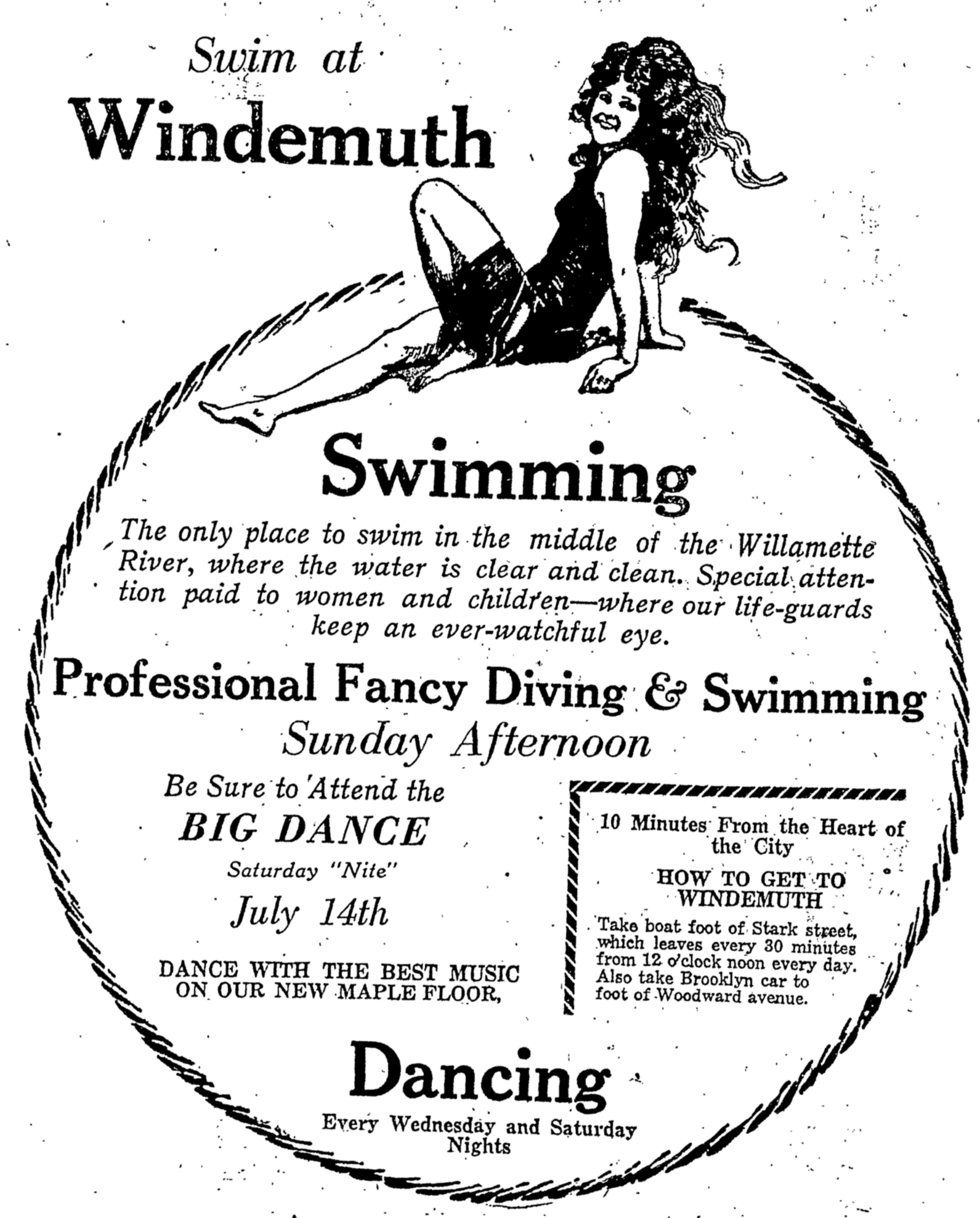
Saturday, May 10th from 10:00-11:30 we’ll explore the colorful history of Portland’s southeast waterfront in the vicinity of Ross Island, where Portlanders flocked to two hugely popular swimming and waterplay venues: Bundy’s Baths and Windemuth. We’ve written about these here on the blog and will be delivering a program with photos, maps and stories that help bring these former Portland water recreation mainstays back to life. Program based at AHC, 701 SE Grand, Portland.

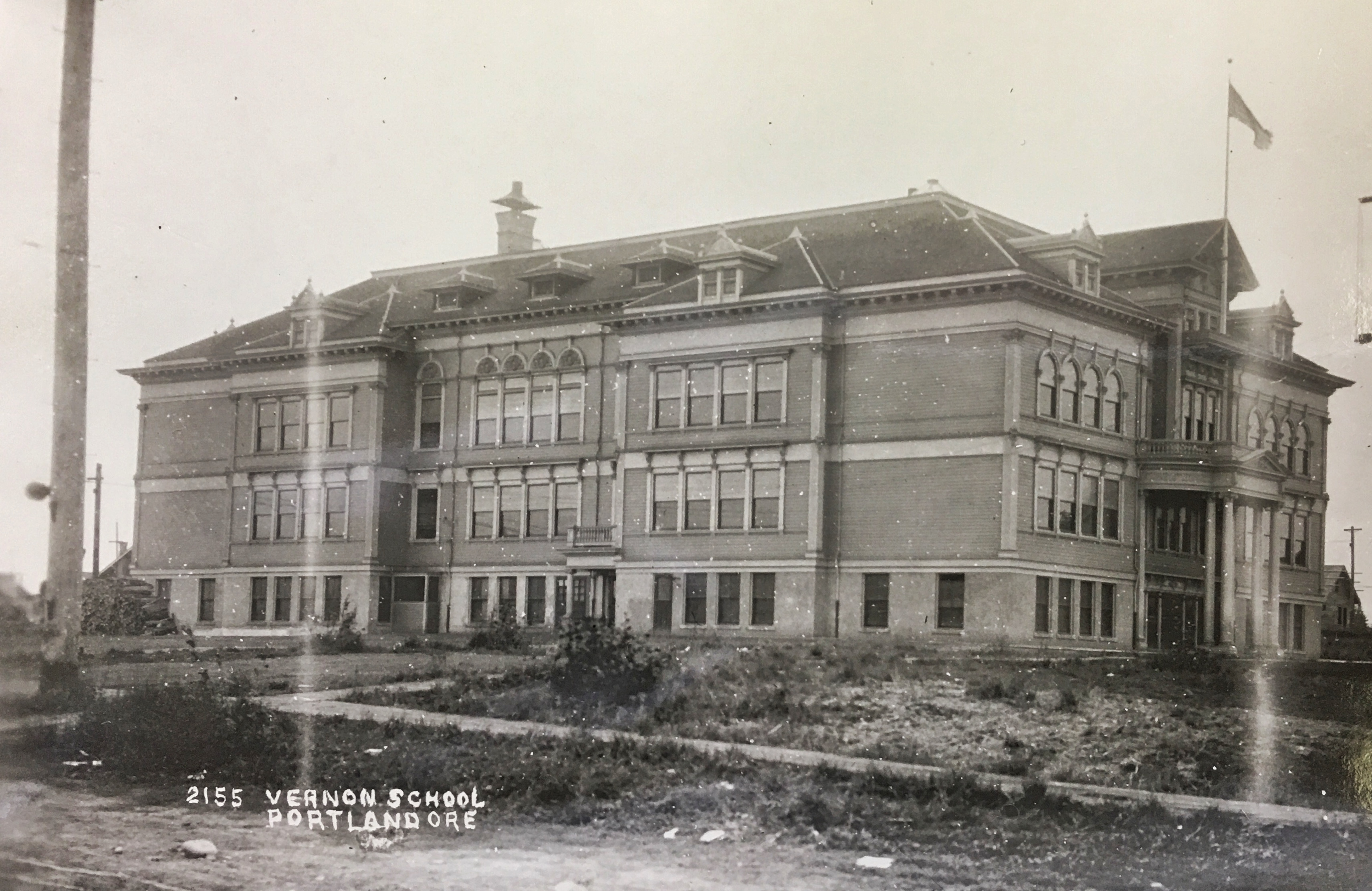
Vernon Walk – Thursday, June 5th from 6:00-8:00 p.m. we’ll be leading a history walk that explores the Vernon neighborhood, from development of Alberta Park, to the fall and rise of neighborhood schools, to patterns of redlining from the 1930s-1950s, the presence of a dairy, a much-loved synagogue and a street full of small businesses.

Alameda Walk – Wednesday, June 11th from 10:00-Noon This walk through the Alameda neighborhood will include insights about pre-development conditions, planning and construction of the neighborhood, the Broadway Streetcar, home construction and architectural styles and points of local interest including the story behind Deadman’s Hill and the 1920s uproar over the former Alameda Park Community Church.

To register or for more information about these programs, visit the Architectural Heritage Center online.

1913 Photos: The Alameda Stairs

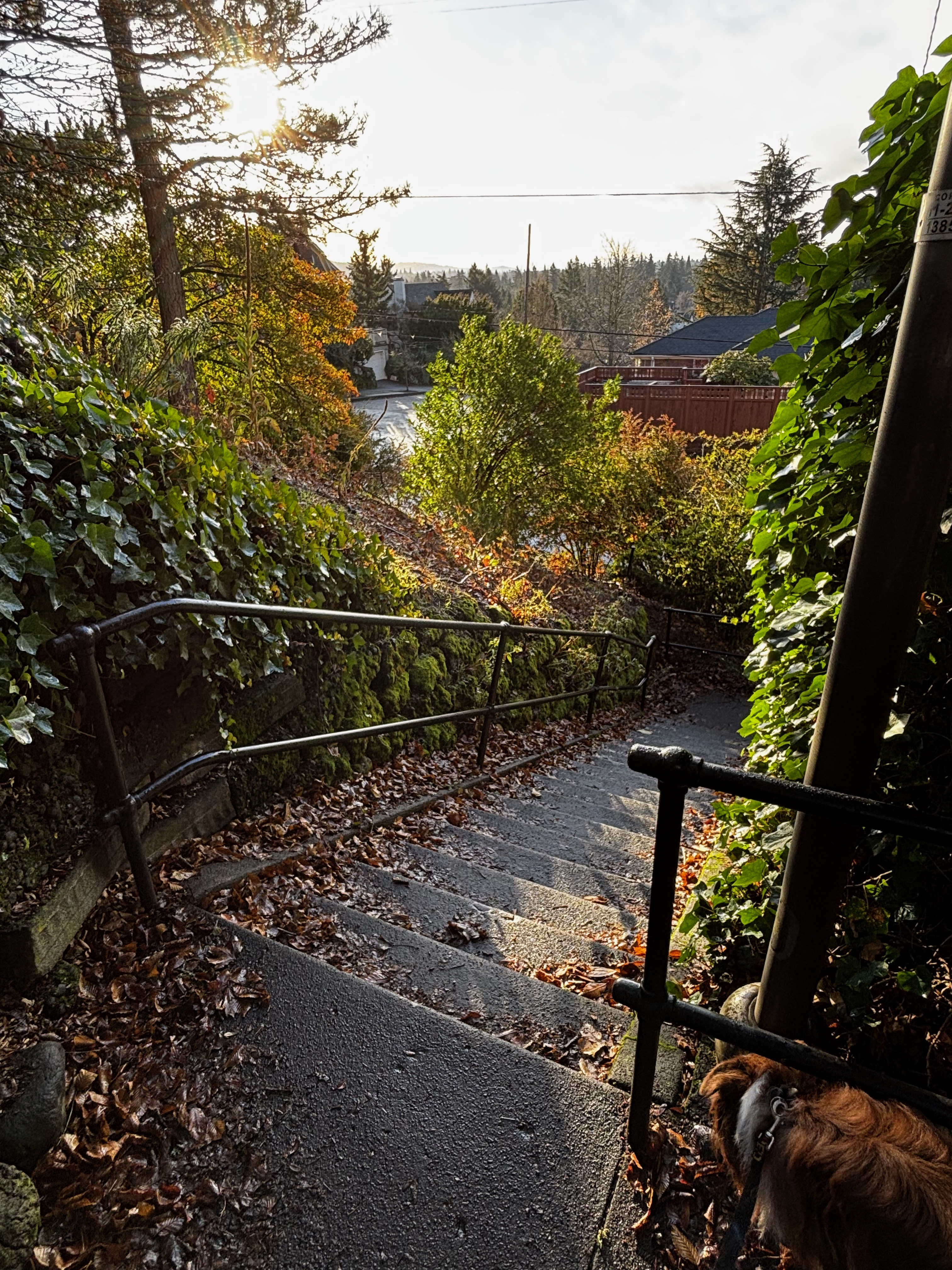
Two 112-year-old public stairways, known today for their role in fitness regimes as well as shortcuts to and from Alameda Elementary School, were once frontrunners of change in what had been rural northeast Portland.

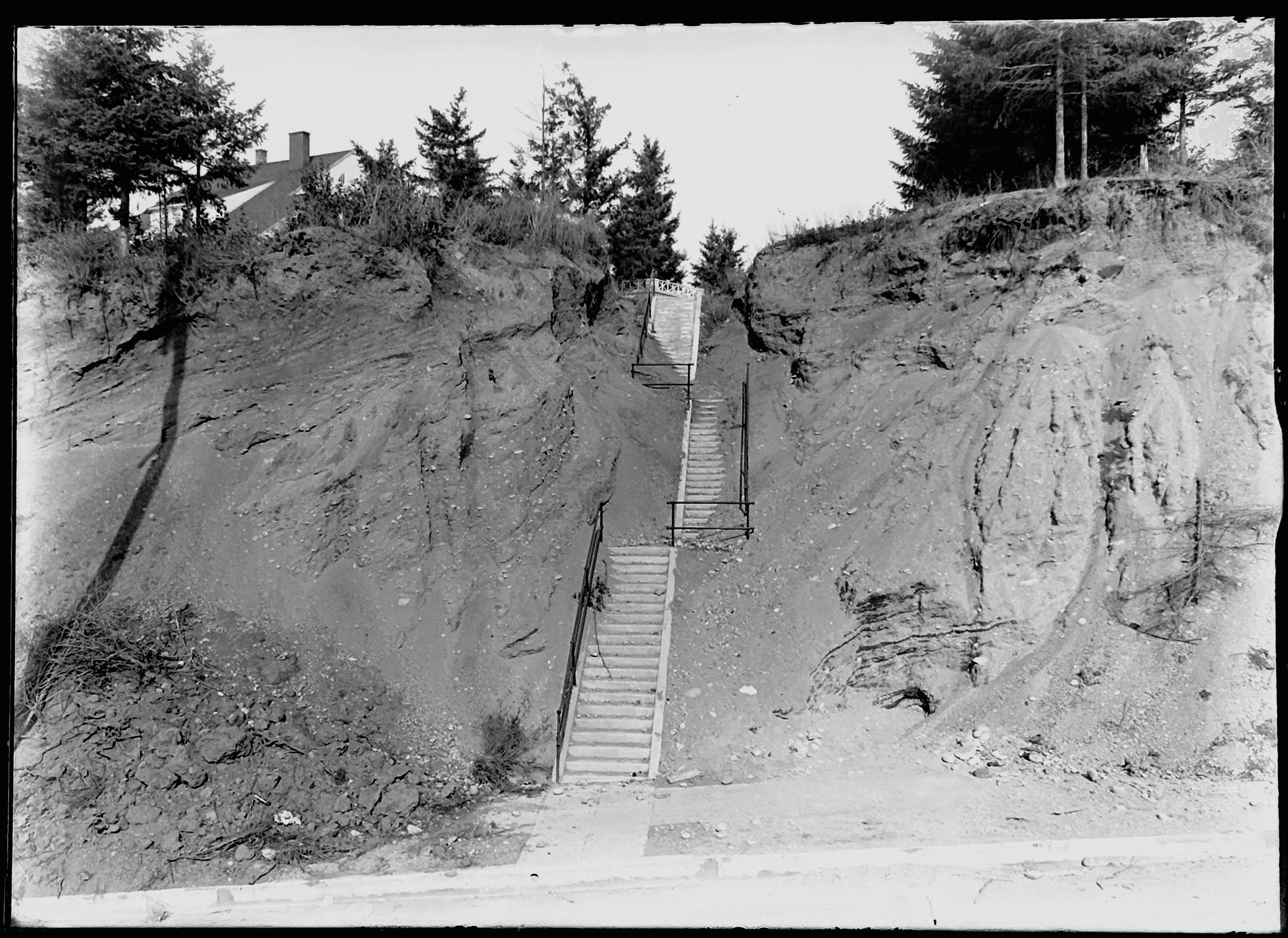
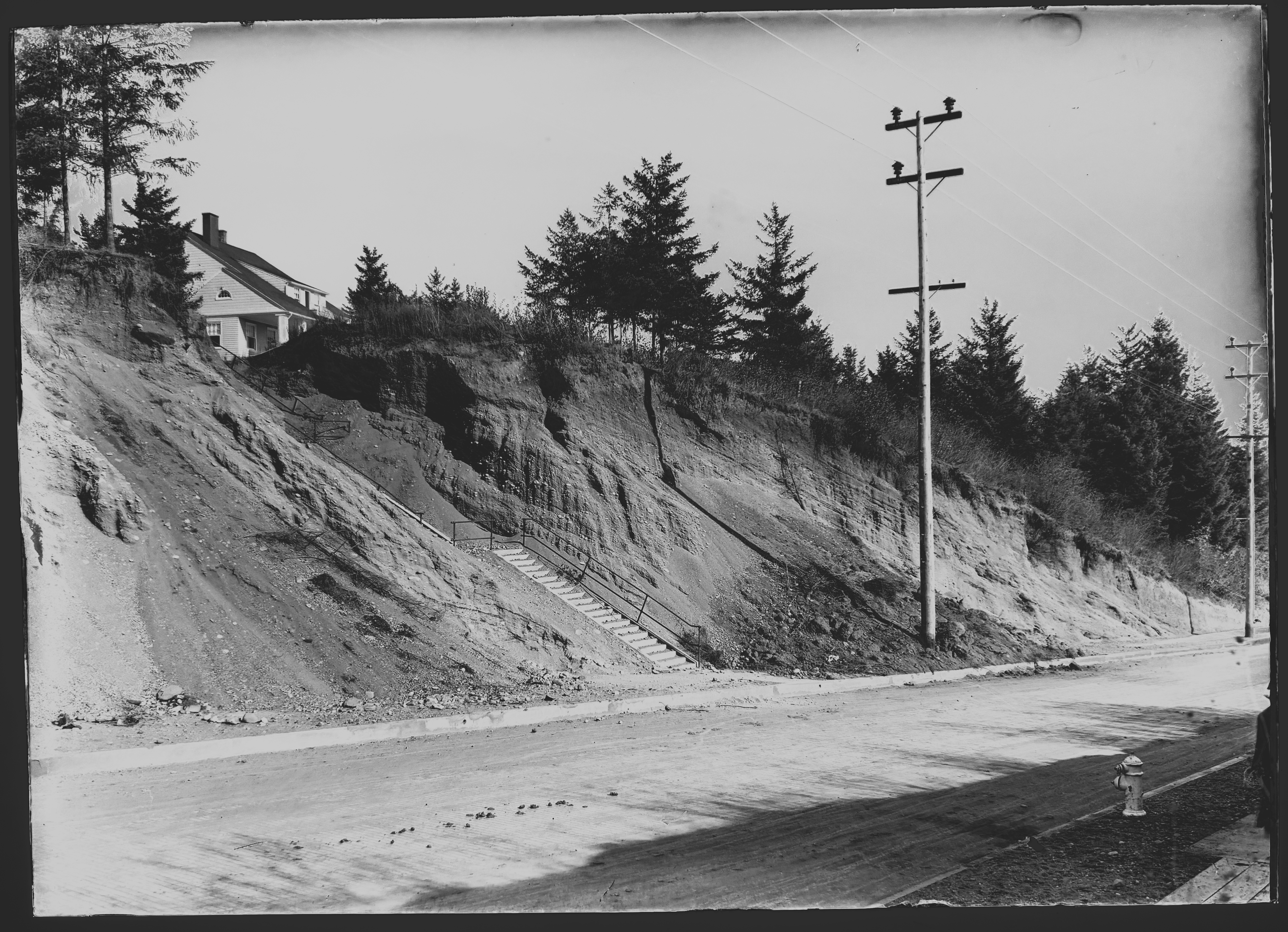
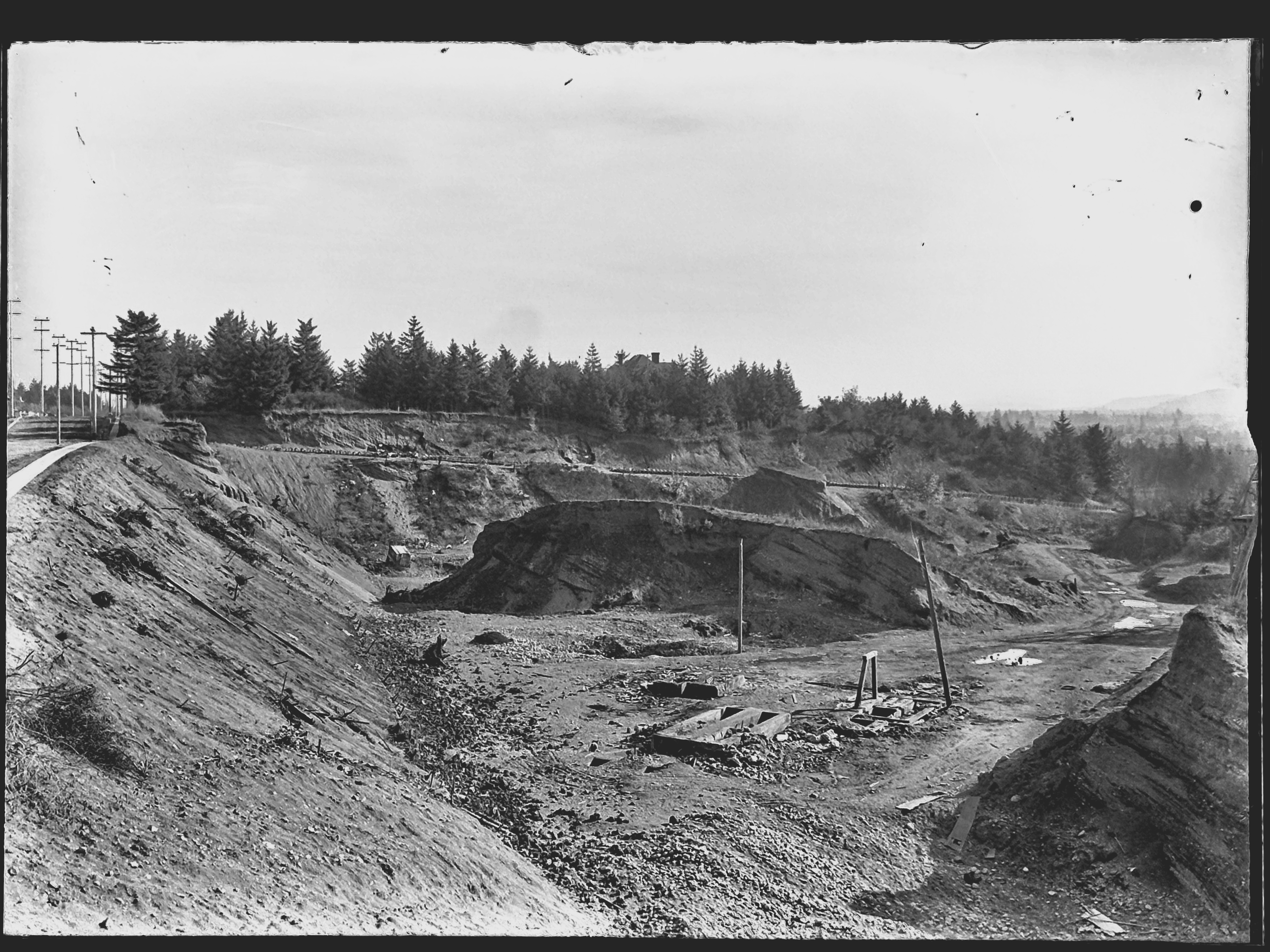
The stairways were built in 1912 by Warren Construction Company, concrete flights anchored into the slope of the ridge, connecting the brand-new Olmsted Park subdivision above with early Fremont Street and what developers hoped would eventually be new neighborhoods below. When built they seemed precarious and tentative, hanging out on rugged cliff-like hillsides above Fremont Street, a giant gravel pit just below. See for yourself:

Fremont Street looking due north showing steps leading down from Alameda Terrace, 1913. House at left is 3251 NE Alameda Terrace. Today these steps land just west of NE 32nd Avenue. Directly behind the photographer was a gravel pit that stretched downslope to the south beyond today’s Klickitat Street and spanned from NE 33rd to NE 31st. Photo courtesy of City Archives: A2009.009.3621.

Fremont Street looking northeast showing steps leading down from Alameda Terrace, 1913. Today these steps land just east of NE 30th and Fremont. House at left is 3251 NE Alameda Terrace. Photo courtesy of City Archives: A2009.009.3635.

A photographer from the Department of Public Works visited the area in December 1913 and may have been following up on concerns from developers and new homeowners about the stability of the slope above and below Fremont in the stretch between NE 30th and NE 33rd. The glass plate negatives he brought back have been at rest since, identified as “Lombard Street” at City Archives. The newly re-discovered stairway images join photos of the giant gravel pit at NE 33rd and Fremont, and photos of the actual intersection in its early development days that we’ve been sharing here, with a few more to come.

The house pictured in both photos still stands today. In 1912, it was one of just a few homes on what was then known as Woodworth Avenue, but is today known as Alameda Terrace, built that same year by Samuel J. and Dorrie Mae Claridge. Over the years, other adjacent houses were built, steadying the slope and giving the stairs purpose connecting neighbors with their neighborhood.

Despite a deep search of early newspapers, city contracting documents and city ordinances, little remains to tell the story of their early construction. When built in 1912, most Portlanders relied on walking and streetcars to get around, and horses to move freight. A dispersed system of public stairways just made sense, particularly up and down landscapes like Gravelly Hill (today’s Alameda Ridge).

The 30th Avenue stairs were noted in the May 1981 citywide Historic Resource Inventory, called out for their significance related to landscape architecture and their role in development of the neighborhood. In the inventory, they’re labeled as “Olmsted Park Public Right of Way.”

Today, these stairs, along with others that span the ridge as it transits northeast Portland, appear in many city exploration guides, including a notable book written by Laura O. Foster called appropriately Portland Stair Walks.

We recommend them as part of your regular history walk regime!

Up next: three 1913 views of mini-landslides on this same slope just above Fremont.

Alameda Monarch 5K Walk, June 1st

Neighbors are talking about the upcoming 5K walk and fun run through Alameda, planned for Saturday, June 1st at 9:00 a.m., and since participants will be traversing many layers of history, we thought we’d offer up some insights about where to look for interesting clues to the past.

Looking southwest at the corner of NE 24th and Fremont, early 1920s. Note delivery bike visible behind power pole. This is the building that today houses Garden Fever and Lucca.

But first, the details (you still have time to register): It’s called the Alameda Monarch 5K and it begins at 9:00 a.m., Saturday, June 1st in the Garden Fever parking lot at NE 23rd and Fremont. Organizer Marcelle Furrow-Kiebler named this the “Alameda Monarch” to celebrate local butterfly habitat improvement done by neighbors, school children and volunteers. Marcelle and the Alameda Neighborhood Association hope the Monarch becomes an annual event that draws neighbors outside to do some neighboring and get some exercise. You can sign up for the free event via Eventbrite. Here’s the link for more information.

This year’s route takes participants out of the Garden Fever parking lot headed north on 23rd, around the corner on Ridgewood and up the 21st Avenue hill to the top. On this first leg, you traverse right through the middle of the Homedale Tract, so visualize the orchards and dairies that were right here until the early 1920s. One long-time resident of the neighborhood remembered it like this:

“Before 1921 and 1922 when city lots were staked out, much of this was an apple orchard, the remnants of which can still be seen in some back yards. The trees grew right down to the edge of the Fremont Street [side]walk and there were several old buildings on the place, residential and otherwise, including a large farmhouse painted light brown which was located close to Fremont in the vicinity of 21st Avenue. This house dated back to the 1890s or before and people lived there in apparent comfort in a rural setting, yet in the midst of modern houses that [were being built] in all directions.”

Once up on top, the route runs east on Skidmore, then south on NE 32nd Place to Alameda (which used to be know as “The Alameda”, where you’ll pass a couple of Alameda’s National Historic Register properties: the Edward and Bertha Keller House and the Thomas Prince House.

Back down the Alameda Ridge via Regents Drive to Edgehill Drive, which used to be called Laura Avenue…the name is still stamped into the curb, can you find it?

When you get down to the bottom of the hill at NE 30th and Fremont, look off to your right one block to the southwest corner of 29th and Fremont, and you’ll have a good view of the Pearson Pine, one of our areas most notable Heritage Trees, planted in 1895 when this was part of the Pearson dairy.

The route continues south on 30th and then turns west on Stanton, right through the heart of Gleneyrie, which was one of the early subdivisions in this part of the neighborhood, and also a place that had a pond and some pretty nice topography. Imagine rolling hills and a wetland.

When runners and walkers turn back north on NE 24th on their way back where they started, they’ll travel squarely in the footprint of the old Broadway Streetcar (1910-1948) that was once such a signature part of life here in the neighborhood. Visualize the overhead electric lines running up the block and listen for the echoes of the rattling, clanking streetcar.

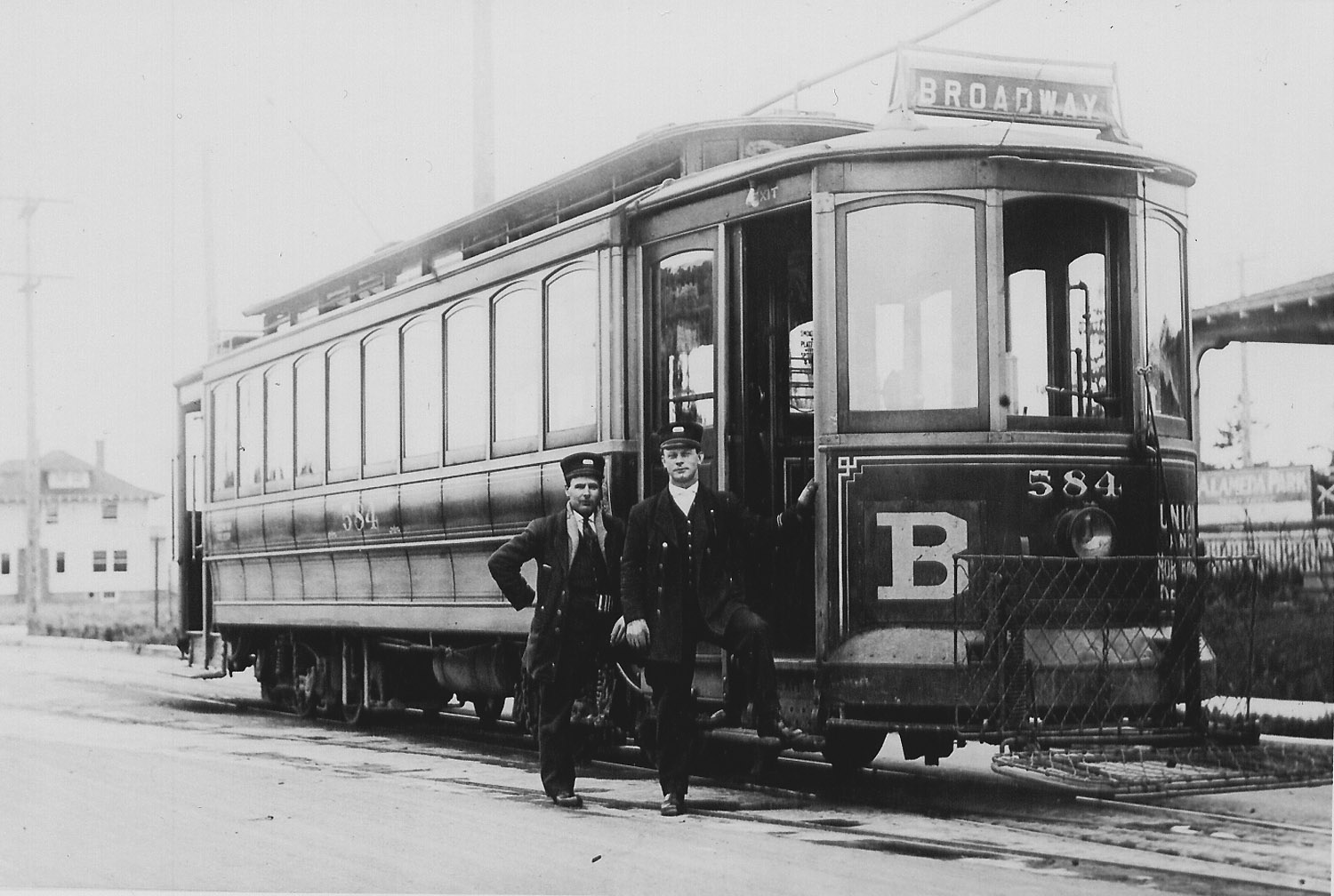
Broadway Streetcar 568 at the end of the line, 29th and Mason. This photo was taken soon after the line was built in 1911, prior to construction of homes and infrastructure.

For perspective about change and the passage of time, remember these recent layers pale in comparison to the more than 500 generations and time immemorial existence of the indigenous people who knew this area long before we came onto the scene.

Vernon History Walks: July 31 and August 28, 2022

Here’s a summer weekend morning neighborhood history walk idea for you.

Our friends at the Vernon Neighborhood Association have sponsored a series of walks in Vernon and in Woodlawn this summer that are free, fun and (we think) interesting.

I’m leading the Vernon walk this summer and there are two more scheduled: Sunday, July 31st from 10:00-noon, and Sunday, August 28th from 10:00-noon. During our two hours, we’ll turn the clock way back to explore the multiple layers of history in Vernon, the dynamics of change that have shaped the neighborhood and all of east Portland, and visit several time traveler locations during a one-mile walk. Registration through VNA is required for meet-up specifics. Both walks are capped at 20 people and have started to fill up. Learn more on this VNA registration page.

“Old Vernon” is just one of the stops on our the Vernon Neighborhood Walking tour. This building was the center of neighborhood life from 1907-1932, do you know where it was? You might be surprised. Join one of the two Vernon walking tours to hear its story and memories from those who knew and loved it.

The Woodlawn walk is ably led by neighborhood historian Anjala Ehelebe, who will describe the character, stories and evolution of Woodlawn. Anji’s walks are Saturday, August 6th from 11:00-1:00 and Saturday, August 27th from 11:00-1:00.

Come join us as we connect past and present right here close to home.

Still walking

Back in March 2020 when the pandemic changed the way the world works, we were amazed and inspired by all the walkers, runners, riders and extra-neighborliness afoot in these Northeast Portland neighborhoods. With all of us under shelter-in-place orders back then and still trying to come to terms with what was going on around us, we needed a new routine, some activity, a little uplift to our spirits and some exercise.

That’s walking.

Back then, we wrote up a few exploratory history walks around the neighborhood, and a little historical perspective on pandemics from 1918. If you haven’t walked those walks, they’re still there for you: the Broadway streetcar loop, the jaunt around the Pearson farm, the Alameda Park perimeter walk.

This afternoon when we were out for a long walk at dusk–which begins about 4:15 p.m. here at the bottom of the year–we were once again impressed with just how many people were out, even in the cold. Most everyone was wearing masks, all of us politely shifting to the other side of the street or up the middle, often with a wave, to make way for walkers headed in our direction. It’s the new social compact: we wondered how in a post-pandemic environment we’re going to train ourselves out of what has become an instinctual response to cross the street.

There’s plenty of other interesting history walks you might add to your walking routine. Don’t forget about the system of alleys between Ainsworth and Prescott from 33rd to 24th. You could cover a lot of territory in that network and get a whole other perspective on the neighborhood. Maybe walk the old Alberta Streetcar route. Or go find and walk around the block where Old Vernon School used to sit and see if you can find the clues of change.

Here’s another idea for a build-your-own history walk: There’s a section here on the blog called The Builders that features biographies of 12 of the most prolific homebuilders in this part of Northeast Portland. With each builder, we’ve also included a pretty complete list of houses and addresses built by that person. Pick out any of the builders and go walk by their work, spot the design or construction similarities.

Go, for instance, to the Kenny Birkemeier entry and string together a route past the addresses of 20 homes he built, all within walking distance. There’s even some old photos to compare against when you get there. You’d get a chance to climb some hills. Could be fun for an old house wonk like you.

If you have a young person in your midst looking for a lesson plan that’s a little different, check out the seven Home History School lesson plans we put together this spring. Good for kids of all ages.

How to get started? Start small with a simple stroll around your own block. There are intriguing clues to look for.

Stay well. Wear the mask. Keep walking.

Home History School | Find your streetcar

Northeast Portland streets were once alive with streetcars taking neighbors to work, school and play. They were an institution that connected us with the city and with our neighbors. Noisy, drafty, cold in winters but alive with neighbors going places, these electric-powered vehicles were loved by Portlanders, and our system was the envy of the country.

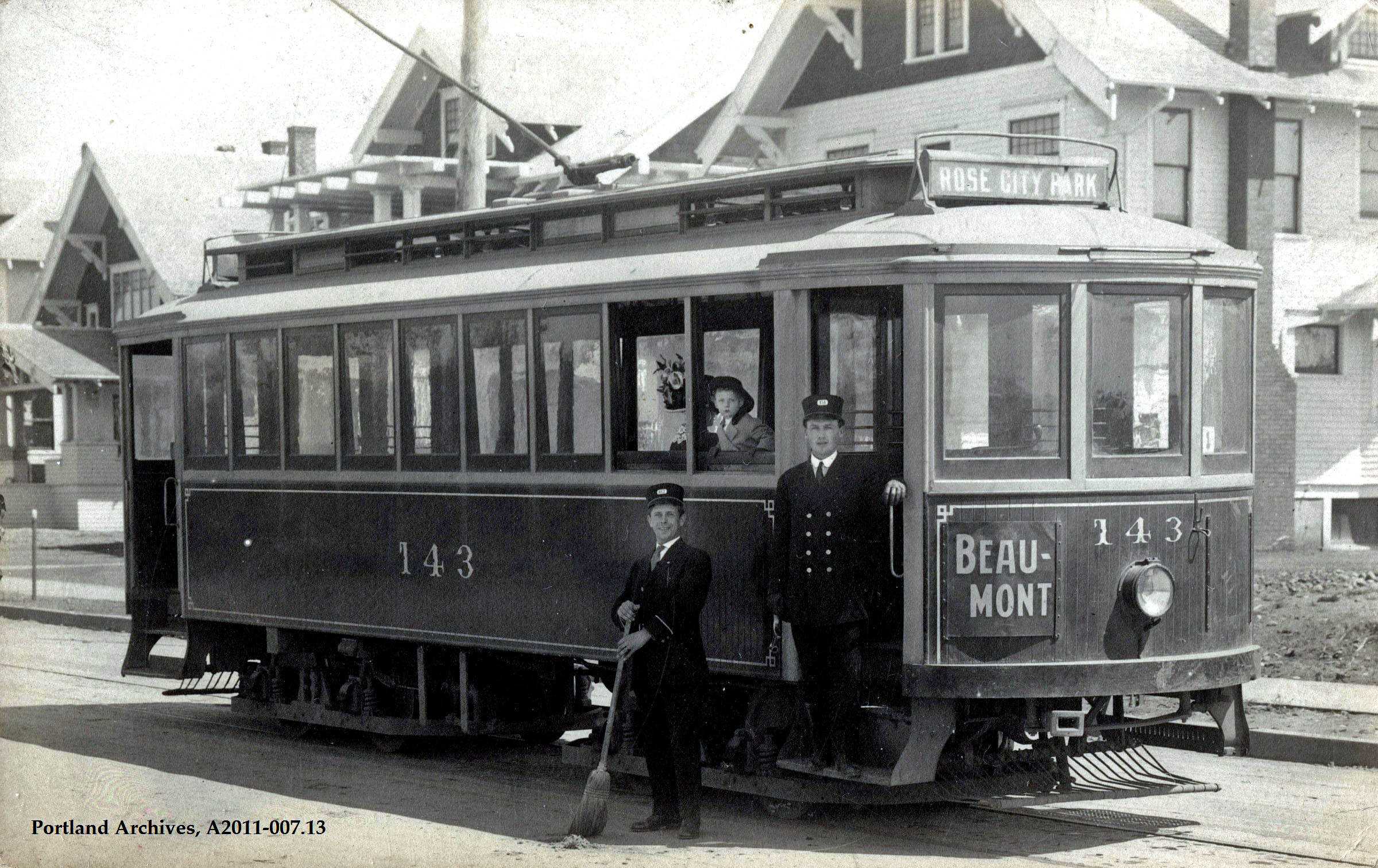
The Beaumont streetcar at the end of the line between Klickitat and Siskiyou on NE 41st Avenue, about 1914. Courtesy City of Portland Archives.

The rise of cars and buses in the 1940s brought an end to streetcars, but if you know where to look, you can still find clues, and there’s lots of photos, memories, maps and even old film to teach us about these times. This week’s activities get you looking for clues, finding your nearest streetcar route and learning about the electric trains that criss-crossed Northeast Portland neighborhoods.

Click below for this week’s installment.

Find Your Streetcar

Time for a walk

With so much on our minds, it’s time to go for a walk.

Can you believe how many walkers, runners and bikers there are out there on our spring-weather streets? We were out this afternoon with the dog and were impressed with all the friendly neighbors out and about, and how ready we all are to say hello to actual in-person people.

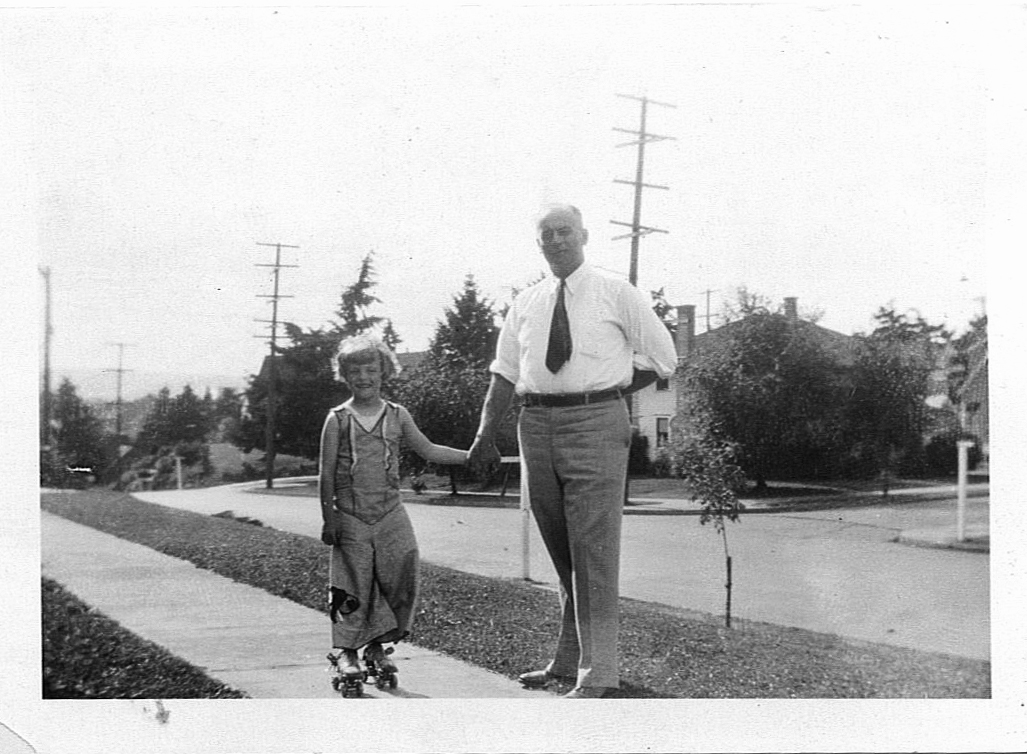
Harriet Lesher and her dad on The Alameda at about NE 22nd, about 1930. Courtesy of the family.

You might be looking for somewhere to walk close to home or a little adventure to take the kids on, maybe something even a little educational. How about a history walk?

You could visit the Pearson pine—a 125-year-old tree that has lived through a lot—and the nearby Pearson dairy farm that exists only in written memory beneath Alameda School. A walk around the dairy is a nice, easy .6 mile.

Or re-trace the route of the old Broadway Streetcar that was once an institution people could not live without, and couldn’t imagine ever changing; it makes a good 3.1 mile loop.

You might survey the entire Alameda Park Plat perimeter, while imagining the forests and fields that once blanketed this area back in 1909. Bring the plat map along (or check it out on your phone).

If you’re walking around the Beaumont area, be sure to stand in the footsteps of these photos from the 1920s and see what looks different today. There are plenty of clues that connect across these nearly 100 years.

Simple pleasures, which mean a lot at a moment like this.

More about kit homes and standardized house plans…

The recent discovery of the Sears Roebuck Argyle home just up the street—which is maybe more of a realization than an actual discovery…it’s been there for 100 years—got us to thinking about and looking around in search of other Sears Roebuck cousins.

There are plenty of them, which should not come as a surprise. Here’s a helpful field guide to identification.

In the same way that all art is derivative of other art, so too with residential architecture, defined by the period, the market, the ways of living at the time. As we’ve discussed in the profiles we’ve written about eastside builders, most used widely available sets of building plans.

Page through any of the catalogs from the early years and you’ll see lots of familiar designs, including maybe your own house. For a time during the building boom of the 1920s, The Oregonian actually published sets of plans of example houses, many of which were indeed built on the eastside.

A page from the 1936 Sears Modern Homes Catalog.

Here’s a link to the best repository of old house plans we’ve found (with many thanks to the folks at Antique Home Style). If you haven’t seen this, it’s going to be a rabbit hole you’ll want to go down, there’s so much to see and think about here. Even the marketing language from the catalogs will make you smile. The Wikipedia piece on Sears Modern Homes is actually pretty good as well.

And here’s another good local source of information about mail-order homes, and all things related to older buildings in our fine city.

Here’s the invitation and challenge: Next time you’re out for a walk (good for you and a great way to experience neighborhood history), see if you can find built versions of any of these plans. We’ll welcome any insights or photos of matches you find.

Three Mile History Walk | Follow the Broadway Streetcar

Here’s a neighborhood walk that makes a nice outing and puts you on the well-worn pathway of earlier years—a history-hunt of sorts to bridge past and present and imagine a time when Alameda was younger and connected to downtown courtesy of the clanky, drafty, dependable Broadway Streetcar.

Broadway Streetcar 568 at the end of the line, 29th and Mason. This photo was taken soon after the line was built in 1911, prior to construction of homes and infrastructure.

You can enter this walking loop just about anywhere on the course of the streetcar’s roundabout transit through the neighborhood, and you can head either north or south. But, just to be orderly about it, how about starting at the end of the line: NE 29th and Mason. That’s where the Broadway streetcar stopped, where the motorman would step outside for a smoke and a look at his watch.
Here’s the same view at NE 29th and Mason, about 1912-13. Note paved streets, absence of mud and brush, and presence of two buildings. The house to the left stands today and is 4206 NE 29th. The building on the right was the Alameda Land Company tract office (a temporary structure at the southeast corner of the intersection), where prospective buyers who exited the streetcar could meet with salesmen and look at subdivision maps. Check out this post which has other views of this intersection and more about the early Alameda Park neighborhood.

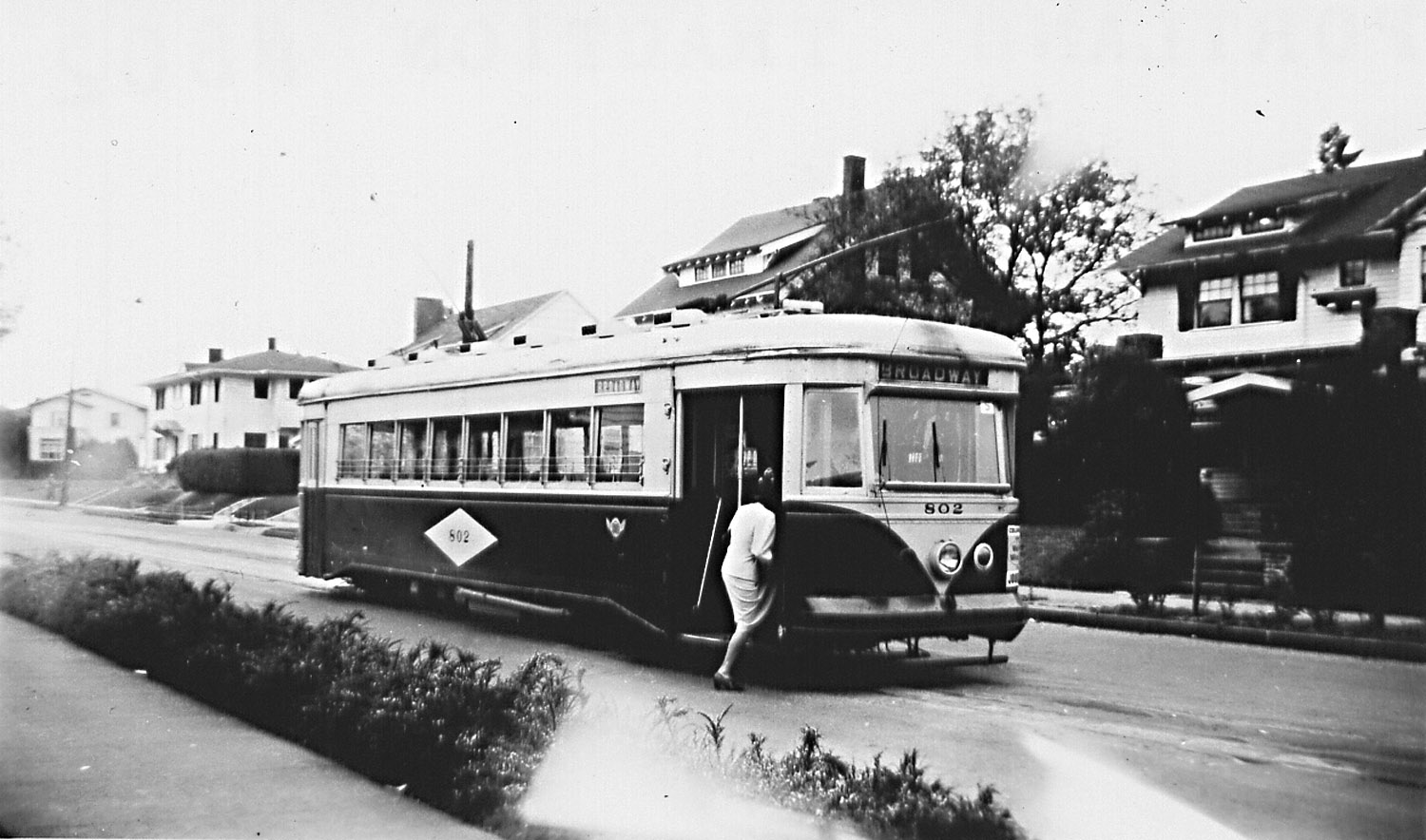
From the end of the line, walk south on 29th to Regents, where the streetcar passed through the “Bus and Bicycle Only” notch at Regents and Alameda. The streetcar turned right and went down the hill here, and you should too, following Regents to NE 24th Avenue where you’ll turn left (south). Continue south on 24th to Fremont and then turn right on Fremont to go west for a couple blocks, just like the old 809 shown below. See if you can orient yourself in just about the same place.
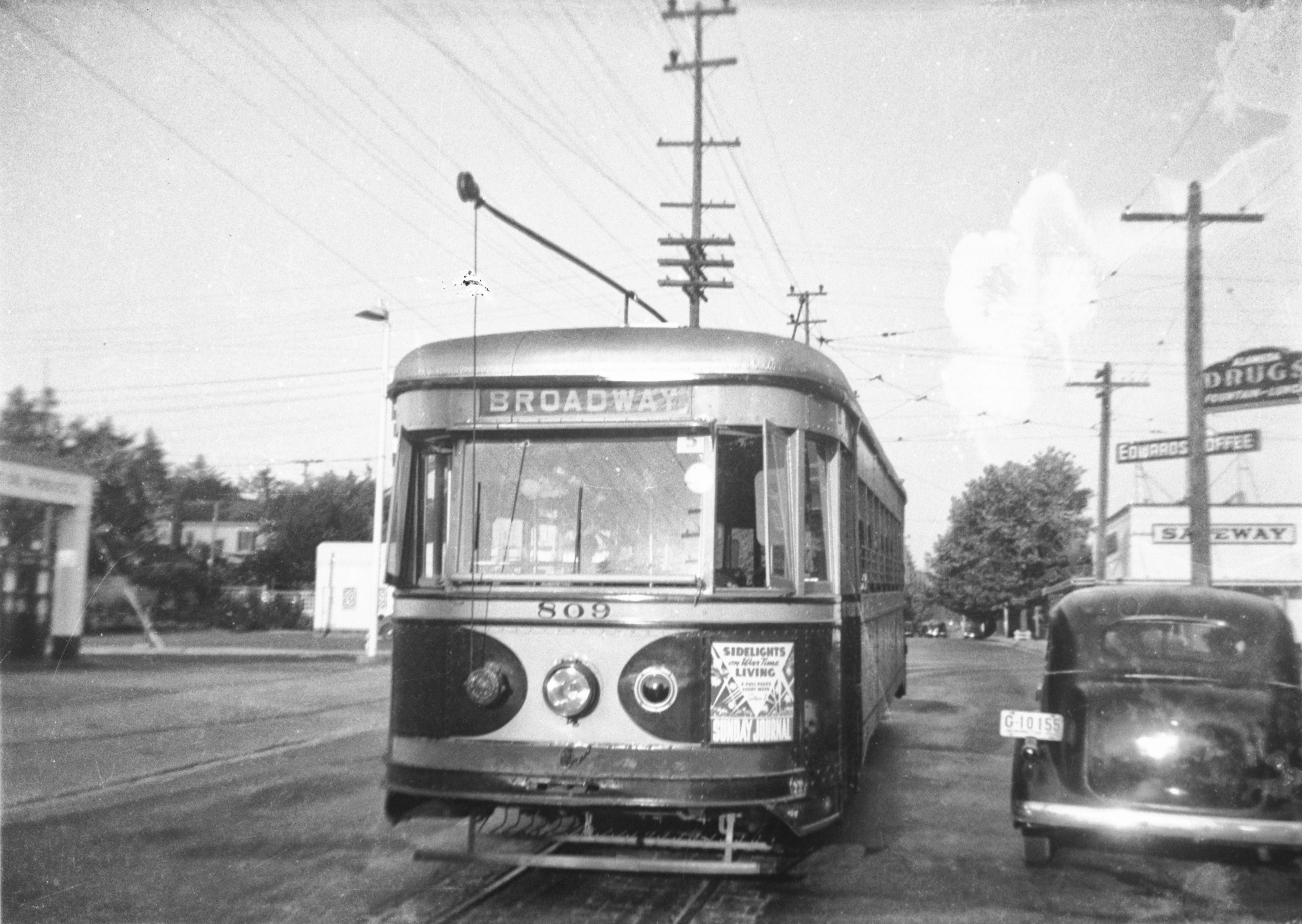
Broadway line car 809 rounds the corner at 24th and Fremont, looking east, 1940. Courtesy of Portland City Archives A2011-007.65. Click to enlarge for a better view. The Safeway building is today’s bank and Alameda Dental. The sign for Alameda Drugs is hanging on the side of today’s Lucca restaurant. Here’s a link to more views of the intersection at NE 24th and Fremont.

At NE 22nd, turn left (south) and enter the long southbound leg of the circuit. Note just how wide the street is: a clue that you are on the streetcar route.
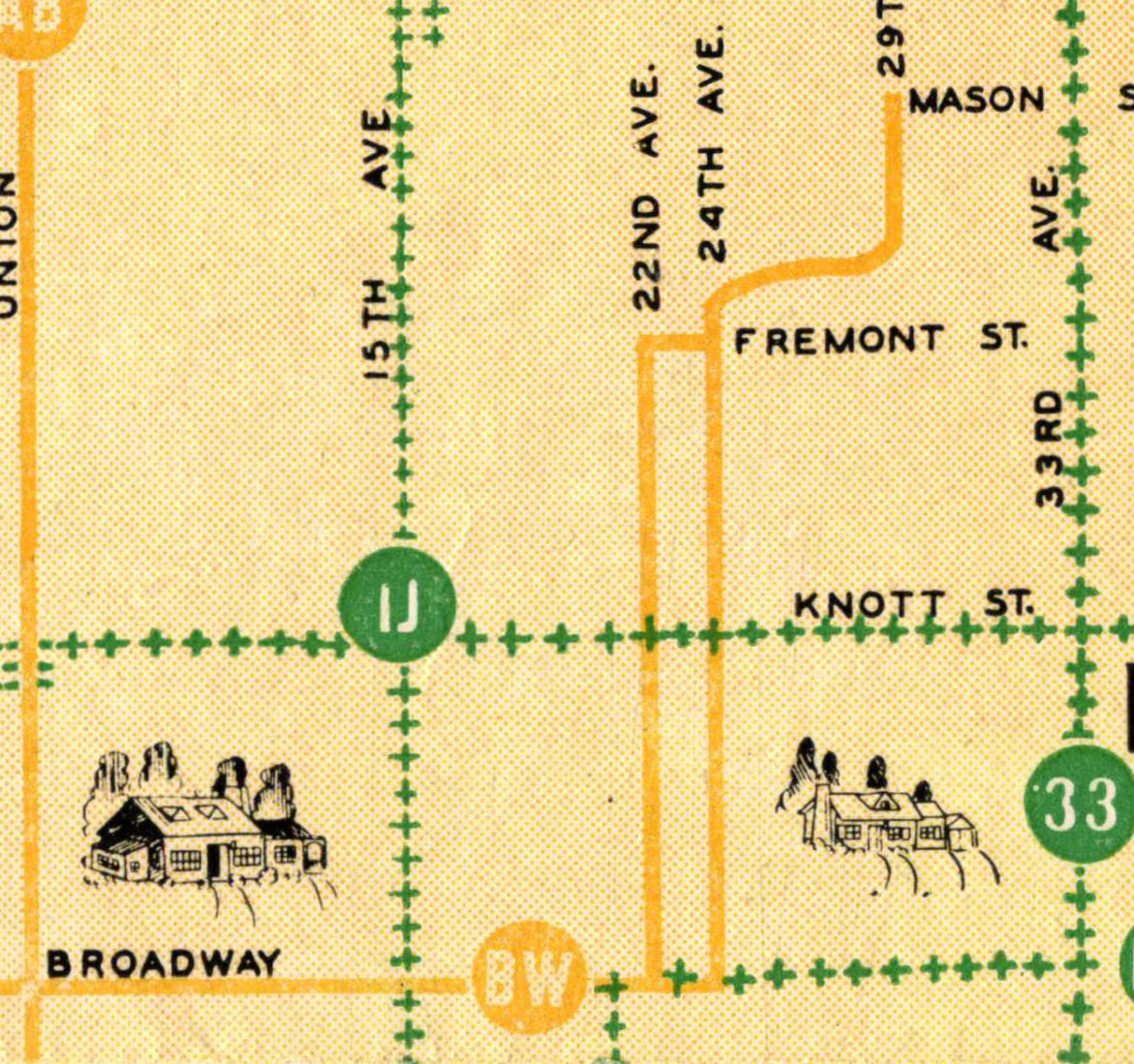
Detail from 1945 Portland Traction Company Map. The green + signs illustrate bus lines. The yellow lines are streetcars. By 1948 Portland’s streetcars had all been removed.

After a good, long straight stretch, when you hit Tillamook and 22nd, you’ll find a modest “S” curve, where the streetcar zigged and zagged on its way south to connect with Broadway. Follow along just for fun. But instead of turning west on Broadway (right) like the streetcar did on its way downtown, turn left (east) and walk back to NE 24th, where you turn left (north) and head back through the neighborhood. Now you’re back on the path of the Broadway Car—the northbound side of the circuit—and headed toward the end of the line.
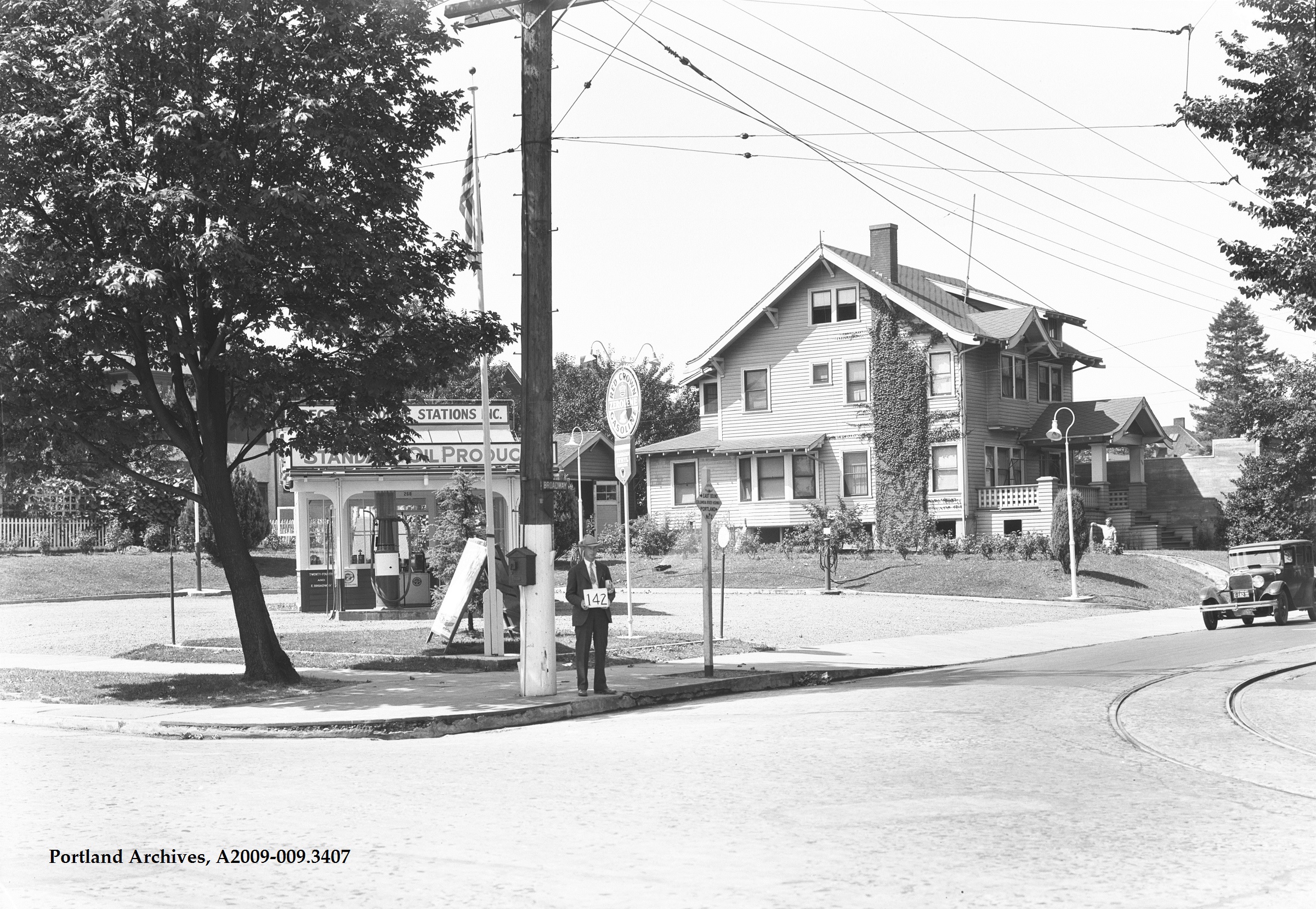
Believe it or not, this is looking southwest at the southwest corner of Broadway and 24th in the summer of 1929, before Broadway was widened. See the streetcar rails sweeping from west to north here in the lower right corner? This service station sits where Spin Laundry Lounge is in 2018. The man holding the number works for the city; the number designates that tract of property for further reference. Click to enlarge. Courtesy of City of Portland Archives, image A2209-009.3407.

Continue north on 24th, cross Fremont and turn right (east) on Regents, where you go back up the hill on your way to the end of the line. Here’s a cool view of NE 24th and Fremont looking north, taken in about 1921. Can you line up in the footsteps of the photographer? The houses you can see in this 1921 photo are still there today.
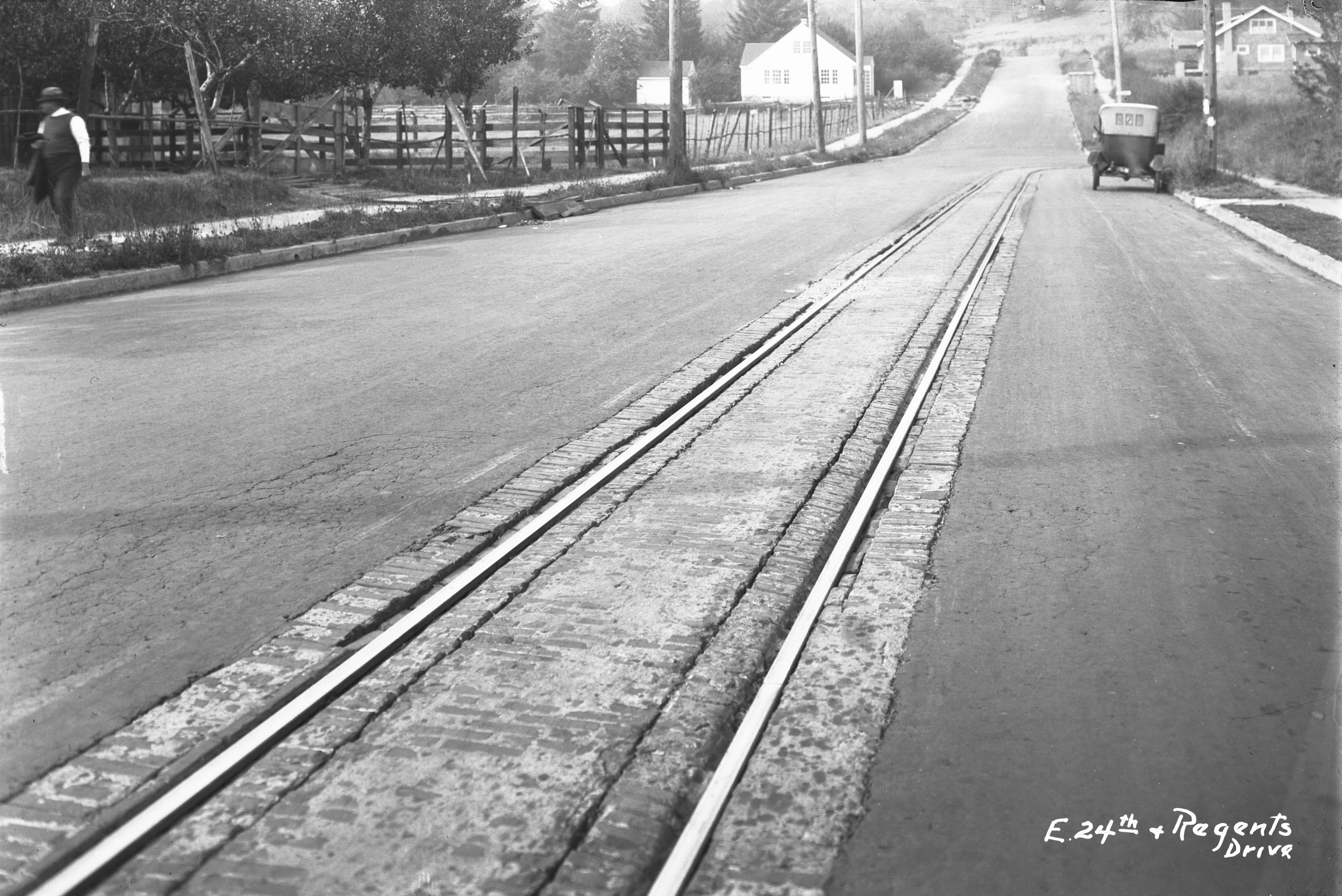
NE 24th and Fremont looking north, taken in 1921. Courtesy of Portland City Archives, image A2009-009.1858

At the top of Regents, pass through the bus notch again and go a few more blocks to Mason, and you’ve arrived at the end of the line. Here’s a photo looking south on NE 29th, from the southeast corner of Mason. See if you can line up in the footsteps of history: pretty much everything but the streetcar and the rails are still visible today.
Turn-by-turn:

Start: 29th and Mason

  1. Walk south on 29th to Regents, turn right and go down the hill.
  2. At 24th, turn left (south off of Regents).
  3. Walk to Fremont and 24th, turn right on Fremont (west off of 24th).
  4. Walk two blocks on Fremont and turn left on 22nd (south off of Fremont).
  5. Keep walking south on 22nd to Tillamook.
  6. Navigate the zig-zag at Tillamook and stay south on 22nd to Broadway, turn left (east off of 22nd).
  7. Walk east on Broadway to 24th, turn left (north off of Broadway).
  8. Walk north on 24th, crossing Fremont, and turn right on Regents (east off of 24th).
  9. Walk up the hill on Regents to 29th, turn left through the notch (north off of Regents).
  10. Walk north on 29th to Mason and you have reached the end of the streetcar line.
  11. Tip your hat to the motorman and the generations of Alamedans who depended on this train.

Some things to look for on your walk…

Notice how 29th narrows on the north side of the intersection. The wider stretch of street to the south was necessary to accommodate the rails and the traffic. Have a good look at Northeast 22nd and you’ll notice how much wider it is than any of our north-south streets. There are other clues to be found in the alignment of power poles, and in the remnants of rail unearthed from time to time during street repairs.

A little more history about our streetcar…

Two generations of our neighbors grew up relying on the Broadway streetcar to take them where they needed to go. Ever-present, often noisy, sometimes too cold (or too hot), but always dependable, the Broadway car served Alameda loyally from 1910 to 1948.

Sensitive to the transport needs of its prospective customers, the Alameda Land Company financed construction of the rails and overhead electric lines that brought the car up Regents Hill to 29th and Mason. Developers all over the city knew access was one key to selling lots, particularly in the muddy and wild environs that Alameda represented in 1909.

In 1923, a trip downtown cost an adult 8 cents. Kids could buy a special packet of school tickets allowing 25 rides for $1. In 1932, a monthly pass for unlimited rides cost $1.25. Alamedans used the streetcar as a vital link to shopping, churchgoing, commuting to the office, trips to the doctor. Some even rode the line for entertainment. A few rode looking for trouble. And at least one elderly rider frequently took a nap in the front yard at the end of the line while waiting for the streetcar.

During the day, cars ran every 10 minutes, and Alamedans referred to them as “regular cars” or “trains.” During the morning and evening rush hours, additional cars called “trippers” were put into the circuit to handle additional riders. Trippers did not climb the hill to 29th and Mason, traveling only on the Fremont Loop to save time. At night, our line was one of the handful in Portland that featured an “owl car,” a single train that made the circuit once an hour between midnight and 5 a.m. Owl service was a special distinction. The downtown end of the line was Broadway and Jefferson.

The Broadway streetcar was replaced by bus on August 1, 1948. By 1950, all of Portland’s once ubiquitous streetcar lines were gone. In the early days of neighborhood life, our streetcar was indispensable. It was one catalyst that made development of Alameda possible. It linked us to downtown and to other neighborhoods near and far. To hear the stories of those who rode it frequently, it linked us to each other in a way too.

Here are a few other history walks you might enjoy.
Dairy & Orchards in the heart of Alameda | The Homedale Tract

Homedale is the name of the property plat—once part of an orchard and dairy—that occupies the landscape bounded roughly by Fremont and Ridgewood, between NE 19th and NE 24th. Today, it’s considered part of the Alameda neighborhood. Here’s a look at the geography.

Detail from the Homedale Plat, filed in 1921. Click to enlarge.

Think of a plat as a road map filed by developers for organizing property into individual lots and streets (read more about the relationship between plats and neighborhoods here). We all live somewhere in a plat and each has its own unique story, players and moment in history. We’ve created a category here on the blog (The Plats) to hold our ongoing exploration of these stories.

While today it’s an orderly grid of streets and homes dating from 1922, less than 100 years ago the sloping landscape just below Alameda ridge that you see here was an important part of Portland’s eastside agriculture. We’ve come across several interesting descriptions that will feed your curiosity and the way you think about this landscape. Read on, from local resident Rod Paulson written in January 1976:

“Before 1921 and 1922 when city lots were staked out, much of this was an apple orchard, the remnants of which can still be seen in some back yards. The trees grew right down to the edge of the Fremont Street [side]walk and there were several old buildings on the place, residential and otherwise, including a large farmhouse painted light brown which was located close to Fremont in the vicinity of 21st Avenue. This house dated back to the 1890s or before and people lived there in apparent comfort in a rural setting, yet in the midst of modern houses that [were being built] in all directions.”

“There was another farmhouse set back a considerable distance from the street more or less in the eastern part of the orchard, and a barn was situated opposite the end of 23rd Avenue.”

We’ve wondered about this: are isolated apple trees from the early orchard days still out there scattered across this part of the neighborhood? Can any readers confirm? In a happy coincidence, the Sabin Community Association has planted a small orchard of young trees near NE 19th and Mason, on ground that probably once was part of the old orchard:

The once and future orchard, near NE 19th and Mason, December 2018.

Owners Michael G. Munley and James T. Barron bought the future Homedale property in 1905 for $6,500 and kept it in agricultural use with an eye to eventual development, but market conditions didn’t make that worthwhile until the 1920s. Not coincidentally, Munley was son-in-law of E.Z. Ferguson, president of the Alameda Land Company which owned land just up the hill. Barron was a Ferguson business partner.

The Irvington Dairy operated from a barn situated at the northeast corner of NE 21st and Fremont from the 1890s until 1916 when a catastrophic fire destroyed much of the herd and the barn.

From the Oregon Journal, January 11, 1916. The address given–725 Fremont–is from Portland’s old addressing system and translates into the NE corner of 21st and Fremont. We did not find a follow-up news story about the fire investigation. The house remembered by Rod Paulson was home to dairy manager Grimm and his family.

Location of the former Irvington Dairy barn at NE 21st and Fremont, looking northeast, December 2018.

Between the terrible fire and an early 1920s resurgence in Portland’s real estate values, the time was nearing when Munley and Barron would execute the land use change and end the property’s agricultural past. In 1919, the Grimms and dairyman E.J. Bruns were selling off the last of the Munley herd:

From The Oregonian, March 30, 1919

A nearby dairy existed just to the east as well: the Pearson Place, the cow pasture where Alameda School was eventually built. The Pearson family operated their dairy there during this same time period and it too was subdivided into residential lots about the same time. You can read more about the Pearson Dairy and its time-traveling tree here (and we recommend putting on your walking shoes and your imagination to walk the perimeter of the farm).

Six years after the big fire at NE 21st and Fremont, Munley and Barron were underway with their plan to develop the property:

From The Oregonian, March 12, 1922

By the fall of 1922, the streets of Homedale had been carved into the south-facing slopes and the first homes had been built. Real estate ads even mentioned without explaining why that most lots had a fruit tree (but no mention of cows).

Interesting to note that prior to 1922, Regents Drive did not go all the way through to NE 21st because the orchard and open fields were in the way. Regents came down the hill and tee’d into NE 24th before heading south. Think of that next time you drive down Regents headed for NE 21st: the former orchard and pasture land you’re driving through.

If you’ve read this far, you deserve the reward of one of our all-time favorite news stories from that time illustrating the consequence of this early day change of land use from agriculture to residential (a subject that bears exploration in future posts). Dixon Place is the next subdivision to the west just a few blocks over, between Fremont to Shaver and from NE 15th to NE 19th, part of today’s Sabin neighborhood. What a great headline:

From The Oregonian, May 3, 1923

Dairies like the one at NE 21st and Fremont–and many more small dairies around town–occupied a unique niche in time as Portland grew between 1890 and the 19-teens. As population and growth exploded and property became more valuable for housing, the departure of the dairies was a bellwether of change. More from the front lines of subdivision-dairy conflict here. It’s a fascinating story.