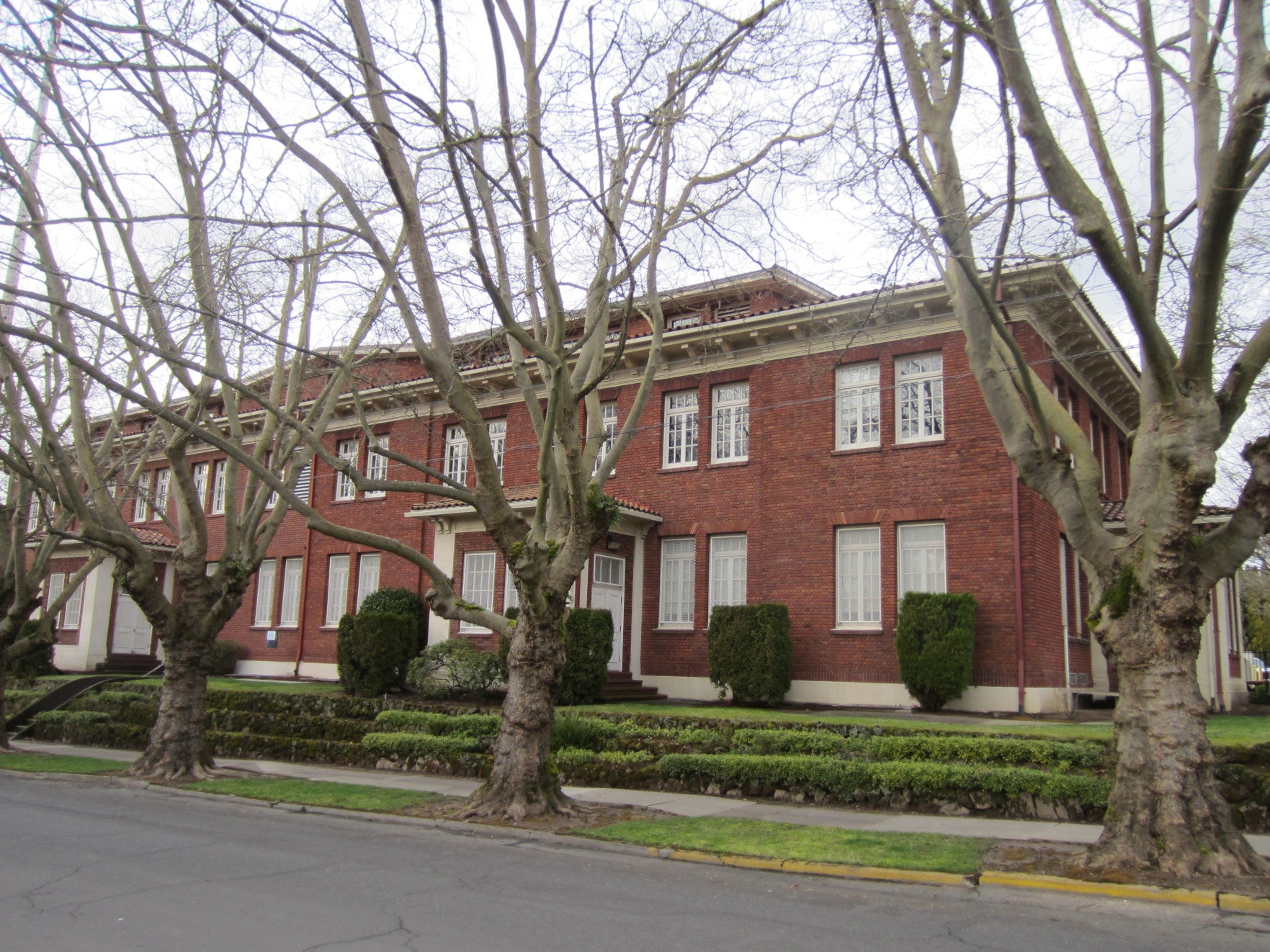
Mystery building at NE 24th and Stanton has always been a “telephone exchange”

You’ve driven by it a million times: the reddish brown brick building on the northwest corner of NE 24th Avenue and Stanton. As I’ve researched this building and its history over the last two years, I’ve spoken with neighbors who’ve thought it was once maybe a school, a brewery, a home for wayward youth: all understandable given its institutional look and size.

Originally referred to as the Garfield Telephone Exchange, or the “Garfield Office,” this building is still functioning today for its original purpose: making sure telephone calls get connected to the right place at the right time.

When it went into full operation in 1924, the building housed telephone operators at switchboards plugging incoming and outgoing calls to and from individual circuits that served homes in Irvington and Alameda. One operator remembered that some of her colleagues and supervisors wore roller skates to help them move quickly from switchboard to switchboard.

Today, the hallways and rooms are quiet except for an omnipresent electrical hum, the quiet clicking of switches doing the job of the former operators, and the soft buzz of fluorescent lights. No roller skates, no operators, in fact it’s uncommon to find anyone in the building at all anymore.

Pacific Telephone and Telegraph Company first rolled out the need for a telephone exchange building in 1919, and chose the location at NE 24th and Stanton because of its strategic location in this growing area of Portland. But early residents did not like the idea of a semi-industrial/commercial building being located in the heart of a residential neighborhood. Building codes and land use ordinances at the time were permissive and allowed the project to move forward. But influential residents of Irvington petitioned Mayor George Baker and Portland City Council to tighten restrictions, which they did on January 14, 1920, throwing a monkey wrench into project planning for Pacific Telephone and Telegraph.

Engineers for the company were stung by the new restrictions—which allowed residents to object to projects—and complained that the new public involvement processes were going to set back development of the new technology.

The Oregonian reported on January 15, 1920:

The action of the city council yesterday, according to W.J. Phillips, commercial manager of the telephone company, will upset the entire plan of development outlined for the next 20 years in Portland…he fears that the entire future service may be impaired.

Forced into reckoning with the neighborhood, the telephone company reluctantly agreed to work with a committee of neighbors to refine designs for the telephone building. Noted Portland architect A.E. Doyle, an Irvington resident, helped lead the committee and eventually won design restrictions which were reported in the April 15, 1920 edition of The Oregonian as follows:

With these restrictions in place—and with designs emerging that showed the attractive architectural details we see today—the neighborhood dropped its opposition and the project proceeded. Building permits were issued and construction followed, completed by Portland building contractor J.M. Dougan and Company at a cost of $123,690.

Trying hard to reach out to the community with a message of progress, Pacific Telephone purchased an advertisement in The Oregonian touting the new facility and mentioning the $1 million total project cost, which included the complicated and costly miles of phone cable buried throughout the area that culminated at and connected into the building.

As Portland’s housing boom produced more demand for phone service, complaints began to mount against Pacific Telephone and Telegraph about the speed at which they were responding to the growing need. In several news stories in 1921 and 1922, phone company officials were quick to point the finger of blame for these complaints at the Irvington neighborhood for slowing down progress on the Garfield Exchange and causing a ripple effect of delay throughout Portland. The building finally went into full operation in January 1924.

Even after construction, and the cables installed, residents still needed to be trained how to use the new phone equipment. The blizzard of news stories about the Garfield office and the Irvington delays (more than 15 news stories on the subject from 1920-1924) finally quieted down in late 1925 when everyone settled into using their phones, and trying to keep up with the changing technology.

Several minor additions have been made over time, and obviously complete technical overhauls have been made inside. Two houses to the north of the building were razed to make room for today’s parking lot. Despite these changes, the conditions outlined in the 1920 terms pretty much hold true today.

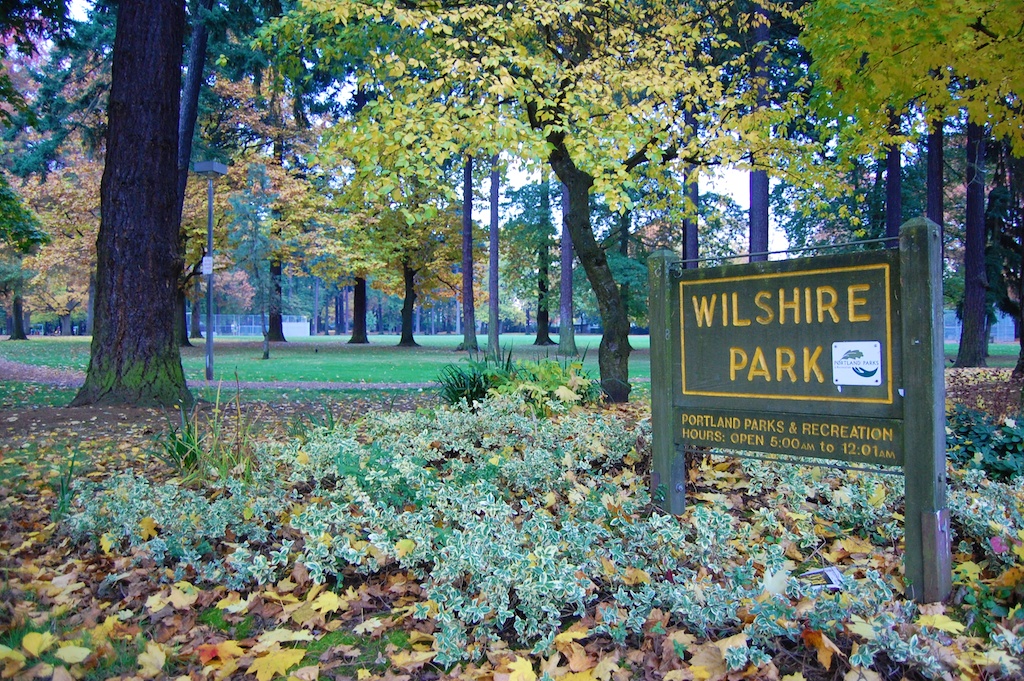
Wilshire Park | The Rest of the Story

Today, it’s a major landmark both here on the ground in Alameda-Beaumont-Wilshire, and even from the air: the 15-acre rectangular patch of tall Douglas-fir trees surrounding baseball diamonds, open fields, picnic areas and a dog park. We know it as Wilshire Park, and many of us benefit from it every day.
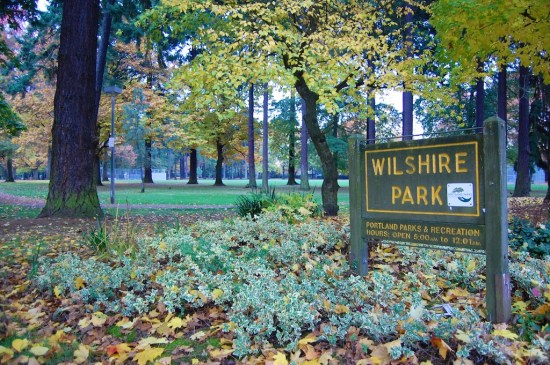
Wilshire Park very nearly became a 1920s auto campground, and then a 1940s subdivision.

We can take Wilshire Park for granted today because of a series of events tracing back to an investment made by one of Portland’s wealthy early residents, Jacob Kamm (1823-1912), who made his fortunes in the steam navigation business. Kamm also dabbled in real estate investment and had strategically purchased parcels downtown and at the edges of Portland, including the 15 acres of woods just north of the Alameda Ridge off the old county road (today’s NE 33rd Avenue), which he platted as the Spring Valley addition in 1882. When Kamm died in 1912, the tract had been untouched, and his estate was valued at $4 million. Sorting out the estate took years and was frequently in the press.

An effort to turn the park into a KOA-style automobile campground in 1920 was cancelled with prejudice by vociferous Alamedans who were worried about its impact on property values and didn’t like the notion of a non-residential and transient-based activity being so close to their homes. After that fight, which involved petitions, community meetings and a high level of consternation with city government, the fate of the 15 acres rested for a few years.

Remember that the early 1920s were a major boom period for the construction of homes in this area. All around the 15 acres, new subdivisions (and lots of kids) were springing up: the Willamette Addition, platted in 1888 and bounded loosely by Skidmore on the south and Alberta on the north (though the original plat was never fully built-out); the Wilshire Addition, platted in 1921 and roughly including the area from NE 33rd to NE 42nd between Fremont and Prescott; the Beaumont Addition, platted in 1910; and Olmsted Park—just  west of 33rd across from the woods—was as well established as its neighbor Alameda Park. Kids from these neighborhoods were already using the wooded area as their playground, with a maze of improvised trails, forts and other secret places nestled into the thick brush and trees. It seemed a natural to become a real city park, with playgrounds and picnic facilities for organized events.

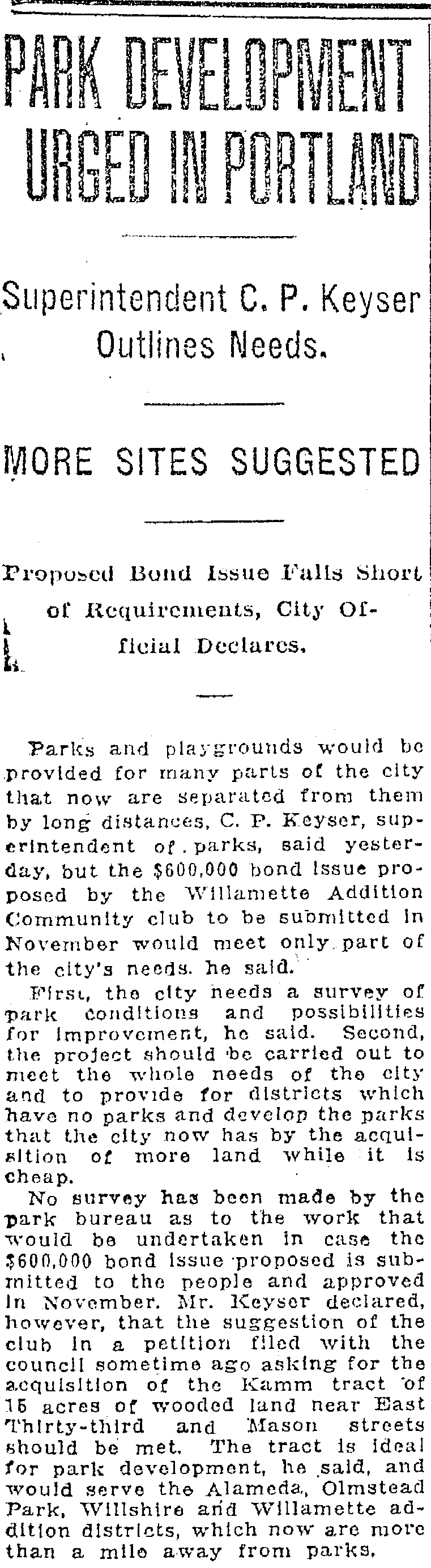
The Wilshire Addition Community Club—a kind-of early neighborhood association and social club—was the first to call for acquisition and development of the park, submitting a proposal in September 1926 for the city to float a bond measure to fund the work. But Portland Parks Commissioner C.P. Keyser felt the chances of a voter-passed measure were too slim because not enough planning and survey work had been completed, so the effort stalled.

Left on their own after the city chose not to take up the cause, neighbors began direct negotiations with the Kamm estate. By 1933, an agreement had been reached that allowed the property to be used as a park—still owned by the Kamm family—as long as the planning and development work was funded and conducted by neighborhood residents. In a Monday morning, March 27, 1933 news story, The Oregonian reported the following:

“Improvement of a 15-acre tract of land has been started by residents of the Wilshire District to convert the site into a park. The land has been made available by the Kamm estate with the proviso that improvement expenses be assumed by persons living in the neighborhood. Volunteer workers gathered at the tract Saturday and yesterday and cut away underbrush and cleaned the land for further improvements.”

A passing reference about who was actually coordinating the work provides insight into the way some people though of the 15 acres in those days: the work party was led by the city’s Nuisance Division, and the Clean Up Campaign Committee of the Junior Chamber of Commerce.

Thanks to work parties like this, and continued use by neighborhood kids, community interest continued to build in the mid-1930s—with the property still in the hands of the Kamm estate—until a proposal was made in the fall of 1937 to have the city purchase the property with a localized bond measure. Backers of the proposal knew that time was running out to keep the park as a park, and told The Oregonian in December of 1937 that “this is the last chance to get it. Contractors want to take over the property to build homes.” They also continued to make the case that the nearest proper park was too far away for children to use. The 15-acres was still a glorified brush patch.

Working with neighbors, the city proposed assessing the agreed purchase price of $28,500 across 3,000 homes within the surrounding vicinity, less than $10 per household. This did not go over well with some, and a firestorm of letters to the editor and complaints to City Hall boiled over. More than 30 percent of the 3,000 homeowners had actually signed petitions opposing the fee, though not all were against the park acquisition itself, if the city could find a way to spread the cost city-wide.  In 1937, Portland was in the grips of a recession that followed the Depression, and joblessness and foreclosures were headline news on a daily basis.

One letter writer, local resident Spencer Akers, put it this way:

“The controversy over the proposed Kamm park seems to be fanned to a red heat. Where is the justice in a comparatively few individuals being obliged to shoulder the purchase price, especially since the depression has reinforced its destruction siege by the surprise attack of the ruthless ‘recession?’ If the city is too poor to purchase the property than why in the name of common sense should we, who happen to live in the immediate vicinity, be judged as financially able to raise the whole purchase price? I know of several families in this district who are actually in need, and a bombshell of this nature would play havoc with their tottering defenses.”

A staff-written editorial from The Oregonian on December 27, 1927, made an eloquent case otherwise:

“If the Kamm tract were certain to remain available for a park for a number of years, and the majority of the residents of the district desired that buying of it be deferred, there could be no sound objection to such a course. It is likely, however, that the tract soon will be developed for residential purposes if it is not taken over for a neighborhood park. The national cry for more housing and the probability of advantageous federal financing for building make that seem inevitable, if the city does not act now. The price is reasonable, probably lower than it will ever be again. No other property is to be had for the purpose. The proposed assessment [of $8.60 for a 50 x 100 foot lot] would be unlikely to be a hardship on anyone; the return of value to the property owners in the district would be obvious.”

But forward-looking arguments did not prevail, and after all the fuss, the city dropped the proposal.

Meanwhile, kids kept using the 15 acres, brush continued to grow, crimes were reported being committed in the woods, and developers sought to purchase and build on the property.
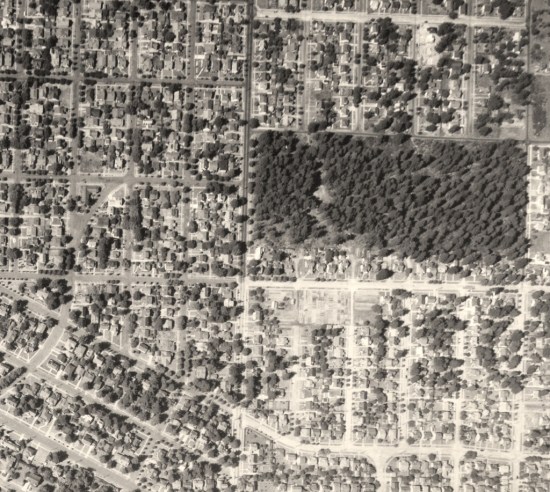
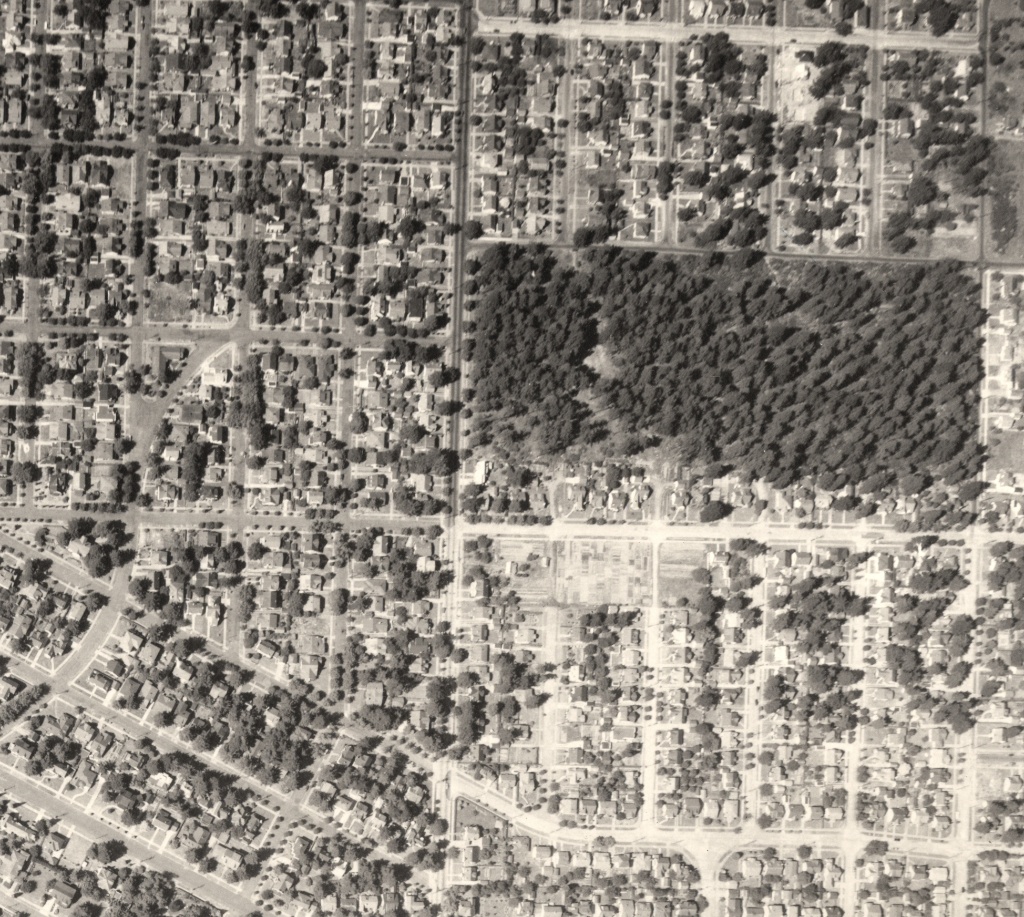
This detail of an aerial photograph from 1943 shows the 15 acres of trees and rough trails. Though the city owned the parcel at this time, there were no developments or facilities yet. Have a look at the rest of the young neighborhood…plenty of vacant lots.

The story goes quiet again, until a brief headline in the April 10, 1940 issue of The Oregonian: City Acquires Kamm Tract. The short, page 4 story reports only that the City Council took the action by emergency ordinance and was acquiring the land from the estate at a cost of $28,500, financed with a two-year loan from the First National Bank that would be paid off from city funds. Perhaps a development proposal led to the tipping point and the emergency action…that part of the story is untold. The public purchase of the property brought an important chapter to a close, and secured the land for the future.

However, almost as if the neighborhood needed something more to fight about, controversy boiled again in February 1941 about naming the newly acquired parcel, with some wanting to call it Jacob Kamm Park, which stemmed from a proposal made by the Sons and Daughters of Pioneers. The majority of surrounding neighbors lined up behind a proposal to call it Wilshire Park. After several stormy meetings on the topic, City Council agreed with the neighbors and adopted Wilshire Park as the official name.
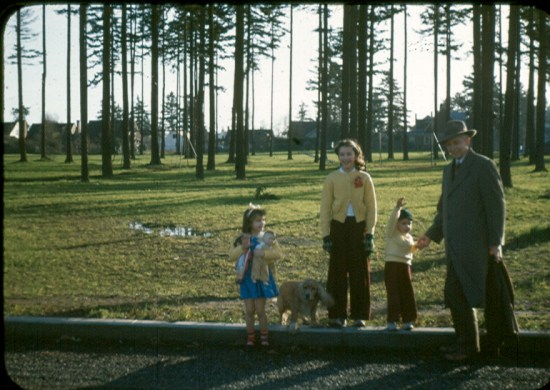
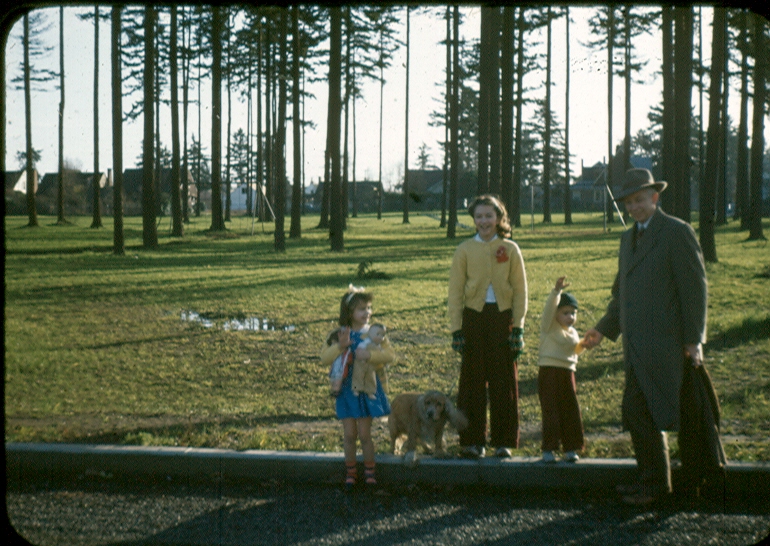
The Hamnett family on the north side of Wilshire Park, looking south, 1948. Note the gravel surface of NE Skidmore street. Photo courtesy of John Hamnett.

By 1950, the city had cut and removed much of the underbrush, constructed the ball diamonds still in place today, and even built a playground, which featured among other things, old Fire Engine Number 2, a 1918 model that was finally decommissioned from service at the SW 3rd and Glisan fire house.

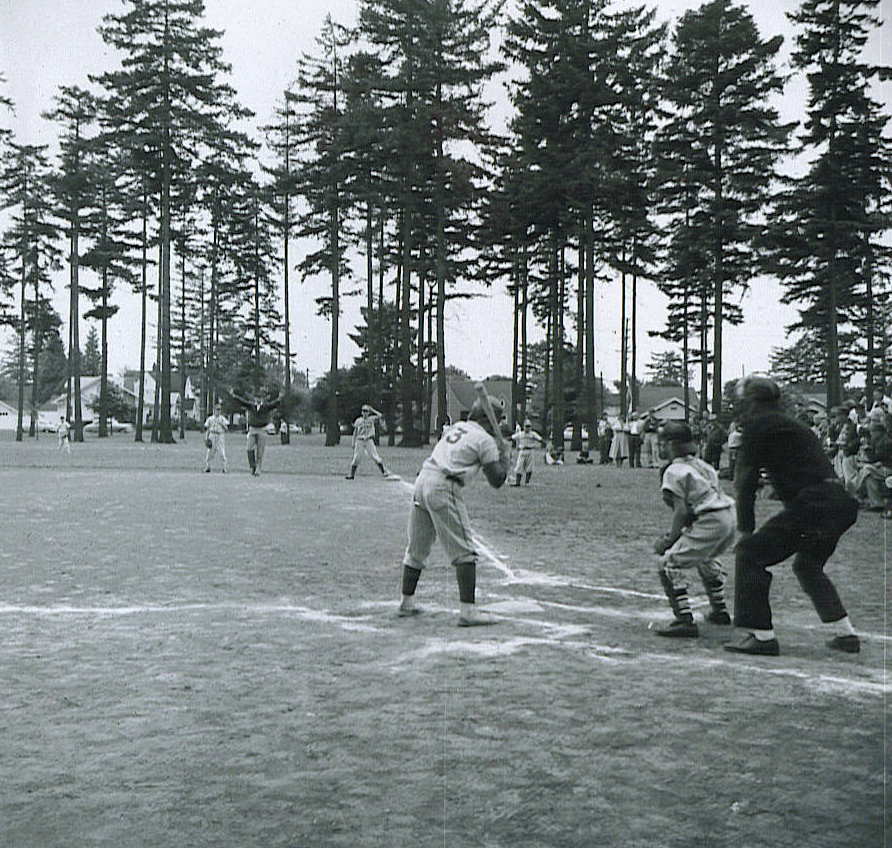
Wilshire Park baseball game, 1956. Looking west.

Many other memories remain about the park, including the family that lived in a home at the far southeast corner of the woods around the turn of the last century; Christmas trees cut in the 1920s and 1930s from the “33rd Street Woods;” the jackstrawed piles of trees and branches left over from the Columbus Day storm of 1962; the generations of baseball players, soccer players, runners and dog walkers who have loved this place.
Proposed Alameda Auto Camp Meets Protest

The first chapter of the Wilshire Park story…


Faithful Alameda History blog readers will know that protests were not uncommon in the early years of our neighborhood life, usually around schools and churches, and frequently about land use topics. Property owners had sought out this subdivision for many reasons, including a covenant that prohibited all but residential development within the Alameda Park plat proper. You couldn’t build a store or office. You could barely build a church, as we have seen.

Want to build a campground, or as they were known during the day, an auto camp? Forget it. This neighborhood was definitely not buying any such proposal.

Our timeframe for this vignette is the mid 1920s. We’ll remember that at this point, Alameda Park is experiencing exponential growth…the previous few years outpacing all other years combined. There was much new construction, but still many vacant lots, some brush fields, and a sense that while we were the “Tuxedo of Portland,” as claimed in the real estate development ads, we were still on the outskirts of Portland.

That’s when our predecessors first learned about a proposal to build an auto campground right here on our doorstep at 33rd and Mason.

The 15-acre wooded parcel that is today’s Wilshire Park was then part of the Jacob Kamm estate. Kamm (1823-1912) was one of Portland’s wealthiest residents, making his fortunes in the steam navigation business. He also dabbled in real estate investment and had strategically purchased parcels downtown and at the edges of Portland, including the 15 acres of woods just north of the Alameda Ridge. When he died in 1912, his estate was valued at $4 million. Sorting out the estate took years and was frequently in the press. Up here in Alameda, Kamm’s trees kept growing.

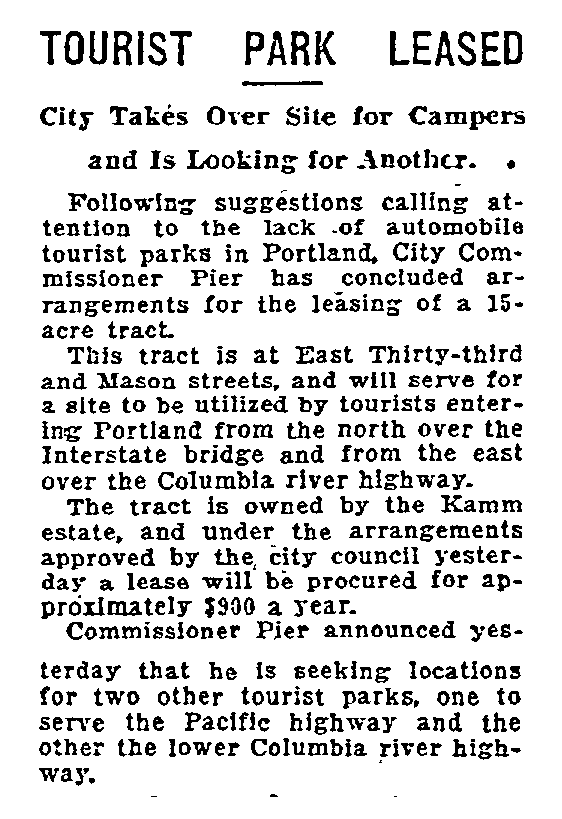
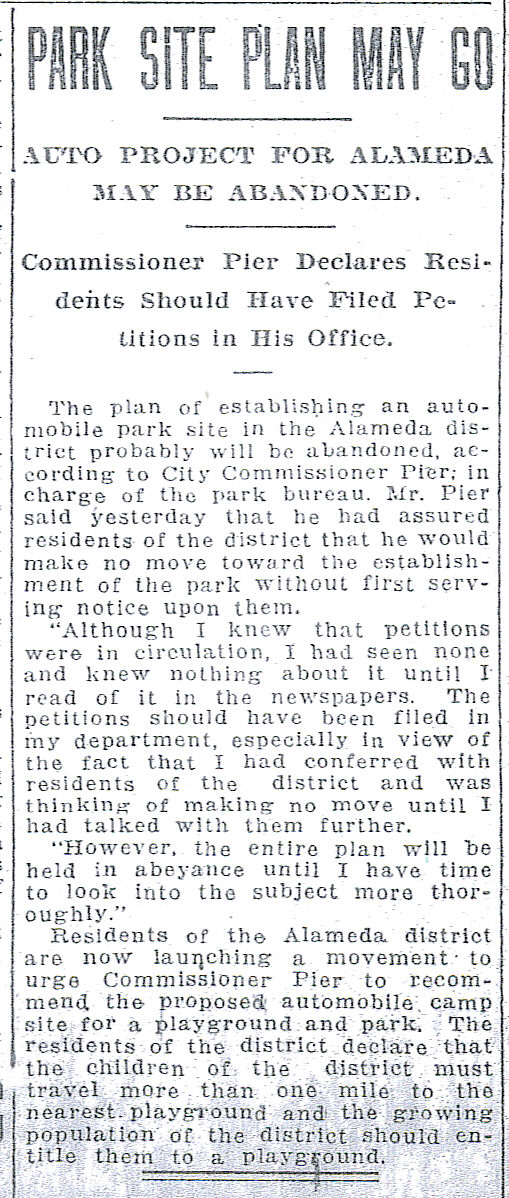
So when a plan came along to do something with the property, reported in an innocuous story in the September 12, 1920 edition of The Oregonian, some readers may have just looked at it as another business pitch. Commissioner Stanhope S. Pier was in charge of this idea:


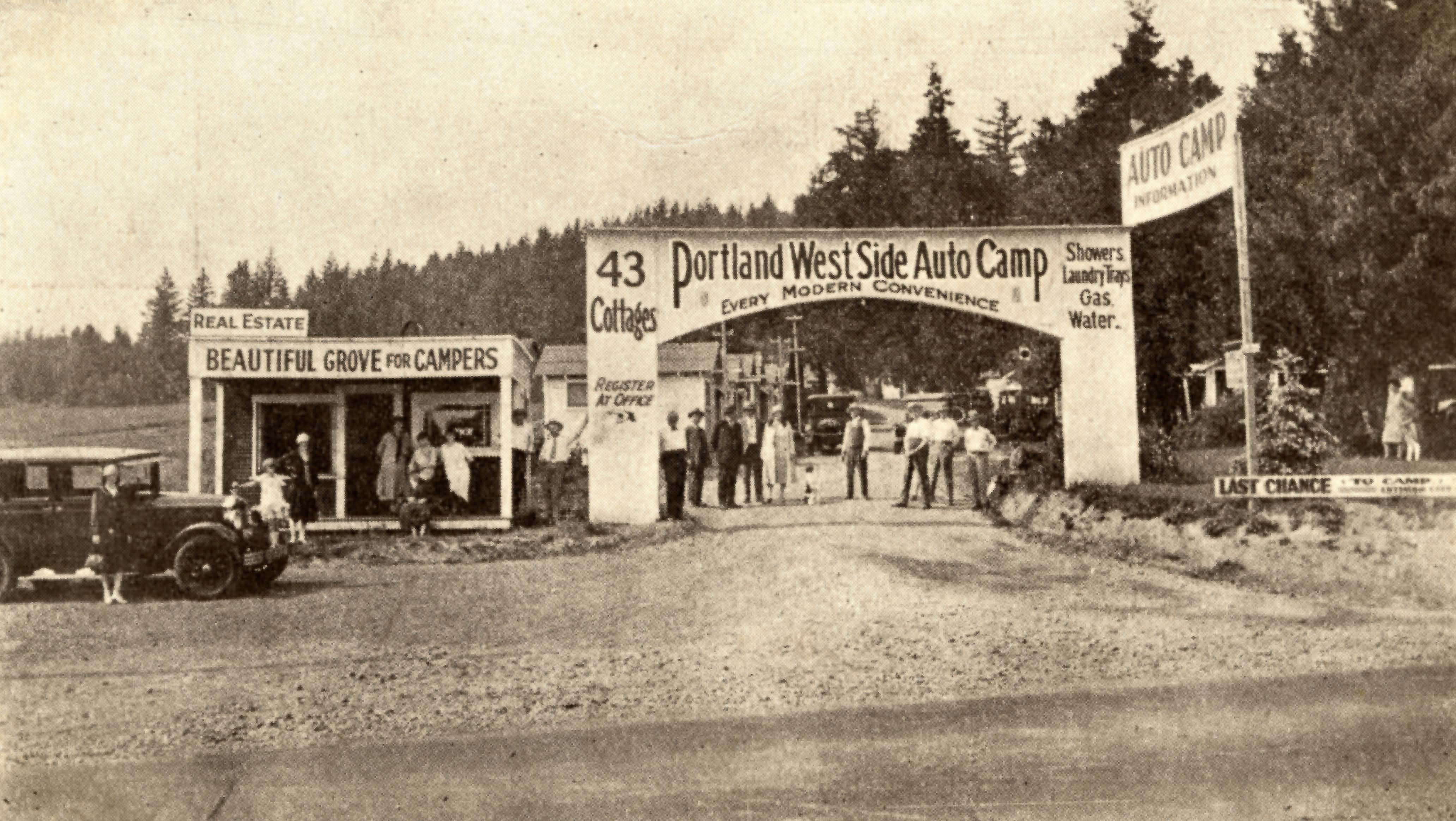
Tourist parks or auto camps were not that uncommon here in Portland and elsewhere. The car was a new toy and tool, and as people traveled the countryside, they needed a place to land temporarily as they explored the area. Think of a KOA campground. Let’s just say that auto camps were in the public consciousness of the day: an enjoyable, convenient and necessary extension of car travel. Here’s a photo from the City of Portland Archives showing one such camp in 1925, somewhere on the Westside.


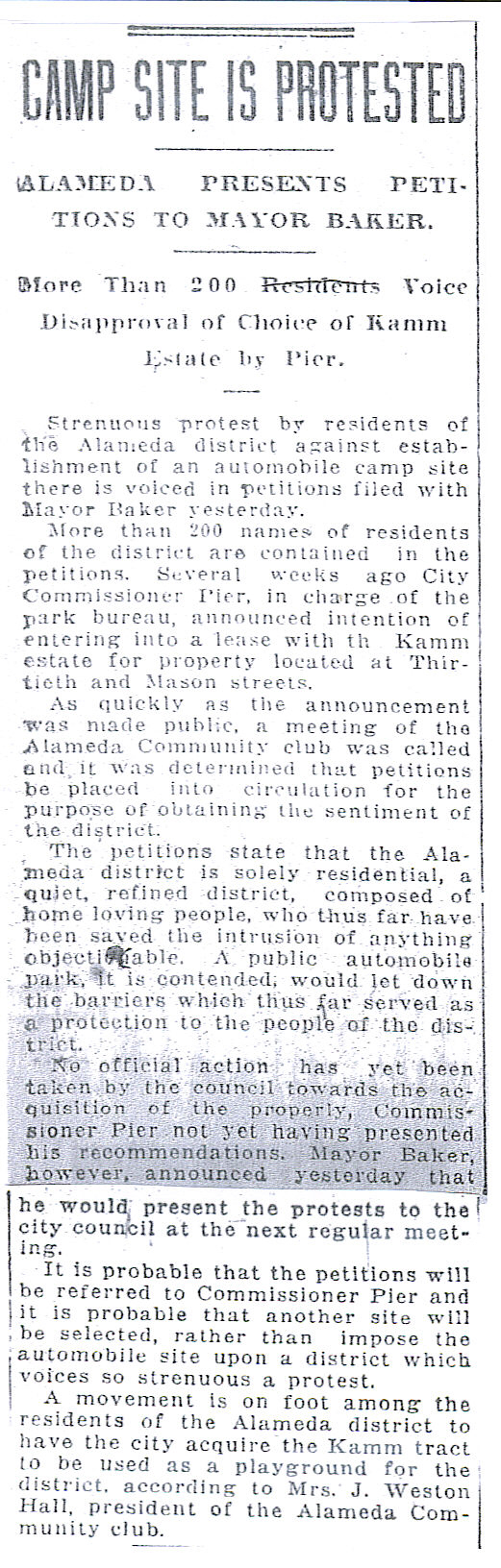
But after reading the September 12th story, it took Alameda residents only a matter of hours to get up a protest to Commissioner Pier, which eventually turned into a petition drive and then a forceful meeting with Mayor Baker and City Council. In The Oregonian story from October 7, 1920 below, be sure to have a look at the fourth paragraph and its description of Alameda as a “quiet, refined district, composed of a home loving people…”


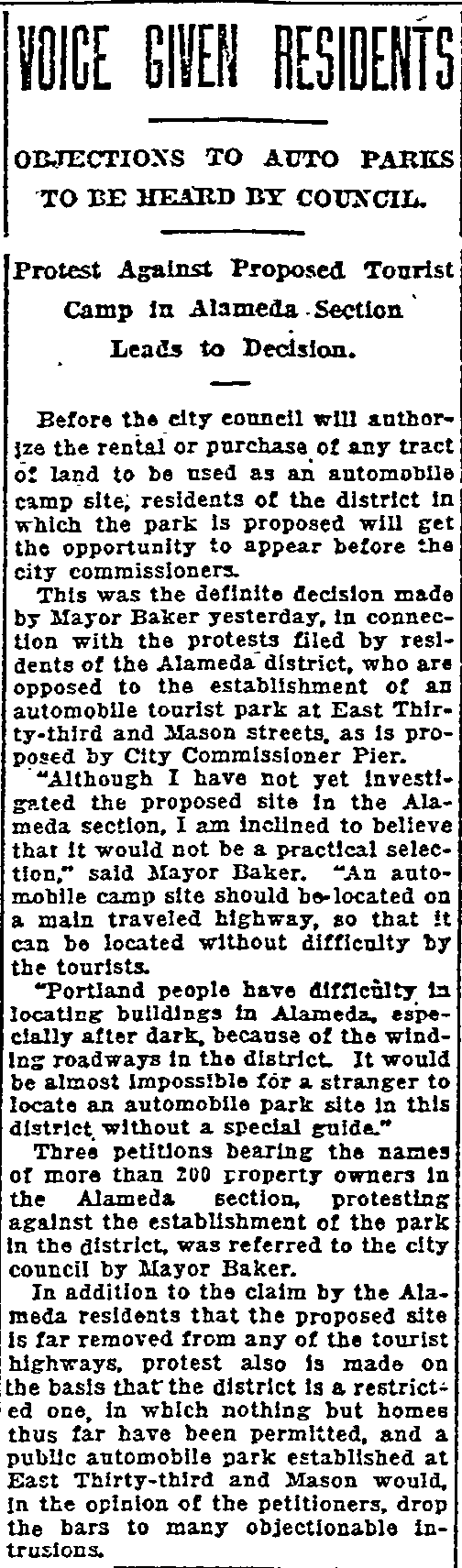
Faced with a petition and local uproar, City Council had to schedule some time to let Alameda vent and make its case. Below, in the story the next day, October 8, 1920, check out the fourth paragraph, where a description of Alameda’s winding streets, considered an asset by some developers, is spun as a liability when it comes to serving the needs of the traveling public.


In the following day’s story, with some plausible deniability and backpedalling by Pier, City Council quickly reversed direction on the plan and endorsed the neighborhood notion of playgrounds and open parks.


Eventually, the city found property and built an auto park near Peninsula Park in the vicinity of Ainsworth and Albina. Here’s another photograph. The topic of the Kamm Estate goes quiet then, resurfacing six years later in the September 10, 1926 edition of The Oregonian (below)as one of several city park needs being considered.


It would take another seven years until 1933—with the property still connected to the Kamm estate—that the city would seriously consider the idea.

Next Chapter: Conflicts about Paying for the Park

Time Passes in Alameda

Walking through the neighborhood during these cold evenings at the end of the year always puts us in a mind to reflect on the passage of time. While we think we know this place, and that this is our neighborhood, there are so many stories and layers of history lurking around every corner here — most of which are lost to time, but a few of which we can find and examine.

When we find reference to a small tree planted more than a hundred years ago to mark the far corner of a farmer’s field, and can go to the actual giant today; when we find the place in the house where the first family gathered around the piano, and can stand in the room and imagine the music and laughter; when we learn about the orchards and tall trees atop the ridge, and can walk in the evenings appreciating where they once stood; experiences like these bring us in touch with our past and are about as close to time travel as possible. They are a fringe benefit of studying the history, and of paying attention to the small things that layer up and give meaning to the passage of time.

And they are a reminder to each of us of our temporary nature here: stewardship of these old homes and their histories is our responsibility at the moment, but in a blink this will be someone else’s story, just as it was for generations before us.

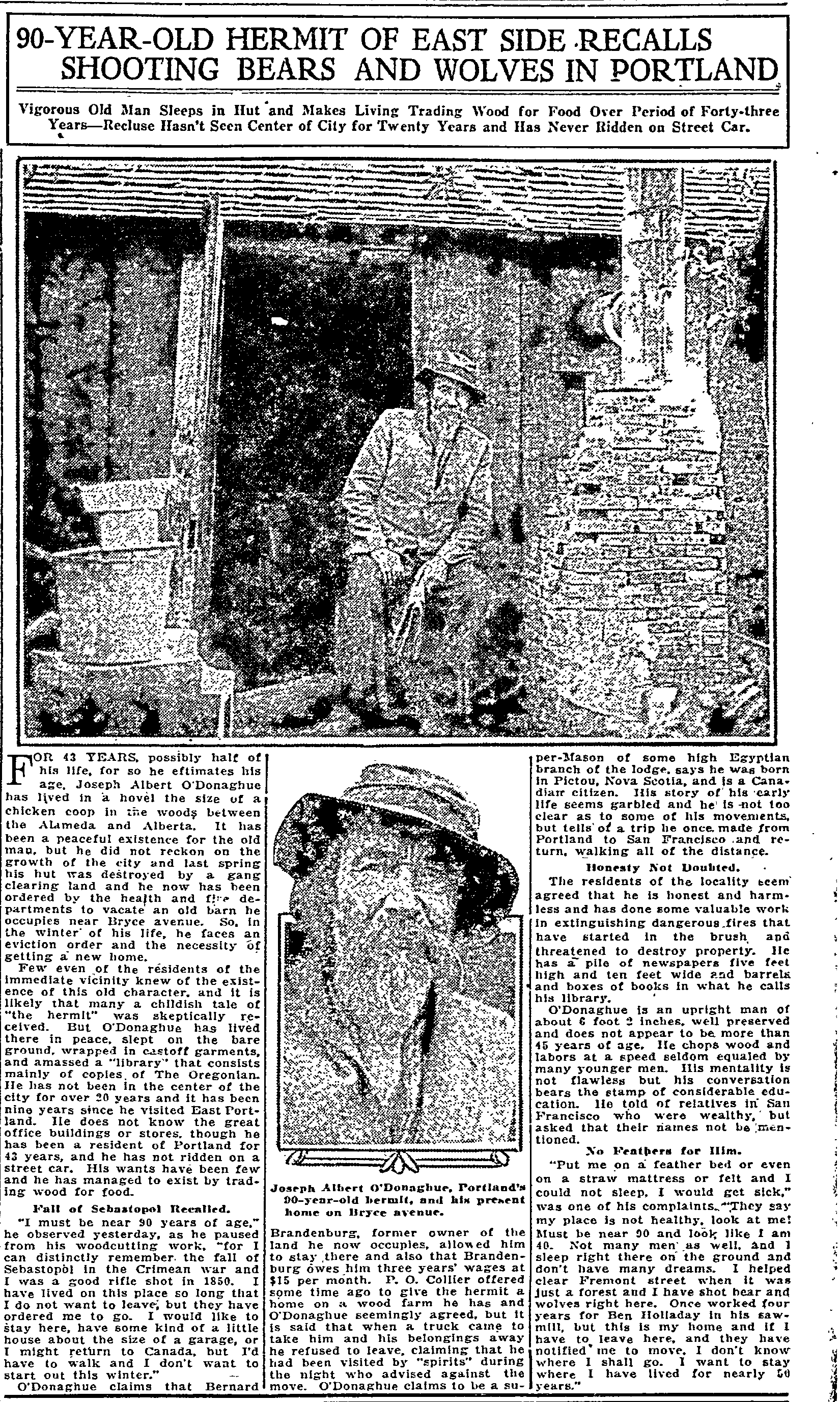
Here’s a little gem we found recently that we’ll pass along as a New Years treat for faithful readers. From The Oregonian on September 18, 1921, the story focuses on local “hermit” Joseph Albert O’Donaghue, who reportedly lived in a shack here in Alameda on Bryce Street. A grain of salt is probably helpful as you track old Joe’s story, travels and age. But even if it seems a long shot that he was hanging around the Alameda Ridge back in the 1880s, the fact is he had been living for a while in the brush near today’s Bryce Street when the reporter found him. That’s enough to reset our mental picture of the neighborhood we think we know, and to feed our imagination.

Think about this the next time you’re out on an evening stroll up Bryce on a cold night at the end of the year.

Click on the story above for a larger view of the file, or the link below to download a PDF copy.

9-18-1921 Hermit lives in woods near Alameda

Alameda History Presentation Planned for Sunday afternoon, January 23rd

We’re hosting a Sunday afternoon presentation of “The Alameda Neighborhood: It’s Founding and Early Life,” here in the neighborhood at the Subud Center, 3185 NE Regents, on Sunday, January 23rd from 3:00-4:15. The free program involves pictures, maps, and stories from past residents that provide a sense of neighborhood life from 1909 til the 1950s. We’ve presented the popular program recently for the Architectural Heritage Center and wanted to bring it home to the neighborhood so Alameda residents could learn more about their local history . To RSVP or for more information, drop us a note at doug@alamedahistory.org or on the phone at 503-901-5510.

Readers of the blog will know that the Subud Center was formerly known as the Alameda Park Community Church and was often used by the neighborhood for public activities, scout meetings, dances and other get-togethers. A Sunday afternoon gathering there to focus on neighborhood history seems fitting. If you haven’t been in the building before, this will be the perfect excuse to come and look around, say hello to neighbors, and appreciate our local history.

Coffee and cookies will be served. Drop us a note if you plan to come so we have enough!

Alameda’s Commercial Corner | 24th and Fremont

Looking southwest at the corner of NE 24th and Fremont, early 1920s. Note delivery bike visible behind power pole. OrHi 49061.

There was a time when the building we know today as the home of Lucca and Garden Fever—at the southwest corner of 24th and Fremont—looked after most of the neighborhood’s needs for grocery and personal goods. Alameda Pharmacy, Alameda Grocery, John Rumpakis’s Alameda Shoe Repair, even the dentist’s office, upstairs above the pharmacy, were neighborhood landmarks that everyone knew, shopped in, and pretty much took for granted (except the ice cream sodas at the pharmacy which were supposed to be legendary). The pharmacy and grocery even provided a delivery-by-bicycle option for homemakers who needed a few small items, but couldn’t get out of the house. It was a win-win situation for Alameda and for the local family-owned business during those early years.

To be sure, some shopping needs were taken care of away from the neighborhood. Even then, there were smaller markets or “convenience” style stores of the day located within walking distance (see this post on the Davis Dairy Store, one such locally-owned convenience market). Built in 1922 during the peak of neighborhood construction, the Alameda Grocery commercial building at 24th and Fremont quite literally had a corner on the market.

That is, until the mid 1930s, when a fully-built-out neighborhood with a growing population, combined with a slowly recovering economy and new trends in shopping, opened up new opportunities for big business which began to shape the corner.

Enter the Safeway Corporation: a publicly-traded rampant success story, with headquarters in Oakland, California and more than 3,200 chain stores nationwide. The company’s penetration of local grocery markets was so complete that by 1935, many states around the country were passing legislation—urged by local merchants who were getting slammed by Safeway chain stores—that taxed the huge company’s local operations to discourage competition.

But not in Portland. By 1937, Safeway had 54 stores here, including 46 stores located in eastside neighborhoods, and even one on the doorstep of Alameda at the southwest corner of NE 24th and Broadway (today it’s Brake Team, an auto service garage) built in 1936. Most of these stores were modest in size, and not like the sprawling stores we know today. Undoubtedly, the local Safeway on Broadway cut into the market share of Alameda Grocery. But nothing like what happened starting in 1938.

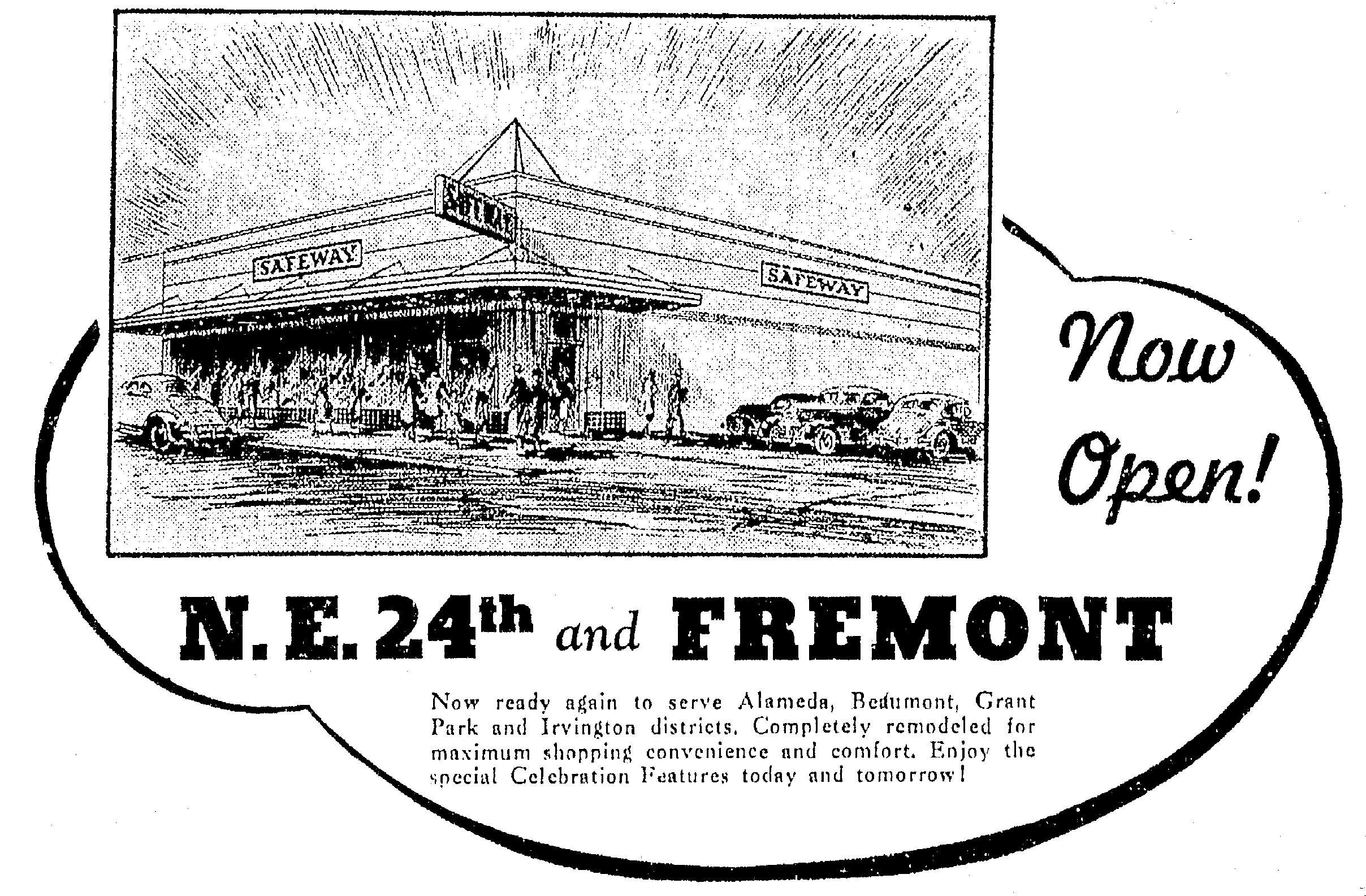
Click on the image for a larger view. This ad is from The Oregonian on September 13, 1940 announcing a remodel and reopening of the Alameda Safeway.

On July 16, 1938, Safeway opened a store in the building we know today as the home of Alameda Dental and Frontier Bank on the southeast corner of the intersection. The property had been leased from the Albers Brothers Milling Company, who incidentally also owned the Alameda grocery and pharmacy building across the street. Retail activity in the single-storey 50-by-100 foot concrete Safeway building began to take a big bite out of Alameda Grocery’s market share.

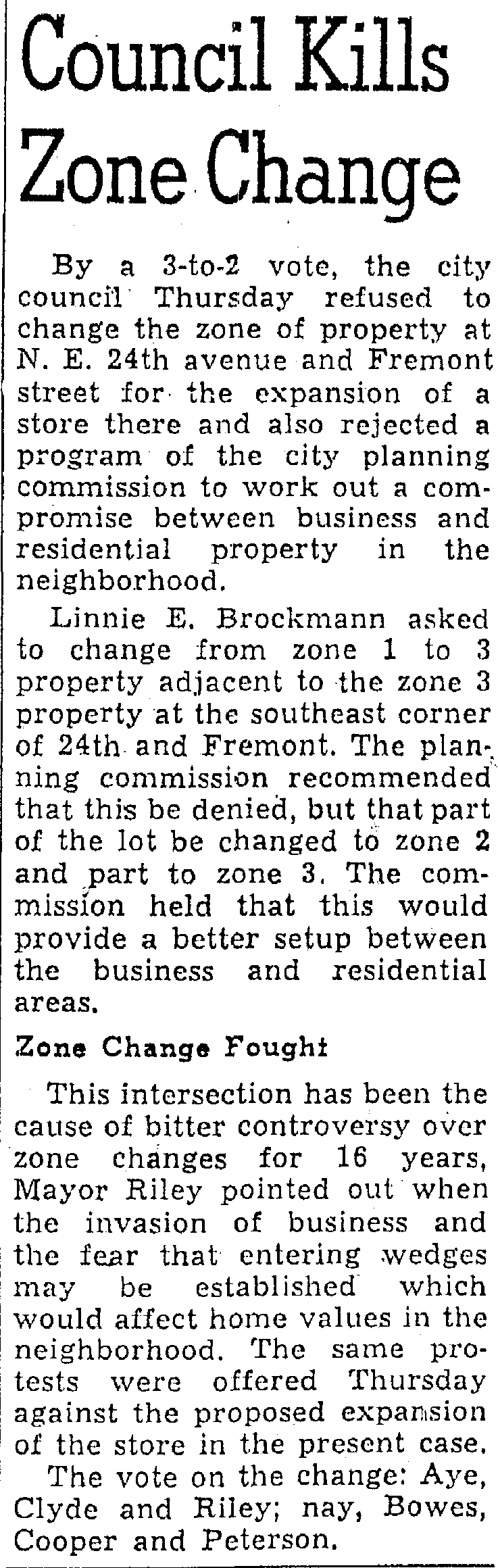
By 1940, Safeway expanded and remodeled, while Alameda Grocery across the street struggled to hold on. About that time, Safeway made plans to expand beyond the footprint of the existing store to take in the entire north end of the block. But as The Oregonian reported on March 20, 1942, the Portland City Council narrowly defeated a zoning change that would have allowed this major expansion. Despite voicing concerns about home values in the neighborhood, Mayor Earl Riley voted to expand the commercial zoning to permit the Safeway expansion:

From The Oregonian, March 20, 1942.

Safeway’s expansion into residential neighborhoods was not a phenomenon isolated to Alameda. Blog reader and longtime Grant Park resident John Hamnett writes that in nearby Grant Park, local residents fought a pitched battle with the City of Portland regarding a plan to build a Safeway adjacent to the Grant Park Grocery, a similar locally-owned market at the southwest corner of NE 33rd and Knott. The vision for that zone change took in all of the southwest corner, and further considered zoning the entire intersection commercial at all four corners. In May 1942, City Council voted 4-1 to allow the Safeway development. Incredulous neighbors protested time and again concerned about their property values, but the City would not relent. Finally, in March 1943, neighbors filed suit against the city for allowing the zone change, and won in a clear decision handed down by Circuit Judge Walter L. Tooze.

Back at NE 24th and Fremont, two gas stations were added on the northwest and northeast corners—the true portal of the Alameda Park subdivision (today site of a parking lot, and Perry’s on Fremont). Generational and ownership changes were remaking the anchor businesses on the south side of the street as well. Eventually, as Safeway’s business model changed (fewer, larger stores instead of the 50-foot by 100-foot businesses sprinkled all over Portland), the former Safeway store went back to being a family-owned business, loved and known by a generation of Alamedans as Brandel’s. Nature’s Fresh Northwest (or simply “Natures”) eventually took over the Alameda Grocery building. And today, after a string of unsuccessful restaurant tenants, Lucca seems to have hit its stride.

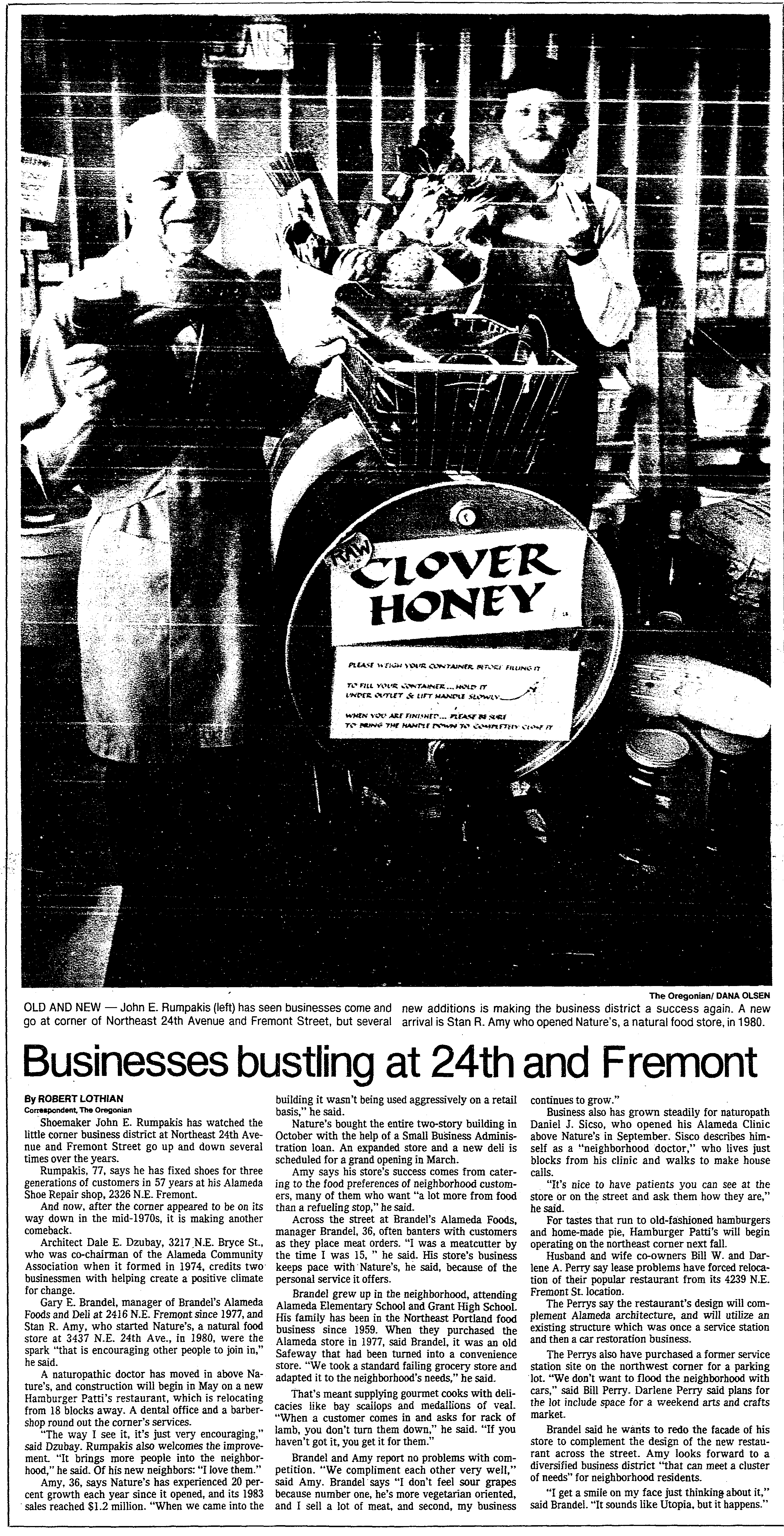
Check out this story from The Oregonian on January 17, 1984, which is a snapshot as the corner transitioned from some difficult times in the 1970s to the place we know today:

From The Oregonian, January 17, 1984. Click on the image for a larger view.

We still miss Brandel’s and the ease of slipping into that old Safeway building for a gallon of milk on the way home. But every time we pass through that intersection, we pause for a moment to think about how our neighborhood geography could have turned out quite differently.

A hill with a lot of history…

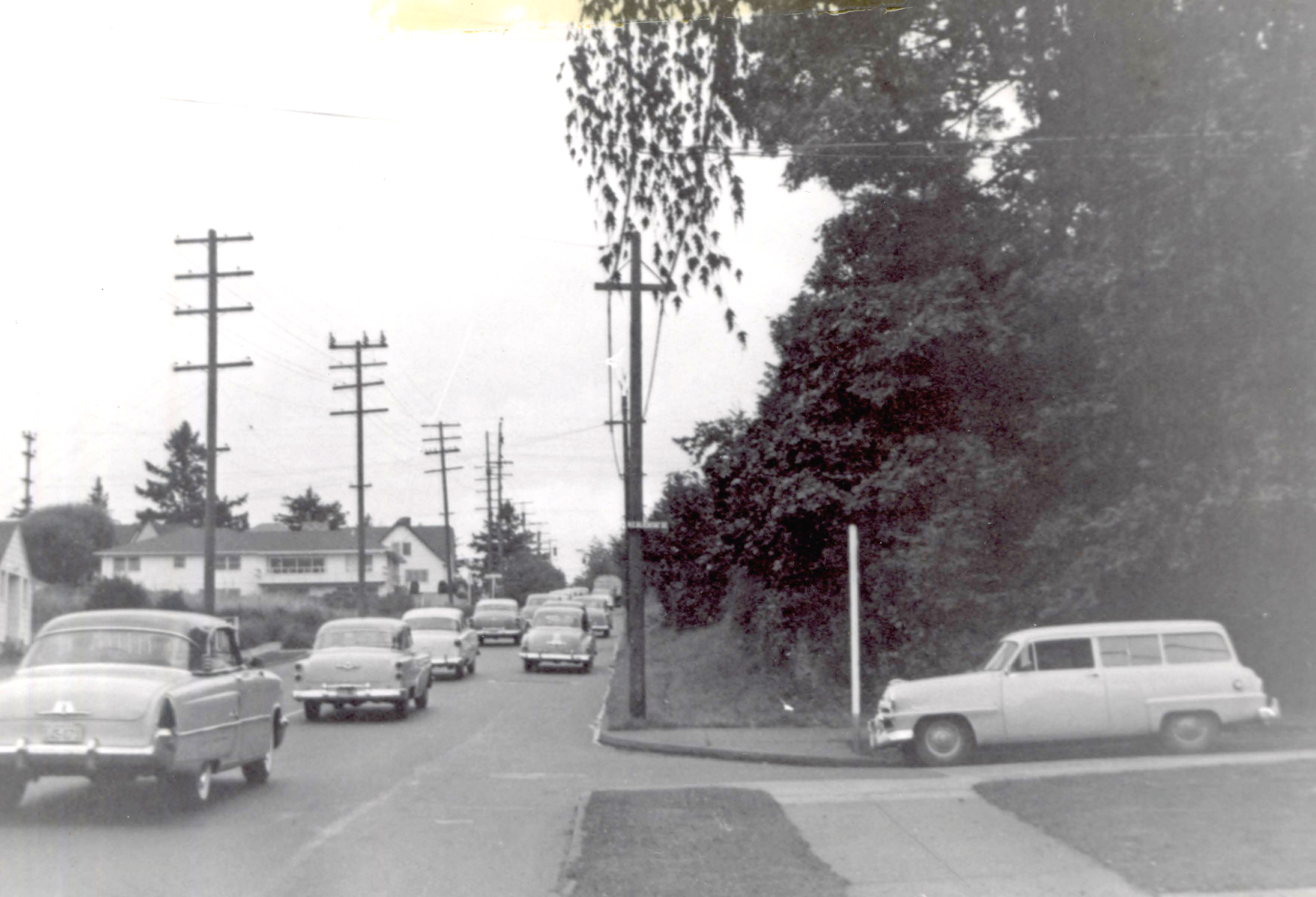
Check out this view looking north up the hill at NE 33rd and Fremont–Gravelly Hill–taken at Klickitat Street in 1954.

Photo Courtesy of City of Portland Archives, image A2005-001.955. Click for a larger view.

Two lanes of traffic northbound, and those were the days of the wide-body car. And you think it’s a tight fit today!

Have a good look around and you’ll see the house on the southwest corner, a Roman-brick ranch with swimming pool that collapsed in the late 1980s and early 1990s. You’ll also see that the brush and trees on the east side of the street are still there, just a little bigger today. Street signs have changed style since then. The upslope houses on the west side of the street haven’t been built yet.

Way back, this was the summit of Gravelly Hill, a one-time gravel pit and garbage dump for east Portland. The contributing factor to the demise of the former home that occupied the southwest corner was the underlying instability of the slope due to the gravelly soils and the not-fully-compacted refuse the house was built upon.

We’re working on a careful look at the history of Gravelly Hill and found this photo fascinating. Believe it or not, we’ve found news stories in The Oregonian from the early 1900s that refer to fox hunts (as in social groups of people on horseback with dogs riding about the countryside) that began and ended at the base of this hill. Farmers and fruitgrowers tilled the soil here for a generation perfecting new breeds of strawberries and apples. Boxing matches were held out this way, far beyond the edges of the city, in a barn perched on the hillside. And residents who wanted more space around them lived and died out here in the country where they could appreciate the view from Gravelly Hill.

Let’s just say that it’s a hill with a lot of history.

And today, just like half a century ago, it’s still a busy intersection, one of the neighborhood’s most dangerous, and one of our least favorites.

With thanks to the Stanley Parr Archives at the City of Portland for this photo from the past.

Activist Parents and the Origin of Alameda School

We’ve written in the past about Alameda School and the portable buildings that preceded it. To be clear, there is much more to learn and write about the school itself, but recently we’ve come across some information that will make you want to go stand at the corner of NE 25th and Fremont and imagine a different reality (that’s a big part of what history is all about for us…trying to reassemble the pieces).

And since it’s the start of the school year, what better time to pause for a moment to think about our favorite local school?

We’ll remember that in 1914, the Alameda Park neighborhood was a blank slate with streets and curbs in, but less than 80 homes built. Still, there were kids, and parents who organized to push for the School Board to build a local school.

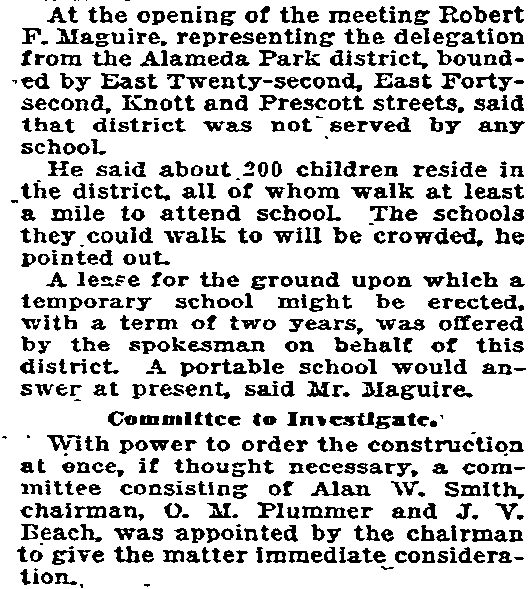
On September 3, 1914, the Board heard from a delegation of Alameda parents, and received a promise for further action:

From The Oregonian, September 4, 1914

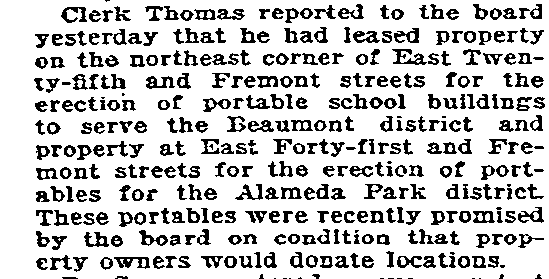
Construction of Kennedy School on NE 33rd was underway which may well have just served to irritate Alameda parents, who felt there should be a school here too. By October, the Board was ready to provide a temporary solution, leasing a 200-foot by 500-foot lot on the northeast corner of 25th and Fremont for several temporary buildings:

From The Oregonian, October 2, 1914. Interesting unrelated note: the writer refers to the “overlap” area (see post from August 24th) as Alameda Park.

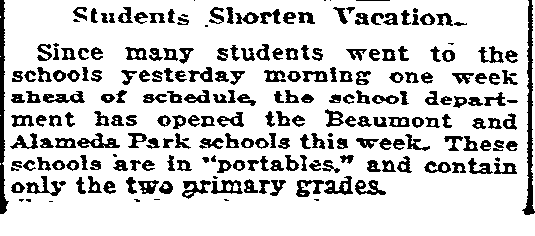
By Thanksgiving week 1914, the buildings were in and so were the kids:

From The Oregonian, November 24, 1914

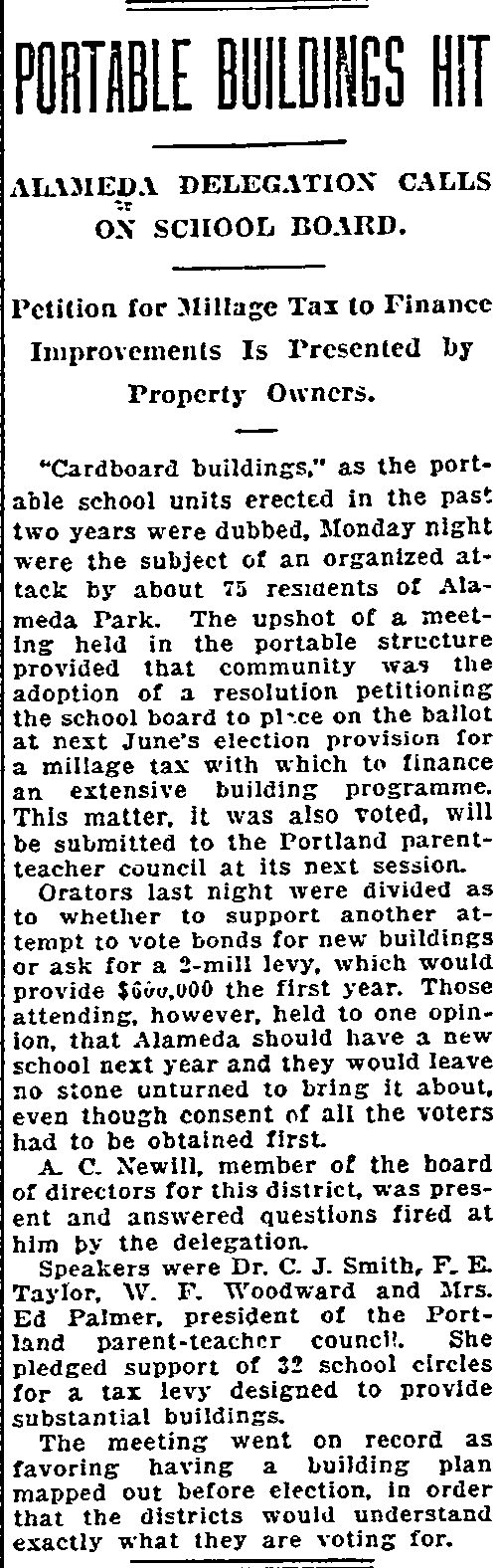
Over the next several years, the portables multiplied into a compound of buildings and by October 1919, Alameda parents (there were more of them by now) held a rally of sorts, signed a petition and expressed their readiness to levy a tax against themselves to build a building:

From The Oregonian, October 29, 1919. Note that additional portables had been added to the mix since the first two in 1914.

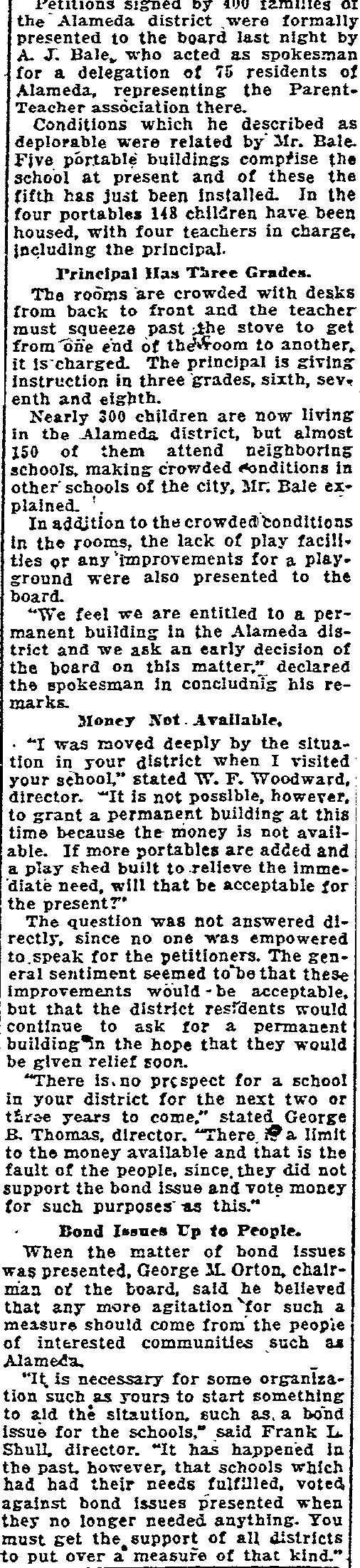
On an interesting side note, Dr. C.J. Smith was a notable Alamedan who while serving as the President of the State Health Board was nominated by the Democratic Party to run for Governor against James Withycombe in the election of 1914. The Smith family was very active in Alameda community affairs. Despite his pleas and the voices of the community, when school started in 1920, the Alameda portables were bursting at the seams with nearly 150 students. Something had to be done. By mid-October 1920, School Board Director W.F. Woodward had been to see the hardships, and parents submitted more petitions.

From The Oregonian, October 15, 1920

Which is exactly what they did. A bond issue was passed and school construction began to catch up with the growing student population across Portland. One year later, on October 27, 1921, the School Board selected a contractor and construction soon followed leading to the school we know today (the building of which is another story for another day).

The following year, homes were built on the property where the portables stood. In fact, there may be a few missing pieces to the story about the location of the portables. The northeast corner of 25th and Fremont has had a house on it since 1919. Perhaps the reporter meant the northwest corner of 25th and Fremont, though we’ve seen multiple references to that northeast corner. Possibly by the early 1920s, the portables were moved onto the current school site–which was a dairy pasture–as the neighborhood expanded.

Regardless, it’s an inspiring story about neighbors making a difference. And it still makes us wonder what the corner of 25th and Fremont looked like with six portable buildings and 150 students. And tip our hat to the parents of the day who helped make it happen.

Alameda History Program Scheduled: Saturday October 23

If you’re like us as we turn the corner into fall, we’re mapping out the next few months and trying to fit in all the family goings on, important programs and events we want to be sure to take in.

Here’s one for your calendar: We’re presenting a program on the history of the Alameda neighborhood at the Architectural Heritage Center on the morning of Saturday, October 23rd. It’s an encore presentation of a sold-out program we gave in January of this year, but with some added new research from the last nine months.

The program is entitled “The Alameda Neighborhood: It’s Founding and Early Life.” We believe all who attended enjoyed it, and we certainly enjoyed the many conversations it spawned afterwards.

The Architectural Heritage Center hasn’t posted their fall listing of programs yet, but when they do, you’ll be able to register for the Alameda program on-line. Stay tuned for that. In the meantime, save the date.

Hope you can join us for a trip back through time…

Vintage Portland Photographs

We’d like to recommend a great local website that will feed your curiosity about Portland history: www.vintageportland.wordpress.com

This excellent site, which launched last November, features a steady parade of high resolution photos that you’ll want to look at close-up for clues to the past and the present. We like to download the photos and then explore them in detail. Look closely and you might see the person in the upstairs window. Or the guy in the distance staring at the photographer from under his fedora. Or the amazing wolf’s head frieze on the cornice of the downtown building.

Taken together they offer a sense of just how much we’ve inherited from the past, how much has been lost, and the importance of recognizing the stewardship role we have at this moment in time to be a bridge between past, present and future.

Keep an eye out there and you might even see a shot or two from the Alameda Park neighborhood! For future reference, we’ve added a link to Vintage Portland on the links sidebar in the lower right side of this page.