Wilshire Market Building Comes Back to Life

We’ve been watching with interest as the remodel work progresses at Wilshire Market (3707 NE Fremont). The term remodel might be a bit modest for the amount of work going on there, stripping the building back to its barest bones, but keeping some of its most interesting aspects.
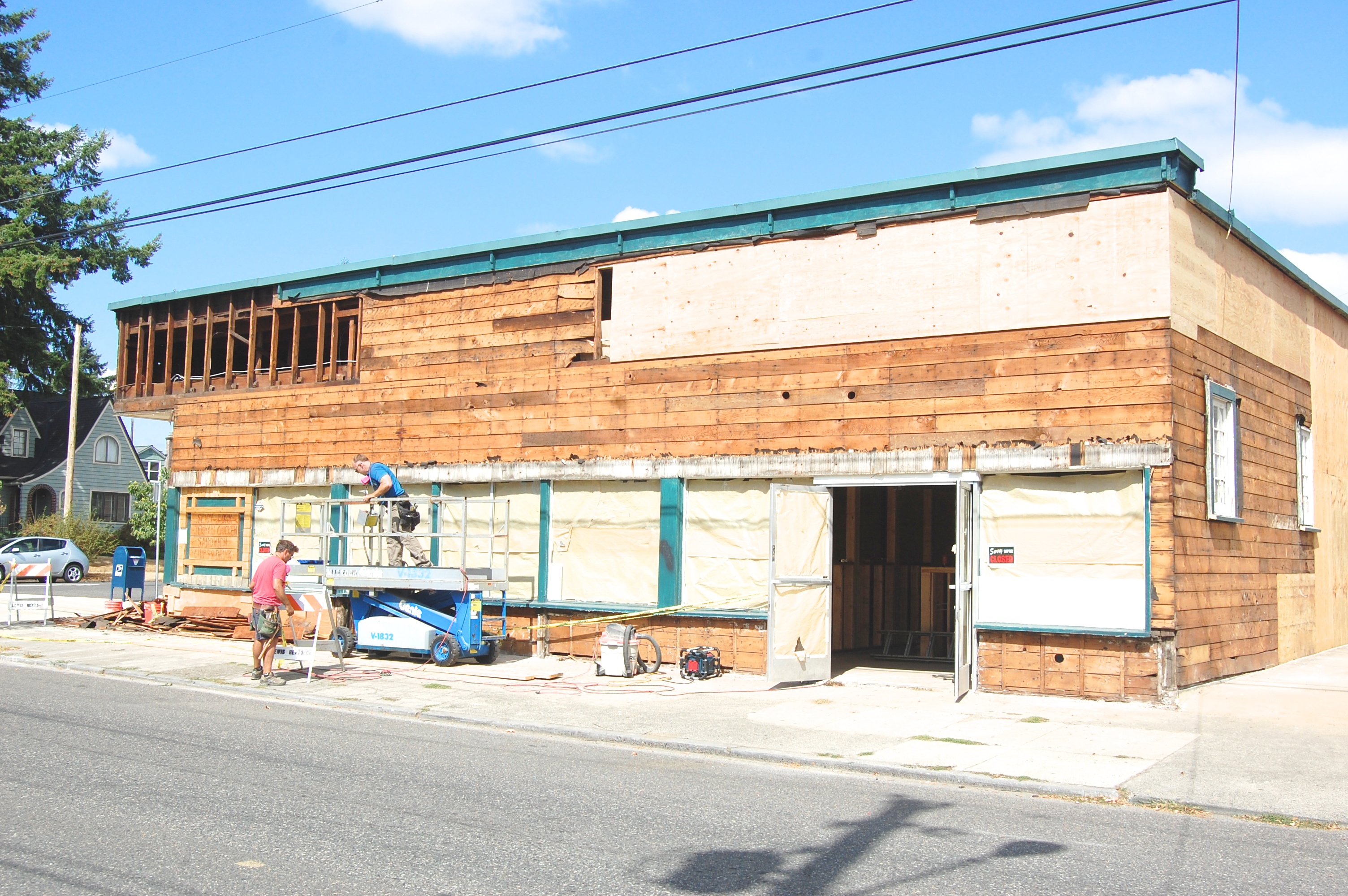
9-13-14 South Face

Remodel might also imply that it’s going to continue being Wilshire Market, which we know not to be the case. Business owner Jeff Smalley is in the process of transforming the building into Fire and Stone, a wood-fired bakery and café. As a nearby neighbor, we’re looking forward to that part, as well as being able to see and appreciate some of the original components of the building.

We dropped in for a visit with Jeff this week and were amazed at what we saw, and at his vision for the new business.

First, about the building.

Built in 1923 as the Wilshire Grocery and Market Inc. by partners Solomon N. Barrigar and Albert P. Mumler, the business name has essentially stayed the same, but the building has had a few facelifts.

The front door, which we believe originally faced the corner, has moved around a bit. When deconstructing, Jeff and his carpenters found clues to other doorways: one in the middle of the south wall; the one that has been most recently used near the southeast corner; and a separate entrance in the northwest corner associated with a small pharmacy.
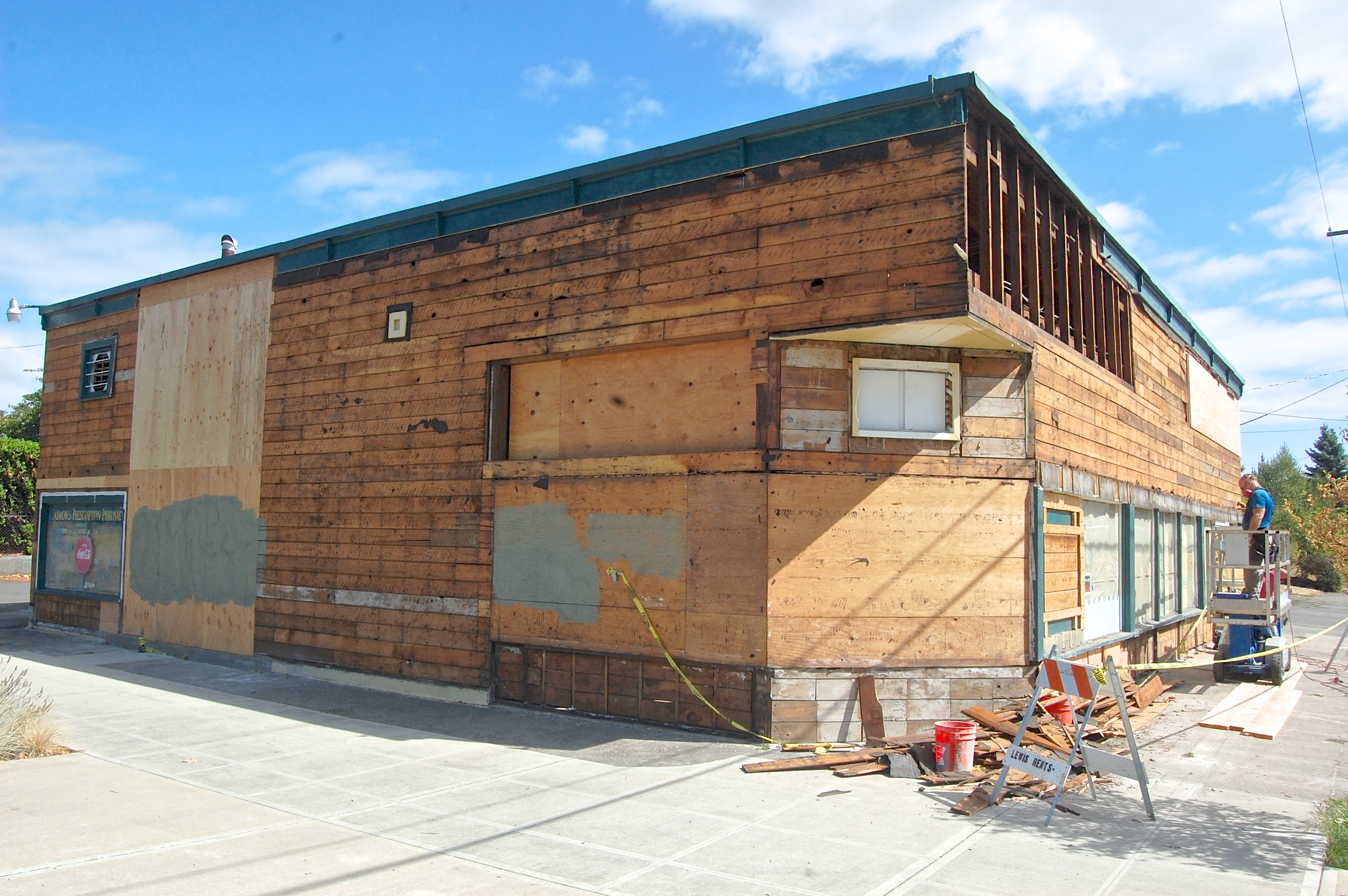
9-13-14 Corner

The once and future entrance at the corner of NE Alameda and Fremont. What was the original entrance to Wilshire Grocery and Market, will be the main entry to the new restaurant Fire and Stone, opening this fall.

The pharmacy has left another big clue: the window on the west side of the building, which you can see to the far left in the photo above. The former owners preserved the window and put it on display for passersby during work completed a few years back.

Padrow’s Dispensing Pharmacy shows up in newspaper advertisements and city directories from 1950-1960 as a business owned by Western Drug Company and in operation at its own address (3701 NE Fremont). How it related to Wilshire Market has so far been beyond anyone’s memory that we’ve spoken with (can any AH readers please shed light on that?), but by all accounts it had its own door–just to the right of the window–and its own identity separate from Wilshire Market.

A fascinating feature of this building buried for at least 50 years is a full set of transom-type windows running the length of the south and west walls above the main windows.
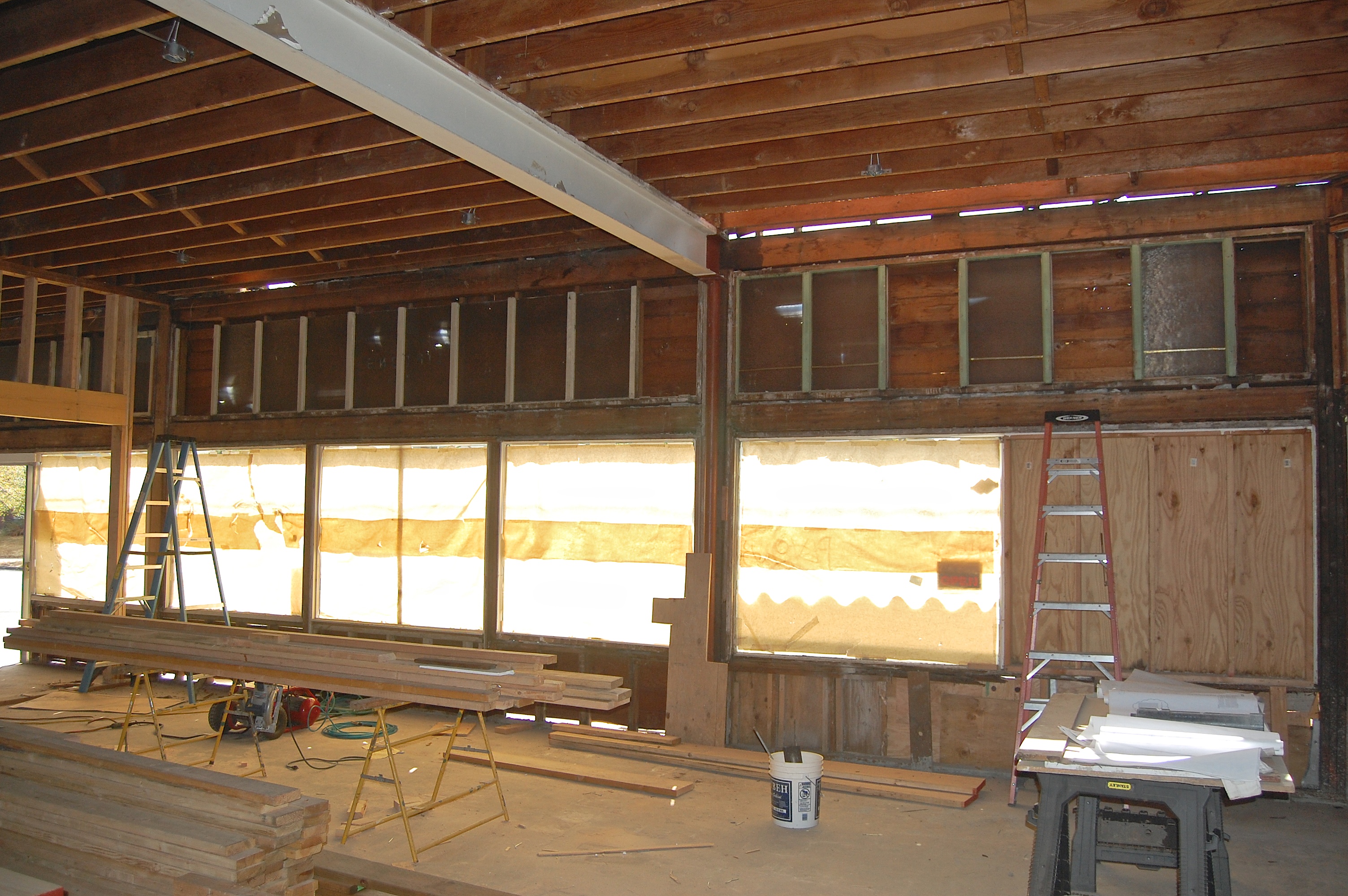
9-13-14 Inside looking south at windows

Looking at the south wall. Note the transom windows above the main windows: 36 panes in all.

They were covered up sometime in the 1940s or 1950s (educated guess) when other things were rearranged in the building (more on that in a moment). 36 of these transom windows tiled the entire south face of the building, prompting Jeff Smalley to observe that it must have been downright hot in the building during the summers. Maybe that’s why they were covered up long ago. Some of the transom windows on the west side had advertisements painted on them like this:
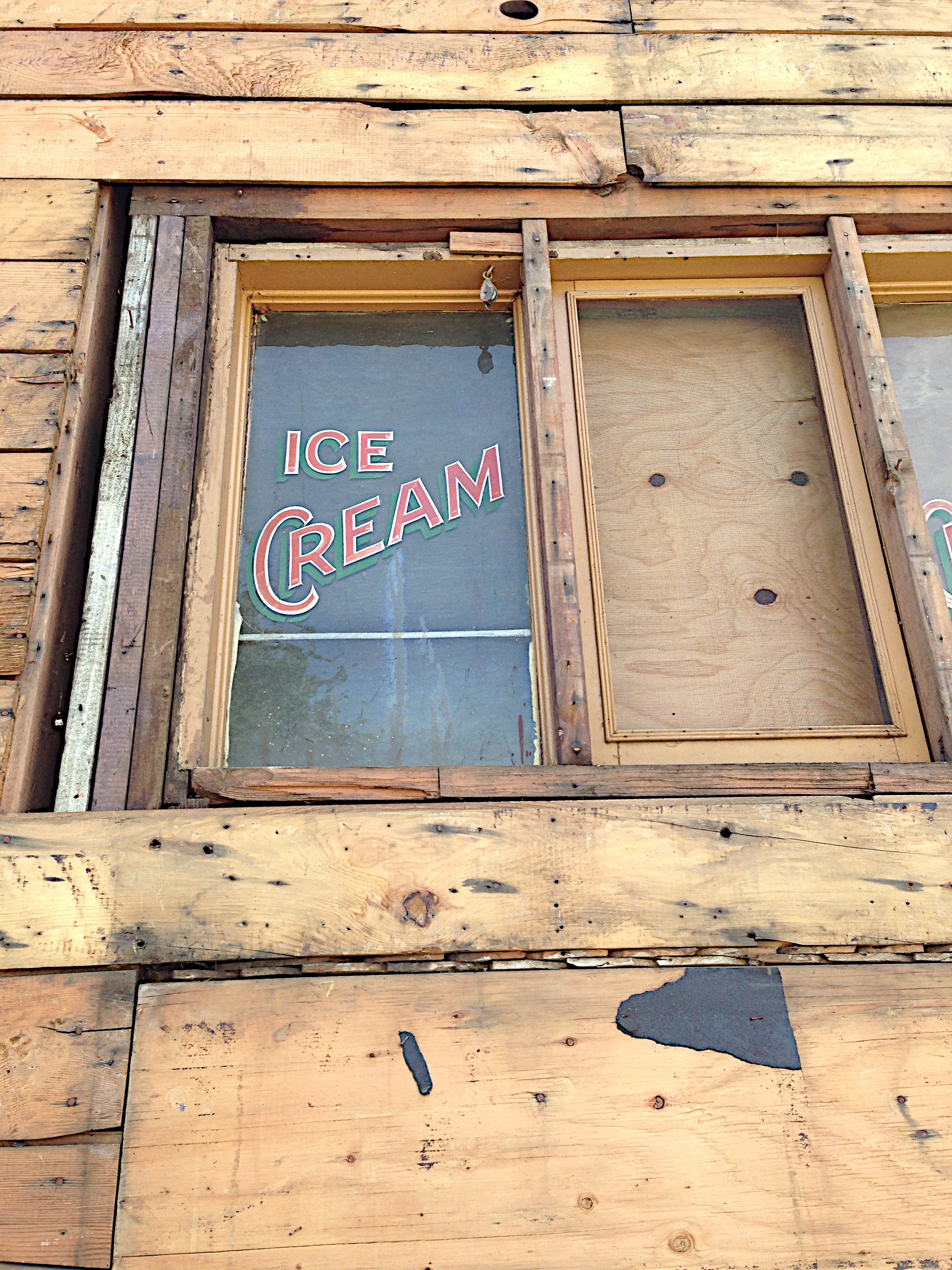
9-13-14 Ice Cream


Smalley has saved the hand-painted windows and will be displaying them inside the business. As for the transom windows, Smalley is liberating that space and opening it up again to light, though the original framing had to be replaced due to damage done during the rearranging a half-century or more ago.

Other rearranging done over the years included an addition to the north side of the building that added a residential apartment and storage area. In fact, the last proprietor of Wilshire Market lived on the premises. Smalley will utilize some of that space for storage and for employee break room space.

Do you have photos or favorite memories from Wilshire Market? Send them along and we’ll share them here.

Now, about the new business: Fire and Stone.
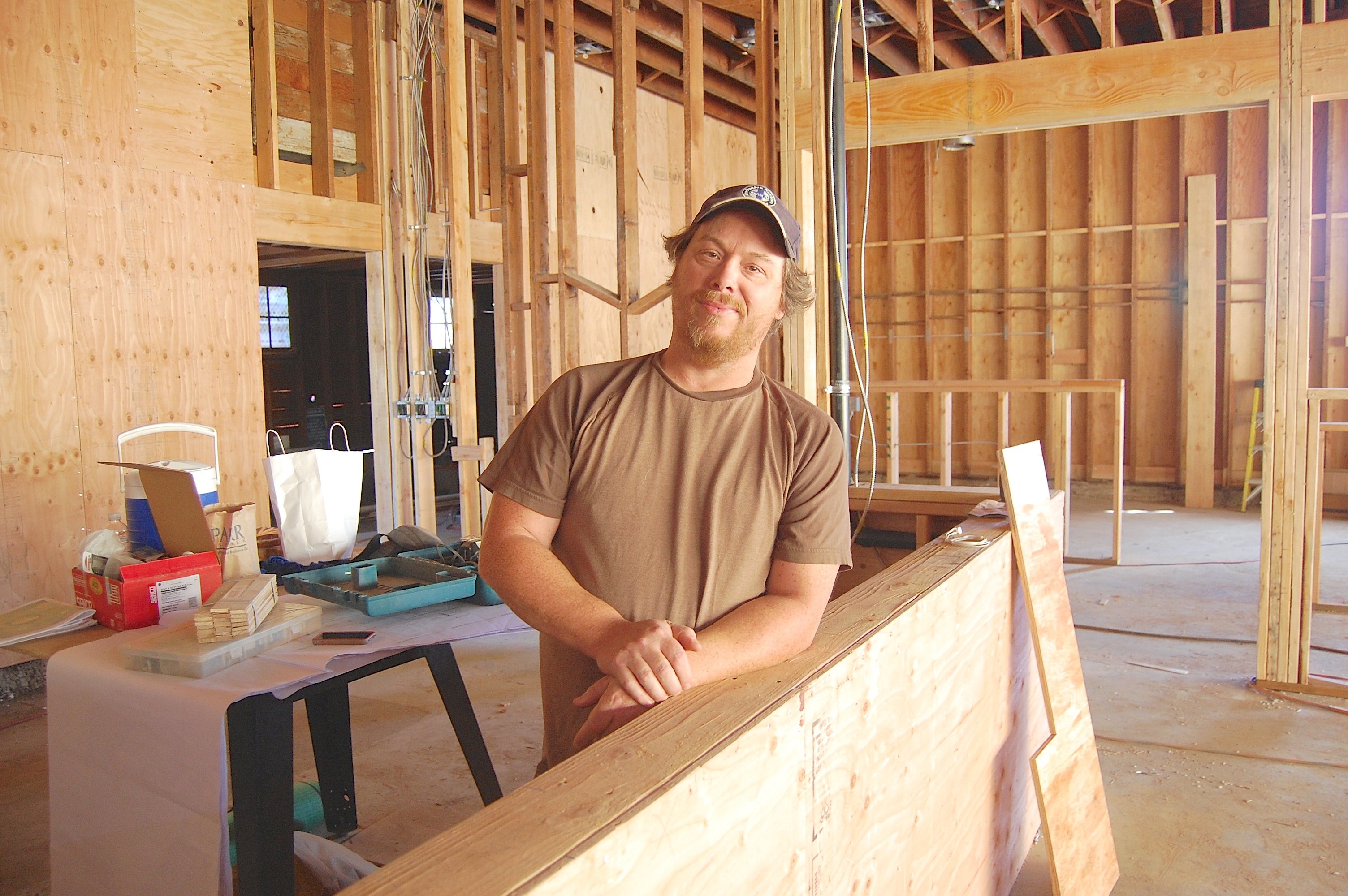
Jeff Smalley at the bar, Fire and Stone

 Jeff Smalley, owner, Fire and Stone.

First things first: Jeff Smalley has a history with bread. He spent seven years as a manager at Grand Central Bakery. He worked at Portland French Bakery, where he launched a new line of bread. And most recently, he was the bakery manager at New Seasons for the last seven years. Jeff knows his bread, and he knows good food. As a plus, he’s also learning a lot about old buildings.

Fire and Stone will feature a large wood-fired oven that is at the heart of the whole operation. A bakery and take-out area with its own entrance will reside at the southeast corner of the building. When you walk in the door—and from just about everywhere inside—you’ll be within sight of the big oven. Seating for 70 in the dining room and 10 seats at the bar should hold a good crowd, and during the summer, tables and chairs will be out on the sidewalk and large sliding windows along the south and west side will be open to the air. Jeff is adamant about being a good neighbor and about wanting the business to be a place where the neighborhood enjoys getting together for good food and conversation. He lives here too: the Smalley family has lived in the Cully neighborhood for 12 years, where Jeff and his wife have restored an older home.

A few other details Jeff pointed out during our recent visit: the tables, chairs and booths (under construction off-site right now) are all being made of seasoned, beautiful wood salvaged from a 100-year-old barn and fashioned in Prairie School and Mission style. The floors will be polished concrete, lending a slightly industrial feel. The exterior will be painted stucco. Inside, expect to see photos of Wilshire Market from the past, in-progress remodeling photos, and maybe even some history about the Beaumont and Alameda neighborhoods (ready when you are, Jeff).

Now for the $64 question: When will Fire and Stone open?

Jeff has been shooting for Labor Day all summer but with that come and gone, has readjusted his sights on the end of October. As an observer and participant in construction projects over the years (and as a lover of good bread), we hope he’s right but are thinking it’s looking more like Thanksgiving.

Whenever it’s ready, the business will add an attractive new venue for a get-together and good food, and serve as a place to remember and appreciate how the past has shaped today and the future.

Rails from the Past

When it comes to tangible Alameda history, few things are closer to the heart than the Broadway Streetcar. It defined our neighborhood for two generations, and linked us with friends, family and business across the city.

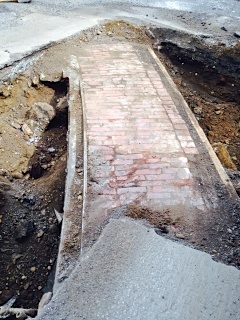
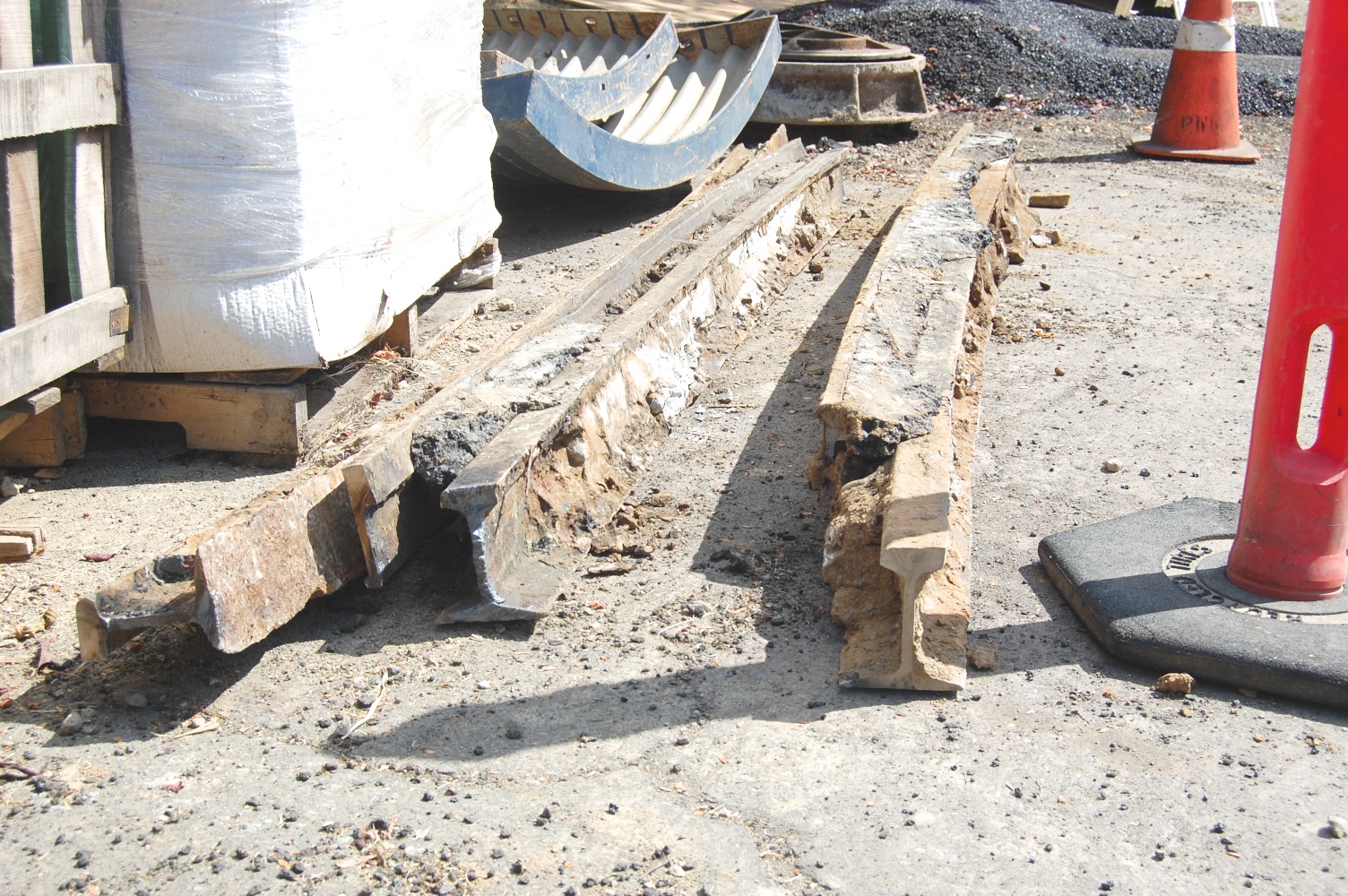
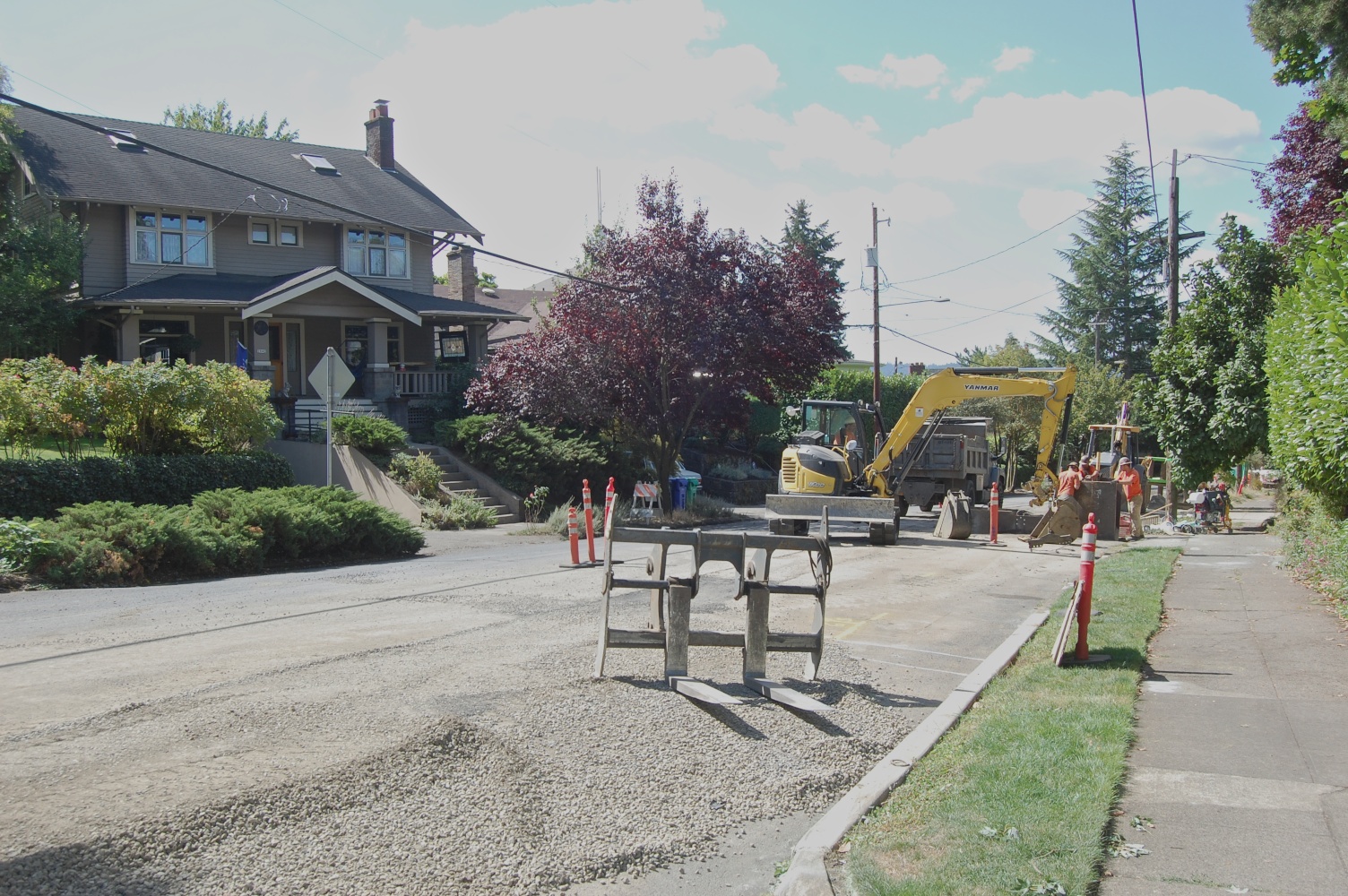
So it is with great interest that we have been watching the sewer upgrade work underway this week on Regents Hill. It’s been dusty and a little clunky with traffic control and lots of big equipment up and down the slope. But it’s also been revealing.

9-9-14 Top of Regents

This week, we stopped to visit with some of the workers, who are just as tuned into history as others of us are, in fact maybe more so. One of the guys told us, appreciatively, “we get a good look at history every day.” And when they find it, as in the case of the streetcar track and the fine brick work between the rails, they take note too. And take pictures. They know something special when they see it.

9-9-14 Rail and brick


Photo credit: Aaron Johns

Standing there near the top of the hill watching the equipment scrape off the asphalt revealing the fine brick work and rails, you can’t help but feel the nostalgia, the wonder about who crafted that stretch of street, all the stories that rolled over the top along those rails for almost 50 years. A kind of post-card from the past.

9-9-14 Rails

Learning More about the Tear-Down Trend

It’s been a quiet few months here on the Alameda History blog, but work has continued and the history radar has been tuned in to several topics and stories.

Like you, we have been watching with dismay as the trend of tear-downs has swept across the eastside. A changing market has meant that the value of the actual lot has eclipsed the value of some older homes, allowing developers to demolish and build new, and still make a profit margin. The result is typically larger, less historically appropriate homes shoe-horned into lots never designed to hold such large buildings. We’ve written a bit about this trend here in Alameda.

Clearly, this is a living and changing neighborhood—which we imagine few would object to. It is the prerogative of the present to redefine, reinterpret and reuse what the past has provided. Still, there are implications. And in our view there is the obligation we owe to the future to be thoughtful with the current and historic character of this 100-year-old-plus neighborhood.

The city is hosting a gathering to discuss this tear-down trend, existing pertinent ordinances, and where these trends may lead. We encourage our neighbors to participate. Here are the details:

Wednesday, June 11 2014, 6:30 to 8:30 pm at Concordia University’s Luther Hall, 2811 NE Holman.

Guest speakers from the City’s Bureau of Development Services, Bureau of Planning and Sustainability, home builders, housing and community organization will address:

  • What are the City’s regulations around residential tear-downs and new construction?
  • How do these trends affect neighborhood affordability, stability, and equity?
  • What are the environmental issues around the demolition of building?
  • What is attracting home builders?

This is an important topic that deserves attention and consideration.

Mark your calendar: Alameda History at the Mission Theater and Pub, Monday, January 13

After a pause in our ongoing quest and passion for Alameda history, we’re back on track in the New Year with a free program as part of the Oregon Encyclopedia History Night series, at 7:00 p.m., Monday, January 13 at the Mission Theater in Northwest Portland. Consider yourself invited.

In pictures and words, we’ll track the early development of Northeast Portland’s Alameda neighborhood, profile key builders and building styles, and share a social history of the homes, families and changing generations of this 100-plus-year-old neighborhood.

Come experience how these layers of local history add up to a deeper understanding of the neighborhood today. This updated presentation will touch on Alameda School, the Pearson Ponderosa Pine, Wilshire Park, the Subud Center/Alameda Park Community Church, the Broadway Streetcar and other institutions and businesses that have defined Alameda life over the years.

It’s free. The beer is good. You might see your neighbors and other history-inclined folks.

7:00 pm, Monday, January 13 at the Mission Theater, 1624 NW Glisan, Portland.

Saying Goodbye

IMG_0772


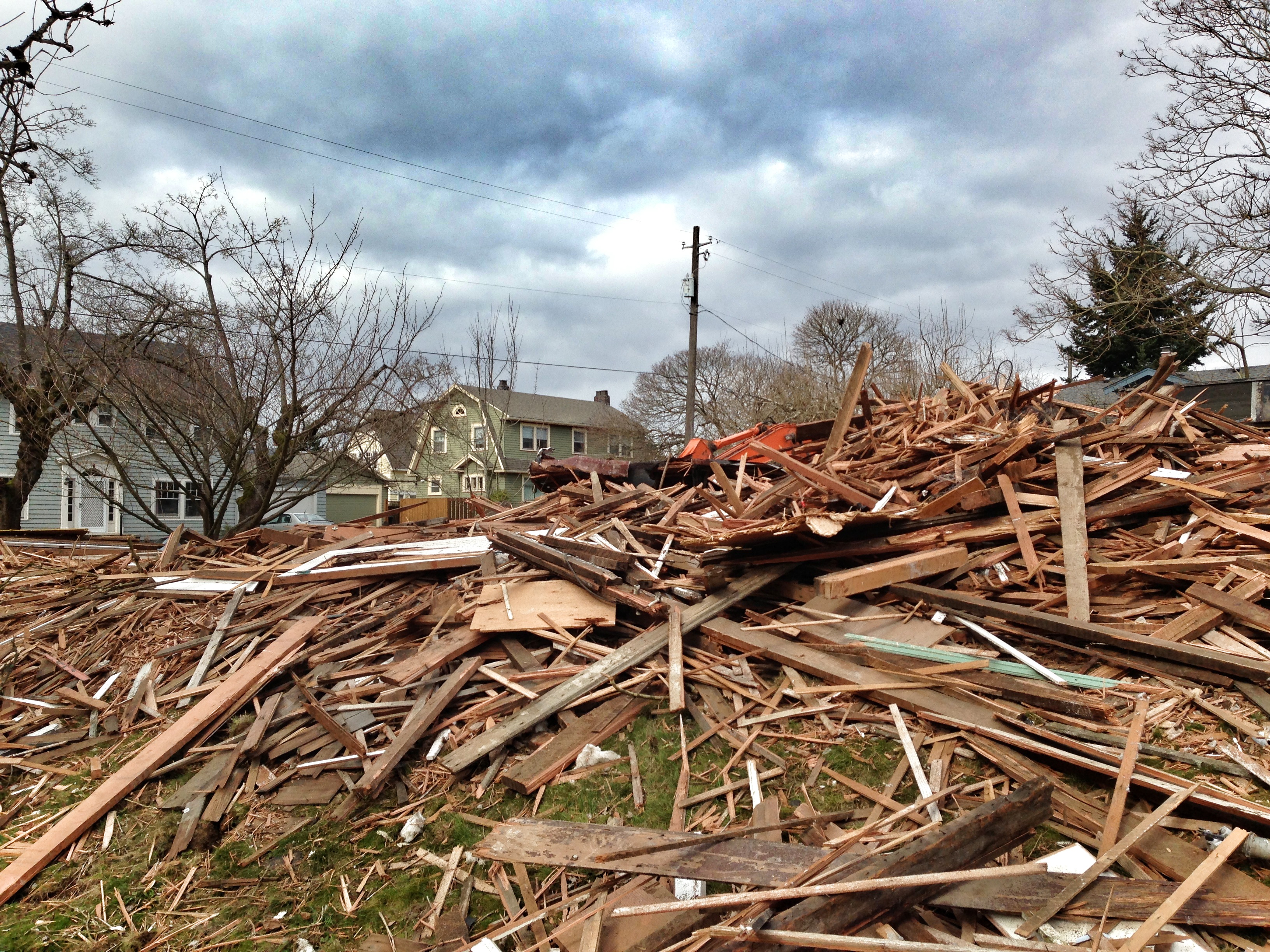
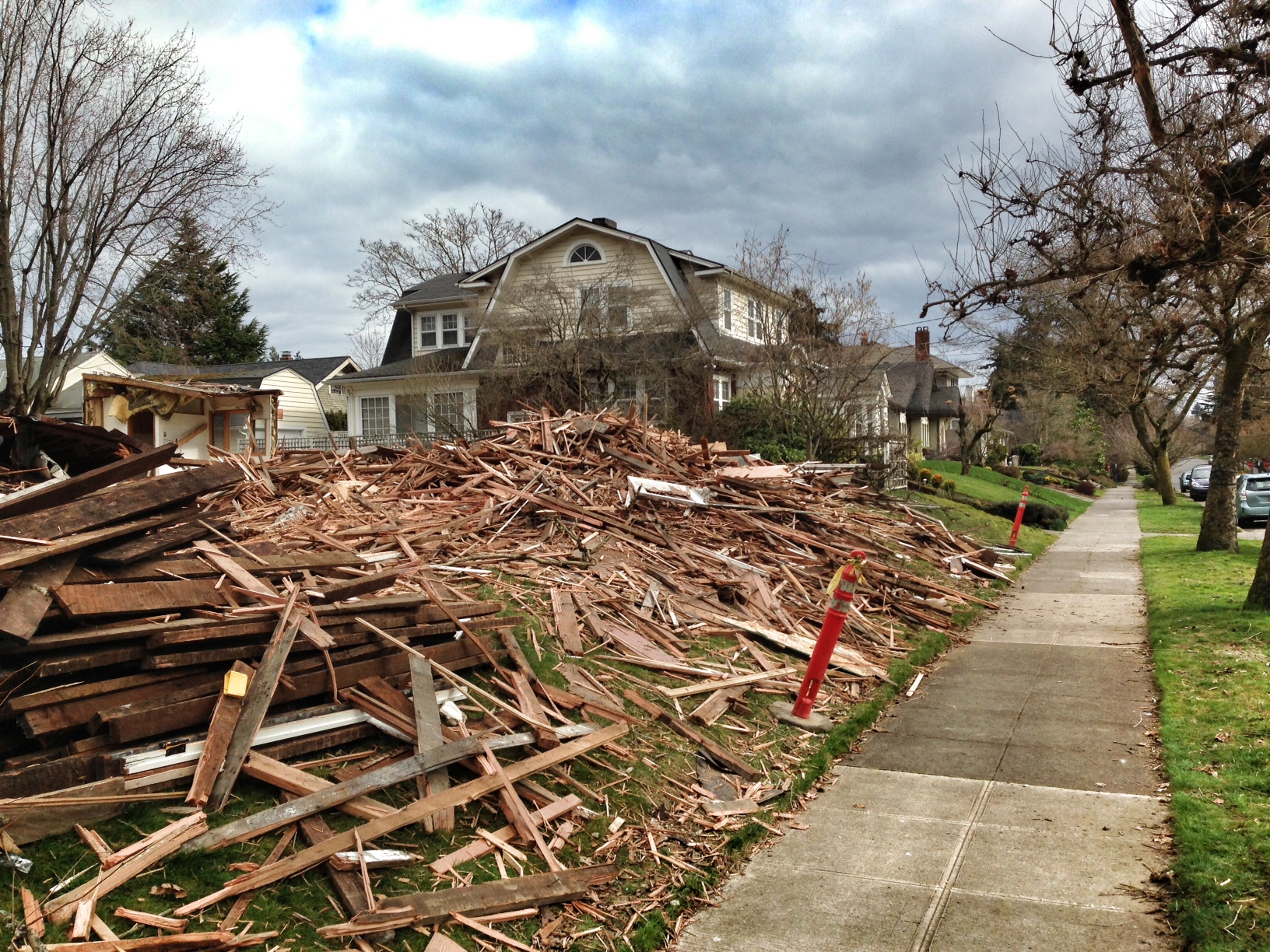
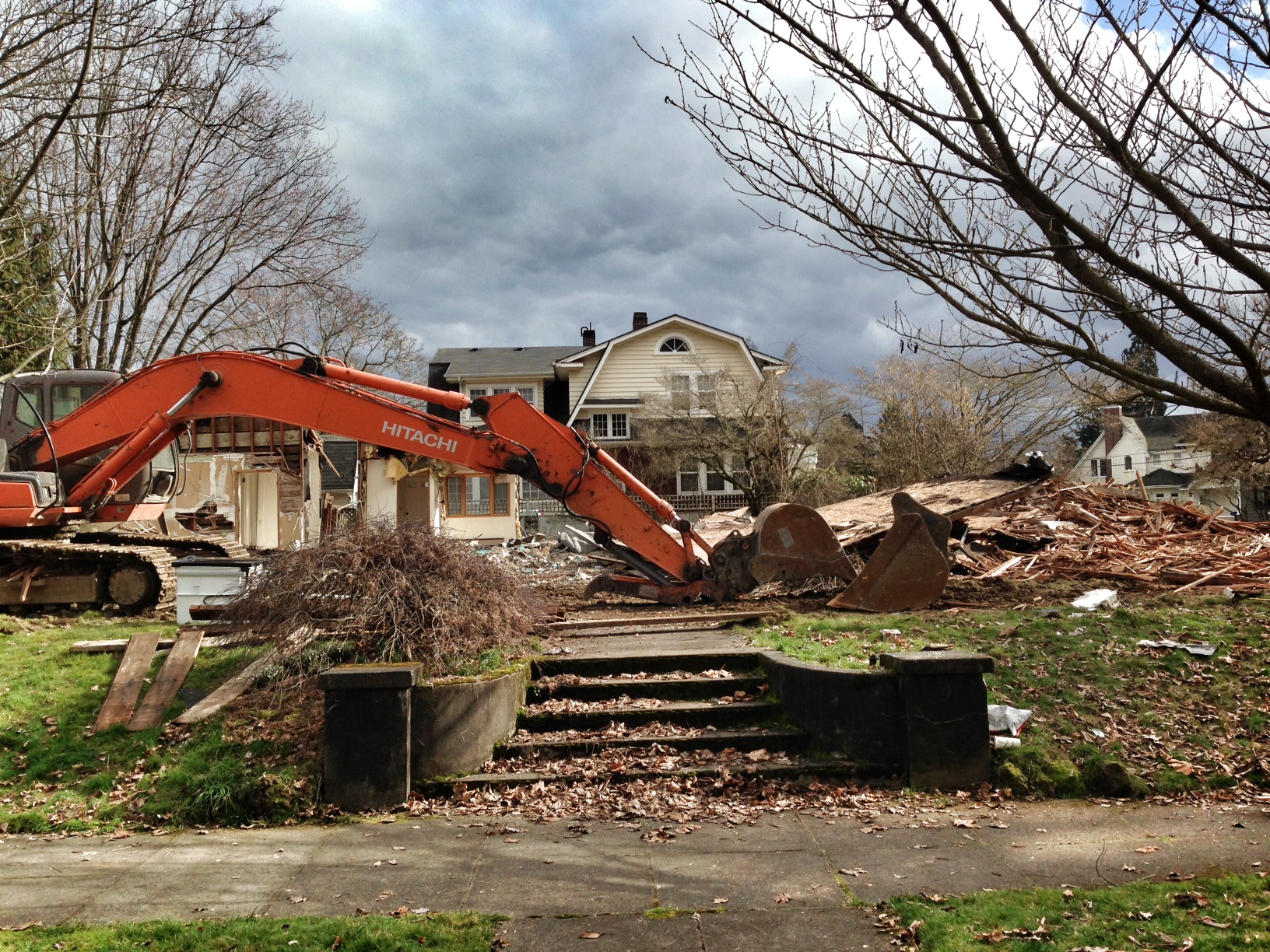
We know change is all around us every day shaping our world, often at a tectonic and invisible pace. An exception this week here in Alameda was the rare, raw and rapid change associated with demolition of the William and Susan Illidge home at 3810 NE 28th Ave.

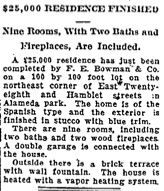
We knew it was going away, this graceful Frederic E. Bowman Mediterranean-style home built in 1922. Last summer we wrote about the plans to raze this vacant beauty and subdivide the big lot in two. We even shared a news story from 1922 noting its recent construction.

Still, there is a raw shock and sadness that accompanies demolition. Splayed out on the ground here at NE 28th and Hamblet—and in piles awaiting a truck—are bits and pieces from 90 years of construction and adaptation. Mom’s favorite tiles here and there. A door to the kids’ room. Tons of lath from the era of plaster.

photo (5)

Gone now are the favorite places and spaces known by four generations of families. Which—as we stand on the sidewalk surveying the mess and trying to imagine two brand new buildings on this spot—makes us appreciate the time-honored aspects of our own home. And the complicated economics of change.


IMG_0766


Sorry to see you go, old time traveler.

Northeast Portland’s Aircraft Factory

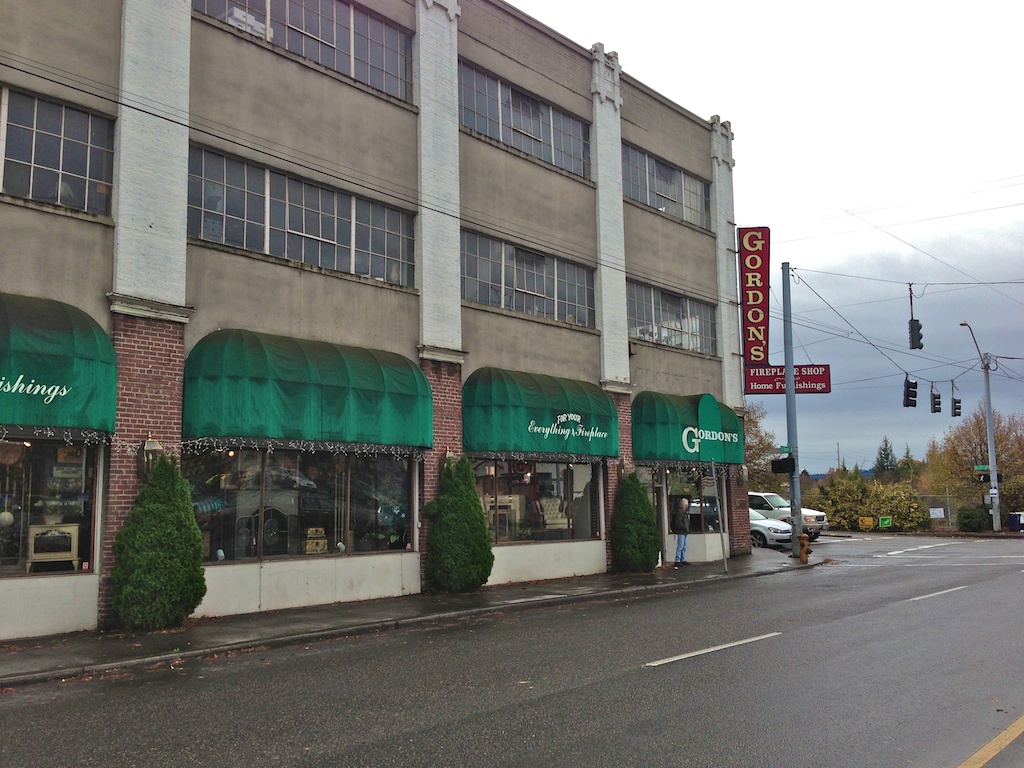
Gordon’s Fireplace Shop, 3300 NE Broadway. Former house-part manufacturing plant owned by Oregon Home Builders President Oliver K. Jeffery and used briefly to manufacture wooden airplane parts in 1917.

One of Alameda’s most prolific home building companies—The Oregon Home Builders, Inc.—is also responsible for building an aircraft manufacturing facility that operated briefly: a building that endures in the neighborhood to this day.

You probably know this building as Gordon’s Fireplace Shop on the southeast corner of NE 33rd and Broadway, or maybe as Tarlow Furniture before that. But in the late 19-teens, after serving as a workshop for house parts and domestic carpentry projects that now reside as built-in cabinets in homes across Northeast Portland, the building moved into full aircraft production mode and began churning out spruce struts, beams and braces for “flying machines.”

First a little context about Oregon Home Builders and its president Oliver K. Jeffery…

Oregon Home Builders, Inc. and its owners had a big vision. They founded the company on a business model that involved selling shares of stock at .25 cents each to investors at large, and building and selling homes. They also built some of Alameda’s prized national register houses, including the Oliver K. Jeffery House at Regents and Shaver, and the Thomas Prince House at Alameda and Regents. Others, including the George Eastman House on Stuart Avenue—designed and built by Oregon Home Builders—should be on the register.

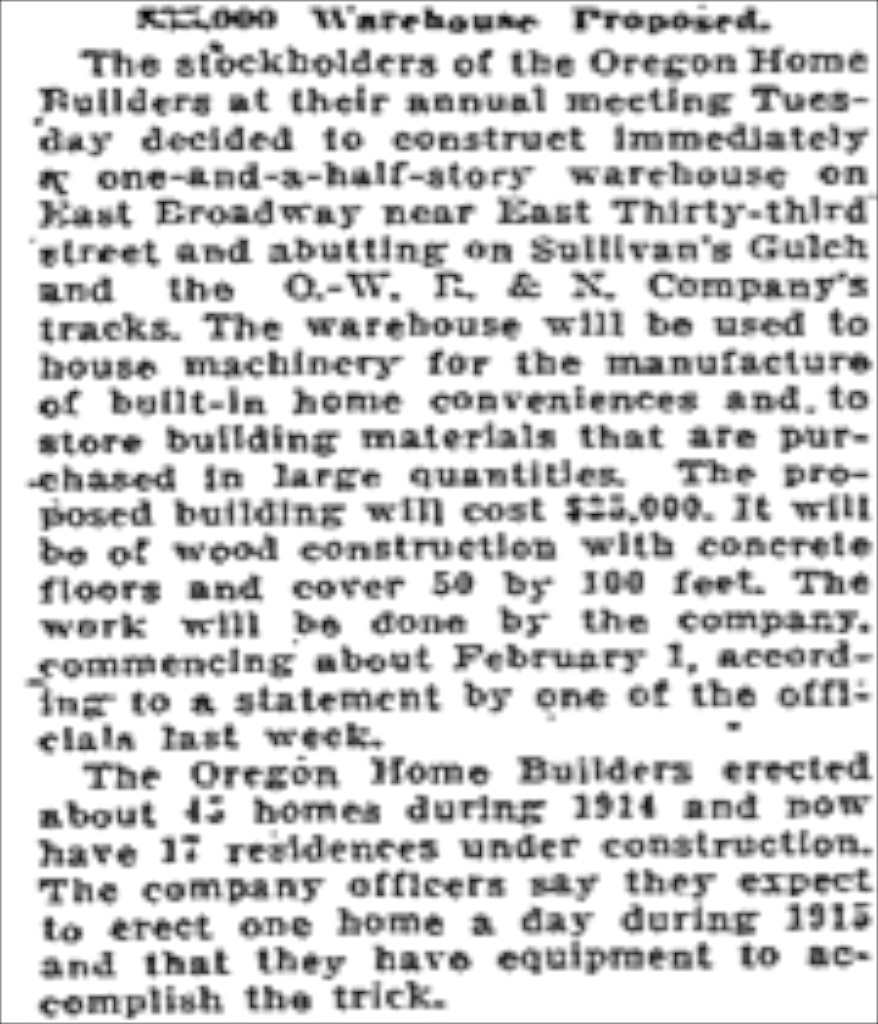
In 1914, the company built 45 houses here in northeast Portland, and drew plans for many more. As a base of operations for this big vision, Oliver K. Jeffery and his colleagues needed a workshop and warehouse near the market they were serving, and near transportation. So in 1915 they set out to build a warehouse on the Oregon Railway and Navigation Line in Sullivan’s Gulch, today’s Banfield corridor. Here’s a snippet that’s a tad fuzzy but readable from the January 17, 1915 pages of The Oregonian.

From The Oregonian, January 17, 1915.

But by 1917, O.K. Jeffery’s personal passions were focused more on airplanes than on homebuilding. A charismatic character in Portland business and social life, and a man of means, Jeffery received much coverage in the pages of The Oregonian during these years, whether in his role as a top Rosarian, his very public divorce proceedings, or his role as a trainee tank commander preparing for World War I. The story below in the August 1, 1917 edition focuses on the airplane factory building at 33rd and Broadway.

Click to read full size. From The Oregonian, August 1, 1917.

Apparently, there was a lot more going on with this story than meets the eye, (Jeffery’s homebuilding company was in the process of going bankrupt). The factory produced airplane parts for only a short time before running out money, but Jeffery’s love of aviation continued until his untimely death due to blood poisoning from a freak accident in December 1934.

Perhaps like us, you’ve driven by the building a million times and wondered about it. Following on that curiosity, and hoping for clues to the company that might have been forgotten in some nook or cranny in its upstairs floors, we dropped in for a visit over the weekend and can offer the following observations:

The folks at Gordon’s were helpful, and interested in the history of their building (which they’ve been in since 1990), but their collective memory of the building can’t see back around the corner of time. They do have a story here and there about a pasta manufacturing company that once inhabited the building. Some sense of the retail furniture company that operated there for 30 years. And a fabulous picture from 1929 that was first and foremost a portrait of Union Pacific Engine 17 coming around a bend in the track, but secondarily a picture of the building. See the distinctive brick pattern along the parapet? Look also how the building extends quite a ways east around the bend of the gulch.

Looking east in Sullivan’s Gulch on January 20, 1929 at Union Pacific Engine 17. The “Beaver State Furniture” building is no longer an aircraft parts factory. The building wraps around the rim of the gulch. Note also how much narrower the gulch is…widened in the 1950s to make room for the Banfield Freeway, requiring replacement of the viaduct. Photo courtesy of Gordon’s Fireplace Shop.

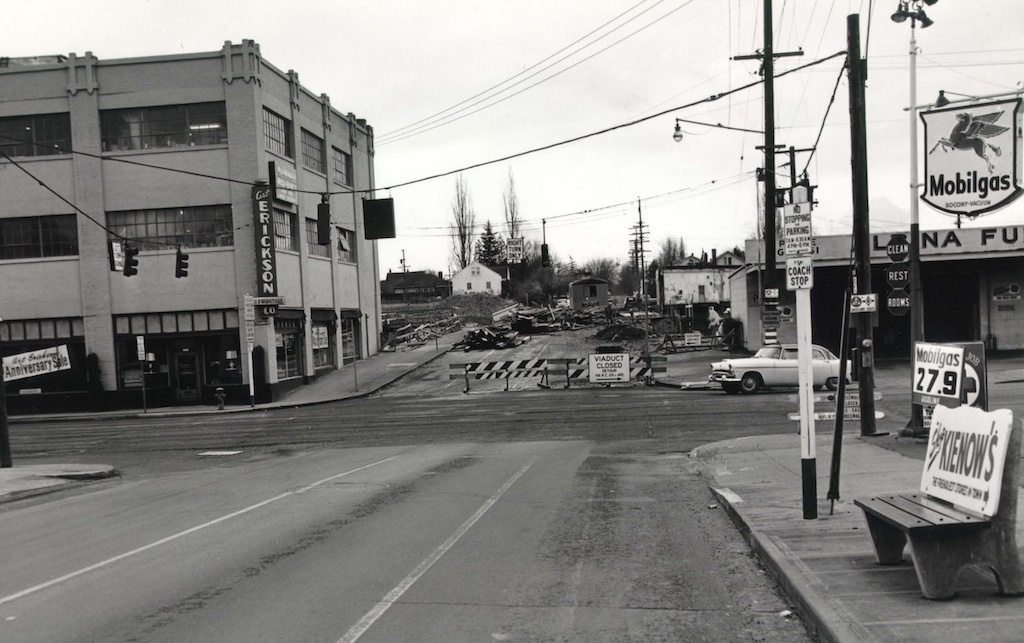
Check out this image below as well, which shows our aircraft factory building in 1956 as Erickson’s Furniture. The new viaduct associated with construction of the Banfield freeway (I-84).

Looking south on Northeast 33rd at Broadway. Construction of a new viaduct. Courtesy of City of Portland Archives. 

During our visit, we learned that the building houses the second oldest freight elevator in Portland, and it’s big. Like a two-car garage that levitates between the first and third floors. It doesn’t take much imagination to see it filled with furniture or spruce airplane parts. But pasta? Hmm.

From the 1960s until 1980, the 22,000-square-foot building was home to Tarlow’s Furniture.

A detailed look at aerial photography of the area over the years (with thanks to Ed McClaran), confirms that the building did indeed once extend east across what is today’s parking lot, and connected up with the building that now houses Rose City Furnishings in the 3400 block of Northeast Broadway.

The view from the top floor is impressive: both up and down Sullivan’s Gulch to the east and west. North across the busy intersection toward the Dolph Park neighborhood. But there are no hidden nooks or crannies with artifacts from Oregon Home Builders. It’s a tidy and well-organized warehouse on the upper floors. Here and there you can tell from marks on the floor where heavy machines and equipment may have been anchored, or workbenches secured to the walls.

No aircraft machinery to be found here. Just a warehouse for Gordon’s Fireplace Shop.

But the aircraft heyday of the building passed briefly and it stands on the north rim of Sullivan’s Gulch as an artifact itself while the busy intersection below surges with traffic and big development plans. In the midst of shuffle and change, it’s a time traveler with stories to tell.

Earliest Alameda Views

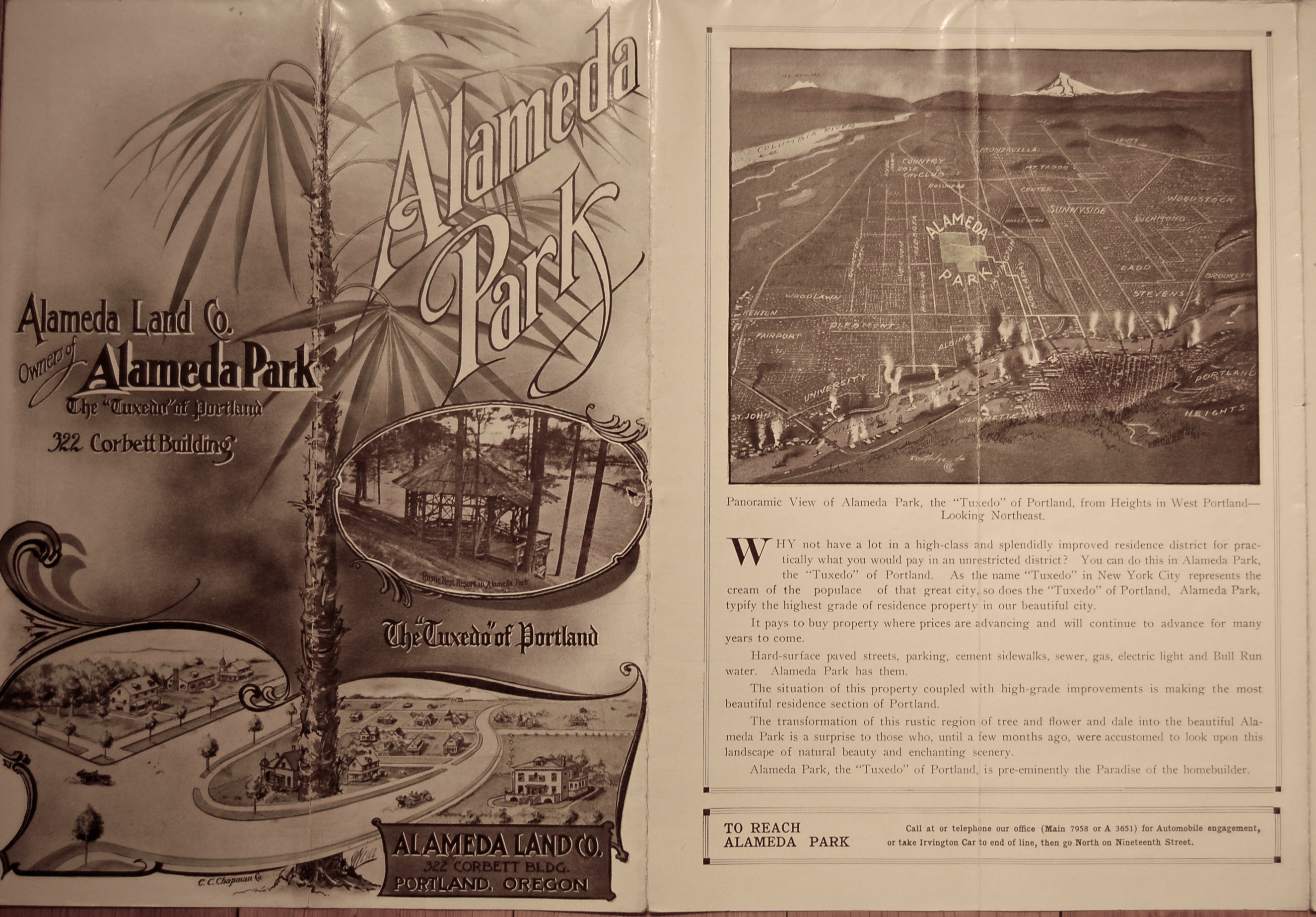
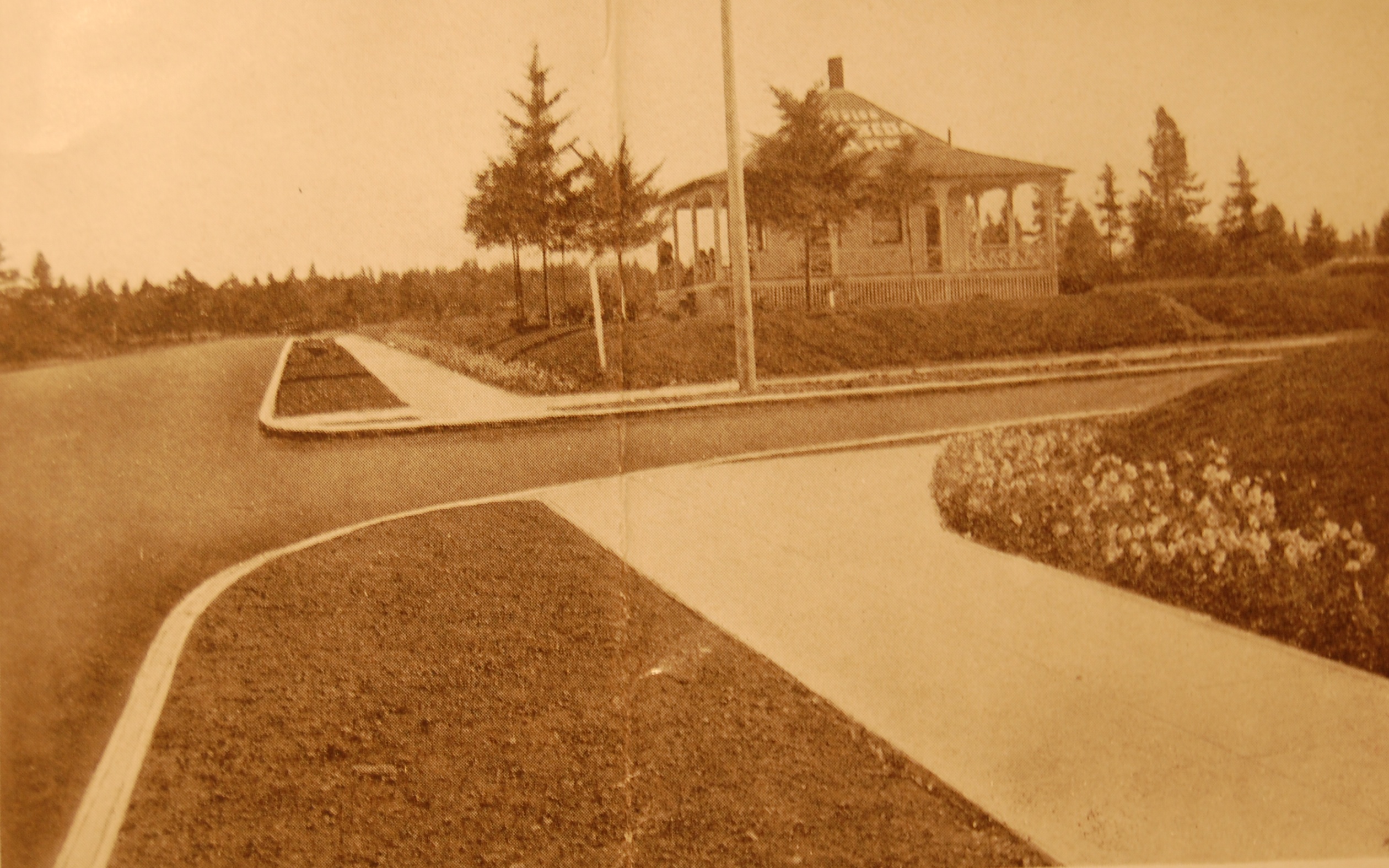
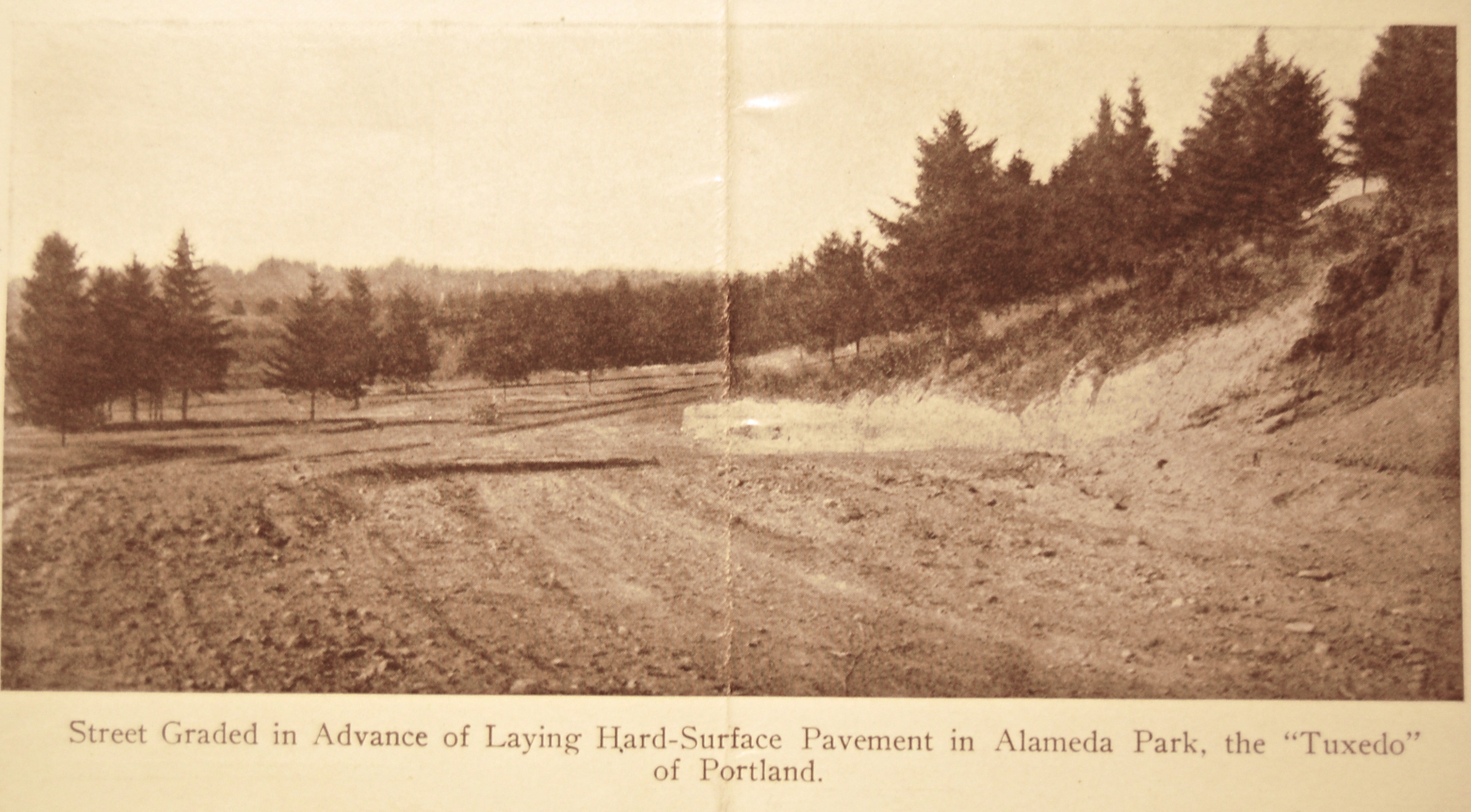
We’ve come across a remarkable piece of propaganda recently that offers a unique look into the earliest days of Alameda Park. It’s a brochure that provides photos and some very creative narrative, all designed to get potential buyers into Alameda Park.

It’s different than the small brochure you might have seen. This is a three-color (black, yellow, green) glossy, multi-fold pamphlet.

Interesting to note how the photo/map view below right is facing east, with Mt. Hood in the distance, instead of the typical north-south orientation. See what other interesting details you can find, like all the steamships in dock. Be sure to check out the “Rustic Rest Resort” on the cover, which looks more like a coastal cabana than something you’d find in the woods and fields of this new neighborhood. We think it was a gazebo like “porch” perched somewhere along the Alameda Ridge.

Click on the image for a full-size look at the map and the text.

Text and images in the brochure go on to talk about the many virtues of the property—descriptions that are a bit ironic since when this went to print, the “Tuxedo” was little more than gravel streets, some concrete curbs, mud and brush.

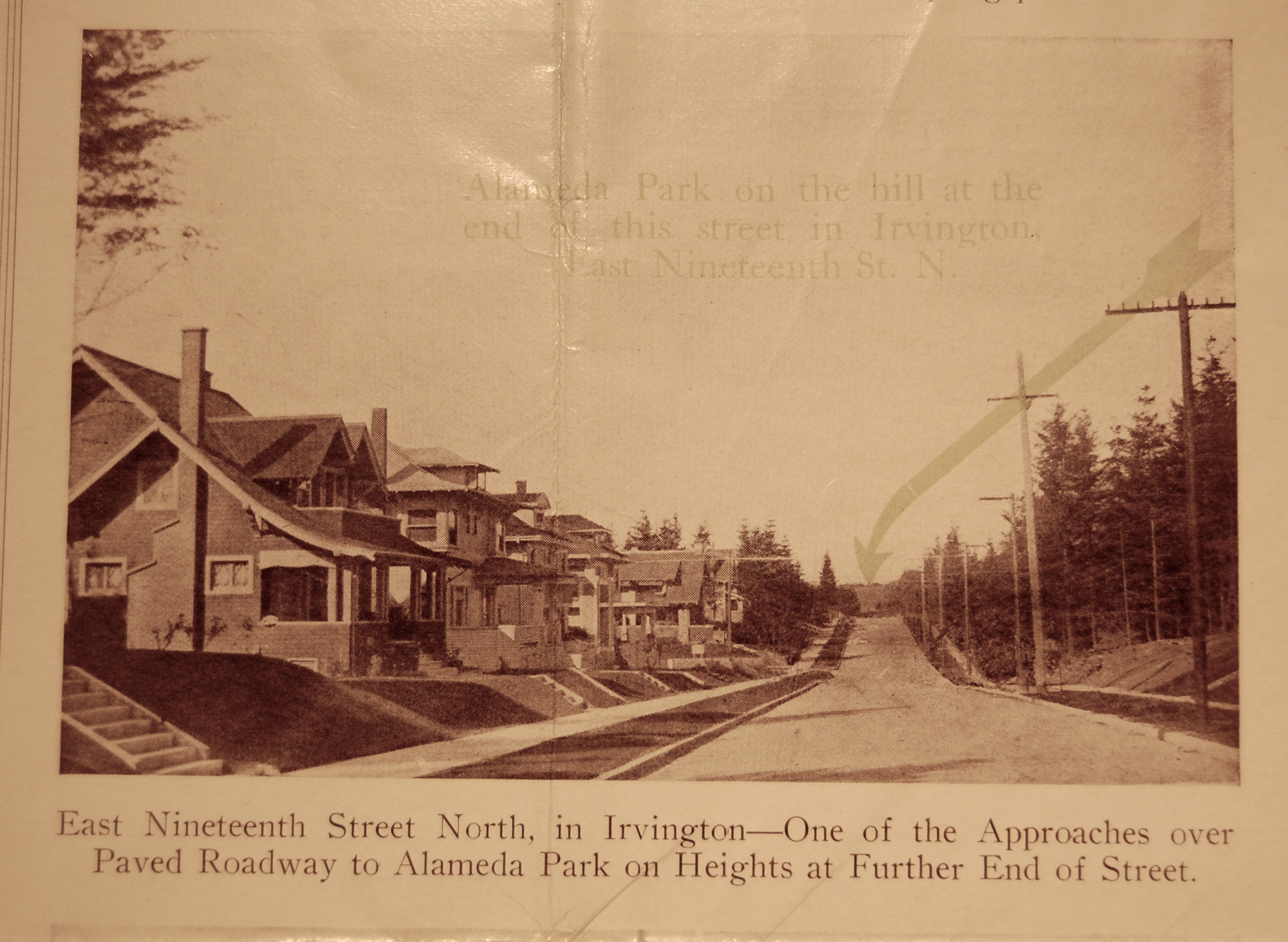
Another distinctive feature is the way in which the proponents boldly benchmark and shamelessly rip off nearby Irvington, which was established, successful and featured solid property values. Check out this panel:

The green text is faded, but it’s pointing out that tiny patch of mud and trees at the far north end of this lovely Irvington street view, as if to say: “Alameda…it’s up there.” Throughout the brochure, Alameda Land Company boosters tried to build their own credibility on the back of Irvington (which was developed earlier and by a different company that didn’t much appreciate this kind of attention).

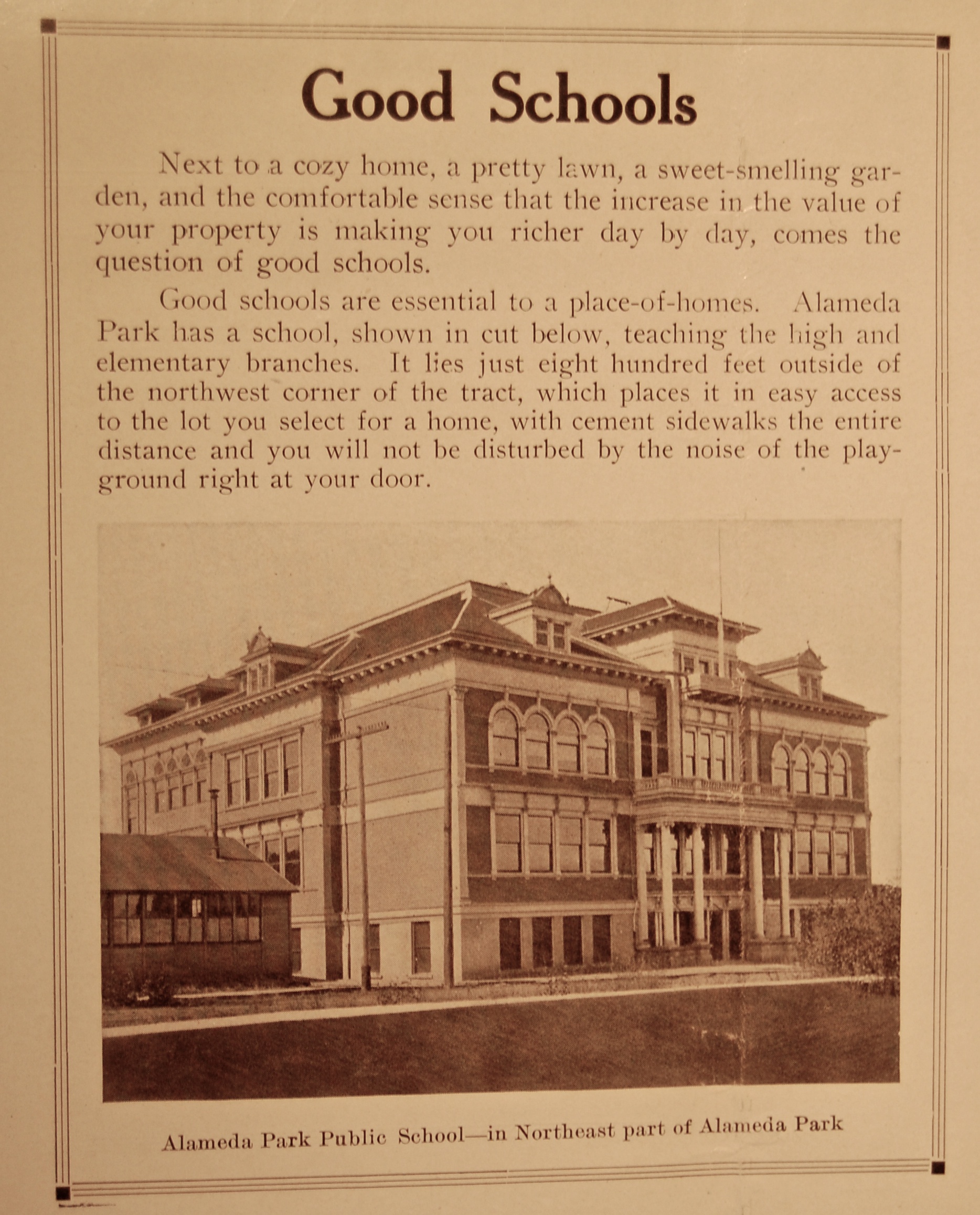
And here’s one that took some real initiative: calling the Irvington School the Alameda School. Just to be clear, this is the original Irvington School. There was never a school like this in Alameda. Period. It’s a bald-faced lie in black and white.

Don’t believe everything you read: there was never a school like this in Alameda…it’s the original Irvington School.

For us though, always in search of more information about the Alameda Land Company, the real gems of this brochure include the photo of the company’s tract office, which was located on the southeast corner of 29th and Mason. Check it out:

Looking east on Mason, just west of NE 29th Avenue. Note that the streetcar tracks have not arrived yet. A later photo taken from nearby looking north shows the railing and a banner that reads “Alameda Land Company Tract Office,” which appears to be on the roof too.

And saving the best for last: this view of NE Regents Drive, looking downhill, long before the neighborhood we know today. About as close as we get to time travel.

With thanks to our friends at the Architectural Heritage Center for sharing.

Change Comes to Alameda

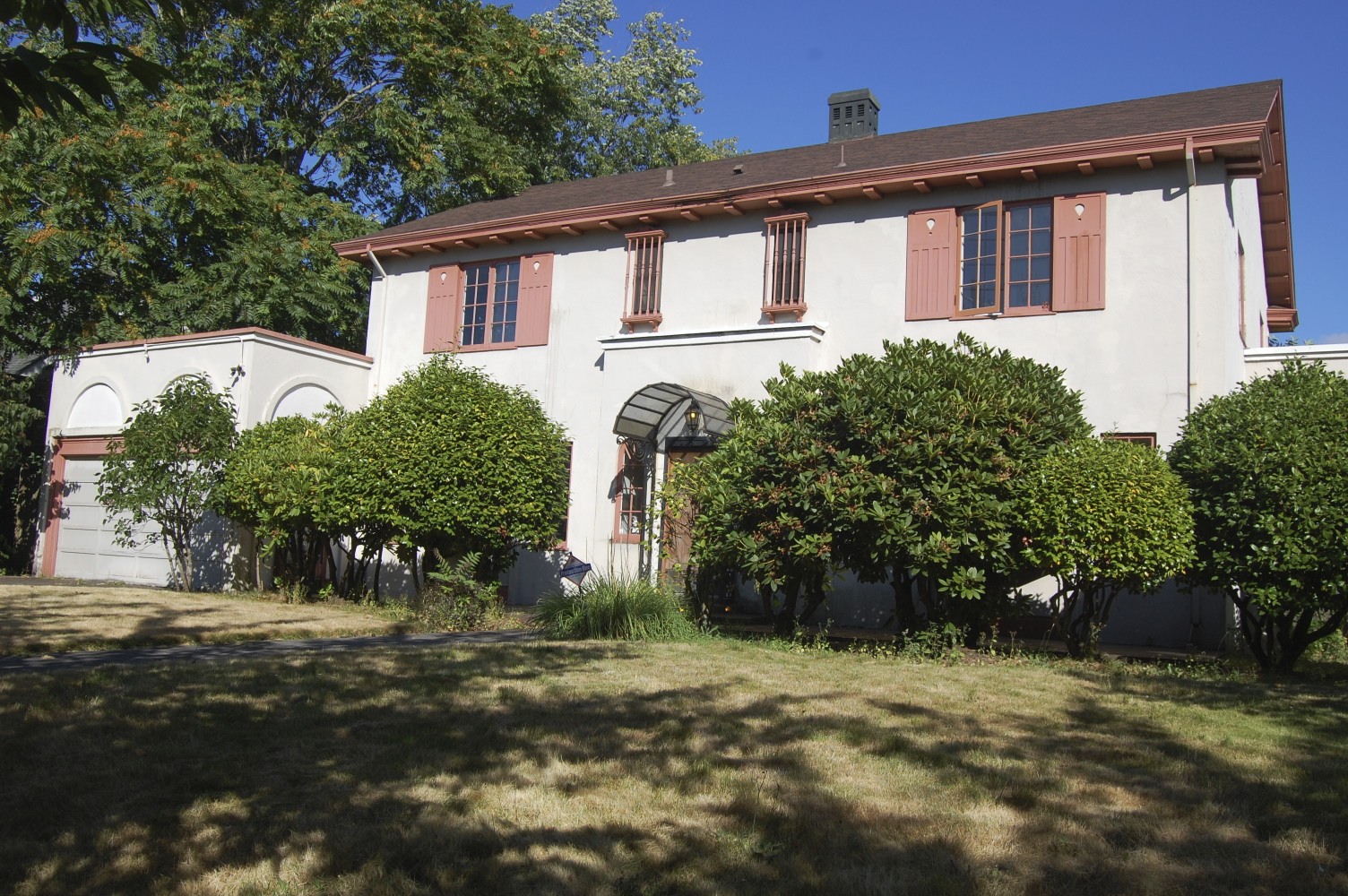
We’ve learned through the Alameda Neighborhood Association about an impending change for the corner of NE 28th and Hamblet. The 1922 Frederic E. Bowman-built Spanish style home will be torn down soon, the large lot will be subdivided, and two homes built.

The William and Susan Illidge home, 3810 NE 28th Avenue. Built by Frederic E. Bowman, 1921-1922. The house, currently vacant, is to be razed and the lot subdivided.

According to Alameda Newsletter Editor George Smith, the developer is planning to construct two high-end homes: one a colonial revival facing Hamblet; the other, a craftsman facing NE 28th. George reports that the builder is sensitive to keeping the houses in scale and style with the surrounding neighborhood.

We have had a close look at the house, and recognize it has clearly seen better days and restoration is an expensive proposition. Still, it’s going to be hard to let go of this time traveler and its stately presence set back on the wide, open and prominent corner lot. It’s one of the few Mediterranean-style homes built by Bowman, who was a prominent east-side builder from 1909-1931.

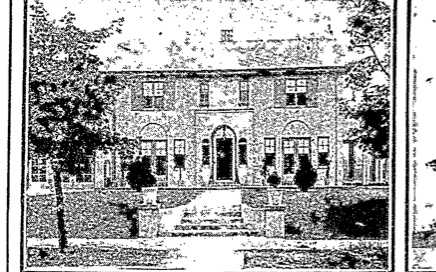
We did find a news story and photo of the home that ran in the July 9, 1922 edition of The Oregonian. Take a look:

In 1930, the house was home to William and Susan Illidge, their three children and Susan’s mother. Illidge was a prominent Portland attorney. We haven’t yet undertaken our customary full study of the house and its former residents—seeking out the stories, memories and photos from their years there. What do you know about this house?

More to follow…

A few spots left for history walk…

Alameda Blog readers will assume we’ve gone into retirement due to the slowdown in posts here. But not so. Research continues, as do daily musings and wonderings about the stories from Alameda’s past. It’s been fun to see the conversation among commenters here on the blog. We’re glad to provide a water cooler around which we can share stories and thoughts.

The outlet this month for our neighborhood history energy is a walking tour of Alameda that we’re leading through the neighborhood on Thursday night, August 9th. At last check, there are still a few open spots, if you’re interested. Click on over to the Architectural Heritage Center’s website for more information about how to register.

More posts to come this summer and fall, including a great story about the baseball rivalry between Alameda and Irvington; some thoughts about current infill and remodeling underway in the neighborhood; and a profile of early architect Ida McCain. Stay tuned.

GArfield 2 8 2 0

More on the Garfield telephone exchange, with thanks to frequent Alameda History blog visitor John Hamnett for inspiration…

We remember the time—which seems not so long ago—when our phone numbers began with two letters (and a word associated with those two letters), and then a number.

We grew up in the Alpine exchange and our number was AL1-2820, which eventually became 251-2820 (get it?…A=2, L=5). When asked for our number, we really did use to say “Alpine 1 2-8-2-0.”

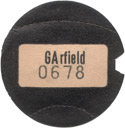
Here in Alameda and in other nearby neighborhoods in Northeast Portland, our phone numbers used to begin with GA. And that’s not by accident. It’s because our neighborhood was served by the GArfield Exchange. If we had grown up here, we would have given out our number as Garfield 2-8-2-0.

A “numbercard” from an old Western Electric style phone bearing the GArfield exchange name and number

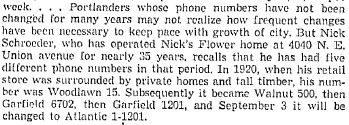
Check out this clipping from The Oregonian on September 1, 1955 which charts the evolution of a local business’s phone number. Keep in mind that behind these changes were corresponding changes in technology at places like the Garfield Exchange Office.

The spoken word “Garfield” would have been ubiquitous in our old Alameda homes in years past. And anyone passing by the building at 24th and Stanton would have thought about it as “our” exchange. The Garfield Exchange.

If you look closely as you travel the city, you might find evidence of these old telephone exchanges, and the days in which we referred to our numbers with a word. Alpine. Garfield. Check out this blog entry from a fellow local historian in New York who has made a practice of collecting these references. Pretty neat. Let us know if you find similar references here in Portland.

And if you are captivated by the idea of exchange names, you must check out this website, which has an incredible collection of information about early telephone exchanges (you can even search your old exchange name). We appreciate the reason given for why remembering these things is important: “Exchange names helped foster a sense of place…