Then and Now | George Asa Eastman Home

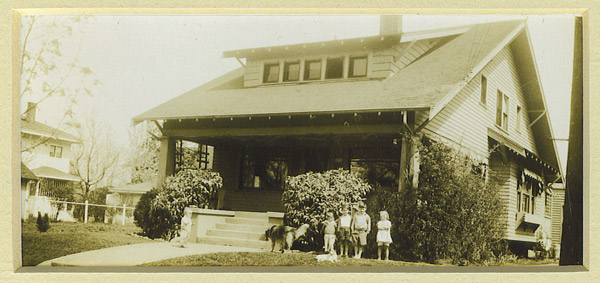
Eastman House Then Eastman House Now

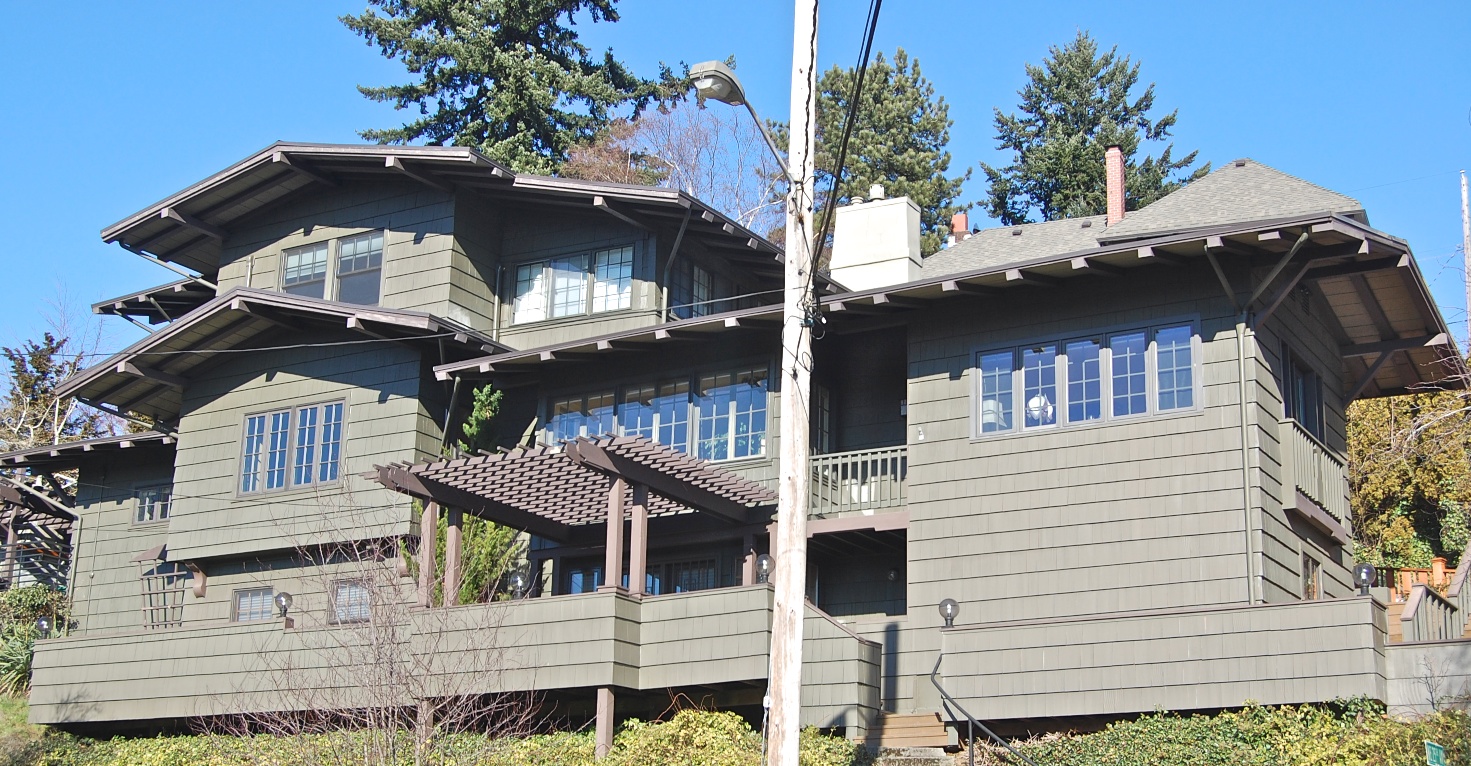
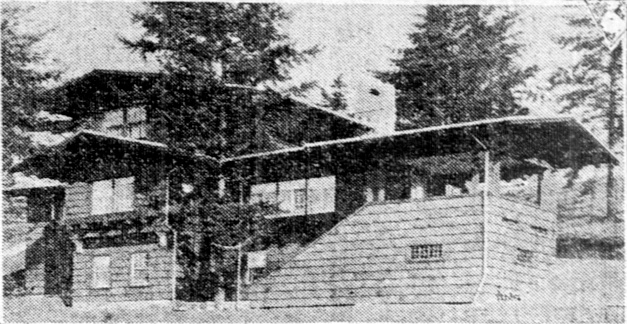
Here’s the home of Portland architect George Asa Eastman, photographed 100 years ago to illustrate a story in the May 5, 1914 edition of The Oregonian about how the Alameda Park neighborhood was “forging ahead.” The subtitle to the headline was “Few districts enjoy more substantial growth than suburban park. New homes are sprinkled over many handsome streets.” Eastman designed this home and supervised its construction in 1912.

While the story didn’t recognize Eastman’s contribution to local construction trends, he was a principal architect for the Oregon Home Builders, which built more homes in Alameda Park and Olmsted Park than any other builder.

You’ll recognize this house today at 2628 NE Stuart Drive, where some recent major changes in landscaping have enabled a full appreciation of the Craftsman style home and the unique site on the sidehill of Alameda Ridge. For a short time after construction, NE Stuart Drive was known as Rugby Drive, a name that is still visible if you know where to look. An accident on the property in 1917 gave rise to the name–still in local usage–of Deadman’s Hill.

A careful look at then-and-now will reveal that the top floor open porch of the house has been enclosed; many windows have been replaced and a couple have been added; a new deck and walkway have been added along the lower level; trees have come and gone (but appear in similar locations); a power pole has been added in the foreground.

Eastman was active in Portland from about 1909 until he moved to Detroit in 1916. He died in 1920. Stay tuned for more on Eastman and the Oregon Home Builders: both are the subject of current inquiry and research.

Then and Now | Thomas Prince House

1923 Frank Moore Photo DSC_0038

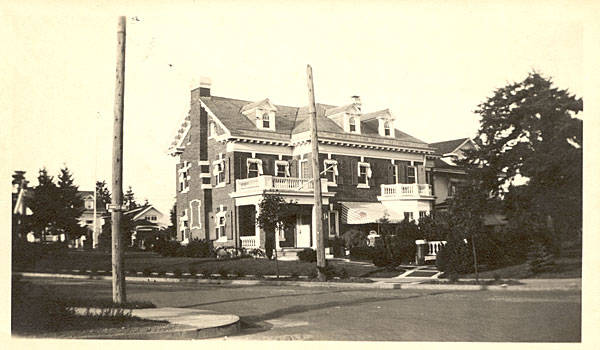
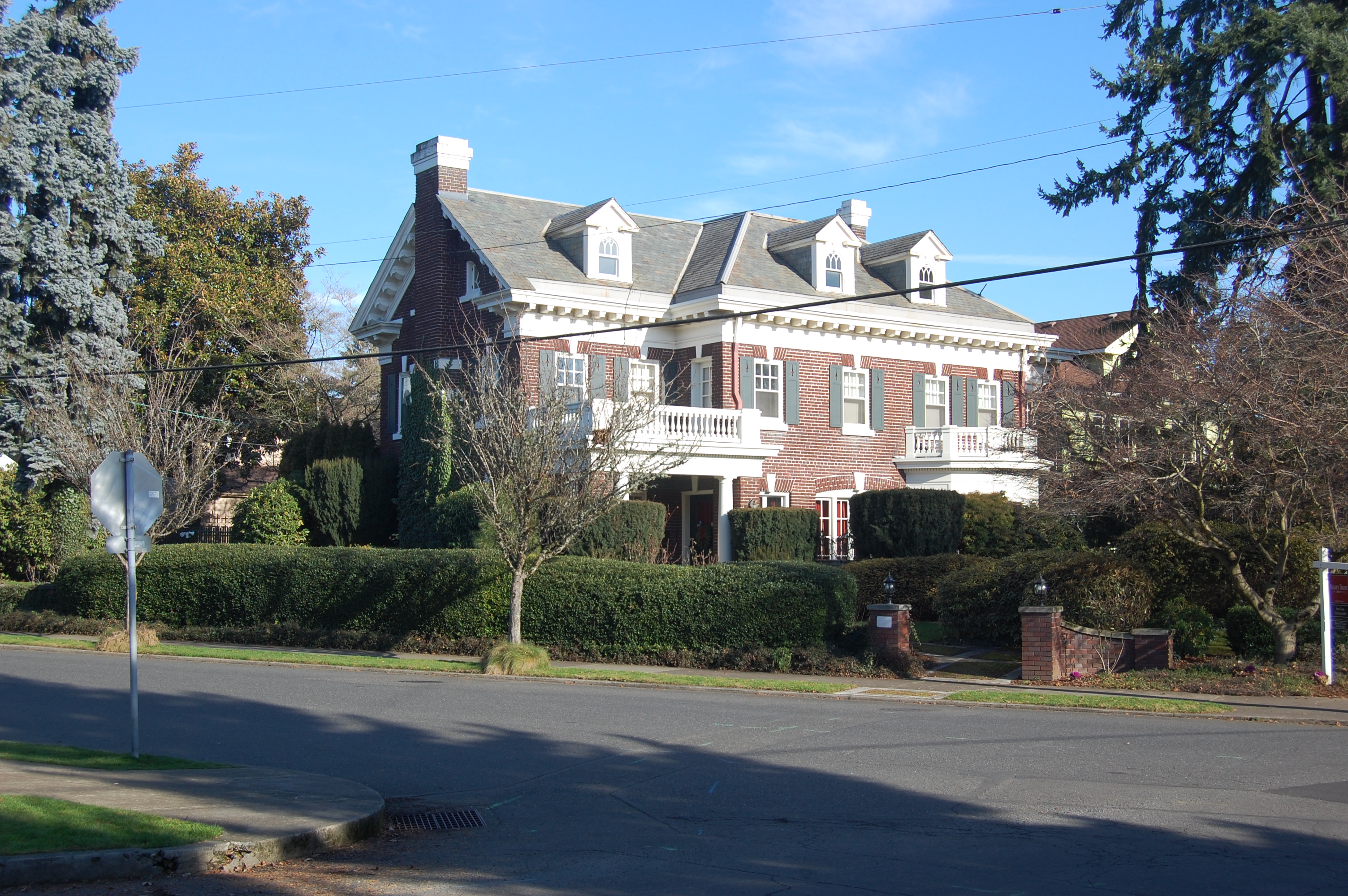
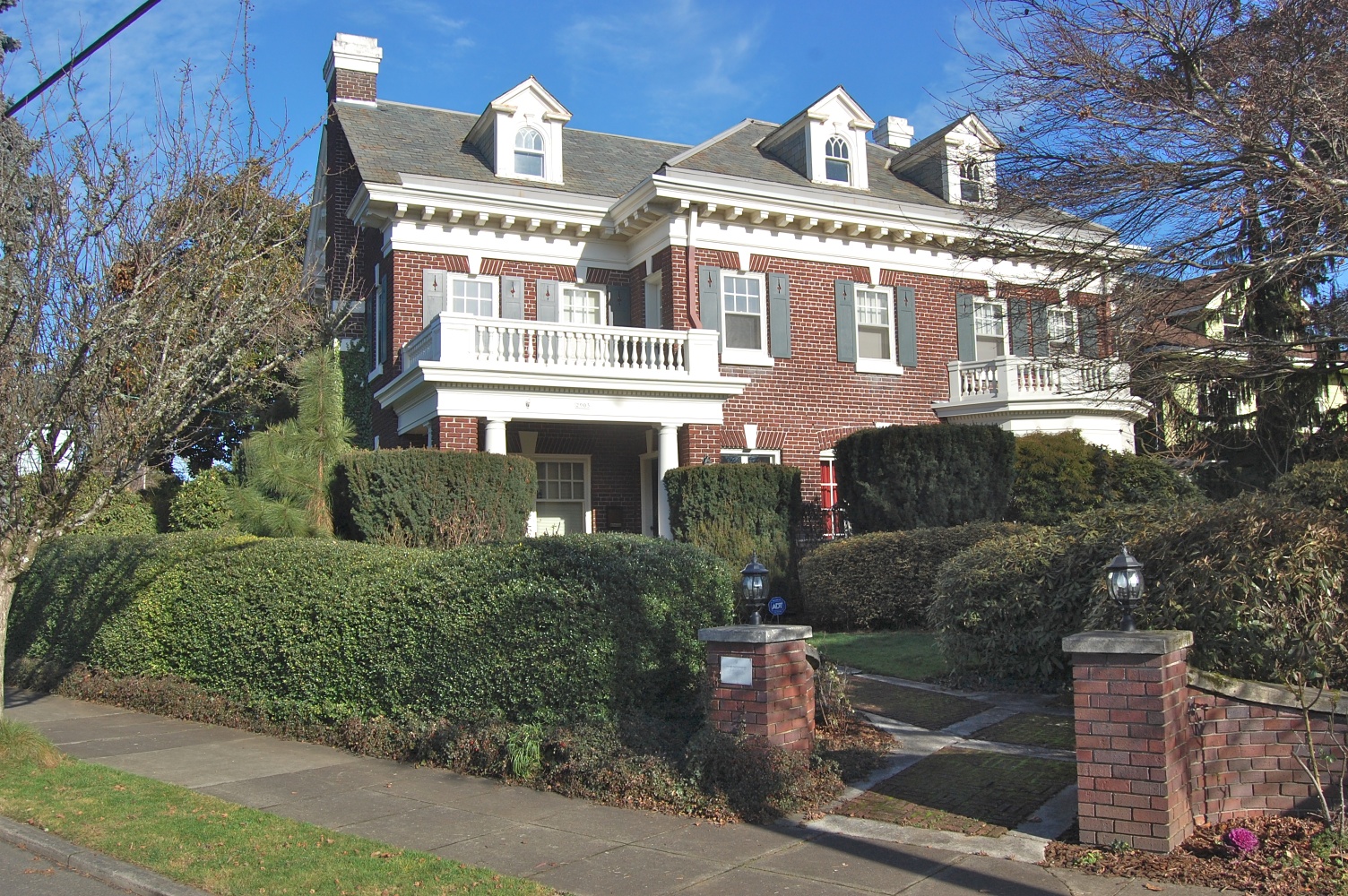
Here’s the Thomas Prince House, at 2903 NE Alameda Street, right at the top of Regents Hill. The then photo is from about 1922, taken by leaders of the Alameda Park Community Church who were out snapping several other photos of the neighborhood in those years, about the time the church was being built. The now view is from approximately the same location.

Some notable changes:

  • The landscaping has taken over;
  • More recently built houses now obstruct the view through to the next block;
  • The power poles (both of them) are gone;
  • The house is still in very good shape;
  • And, the house is for sale at $1.375 million.
  • (What else do you see?)

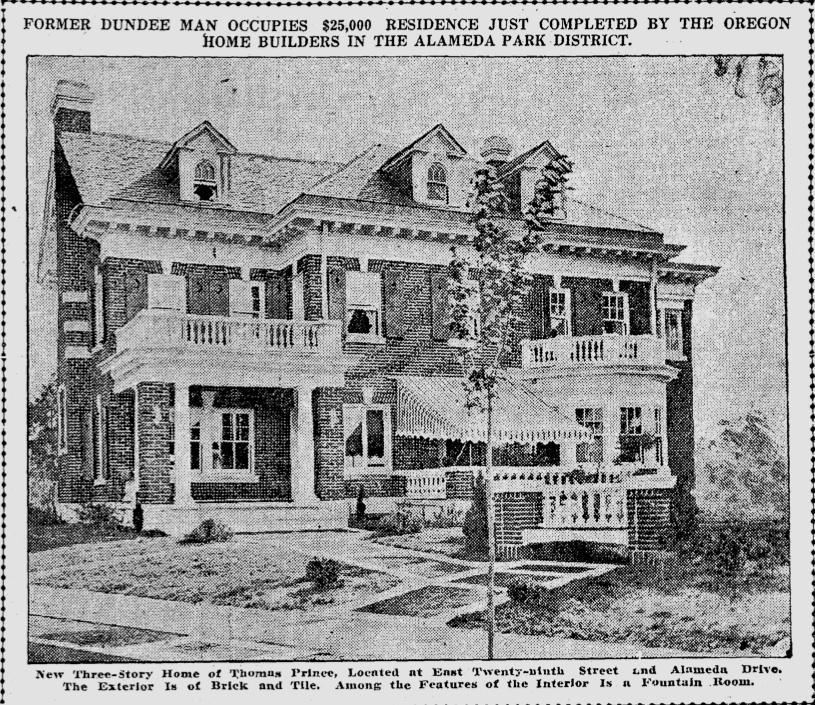
As long as we are focusing in on the Thomas Prince house, we should look at another photo pair, this time a view from The Oregonian on July 22, 1917. The caption of the 1917 story says the $25,000 house featured a “fountain room.”

Thomas Prince House 1917

Thomas Prince House 2014

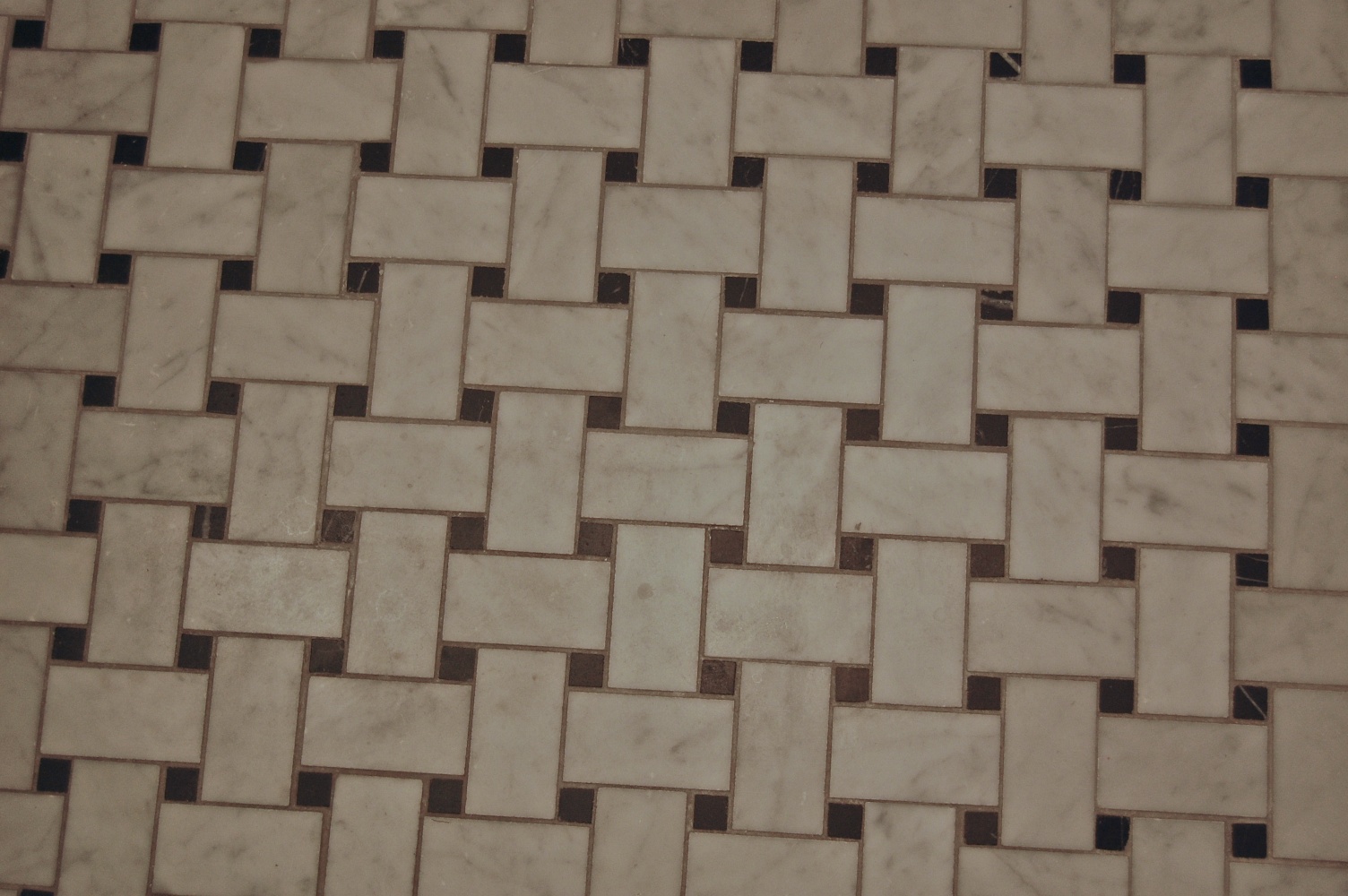
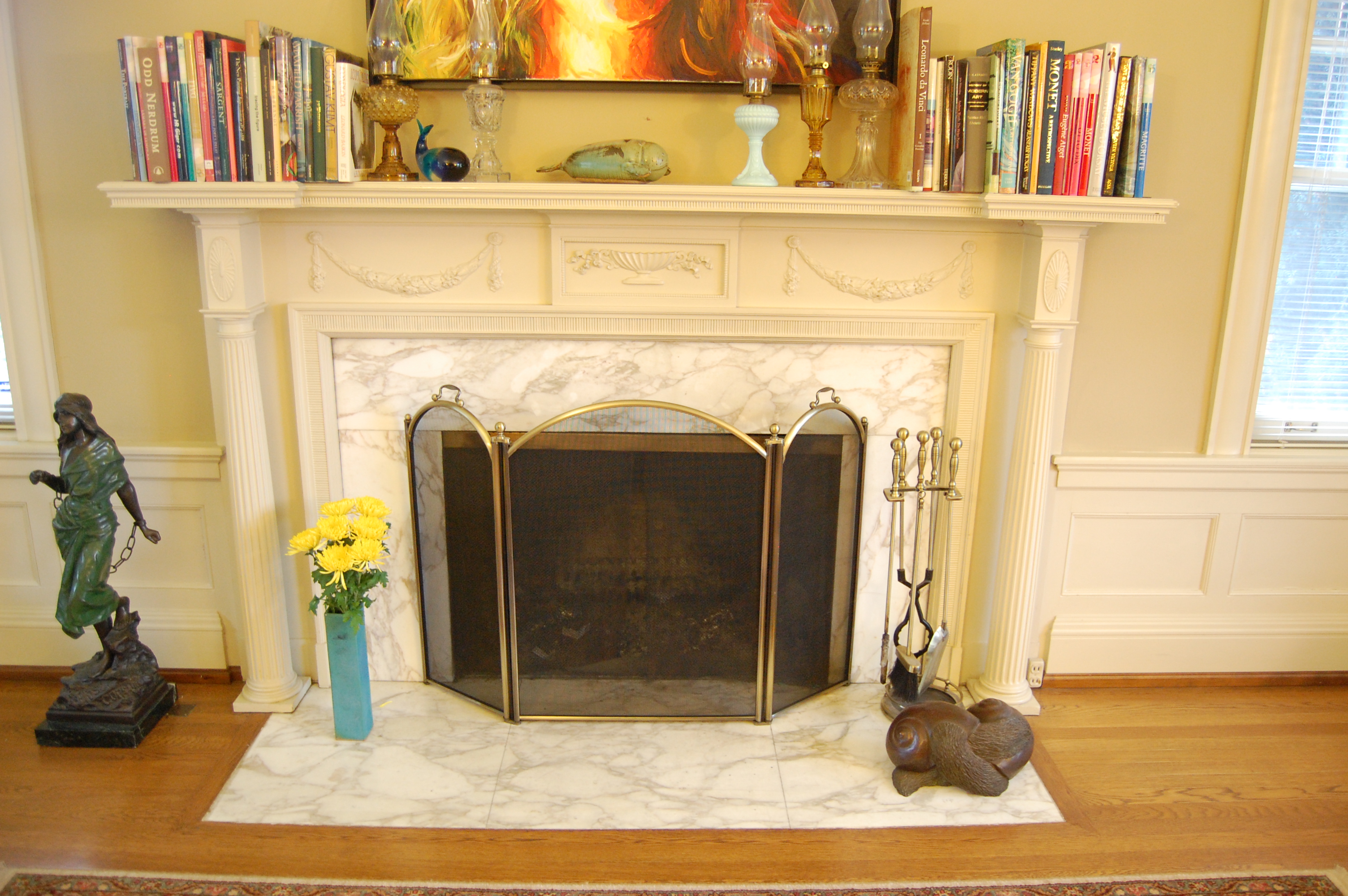
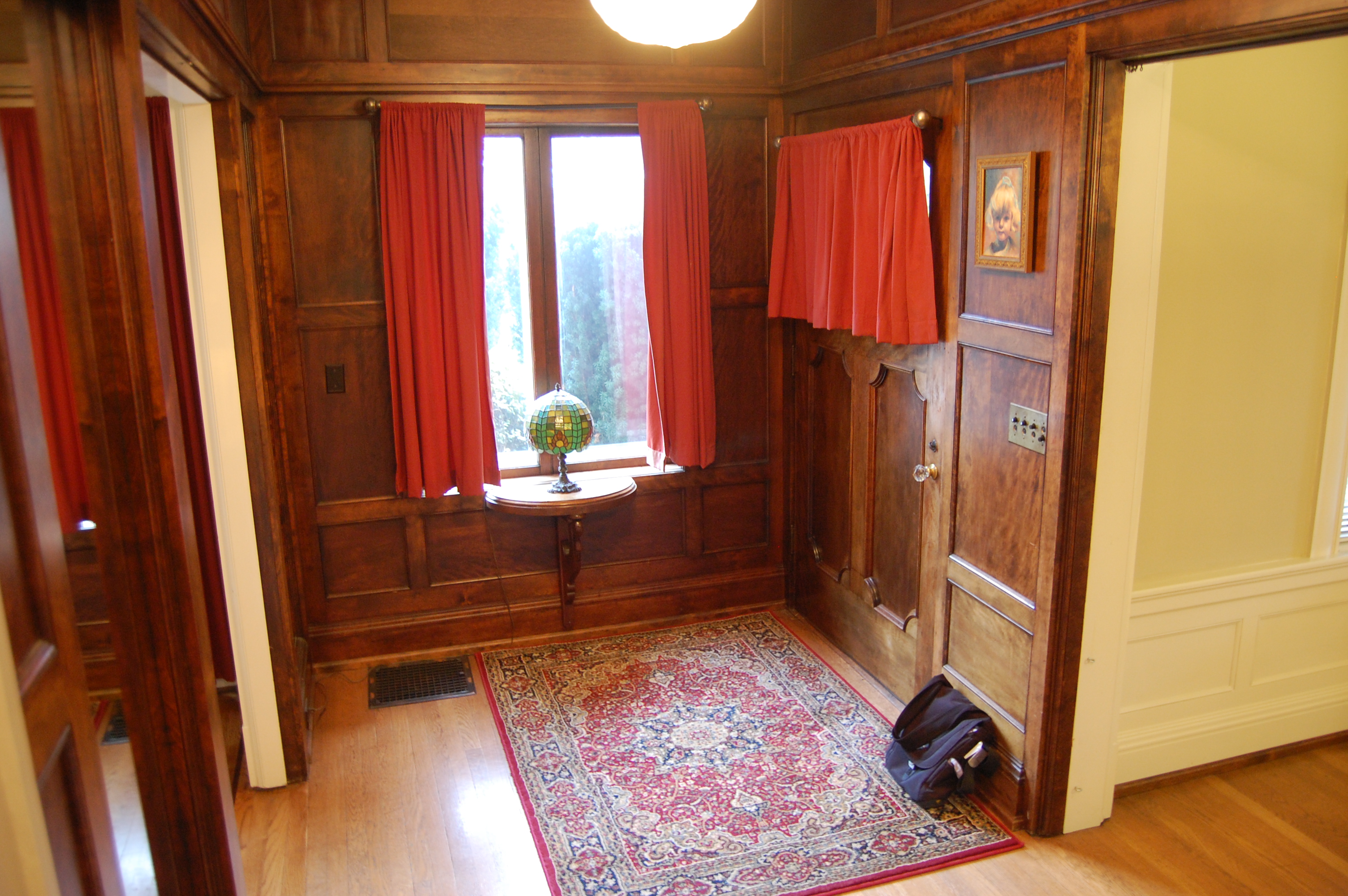
We visited the house recently and didn’t see any sign of the fountain room, though we did note the beautiful almost 3-D woven tile in the upstairs bathrooms; the marble fireplace (and a signature etched into the hearth); and the beautiful and stately birch paneled entryway. See the photos below by Emma Decker. The house is worthy of its national register status (Here is a link to the nomination form filed in 1985 Thomas Prince House HNR Nomination complete with floor-by-floor drawings and descriptions).

Bathroom Tile Detail - Thomas Prince House

DSC_0018

DSC_0020

Prince was an interesting person with at least two major careers behind him when at age 71 in 1912 he agreed to be the financial backer for Oliver K. Jeffrey and the Oregon Home Builders Inc. Jeffrey and his company built more than two dozen homes in Alameda and Olmsted Park—many of them unique, grand and built for wealthy clients—and as regular readers of the blog will recall, also built the building that now houses Gordon’s Fireplace Shop at NE 33rd and Broadway (check out the story if you haven’t read it. We know you’ve driven by this place and wondered what it’s all about). More soon about the Oregon Home Builders, a fascinating story that ends in a broken business model and bankruptcy.

Prince’s roots were in Massachusetts, where he was a founding partner in Reed and Prince, a manufacturer of nuts and bolts with national market share (still in operation today). Something happened in the Prince family in the 1890s, and Thomas, accompanied only by his developmentally disabled son Harold Thomas Prince, left on their own for Oregon, where the elder became a walnut and fruit grower near Dundee. When he died in February 1920 at age 79, Prince owned and operated the largest walnut orchard in Oregon.

Though it’s known today on the National Register of Historic Places as the Thomas Prince House, the elder Thomas didn’t spend much time here. He died in California in 1920 and his death set off a feeding frenzy among heirs and beneficiaries as his $2 million estate was divided up. A sad series of stories in The Oregonian in the three years after his death documents the infighting and finger pointing (as well as the occasional sale of property like Prince’s seven-passenger Pierce Arrow touring car sold at auction in 1920). Son Harold Thomas Prince lived in the house with his wife Marjorie until the 1950s.

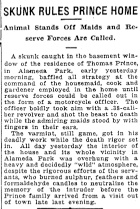
As a bonus for reading all the way to the bottom, here’s an interesting tidbit about the house that turned up in the August 11, 1918 edition of The Oregonian:

Skunk 8-11-1918

Alameda Then and Now

In the course of research over the years, we’ve come across quite a few pictures of neighborhood homes, which we’ve always squirreled away into the archive for some future use. Many of them are grainy, some are half-toned from old newspapers. Some have coffee spilled on them. Each one tells a story, particularly when paired with a contemporary photo of the same view.

With the start of the new year, we’re inaugurating a regular feature that we call “Alameda Then and Now” to plumb the archive a bit and explore how time has changed the face of the neighborhood (or not, in some cases). The rule is that the then picture has to be before 1962, and the earlier the better. We’ll be pulling from our archive and will do our best to stay within the footprint of the Alameda Park plat. If you have images we should consider, please pass them along.

We’ve created a category here on the blog, and a menu button on the top right which you can use to check back on the growing collection.

Like a family’s picture album, the faces of our homes contain precious tales of our life and times.

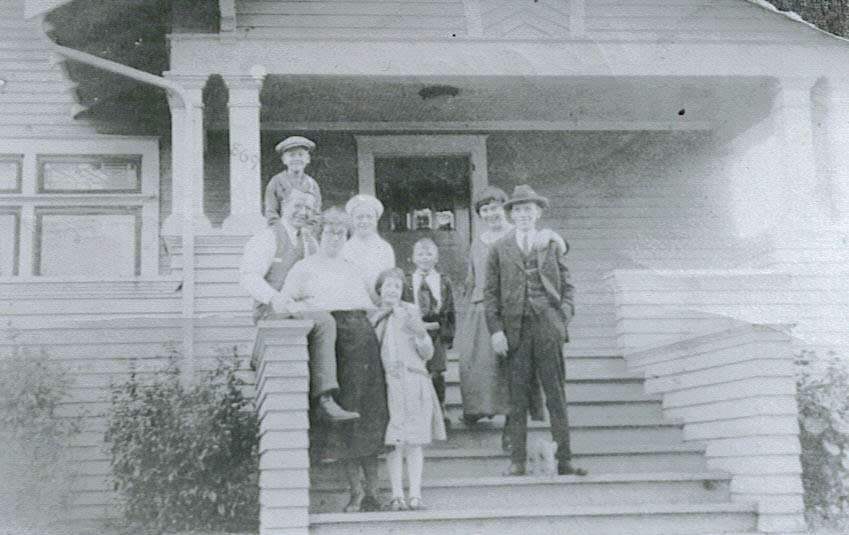
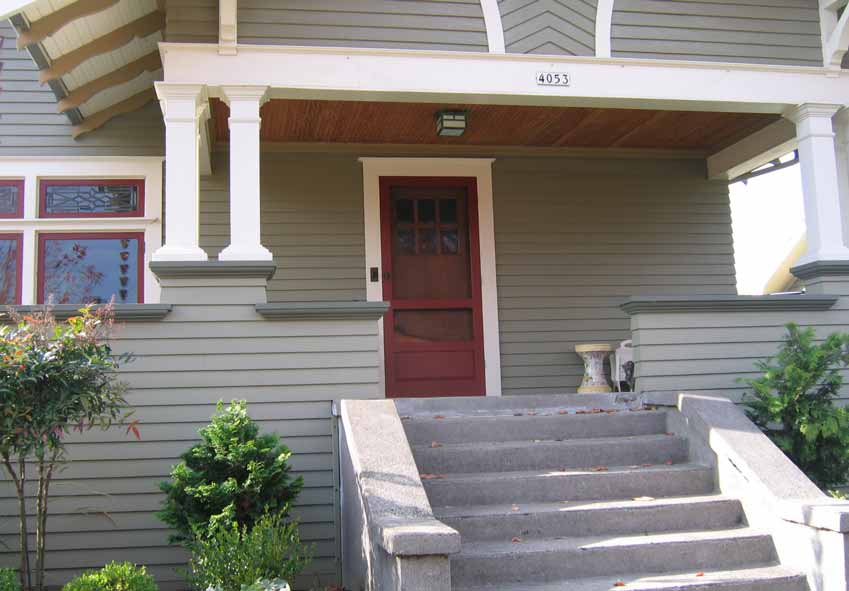
This pair is a little eerie, like the family just stepped out of the frame.  The house, located on NE 30th Avenue, is substantially the same as when it was built in 1912. In the top photo, the Morrison family gathers on their front porch, about 1920. Below, the same view today. The wooden steps are long gone and the columns and porch walls have been restored, but the decorative rafter tails, door, windows and siding are the same this family knew almost 100 years ago. Click on each image for a larger view.

Stay tuned for the then and now next pair…

Earliest Alameda Views

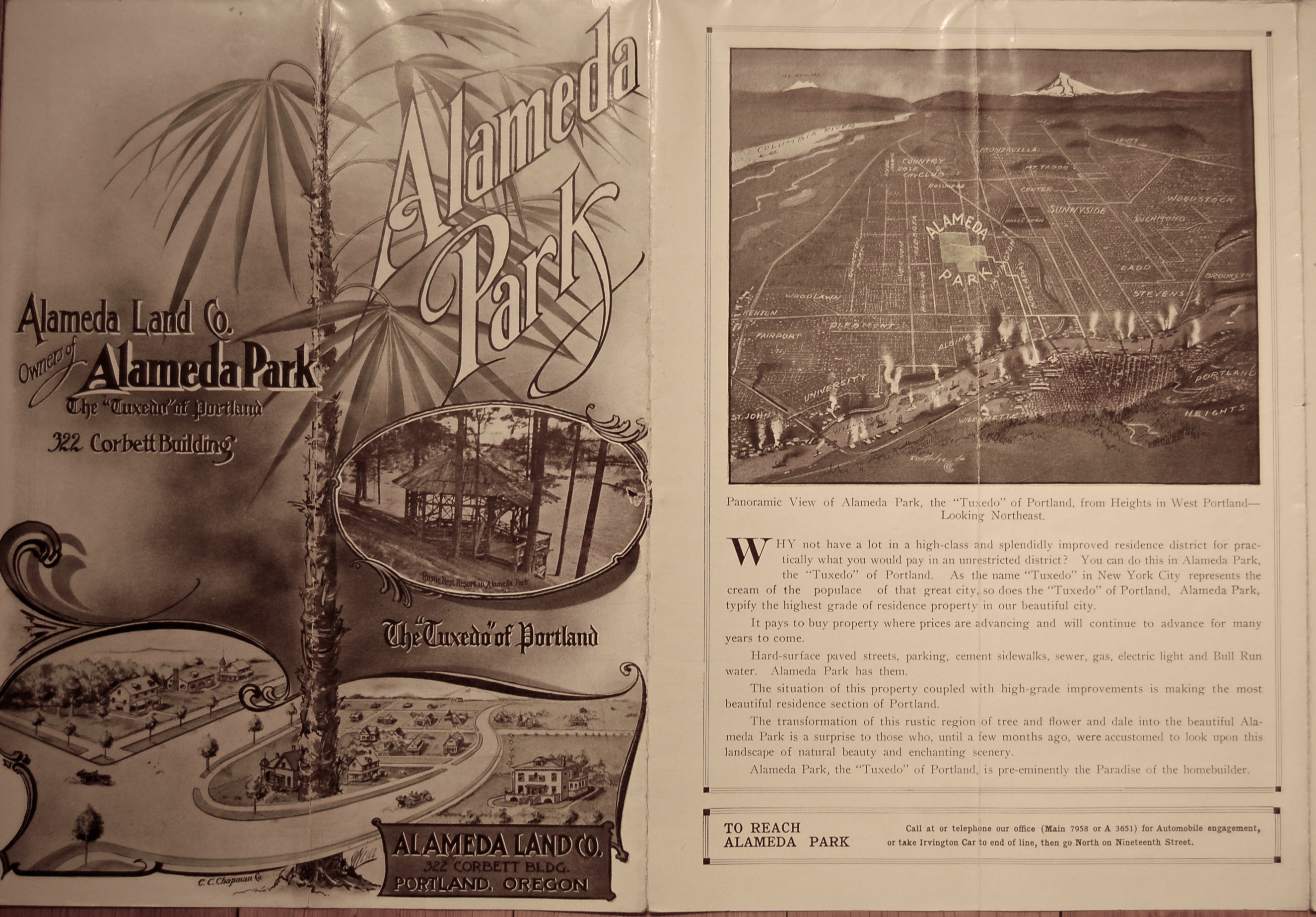
We’ve come across a remarkable piece of propaganda recently that offers a unique look into the earliest days of Alameda Park. It’s a brochure that provides photos and some very creative narrative, all designed to get potential buyers into Alameda Park.

It’s different than the small brochure you might have seen. This is a three-color (black, yellow, green) glossy, multi-fold pamphlet.

Interesting to note how the photo/map view below right is facing east, with Mt. Hood in the distance, instead of the typical north-south orientation. See what other interesting details you can find, like all the steamships in dock. Be sure to check out the “Rustic Rest Resort” on the cover, which looks more like a coastal cabana than something you’d find in the woods and fields of this new neighborhood. We think it was a gazebo like “porch” perched somewhere along the Alameda Ridge.

Click on the image for a full-size look at the map and the text.

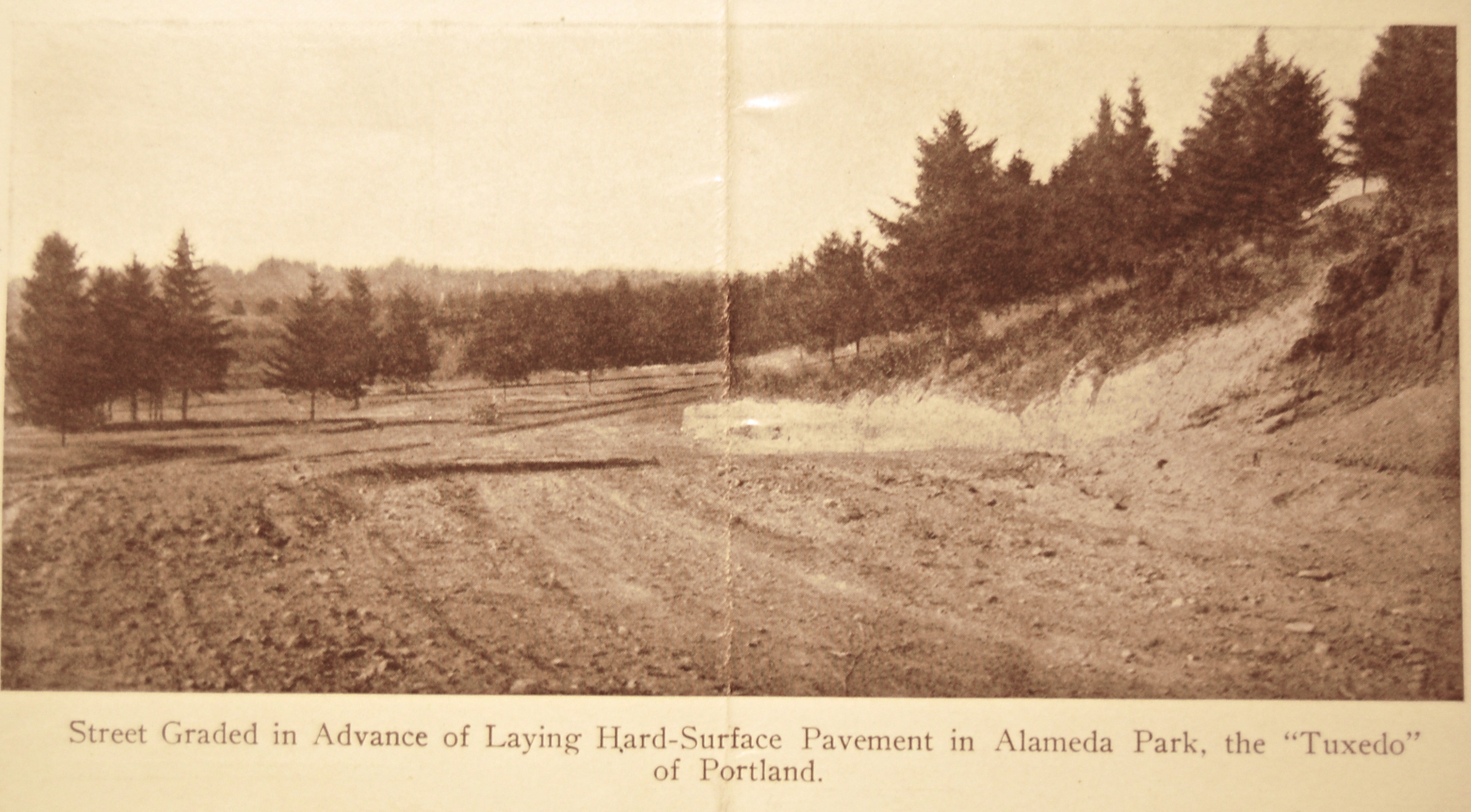
Text and images in the brochure go on to talk about the many virtues of the property—descriptions that are a bit ironic since when this went to print, the “Tuxedo” was little more than gravel streets, some concrete curbs, mud and brush.

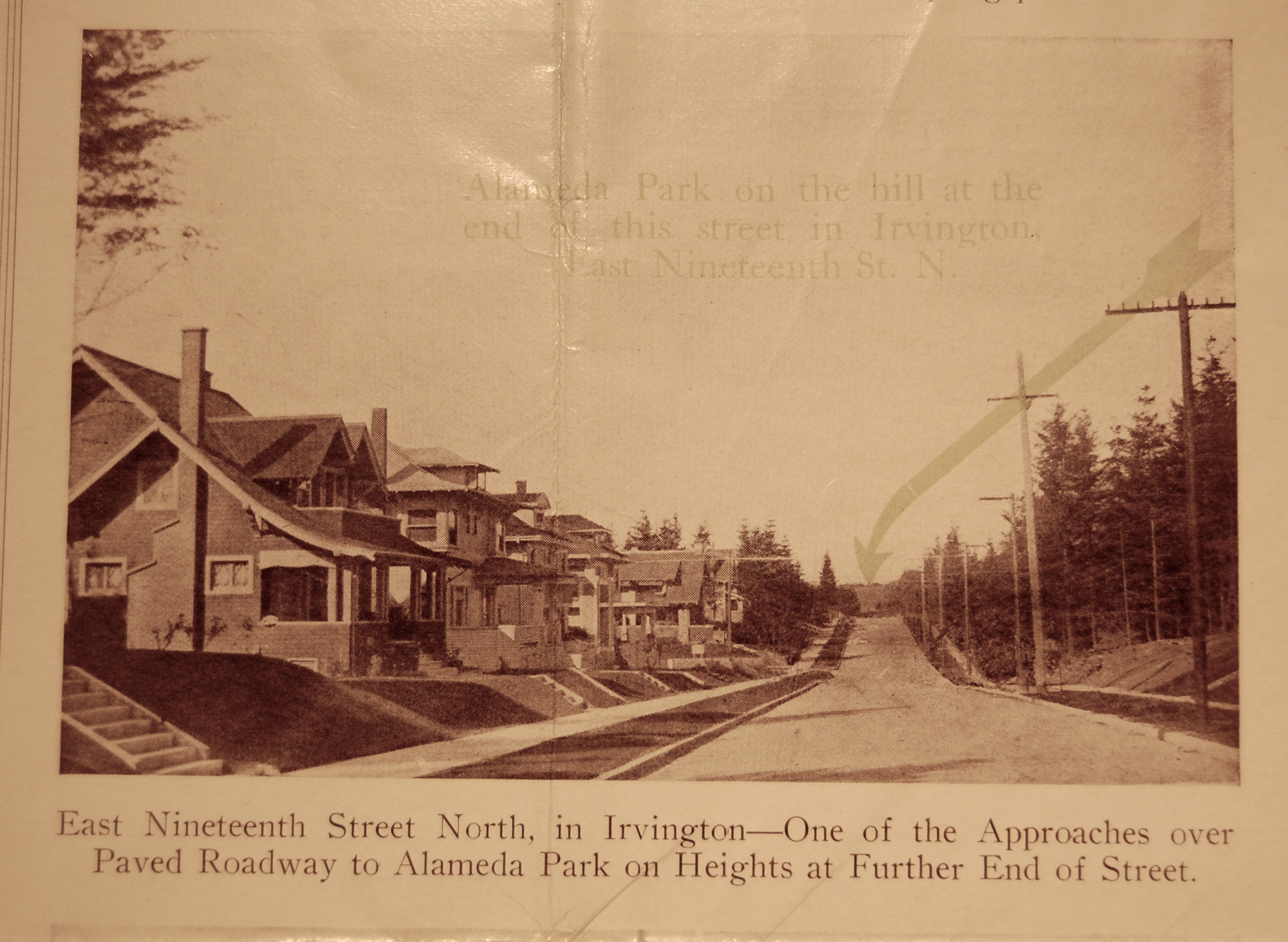
Another distinctive feature is the way in which the proponents boldly benchmark and shamelessly rip off nearby Irvington, which was established, successful and featured solid property values. Check out this panel:

The green text is faded, but it’s pointing out that tiny patch of mud and trees at the far north end of this lovely Irvington street view, as if to say: “Alameda…it’s up there.” Throughout the brochure, Alameda Land Company boosters tried to build their own credibility on the back of Irvington (which was developed earlier and by a different company that didn’t much appreciate this kind of attention).

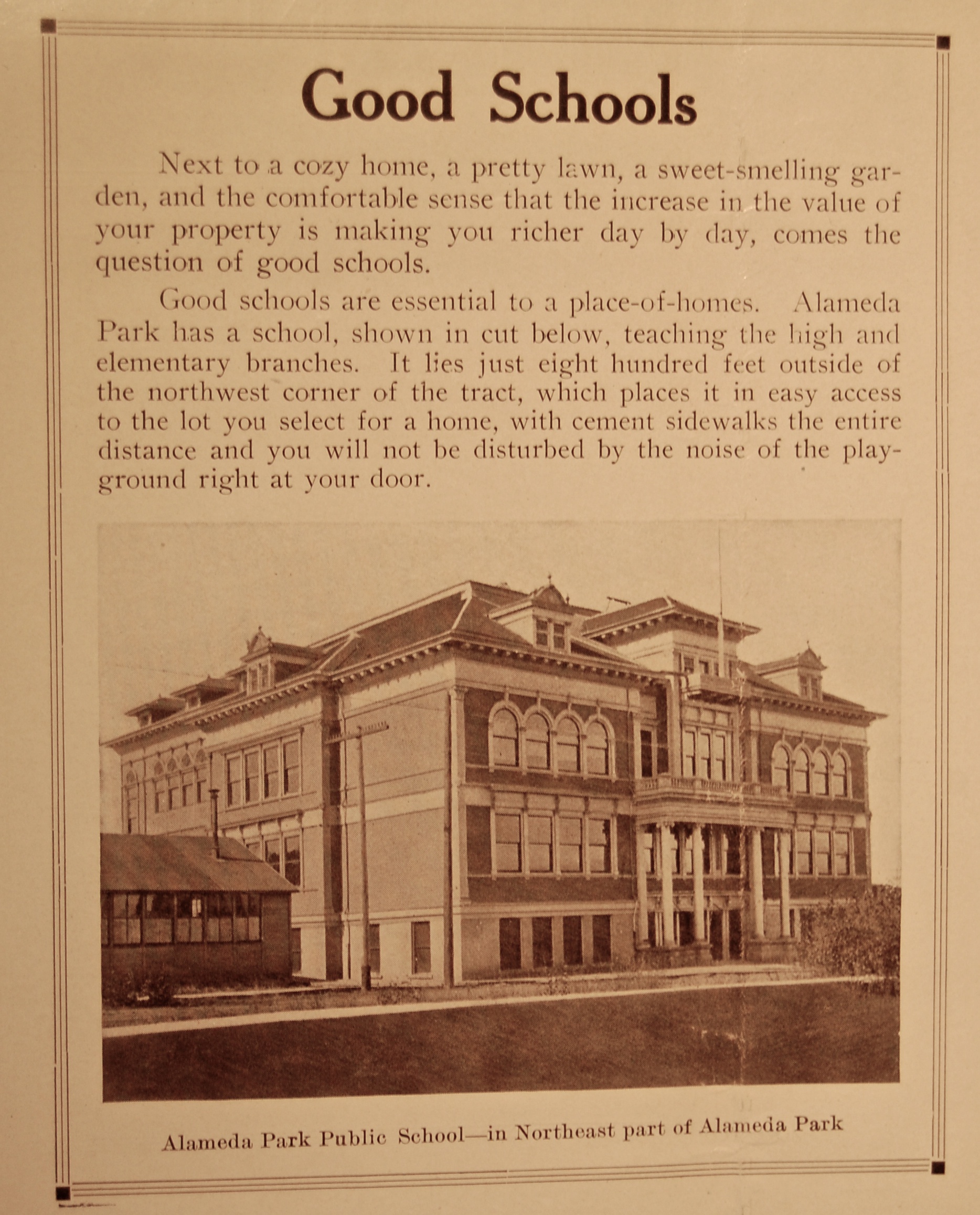
And here’s one that took some real initiative: calling the Irvington School the Alameda School. Just to be clear, this is the original Irvington School. There was never a school like this in Alameda. Period. It’s a bald-faced lie in black and white.

Don’t believe everything you read: there was never a school like this in Alameda…it’s the original Irvington School.

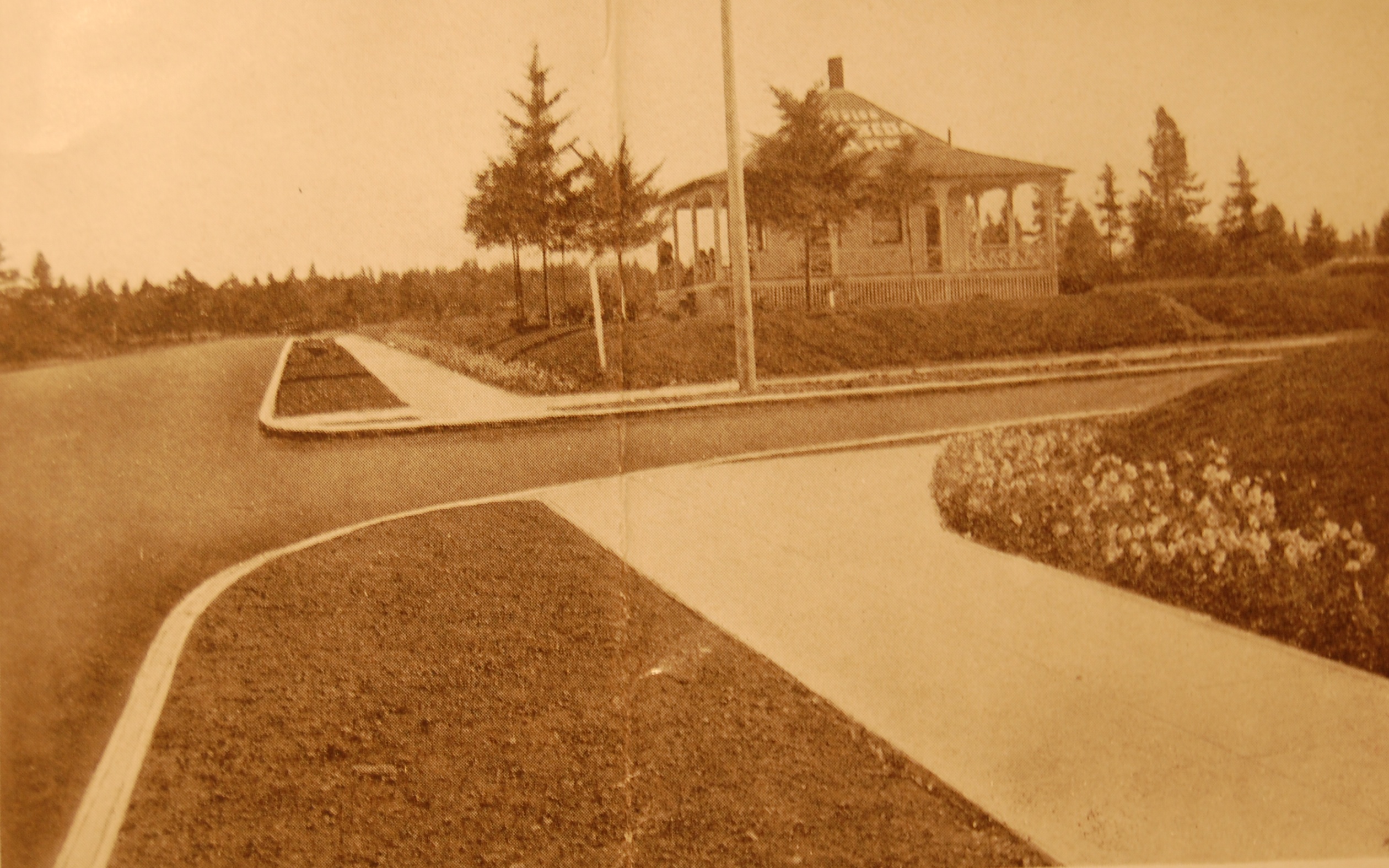
For us though, always in search of more information about the Alameda Land Company, the real gems of this brochure include the photo of the company’s tract office, which was located on the southeast corner of 29th and Mason. Check it out:

Looking east on Mason, just west of NE 29th Avenue. Note that the streetcar tracks have not arrived yet. A later photo taken from nearby looking north shows the railing and a banner that reads “Alameda Land Company Tract Office,” which appears to be on the roof too.

And saving the best for last: this view of NE Regents Drive, looking downhill, long before the neighborhood we know today. About as close as we get to time travel.

With thanks to our friends at the Architectural Heritage Center for sharing.

A hill with a lot of history…

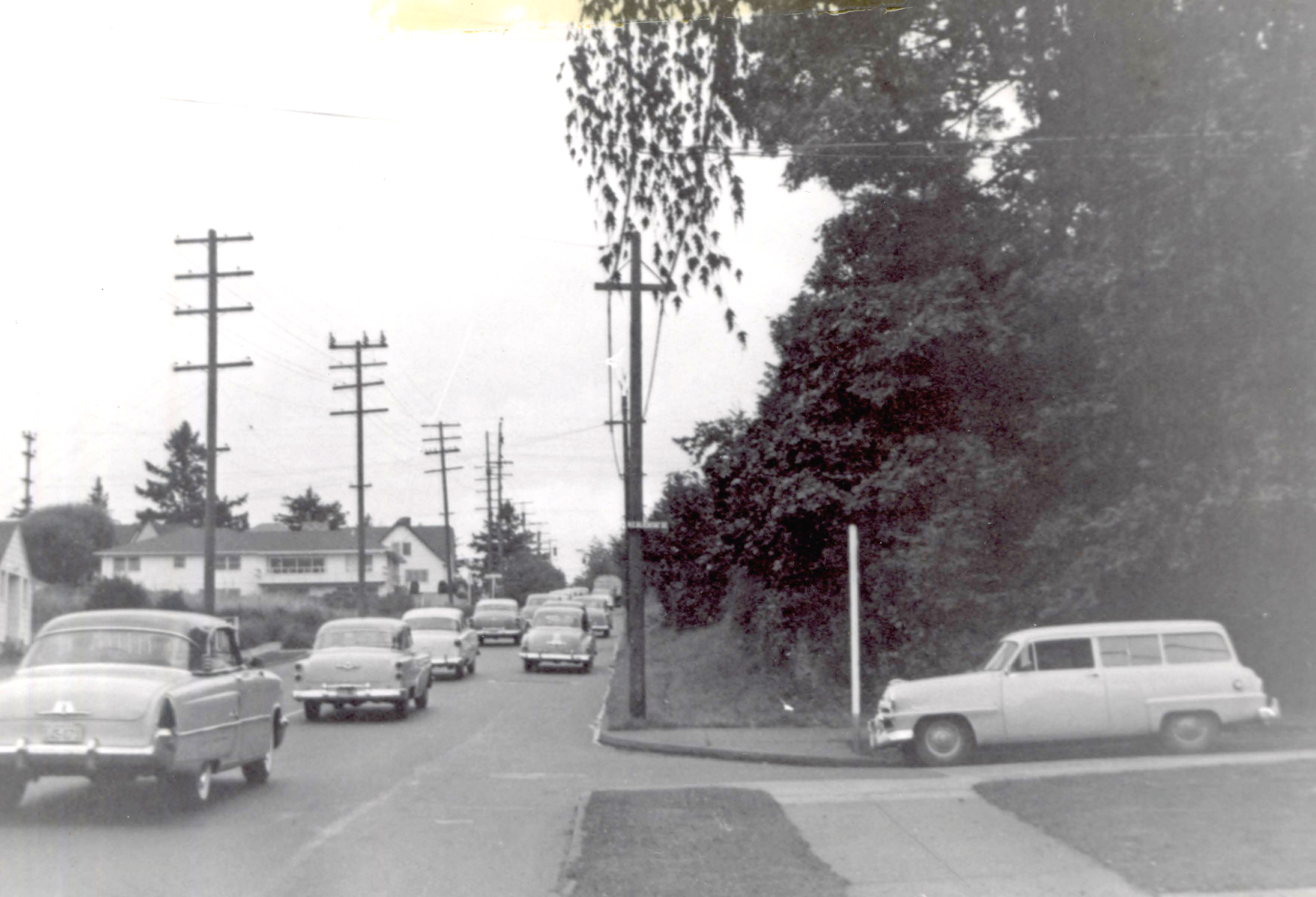
Check out this view looking north up the hill at NE 33rd and Fremont–Gravelly Hill–taken at Klickitat Street in 1954.

Photo Courtesy of City of Portland Archives, image A2005-001.955. Click for a larger view.

Two lanes of traffic northbound, and those were the days of the wide-body car. And you think it’s a tight fit today!

Have a good look around and you’ll see the house on the southwest corner, a Roman-brick ranch with swimming pool that collapsed in the late 1980s and early 1990s. You’ll also see that the brush and trees on the east side of the street are still there, just a little bigger today. Street signs have changed style since then. The upslope houses on the west side of the street haven’t been built yet.

Way back, this was the summit of Gravelly Hill, a one-time gravel pit and garbage dump for east Portland. The contributing factor to the demise of the former home that occupied the southwest corner was the underlying instability of the slope due to the gravelly soils and the not-fully-compacted refuse the house was built upon.

We’re working on a careful look at the history of Gravelly Hill and found this photo fascinating. Believe it or not, we’ve found news stories in The Oregonian from the early 1900s that refer to fox hunts (as in social groups of people on horseback with dogs riding about the countryside) that began and ended at the base of this hill. Farmers and fruitgrowers tilled the soil here for a generation perfecting new breeds of strawberries and apples. Boxing matches were held out this way, far beyond the edges of the city, in a barn perched on the hillside. And residents who wanted more space around them lived and died out here in the country where they could appreciate the view from Gravelly Hill.

Let’s just say that it’s a hill with a lot of history.

And today, just like half a century ago, it’s still a busy intersection, one of the neighborhood’s most dangerous, and one of our least favorites.

With thanks to the Stanley Parr Archives at the City of Portland for this photo from the past.

Window Inspiration

We’ve always enjoyed walking the neighborhood and contemplating the many layers of history here in Alameda. It’s also always interesting to see how past and current homeowners have responded—or not—to the history of their homes. Sometimes inspiring; sometimes perplexing.

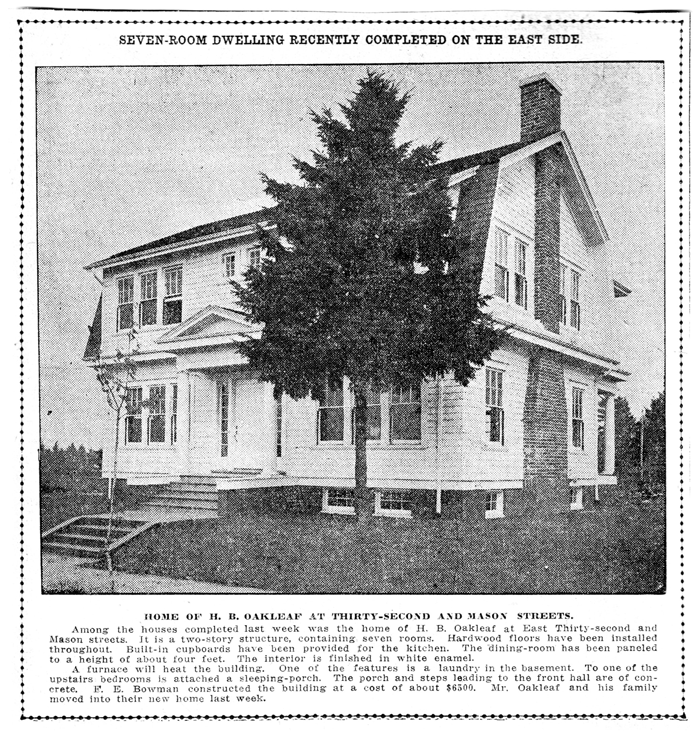
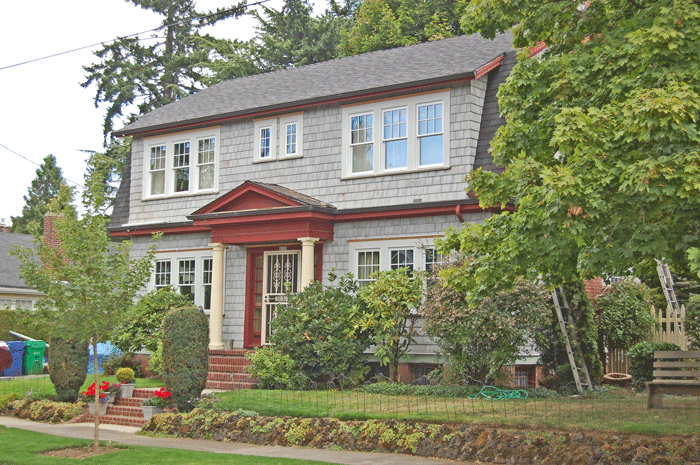
One neighbor at the corner of NE 32nd and Mason has been busy putting things back like they were almost 100 years ago when this Dutch colonial was built by Portland homebuilder Frank E. Bowman.

Constructed originally for $6,500 for H.B. Oakleaf and his family, the home changed hands across the generations and along the way stylistic “updates” and maintenance began to change the look of the home’s exterior. Aluminum siding was put up over the original cedar shake siding. Wooden windows were pulled out in favor of the dreaded aluminum slider windows. Wooden trim, sills and lentil molding were removed. Much of the original charm seen in this photograph — which ran in The Oregonian on September 6, 1914 — was slowly drained away.

Fast forward to this summer, when Alamedans Steve and Teresa Goodman made good on a long-time goal: replace the aluminum windows with traditional wood windows; remove the 1960s siding and restore the exterior to more traditional cedar shakes.

That’s 36 windows to be exact (wood clad, low-E, double-hung, double glazed and argon filled windows) and if you look closely, complete with lintel molding up top and wooden sills below. Steve and Teresa have been thinking about this since the 1980s, and as Steve says, “better late than never.”

So, if you are looking for a little inspiration about the value of restoring your home to its more traditional roots, walk by 32nd and Mason and take stock. Nice work, Steve and Teresa.

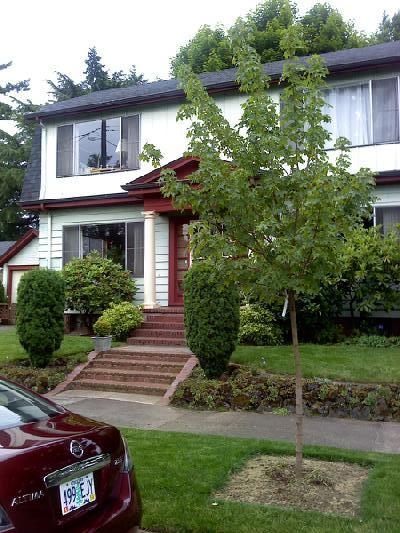
September 10th Post Script: An interested reader wanted to see what it looked like before. I’m sure Steve won’t mind if I share this picture, which he took…

Vintage Portland Photographs

We’d like to recommend a great local website that will feed your curiosity about Portland history: www.vintageportland.wordpress.com

This excellent site, which launched last November, features a steady parade of high resolution photos that you’ll want to look at close-up for clues to the past and the present. We like to download the photos and then explore them in detail. Look closely and you might see the person in the upstairs window. Or the guy in the distance staring at the photographer from under his fedora. Or the amazing wolf’s head frieze on the cornice of the downtown building.

Taken together they offer a sense of just how much we’ve inherited from the past, how much has been lost, and the importance of recognizing the stewardship role we have at this moment in time to be a bridge between past, present and future.

Keep an eye out there and you might even see a shot or two from the Alameda Park neighborhood! For future reference, we’ve added a link to Vintage Portland on the links sidebar in the lower right side of this page.

Broadway Streetcar Stick-up | A Memory

Here’s a neighborhood memory that brings together a couple of favorite topics we like to wonder about: The open spaces of the early unbuilt neighborhood, and the Broadway Streetcar.

Long-time Alameda Tuesday Club member Terry O’Hanlon checked in with us recently to share these memories. Part of her growing up years – and most of her adult life – has been spent right here in the Alameda neighborhood. During the late 1920s and early 1930s, she and her family lived in the bungalow at 4016 NE 28th.  Here’s a picture:
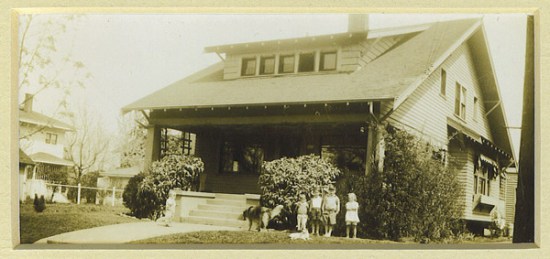
4016 NE 28th, taken about 1932. Photo Courtesy of Terry O’Hanlon.

The house, built in 1921 by the Wickman Building Company, looks much the same today. As a very young person, Terry remembers playing with the neighbor kids, romping out front with her little white dog, and adventuring around the open spaces and empty lots nearby.

She also has an enduring memory of the night her living room provided a convenient stake-out location for the Portland Police.

A spate of robberies had been plaguing the Broadway Streetcar. As AH readers know, 29th and Mason was the end of the streetcar line, where the conductor stepped outside to switch the overhead electrical connection, flipped the seats so they’d be facing forward, and then took a break before the inbound trip back downtown to Broadway and Jefferson. 29th and Mason was a quiet, somewhat out of the limelight spot – perfect for a motorman’s momentary pause. But also perfect for a stick up. The car, and its accumulated collected fares, was a sitting duck out there in the dark at the end of the line.

That’s where Terry’s living room came in handy: at the time, it provided a perfect view to the end of the line—about one block east—so the good guys could keep an eye out for the bad guys. Look back at the photo: See that empty lot to the left (north)? 20 years later, Kenny Birkemeier would build a house on that spot, filling up that open view to the end of the line.

Here’s something to think about: Watching out your window as all around you a neighborhood is being built up. Elder Alamedans remember this phenomenon well, and some have even lamented the loss of their favorite empty lot, hiding spot, or fort location. It was one of the defining experiences of growing up in Alameda up until the late 1940s. A topic for some future post. But back to the living room and the streetcar stick up…

Terry remembers coming downstairs to a darkened first floor, into a room filled with cops all craning their necks to watch the streetcar when it finally came to a stop. The shock of it all seared that image into Terry’s memory banks for these many years. But don’t ask if her if Portland’s Finest got their man…she’s never been sure about that. The image of her darkened house filled with police soaked up all available memory-making bandwidth for the very young person she was at the time.

We’ve seen news stories from 1920s editions of The Oregonian about a burglar operating in the neighborhood, but have never come across any official telling of the streetcar stick-up to help us know how it all turned out. Chances are the Portland Traction Company, which operated the Broadway car during those years, would have wanted to keep a lid on the whole thing anyway so as to not put every carline in jeopardy.

There are other memories about the end of our car line: about the old man and his German shepherd who used to nap on the lawn of the house at the southwest corner of 29th and Mason, watching streetcars come and go. And the enterprising teenager who “hijacked” a driver-less streetcar parked momentarily at 24th and Fremont. And, what it felt like for some on the last ride of the last day.

So many memories to explore, so little time…
Alameda Park Community Church Drawings Found

If you’re a long-time reader of the blog, you’ll recall our piece on the controversy about construction of the Alameda Park Community Church (click here for that page). As a reminder, in the Fall of 1920, neighbors were not happy about plans to build the church on two lots at the southwest corner of 30th Avenue and Mason. The former owners of our house—Walter and Edith Morrison—led a campaign to oppose the building, and then to relocate the planned construction one block east to the island at the corner of Mason and Regents where it was ultimately built (but not before trying unsuccessfully to kick it out of the neigborhood altogether) .

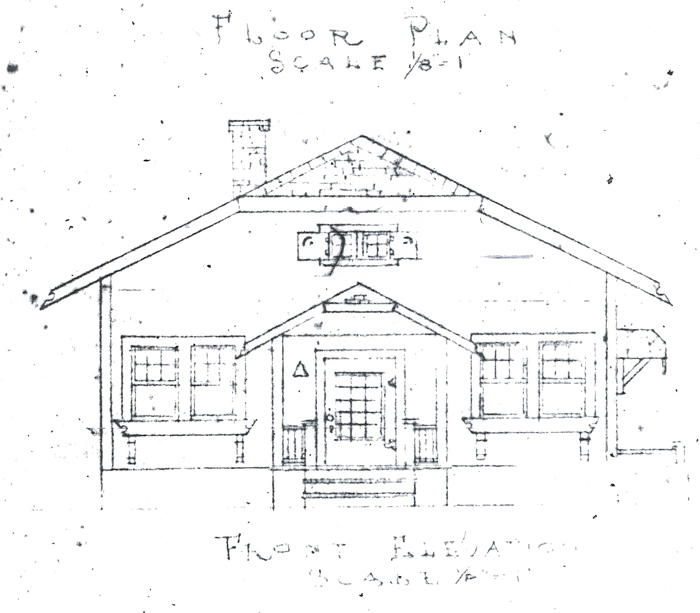
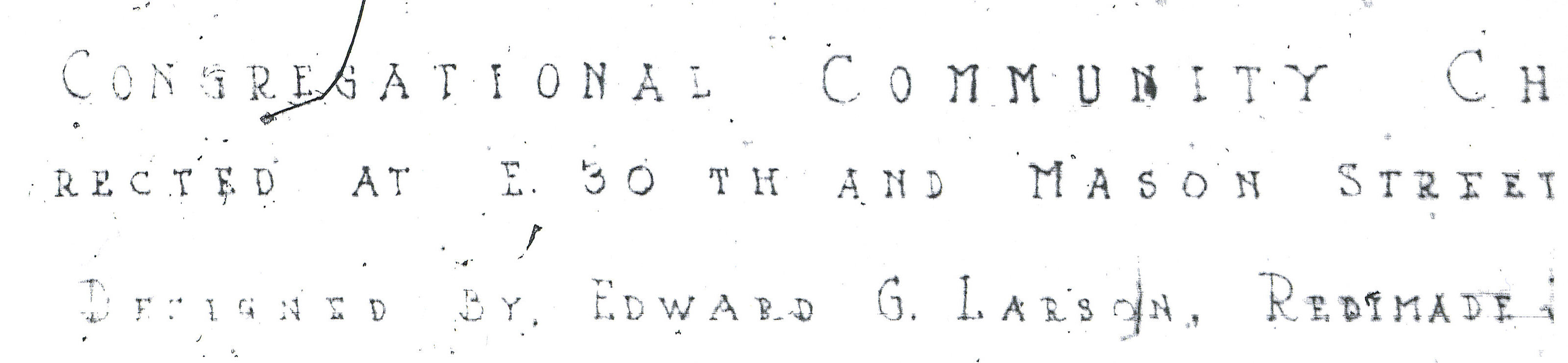
While researching recently through building permits and related documents filed on microfiche, we came across the original drawings for the building, all filed for construction at 30th Avenue and Mason. Take a look:

Detail from elevation drawings filed with construction documents for the city’s permit process. Note that the building was designed by architect Edward G. Larson, working for Redimade Building Company (which was based in Portland).

The church building, now known as the Subud Center, is still going strong and a neat place for meetings, events and large family gatherings.

We continue to keep any ear out for stories, memories and photos of this building. Have something you can share?

Old School


Alameda School, 1923. Picture taken looking southeast from the corner of NE 27th and Fremont. OHS image OrHi 105623.

We received word last week from Portland Public Schools that they’re sharing an inventory of their many historic properties, including our favorite Alameda Elementary School, and nearby Beaumont Middle School.

You can find these reports and many others at this link, which is interestingly housed within the Office of School Modernization.

Looks like Alameda faired well in the analysis in terms of its historic integrity, but Beaumont–due to many alterations made over time–did not. Both buildings were designed by George Jones, the one-man Portland school architectural institution (actually two man institution, his father Thomas had also been architect for the Portland School District years earlier).

The good news for Alameda Elementary School is that it scores well as a candidate for listing on the National Register of Historic Places. Perhaps a small group of interested parents and historic building fans might be up to the task…? Count us in if we can find a quorum.

Be sure to have a look at these other posts related to Alameda School.