More about kit homes and standardized house plans…

The recent discovery of the Sears Roebuck Argyle home just up the street—which is maybe more of a realization than an actual discovery…it’s been there for 100 years—got us to thinking about and looking around in search of other Sears Roebuck cousins.

There are plenty of them, which should not come as a surprise. Here’s a helpful field guide to identification.

In the same way that all art is derivative of other art, so too with residential architecture, defined by the period, the market, the ways of living at the time. As we’ve discussed in the profiles we’ve written about eastside builders, most used widely available sets of building plans.

Page through any of the catalogs from the early years and you’ll see lots of familiar designs, including maybe your own house. For a time during the building boom of the 1920s, The Oregonian actually published sets of plans of example houses, many of which were indeed built on the eastside.

A page from the 1936 Sears Modern Homes Catalog.

Here’s a link to the best repository of old house plans we’ve found (with many thanks to the folks at Antique Home Style). If you haven’t seen this, it’s going to be a rabbit hole you’ll want to go down, there’s so much to see and think about here. Even the marketing language from the catalogs will make you smile. The Wikipedia piece on Sears Modern Homes is actually pretty good as well.

And here’s another good local source of information about mail-order homes, and all things related to older buildings in our fine city.

Here’s the invitation and challenge: Next time you’re out for a walk (good for you and a great way to experience neighborhood history), see if you can find built versions of any of these plans. We’ll welcome any insights or photos of matches you find.

Adaptive reuse on NE 30th: A viable alternative to teardown

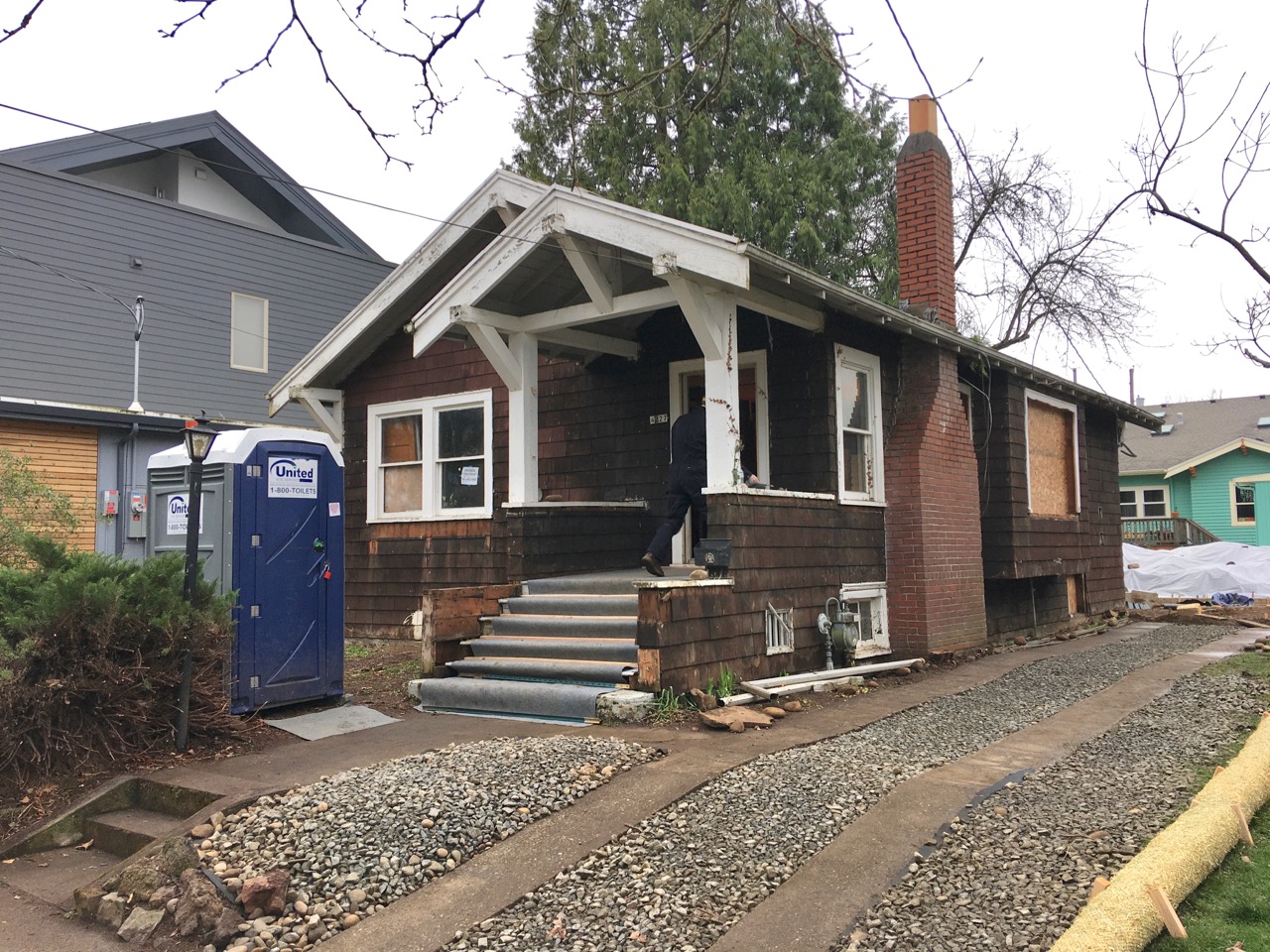
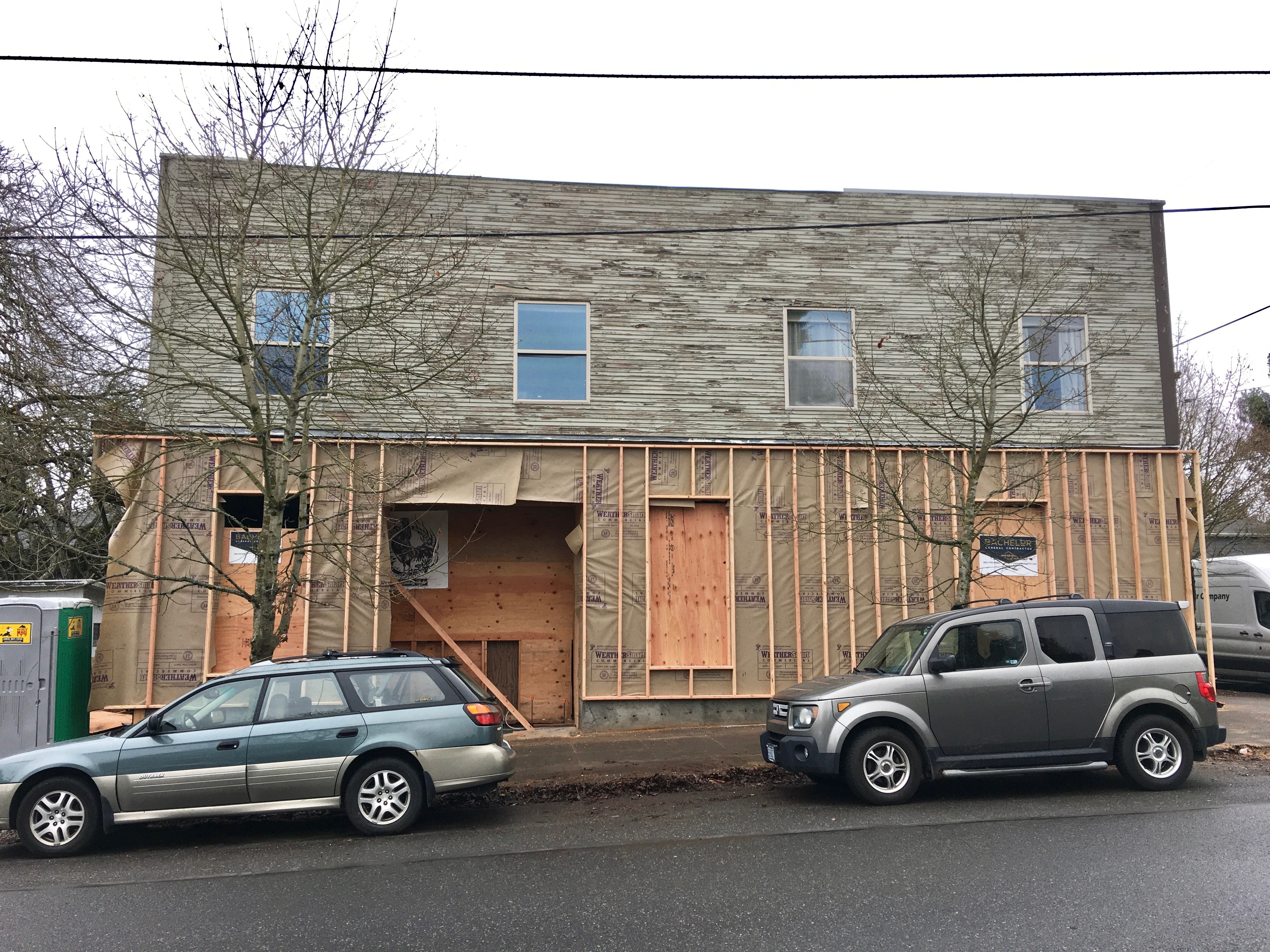
When the dumpsters and porta-potty arrived a few weeks ago out in front of the old house, we presumed the worst. We’d seen the 1921 Craftsman bungalow near NE 30th and Skidmore decline as bags of garbage piled up on the front porch, bushes grew up over the car in the driveway and the electricity was turned off.

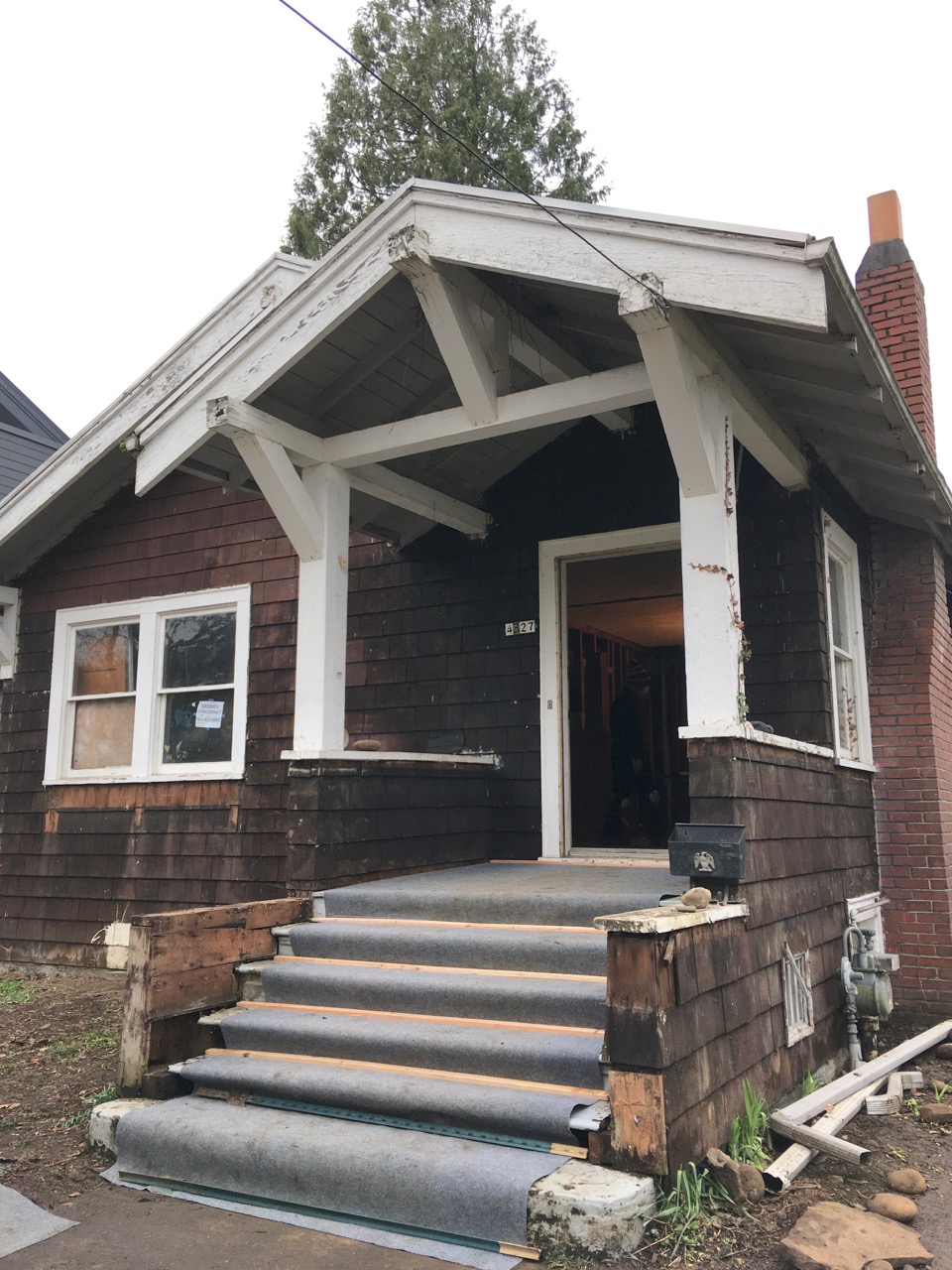
This compact 1921 bungalow near NE 30th and Skidmore in Alameda is being revived from what looked like a sure path toward teardown. March 2, 2020.

Taken with its slow descent over the last couple of years, the recent signals seemed clear enough the property had changed hands and would be torn down to make way for another quickly-built three-story unit (or two) that maximized lot lines and financial returns. We’ve seen this story play out before, including for the old bungalow that used to stand right next door to this unlikely survivor.

But this story is headed in a different direction.

The 1,000-square-foot 1921 Alameda bungalow that looked like the next candidate for a teardown is now being revived, restored and repurposed by a nearby neighbor couple who couldn’t bear to see another teardown / big box happen and who wanted to make room for their extended family (they’re adding an addition to the back of the old bungalow to give the modern family a bit more space).

Harry Ford and Amy Garlock, who live in the house directly across the backyard lot line, watched back in 2016 as the former house kitty-corner across the backyard did get torn down and replaced by two three-story semi-attached boxes which sold for almost $1 million each. When it looked like the bungalow directly behind them was headed down the same path, they began to wonder if there was something they could do.

“We bought it partly so that there wouldn’t be another giant duplex in our backyard,” says Ford.

But Ford also explains the house—which will share a big now-open backyard with their own place on NE 29th—will help meet a very real contemporary need: a quality place to live for their aging-in-place parents.

It’s interesting to note that back in the day, a similar multi-generational family-as-neighbor arrangement was in place just around the corner with the family that once lived in the now-gone bungalow and their in-laws who lived right next door. Former residents of that house remembered dinners that went back and forth, the sharing of tools, supplies, grandparents helping with babysitting. It worked out great for everyone.

Today, Ford is looking forward to having his in-laws just across the backyard, and to interrupting the teardown trend by keeping—and adapting—the historic fabric of the neighborhood. He acknowledges that pretty much any other purchaser of the very run-down house would have razed, rebuilt and sold high to repay the construction loan, then moved on to the next project.

For his family though, the ability to acquire an existing older home at a reasonable price literally in their own backyard, combined with the ability to meet the families’ needs at the moment and for the foreseeable future, made this a reasonable thing to do. Ford and Garlock look at the investment in restoration as a good long-term proposition given the multiple types of “bottom lines” it helps them achieve: economics, quality of life, aesthetics and sustainability.

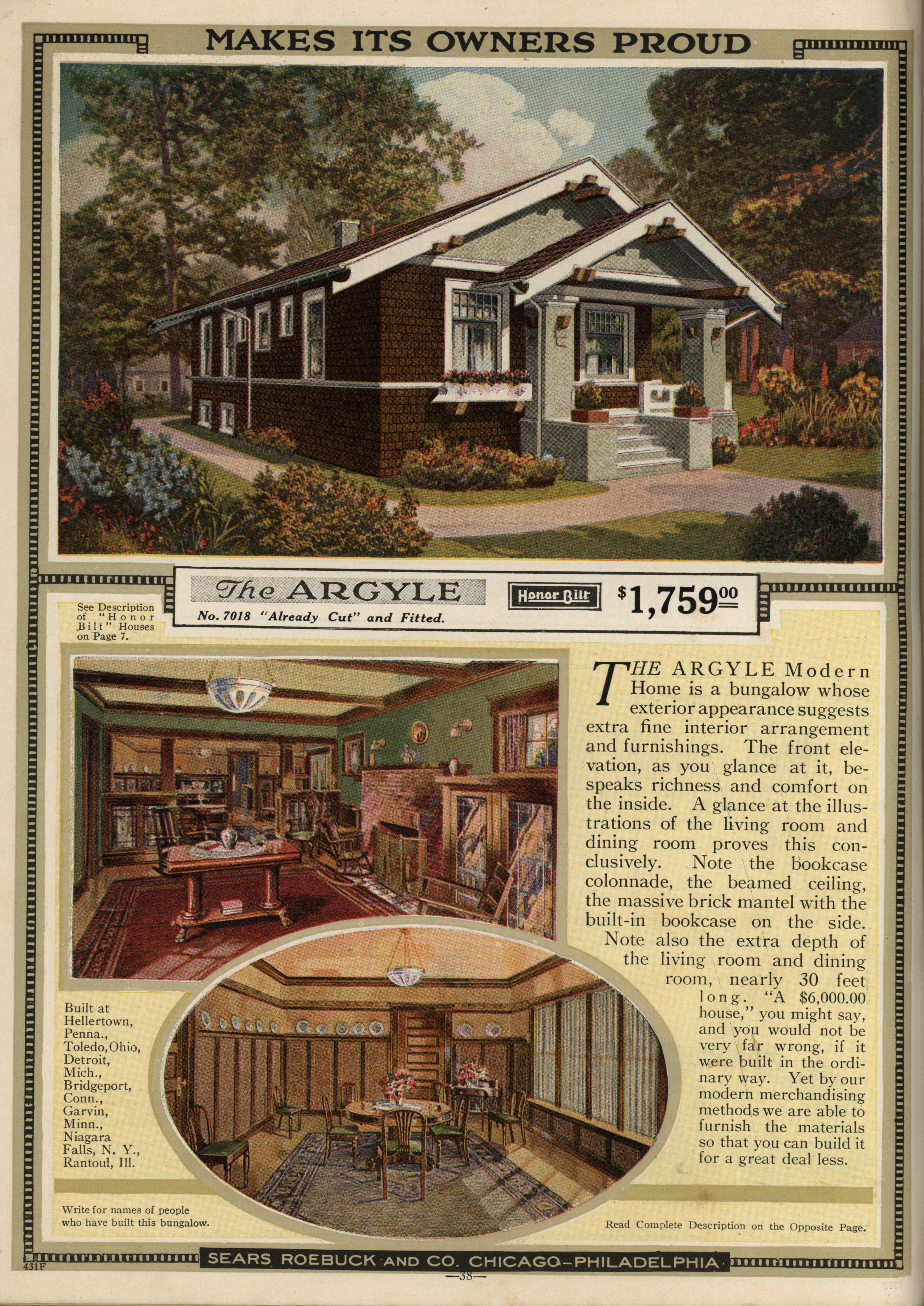
The origin of the house has an interesting story: when AH started exploring the home’s history this week, we determined that it’s a Sears Roebuck house, built in 1921 by builder Albert W. Horn. The floor plan is pure Sears Argyle, one of the company’s most successful kit homes, sold from 1917-1925. Here, take a look:

The Argyle page from a 1921 Sears Roebuck catalog. From 1908 through 1940, Sears sold more than 70,000 kit homes that were built in almost every major US city by homeowners, their friends and in some cases like this one, actual home builders.


1921 Sears Roebuck Argyle floor plan, from the catalog. A solid match with the NE 30th Avenue bungalow.


On a recent visit, the scope of the work necessary to bring back the 1921 bungalow was evident: Heating, plumbing, electrical, all interior walls, kitchen, bathroom, fireplace, chimney, exterior siding, finishes, window trim. The 100-year-old foundation and framing are solid. Everything else needs attention.

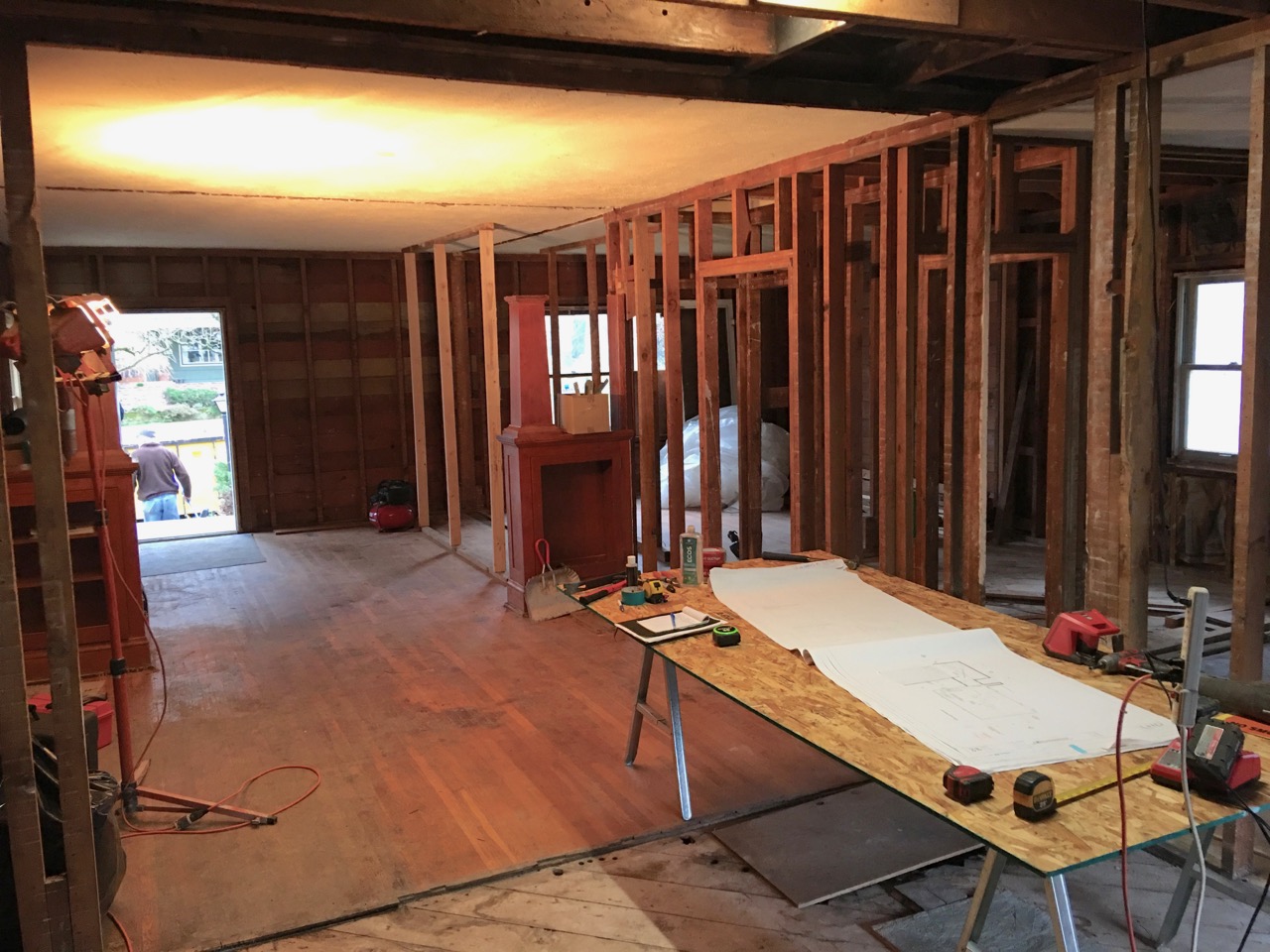
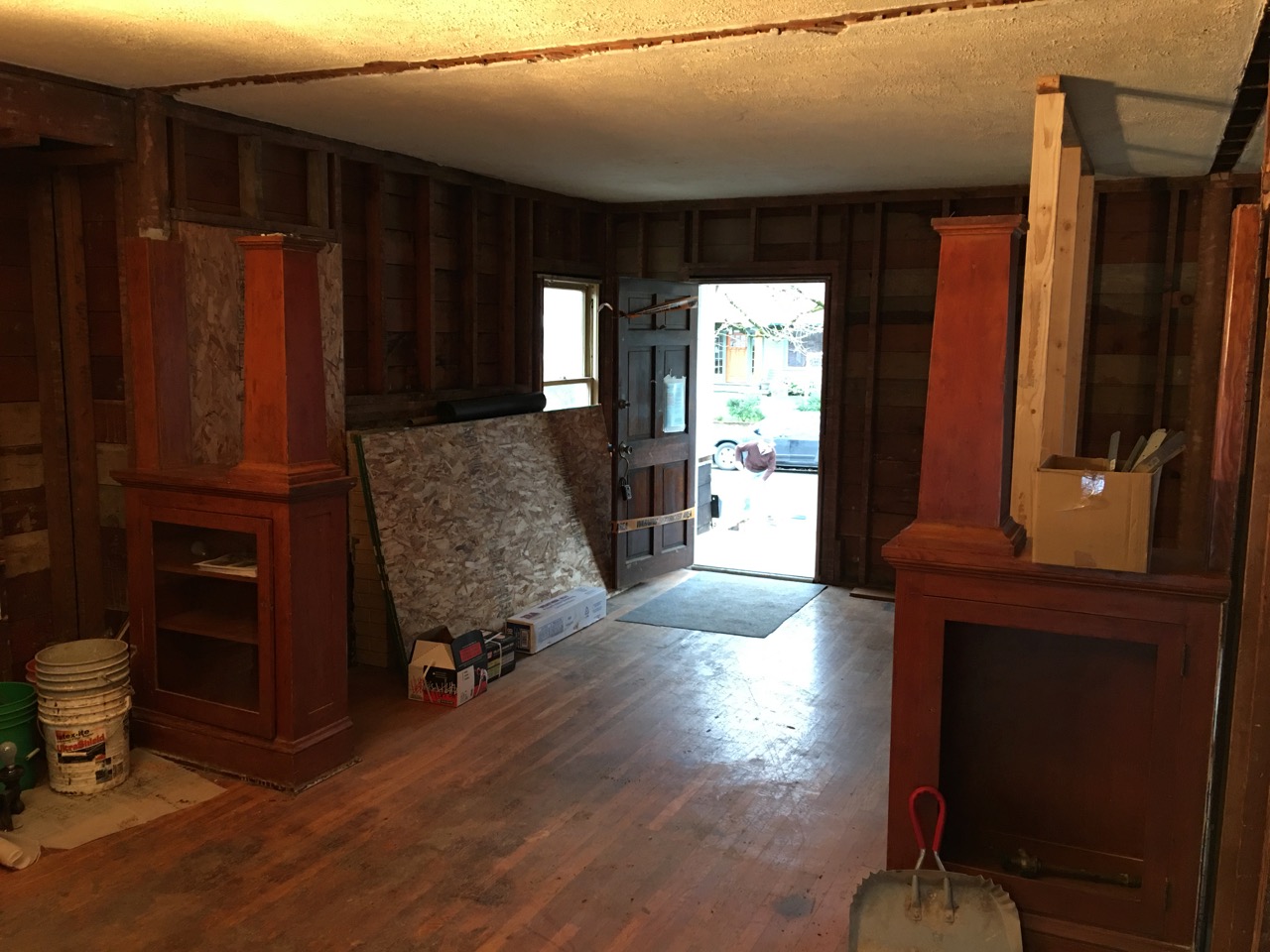
Standing in the kitchen looking toward the front door through the dining room and living room. There’s a bedroom in the front right, a bathroom down the hall and a bedroom in the back, just to the right in this picture. Turn 90 degrees to the right and there’s a stairway into the full basement. March 2, 2020.

“Sometimes, going down to the studs in an old house like this is just easier because you know exactly what you’re working with,” said Craig McNinch of McNinch Construction who is running the project utilizing drawings by Lynn Harritt. He also restored Ford and Garlock’s current bungalow on NE 29th. “This place has great bones,” says McNinch, gesturing to the full dimension 2 x 4 framing lumber, the solid oak floors and the foundation.

From the dining room looking into the living room. A portal wall framed the opening between the two rooms and came down to meet the columns that are atop the built-in cabinets. Behind the sheets of pressboard material on the left is a fireplace. Just like the historic Argyle plans. March 2, 2020.

McNinch has worked on many restoration projects in the area and acknowledges this one is indeed a challenge. But he likes the vision of restoring what was once a new and exciting home for a young family, the backyard connection of the two houses and families, and the constant stream of positive comments he’s had from neighbors and passersby who are happily surprised with the work. During a recent afternoon, we heard McNinch and his crew loudly encouraged to “keep up the good work” by a passing driver calling from a rolled-down window.

Asbestos abatement contractors recently removed the asphalt shingles revealing the original brown cedar shingle siding. March 2020.

Ford and Garlock’s project to revive the old place reminds all of us that there are alternatives to demolition; that it’s ok to adapt something old to meet current needs; that the grace and history of an old place adds its own kind of meaning to family life.

Stay tuned for updates and more on Sears Roebuck homes.

Parlor stories

It’s been a quiet year so far on the AH blog, in deference to a busy batch of research for home owners and architects, several presentations, and ongoing exploration of our standing lines of history inquiry. We’ve been saving up some favorite old photos sent our way by history friend and photo collector Norm Gholston. Here’s one you’re going to want to take a close look at: the interior of a home in the vicinity of North Albina and Webster just after the turn of the last century.

Click in for a good look and then let’s take it apart in the way we like to do with Norm’s great old photos.

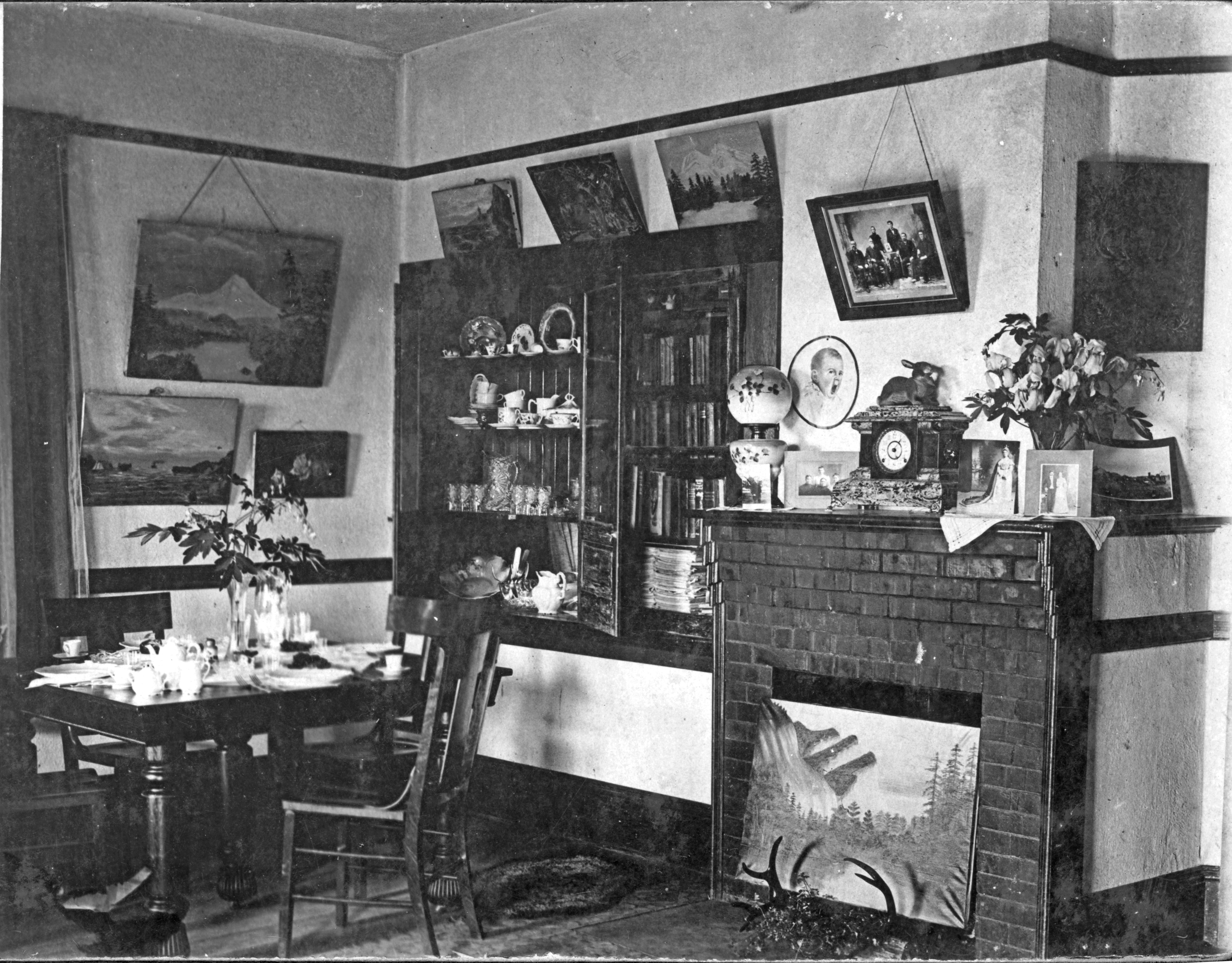
Part gallery, part living room, part library, apparently part dining room, this room is dressed to the nines. These picture rails are fully engaged with local art: Mt. Hood, the Coast, maybe the Columbia River.

The mantlepiece tells multiple chapters of the family story and serves as home for the heirloom clock (and the rabbit). Our very favorite thing in this whole picture is the yawning baby on the wall.

Formal table setting, with two forks at each plate, cloth napkins, the good china. Are the flowers silk or the real thing?

The texture of the plaster—and the various cracks and wear marks—make us think this house has seen a few years. And interesting fireplace: we’ve never seen a wooden fireplace surround quite like that one with corner trim that steps back following the line of bricks.

Bookcases filled. Thin carpet. Painted antlers. Victorian parlor lamp. So much to see.

The actual location of the house remains a bit of mystery. Norm tells us that on the back of the photo is written the address “5021 N. Albina,” which is curious for several reasons:

The address format is post-address change, meaning someone wrote that on there after 1931, which certainly could have happened. But the photo appears earlier than that to us.

The current building at that address is a mid-century brick duplex at the southwest corner of N. Albina and Webster…definitely not this place.

A look back at aerial photography of that corner in 1939 and in 1925 shows a vacant lot, as does the 1924 Sanborn map.

Could be that this is the interior of a house that stood there but was demolished before the 1925 aerial photography, but why would someone write 5021 Albina on the back given that it was never known as 5021? Hmm.

So we’re glad to consider this the interior of a house in the neighborhood from the turn of the last century and leave it at that. One of those mysteries that may never be solved. We like to solve them, but we’re glad just to continue contemplating too.

Another neighborhood goodbye: Food King Market

We know change is the only real constant in our neighborhood life, but it seems we’ve been saying goodbye to businesses and buildings more frequently than usual these days.

Today is the last day of business for Food King Market, located at 2909 NE Prescott. The building has recently sold and the family that has met the neighborhood’s convenience store needs for the last 20-plus years is closing up shop. There most certainly is a story here about owners David and Kaybee and their own history in the place and where their path leads from here. The neighborhood will miss them and the convenience of having a small market nearby for last-minute needs.

For the building, it’s unclear where the path will lead. The new owner is in conversation with the city regarding permitting and here’s what the official status of remodeling plans says:

“Remodel and change the use of the existing structure (which is now consisting of three units: a grocery store, a residence, and a current vacant unit), to either 100% office or a combination of office and retail sales and service. Also proposed is to convert approximately 500-800 sq ft of existing footprint into covered or partially-covered outdoor areas.”

The silver lining at this point for the neighborhood appears that this is not a multi-story Airbnb hotel or condominium. It seems the new owners are considering repurposing aspects of the original building.

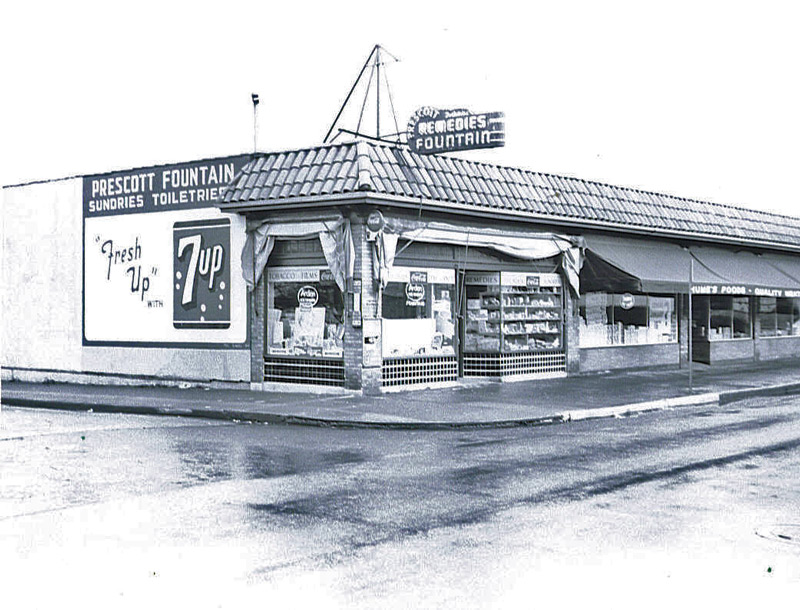
Which leads us to this photo, which accompanied this post we wrote 11 years ago describing the history of the stores that have operated on the site, and shared memories of some of the “kids” who dropped by for iced cokes on credit.

1955, looking northeast from the corner of NE 29th and Prescott. Photo courtesy of Tom Robinson.

Thanks David and Kaybee. We’ll miss being able to zip over for the missing ingredient at the last moment, and we wish you well. And we’ll continue to follow remodel plans for this building which has been a neighborhood institution of sorts for almost 100 years.

In 1911, it’s snowing

With thoughts about snow in the air, let’s turn back the clock to 1911.

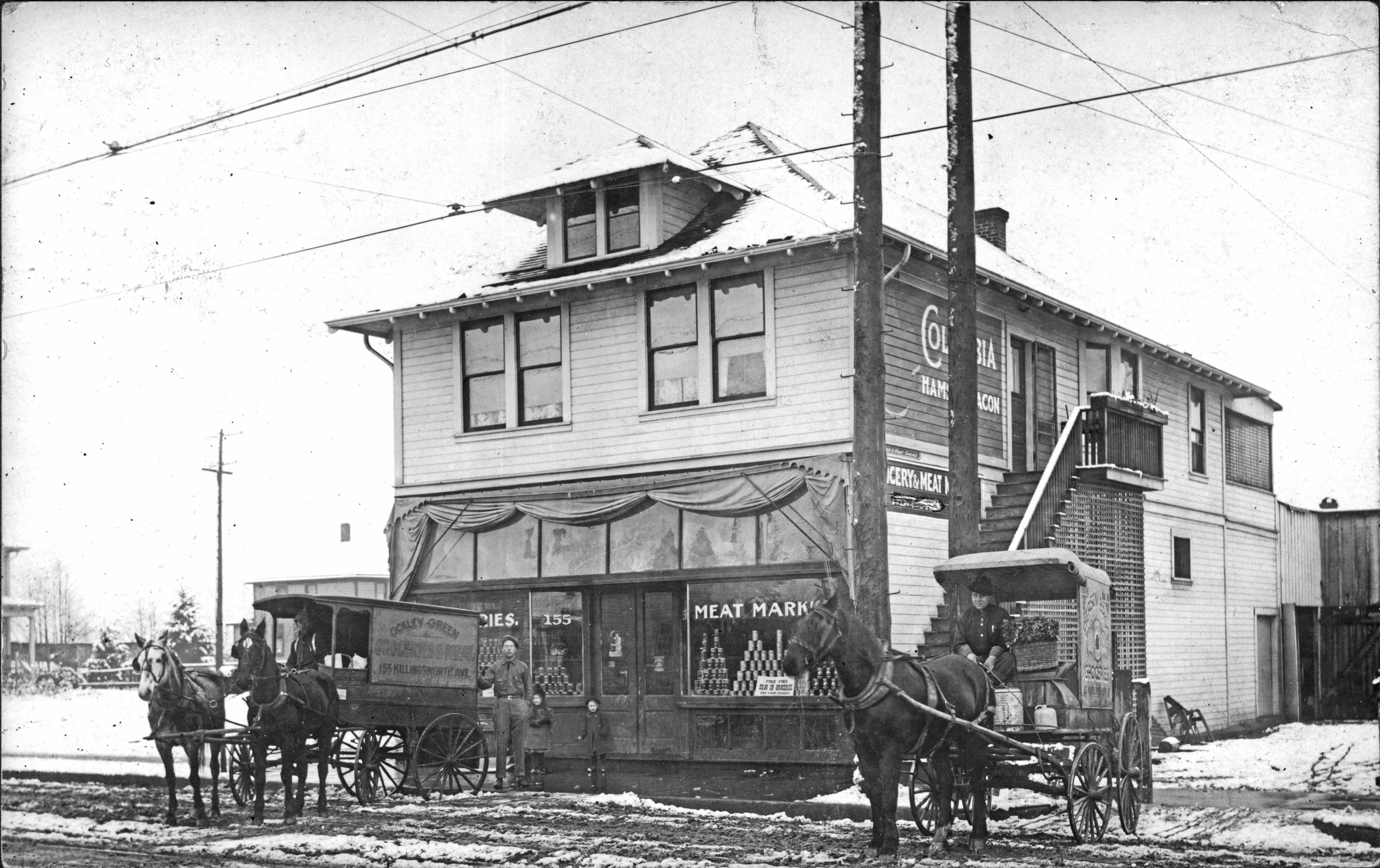
From time to time, AH reader and Portland photo collector Norm Gholston sends along a gem or two from neighborhoods we know well—and some we’re still learning about. Here’s a killer image Norm shared recently, a “real photo” postcard from 1911 that shows a mom and pop grocery from Killingsworth Avenue at the southern edge of today’s Arbor Lodge neighborhood.

There’s so much to see and think about in this photo. Click in for a good look and we’ll share some insights:

Photo courtesy Norm Gholston

Snow! Those four-legged traction devices look pretty steady, don’t they?

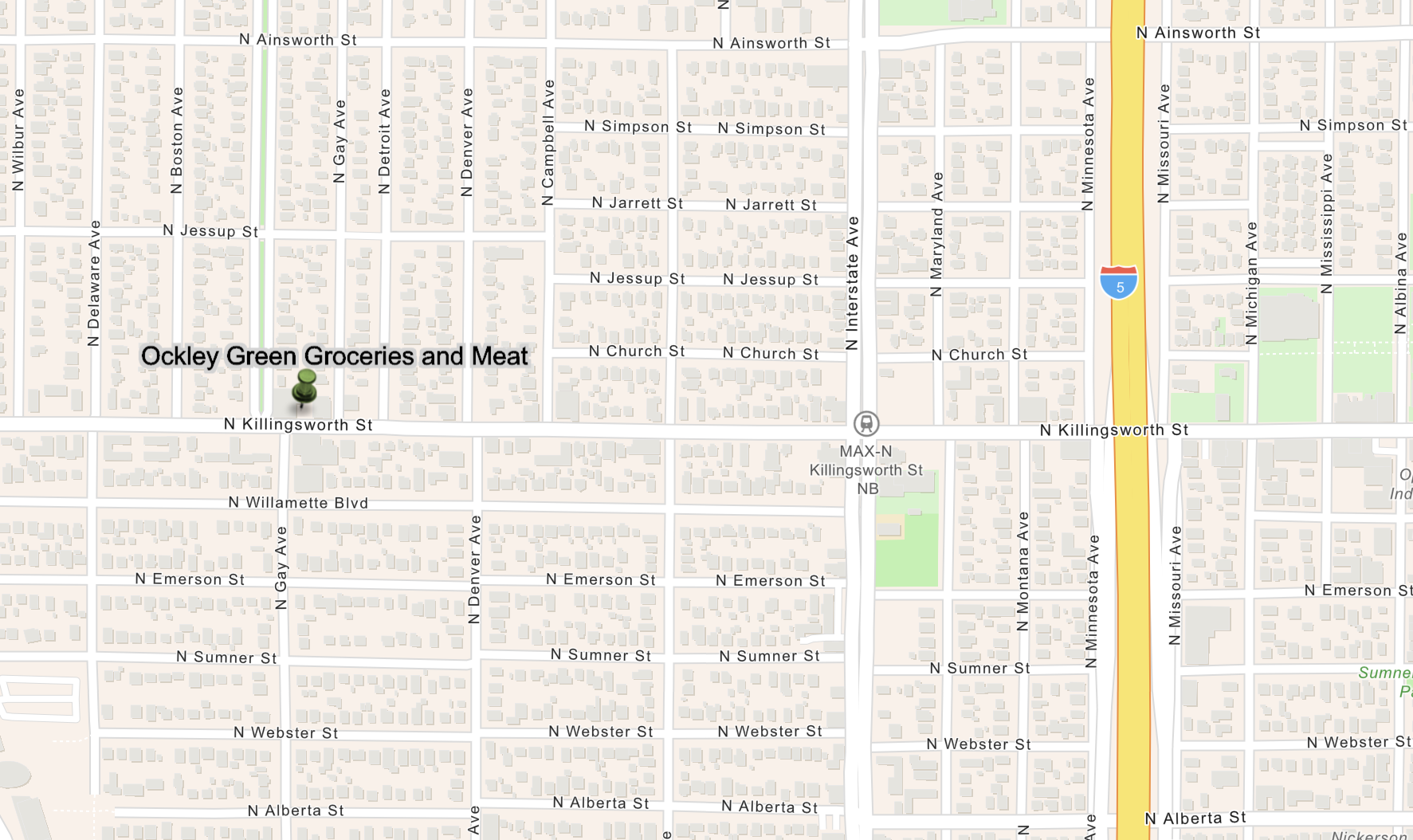
As the writing on the wagon to the left says (and the numbers on the window to the left of the front door suggest), this is 155 Killingsworth Avenue, which before Portland’s Great Renumbering was actually 155 West Killingsworth. When you map that out today, it takes you to 2225 N. Killingsworth, located on the north side of the street just east of the N. Omaha Tree Way, a four-block-long Arbor Lodge boulevard.

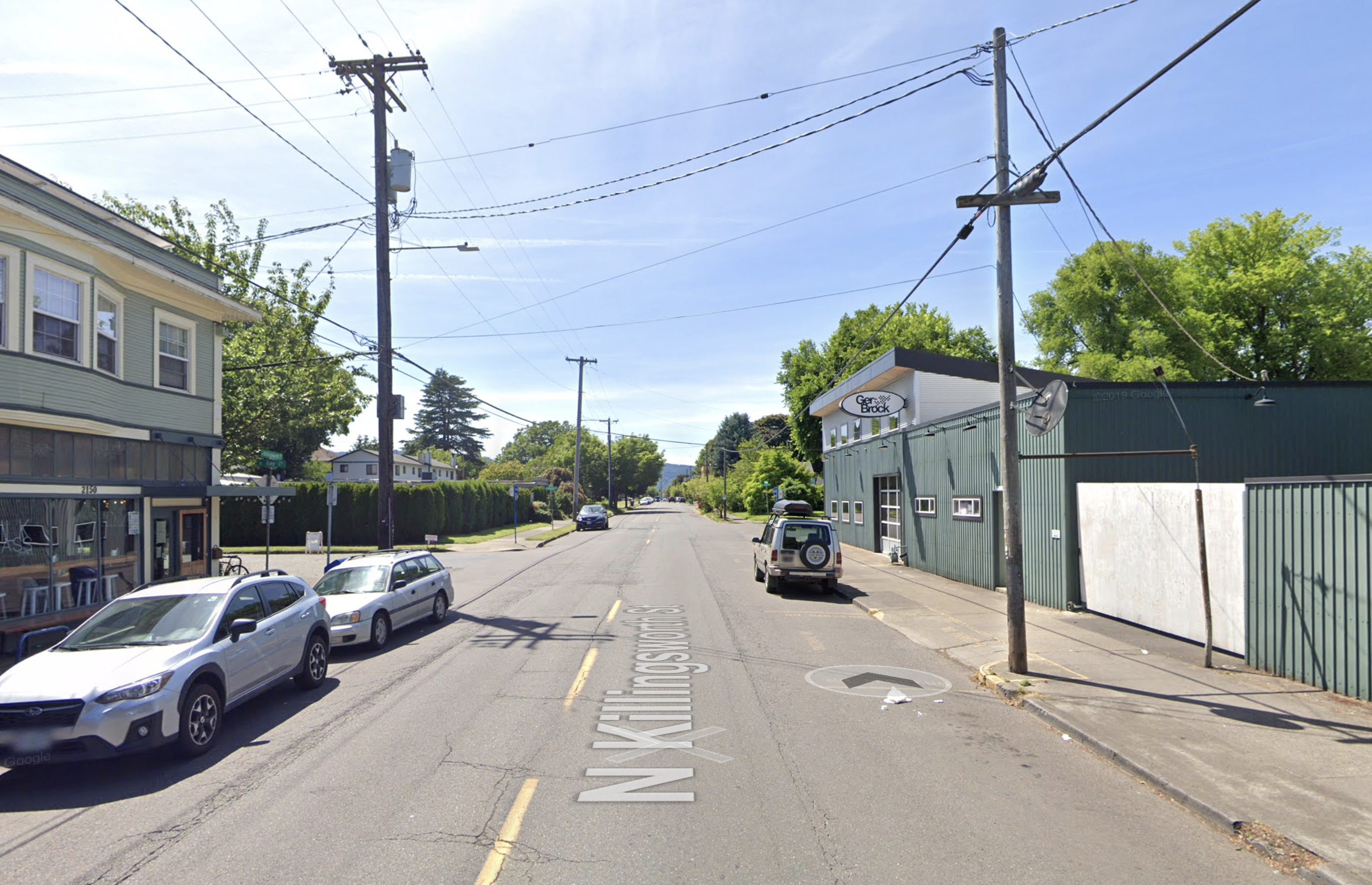
Here’s where this is today, first by map, and then by Google Streetview


In this contemporary Google Streetview image, the horses and wagons would be parked near the utility pole in front of the white gate.


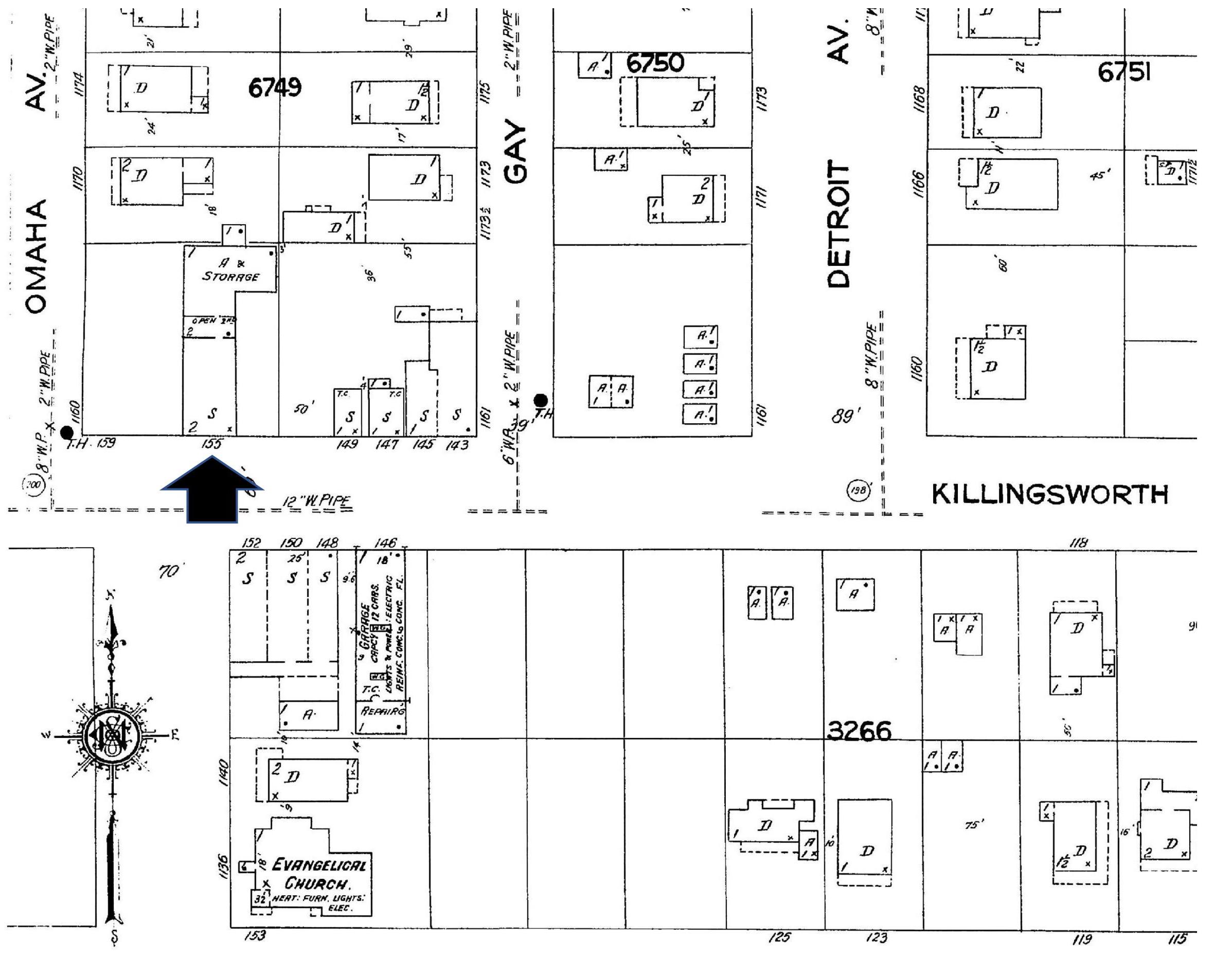
Detail from Sanborn Plate 521 shows the area in 1924. Arrow indicates location of Ockley Green Groceries and Meat.

Interestingly enough, there must be some remnant of the old market building underneath the existing structure of the auto shop that exists at that address today, because a plumbing permit still on file for that address tracks back to construction of the market building in July 1909, and tells us it was indeed a store.

The wagon on the right, with the grinning driver in his great gauntlet gloves, buttoned-up tunic and basket of greens, is driving for Pierson Brothers Grocery, also housed at 155 W. Killingsworth (look very carefully at the writing on his wagon). What was in that drinking jug on the far right next to the kerosene can?

Neither the Pierson Brothers nor Ockley Green Groceries and Meat appear in any of the Polk city directories either side of 1911 when this photo was taken, but don’t tell these guys that. We’ve scoured through newspapers and other business listings of the era and don’t find reference to these businesses either, though the grocery operated for years after the photo was taken. Help wanted ads from 1910 sought an experienced meat cutter to come in on Saturdays. Perhaps that’s when the fresh meat arrived from the nearby Portland Union Stockyards.

Be sure to appreciate the school girls: the younger girl on the right pulling a sled; both are layered up in their wool coats and hats and good winter boots.

Some clever volunteer editor has scratched out the words under the sign near the stairs, readable between the two utility poles. Yes, we can read “Grocery & Meat Market.” No, we can’t read whatever you crossed out. Was it a person’s name? The scratch-out edits were applied directly to the postcard, not to the actual Foster and Kleiser sign. Why?

Thanks to the 1910 census, we know who is living up those unpainted stairs, behind the open screen door. It’s Frank B. and Margaret Ford, who built the building. Ford was a real estate speculator dealing primarily in grocery stores like this and other simple first-floor commercial properties. Frank and Margaret bought and sold many properties on the eastside over the years and when things got tight, Frank took some liberties with certain documents, which got him arrested in 1929 for real estate fraud. But in 1909, he knew the right place to build a market with the new and booming Overlook neighborhood all around.

Frank B. Ford and his partner Theil also built the commercial block across the street which now houses the Milk Glass Market (which is well worth a visit by the way for a coffee and look around at the neat old market building insides). Back to the photo, look carefully at the reflection in the market window panes and you might even be able to make out the form of the building across the street and its clapboard siding. Check out the Sanborn plate again (and the streetview) and you can see the Milk and Glass Market building directly across the street.

Be sure to note the rails running east-west on Killingsworth, visible in the far left bottom of the photo. This is the St. Johns car line. In the 1890s,  somewhere nearby behind the photographer was the re-load point where the steam train came and went to St. Johns and riders transferred to the electric trolley line that ran east and then south toward Portland. A station was built here–at the corner of Killingsworth and Omaha on the south side of the street–and it was called the Ockley Green Station; later it served the electric trolley that went all the way through to St. Johns. You’ll find dozens of references to it in early newspapers of the day. Real estate ads selling houses or renting apartments all say “near Ockley Green Station.” No need for an address or even a cross-streets, everyone knew where Ockley Green Station was (though, thankfully, some did explain Omaha and Killingsworth was the spot).

There’s another mystery we’ve been puzzling over that will remain unsolved for the moment (we’re not without our hunches): the name Ockley Green taken by the station and the market, and eventually the school.

Here’s what we know for sure:

  • Ockley Green was the name of the station from early days. It was not named for a person. There is no person in any of the Portland decadal censuses during that time or in any city directory of that era that we examined with that name.
  • The school that exists today at Ainsworth and Interstate (10 blocks to the northeast) built in 1925 takes its name from the Ockley Green Station. Documents from the Portland Public School archive tell us this fact. The original building was actually built as “Multnomah Public School” in 1893 at N. Missouri and Shaver, but was moved to Interstate and Ainsworth about 1901, and its name changed to Ockley Green (for the station) in about 1909. The first building was demolished and the one we know today built in 1925. But that’s another story.
  • There is no underlying plat or development plan with this name, no streets or other features. It was more of a “district” than a specific place.
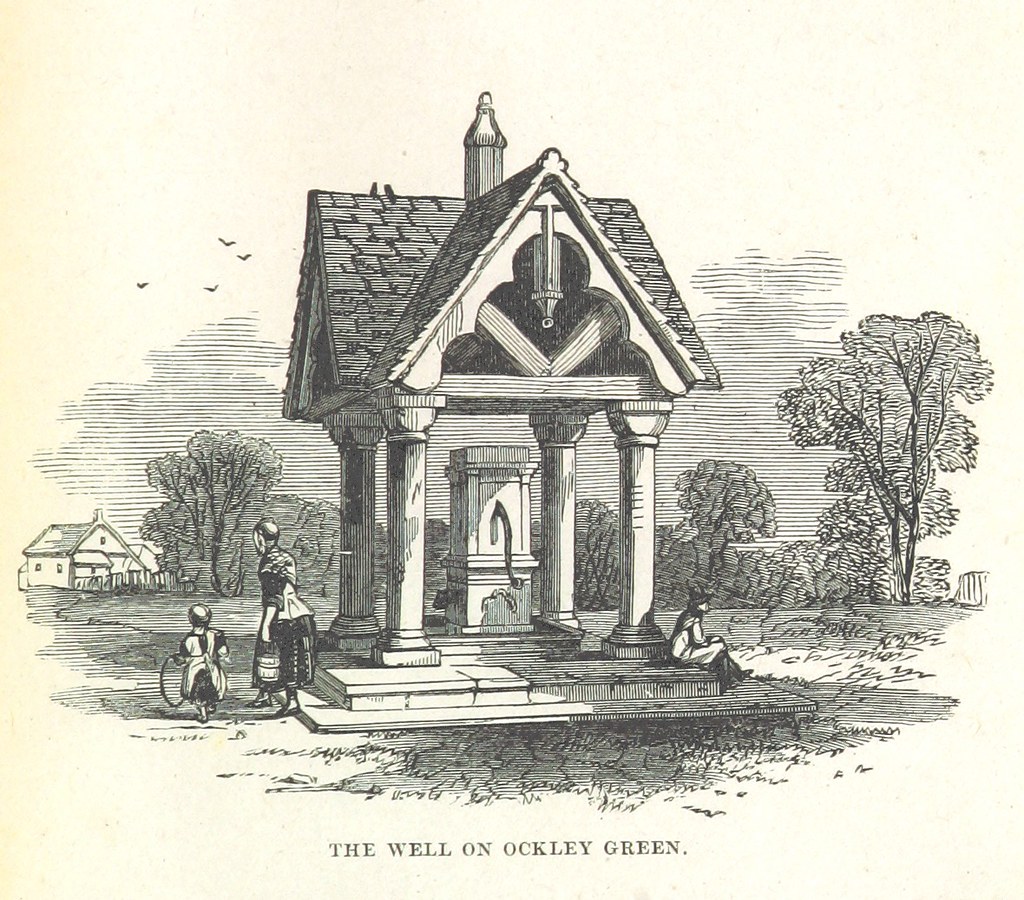
  • Ockley is a picturesque town in Surrey in southern England with a much-written about commons or “green.” Even today, Surrey’s heritage authority reports the most important feature of little Ockley town…”is the long, broad green, which is said to be one of the most impressive in southern England.” Both the green and the town were celebrated in writing and in art during the 1800s. Here’s an example:

From London News, 1851.

We’ve had a good look around on this naming mystery, talked to the Arbor Lodge Neighborhood Association, consulted all of our usual helpful print and public document sources and even stumped a few research librarians. The definitive story behind origin of the name Ockley Green has apparently slipped away, at least for the moment. We have our hunches: immigrant Portlanders with roots in Surrey saw something about the open landscape of the early neighborhood that reminded them of home, and it was comforting to have the place and the memory with them. We completely understand this.

Meanwhile in 1911, it was snowing at 155 West Killingsworth and the grocerymen were still delivering, the kids ready for adventure.


Another View | 30th and Emerson

Recently we’ve written about the adaptive reuse of a former neighborhood grocery store located at the northeast corner of NE 30th and Emerson. Its rebirth as a health clinic and neighborhood coffee shop is as inspiring as another story is disappointing: the impending loss of the Logan Grocery at NE 33rd and Alberta.

Today’s post provides a 40-year look back at NE 30th and Emerson and is the fruit of time spent at one of our favorite places, Portland City Archives, where we’ve been recently working on several research projects (the Vernon water tank is in the pipeline, so to speak, and we’ve found some great photos of that giant coming soon).

While searching for views of some former local grocery stores we’re tracking, we came across this gem from 1980. Click in for a good look.

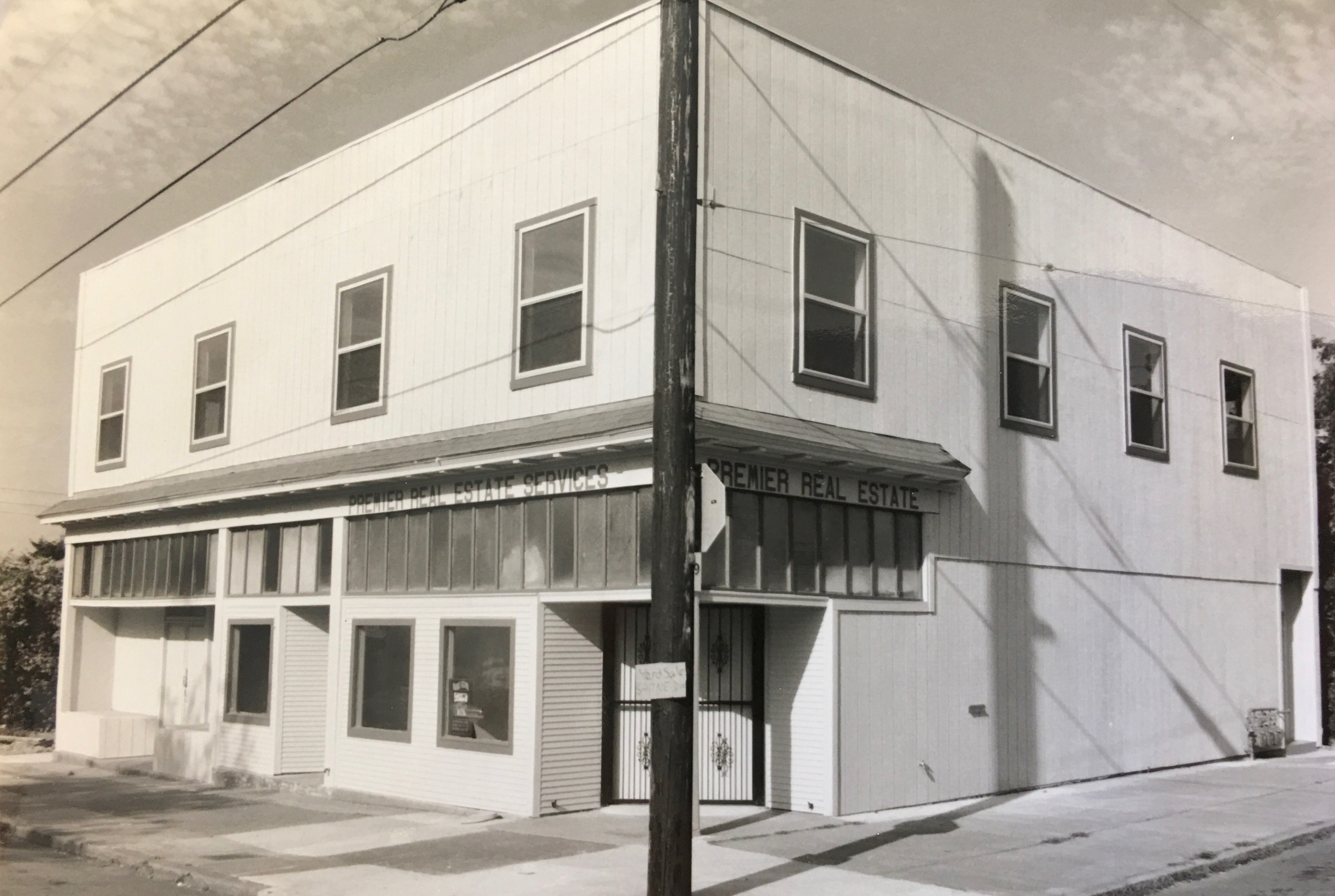
Looking northeast at the corner of NE 30th and Emerson, 1980. Courtesy of Portland City Archives, image A2011-028 APF/15624. A quick look back through newspapers and directories from the 1980s confirms that Premier Real Estate Services, owned by Wayne Jacox, operated from this storefront.

Here’s a similar view today:

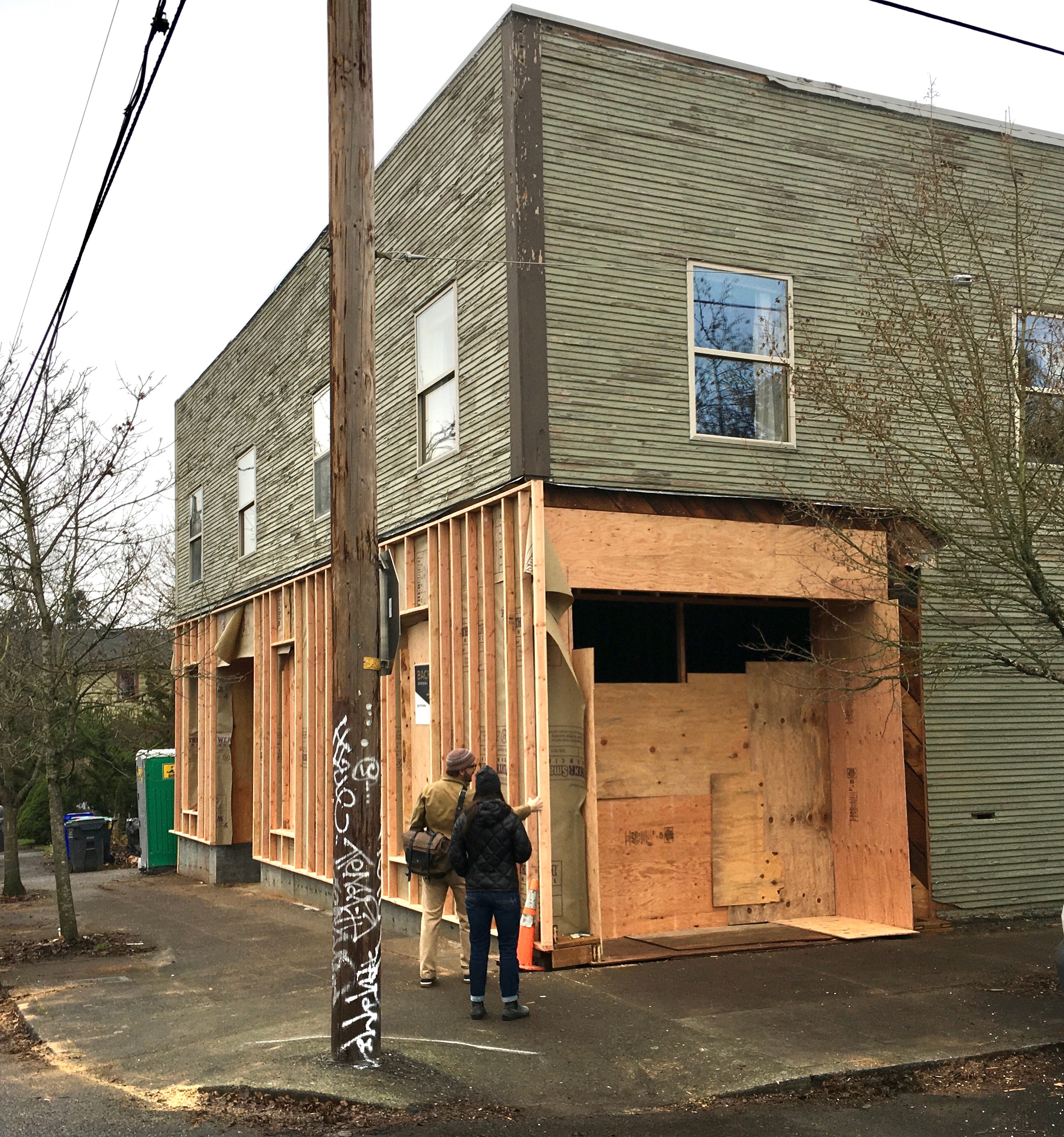
NE 30th and Emerson, January 2019.

No telling when the thin clapboard siding went on (or the T-111 siding came off) and the transom windows were removed. Upstairs windows haven’t changed, nor has the utility pole out front with the stop sign on it. The corner entry is gone, as is the 30th Street entry to the upstairs apartment. Gas meters are still in the same place as 1980. And from the 1980 picture, you can see the two distinct storefronts from the way-back past that align with what the 1924 Sanborn map shows at 1122 and 1124 East 30th Street North.

Definitely worth 1,000 words. Thanks City Archives!


Concordia Conversations: January 12th

Here’s an upcoming free neighborhood event that will bridge past, present and future that might be of interest to AH readers:

“Concordia Conversations,” on the afternoon of Sunday, January 12th, will bring together a panel of neighbors to reflect on the drivers of change in Northeast Portland and to view a short film titled “Diary of a Street,” by Portland artist and neighbor Jordana Leeb. The program will be held at the Cerimon House (5131 NE 23rd) from 3:00-5:30 p.m. on Sunday January 12th.

Panelists include: Bob Boyer, long-time Concordia resident, former State Senator and Northeast Coalition of Neighborhoods chair; Chris Guinn III, owner of Dwell Realty and Elevated Coffee; P. Elise Scolnick, current Board Vice-President for Alberta Main Street and long-time resident; and Diane Linn, Executive Director of Proud Ground, a Portland-based community land trust.

We’ll be there too with a brief program looking back at the early years of neighborhood history.

The program is free, though an RSVP is requested. For more information: tinyurl.com/concordiaconversations

Oregon Encyclopedia adds Alameda

Students of Oregon history should know about the Oregon Encyclopedia (OE), our state’s comprehensive collection of on-line articles covering the history of everything from Obo Addy to Jan Zach and everything in between (some 1,694 topics, in fact, and 24 longer essays on various history themes). It’s a project of the Oregon Historical Society and a tremendous resource for students of all ages. And it’s just good reading.

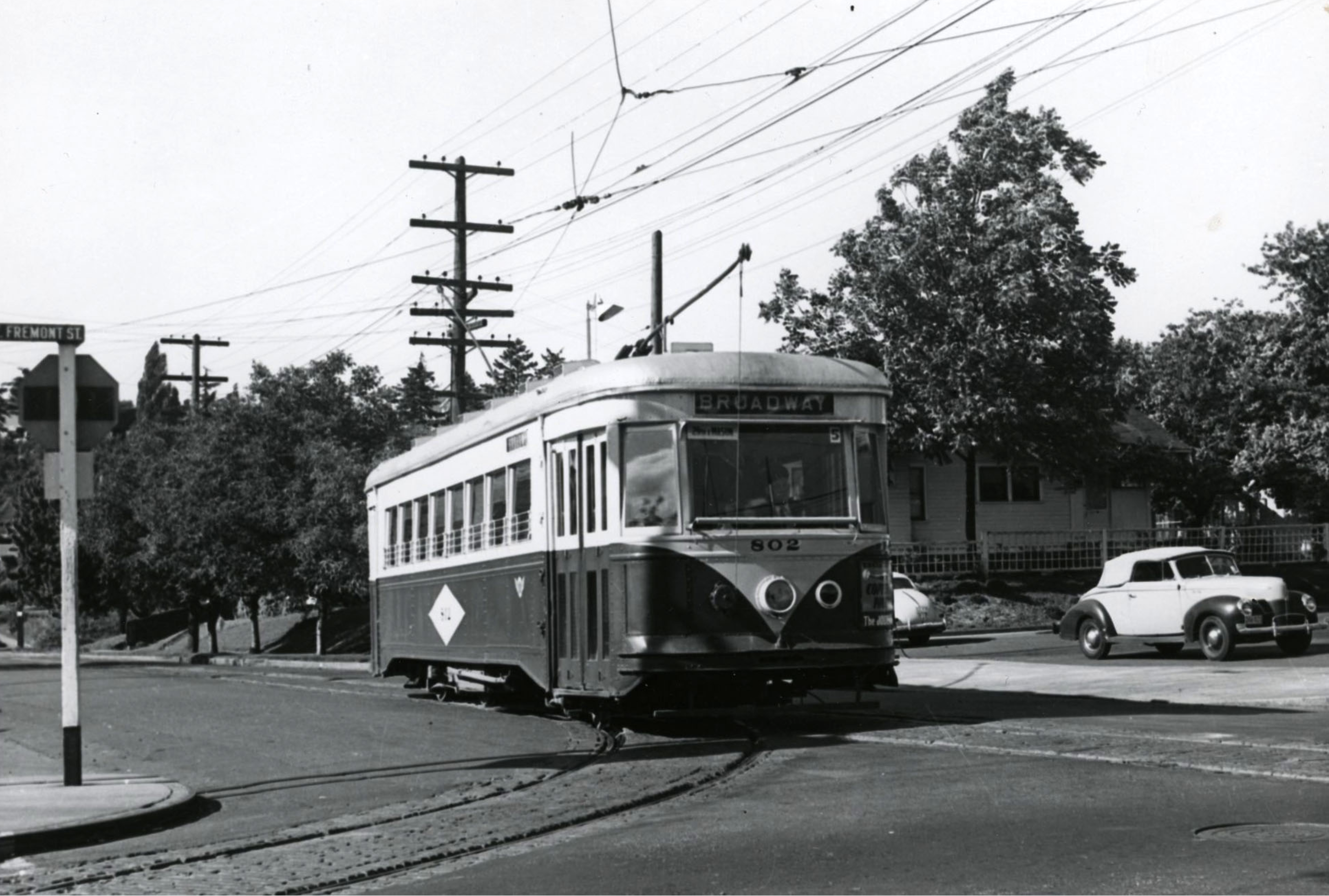
We’re proud to serve on the Oregon Encyclopedia Editorial Board, and pleased to see OE has just published our essay on the Alameda Neighborhood. Click in and check it out. The article features a little-known photo of the Broadway Streetcar originally published in the Oregon Journal (we haven’t seen it and we’ve looked at lots of Broadway Streetcar photos).

Courtesy Oregon Historical Society Research Library, Oregon Journal, 49061, photo file 1686. Photo looking north on 24th as the streetcar rounds the corner to the west on Fremont headed for downtown. Autos to the right are parked in the former gas station lot now occupied by Childroots Fremont Center Daycare. Another view of this intersection is here.

Here’s an idea for your next trip across Oregon: there’s a great feature of OE called the Oregon History Wayfinder which allows you to identify articles by location. Next time you’re planning a trip, check out the history along your route.

On the topic of digital access to history stories, if you’re in Portland you should check out the excellent PDX Social History Guide, which is both website and ap and provides pictures, oral history audio snippets and other resources.

Where there’s a will, there’s a way

We’ve been watching two commercial corners just a few blocks apart that share similar histories but are on very different pathways to the future.

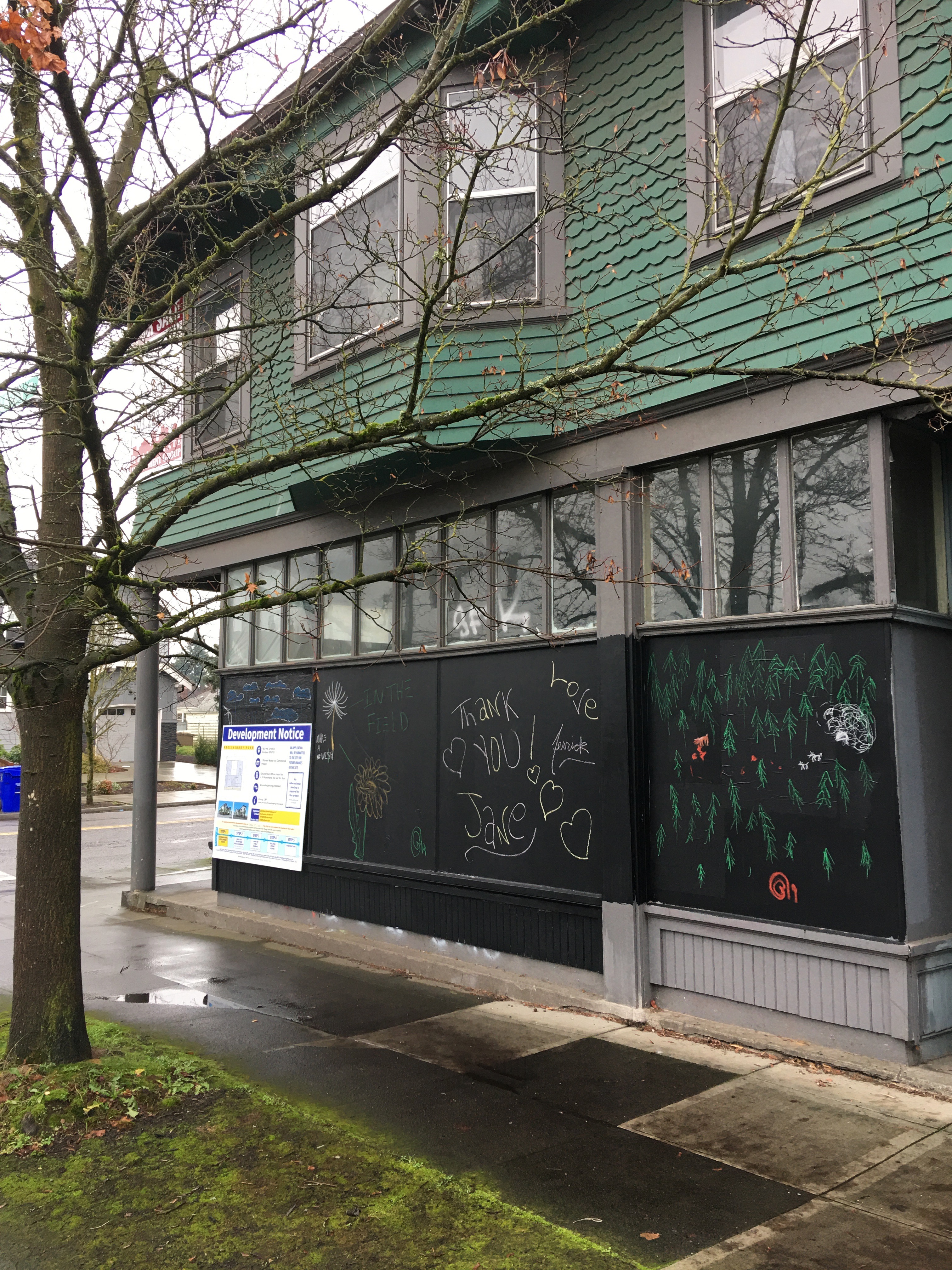
We’ve written here about the Logan Grocery, the mom-and-pop grocery store that for more than 100 years has anchored the southwest corner of NE 33rd and Alberta and is now slated for demolition. Here’s a look just as a refresher:

NE 33rd and Alberta, December 2019

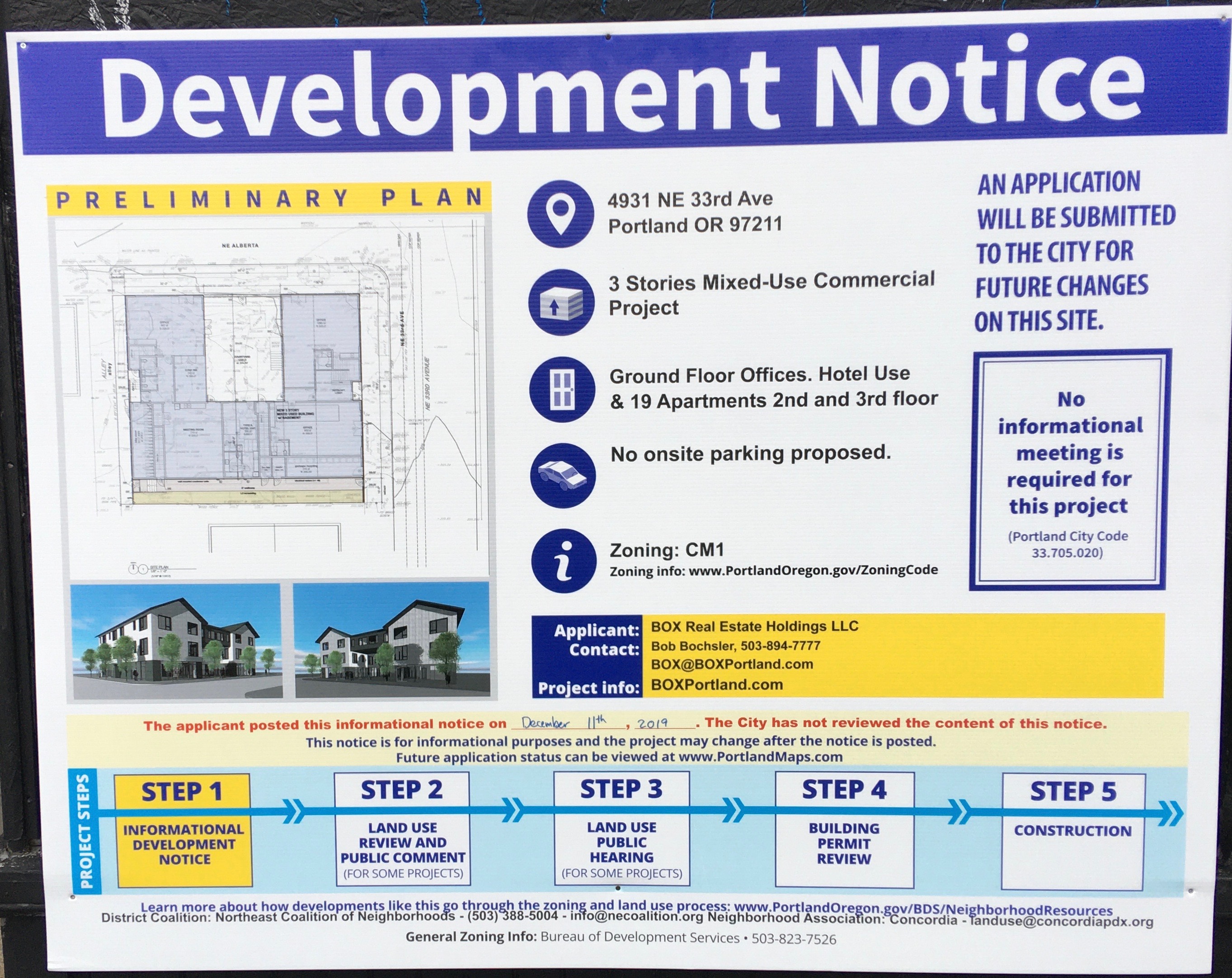
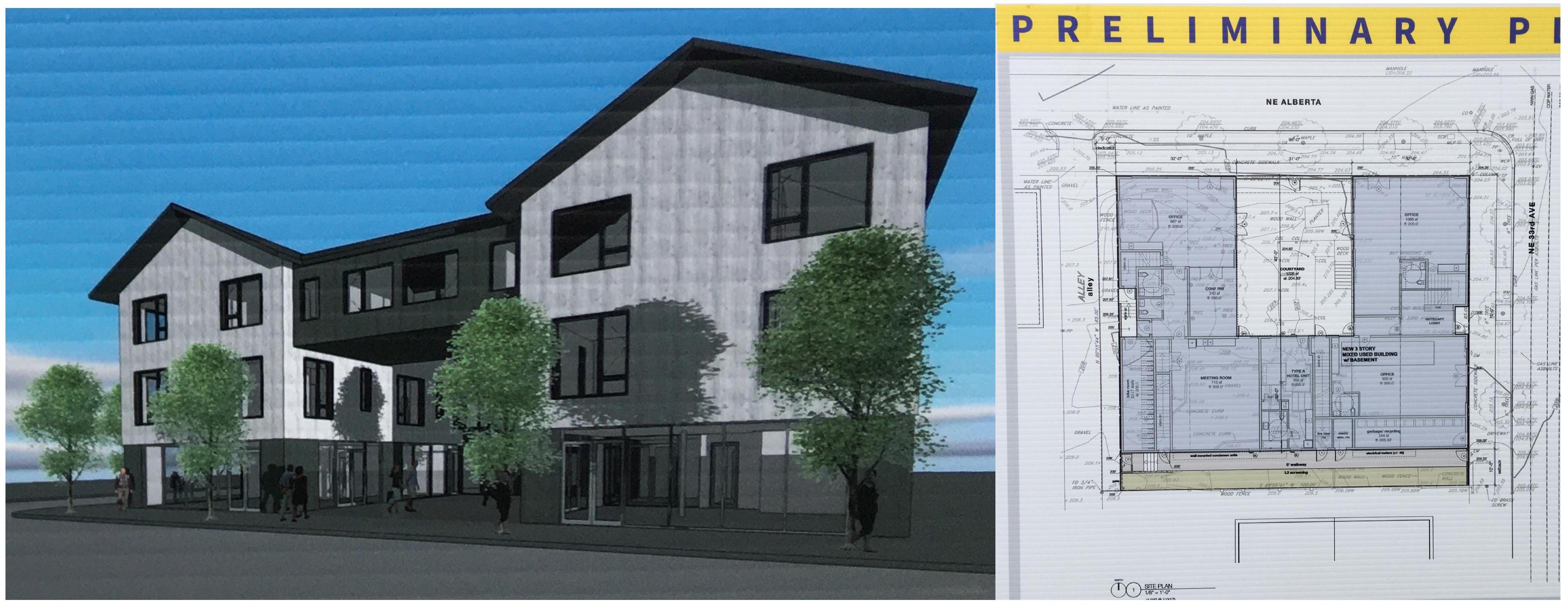
In the last week or so, a sign has been posted on the building showing a rendering of the future, which includes demolition of the historic building and then construction of a three-story mixed-use commercial building including a 19-apartment hotel (which we think probably means Airbnb-like short-term rentals) and no on-site parking. Yes, you read that right. Take a look (click to enlarge).

Interviewed in late September, developer Bob Bochsler of Box Real Estate Holdings explained that he wanted to consider ways to utilize the existing building, but that concerns associated with the cost of reinforcing the old foundation drove the demolition decision, nixing any kind of adaptive reuse that would allow the existing building to be repurposed for a new future.

Note that no informational meeting is required for this significant change, though there is contact information and a cryptic note that the project might be amended.

~

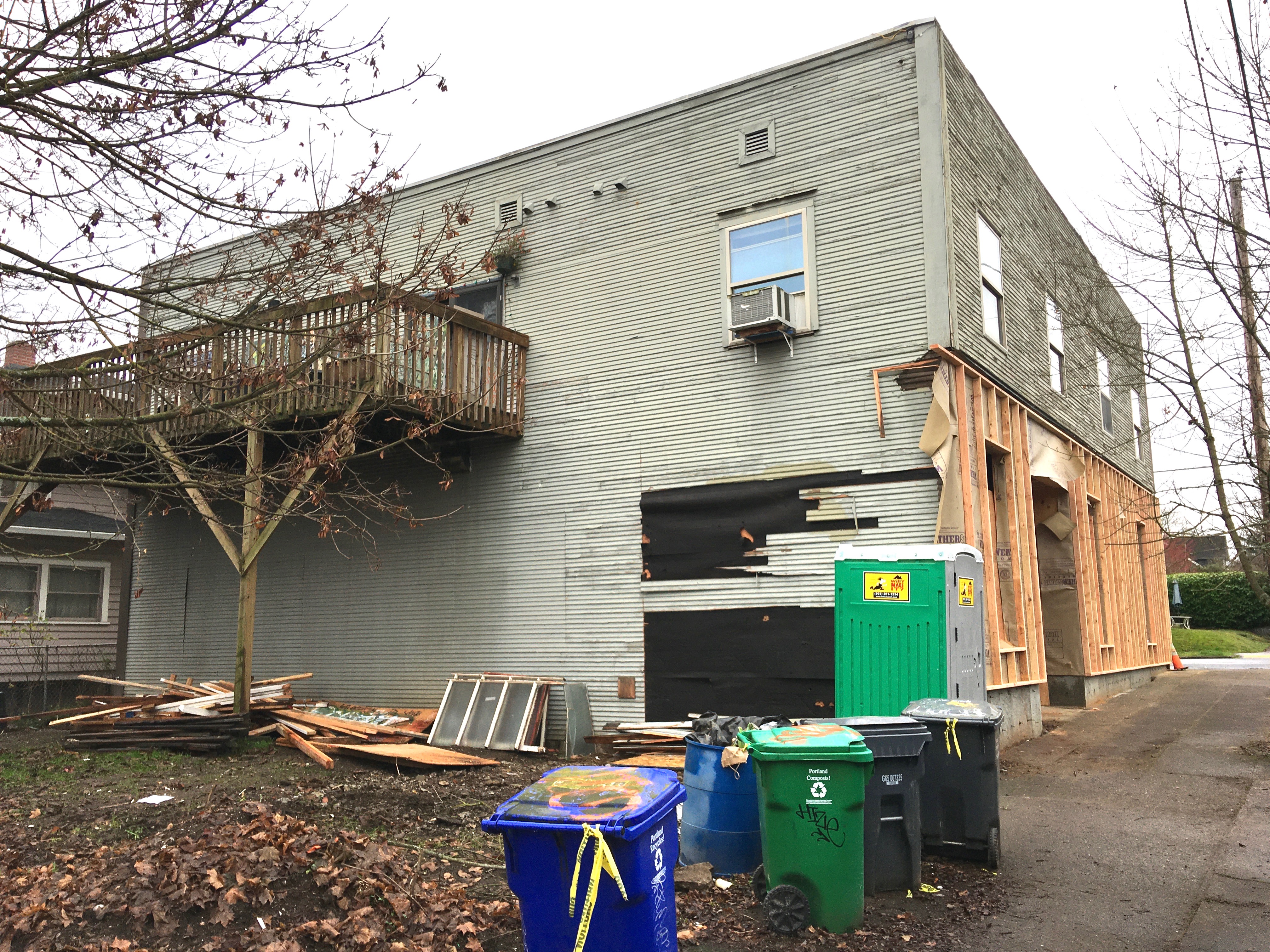
Meanwhile, A few blocks over, at the northeast corner of 30th and Emerson, a similar but very different story is unfolding. Here, a 107-year-old wood-frame mixed-use commercial building that was once also a grocery store (and many other things) is being restored and repurposed as the home of a medical practice and neighborhood coffee shop. Take a look:

Dr. Thomas Grace and Rachel Buckwalter inspect the southwest corner of their future place of business. Clinic entry to the right, coffee shop entry to the far left. December 2019.


West side, coffee shop to the left, clinic to the right. Apartments upstairs. December 2019.

There’s lots more to learn about this old building, constructed in 1912, which once housed two businesses on the first floor facing NE 30th, and two apartments upstairs. Back in the day it was a grocery store. It’s been Cecilia’s Drapery Shop, Jack Emerald’s Barber Shop, The Quaint Shop (an art supply business), a men’s clothing shop, a dry goods store and many other things.

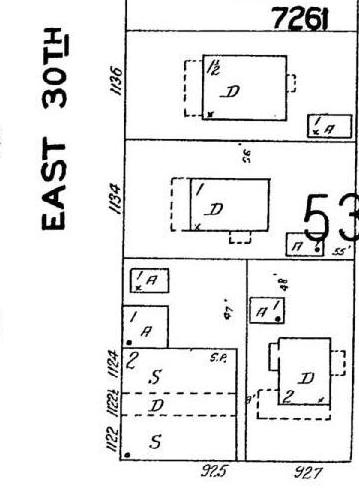
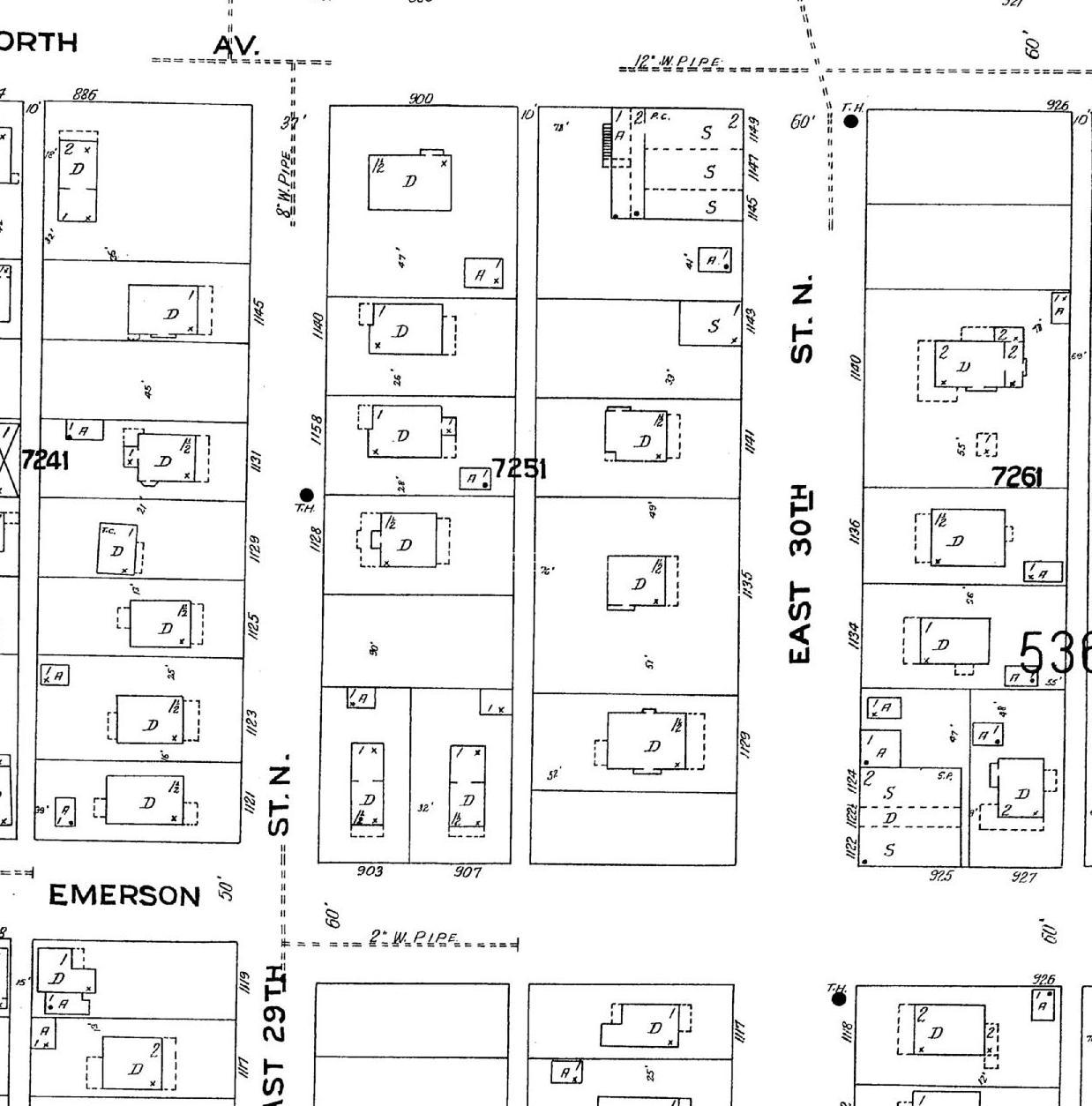
Here it is in the 1924 Sanborn Fire Insurance map, showing it’s pre-address-change addresses of 1122 and 1124 East 30th Street North (downstairs) and 1122 ½ (upstairs). Look in the lower right-hand corner. S=shop. D=dwelling. A=automobile or garage.

Detail from Sanborn Fire Insurance Map Plate 535, 1924.

Dr. Thomas Grace and Rachel Buckwalter bought the two-story building this last year and have been busy getting it ready for its next chapter, which begins this coming spring. The couple own and operate Natural Pain Solutions, a chiropractic practice focused on non-surgical spinal decompression, integrated care and treatment for pain. When it opens in spring, the practice will be Move Better Chiropractic.

Their former clinic had been located in the Macadam Center building which was destroyed by fire in January 2018. After the fire, Thomas and Rachel—who are Vernon neighborhood residents—were on the lookout for a new venue. When Rachel saw the for sale sign on the building last spring, she called on a whim, walked through later that day and fell in love with the building. Thomas saw it the next day and they knew renovating the space would work for them. Within weeks, they had started talking with architects.

Since then, there have been plenty of conversations with engineers, estimators, architects and contractors to determine the feasibility of adapting the building to meet their needs, but in their minds demolition was not a solution.

Yes, the foundation is 107 years old and like all old foundations in the neighborhood has its issues and needs. But instead of considering that a deal breaker, a partial new foundation wall has been added, seismic stabilization work has been done, and additional structural timber has been added.

The renovation design concept—by Portland firm Works Progress Architecture—starts with the structural work and completely renovates the interior space, fitting it inside the existing exterior building envelope, offering a contrast between old and new. The clinic and a new coffee shop will occupy the first floor, with glass roll-up garage doors in the coffee shop on the north face of the building opening onto an open outdoor patio and hanging-around space. Friends of Grace and Buckwalter own and operate Full City Rooster (a craft coffee roaster in Dallas, Texas) and will be helping Grace establish the coffee shop in the renovated building.

North side where the roll-up garage door will open into the patio/open space. December 2019.

Upstairs, the existing apartments are being renovated. In the future, Grace and Buckwalter hope to convert the two existing apartments into four studio apartments.

A repurposed small building in the open lot to the north will hold Buckwalter’s new business, “Moss,” which will feature an unusual mix of garden-related items and specialty intimate clothing for women.

The couple—who live a few blocks away in a 1912 bungalow with their four children—appreciate living and working in vintage spaces. The building is not far from the busy Foxchase corner of NE 30th and Killingsworth, and just a few blocks north of Alberta. Being on Trimet Bus 72 is also a plus (they’ve added a get-out-of-the-rain portico to the west face of the building for riders).

So, why did they decide not to go for the demolition option and to invest in making an old building work?

“We like the building and we think it will look beautiful with a couple upgrades and modifications,” said Grace. “We see this location as a natural transition between Killingsworth and Alberta Street, and hope to be a connection point in the community. We hope that the outdoor space will serve as a public area and place of informal gathering.”

Where there’s a will, there’s a way.

Oregon Home Builders Company: The rest of the story

If you’ve been following along on our exploration of the various builders who shaped our neighborhoods long ago, you’ve seen the pieces we’ve written about both the Oregon Home Builders Company and their factory building at NE 33rd and Broadway. This high-profile Portland company built more than 100 beautiful homes during its five years of operation from 1912-1917.

When we first dove in with both feet to explore the company, its people, its houses and its legacy, we were hooked by their compelling story; by their five-year arc from an auspicious launch with great promise, to their design and construction of durable and beautiful homes, to an embarrassing end, crashing in a mess of bankruptcy, unfulfilled promises and questionable business practices.

From The Oregonian, May 13, 1917

Recently we’ve come across some further insight which confirms our belief there was something fishy about company finances that led to their demise, despite their quality designs and construction methods.

A bit of background is necessary to fully appreciate this, so bear with us:

One of the fine homes the company built was for eastern industrialist Thomas Prince: it’s called the Thomas Prince House and it’s on the National Register of Historic Places and we’ve written about it here.

From The Oregonian, July 22, 1917

Prince was a wealthy and successful captain of heavy industry from Massachusetts. In 1895, he retired to Oregon with a small fortune and with his son to grow walnuts near Dundee, which he did on a grand scale. By the time Oregon Home Builders was formed in 1912, he was 72 years old. Company president Oliver K. Jeffery knew him from real estate circles and somehow convinced him to serve on the company’s board and to invest his own funds in getting the company started.

From the Oregon Daily Journal, November 15, 1907

The company built a house for Thomas Prince in perhaps the most visible place in the Alameda Park subdivision: right at the top of Regents Hill at the crest of the ridge where the Broadway Streetcar passed by dozens of times a day. It was a trophy house for the company, built to show investors and potential clients they knew what they were doing.

When this house was built in 1916, Prince was 76 years old and in ill health physically and cognitively. He lived there only briefly, before dying of a stroke in California. But still, it’s the Thomas Prince House—as it should be—named for its first owner and occupant. Somehow, in Prince’s final years, the persuasive Jeffery convinced him to invest in the company at a very large scale. We’ve recently come across court documents that provide a bit more insight about what happened.

Oliver K. Jeffery, 1916. From the Photographic Business and Professional Directory, American Publishing Company, 1916.

Thanks to an Oregon Supreme Court Case heard on appeal of a Multnomah County Circuit Court ruling about Prince’s guardianship, we’ve learned the full story about where the company’s money was coming from. Read on:

“In 1915 his [Prince’s] faculties had become impaired by ill health and advanced age, in which condition he was induced by one O. K. Jeffrey to consent to finance the construction of dwelling-houses situated upon lots in Portland, Oregon, which lots, were acquired or controlled by Jeffrey. The money so advanced was to be repaid upon the sale of the dwellings so constructed. The enterprise was conducted under the unincorporated firm name of Oregon Home Builders, Jeffrey being the active head thereof: the dwellings did not sell readily, and from its inception, the concern lost money.”

“In May, 1917, Mr. Prince suffered a stroke of paralysis, in connection with which he was compelled to undergo a surgical operation, whereby he was confined in a hospital for several months. During that time, Jeffrey acquired a tract of land, and while Mr. Prince was convalescing the Oregon Home Builders erected a plant thereon for the manufacture of aeroplanes; Jeffrey prevailed upon Mr. Prince to advance the funds required to construct the plant and also to agree to advance the money necessary for the weekly pay-roll of those employed in the manufacture of aeroplanes, amounting to about $1,000 per week.”

Former Oregon Home Builders warehouse and workshop at NE 33rd and Broadway, briefly a factory to build World War 1 aircraft parts. Photo taken in 2012.

You may have known this building as Gordon’s Fireplace Shop, now closed. Oregon Home Builders built and used this building for almost two years as warehouse and workshop where the company constructed its built-ins and kitchen cabinetry until Jeffery transformed it—briefly in 1917 until funding reality caught up—into a place where spruce aircraft parts were built.

Photos from a January 1, 1918 spread in The Oregonian about the factory.

In an August 5, 1917 story in the Oregon Journal, Jeffrey was quoted as saying his workers were cutting 25,000 board feet of spruce parts daily for airplane stock and that the product would be shipped to eastern finishing plants. He told reporters: “Large orders for finished material have been secured by my company and the present force of 26 men will soon be doubled.”

Many different products have been manufactured in this building over the years: excelsior, pasta, furniture. It’s even hosted street-facing retail including barber shops and diners.

But let’s get back to the Oregon Supreme Court document for the clincher:

“By January 1, 1918, Mr. Prince had advanced in cash to the Oregon Home Builders about $157,000, and in addition had incurred a number of large obligations.”

“In part payment of the funds so advanced, Jeffrey, in the name of the Oregon Home Builders, conveyed to Mr. Prince, at excessive prices, nineteen or more dwelling-houses in Portland, Oregon, with the land upon which they were situated and a tract of acreage in Clackamas County, also eight sales contracts for the sale of dwelling-houses. All of the properties so transferred were already encumbered. Mr. Prince was compelled to borrow large sums to meet the demands for money made by Jeffrey.”

The brief goes on, but to summarize, a Prince family member from back east came to help the ailing Thomas, saw what was going on and immediately shut down the airplane factory and established a guardian for Prince, cutting Jeffery off.

This is what was actually going on behind the scenes, not reported on by any of the papers. And here’s what it looked like in The Oregonian during that time, with Jeffery as the prominent young businessman, patriot and pilot hero.

From The Oregonian, August 1, 1917

Did you catch the last two sentences? Sheesh.

“As president of the Oregon Home Builders, a concern which has gone far toward aiding those of small means in home building and owning, Mr. Jeffery is well known. The airplane factory is distinctly his own, although he will still retain his interest and presidency in the first firm.”

You can read the company history to see how it all ends (which we’ve updated with this new nugget). Proof that the early neighborhood-building years were a little crazy as investors and speculators jostled to get in on the profits.

At the moment—among several other research topics—we’re focusing in on another series of amazing neighborhood homes from the same era built by another company—Arnt Anderson’s construction company—which appears to have traveled a similar path, though Arnt was convicted and served time in a federal prison for larceny. More to follow.