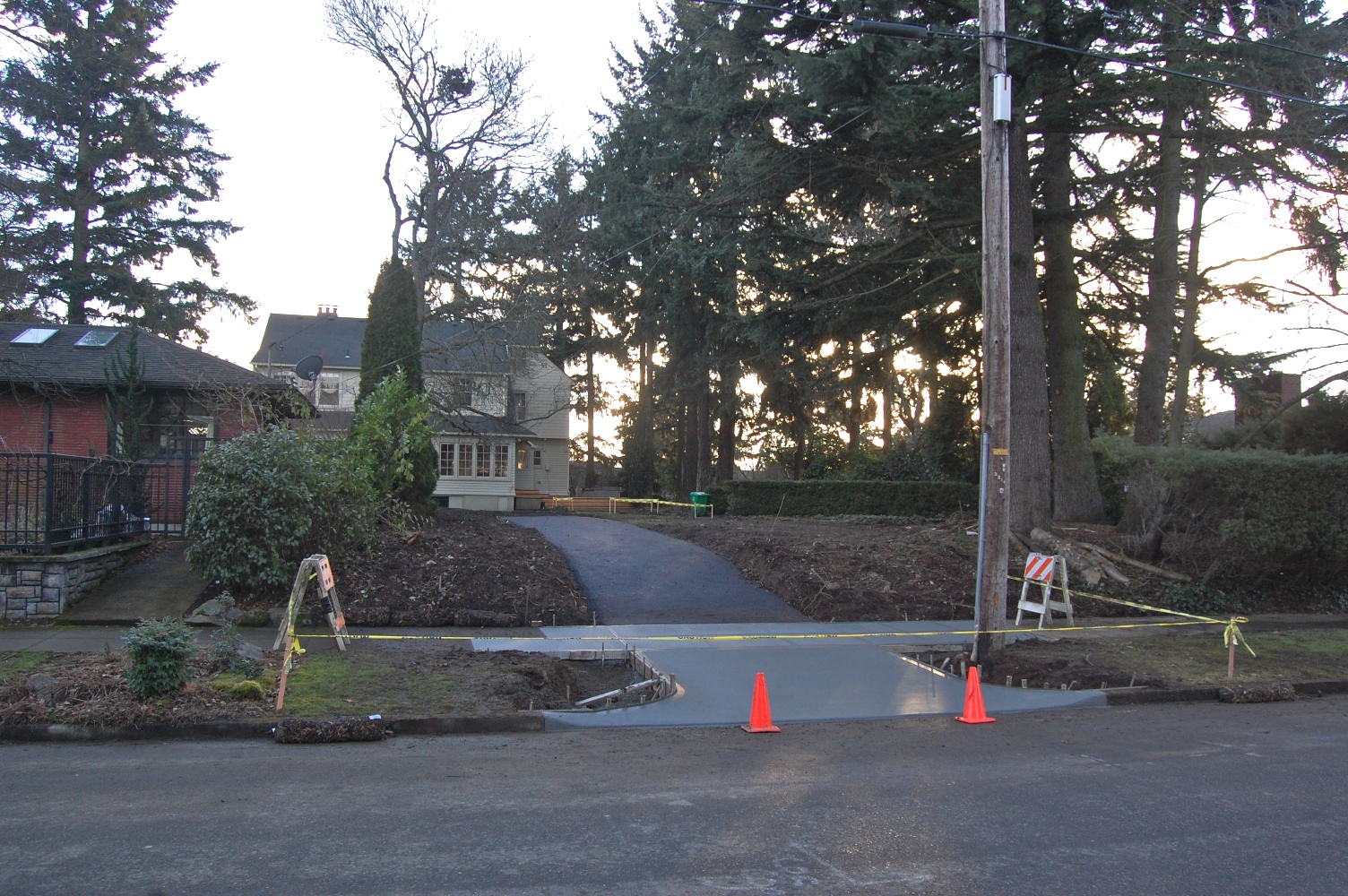
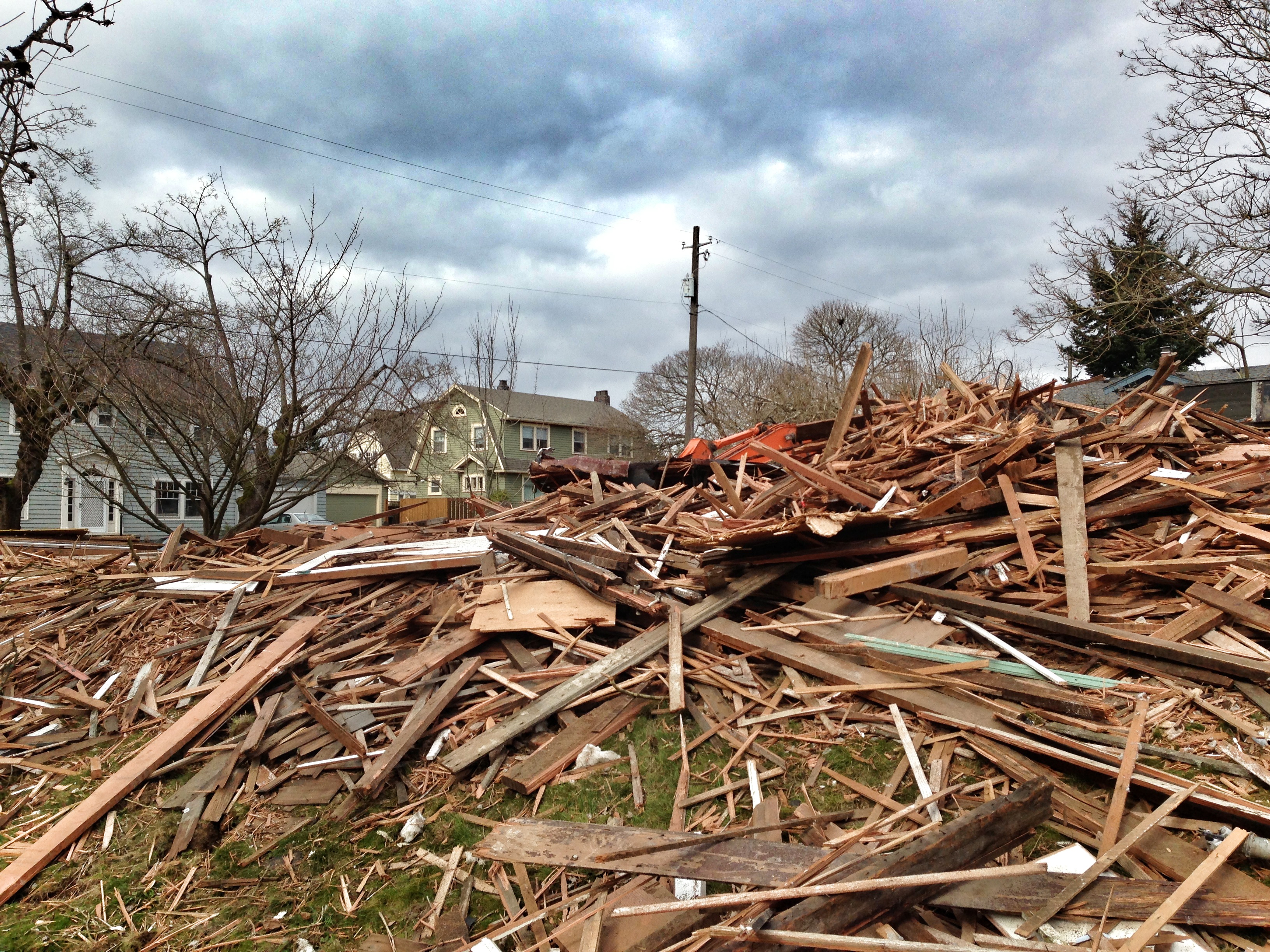
The 1946 ranch-style home at NE 24th and Regents is no more. Out on a walk today, here is what we observed:
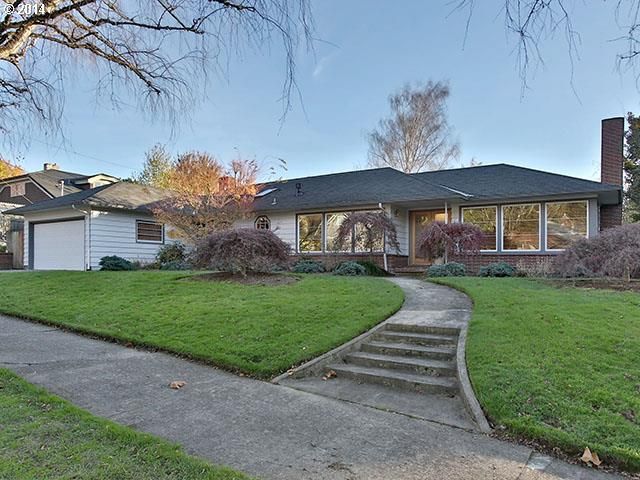
Above, what it used to look like, a photo borrowed from the online listing.
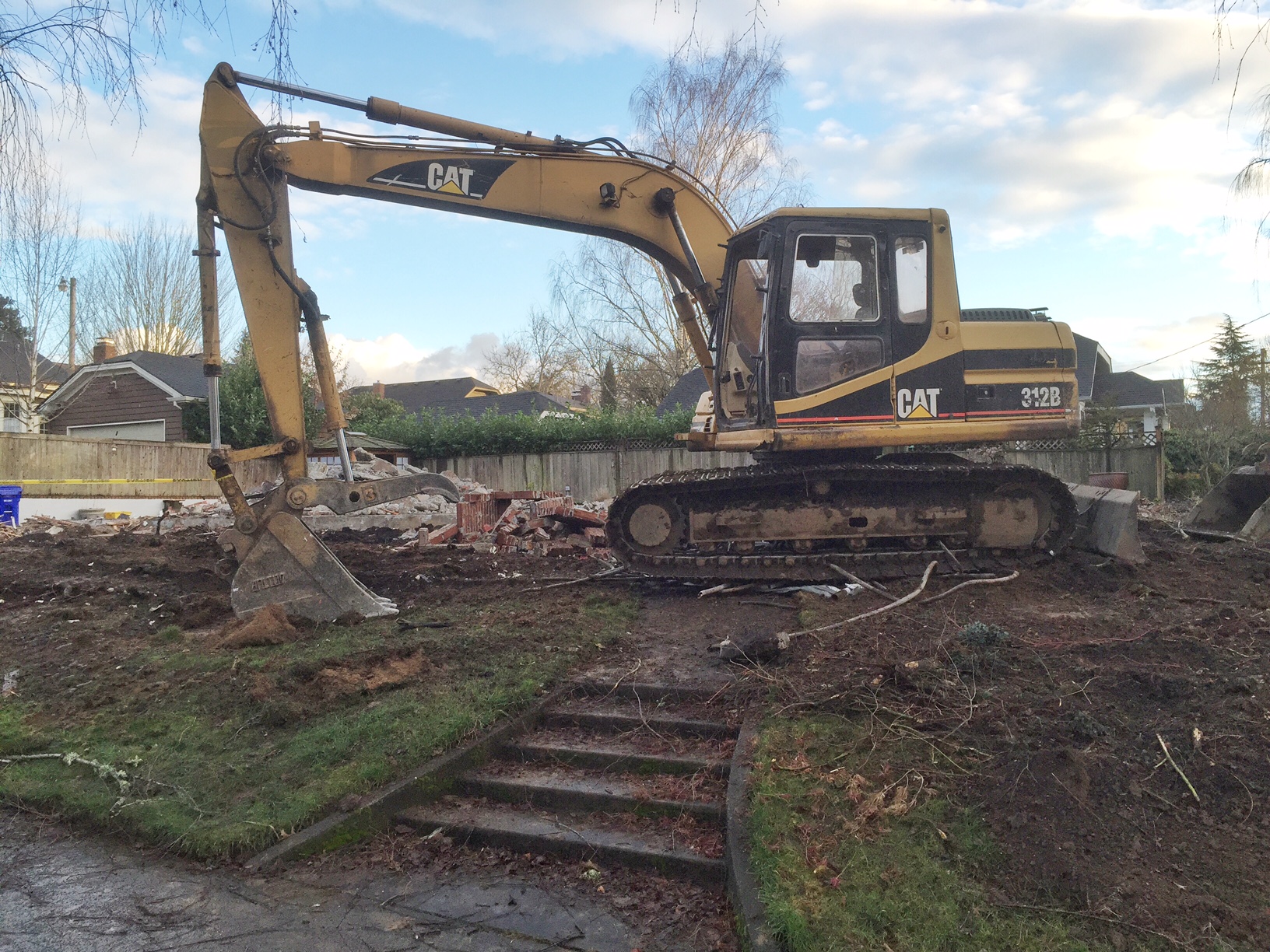
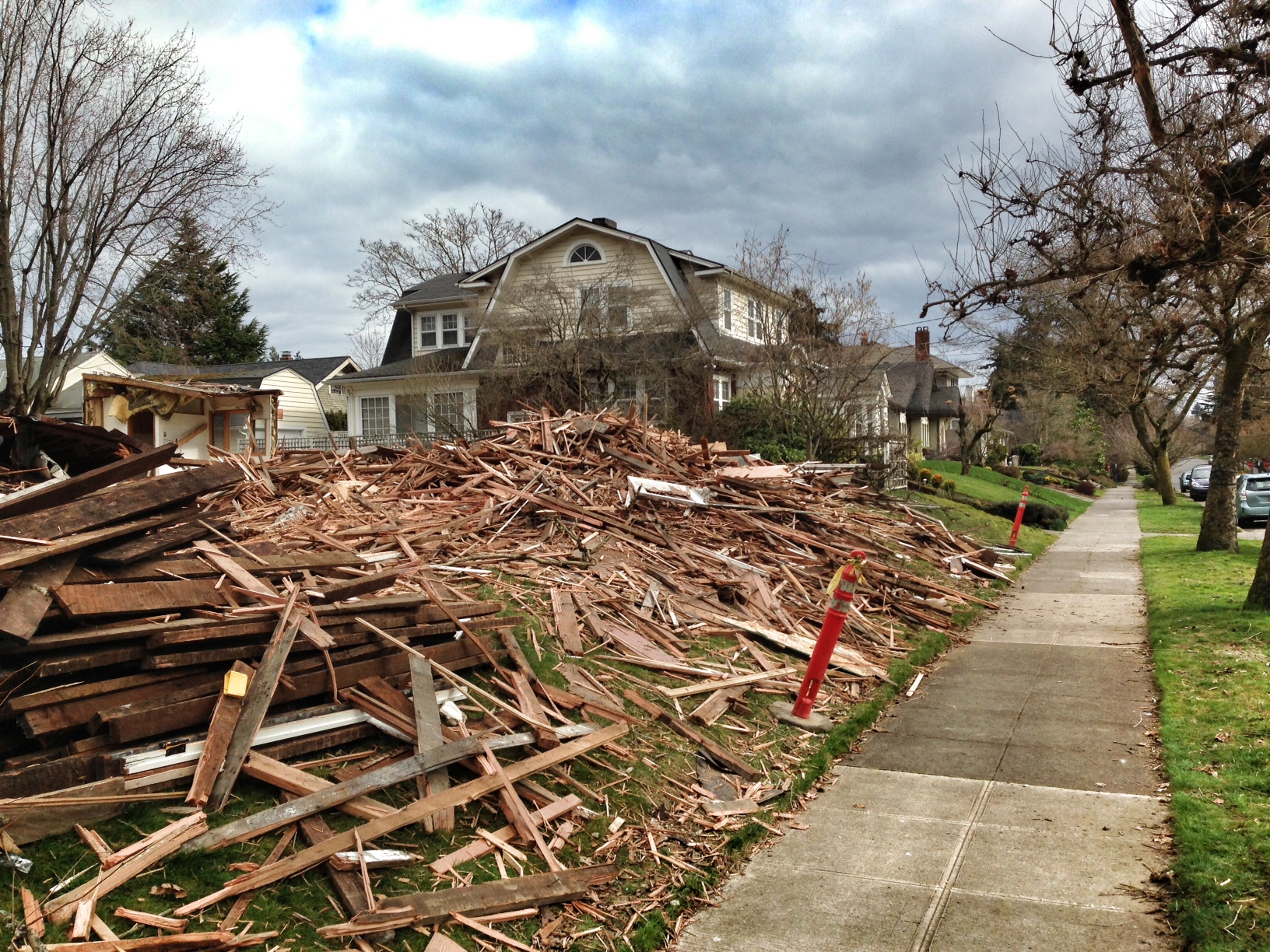
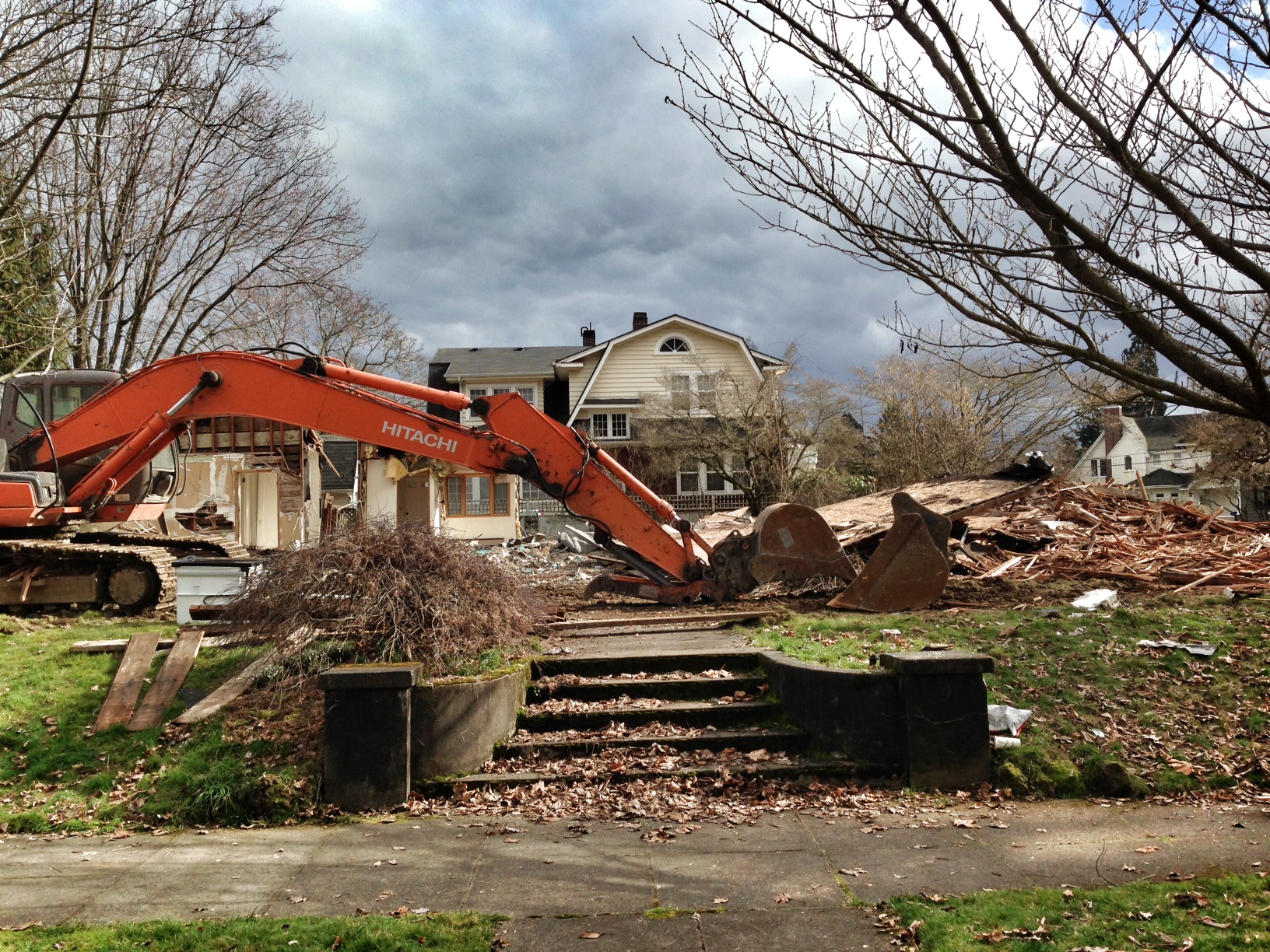
Here’s the same view today.
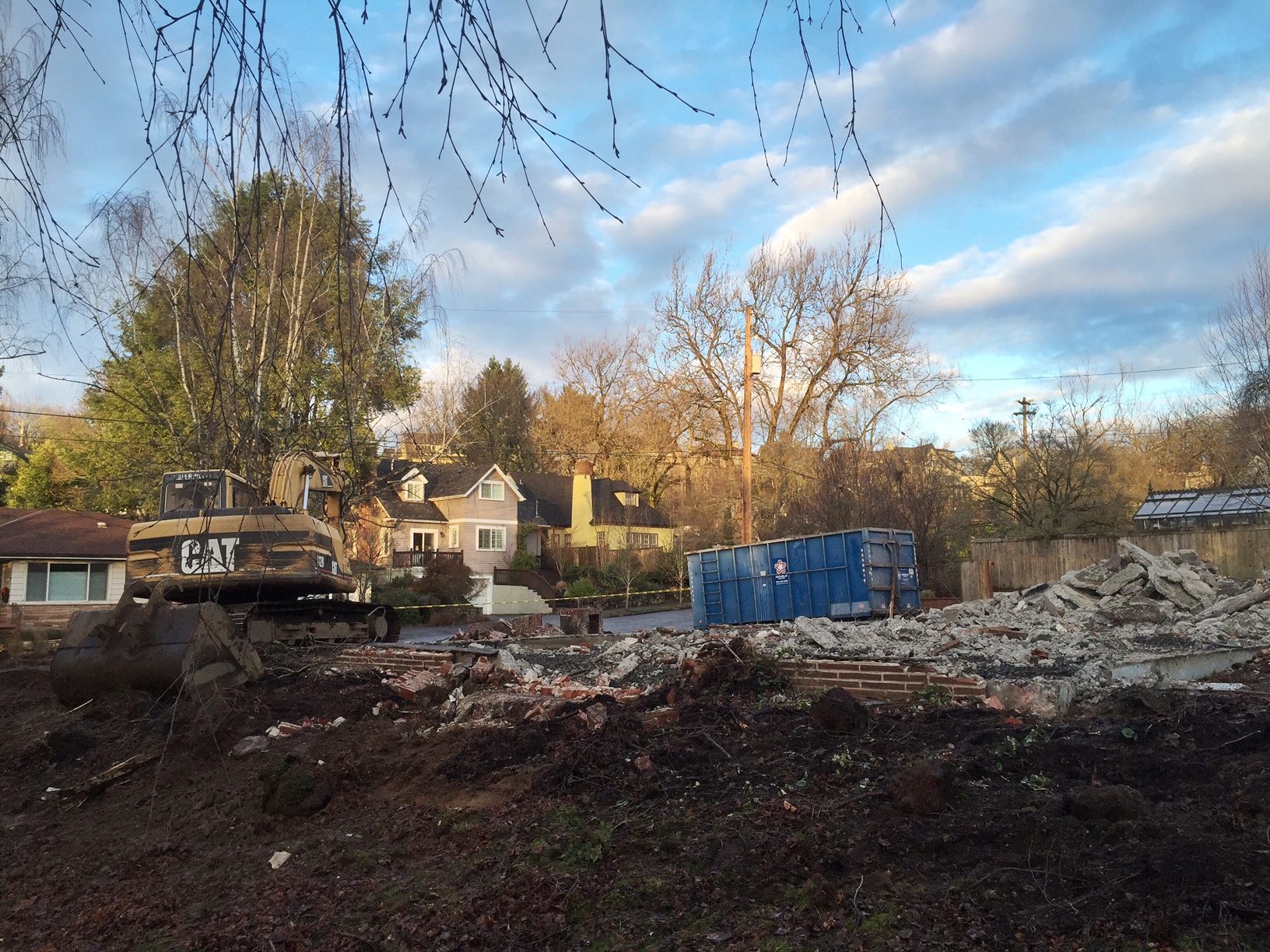
Looking north toward Alameda Ridge.
We’ve been watching this house for the last several months, having read in the neighborhood newsletter that it had been slated for demolition and that multiple houses were going to be built back in its place. As we stood on the corner taking in the change, almost every passerby stopped to roll down their window and look. Many took pictures. Everyone seemed surprised, and not in a good way.
The real estate listing said this of the home:
Stunningly updated Alameda Mid-Century modern. This rare one-level home, on a double corner lot, boasts high-end appliances, central air, heated floors, two fireplaces and a zen-like garden retreat with a tea-house and hot tub.
We suppose cashing in on the value of the double lot eclipsed the value of the “rare one-level home.”
We’ve written about the demolition trend here on AH in the past when it has changed the face of the neighborhood. To read more about how demolitions are changing neighborhoods across Portland—and to track them on an interesting map—check out Restore Oregon, which is hard at work to advocate for protections, alternatives and education.
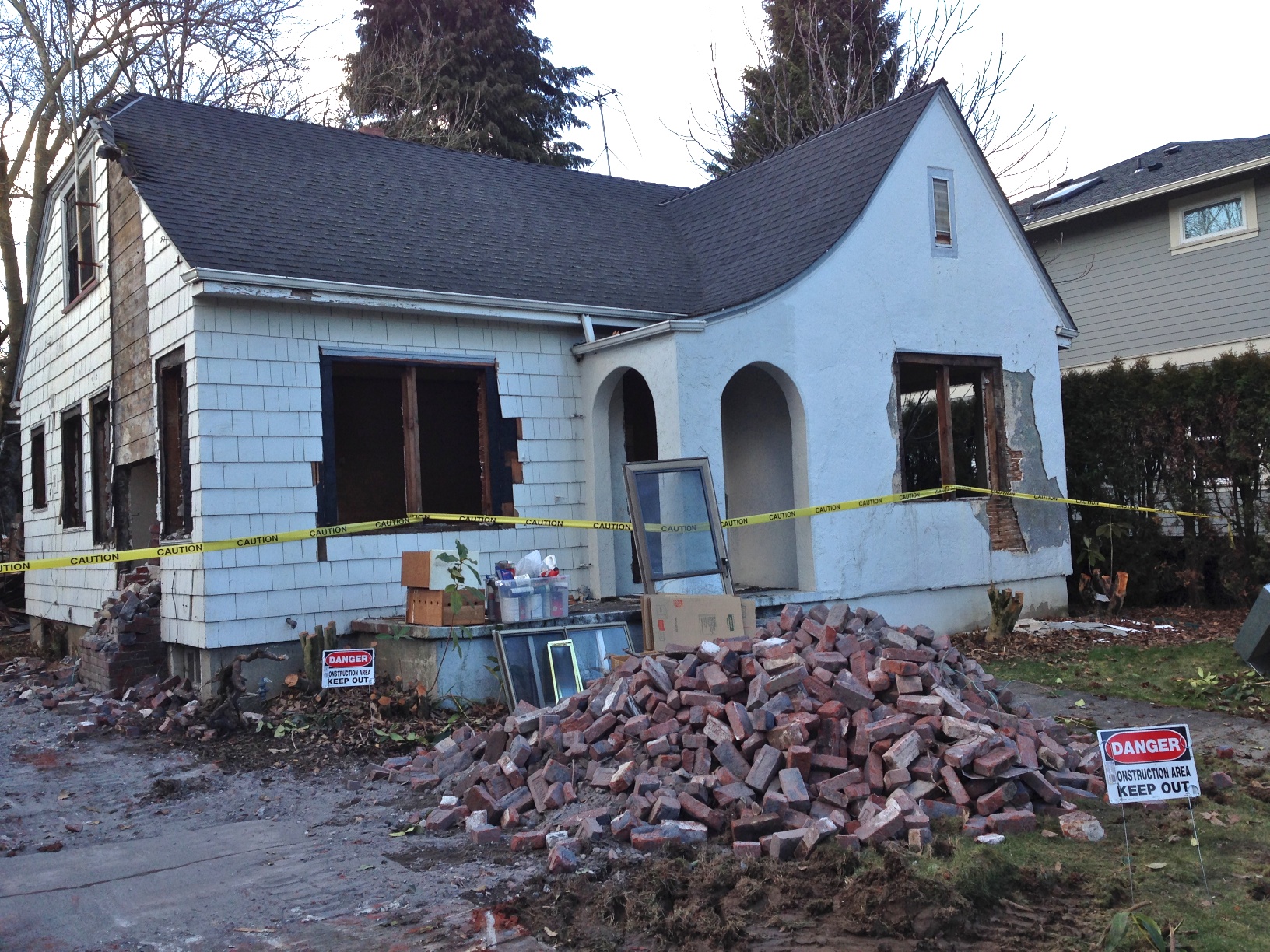
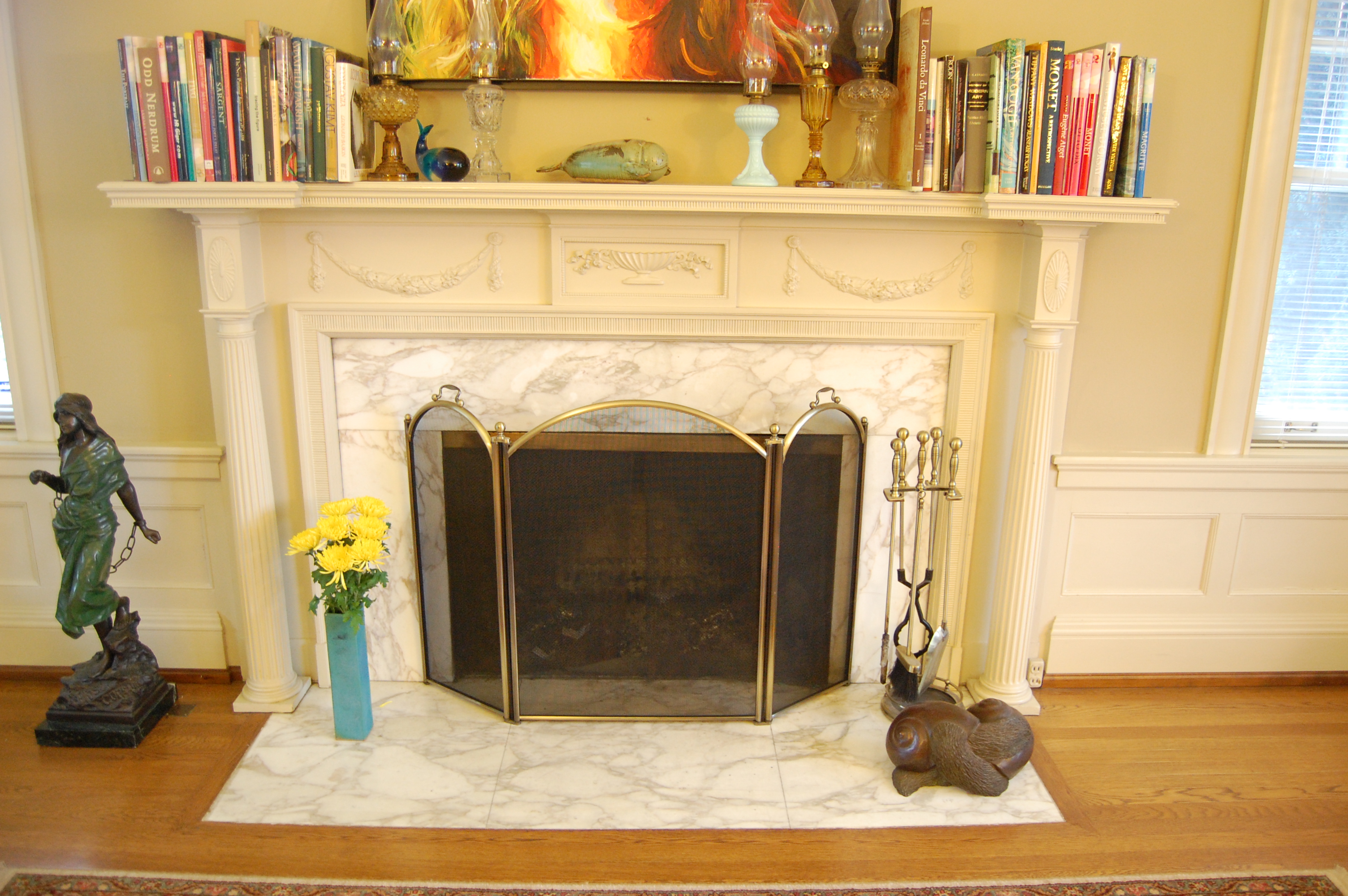
There’s another house we’ve been watching—a 1921 Craftsman bungalow on the northwest corner of Skidmore and 30th that has been vacant for a while. This fall, the Alameda Newsletter reported that it was also a candidate for tear-down.
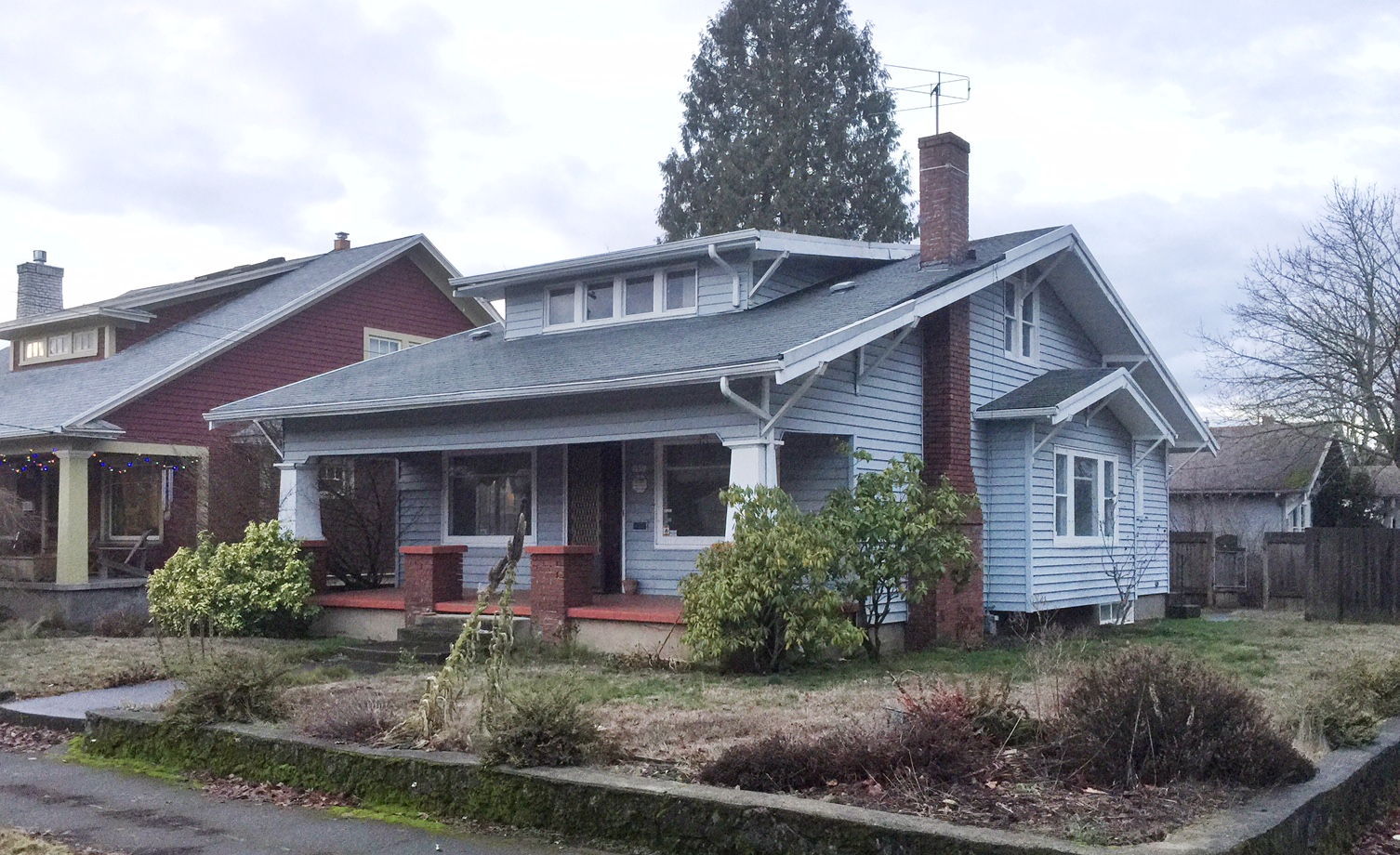
2933 NE Skidmore, built in 1921.
In fact, here’s text from that listing:
Builders! Investors! 50×50 lot in desirable Alameda neighborhood. Land division has been approved for an attached home by the City of Portland. Build attached house on each lot in one of Portland’s A+ neighborhoods! Buyer to do due diligence. House of no value. Value in Land only.
Did you catch that sentence: “House of no value.”
Really?
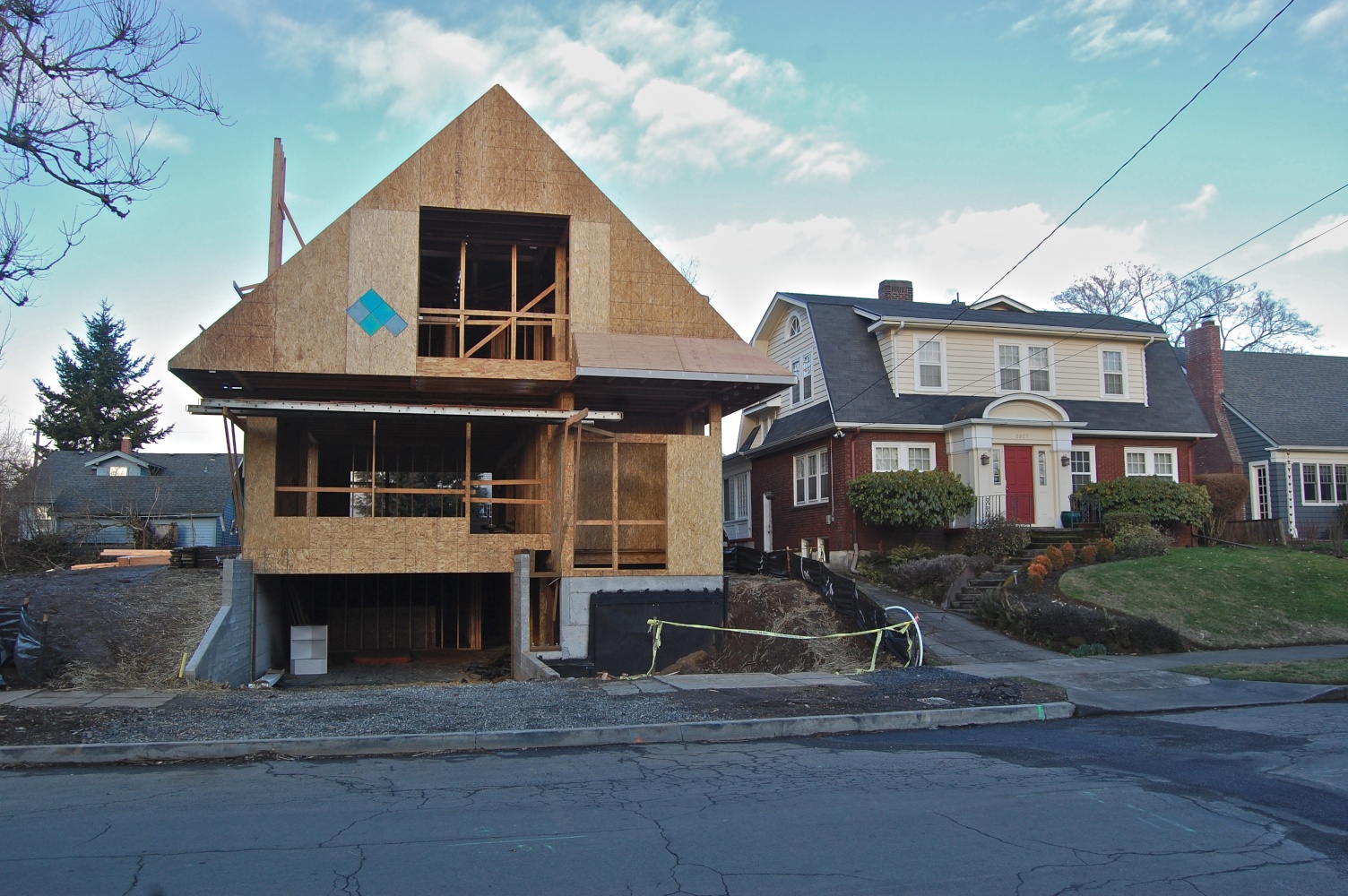
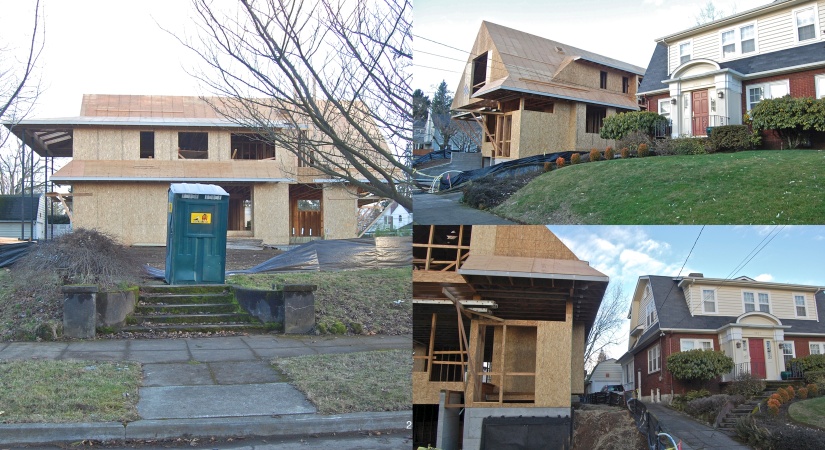
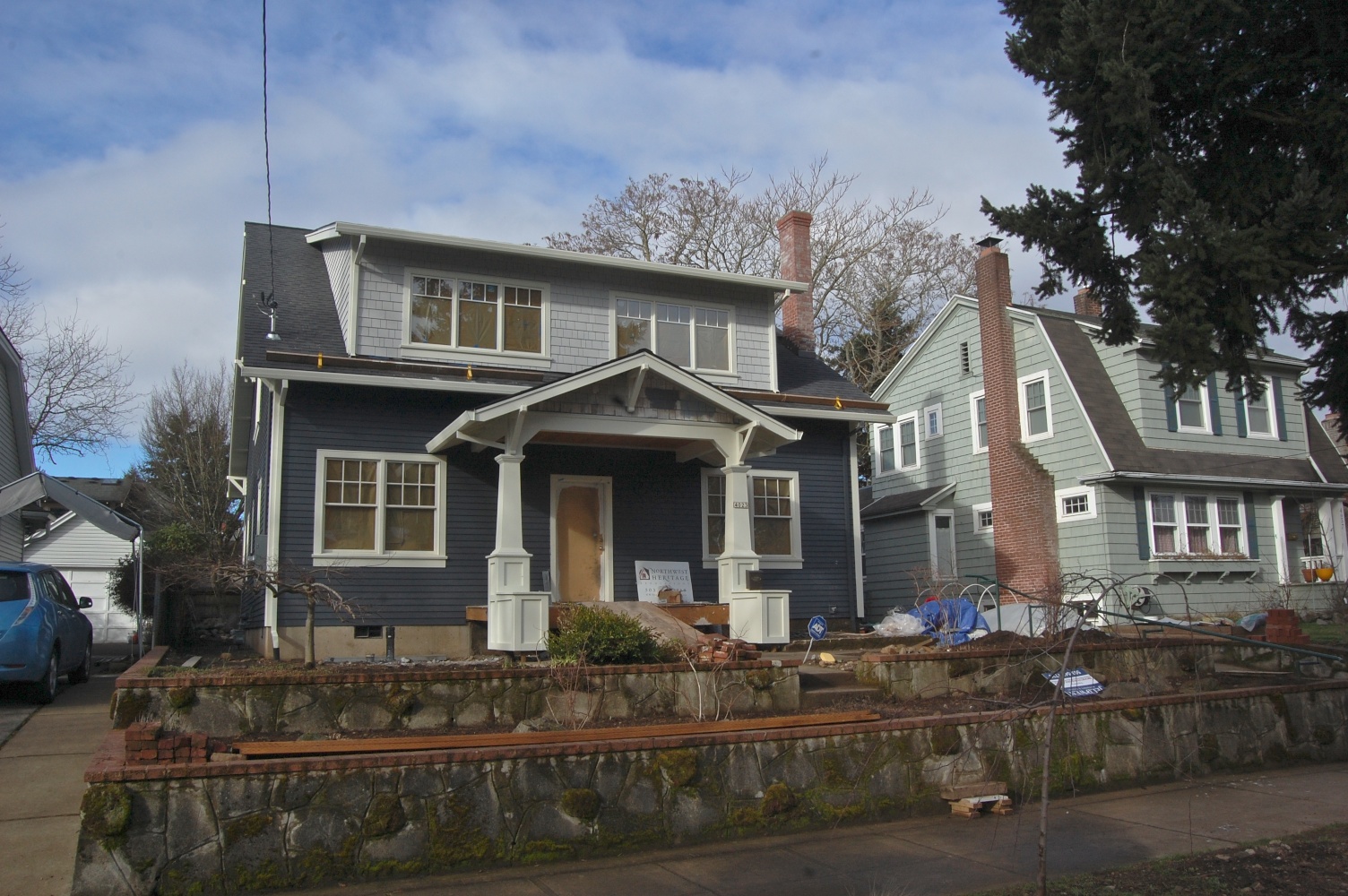
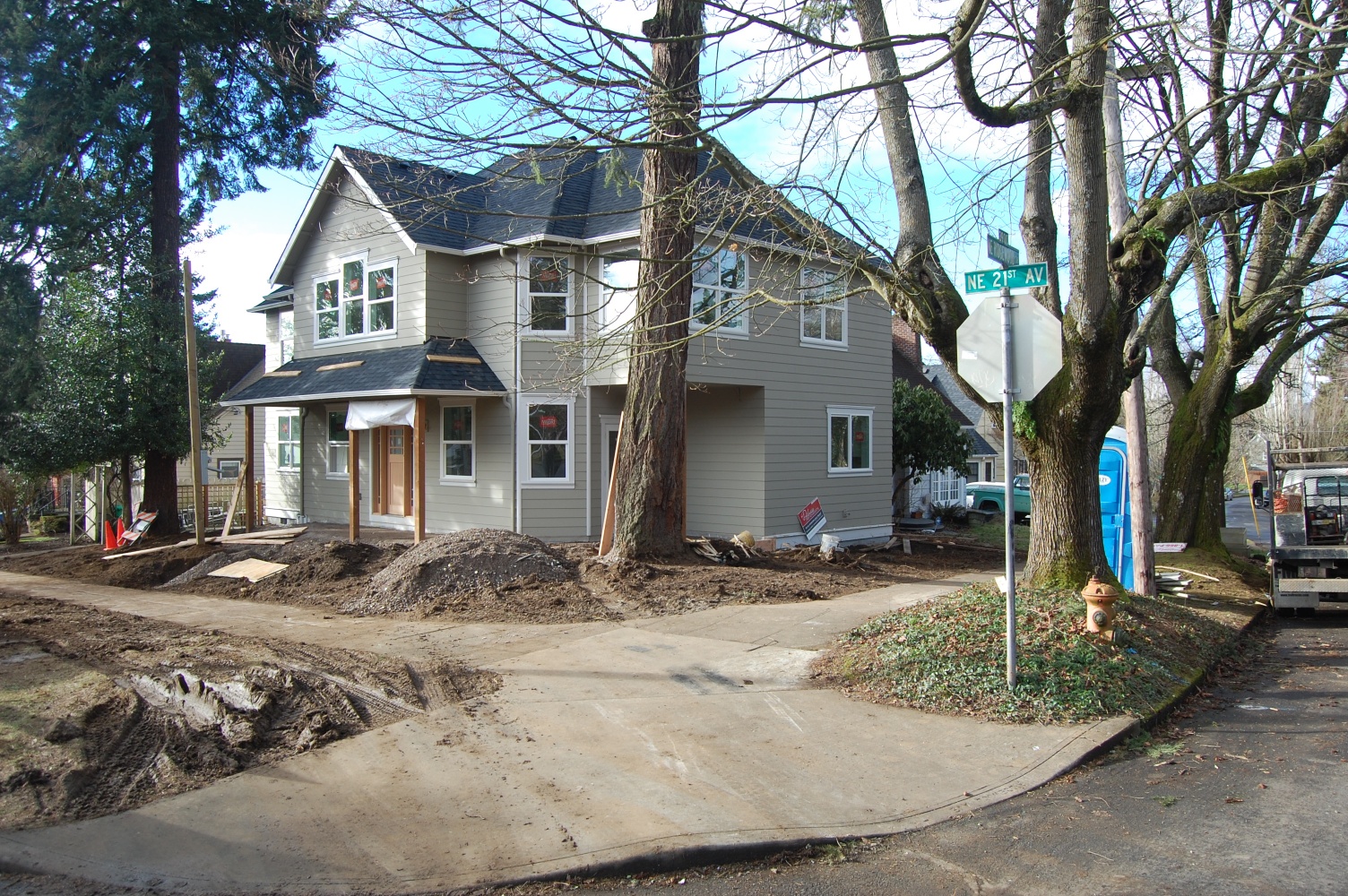
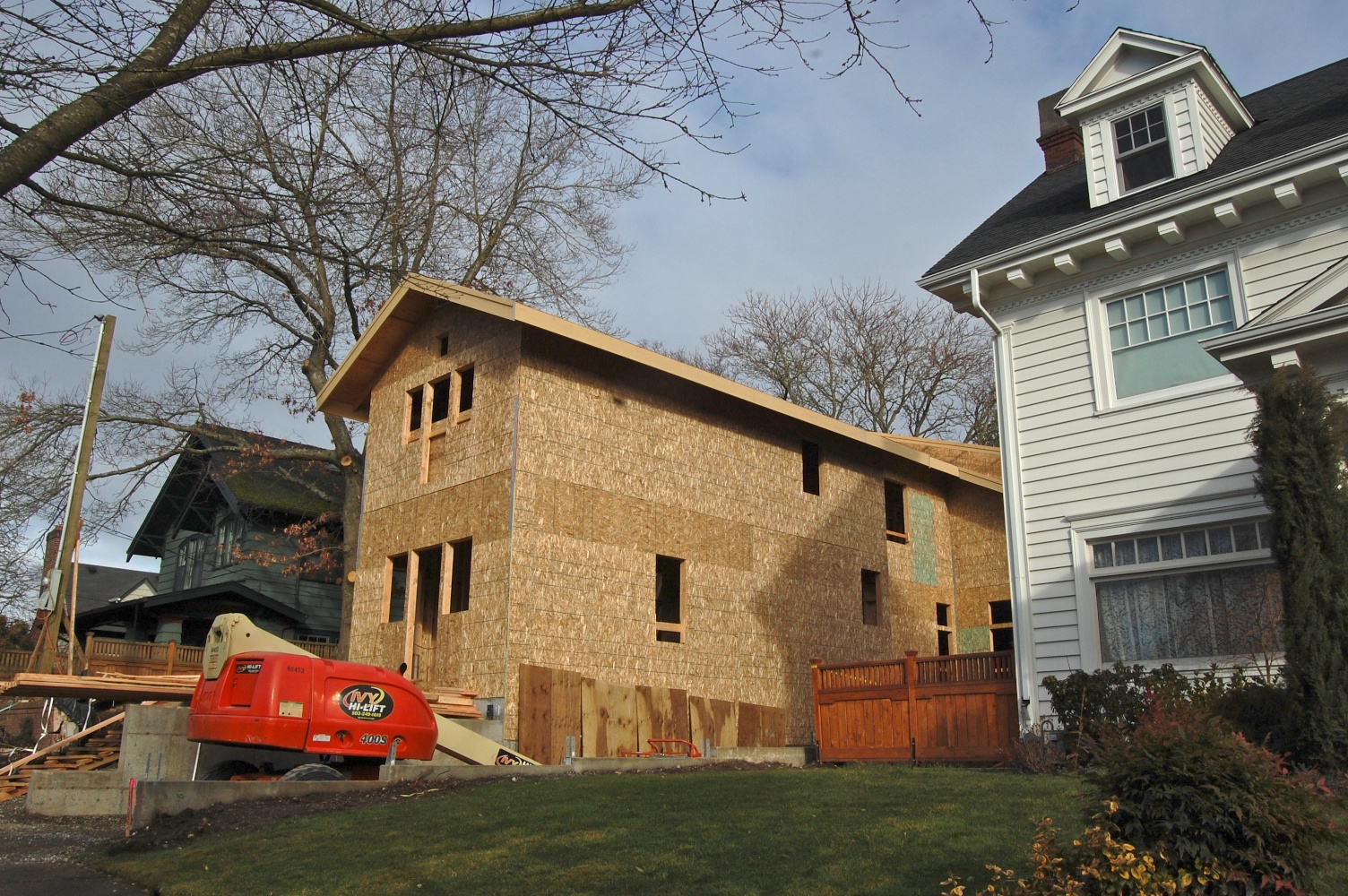
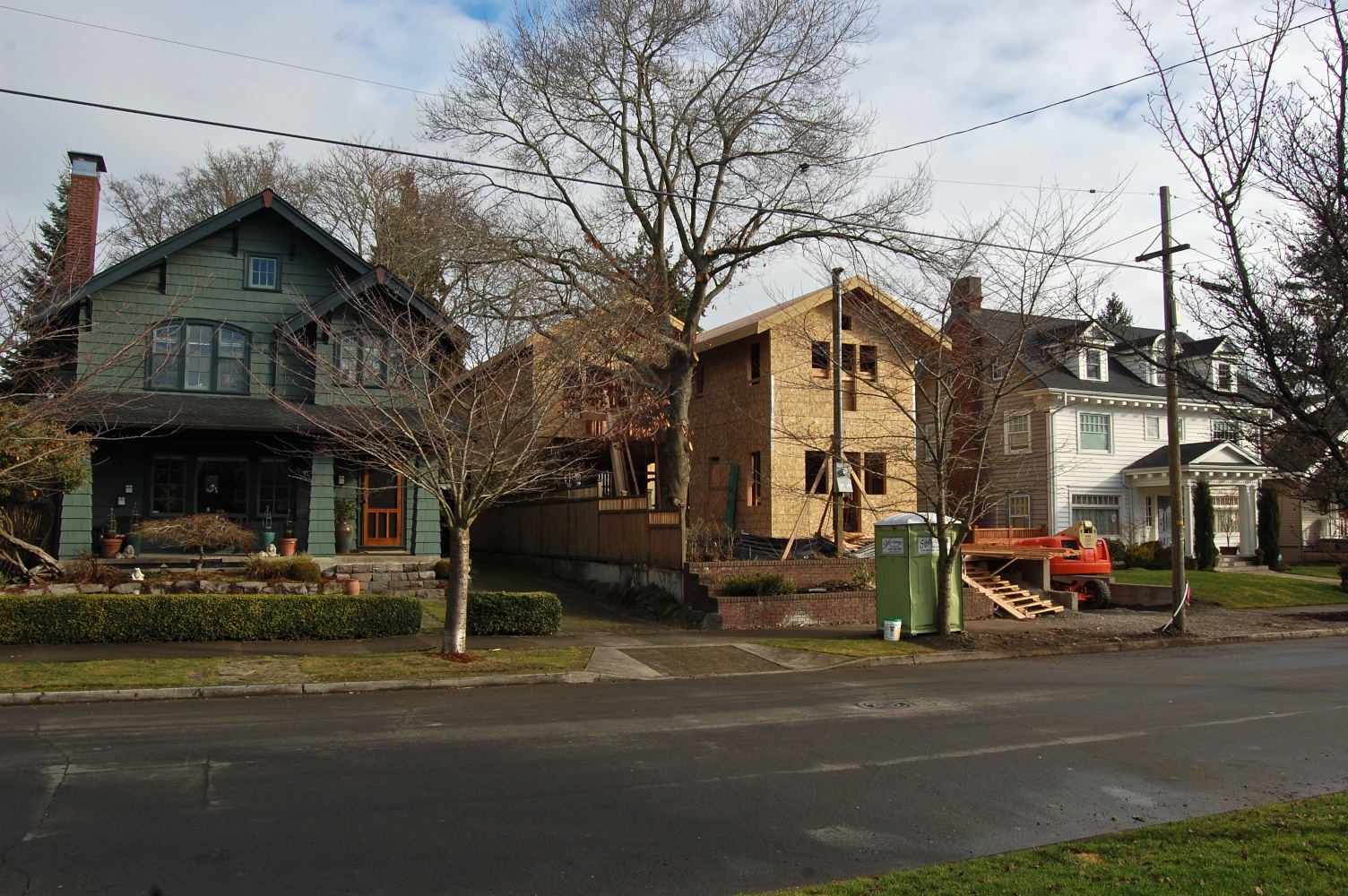
Did you catch the rest of the ad: this property has gone from one 50 x 100 corner lot to two 50 x 50 lots, approved by the city, and it must host an attached home (row house or duplex). Have a look at the attached home/duplex being built on NE 32nd between Sumner and Emerson (or worse, the one being built on NE 30th between Killingsworth and Jarrett) for a taste of what might be coming our way.
2933 NE Skidmore will likely be the next Alameda tear down. More on that house next.










 Alameda Old House History
